Secrets: shining a light on hidden power

The truth can be a slippery thing. We each have a version but it slips and slides about in our minds as we deal with the constant flood of information coming at us from all sides, not to mention trying to balance this expert view against that, between what we know, what we think we know, and what we suspect.

We are all at the mercy of cognitive biases and layers of assumptions and associations built up over our lifetimes. And so we need reference points to help mark the key geographical features of our worldview. And, sometimes, we need some of those reference points visible in our world, amongst our tribes of friends, colleagues, allies and families. It’s very difficult for most of us to make our way in the world and act with the determination we often crave without some acknowledgement that we’re not the only ones seeing the world as we do. The bigger the thought, the less pleasant it is to assimilate, and the further out from the mainstream it lives, the more important that acknowledgment can be.

The 1%-99% Occupy meme was one of those markers. The reason it travelled so far and fast wasn’t because it told people something altogether new, but rather that it capped off and gave voice to thoughts they already had. It didn’t teach as much as it validated and articulated.

At /The Rules, we think its time for a new marker; one that grows very much from the 1%-99% meme, and, hopefully, adds something important. And it’s that we now all live on a One Party Planet.

This is a provocative claim, pregnant with meaning and implication. If it’s true in the way we believe it to be, it means there is an identifiable form of totalitarianism casting a shadow over the entire human race. It means that there is a force so broad, so enmeshed within the logic of modern global power, that the solutions we all work toward in the specific struggles we care most about – be that rampant inequalities in income and opportunity, widespread poverty, or climate change – are all facing it. Not a force that lives in any single person, organization or structure, but that is ephemeral in the way that all ideology is ephemeral. It transcends and thereby unites the leadership of the vast majority of political parties, governments and corporations that have any proximity to global power. But for all this, it is also specific, definable, and visible through the right lenses. Which means it can be challenged.

It’s got many names but we call it Neoliberalism, because that fits it well enough and is very common, recognizable currency. It’s not primarily an economic agenda; it’s a moral philosophy. As Margaret Thatcher, one of its seminal champions herself said, “economics are the method, the object is to change the heart and soul”.

It is defined by a circular and hermetically sealed logic, in three parts. Firstly, that survival of the fittest through eternal competition between self-interested parties is, practically speaking, the only law upon which human society can realistically be ordered; secondly, that, in the moral hierarchy, financial wealth equates with life success which equates with virtue; and thirdly that man [sic] is, if not an island, then, at most, a part of an archipelago of islands of shared interests, answerable only to himself, his peers and, possibly, his God, in that order. To see only the familiar economics – i.e. belief in small government, low taxes, the sanctity of private property and private industries, and 'free' markets, particularly in labor, all of which feed, above all else, the double-headed hydra of profit and economic growth – and not connect it back to the moral philosophy is to miss the point.

To back up this provocative claim, we have released a pamphlet today called, The One Party Planet. We start it by looking inwards, at our cognitive capacities. The world we see around us today is a reflection of human consciousness; we long since passed the point where we could say, “it wasn't us.” So whatever challenges we face—climate change, rampant inequality, endless violent conflict or vast impoverishment—are challenges, first and foremost, of and for the human mind. It helps, therefore, to spend a small amount of time reflecting on what we know about its character in a section called, How True is True?

Then we turn to what might be more familiar territory: power theories, processes and players. This breaks into six parts; The Neoliberal Heart and Soul, Fashions in Global Power, Financial Might, Concentration of Corporate Power, Active Political Projects, and In their Own Words. And finally, a few thoughts on the system's internal logic; that alignment of forces that mean none of this was really planned and no one is actually to blame. We conclude with the most human considerations in Facing Ourselves, and Where Hope Lies.

We have written it as a political pamphlet to honor all those that were written against the wishes of the ruling elite in the past, and that played some part in monumental change, from the English Civil War to the Abolition of Slavery. We’d like help spreading it around, translating it, and building on it. If it’s wrong in important ways, we want to know how. If there more that should be said, we want to help people say it. You can comment on our facebook page, or write to pamphlets@therules.org. More


Ground water depletion driving global conflicts – NASA scientist

ROME, Nov 7 (Thomson Reuters Foundation) – Global ground water supplies, crucial for sustaining agriculture, are being depleted at an alarming rate with dangerous security implications, a leading scientist said.

Cracked ground of the Atibainha dam Brazil

“It's a major cause for concern because most of the places where it (ground water depletion) is happening are major food producing regions,” James Famiglietti, a University of California professor who conducts research for the National Aeronautics and Space Administration (NASA), said in an interview with the Thomson Reuters Foundation.

“India is the worst off, followed by the Middle East, and the U.S. is probably number three … the Chinese, particularly on the north China plain, are more water limited than people believe.”

Famiglietti's conclusions are based on his latest research paper “The global ground water crisis” published in the journal Nature Climate Change last month.

The study uses analysis of satellite images to warn that ground water in many of the world's largest aquifers is being exploited at a far faster rate than it can be naturally replenished.

Farming accounts for more than 80 percent of the United States' water use, according to the U.S. Department of Agriculture, and the figures are similar globally.

Famiglietti has been called to the Pentagon a number of times to discuss the potential impact of groundwater scarcity with leading military planners.

Water-related conflicts are already happening, he said, and security experts are bracing for more.

“In 90 percent of the world where there are violent conflicts, there are water scarcity issues,” he said.

Water scarcity has been one component driving Syria's civil war, he said. The agricultural sector lacks sufficient water to farm, and a “young generation of unhappy farmers moved to the city and conflict ensued”.

Oil-rich, water scarce countries in the Gulf currently rely on desalinated sea water for much of their water consumption.

Some analysts suggest that more countries will embrace energy-intensive desalination, particularly using nuclear technology, if current trends continue.

Famiglietti said this would not be a good option, as it requires too much energy, and won't be able to efficiently provide the volumes of water needed for large-scale agriculture.

Governments first need to acknowledge there is a problem, he said, and then factor scarcity into pricing, while investing in conservation and new technologies to promote efficiency. More


Drought apocalypse begins in California as wells run dry

(NaturalNews) Water wells in central California have begun to run dry, reports the LA Times. (1) “Extreme drought conditions have become so harsh for the Central Valley community of East Porterville [that] many of its residents dependent on their own wells have run out of water.”

Tulare County has confirmed their wells have run out of water, and so far hundreds of homes have no running water.

According to the LA Times, rumors are also spreading that Child Protective Services officials will begin taking children away from families who have no running water, although the county claims the rumor is false.

It begins: the collapse of California's water aquifers

With this news, it is now official that the collapse of California's water aquifers has begun. With each passing month and year, more and more wells will run dry across the state as California plummets into the desert conditions from which it once sprang.

Extreme drought now covers 82% of California, according to the National Drought Mitigation Center. (2) Fifty-eight percent of the state is in “exceptional drought.”

During the unfolding of this drought, California farmers and cities have siphoned unprecedented volumes of water out of the state's underground aquifers. This is called “fossil water” and it can take centuries to regenerate. Once this fossil water is used up, it's gone.

35-year “megadrought” may be on the way

“The southwestern United States has fifty percent change of suffering a 'megadrought' that lasts 35 years,” reports the Daily Mail. (3)

“They say global warming has meant the chance of a decade long drought is at least 50 percent, and the chances of a 'megadrought' – one that lasts up to 35 years – ranges from 20 to 50 percent over the next century.”

One scientist is quoted in the story as saying, “This will be worse than anything seen during the last 2,000 years and would pose unprecedented challenges to water resources in the region.”

Unless politicians become magical wizards and figure out a way to create water out of nothing, what all this really means is that cities of the American southwest will not be able to support present-day populations. A mass migration (evacuation) out of the cities will be necessary sooner or later.

California's water deficit will lead to ecological and economic collapse

In an almost perfect reflection of California's state budget deficits, the state is also running an unsustainable water deficit. It is a mathematical certainty that when you remove far more water from the aquifers than is being replenished, the amount of water remaining in those aquifers will eventually reach zero.

This “zero day” water reality is still psychologically denied by most Californians. If the reality of this situation were widely recognized, California would be experiencing a glut of real estate inventory as millions of homeowners tried to sell their properties and evacuate the state. The fact that the real estate market has not yet collapsed in California tells us that Californians are still living in a state of denial about the future of their water supply.

Even as California's water supply collapses by the day, local farmers and towns have few options other than drilling for more water. “Drill! Drill! Drill!” is the mantra of the day, creating an 18-month backlog for well drilling companies. Each new well that's drilled must seek to go deeper than the previous wells which are running dry. It's a literal race to the bottom which can only end in catastrophe.

Then again, a willful acceleration toward catastrophe is merely a sign of the times when it comes to human civilization. There is almost no area in which humans have ever achieved balance: not in fossil fuels, metals mining, fossil water exploitation, debt creation, industrial chemical contamination, ecological exploitation or even global population. It's almost as if the human race is determined to destroy itself while racing to see who can achieve self destruction first. More


ISIS and Our Times – Noam Chomsky

It is not pleasant to contemplate the thoughts that must be passing through the mind of the Owl of Minerva as the dusk falls and she undertakes the task of interpreting the era of human civilization, which may now be approaching its inglorious end.

Bajid Kandala refugee cam, Iraq

The era opened almost 10,000 years ago in the Fertile Crescent, stretching from the lands of the Tigris and Euphrates, through Phoenicia on the eastern coast of the Mediterranean to the Nile Valley, and from there to Greece and beyond. What is happening in this region provides painful lessons on the depths to which the species can descend.

The land of the Tigris and Euphrates has been the scene of unspeakable horrors in recent years. The George W. Bush-Tony Blair aggression in 2003, which many Iraqis compared to the Mongol invasions of the 13th century, was yet another lethal blow. It destroyed much of what survived the Bill Clinton-driven UN sanctions on Iraq, condemned as “genocidal” by the distinguished diplomats Denis Halliday and Hans von Sponeck, who administered them before resigning in protest. Halliday and von Sponeck's devastating reports received the usual treatment accorded to unwanted facts.

One dreadful consequence of the US-UK invasion is depicted in a New York Times “visual guide to the crisis in Iraq and Syria”: the radical change of Baghdad from mixed neighborhoods in 2003 to today's sectarian enclaves trapped in bitter hatred. The conflicts ignited by the invasion have spread beyond and are now tearing the entire region to shreds.

Much of the Tigris-Euphrates area is in the hands of ISIS and its self-proclaimed Islamic State, a grim caricature of the extremist form of radical Islam that has its home in Saudi Arabia. Patrick Cockburn, a Middle East correspondent for The Independent and one of the best-informed analysts of ISIS, describes it as “a very horrible, in many ways fascist organization, very sectarian, kills anybody who doesn't believe in their particular rigorous brand of Islam.”

Cockburn also points out the contradiction in the Western reaction to the emergence of ISIS: efforts to stem its advance in Iraq along with others to undermine the group's major opponent in Syria, the brutal Bashar Assad regime. Meanwhile a major barrier to the spread of the ISIS plague to Lebanon is Hezbollah, a hated enemy of the US and its Israeli ally. And to complicate the situation further, the US and Iran now share a justified concern about the rise of the Islamic State, as do others in this highly conflicted region.

Egypt has plunged into some of its darkest days under a military dictatorship that continues to receive US support. Egypt's fate was not written in the stars. For centuries, alternative paths have been quite feasible, and not infrequently, a heavy imperial hand has barred the way.

After the renewed horrors of the past few weeks it should be unnecessary to comment on what emanates from Jerusalem, in remote history considered a moral center.

Eighty years ago, Martin Heidegger extolled Nazi Germany as providing the best hope for rescuing the glorious civilization of the Greeks from the barbarians of the East and West. Today, German bankers are crushing Greece under an economic regime designed to maintain their wealth and power.

The likely end of the era of civilization is foreshadowed in a new draft report by the Intergovernmental Panel on Climate Change, the generally conservative monitor of what is happening to the physical world.

The report concludes that increasing greenhouse gas emissions risk “severe, pervasive and irreversible impacts for people and ecosystems” over the coming decades. The world is nearing the temperature when loss of the vast ice sheet over Greenland will be unstoppable. Along with melting Antarctic ice, that could raise sea levels to inundate major cities as well as coastal plains.

The era of civilization coincides closely with the geological epoch of the Holocene, beginning over 11,000 years ago. The previous Pleistocene epoch lasted 2.5 million years. Scientists now suggest that a new epoch began about 250 years ago, the Anthropocene, the period when human activity has had a dramatic impact on the physical world. The rate of change of geological epochs is hard to ignore.

One index of human impact is the extinction of species, now estimated to be at about the same rate as it was 65 million years ago when an asteroid hit the Earth. That is the presumed cause for the ending of the age of the dinosaurs, which opened the way for small mammals to proliferate, and ultimately modern humans. Today, it is humans who are the asteroid, condemning much of life to extinction.

The IPCC report reaffirms that the “vast majority” of known fuel reserves must be left in the ground to avert intolerable risks to future generations. Meanwhile the major energy corporations make no secret of their goal of exploiting these reserves and discovering new ones.

A day before its summary of the IPCC conclusions, The New York Times reported that huge Midwestern grain stocks are rotting so that the products of the North Dakota oil boom can be shipped by rail to Asia and Europe.

One of the most feared consequences of anthropogenic global warming is the thawing of permafrost regions. A study in Science magazine warns that “even slightly warmer temperatures [less than anticipated in coming years] could start melting permafrost, which in turn threatens to trigger the release of huge amounts of greenhouse gases trapped in ice,” with possible “fatal consequences” for the global climate.

Arundhati Roy suggests that the “most appropriate metaphor for the insanity of our times” is the Siachen Glacier, where Indian and Pakistani soldiers have killed each other on the highest battlefield in the world. The glacier is now melting and revealing “thousands of empty artillery shells, empty fuel drums, ice axes, old boots, tents and every other kind of waste that thousands of warring human beings generate” in meaningless conflict. And as the glaciers melt, India and Pakistan face indescribable disaster.

Sad species. Poor Owl.

© 2014 Noam Chomsky
Distributed by The New York Times Syndicate


Leonardo DiCaprio Narrates Climate Change Films Urging Shift From Fossil Fuels to Renewables

Production company Tree Media, whose mission is to inspire positive social action, has just released the first of four films in the Green World Rising series focusing on solutions to the climate crisis.

The eight-minute film, CARBON, narrated by actor and dedicated environmentalist Leonardo DiCaprio, was created with support from the Leonardo DiCaprio Foundation and in collaboration with Thom Hartmann. The film’s goal is to draw attention to how some governments are already putting a price on carbon through carbon taxes and carbon trading to encourage polluters to shift from dirty energy sources to renewables prior to the UN Climate Summit in New York on Sep. 23. All four films will be released in the next month leading up to the summit.

“97% of climate scientists agree: climate change is happening now—and humans are responsible,” said DiCaprio. “We cannot sit idly by and watch the fossil fuel industry make billions at our collective expense. We must put a price on carbon—now.”

“We need serious action to address the most pressing issue of our time,” said Hartmann. “Communities across the world have taken action in the most direct and effective way possible by taxing and trading carbon. For us to beat this crisis, many more need to join.”

The film explains what a carbon tax and carbon trading are, how they can help us stop “using the atmosphere as a sewer,” as Joseph Romm of the Center for American Progress says in the film, and what ordinary people can do to push elected officials to act. More

Carbon


Published on Aug 20, 201 4 • CARBON is the first film in the Green World Rising Series, http:// www.greenworldrising.org “Carbon” is narrated by Leonardo DiCaprio, presented by Thorn Hartmann and directed by Leila Conners. Executive Producers are George DiCaprio, Earl Katz and Roee Sharon Peled. Carbon is produced by

Mathew Schmid and was written by Thorn Hartmann, Sam Sacks, Leila Conners and Mathew Schmid. Music is composed and performed by Jean-Pascal Beintus and intro drone by Francesco Lupica. Carbon is produced by Tree Media with the support of the Leonardo DiCaprio Foundation.

Facing Rising Ocean, Pacific Island Town Must Relocate

In an unprecedented move that illustrates the dramatic impacts of planetary global warming, one community in the South Pacific has decided it has no choice but to pick itself up entirely and flee for higher ground.

All too aware of their vulnerability to the effects of climate change — such as rising sea levels and extreme weather events — communities in the Pacific Islands have long acknowledged that their very existence isthreatened by global warming.

But now, authorities in a town on Taro Island, a coral atoll off Choiseul in the Solomon Islands that sits less than seven feet above sea level, have decided to relocate to the mainland in response to increasing coastal hazards including tsunamis, storm surges, and erosion. The exodus from Choiseul Bay Township, the provincial capital that's currently home to about 500 people, will take place over many years. It is the first such official migration — of people, services, and facilities — in the Pacific Islands.

According to Reuters, “the groups behind the Choiseul adaptation plan said it is being hailed by the Solomon Islands national government as a model for other provinces across the nation and more broadly across the Pacific.”

The plan comes out of Choiseul Bay Township's consultation with a team of engineers, scientists and planners, funded by the Australian government, on how best to adapt to the impact of climate change. Extensive community input was solicited, Choiseul Province premier Jackson Kiloe said in a statement Friday.

“Relocation is the only option available that will keep the community safe and will allow for future growth and prosperity of the capital and the province,” said Philip Haines, project manager at BMT, an engineering firm that worked on the plan.

Land to build a new, larger settlement that could accommodate up to 5,000 inhabitants has already been acquired, Haines told Reuters. The town will essentially have to be built up from scratch, with a hospital and school expected to be constructed within five years. In the meantime, the plan prescribes detailed actions to increase the community’s resilience to climate change, including the preparation of a tsunami response plan, and the handover of a hand-wound siren to alert the local communities of a tsunami warning.

The Solomon Islands government would be looking for climate change funding from international donors to finance the relocation, Reuters reports.

Some of that funding could come from the U.S., which has millions invested in Asia-Pacific climate change adaptation, as U.S. Secretary of State John Kerry pointed out when he visited the Solomon Islands just last week.

In remarks delivered in Honolulu last week, Kerry said:

I just came from the Solomon Islands yesterday, a thousand islands, some of which could be wiped out if we don’t make the right choices. The Pacific Islands across the entire Pacific are vulnerable to climate change. And just yesterday, I saw with my own eyes what sea level rise would do to parts of it: It would be devastating — entire habitats destroyed, entire populations displaced from their homes, in some cases entire cultures wiped out. They just had flash flooding in Guadalcanal — unprecedented amounts of rainfall. And that’s what’s happened with climate change — unprecedented storms, unprecedented typhoons, unprecedented hurricanes, unprecedented droughts, unprecedented fires, major damage, billions and billions of dollars of damage being done that we’re paying for instead of investing those billions of dollars in avoiding this in the first place. More


Central America braces for drought-linked food crisis

Low rainfall linked to the El Nino weather phenomenon has led to drought in parts of Central America, causing widespread damage to crops, shortages and rising prices of food, and worsening hunger among the region’s poor.

An unusually hot season and extended dry spells have brought drought to areas in eastern and western Guatemala and El Salvador, southern Honduras and northern and central Nicaragua, destroying swathes of bean and maize crops, the region’s staple foods, and putting pressure on subsistence farmers and food prices.

“Extremely poor households across large areas of Guatemala, Nicaragua, Honduras, and El Salvador will experience a rapid deterioration in their food security in early 2015.

“Atypically high levels of humanitarian assistance, possibly the highest since Hurricane Mitch in 1998, will likely be required in order to avoid a food crisis,” said a recent report by the Famine Early Warning Systems Network (FEWS NET), run by the US Agency for International Development (USAID).

Thousands of families in the region have become too poor to buy enough food for survival because poor harvests are pushing up prices of staple foods while coffee producers are hiring fewer seasonal coffee pickers and paying lower wages because of a coffee leaf rust or roya epidemic across Central America.

In Nicaragua and Honduras, red bean prices rose by up to 129 percent between January and June 2014, according to FEWS NET.

Other livelihoods in Central America, including fishing and livestock breeding, have also been hard hit by the recent drought and the El Nino weather phenomenon, FEWS NET said.

El Nino, which can last more than a year, significantly raises surface temperatures in the central and eastern areas of the tropical Pacific Ocean, a phenomenon linked to major climate fluctuations around the world.

In response to the drought, the Guatemalan government has said it will begin distributing 4,000 tonnes of food aid to more than 170,000 families affected by the drought from early October, using government and United Nations World Food Programme (WFP) food reserves.

One of the poorest countries in Central America, Guatemala already struggles to feed its population, particularly those impoverished indigenous communities living in rural areas.

Around half Guatemala’s population of 15 million lives in poverty and the country has the world’s fourth highest rate of chronic malnutrition, which affects almost half the children under five, according to the WFP.

In neighboring Honduras, the government is distributing food, including rice, beans and flour, and vitamin supplements to 76,000 families, many subsistence farmers, affected by the drought.

First Blogged on http://robinwestenra.blogspot.com/

China Suffers Drought, Water Shortage

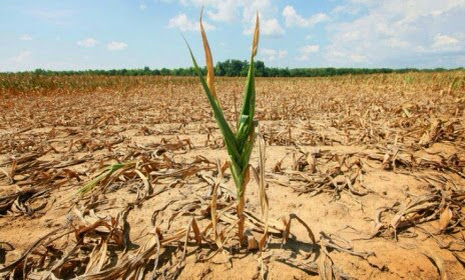
This summer has been one of the hottest in decades in Jilin Province, China, and several counties are facing the complete loss of their harvests.

Currently, Changling, Nongan, Gongzhuling and 10 other agricultural counties in Jilin are facing a severe drought. The severity of the drought is comparable to that in 1951.

A villager Ms. Lee from Wanglong village, Huajia Township, Nongan County, Changhun City, told Epoch Times: “The drought is very bad. All the corn leaves have turned yellow. Corns are not fully grown, only their tips are seen with barely any kernels.”

Since July 1 this year, the rainfall in Jilin Province totaled only 4.4 inches, which is about 48 percent less compared to the same period from previous years. This year had the second lowest rainfall in history; the least amount since 1951.

Over 14 million acres of farmland are affected.

Government data indicates the drought has impacted more than 1.3 million acres of farmland in the major agricultural areas of Jilin with no improvements in sight. According to the weather forecast, the average rainfall could be as low as a third of an inch per day.

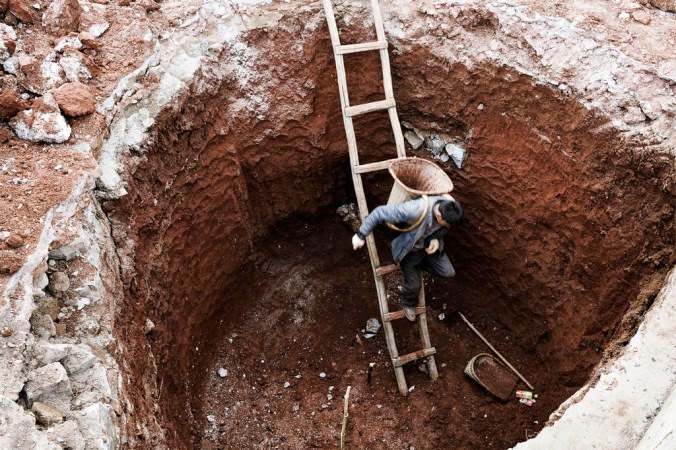
Ms. Lee, a villager from Wanglong village said: “Even the water level of our own well is slowly dropping. It is only enough for domestic use. Our farmland has not been irrigated for over a month.”

Mr. Sun from Zhen-Chai village, Nongan County said that all their cucumber plants have perished from the drought.

Chinese media has reported two-thirds of the corn stalks have withered in some towns while others have completely perished.

Local governments have not taken any measure to tackle this problem and villagers are on their own. A staff member at Jilin Grain Bureau only briefly told Epoch Times that the situation was “unclear” and then hung up the phone.

Other Provinces Impacted

During the summer, a total of 12 provinces, including Shandong, Henan, Shaanxi Anhui, Hubei, Gangsu, and Xinjiang, have been affected by the drought. Over 14 million acres of farmland are affected.

Henan Province, for example, is witnessing the worst drought in the last 63 year with 740,000 people facing a temporary shortage of drinking water. In Shandong Province the cost of the lost harvest is reaching $630 million.

All these statistics put into question the recently announced food exports to Russia. After Russia announced it would stop importing food from Europe, the United States, and Australia, China immediately started building a warehouse on the Russian boarder to facilitate customs clearance for fruit going into Russia. More


“Containing the Resource Crisis”

LONDON – The proclamation of a new Cold War, following Russia’s annexation of Crimea, turned out to be alarmist and premature. However, it reflected the anxiety of today’s decision-makers in the face of a crumbling global order.


With emerging economies far from committed to established norms in international relations, many governments and multinational companies are feeling vulnerable about relying on others for vital resources – the European Union’s dependence on Russian gas being a case in point.

Competition for scarce resources is sorely testing our assumptions about global governance and cooperation, at a time when collective leadership is becoming ever more necessary. But even in the absence of overarching global legal frameworks, it is possible to maintain a sense of common security if the terms of resource investments are founded on long-term political understanding and commercial relationships, rather than short-term competition.

The stakes are high. Resource scarcity is closely linked to political risks. Consider, for example, the drought that decimated Russia’s 2010 wheat harvest. In response, Russia imposed export restrictions to shore up its domestic supplies, sending food prices soaring in its main export markets, especially Egypt. This in turn helped spark the political uprisings that spread rapidly across North Africa and the Middle East. Climate change is expected to trigger many more such chains of events.

One test case for such cooperation is the potentially explosive issue of the Nile Delta’s water resources. Britain’s colonial-era treaty has, since 1929, given Egypt a veto over any upstream river project that might affect the country’s water supply

One test case for such cooperation is the potentially explosive issue of the Nile Delta’s water resources. Britain’s colonial-era treaty has, since 1929, given Egypt a veto over any upstream river project that might affect the country’s water supply. Several Nile Basin countries, including Sudan and Ethiopia, have now ratified a new, Nile River Basin Cooperative Framework agreement, which Egypt has yet to sign. Given Egypt’s concerns about potential water shortages arising from Ethiopia’s new upstream hydropower plants, its assent is far from assured.

Indeed, in Egypt’s febrile political atmosphere, its newly elected president, General Abdul Fattah el-Sisi, may be tempted to escalate the threat of military action in response to Ethiopia’s hydropower projects. Such a move would send shockwaves through a region already reeling from conflict in South Sudan, Syria, Iraq, and Lebanon.

To avoid another dangerous political-environmental chain reaction, nudging all sides toward agreement will require achieving mutual recognition of resource concerns. Ethiopia must credibly guarantee the supply of water downstream, for example, by establishing a water-replenishment rate at its dam reservoirs that does not threaten the onward flow of water to Egypt. At the same time, Egypt, while retaining the fundamental right to protect its water supply, must recognize the interests of its upstream neighbors and be ready to negotiate in good faith a new Nile Basin treaty.

Multinational companies and sovereign investors like China, which have financed hydropower projects upstream, will come under increasing pressure to adopt a position. They, too, can play a positive role by considering the cross-border investments that will address critical interdependencies, like Egypt’s wasteful agricultural irrigation practices.

Similar resource-related tensions are surfacing in other parts of the world. Water stress and food security threaten to constrain India’s economic promise, as increasing coal-powered electricity generation diverts water resources away from agriculture. The political risks of investing in Nigeria’s agriculture sector are also rising as a result of the country’s demographic explosion, high inflation, weak rule of law, and insecure land rights, with wider political consequences.

These resource strains are aggravated by foreign investments that seek to meet developed-country consumers’ voracious demand for resources without attention to their impact on sustainability in the host countries. This virtual outsourcing of the industrialized world’s environmental impacts, apart from being hypocritical, is no basis for building a strategy for global environmental sustainability.

Instead, the world needs to invest in sustainable agriculture, renewable energy, and green infrastructure. To be sure, the most promising efforts by leading multinationals today must confront entrenched subsidies and vested political interests. Unless the necessary policy frameworks are put in place green investment initiatives will continue to struggle to achieve a meaningful scale. Moreover, developed and developing countries seem unable even to agree on a fair division of environmental responsibilities, even though they have become increasingly interdependent in trade, investment, and the supply of natural resources.

These difficulties should not stop us from trying. The Earth Security Initiative is working with the BMW Foundation to develop global roundtables on resource security over a two-year period, starting in Hangzhou, China, on July 17- 20. These high-level, informal meetings will bring together leaders from politics, business, and civil society in Europe and emerging economies in an effort to bridge just such differences.

We know what needs to be done, why it is important, and who must be involved to secure our planet’s long-term future. We must now address the equally vital question of how this will be achieved.

Read more at http://www.project-syndicate.org/commentary/alejandro-litovsky-addresses-the-increasingly-close-links-between-resource-scarcity-and-political-risk#qFDfi1xP668YyhLg.99


Israel accused of war crimes (UK Parliament)

Israel accused of war crimes (UK Parliament)

265,718 views

Published on Jul 15, 201 4 • Highlights from a UK parliamentary debate in which MPs variously accused Israel of war crimes, disproportionate violence, ruining peace negotiations by building illegal settlements, running the worlds largest outdoor prison, collective punishment, and attacking water supplies, hospitals, supply centres and all manner of other civilian targets. I have edited out the contributions of Foreign Secretary, William Hague, because nearly all of them displayed a shameful lack of compassion for the sufferings of the Palestinian people (Hague is a prominent member of an organisation called the “Conservative Friends of Israel” and is well aware of the funding that involvement brings to his party and his own political campaigns) The debate took place on the 14th of July 2014