The Historical Perspective of the 2014 Gaza Massacre

August 23, 2014ICH” – “PIPR” – – People in Gaza and elsewhere in Palestine feel disappointed at the lack of any significant international reaction to the carnage and destruction the Israeli assault has so far left behind it in the Strip.

The inability, or unwillingness, to act seems to be first and foremost an acceptance of the Israeli narrative and argumentation for the crisis in Gaza. Israel has developed a very clear narrative about the present carnage in Gaza.

It is a tragedy caused by an unprovoked Hamas missile attack on the Jewish State, to which Israel had to react in self-defence. While mainstream western media, academia and politicians may have reservations about the proportionality of the force used by Israel, they accept the gist of this argument. This Israeli narrative is totally rejected in the world of cyber activism and alternative media. There it seems the condemnation of the Israeli action as a war crime is widespread and consensual.

The main difference between the two analyses from above and from below is the willingness of activists to study deeper and in a more profound way the ideological and historical context of the present Israeli action in Gaza. This tendency should be enhanced even further and this piece is just a modest attempt to contribute towards this direction.

Ad Hoc Slaughter?

An historical evaluation and contextualization of the present Israeli assault on Gaza and that of the previous three ones since 2006 expose clearly the Israeli genocidal policy there. An incremental policy of massive killing that is less a product of a callous intention as it is the inevitable outcome of Israel’s overall strategy towards Palestine in general and the areas it occupied in 1967, in particular.

This context should be insisted upon, since the Israeli propaganda machine attempts again and again to narrate its policies as out of context and turns the pretext it found for every new wave of destruction into the main justification for another spree of indiscriminate slaughter in the killing fields of Palestine.

The Israeli strategy of branding its brutal policies as an ad hoc response to this or that Palestinian action is as old as the Zionist presence in Palestine itself. It was used repeatedly as a justification for implementing the Zionist vision of a future Palestine that has in it very few, if any, native Palestinians. The means for achieving this goal changed with the years, but the formula has remained the same: whatever the Zionist vision of a Jewish State might be, it can only materialize without any significant number of Palestinians in it. And nowadays the vision is of an Israel stretching over almost the whole of historic Palestine where millions of Palestinians still live.

This vision ran into trouble once territorial greed led Israel to try and keep the West Bank and the Gaza Strip within its rule and control ever since June 1967. Israel searched for a way to keep the territories it occupied that year without incorporating their population into its rights-bearing citizenry. All the while it participated in a ‘peace process’ charade to cover up or buy time for its unilateral colonization policies on the ground.

With the decades, Israel differentiated between areas it wished to control directly and those it would manage indirectly, with the aim in the long run of downsizing the Palestinian population to a minimum with, among other means, ethnic cleansing and economic and geographic strangulation. Thus the West Bank was in effect divided into a ‘Jewish’ and a ‘Palestinian’ zones – a reality most Israelis can live with provided the Palestinian Bantustans are content with their incarceration within these mega prisons. The geopolitical location of the West Bank creates the impression in Israel, at least, that it is possible to achieve this without anticipating a third uprising or too much international condemnation.

The Gaza Strip, due to its unique geopolitical location, did not lend itself that easily to such a strategy. Ever since 1994, and even more so when Ariel Sharon came to power as prime minister in the early 2000s, the strategy there was to ghettoize Gaza and somehow hope that the people there — 1.8 million as of today — would be dropped into eternal oblivion.

But the Ghetto proved to be rebellious and unwilling to live under conditions of strangulation, isolation, starvation and economic collapse. There was no way it would be annexed to Egypt, neither in 1948 nor in 2014. In 1948, Israel pushed into the Gaza area (before it became a strip) hundreds of thousands of refugees it expelled from the northern Naqab and southern coast who, so they hoped, would move even farther away from Palestine.

For a while after 1967, it wanted to keep as a township which provided unskilled labour but without any human and civil rights. When the occupied people resisted the continued oppression in two intifadas, the West Bank was bisected into small Bantustans encircled by Jewish colonies, but it did not work in the too small and too dense Gaza Strip. The Israelis were unable to ‘West Bank’ the Strip, so to speak. So they cordoned it as a Ghetto and when it resisted the army was allowed to use its most formidable and lethal weapons to crash it. The inevitable result of an accumulative reaction of this kind was genocidal.

Incremental Genocide

The killing of three Israeli teenagers, two of them minors, abducted in the occupied West Bank in June, which was mainly a reprisal for killings of Palestinian children in May, provided the pretext first and foremost for destroying the delicate unity Hamas and Fatah have formed in that month. A unity that followed a decision by the Palestinian Authority to forsake the ‘peace process’ and appeal to international organizations to judge Israel according to a human and civil rights’ yardstick. Both developments were viewed as alarming in Israel.

The pretext determined the timing – but the viciousness of the assault was the outcome of Israel’s inability to formulate a clear policy towards the Strip it created in 1948. The only clear feature of that policy is the deep conviction that wiping out the Hamas from the Gaza Strip would domicile the Ghetto there.

Since 1994, even before the rise of Hamas to power in the Gaza Strip, the very particular geopolitical location of the Strip made it clear that any collective punitive action, such as the one inflicted now, could only be an operation of massive killings and destruction. In other words: an incremental genocide.

This recognition never inhibited the generals who give the orders to bomb the people from the air, the sea and the ground. Downsizing the number of Palestinians all over historic Palestine is still the Zionist vision; an ideal that requires the dehumanisation of the Palestinians. In Gaza, this attitude and vision takes its most inhuman form.

The particular timing of this wave is determined, as in the past, by additional considerations. The domestic social unrest of 2011 is still simmering and for a while there was a public demand to cut military expenditures and move money from the inflated ‘defence’ budget to social services. The army branded this possibility as suicidal. There is nothing like a military operation to stifle any voices calling on the government to cut its military expenses.

Typical hallmarks of the previous stages in this incremental genocide reappear in this wave as well. As in the first operation against Gaza, ‘First Rains’ in 2006, and those which followed in 2009, ‘Cast Lead’, and 2012, ‘Pillar of Smoke’, one can witness again consensual Israeli Jewish support for the massacre of civilians in the Gaza Strip, without one significant voice of dissent. The Academia, as always, becomes part of the machinery. Various universities offered the state its student bodies to help and battle for the Israeli narrative in the cyberspace and alternative media.

The Israeli media, as well, toed loyally the government’s line, showing no pictures of the human catastrophe Israel has wreaked and informing its public that this time, ‘the world understands us and is behind us’. That statement is valid to a point as the political elites in the West continue to provide the old immunity to the Jewish state. The recent appeal by Western governments to the prosecutor in the international court of Justice in The Hague not to look into Israel’s crimes in Gaza is a case in point. Wide sections of the Western media followed suit and justified by and large Israel’s actions.

This distorted coverage is also fed by a sense among Western journalist that what happens in Gaza pales in comparison to the atrocities in Iraq and Syria. Comparisons like this are usually provided without a wider historical perspective. A longer view on the history of the Palestinians would be a much more appropriate way to evaluate their suffering vis-à-vis the carnage elsewhere.

Conclusion: Confronting Double-Standards

But not only historical view is needed for a better understanding of the massacre in Gaza. A dialectical approach that identifies the connection between Israel’s immunity and the horrific developments elsewhere is required as well. The dehumanization in Iraq and Syria is widespread and terrifying, as it is in Gaza. But there is one crucial difference between these cases and the Israeli brutality: the former are condemned as barbarous and inhuman worldwide, while those committed by Israel are still publicly licensed and approved by the president of the United States, the leaders of the EU and Israel’s other friends in the world.

The only chance for a successful struggle against Zionism in Palestine is the one based on a human and civil rights agenda that does not differentiate between one violation and the other and yet identifies clearly the victim and the victimizers. Those who commit atrocities in the Arab world against oppressed minorities and helpless communities, as well as the Israelis who commit these crimes against the Palestinian people, should all be judged by the same moral and ethical standards. They are all war criminals, though in the case of Palestine they have been at work longer than anyone else. It does not really matter what the religious identity is of the people who commit the atrocities or in the name of which religion they purport to speak. Whether they call themselves jihadists, Judaists or Zionists, they should be treated in the same way. More


Militarized cops’ scary new toys: The ugly next frontier in “crowd control”

The horror we saw in Ferguson may be just the start. Here’s some other police gear our military is working on.

Police in Ferguson, Mo., Aug. 11, 2014

Now that the sight of American police decked out as if they are replaying the events of Blackhawk Down has alerted the American public to the militarization of our police agencies, perhaps they will finally be receptive to the warnings that some of us have been making for years about the next generation of weapons that are being developed for “crowd control.” As we’ve seen over the past few days, regardless of whether it’s created for military purposes, this gear tends to eventually end up on the streets of the United States.

In Ferguson this week the police used one of these new weapons, the LRAD, also known as a sound cannon. These were developed fairly recently as an interdiction device to repel pirates or terrorists in the aftermath of the attack on the USS Cole. But their use as a weapon to disperse crowds quickly became obvious. In Ferguson it seems to have served mostly as a warning device, but it can cause substantial pain and hearing damage if it’s deployed with the intent to send crowds running in the opposite direction. It’s been used liberally by police departments for the past few years, even at such benign public gatherings as a sand castle competition in San Diego, California. The police chief (as it happens, the former FBI agent in charge at the Ruby Ridge standoff) explained that it was there in case they needed it. Evidently, San Diego takes its sand castle competitions very seriously.

But the LRAD is a toy compared to some of the other weapons the military industrial complex has been developing to deal with “crowd control.” Take Shockwave, the new electric shock weapon developed by Taser International, a sort of taser machine gun:

The cartridges are tethered by 25-foot wires, which can be fired from a distance of up to 100 meters in a 20-degree arc. The “probes” on the end of the cartridges can pierce through clothing and skin, emitting 50,000 volts of electricity in the process.

“Full area coverage is provided to instantaneously incapacitate multiple personnel within that region” Taser explains.

“Multiple Shockwave units can be stacked together (like building blocks) either horizontally or vertically in order to extend area coverage or vertically to allow for multiple salvo engagements.” The product description states.

The weapons can also be vehicle mounted or “daisy chained” according to Taser. Clearly it is anticipated that these things will be used on sizable crowds, meaning an increased likelihood of indiscriminate targeting.

advertisement

The Department of Defense touts the use of these weapons as battlefield devices, but considering the huge market for military gear among police forces, it’s fairly obvious that they have been developed for domestic use as well. You can watch a demonstration of the device here. You’ll note the demo opens with the question: “What if you could drop everyone in a given area to the ground with the push of a button?” (They leave out the part where they are all screaming and writhing in terrible pain …)

And then there’s Taser’s new shotgun style taser called the XREP (for Extended Range External Projectile).It has the advantage of being able to be shot from a real gun and it delivers 20 long excruciating seconds of unbearable pain as opposed to the wimpy 5 seconds of the regular taser — which kills people with regularity. (You can see a demonstration of that one here.) The Taser drone is still in development but it’s sure to be a very welcome addition to the electroshock weapon arsenal.

If we believe, as Joe Scarborough does, that citizens are required to instantly comply with police regardless of the situation, these devices are perfect enforcement tools. On the other hand, if you believe that citizens have a right to peacefully protest and that police are not automatically entitled to deference in all circumstances, then you might want to think twice about the use of these weapons. They are only barely better than allowing police to shoot into crowds with bullets. Tasers can kill people and cause them to badly injure themselves and they are far too easy for police to use indiscriminately since the public has been brainwashed into believing they are harmless.

But there’s more. The military has been developing something called the Active Denial System, also known as the Pentagon’s Ray Gun. “60 Minutes” did a laudatory story on it a few years back in which it showed the training exercises the Army was using to test the weapon for potential use in Iraq. The funny thing was that the exercises featured soldiers dressed as protesters carrying signs that said “world peace,” “love for all,” which the “60 Minutes” correspondent characterized as something soldiers might confront in Iraq. (Who knew there was a large contingent of American-style hippies in Iraq staging antiwar protests?) The weapon itself is something out of science fiction: It’s a beam of electromagnetic radiation that heats the skin to a painful 130 degrees allegedly without inflicting permanent damage. They claim there have been almost no side effects or injuries. It just creates terrible pain and panics the peaceniks into dispersing on command. What could be better than that? Imagine how great it would be if any time a crowd gathers and the government wants to shut it down, they can just zap it with heat and send everyone screaming in agony and running in the opposite direction.

In his thorough Harper’s investigation on this subject, reporter Ando Arike explained the purpose behind all these new technologies:

[We have] an international arms-development effort involving an astonishing range of technologies: electrical weapons that shock and stun; laser weapons that cause dizziness or temporary blindness; acoustic weapons that deafen and nauseate; chemical weapons that irritate, incapacitate, or sedate; projectile weapons that knock down, bruise, and disable; and an assortment of nets, foams, and sprays that obstruct or immobilize. “Non-lethal” is the Pentagon’s approved term for these weapons, but their manufacturers also use the terms “soft kill,” “less-lethal,” “limited effects,” “low collateral damage,” and “compliance.” The weapons are intended primarily for use against unarmed or primitively armed civilians; they are designed to control crowds, clear buildings and streets, subdue and restrain individuals, and secure borders. The result is what appears to be the first arms race in which the opponent is the general population.

As I wrote earlier, in a couple of weeks the Soft-kill Convention, also known as Urban Shield, will be holding its annual trade show in Oakland, California. Police agencies from all over the world will attend to try out the various types of modern weapons that will be on display there. The super high-tech weapons described above are probably some years away from the commercial market. But it’s highly likely they will make their way to the police eventually through one of the many ways the weapons manufacturers manage to put this equipment in the hands of civilian authorities — if the federal government continues to make money available for that purpose.

Hopefully, Ferguson has alerted the public to the danger to our civil rights and liberties brought by the federal government arming police forces to the teeth with military gear. But it’s going to take vigilance to ensure that the next time we see civil unrest and peaceful protests on the streets of America, the authorities won’t be responding with electroshock or laser weapons or electromagnetic radiation devices designed purely for the purpose of gaining instant compliance from people in a crowd. If Americans foolishly accept these weapons as an improvement on the harsher methods we might see today there is a grave danger that we will be giving authorities much more power to quell dissent. In a free society it shouldn’t be easy to quell dissent. If it is, that society won’t be free for very long. More


When fear changed sides – Quand la peur change de camp

Thoughts on the Arab revolutions – Réflexions sur les révolutions arabes…

The organization abbreviated as ISIS (Islamic State in Iraq and Syria) is not new in the region, nor is it a newfound expression of the crises afflicting Arab societies at a moment of profound transformations, initiated by 2011 revolutions.

To the contrary, ISIS is the offspring of more than one father, and the product of more than one longstanding and widespread sickness. The organization’s explosive growth today is in fact the result of previously existing, worsening conflicts that were caused by the different fathers.

ISIS is first the child of despotism in the most heinous form that has plagued the region. Therefore, it is no coincidence that we see its base, its source of strength concentrated in Iraq and Syria, where Saddam Hussein and Hafez and Bashar Al-Assad reigned for decades, killing hundreds of thousands of people, destroying political life, and deepening sectarianism by transforming it into a mechanism of exclusion and polarization, to the point that injustices and crimes against humanity became commonplace.

ISIS is second the progeny of the American invasion of Iraq in 2003, both the way in which it was initially conducted and the catastrophic mismanagement that followed. Specifically, it was the exclusion of a wide swath of Iraqis from post invasion political processes and the formation of a new authority that discriminated against them and held them collectively at fault for the guilt of Saddam and his party, which together enabled groups (such as those first established by Abu Musab al-Zarqawi) whose activities have been resumed by ISIS to get in touch with some parts of Iraqi society and to establish itself among them.

ISIS is third the son of Iranian aggressive regional policies that have worsened in recent years — taking Iraq, Lebanon, and Syria as its backyard, feeding (directly or indirectly) confessional divisions and making these divides the backbone of ideological mobilization and a policy of revenge and retaliation that has constructed a destructive feedback loop.

ISIS is fourth the child of some of the Salafist networks in the Gulf (in Saudi Arabia and other states), which emerged and developed throughout the 1980s, following the oil boom and the “Afghan jihad”. These networks have continued to operate and expand throughout the last two decades under various names, all in the interest of extremism and obscurantism.

ISIS is fifth the offspring of a profound crisis, deeply rooted in the thinking of some Islamist groups seeking to escape from their terrible failure to confront the challenges of the present toward a delusional model ostensibly taken from the seventh century, believing that they have found within its imaginary folds the answer to all contemporary or future questions.

ISIS is sixth the progeny of violence, or of an environment that has been subjected to striking brutality, which has allowed the growth of this disease and facilitated the emergence of what could be called “ISISism”. Like Iraq previously, Syria today has been abandoned beneath explosive barrels to become a laboratory, a testing ground for violence, daily massacres and their outcomes.

ISIS, an abominable, savage creature, is thus the product of at least these six fathers. Its persistency depends on the continuation of these aforementioned elements, particularly the element of violence embodied by the Assad regime in Syria. Those who think that they should be impartial toward or even support tyrants like Assad in the fight against ISISism fail to realize that his regime is in fact at the root of the problem.

Until this fact is recognized — that despotism is the disease and not the cure — we can only expect more deadly repercussions, from the Middle East to the distant corners of the globe… More


Global Climate Inaction Will Mean Economic Turmoil for South Asia, Warns Bank

The first comprehensive study ever issued on the economic costs that uncontrolled climate change would inflict on South Asia predicts a staggering burden that would hit the region's poorest the hardest.


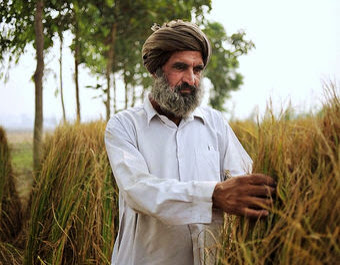
Rice Farmer in Punjab, India

“The impacts of climate change are likely to result in huge economic, social and environmental damage to South Asian countries, compromising their growth potential and poverty reduction efforts,” said the study, published by the Asian Development Bank.

The cuts in regional GDP are so deep that they might ripple around the world, as six developing countries with 1.4 billion people—a third of them living in poverty—pay the price of the world's continuing reliance on fossil fuels.

Projections like this feed into the urgency for action as world leaders prepare to meet at the United Nations next month to discuss the climate crisis. Recent warnings show that the steps nations seem willing to take will fall well short of what is needed.

Action now, the study shows, would pay immediate and lasting dividends to the countries it examined: Bangladesh, Bhutan, India, the Maldives, Nepal and Sri Lanka.

The study, published as a new 160-page book, says that if the world cuts fossil fuel consumption enough to keep warming within 2 degrees Celsius—the goal of UN negotiations—the costs to South Asian countries of adapting to rising seas and temperatures in the decades ahead might be cut almost in half.

But if business-as-usual continues, leading to a world that is 4 or 5 degrees warmer by 2100 than at the start of the industrial age, the outlook looks grim.

“Climate change will slash up to 9 percent off the South Asian economy every year by the end of this century if the world continues on its current fossil-fuel intensive path,” the bank said. “The human and financial toll could be even higher if the damage from floods, droughts, and other extreme weather events is included.”

Because this kind of estimate is inherently imprecise, the bank warned that the real damage could be much worse than expected. Under business-as-usual trends, there is a one in 20 chance that South Asia will lose 24 percent of its annual GDP by the end of the century, the study found.

Paying to stave off those damages will cost these nations dearly, the study said.

To avoid the damage that is expected if the world takes no action on climate change, South Asia would have to spend nearly $40 billion per year by 2050 on adaptation measures, or nearly half a percentage point of average annual GDP. By 2100, the costs would have to increase to $73 billion per year, or roughly nine-tenths of a point of GDP.

If the world were to achieve the 2-degree warming goal established by UN negotiators at climate treaty talks in Copenhagen in 2009—a goal also at the heart of culminating talks set for Paris in 2015—annual adaptation costs for South Asia would be considerably less: $31 billion a year at mid-century, and $41 billion at century's end.

And instead of losing nearly 9 percent of annual GDP by the end of the century, the study found, South Asia would lose about 2.5 percent by 2100 if the world lives up to the goals of Copenhagen. More


Leonardo DiCaprio Narrates Climate Change Films Urging Shift From Fossil Fuels to Renewables

Production company Tree Media, whose mission is to inspire positive social action, has just released the first of four films in the Green World Rising series focusing on solutions to the climate crisis.

The eight-minute film, CARBON, narrated by actor and dedicated environmentalist Leonardo DiCaprio, was created with support from the Leonardo DiCaprio Foundation and in collaboration with Thom Hartmann. The film’s goal is to draw attention to how some governments are already putting a price on carbon through carbon taxes and carbon trading to encourage polluters to shift from dirty energy sources to renewables prior to the UN Climate Summit in New York on Sep. 23. All four films will be released in the next month leading up to the summit.

“97% of climate scientists agree: climate change is happening now—and humans are responsible,” said DiCaprio. “We cannot sit idly by and watch the fossil fuel industry make billions at our collective expense. We must put a price on carbon—now.”

“We need serious action to address the most pressing issue of our time,” said Hartmann. “Communities across the world have taken action in the most direct and effective way possible by taxing and trading carbon. For us to beat this crisis, many more need to join.”

The film explains what a carbon tax and carbon trading are, how they can help us stop “using the atmosphere as a sewer,” as Joseph Romm of the Center for American Progress says in the film, and what ordinary people can do to push elected officials to act. More

Carbon


Published on Aug 20, 201 4 • CARBON is the first film in the Green World Rising Series, http:// www.greenworldrising.org “Carbon” is narrated by Leonardo DiCaprio, presented by Thorn Hartmann and directed by Leila Conners. Executive Producers are George DiCaprio, Earl Katz and Roee Sharon Peled. Carbon is produced by

Mathew Schmid and was written by Thorn Hartmann, Sam Sacks, Leila Conners and Mathew Schmid. Music is composed and performed by Jean-Pascal Beintus and intro drone by Francesco Lupica. Carbon is produced by Tree Media with the support of the Leonardo DiCaprio Foundation.

Tomgram: Patrick Cockburn, How to Ensure a Thriving Caliphate

Think of the new “caliphate” of the Islamic State, formerly the Islamic State in Iraq and Syria (ISIS), as George W. Bush and Dick Cheney's gift to the world (with a helping hand from the Saudis and other financiers of extremism in the Persian Gulf). How strange that they get so little credit for its rise, for the fact that the outlines of the Middle East, as set up by Europe’s colonial powers in the wake of World War I, are being swept aside in a tide of blood.

Had George and Dick not decided on their “cakewalk” in Iraq, had they not raised the specter of nuclear destruction and claimed that Saddam Hussein’s regime was somehow linked to al-Qaeda and so to the 9/11 attacks, had they not sent tens of thousands of American troops into a burning, looted Baghdad (“stuff happens”), disbanded the Iraqi army, built military bases all over that country, and generally indulged their geopolitical fantasies about dominating the oil heartlands of the planet for eternity, ISIS would have been an unlikely possibility, no matter the ethnic and religious tensions in the region. They essentially launched the drive that broke state power there and created the kind of vacuum that a movement like ISIS was so horrifically well suited to fill.

All in all, it’s a remarkable accomplishment to look back on. In September 2001, when George and Dick launched their “Global War on Terror” to wipe out — so they then claimed — “terrorist networks” in up to 60 countries, or as they preferred to put it, “drain the swamp,” there were scattered bands of jihadis globally, while al-Qaeda had a couple of camps in Afghanistan and a sprinkling of supporters elsewhere. Today, in the wake of the invasions of Afghanistan and Iraq and an air power intervention in Libya, after years of drone (and non-drone) bombing campaigns across the Greater Middle East, jihadist groups are thriving in Yemen and Pakistan, spreading through Africa (along with the U.S. military), and ISIS has taken significant parts of Iraq and Syria right up to the Lebanese border for its own bailiwick and is still expanding murderously, despite a renewed American bombing campaign that may only strengthen that movement in the long run.

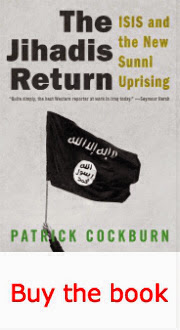
Has anyone covered this nightmare better than the world’s least embedded reporter, Patrick Cockburn of the British Independent? Not for my money. He’s had the canniest, clearest-eyed view of developments in the region for years now. As it happens, when he publishes a new book on the Middle East (the last time was 2008), he makes one of his rare appearances at TomDispatch. This month, his latest must-read work, The Jihadis Return: ISIS and the New Sunni Uprising, is out. Today, this website has an excerpt from its first chapter on why the war on terror was such a failure (and why, if Washington was insistent on invading someplace, it probably should have chosen Saudi Arabia). It includes a special introductory section written just for TomDispatch. Thanks go to his publisher, OR Books. Tom

Why Washington’s War on Terror Failed

The Underrated Saudi Connection

By Patrick Cockburn

[This essay is excerpted from the first chapter of Patrick Cockburn’s new book, The Jihadis Return: ISIS and the New Sunni Uprising, with special thanks to his publisher, OR Books. The first section is a new introduction written for TomDispatch.]

There are extraordinary elements in the present U.S. policy in Iraq and Syria that are attracting surprisingly little attention. In Iraq, the U.S. is carrying out air strikes and sending in advisers and trainers to help beat back the advance of the Islamic State of Iraq and the Levant (better known as ISIS) on the Kurdish capital, Erbil. The U.S. would presumably do the same if ISIS surrounds or attacks Baghdad. But in Syria, Washington’s policy is the exact opposite: there the main opponent of ISIS is the Syrian government and the Syrian Kurds in their northern enclaves. Both are under attack from ISIS, which has taken about a third of the country, including most of its oil and gas production facilities.

But U.S., Western European, Saudi, and Arab Gulf policy is to overthrow President Bashar al-Assad, which happens to be the policy of ISIS and other jihadis in Syria. If Assad goes, then ISIS will be the beneficiary, since it is either defeating or absorbing the rest of the Syrian armed opposition. There is a pretense in Washington and elsewhere that there exists a “moderate” Syrian opposition being helped by the U.S., Qatar, Turkey, and the Saudis. It is, however, weak and getting more so by the day. Soon the new caliphate may stretch from the Iranian border to the Mediterranean and the only force that can possibly stop this from happening is the Syrian army.

The reality of U.S. policy is to support the government of Iraq, but not Syria, against ISIS. But one reason that group has been able to grow so strong in Iraq is that it can draw on its resources and fighters in Syria. Not everything that went wrong in Iraq was the fault of Prime Minister Nouri al-Maliki, as has now become the political and media consensus in the West. Iraqi politicians have been telling me for the last two years that foreign backing for the Sunni revolt in Syria would inevitably destabilize their country as well. This has now happened.

By continuing these contradictory policies in two countries, the U.S. has ensured that ISIS can reinforce its fighters in Iraq from Syria and vice versa. So far, Washington has been successful in escaping blame for the rise of ISIS by putting all the blame on the Iraqi government. In fact, it has created a situation in which ISIS can survive and may well flourish.

Using the al-Qa'ida Label

The sharp increase in the strength and reach of jihadist organizations in Syria and Iraq has generally been unacknowledged until recently by politicians and media in the West. A primary reason for this is that Western governments and their security forces narrowly define the jihadist threat as those forces directly controlled by al-Qa‘ida central or “core” al-Qa‘ida. This enables them to present a much more cheerful picture of their successes in the so-called war on terror than the situation on the ground warrants.

In fact, the idea that the only jihadis to be worried about are those with the official blessing of al-Qa‘ida is naïve and self-deceiving. It ignores the fact, for instance, that ISIS has been criticized by the al-Qa‘ida leader Ayman al-Zawahiri for its excessive violence and sectarianism. After talking to a range of Syrian jihadi rebels not directly affiliated with al-Qa‘ida in southeast Turkey earlier this year, a source told me that “without exception they all expressed enthusiasm for the 9/11 attacks and hoped the same thing would happen in Europe as well as the U.S.”

Jihadi groups ideologically close to al-Qa‘ida have been relabeled as moderate if their actions are deemed supportive of U.S. policy aims. In Syria, the Americans backed a plan by Saudi Arabia to build up a “Southern Front” based in Jordan that would be hostile to the Assad government in Damascus, and simultaneously hostile to al-Qa‘ida-type rebels in the north and east. The powerful but supposedly moderate Yarmouk Brigade, reportedly the planned recipient of anti-aircraft missiles from Saudi Arabia, was intended to be the leading element in this new formation. But numerous videos show that the Yarmouk Brigade has frequently fought in collaboration with JAN, the official al-Qa‘ida affiliate. Since it was likely that, in the midst of battle, these two groups would share their munitions, Washington was effectively allowing advanced weaponry to be handed over to its deadliest enemy. Iraqi officials confirm that they have captured sophisticated arms from ISIS fighters in Iraq that were originally supplied by outside powers to forces considered to be anti-al-Qa‘ida in Syria. More


We Are Above the Law Declares County Attorney

August 20, 2014 “ICH” – Habersham County, Georgia, the jurisdiction that allowed intentionally or through negligence a SWAT team to break into a home with violent force in the middle of the night and throw a stun grenade into a baby’s face sending him to a hospital for weeks where he was in life support, has ruled that it would be illegal for the county to pay the baby’s medical bills. http://www.wsbtv.com/news/news/local/lawyer-county-refuses-pay-medical-bills-toddler-hu/ng3s9/

The negligence of the police, and thereby the county, is a triple dose. It was the wrong house. A SWAT team was unnecessary in order to exercise a search warrant for a drug suspect. There was no excuse for throwing a stun grenade into a baby’s crib.

But the county attorney has ruled that the county is not liable for these massive incidences of unbridled negligence.

However, the unjustifiable SWAT team assault on the family in the home was legal.

As the saying goes, “a fish rots from the head.” The rot in government accountability that began in Washington has now reached the local level. More

Dr. Paul Craig Roberts was Assistant Secretary of the Treasury for Economic Policy and associate editor of the Wall Street Journal. He was columnist for Business Week, Scripps Howard News Service, and Creators Syndicate. He has had many university appointments. His internet columns have attracted a worldwide following. Roberts' latest books are The Failure of Laissez Faire Capitalism and Economic Dissolution of the West and How America Was Lost.


Greenland ice loss doubles from late 2000s

A new assessment from Europe’s CryoSat spacecraft shows Greenland to be losing about 375 cu km of ice year.

The team has produced elevation models for the ice sheets

Added to the discharges coming from Antarctica, it means Earth’s two big ice sheets are now dumping roughly 500 cu km of ice in the oceans annually.

“The contribution of both ice sheets together to sea level rise has doubled since 2009,” said Angelika Humbert from Germany’s Alfred Wegener Institute.

“To us, that’s an incredible number,” she told BBC News.

In its report to The Cryosphere journal, the AWI team does not actually calculate a sea-level rise equivalent number, but if this volume is considered to be all ice (a small part will be snow) then the contribution is likely to be on the order of just over a millimetre per year.

This is the latest study to use the precision altimetry data being gathered by the European Space Agency’s CryoSat platform.

The satellite was launched in 2010 with a sophisticated radar instrument specifically designed to measure the shape of the polar ice sheets.

The AWI group, led by senior researcher Veit Helm, has taken just over two years’ worth of data centred on 2012/2013 to build what are called digital elevation models (DEMs) of Greenland and Antarctica, and to asses their evolution.

These models incorporate a total of 14 million individual height measurements for Greenland and another 200 million for Antarctica.

When compared with similar data-sets assembled by the US space agency’s IceSat mission between 2003 and 2009, the scientists are able then to calculate changes in ice volume beyond just the CryoSat snapshot.

Negative shifts are the result of surface melting and ice discharge; positive trends are the consequence of precipitation – snowfall.

Greenland is experiencing the biggest reductions in elevation currently, losing about 375 cu km a year (plus or minus 24 cu km per year), with most of the action occurring at the west and south-east coast of the continent.

Significant thinning is seen also in the North East Greenland Ice Stream (NEGIS).

“This has three outlet glaciers and one of these, the Zachariae Isstrom, has retreated quite a bit and some volume loss has already been reported. But we see now that this volume loss is really propagating to upper areas, much further into the interior of the ice sheet than has been recorded before,” explained Prof Humbert.

In Antarctica, the annual volume loss is about 128 cu km per year (plus or minus 83 cu km per year).

As other studies have found, this is concentrated in the continent’s western sector, in the area of the Amundsen Sea Embayment.

Big glaciers here, such as Thwaites and Pine Island, are thinning and retreating at a rapid rate.

Some thickening is seen also, such as in Dronning Maud Land, where colossal snowfalls have been reported. But this accumulation does not offset the losses occurring in West Antarctica.

A British-led group recently reported its own Antarctica DEM, using a different algorithm to process the numbers in the CryoSat data.

The AWI outcomes look very similar, and the German team has transferred the exact same approach to Greenland so it can have confidence in comparing the two continents.

The losses also look consistent with the analysis coming out of the American Grace mission, which uses a different type of satellite to monitor gravity changes in the polar regions – to, in essence, weigh the amount of ice being dumped into the sea.

Prof Andy Shepherd, who was part of the British group that reported its findings in May, commented: “This is yet another exciting result from CryoSat, thanks to the team at AWI, charting yet more new ground by providing the first complete survey of ice volume changes in Greenland.

“However, the increased ice losses that have been detected are a worrying reminder that the polar ice sheets are still experiencing dramatic changes, and will inevitably raise concerns about future global sea-level rise.” More


Beware, fellow plutocrats, the pitchforks are coming

Nick Hanauer: Beware, fellow plutocrats, the pitchforks are coming

Published on Aug 12, 2014 • Nick Hanauer is a rich guy, an unrepentant capitalist — and he has something to say to his fellow plutocrats: Wake up! Growing inequality is about to push our societies into conditions resembling prerevolutionary France. Hear his argument about why a dramatic increase in minimum wage could grow the middle class, deliver economic prosperity … and prevent a revolution.

TEDTalks is a daily video podcast of the best talks and performances from the TED Conference, where the world's leading thinkers and doers give the talk of their lives in 18 minutes (or less). Look for talks on Technology, Entertainment and Design – plus science, business, global issues, the arts and much more.

Find closed captions and translated subtitles in many languages at http://www.ted.com/translate

Follow TED news on Twitter: http://www.twitter.com/tednews

Like TED on Facebook: https ://www.facebook.com/TE D

Subscribe to our channel: http://www.youtube.com/user/TEDtalksDirector

Global campaign launched to improve weather & climate services for small island developing states (SIDS)

A global campaign to improve weather and climate services for all small island developing states was launched today with the support of the World Meteorological Organisation (WMO), the Secretariat of the Pacific Regional Environment Programme (SPREP) and Digicel Pacific.

The Small Islands, Weather Together campaign (www.weathertogether.org) aims to show how the small island developing states of the world can work together to improve their vital weather and climate services.

In the Pacific region alone, extreme weather already accounts for 76% of all disasters with 50% directly related to cyclones. The increase in extreme weather events is also hampering the sustainable development of many small island developing states. For example, when Cyclone Evan hit Samoa in December 2012 it resulted in the loss of one third of the country’s entire annual economic output.

WMO Secretary-General Michel Jarraud stresses that small island developing states need greater investment to further strengthen their vital weather and climate services and to ensure that efforts towards sustainable development are not wasted.

“If we don’t invest in stronger weather and climate services for small island developing states then extreme weather events could simply wipe out years of development effort if they are not well prepared. It is much more cost-effective to invest in early preparedness and prevention than to focus only on rehabilitation and post-disaster action,” he asserted.

Climate change is increasing the frequency and intensity of weather and climate events – cyclones, typhoons, drought, flash floods – in many small island developing states. But many of their Meteorological Services still lack the basic infrastructure, technology and expertise they need to protect vulnerable island communities and economies.

For Mr. Jarraud, there is an urgent need to enhance the quality of early warnings for extreme weather. He pointed out that the formulation and dissemination of these warnings also need to be improved so that they can be understood and used by the island communities and government agencies.

In the Pacific islands, SPREP and other partners are working to improve communication of this type of information in partnership with national meteorological services, the media, including broadcast stations and communities.

“SPREP recognises that weather forecasts and warnings such as those given during tropical cyclones do not have a shelf life, they must be disseminated rapidly to the public or else they are useless,” says SPREP Acting Director General Kosi Latu.

He further noted, “We can improve the quality of the forecasts and warnings so that countries and communities have more lead time to take action. But we can also improve the way climate information is used over longer time scales by farmers, fishermen and by decision-makers across government. For example, when planning new infrastructure, we can say ‘this place has a high risk of tsunami, flooding or storm surge, so don’t build things here’.”

Mr. Jarraud recalls that the small developing island states stand to suffer more and more if the global community fails to agree to a limit in greenhouse gas emissions, the main human cause of climate change and global warming.

“Greenhouse gas emissions are still on the rise. We need to reach a peak of emission over the next 15–20 years, then to decrease dramatically to zero equivalent emission in about 50–60 years from now.

“This is a huge challenge. We must act now. The more we wait, the more difficult it will be, and, therefore, the more expensive it will be for countries to adapt to climate change. If we do not act now, we are agreeing to leave the small island developing states in a situation which may no longer be manageable,” he warned.

The Small Islands, Weather Together campaign was launched specifically to coincide with the lead up to the United Nations Third International Conference on Small Island Developing States, which will be held in Apia, Samoa, from 1–4 September, 2014.

For more information visit: www.weathertogether.org