Can This Transform the Caribbean?

In the immortal words of Montserratian singer/songwriter, Arrow, the Caribbean is “…feelin’ hot, hot, hot!” And, that’s a good thing.
With a little help from Mother Nature, the islands of the Caribbean are learning to harness the power of high temperature geothermal energy beneath the earth’s surface.

In an effort to move away from reliance on expensive, fossil-fueled, diesel-powered generators toward a dependable, eco-friendly source of renewable energy, a number of forward-thinking Caribbean islands are aggressively searching for and identifying alternative sources of power beneath the surface.

Energy self-sufficiency, long sought-after by local governments may soon become a reality for some islands in the Caribbean.

While the road to sustainable geothermal power generation has no short cuts and faces a number of financial, administrative and physical challenges, the rewards can be substantial in the long-run.

Geothermal power produces an environmentally-friendly, long-lasting energy source that can provide electricity at significantly lower cost and, in some cases, may produce enough excess power, exported via submarine cables, to create a revenue stream between islands.

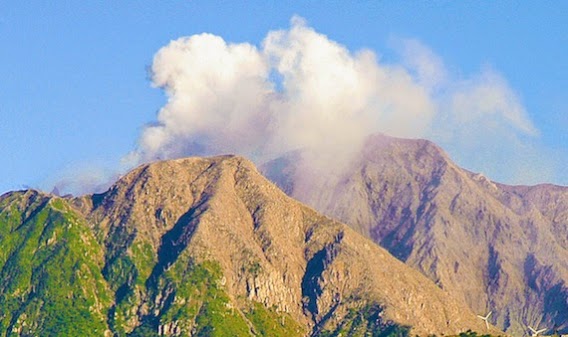
The Caribbean island of Montserrat is among the leaders in geothermal exploration.

It is also on a mission of rebirth from the devastation caused by the eruption of the Soufrière Volcano in the mid-1990s which destroyed the capital town of Plymouth, left more than half of the island’s residents homeless and covered more than 30 percent of the island with lava and ash.

Today, Montserrat has plans for a new capital town, a new port, a vibrant hospitality and tourism industry and the regeneration of private enterprise equipped with a sustainable infrastructure. Geothermal power will play a major role in this transformation.

Ironically, the same geological forces that created the Soufrière Volcano will now be harnessed to power the island’s electricity grid from a geothermal source. Iceland Drilling Company Ltd., a leading high-tech company in the field of high temperature deep geothermal drilling, has successfully tested two geothermal wells on Montserrat and the foundation is now in place for a third well backed by the UK government, part of its continuing support for the British Overseas Territory’s Master Plan for Growth.

It is our hope that Montserrat’s geothermal resources and sustainable, “green” energy infrastructure will attract environmentally-conscious developers and investors as “founding fathers” of our new capital town.

Ultimately, “going green” in Montserrat may help the nation move to the forefront in eco-tourism while driving a self-sufficient economic future.

In Dominica, geothermal exploration supported by the European Union brings with it the hopes of clean energy generation sufficient to supply the entire island and provide electricity for export as well.

Nevis, another volcanic island, is hoping to become a regional supplier of power to nearby St. Kitts, among others, and has said it intends to begin exploratory well-digging at various sites around the island.

Geothermal power has the possibility of transforming the Caribbean.

It will allow for a rise in the standard of living, an increase in job opportunities and a cleaner environment for residents and visitors to enjoy.

If nations can reduce, or eliminate, their reliance on expensive, environmentally harmful fossil fuels, they will not only pave the way for energy independence but also create an attractive environment for investors to support sustainable practices and economic development that will benefit the entire region. More


Leaders sign historic sustainable energy & climate resilient treaty

September 2: Over 150 delegates and members of the international development community from more than 45 countries were stunned to see leader after leader approach the podium to sign a historic sustainable energy and climate resilient treaty that will significantly change the lives and destiny of over 20 million small islanders, for the better.

Led by the Deputy Prime Minister of Samoa, Hon. Fonotoe Nuafesili Pierre Lauofo, multiple leaders from the Pacific, Caribbean and African, Indian Ocean and Mediterranean Sea (AIMS) regions, forcefully raised their voices in unison and accepted responsibility for fulfilling the commitment to the Small Island Developing States (SIDS) Sustainable Energy mechanism – SIDS DOCK. The opening for signature of this historic SIDS DOCK Treaty – a SIDS-SIDS Initiative – was a major highlight of the first day of the United Nations (UN) Third International Conference on SIDS, taking place in Apia, Samoa, from 1-4 September.

The unprecedented and unexpected number of Heads of State and Government present, sent a strong signal to the standing room only audience, the SIDS population and the international community, demonstrating how deeply committed SIDS leaders are and that they all firmly believe that SIDS must, have and will take responsibility for charting the future of their countries towards a path that would see a total transformation of the SIDS economy away from fossil fuels, to that of one driven by low carbon technologies. The event was considered so important to the Republic of Cabo Verde, that the Prime Minister, Hon. José Maria Neves, excused himself and his entire delegation from the Plenary Hall, to ensure that Cabo Verde, a SIDS DOCK Founding Member was well-represented at the signing – the Cabo Verde Government has one of the most ambitious plans in SIDS, that aims to achieve 100 penetration of renewable energies in Cabo Verde, by 2020.

More than half the members of the Alliance of Small Island States (AOSIS) were present for the signing of the historic treaty, witnessed by the SIDS DOCK partners Denmark, Japan and Austria, whose kind and generous support facilitated SIDS DOCK start -up activities; also present were SIDS DOCK partners, the United Nations Development Programme (UNDP), the World Bank, the United Nations Industrial Development Organization (UNIDO) and the Clinton

Foundation. The treaty was signed by the governments of Barbados, Belize, Bahamas (Commonwealth of the), Dominica (Commonwealth of), Cabo Verde (Republic of), Cook Islands, Dominican Republic, Fiji (Republic of), Grenada, Guinea Bissau, Kiribati (Republic of), Niue, Palau (Republic of), Saint Kitts and Nevis, Saint Vincent and the Grenadines, Samoa (Independent State of), Seychelles (Republic of), and Tuvalu.

The Statute will remain open for signature in Apia, Samoa until September 5, and will reopen for signature in Belmopan, Belize, from September 6, 2014 until it enters into force. Belize is the host country for SIDS DOCK, with Samoa designated as the location for the Pacific regional office. More


Why Island Wisdom Is Crucial to Help the World Adapt and Prepare for the Im

For decades, small island countries have been warning the world about the consequences of climate change. While many countries have been debating whether climate change is even happening or who is to blame, small islands have just had to deal with its impact, from extreme weather to rising sea levels and increasing environmental vulnerability.

Major storms have always been a fact of life for small islands. But in recent years they have intensified in their destructive capabilities. In 2004, Hurricane Ivan struck the Caribbean island of Grenada, causing widespread destruction. The financial cost of the disaster was estimated at more than $900 million – more than twice the country’s gross domestic product (GDP). Only 10 months later, the country was hit again, this time by Hurricane Emily, which caused another $50 million in damage.

In the Caribbean, changes in hurricane intensity and frequency could eventually result in additional annual losses of $450 million, largely due to disruption of a key source of revenue and jobs: tourism. Limited diversification and small market size means that small island economies are not resilient to disaster loss. This is true not just in the Caribbean, but the world over.

According to global risk models developed by the UN Office for Disaster Risk Reduction (UNISDR), six of the top 10 countries with the greatest proportion of resources at risk during hurricanes or cyclones are small islands. These losses will only increase due to sea-level rise, water scarcity, drought, and other factors.

The 38 small island developing states, which spread across the Caribbean, the Pacific and Indian Oceans, are not sitting and waiting for the next storm to hit. They have been taking measures to adapt to and manage the risks posed by climate change.

Several Caribbean islands came together seven years ago to create an insurance pool of easy-to-access disaster funding. Spreading the risk across countries reduces premiums and provides contributors with a safety net which can fund vital services when disaster strikes. Since 2007, more than $30 million has been paid out by the 16 participating countries. A similar initiative is under way in the Pacific region where the memories of the massive human toll and devastation due to Typhoon Haiyan that claimed more than 6,000 lives in the Philippines last November are still all too vivid.

Ideas and actions for reducing the risk from disasters will be at the forefront of the United Nations Conference on Small Island Developing States, to be held in Samoa from 1-4 September. The Conference will be a showcase for those living on the frontlines of climate change and could have a lasting and positive influence on the post-2015 development agenda.

The Conference is an acknowledgement by all the countries of the world of the unique circumstances that small island developing countries face. Their size, combined with their remoteness, and economies of scale, have made it that much more difficult for small islands to implement measures to become resilient. This is compounded by the impacts of climate change, a problem that is hardly of their own making as they collectively contribute less than 1 per cent of total greenhouse gas emissions. In fact, many are striving to become carbon neutral by using renewable energy, improving energy efficiency, and offsetting their greenhouse gas emissions.

Next week’s conference in Samoa is the first of two critical global gatherings. Just a few weeks later, on 23 September in New York, UN Secretary-General will host heads of State, CEOs and civil society leaders at the Climate Summit. The Summit aims to spur accelerated and ambitious actions to reduce emissions and build resilience to climate change worldwide, from the largest countries to the smallest island States. It’s about turning promises into performance.

With international attention on small islands, climate change and the post-2015 framework for disaster risk reduction, there has never been a better chance to turn the tide. Now is the time to listen, support and partner with those who have seen first-hand what climate change can do to your economy and your community. It would be one of the greatest tragedies of our time to continue to ignore the warnings from small islands; their issues will soon become our own. More

_________________

Han Seung-soo is the UN Secretary-General’s Special Envoy for Disaster Risk Reduction and Water and former Prime Minister of the Republic of Korea


Al Gore’s “Turning Point”

Eight years after Al Gore wrote a book and made a movie to impress upon us the “planetary emergency of global warming” (his subtitle for An Inconvenient Truth), he wrote an article with a more optimistic feel- ing in the 18 June 2014 issue of Rolling Stone. He begins “The Turning Point: New Hope for Climate” as follows:

Al Gore - Climate Reality Leadership Corp

In the struggle to solve the climate crisis, a powerful, largely unnoticed shift is taking place. The forward journey for human civilization will be difficult and dangerous, but it is now clear that we will ultimately prevail. The only question is how quickly we can accelerate and com- plete the transition to a low-carbon civilization.

The “surprising – even shocking – good news” is “our ability to convert sunshine into usable energy . . . much cheaper far more rapidly than anyone had predicted,” Gore writes: the cost of photovoltaic electricity is competitive with that from other sources in at least 79 countries, and the 43% decrease in cost of wind- generated electricity since 2009 has made it cheaper than coal-generated electricity. By 2020 more than 80% of world population will live where photovoltaic electricity is competi- tive with other sources.

As evidence of this “largely unnoticed shift,” he notes that Germany now generates 37% of its electricity from wind and solar, a percentage expected to reach 50% by 2020, and that nine of ten European coal and gas plants are losing money. Worldwide, capacity for 17 gi- gawatts of solar electricity was installed in 2010, for 39 in 2003, with expectations of 55 in 2014. China claims it will have a capacity of 70 solar gigawatts by 2017. (A gigawatt is the power generating capacity of a standard electric power plant.)

Gore states that in the U.S. 166 coal-fired plants have closed or announced closings in the last 4.5 years, and 183 proposed coal-fired plants have been canceled since 2005. He acknowledges that some of this shift from coal is to natural gas obtained by hydrofracturing (“fracking”) but focuses on the emergence of “on-site and grid battery storage and microgrids,” noting that the Edison Electric Institute (the U.S. utility trade group) has labeled this trend as the “largest near-term threat” to the present elec- tric utility system. He likens this threat to that posed by cell phones to the landline telephone system. He cites Citigroup’s recognition of the decreased cost of solar and wind electricity and battery storage (long seen as a barrier to intermittent energy from renewable). In addition, he notes a reduction of 49% in energy intensity (energy in- put per dollar output in gross domestic product) since 1980.

Gore observes that the Koch brothers have led the fight against rooftop solar electricity and for keeping the present fossil-fueled electric plants, one of their arguments being that net metering allows producers of solar electricity to benefit from the grid without paying for it. Al- though Gore neglects to mention that in net metering the utility pays the generator only the wholesale price for the surplus generation, he does note that solar electricity gen- eration has the advantage of peaking with electricity de- mand, thereby saving utilities from having to install new peak generation capacity (a point also made by keynoter Perez at the kickoff to develop the solar lessons for School Power Naturally, reported in our Winter 2003 issue).

Gore likens global warming to a fever for planet Earth and notes that the presently-gathering El Niño is expected to result in a pronounced global temperature increase. (Coverage in our Winter 2010 issue of a talk to the American Physical Society and the American Association of Physics Teachers on 15 February 2010 by Judith Lean of the Naval Research Laboratory attributes this to the phase of the 22-year solar cycle.) He correlates the de- struction from Supertyphoon Haiyan and Superstorm Sandy with greater surface water temperature (5.4oF for the former, 9oF for the latter). He notes that higher water temperatures also mean higher sea level and disruption of water supplies that depend on snowmelt. And he adds that even more severe catastrophes are in the offing, like the irreversible collapse of a portion of the West Antarc- tic ice sheet. In addition to heightened sea level, warmer climate also means an atmosphere capable of holding more water vapor and delivering more severe storms, as have been seen in Pensacola (FL), and Nashville (TN). At the same time, global warming will exacerbate the dryness of the drier parts of the Earth through greater evaporation of what little water there is in the ground. Gore also observes that climate change brings concern to the military for both the safety of its bases and the new types of world conflict it will have to deal with.

Gore concedes that these many “knock-on consequences of the climate crisis” are enough to cause anyone to despair. But, as he writes in his opening paragraph, “we will have to take care to guard against despair,” lest we become deterred from the action we must pursue. Though there be light at the end of the tunnel, he points out that we are in the tunnel. Among the things he says we need are “a price on carbon in our markets” and “green banks” to finance “green” projects.

“Damage has been done, and the period of consequences will continue for some time to come, but there is still time to avoid the catastrophes that most threaten our future.”

Though U.S. greenhouse gas emissions had decreased from 2008 to 2012, due to recovery from the recession, they increased 2.4% in 2013. Gore calls for the U.S. to match the European Union’s commitment to reduce carbon dioxide emissions 40% by 2030.

Gore’s concluding reasons for optimism are that “Rapid technological advancements in renewable energy are stranding carbon investments; grassroots movements are building opposition to the holding of such assets; and new legal restrictions on collateral flows of pollution . . . are further reducing the value of coal, tar sands, and oil and gas assets.” “Damage has been done,” he adds, “and the period of consequences will continue for some time to come, but there is still time to avoid the catastrophes that most threaten our future.”


How extensive is California’s drought?

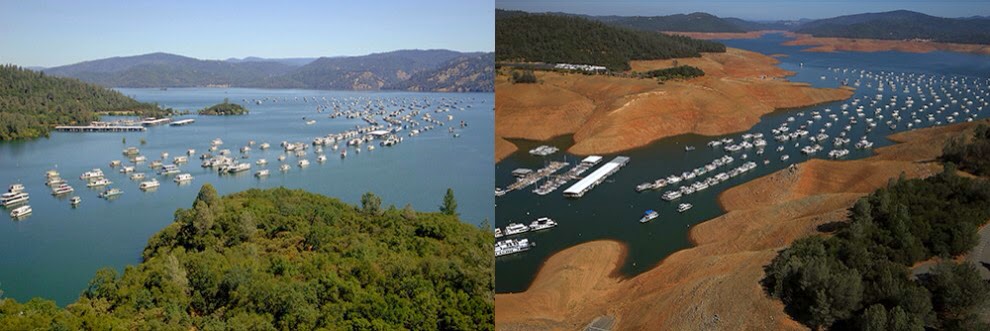
A snake-like trickle of water flows underneath Lake Oroville's Enterprise Bridge — just one striking example of how much California's chronic drought is affecting the state's lakes and reservoirs.

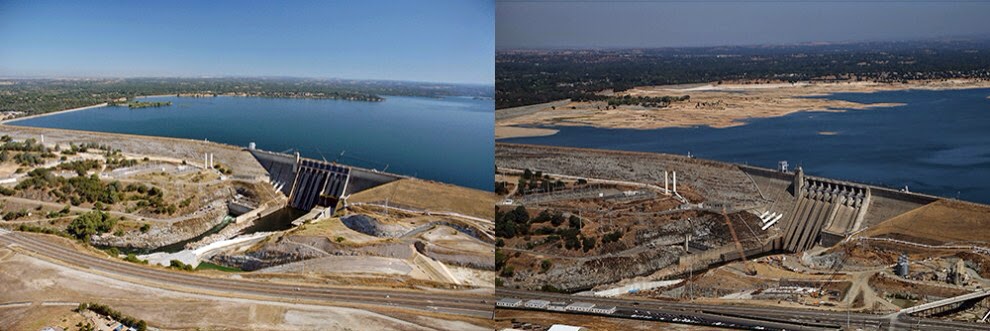
Situated at the foot of the Sierra Nevadas in Butte County, Lake Oroville is one of the largest reservoirs in California, second only to Shasta Lake. After enduring three straight years of drought, the lake is currently only filled to 32 percent of its capacity.

In any case, the drought in California is getting serious. Phase 2 of Los Angeles' mandatory water conservation ordinance is now in effect, which means a team of water-use inspectors are tasked with enforcing water restrictions and fining water wasters. If the drought continues through fall and winter, the ordinance will move to Phase 3, which entails even stricter rules and some prohibitions.

To get a better idea of the dire situation in the Golden State, continue below for a photo comparison of water levels taken in 2011 and 2014, looking at Lake Oroville and Folsom Lake, another major California reservoir located in Sacramento County that is now filled at 40 percent of its capacity.

Bidwell Marina, Lake Oroville

Folsam Dam, Folsom Lake

Enterprise Bridge, Lake Oroville


Global Climate Inaction Will Mean Economic Turmoil for South Asia, Warns Bank

The first comprehensive study ever issued on the economic costs that uncontrolled climate change would inflict on South Asia predicts a staggering burden that would hit the region's poorest the hardest.


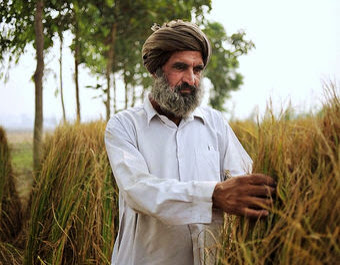
Rice Farmer in Punjab, India

“The impacts of climate change are likely to result in huge economic, social and environmental damage to South Asian countries, compromising their growth potential and poverty reduction efforts,” said the study, published by the Asian Development Bank.

The cuts in regional GDP are so deep that they might ripple around the world, as six developing countries with 1.4 billion people—a third of them living in poverty—pay the price of the world's continuing reliance on fossil fuels.

Projections like this feed into the urgency for action as world leaders prepare to meet at the United Nations next month to discuss the climate crisis. Recent warnings show that the steps nations seem willing to take will fall well short of what is needed.

Action now, the study shows, would pay immediate and lasting dividends to the countries it examined: Bangladesh, Bhutan, India, the Maldives, Nepal and Sri Lanka.

The study, published as a new 160-page book, says that if the world cuts fossil fuel consumption enough to keep warming within 2 degrees Celsius—the goal of UN negotiations—the costs to South Asian countries of adapting to rising seas and temperatures in the decades ahead might be cut almost in half.

But if business-as-usual continues, leading to a world that is 4 or 5 degrees warmer by 2100 than at the start of the industrial age, the outlook looks grim.

“Climate change will slash up to 9 percent off the South Asian economy every year by the end of this century if the world continues on its current fossil-fuel intensive path,” the bank said. “The human and financial toll could be even higher if the damage from floods, droughts, and other extreme weather events is included.”

Because this kind of estimate is inherently imprecise, the bank warned that the real damage could be much worse than expected. Under business-as-usual trends, there is a one in 20 chance that South Asia will lose 24 percent of its annual GDP by the end of the century, the study found.

Paying to stave off those damages will cost these nations dearly, the study said.

To avoid the damage that is expected if the world takes no action on climate change, South Asia would have to spend nearly $40 billion per year by 2050 on adaptation measures, or nearly half a percentage point of average annual GDP. By 2100, the costs would have to increase to $73 billion per year, or roughly nine-tenths of a point of GDP.

If the world were to achieve the 2-degree warming goal established by UN negotiators at climate treaty talks in Copenhagen in 2009—a goal also at the heart of culminating talks set for Paris in 2015—annual adaptation costs for South Asia would be considerably less: $31 billion a year at mid-century, and $41 billion at century's end.

And instead of losing nearly 9 percent of annual GDP by the end of the century, the study found, South Asia would lose about 2.5 percent by 2100 if the world lives up to the goals of Copenhagen. More


Leonardo DiCaprio Narrates Climate Change Films Urging Shift From Fossil Fuels to Renewables

Production company Tree Media, whose mission is to inspire positive social action, has just released the first of four films in the Green World Rising series focusing on solutions to the climate crisis.

The eight-minute film, CARBON, narrated by actor and dedicated environmentalist Leonardo DiCaprio, was created with support from the Leonardo DiCaprio Foundation and in collaboration with Thom Hartmann. The film’s goal is to draw attention to how some governments are already putting a price on carbon through carbon taxes and carbon trading to encourage polluters to shift from dirty energy sources to renewables prior to the UN Climate Summit in New York on Sep. 23. All four films will be released in the next month leading up to the summit.

“97% of climate scientists agree: climate change is happening now—and humans are responsible,” said DiCaprio. “We cannot sit idly by and watch the fossil fuel industry make billions at our collective expense. We must put a price on carbon—now.”

“We need serious action to address the most pressing issue of our time,” said Hartmann. “Communities across the world have taken action in the most direct and effective way possible by taxing and trading carbon. For us to beat this crisis, many more need to join.”

The film explains what a carbon tax and carbon trading are, how they can help us stop “using the atmosphere as a sewer,” as Joseph Romm of the Center for American Progress says in the film, and what ordinary people can do to push elected officials to act. More

Carbon


Published on Aug 20, 201 4 • CARBON is the first film in the Green World Rising Series, http:// www.greenworldrising.org “Carbon” is narrated by Leonardo DiCaprio, presented by Thorn Hartmann and directed by Leila Conners. Executive Producers are George DiCaprio, Earl Katz and Roee Sharon Peled. Carbon is produced by

Mathew Schmid and was written by Thorn Hartmann, Sam Sacks, Leila Conners and Mathew Schmid. Music is composed and performed by Jean-Pascal Beintus and intro drone by Francesco Lupica. Carbon is produced by Tree Media with the support of the Leonardo DiCaprio Foundation.

China Suffers Drought, Water Shortage

This summer has been one of the hottest in decades in Jilin Province, China, and several counties are facing the complete loss of their harvests.

Currently, Changling, Nongan, Gongzhuling and 10 other agricultural counties in Jilin are facing a severe drought. The severity of the drought is comparable to that in 1951.

A villager Ms. Lee from Wanglong village, Huajia Township, Nongan County, Changhun City, told Epoch Times: “The drought is very bad. All the corn leaves have turned yellow. Corns are not fully grown, only their tips are seen with barely any kernels.”

Since July 1 this year, the rainfall in Jilin Province totaled only 4.4 inches, which is about 48 percent less compared to the same period from previous years. This year had the second lowest rainfall in history; the least amount since 1951.

Over 14 million acres of farmland are affected.

Government data indicates the drought has impacted more than 1.3 million acres of farmland in the major agricultural areas of Jilin with no improvements in sight. According to the weather forecast, the average rainfall could be as low as a third of an inch per day.

Ms. Lee, a villager from Wanglong village said: “Even the water level of our own well is slowly dropping. It is only enough for domestic use. Our farmland has not been irrigated for over a month.”

Mr. Sun from Zhen-Chai village, Nongan County said that all their cucumber plants have perished from the drought.

Chinese media has reported two-thirds of the corn stalks have withered in some towns while others have completely perished.

Local governments have not taken any measure to tackle this problem and villagers are on their own. A staff member at Jilin Grain Bureau only briefly told Epoch Times that the situation was “unclear” and then hung up the phone.

Other Provinces Impacted

During the summer, a total of 12 provinces, including Shandong, Henan, Shaanxi Anhui, Hubei, Gangsu, and Xinjiang, have been affected by the drought. Over 14 million acres of farmland are affected.

Henan Province, for example, is witnessing the worst drought in the last 63 year with 740,000 people facing a temporary shortage of drinking water. In Shandong Province the cost of the lost harvest is reaching $630 million.

All these statistics put into question the recently announced food exports to Russia. After Russia announced it would stop importing food from Europe, the United States, and Australia, China immediately started building a warehouse on the Russian boarder to facilitate customs clearance for fruit going into Russia. More


Wednesday’s rainfall a ‘once in a 200-year’ weather event, climatologists say

Several weather records were broken Wednesday after 13.27 inches of rain fell at Islip Town's Long Island MacArthur Airport in what the Northeast Regional Climate Center calls a 24-hour 200-year storm event.

That means that “rainfall of this magnitude is only expected to occur once in a 200-year period,” according to the center's website.

At play was a complex weather system that the National Weather Service had been monitoring for days, warning of the threat of flash flooding, in which an upper level disturbance, a low pressure area at the surface and very moist environment all combined over the area, said Tim Morrin, weather service meteorologist in Upton.

The “bull's-eye” of the heaviest rainfall that deluged an area of western Suffolk was right near MacArthur Airport, he said.

“A very small micro-scale event took place” in that area, one that is yet to be explained, he said, but that will likely be researched extensively, with follow-up papers written. Such a phenomenon is “impossible to forecast,” he said, as “there's not enough skill in the computer models to pinpoint that kind of extreme” on such a small scale.

As for hourly rainfall, 5.34 inches fell from 5 to 6 a.m. Wednesday at the airport in Ronkonkoma, followed by another 4.37 inches from 6 to 7 a.m., according to the Climate Center. They may have come back-to-back, but each is considered a 500-year event, said Jessica Spaccio, a climatologist with the center, which is at Cornell University.

Records were also broken, and, “when we break a state record, that's pretty exciting,” Spaccio said

According to a preliminary report from the weather service, the previous New York State record for precipitation in a 24-hour period was broken. That was set Aug. 27 to 28, 2011, in Tannersville when 11.6 inches fell during what the service referred to as Hurricane/Tropical Storm Irene.

With half the month still to go, Wednesday's rainfall also resulted in a record for the month of August, previously 13.78 inches set in 1990, the weather service said. The airport's August rainfall now stands at 13.88 inches, said the weather service, which has maintained official records for the airport for the past 30 years.

While Long Island has been considered “abnormally dry” this year by the U.S. Drought Monitor, the 13.27 inches at the airport in just about one day exceeded normal rainfall for June, July and August combined — 11.68 inches — based on precipitation records from 1981 to 2010, according to the Climate Center.

Wednesday's rainfall also broke the airport's all-time daily rainfall record, which was 6.74 inches set Aug. 24, 1990, Spaccio said.

And as for the record rainfall for Aug. 13 — beating that was a piece of cake, with the previous record for that day 0.91 inches, set in 2013, the weather service said.

As for hourly rainfall amounts — top honors now go to Wednesday from 5 to 6 a.m. when 5.34 inches fell at the airport, followed by 4.37 inches the very next hour, Spaccio said. The highest previous amount was 2.64 inches, which fell in one hour on July 18, 2007. That's based on data maintained since July 1996, she said. More