Explaining Extreme Events of 2013

A report released today investigates the causes of a wide variety of extreme weather and climate events from around the world in 2013. Published by the Bulletin of the American Meteorological Society, “Explaining Extreme Events of 2013 from a Climate Perspective (link is external)” addresses the causes of 16 individual extreme events that occurred on four continents in 2013. NOAA scientists served as three of the four lead editors on the report.

Of the five heat waves studied in the report, human-caused climate change was found to have clearly increased the severity and likelihood of those events. On the other hand, for other events examined like droughts, heavy rain events, and storms, fingerprinting the influence of human activity was more challenging. Human influence on these kinds of events—primarily through the burning of fossil fuels—was sometimes evident, but often less clear, suggesting natural factors played a far more dominant role.

“This annual report contributes to a growing field of science which helps communities, businesses and nations alike understand the impacts of natural and human-caused climate change,” said Thomas R. Karl, L.H.D., director of NOAA’s National Climatic Data Center. “The science remains challenging, but the environmental intelligence it yields to decision makers is invaluable and the demand is ever-growing.”

Confidence in the role of climate change about any one event is increased when multiple groups using independent methods come to similar conclusions. For example, in this report, five independent research teams looked at specific factors related to the record heat in Australia in 2013. Each consistently found that human-caused climate change increased the likelihood and severity of that event. However, for the California drought, which was investigated by three teams from the United States, human factors were found not to have influenced the lack of rainfall. One team found evidence that atmospheric pressure patterns increased due to human causes, but the influence on the California drought remains uncertain.

When human influence for an event cannot be conclusively identified with the scientific tools available today, this means that if there is a human contribution, it cannot be distinguished from natural climate variability.

“There is great scientific value in having multiple studies analyze the same extreme event to determine the underlying factors that may have influenced it,” said Stephanie C. Herring, PhD, lead editor for the report at NOAA’s National Climatic Data Center. “Results from this report not only add to our body of knowledge about what drives extreme events, but what the odds are of these events happening again—and to what severity.”

The report was edited by Herring, along with Martin P. Hoerling, NOAA’s Earth System Research Laboratory; Thomas Peterson, NOAA’s National Climatic Data Center, and Peter A. Stott, UK Met Office Hadley Centre and written by 92 scientists from 14 countries. View the full report online (link is external).

Also, view the slides for the media briefing on the “Explaining Extreme Events of 2013 from a Climate Perspective” report. More


WHAT’S POSSIBLE: The U.N. Climate Summit Film

WHAT'S POSSIBLE: The U.N. Climate Summit Film

Published on Sep 23, 2014 • Presented to world leaders at the United Nations Climate Summit in New York, this short inspirational film shows that climate change is solvable. We have the technology to harness nature sustainably for a clean, prosperous energy future, but only if we act now. Narrated by Morgan Freeman, it calls on the people of the world to insist leaders get on the path of a livable climate and future for humankind.

Learn more about climate change and take action at takepart.com/climate.

WHAT'S POSSIBLE was created by director Louie Schwartzberg, writer Scott Z. Burns, Moving Art Studio, and Lyn

Davis Lear and the Lear Family Foundation.

SEQUEL ALERT! Sign up at MovingArt.com to be the first to hear about the launch of the sequel to WHAT'S

POSSIBLE: movingart.com/un/

Directed by Louie Schwartzberg

Written by Scott Z. Burns

Produced by Lyn Davis Lear

Narrated by Morgan Freeman

Music by Hans Zimmer


Climate Injustice – Excerpt from Disruption

‘When it comes to climate change, why do we do so little when we know so much?’

Through a relentless investigation to find the answer, Disruption takes an unflinching look at the devastating consequences of our inaction.

The exploration lays bare the terrifying science, the shattered political process, the unrelenting industry special interests and the civic stasis that have brought us to this social, moral and ecological crossroads.The film also takes us behind-the-scenes of the efforts to organize the largest climate rally in the history of the planet during the UN world climate summit.

This is the story of our unique moment in history. We are living through an age of tipping points and rapid social and planetary change. We’re the first generation to feel the impacts of climate disruption, and the last generation that can do something about it. The film enlarges the issue beyond climate impacts and makes a compelling call for bold action that is strong enough to tip the balance to build a clean energy future. More


Wastewater recycling, part of the solution to water shortage?

After the report on mountaineering and my experiences on the ascent to Mount Aconcagua, I return to the subject of water, and the opportunities and challenges in recycling it.

In earlier posts here I wrote about a very sophisticated system of wastewater recycling in Singapore, which turns it back into drinking water.

And at this year’s Singapore International Water Week, the Californian Orange County received the highest recognition, for a scheme where perfectly treated wastewater is pumped back into underground aquifers, to be later pumped up again as drinking water. It also serves as a barrier to seawater intrusion.

These two examples, especially Singapore, are probably the most far-reaching examples I know of achievement in water recycling.

Places like San Diego, hit by a drought, are now re-considering again the idea to follow the Singapore example, despite some opposition from civil society. So, to what extent is it possible to scale up these kinds of activities globally; is there potential for wastewater to contribute in a substantial way to closing the gap of some 300 cubic kilometres between the level of water withdrawals and sustainable supply?

Estimates show close to 300 cubic kilometres of wastewater is generated by municipalities per year (average 2003-12). This is the equivalent of some 50% of global average annual withdrawals for household use.

Part of the other 50% of withdrawals not counted as ‘wastewater’ may well be lost in leakage in pipes (in some countries this accounts for up to 70% of the water withdrawn by the municipal water supply schemes). Another part could be ‘used’ through evapotranspiration in lawns and gardens, etc.

As the table below shows, only about half of this wastewater is actually collected and treated, but less than 10% of the treated wastewater is directly reused.

Table 1: Municipal wastewater generation and treatment data 2003-2012, country groups by income per capita

Source: FAO aquastat


To get an idea of how municipal water could contribute to closing the gap between withdrawals and sustainable supply, let me go through the water supply chain.

The first step would require a better understanding of what happens with the 50% of municipal water apparently ‘disappearing’. Where this is down to leakage, governments have to set the right incentives so municipal water authorities address the issue.

One way proposed by the 2030 Water Resources Group (2030 WRG) in South Africa, which has been implemented by the government there, is to measure both water delivery and water intake, and to pay a premium to the schemes where the difference (i.e., water unaccounted for) gets smaller.

According to 2030 WRG cost-curve estimates, the cost savings would by far exceed the necessary spending to reduce the leakage.

As part of my proposals for targets within the water goal for post-2015 sustainable development, I suggest primary treatment of all wastewater by 2030 – an idea I will come back to in a later post.

So, what happens with 285 km³ of estimated wastewater generated, and what needs to be done? We will first have to increase collection, particularly in economically deprived areas, to make sure wastewater is collected and available for proper treatment.

Actually, only 36% of the world’s population has a sewage connection; this leaves 4.6 billion people unconnected. According to a WHO study, initial investment to set up a sewer connection is about USD 170 per capita; so the investment cost to connect them would be somewhere close to USD 800 billion. The annual cost of capital, repayment and operating cost is estimated at USD 1 per m³.

Next: treatment of both the up-to-now untreated collected – and the newly collected – wastewater. Estimates amount to USD 0.35 per m³. A big part of this cost is energy, an often forgotten link in the water-food-energy nexus framework.

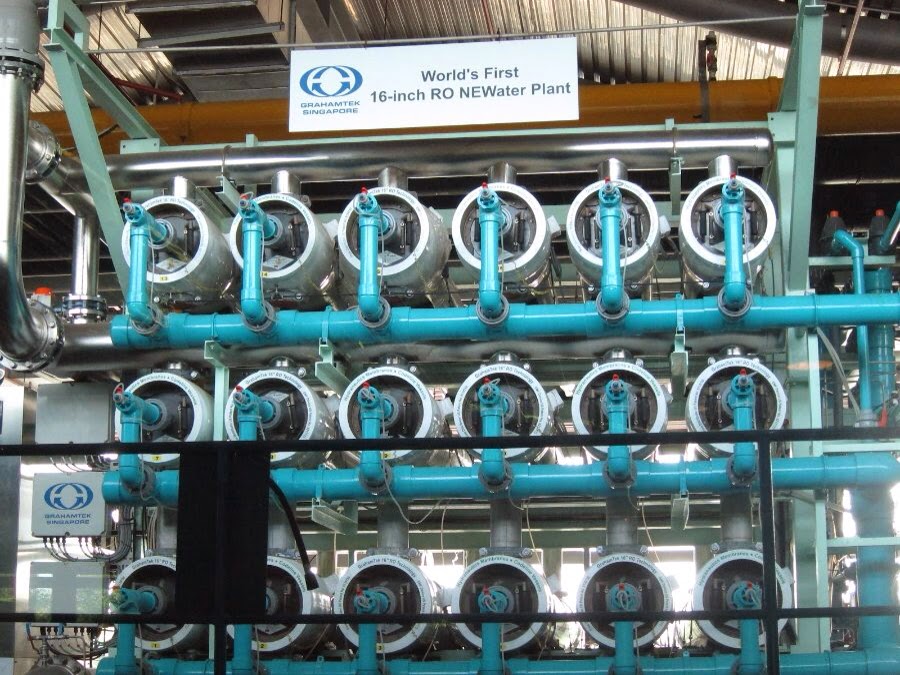
And last but not least: less than 10% of treated wastewater is used directly. This can and must be increased. Direct use is, for instance, the Singapore approach, bringing treated water back to consumers as so-called ‘NEWater’.

Another example is Australia: around 1.4 cubic kilometers of municipal wastewater are treated, of which 0.4 cubic kilometers are used directly, mostly in agriculture.

At Nestlé we have a similar approach. All our factories treat wastewater (in fact the first wastewater treatment plant in the group was built in the 1930s, so we understood the need for this very early) and as much of this treated wastewater as possible is used directly.

At the same time, we should keep in mind indirect use, even though it’s often difficult to measure. Treated wastewater is returned to rivers and then often withdrawn again and treated further for human consumption.

One might, for instance, assume that a significant part of the water in the River Thames, once it reaches London, is treated wastewater from communities further up the river. Increasing the share of direct use of wastewater should clearly be encouraged – in a form accepted by local communities.

So, all in all there are some significant opportunities to use treated wastewater as a resource, helping to close the gap between freshwater withdrawals and sustainable supply. But these opportunities need to be carefully evaluated, to make sure they are fully accepted, but also cost and energy effective when compared to other solutions. Via Peter Brabeck-Letmathe – Linkedin More


Why We March

On Sunday, September 21st, a huge crowd will march through the middle of Manhattan. It will almost certainly be the largest rally about climate change in human history, and one of the largest political protests in many years in New York.

More than 1,000 groups are coordinating the march — environmental justice groups, faith groups, labor groups — which means there’s no one policy ask. Instead, it’s designed to serve as a loud and pointed reminder to our leaders, gathering that week at the United Nations to discuss global warming, that the next great movement of the planet’s citizens centers on our survival and their pathetic inaction.

As a few of the march’s organizers, though, we can give some sense of why we, at least, are marching, words we think represent many of those who will gather at Columbus Circle for the walk through midtown Manhattan.

We march because the world has left the Holocene behind: scientists tell us that we’ve already raised the planet’s temperature almost one degree Celsius, and are on track for four or five by century’s end. We march because Hurricane Sandy filled the New York City subway system with salt water, reminding us that even one of the most powerful cities in the world is already vulnerable to slowly rising ocean levels.

We march because we know that climate change affects everyone, but its impacts are not equally felt: those who have contributed the least to causing the crisis are hit hardest, here and around the world. Communities on the frontlines of global warming are already paying a heavy price, in some cases losing the very land on which they live. This isn’t just about polar bears any more.

And we march for generations yet to come, our children, grandchildren and their children, whose lives will be systematically impoverished and degraded. It’s the first time one century has wrecked the prospects of the millennia to come, and it makes us mad enough to march.

We march with hope, too. We see a few great examples around the world of how quickly we could make the transition to renewable energy. We know that if there were days this summer when Germany generated nearly 75% of its power from renewable sources of energy, the rest of us could, too — especially in poorer nations around the equator that desperately need more energy. And we know that labor-intensive renewables would provide far more jobs than capital-intensive coal, gas and oil.

And we march with some frustration: why haven’t our societies responded to 25 years of dire warnings from scientists? We’re not naïve; we know that the fossil fuel industry is the 1% of the 1%. But sometimes we think we shouldn’t have to march. If our system worked the way it should, the world would long ago have taken the obvious actions economists and policy gurus have recommended — from taxing carbon to reflect the damage it causes to funding a massive World War II-scale transition to clean energy.

Marching is not all, or even most, of what we do. We advocate; we work to install solar panels; we push for sustainable transit. We know, though, that history shows marching is usually required, that reason rarely prevails on its own. (And we know that sometimes even marching isn’t enough; we’ve been to jail and we’ll likely be back.)

We’re tired of winning the argument and losing the fight. And so we march. We march for the beaches and the barrios. We march for summers when the cool breeze still comes down in the evening. We march because Exxon spends $100 million every day looking for more hydrocarbons, even though scientists tell us we already have far more in our reserves than we can safely burn. We march for those too weak from dengue fever and malaria to make the journey. We march because California has lost 63 trillion gallons of groundwater to the fierce drought that won’t end, and because the glaciers at the roof of Asia are disappearing. We march because researchers told the world in April that the West Antarctic ice sheet has begun to melt “irrevocably”; Greenland’s ice shield may soon follow suit; and the waters from those, as rising seas, will sooner or later drown the world’s coastlines and many of its great cities.

We don’t march because there’s any guarantee it will work. If you were a betting person, perhaps you’d say we have only modest hope of beating the financial might of the oil and gas barons and the governments in their thrall. It’s obviously too late to stop global warming entirely, but not too late to slow it down — and it’s not too late, either, to simply pay witness to what we’re losing, a world of great beauty and complexity and stability that has nurtured humanity for thousands of years.

There’s a world to march for — and a future, too. The only real question is why anyone wouldn’t march. More


Ongoing drought in Brazil brings rising tensions

The western USA is not the only place suffering from lack of rain, Latin America’s economic powerhouse has been struck hard by a powerful and ongoing water crisis.

The worst drought since records began 84 years ago has constrained the Brazillian economy in many ways, particularly coffee production, agriculture and hydroelectric power generation, which accounted for 80% of electricity generation. This power fuels the economic development on which millions are counting to rise out of poverty, and the loss has slowed the entire economy, due to the need to import expensive fossil fuels in order to keep the lights on and water pumps running (costing $6 billion extra so far this year, while increasing the country’s greenhouse gas emissions).


Water rationing has been imposed in many parts of the country for months, but the situation is approaching a critical point. Nineteen large cities are under water rationing rules, and the water catchment capacity feeding the megalopolis of Sao Paolo (20 million inhabitants and the economic capital of the entire continent) is down to 10%. Carefully husbanded, and tapping water usually deemed of inferior quality, there is enough left to squeeze out of the system for a hundred days consumption. States are now squabbling over allocation of the remaining water resources, and fighting has erupted sporadically in some rural areas.

In Sao Paolo itself, financial incentives to reduce consumption have been accompanied by cutting water pressure at night, effectively cutting off all the poorer areas of the city which sit on hills. In nearby Gaurulhos residents of some neighbourhoods are getting water one day in three. Balancing the competing needs of drinking water and power generation is also having societal consequences, exacerbating general social tension, and helping fuel reactions such as the protests and riots back in June.

The drought may be linked to climate change, since the rains that normally come south from evaporation in the Amazon basin failed to arrive, a potentially very worrying symptom. It also reveals some of the likely types of economic cost and societal tension that will arise and worsen as the world warms further and the consequences begin to bite. Some early spring rains appeared in Brazil this week, enough at least to halt the fall in Sao Paolo’s reserves, but the prognosis for the coming rainy season is still very uncertain.

Via Facebook –The Earth Story

Image credit: Reuters/Nacho Doce

http://www.theguardian.com/weather/2014/sep/05/brazil-drought-crisis-rationing
http://www.reuters.com/article/2014/02/12/us-brazil-economy-fiscal-idUSBREA1B1CY20140212
http://phys.org/news/2012-05-worst-drought-years-toll-northern.html


The Pale Blue Dot


THE SAGAN SERIES – The Pale Blue Dot

Published on Oct 21, 2013 • Facebook – http://www.facebook.com/thesaganseries

Twitter – http://twitter.com/reidgower

G+ – http://bit.lyA/pHzQh


The Sagan Series is an educational project working in the hopes of promoting scientific literacy in the general population. Created by ©ReidGower http://twitter.com/reidgower

Copyright Disclaimer Under Section 1 07 of the Copyright Act 1976, allowance is made for “fair use” for purposes such as criticism, comment, news reporting, teaching, scholarship, and research. Fair use is a use permitted by copyright statute that might otherwise be infringing. Non-profit, educational or personal use tips the balance in favor of fair use. All copyrighted materials contained herein belong to their respective copyright holders, I do not claim ownership over any of these materials. I realize no profit, monetary or otherwise, from the exhibition of these videos.


Drought apocalypse begins in California as wells run dry

(NaturalNews) Water wells in central California have begun to run dry, reports the LA Times. (1) “Extreme drought conditions have become so harsh for the Central Valley community of East Porterville [that] many of its residents dependent on their own wells have run out of water.”

Tulare County has confirmed their wells have run out of water, and so far hundreds of homes have no running water.

According to the LA Times, rumors are also spreading that Child Protective Services officials will begin taking children away from families who have no running water, although the county claims the rumor is false.

It begins: the collapse of California's water aquifers

With this news, it is now official that the collapse of California's water aquifers has begun. With each passing month and year, more and more wells will run dry across the state as California plummets into the desert conditions from which it once sprang.

Extreme drought now covers 82% of California, according to the National Drought Mitigation Center. (2) Fifty-eight percent of the state is in “exceptional drought.”

During the unfolding of this drought, California farmers and cities have siphoned unprecedented volumes of water out of the state's underground aquifers. This is called “fossil water” and it can take centuries to regenerate. Once this fossil water is used up, it's gone.

35-year “megadrought” may be on the way

“The southwestern United States has fifty percent change of suffering a 'megadrought' that lasts 35 years,” reports the Daily Mail. (3)

“They say global warming has meant the chance of a decade long drought is at least 50 percent, and the chances of a 'megadrought' – one that lasts up to 35 years – ranges from 20 to 50 percent over the next century.”

One scientist is quoted in the story as saying, “This will be worse than anything seen during the last 2,000 years and would pose unprecedented challenges to water resources in the region.”

Unless politicians become magical wizards and figure out a way to create water out of nothing, what all this really means is that cities of the American southwest will not be able to support present-day populations. A mass migration (evacuation) out of the cities will be necessary sooner or later.

California's water deficit will lead to ecological and economic collapse

In an almost perfect reflection of California's state budget deficits, the state is also running an unsustainable water deficit. It is a mathematical certainty that when you remove far more water from the aquifers than is being replenished, the amount of water remaining in those aquifers will eventually reach zero.

This “zero day” water reality is still psychologically denied by most Californians. If the reality of this situation were widely recognized, California would be experiencing a glut of real estate inventory as millions of homeowners tried to sell their properties and evacuate the state. The fact that the real estate market has not yet collapsed in California tells us that Californians are still living in a state of denial about the future of their water supply.

Even as California's water supply collapses by the day, local farmers and towns have few options other than drilling for more water. “Drill! Drill! Drill!” is the mantra of the day, creating an 18-month backlog for well drilling companies. Each new well that's drilled must seek to go deeper than the previous wells which are running dry. It's a literal race to the bottom which can only end in catastrophe.

Then again, a willful acceleration toward catastrophe is merely a sign of the times when it comes to human civilization. There is almost no area in which humans have ever achieved balance: not in fossil fuels, metals mining, fossil water exploitation, debt creation, industrial chemical contamination, ecological exploitation or even global population. It's almost as if the human race is determined to destroy itself while racing to see who can achieve self destruction first. More


ISIS and Our Times – Noam Chomsky

It is not pleasant to contemplate the thoughts that must be passing through the mind of the Owl of Minerva as the dusk falls and she undertakes the task of interpreting the era of human civilization, which may now be approaching its inglorious end.

Bajid Kandala refugee cam, Iraq

The era opened almost 10,000 years ago in the Fertile Crescent, stretching from the lands of the Tigris and Euphrates, through Phoenicia on the eastern coast of the Mediterranean to the Nile Valley, and from there to Greece and beyond. What is happening in this region provides painful lessons on the depths to which the species can descend.

The land of the Tigris and Euphrates has been the scene of unspeakable horrors in recent years. The George W. Bush-Tony Blair aggression in 2003, which many Iraqis compared to the Mongol invasions of the 13th century, was yet another lethal blow. It destroyed much of what survived the Bill Clinton-driven UN sanctions on Iraq, condemned as “genocidal” by the distinguished diplomats Denis Halliday and Hans von Sponeck, who administered them before resigning in protest. Halliday and von Sponeck's devastating reports received the usual treatment accorded to unwanted facts.

One dreadful consequence of the US-UK invasion is depicted in a New York Times “visual guide to the crisis in Iraq and Syria”: the radical change of Baghdad from mixed neighborhoods in 2003 to today's sectarian enclaves trapped in bitter hatred. The conflicts ignited by the invasion have spread beyond and are now tearing the entire region to shreds.

Much of the Tigris-Euphrates area is in the hands of ISIS and its self-proclaimed Islamic State, a grim caricature of the extremist form of radical Islam that has its home in Saudi Arabia. Patrick Cockburn, a Middle East correspondent for The Independent and one of the best-informed analysts of ISIS, describes it as “a very horrible, in many ways fascist organization, very sectarian, kills anybody who doesn't believe in their particular rigorous brand of Islam.”

Cockburn also points out the contradiction in the Western reaction to the emergence of ISIS: efforts to stem its advance in Iraq along with others to undermine the group's major opponent in Syria, the brutal Bashar Assad regime. Meanwhile a major barrier to the spread of the ISIS plague to Lebanon is Hezbollah, a hated enemy of the US and its Israeli ally. And to complicate the situation further, the US and Iran now share a justified concern about the rise of the Islamic State, as do others in this highly conflicted region.

Egypt has plunged into some of its darkest days under a military dictatorship that continues to receive US support. Egypt's fate was not written in the stars. For centuries, alternative paths have been quite feasible, and not infrequently, a heavy imperial hand has barred the way.

After the renewed horrors of the past few weeks it should be unnecessary to comment on what emanates from Jerusalem, in remote history considered a moral center.

Eighty years ago, Martin Heidegger extolled Nazi Germany as providing the best hope for rescuing the glorious civilization of the Greeks from the barbarians of the East and West. Today, German bankers are crushing Greece under an economic regime designed to maintain their wealth and power.

The likely end of the era of civilization is foreshadowed in a new draft report by the Intergovernmental Panel on Climate Change, the generally conservative monitor of what is happening to the physical world.

The report concludes that increasing greenhouse gas emissions risk “severe, pervasive and irreversible impacts for people and ecosystems” over the coming decades. The world is nearing the temperature when loss of the vast ice sheet over Greenland will be unstoppable. Along with melting Antarctic ice, that could raise sea levels to inundate major cities as well as coastal plains.

The era of civilization coincides closely with the geological epoch of the Holocene, beginning over 11,000 years ago. The previous Pleistocene epoch lasted 2.5 million years. Scientists now suggest that a new epoch began about 250 years ago, the Anthropocene, the period when human activity has had a dramatic impact on the physical world. The rate of change of geological epochs is hard to ignore.

One index of human impact is the extinction of species, now estimated to be at about the same rate as it was 65 million years ago when an asteroid hit the Earth. That is the presumed cause for the ending of the age of the dinosaurs, which opened the way for small mammals to proliferate, and ultimately modern humans. Today, it is humans who are the asteroid, condemning much of life to extinction.

The IPCC report reaffirms that the “vast majority” of known fuel reserves must be left in the ground to avert intolerable risks to future generations. Meanwhile the major energy corporations make no secret of their goal of exploiting these reserves and discovering new ones.

A day before its summary of the IPCC conclusions, The New York Times reported that huge Midwestern grain stocks are rotting so that the products of the North Dakota oil boom can be shipped by rail to Asia and Europe.

One of the most feared consequences of anthropogenic global warming is the thawing of permafrost regions. A study in Science magazine warns that “even slightly warmer temperatures [less than anticipated in coming years] could start melting permafrost, which in turn threatens to trigger the release of huge amounts of greenhouse gases trapped in ice,” with possible “fatal consequences” for the global climate.

Arundhati Roy suggests that the “most appropriate metaphor for the insanity of our times” is the Siachen Glacier, where Indian and Pakistani soldiers have killed each other on the highest battlefield in the world. The glacier is now melting and revealing “thousands of empty artillery shells, empty fuel drums, ice axes, old boots, tents and every other kind of waste that thousands of warring human beings generate” in meaningless conflict. And as the glaciers melt, India and Pakistan face indescribable disaster.

Sad species. Poor Owl.

© 2014 Noam Chomsky
Distributed by The New York Times Syndicate


Nearly Half the World’s Trash Is Burned, and That’s Worsening Climate Change

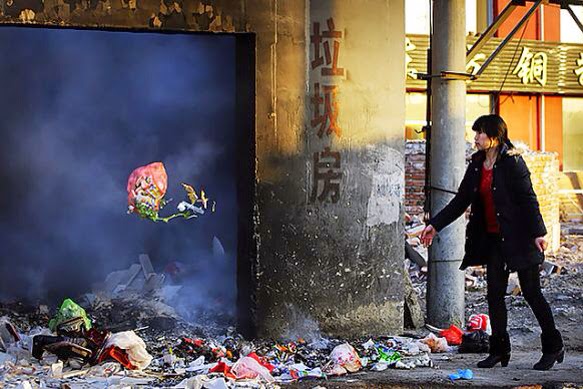
Nearly half the world’s trash is burned in the open, spewing pollutants into the atmosphere that contribute to climate change and affect human health, according to a new study.

Since such burning is largely unregulated and unreported, emissions of some pollutants have been underestimated by as much as 40 percent, said the researchers, who published their findings in the journalEnvironmental Science & Technology.

“I was shocked at the numbers,” said Christine Wiedinmyer, an atmospheric scientist at the National Center for Atmospheric Research and the study’s lead author. “They were much larger than I expected, particularly the air pollutants.”

The researchers estimated the amount of carbon dioxide, carbon monoxide, mercury, tiny particulate matter, and other pollutants released by burning trash.

Every year 970 million metric tons of food, paper, plastics, and metals are set aflame at homes, businesses, and dumps—roughly 41 percent of the world’s garbage, according to the study.

The garbage problem is likely to get worse. Researchers predict the world will triple its production of garbage to more than 11 million tons daily by 2100.

Fires can spring up at dumps with little warning. A fire in Iqaluit, the capital of the Canadian territory of Nunavut, broke out in May and burned for almost 100 days before fire crews began dousing the flames of the “dumpcano.” In March, a dump fire outside Bangkok blanketed neighborhoods with so much thick smoke that it could be seen by satellites.

Heavily populated countries, including China, the United States, India, Japan, Brazil, and Germany, produce the most waste, according to the study. China, India, Brazil, Mexico, Pakistan, and Turkey generate the most emissions from trash burning.

Trash burning produces mercury, chemicals known as polycyclic aromatic hydrocarbons, and fine particulate matter. These pollutants have been linked to heart and lung disease, neurological disorders, and cancer. Annual emissions of mercury and PAHs may have been underestimated by 10 to 40 percent, the researchers said.

Trash burning may also be clogging the air with far more particulate matter than was previously thought. A global tally of reported pollutants indicated that 34 million kilograms of tiny airborne particles called PM 2.5 are released into the air annually.

Wiedinmyer and her colleagues calculate that open burning shoots another 10 million kilograms into the atmosphere—an increase of 29 percent. In Sri Lanka, garbage burning produced five times more emissions of PM 10 (a larger particle) than was included in the official national tally.

These particles can penetrate deep into the lungs and have been associated with heart disease, asthma, and premature death. About 3.7 million people die prematurely from outdoor air pollution, according to the World Health Organization.

Open burning of garbage is closely related to poverty. Unregulated dump fires may be adjacent to settlements, putting the families that live there, especially women and children, at risk of health complications from the pollution. Some of these families derive income from the dump, removing valuable materials for resale.

The contribution of garbage burning to global carbon dioxide emissions is relatively small—only 5 percent of the 2010 global annual emissions. But on a country-by-country basis, it can be quite large. The study found that trash burning in Lesotho, Burundi, Mali, Somalia, and Sri Lanka produced more carbon dioxide than was recorded by the official registers.

Emissions from open burning of trash are rarely reported by environmental agencies, meaning the pollution goes uncounted and is left out of policy decisions.

Air Pollution Isn’t Just Bad for Your Health—It’s Taking Food off Your Plate

Brian Gullett, an environmental engineer at the United States Environmental Protection Agency and a coauthor of the paper, pointed out how difficult it is to calculate the emissions that come from open burning. Unlike with coal-burning power plants, no one knows the exact number of garbage-burning fires, and it can be difficult to trap and analyze the emissions.

Knowing where pollutants come from doesn’t change the burden they place on health, said Patrick Kinney, an expert on health and air pollution at Columbia University. But it does point to “which sources to go after in controlling the problem.”

Said Wiedinmyer, “If we’re looking at air pollution control strategies, we need to include all sources of air pollutants to get the most effective controls in place. If we’re missing a large source, it could lead to control strategies that aren’t going to work at all, or as well.” More