LA Imports Nearly 85 Percent of Its Water—Can It Change That by Gathering Rain?

The urban drainage-ways of Los Angeles can never quite look like wild creeks, but restoring some of their capacity to store, slow, and filter water fixes many problems at once.

Walk the glaring streets of Los Angeles’ San Fernando Valley on a sun-soaked afternoon in a drought year, the dry, brush-covered mountains rising behind you, and it can be easy to feel that you’re in arid country. “Beneath this building, beneath every street, there’s a desert,” said the fictional mayor in the Oscar-winning 1974 movie Chinatown. “Without water the dust will rise up and cover us as though we’d never existed!”

It’s an apocryphal idea. L.A. is not the Mojave but, climatically, more like Athens. Artesian springs, fed by rain in the mountains and hills, used to bubble up around Los Angeles, and farmers and Spanish missionaries grew fruit and olives in the Valley starting in the 18th and 19th centuries.

But the city has a history of treating its own raindrops and rivers as if they were more problematic than valuable. The L.A. River was prone to catastrophic floods in heavy rains, and, in the 20th century, engineers buried, straightened, and paved sections of the riverbed, flushing the water through concrete drainage channels to the Pacific Ocean. Then, to quench the thirst of its growing population, Los Angeles undertook a series of engineering feats that pumped water from the eastern Sierra Nevada Mountains, Northern California, and the Colorado River via hundreds of miles of pipes and reservoirs. Now the city typically imports more than 85 percent of its water from afar. And it’s as if the waters of Los Angeles disappeared from the consciousness of locals: Many Angelenos will tell you, mistakenly, that they live in a desert.

Now that story is changing again.

In the past decade and a half, a few local environmentalists have been collaborating with city and county officials to rewrite the plan for water here, driven by more and more urgent necessity. As winter temperatures rise in an era of climate change, the city’s distant water sources, fed by mountain snowmelt, are becoming less reliable. And drought years and battles over water allocation are adding to the difficulties. The State Water Project, which transfers water from the north to southern California, announced this year it would supply only five percent of the amount of water requested by agencies around the state (including the Metropolitan Water District of Southern California, which supplies parts of Los Angeles), because of the drought. Court rulings to protect endangered species have limited the amount of water L.A. and other cities can take from the Sacramento-San Joaquin Delta.

There’s no easy way for L.A. to get more water from distant sources, but new research from UCLA suggests that rainfall in the Los Angeles region is likely to stay the same on average in decades ahead.

Urban drainage in L.A. can never look like wild creeks, but restoring some capacity to store, slow, and filter water fixes many problems.

The city will need to become more water self-reliant to survive the rest of this century, and capturing local rain looks much more desirable than in the past. “There’s been a refocus on the value of local stormwater as a resource, not as a nuisance,” says Kerjon Lee, public affairs manager for the Los Angeles County Department of Public Works.

During the 1990s, in the flat landscape of Sun Valley, a San Fernando Valley neighborhood at the foot of the Verdugo Mountains, Los Angeles engineers and bureaucrats began re-imagining what one could do with raindrops.

Sun Valley never stopped acting as a tributary of the Los Angeles River, even as many of its lots filled, over the past several decades, with sand and gravel pits, auto body shops, junkyards, metals recycling plants, and miscellaneous blue-collar industries. Now two-thirds of the land here is covered with what engineers call an “impervious surface,” like concrete or asphalt, which water cannot penetrate. The more such surfaces there are in a neighborhood, the more rainwater tends to puddle up and flood. Heavy rain can make many of Sun Valley’s streets impassable. In one of the worst storms, about a decade ago, a sinkhole swallowed up part of a major street that used to be a riverbed, and a city engineer tumbled in and died.

Sun Valley is one of a few areas of L.A. not served by the massive drainage system that sends stormwater either to San Pedro or Santa Monica Bay. In the 1990s, the county planned to build a series of storm drains throughout the neighborhood—until a local environmentalist and gadfly named Andy Lipkis stepped in and asked them to reconsider.

Lipkis founded an organization called TreePeople in the mid-1970s, when he was just a teenager. The organization eventually made its headquarters on the site of an old fire station in Coldwater Canyon Park, on the high ridgeline along Mulholland Drive, named after the famous engineer who designed the first system to import water to the city on a large scale. There, among the breezy, fragrant slopes of oak and bay trees, you can see what Lipkis has been trying to tell locals his whole life: Much of Los Angeles is part forest and part river.

In 1998, Lipkis rigged a south L.A. house with water cisterns and rain gardens, gathered a group of local officials, and staged a deluge, aiming fire hoses at the roof. The group watched with amazement as the lot soaked up thousands of gallons of water.

He convinced them to consider what, at the time, was a more experimental and costly approach to managing water in Sun Valley, which overlies the San Fernando Valley Groundwater Basin, an aquifer that supplies about 13 percent of L.A.’s water. Lipkis argued that the county and city could begin to revive some of the features of a natural watershed. The urban drainage-ways of Los Angeles can never quite look like wild creeks, but restoring some of their capacity to store, slow, and filter water fixes many problems at once. When stormwater gushes across pavement, it picks up debris and contamination; when it soaks into soil and enters an aquifer, it is cleaner. Conventional storm drains would have only cost about $40 million, while TreePeople says its recommendations were nearly five times as expensive. But the organization’s own analysis suggested that the latter would return at least $300 million in benefits to the city.

“There’s been a refocus on the value of local stormwater as a resource, not as a nuisance.”

Water managers brought the options to stakeholders and residents in the mostly Latino, working-class neighborhood. They chose Lipkis’ approach. “The community didn’t want more concrete,” says Lee.

Alicia Gonzales moved to Sun Valley in 1985, as a nine-year-old, after her parents “fell in love with the house” on Elmer Avenue. Then she and her family watched as the rains poured through her yard, turning it from grass to mud. She remembers how the rain would form a torrent in the alley near her family’s house. “Trash and shopping carts would get stuck there,” she says.

She moved out as a young adult, then returned several years ago to help her father, who was struggling with severe diabetes and kidney disease and needed regular dialysis.

When the streets flooded, many kids in the neighborhood stayed home. Gonzales often wouldn’t drive her daughters to school on rainy days. “My car would get stuck,” she said.

Though Lipkis had sowed the ideas for a new way to manage water here, years passed before anyone found the funding and wherewithal to solve Elmer Avenue’s flooding problems. In 2004, L.A. County finalized a new stormwater plan for Sun Valley. Two years later, the county finished its first project. Under a baseball and soccer field in Sun Valley Park, a tree-lined oasis in the middle of an industrial district, engineers installed a retention tank that collects runoff from the surrounding streets. In 2007, the county Flood Control District spent nearly $4 million to build drains, catch basins, and a tiny corner park at an intersection that used to turn into a deep lagoon in heavy rain—and was a favorite location for news crews to shoot dramatic footage of local storms.

About eight years ago, employees of TreePeople appeared on Gonzales’ block. They said that her street was part of a watershed, and stormwater from the mountains was pouring into her backyard. (When Gonzales first met Andy Lipkis, she says he rhapsodized about her parents’ olive tree, nearly the only landscaping that had survived the flood damage.) An organization called the Council for Watershed Health had partnered with TreePeople to renovate her street.

“There’s been a refocus on the value of local stormwater as a resource, not as a nuisance.”

The Council for Watershed Health led the effort to pull apart the street and put in rain barrels, rain gardens, underground water tanks, and water-permeable walkways and driveways. Gonzales got one of a few special grants to replant her muddy yard, and volunteers showed up at her house to help with the landscaping. The alley became a pedestrian walkway that the project organizers dubbed The Paseo, a meandering sidewalk lined with native plants between concrete-block walls, painted with the words, “Water is the driving force of life.” In rainstorms now, the water runs through the landscaping, and kids walk the path to school. Neighbors water their drought-tolerant plants with rain barrels, but most of the rain soaks in under the street.

As small as these three projects were—a single city block, a corner park, and a soccer field—they have gotten the attention of the entire region: two Southern California regional water districts, several Los Angeles city and county agencies, the federal Bureau of Reclamation, and a number of state agencies got involved and provided funding for Elmer Avenue. These projects have become test cases for a much larger strategy to boost the water supply every time it rains across the entire region.

In Sun Valley, the county plans ultimately to capture nearly all of the rainwater that pours through the neighborhood. Next to Sun Valley Park, the city and county are planning to convert what is now a gravel pit and concrete plant into a 46-acre park that will collect in an average year about enough water to supply 4,000 Angelenos.

Their findings come at a crucial time. Crumbling infrastructure and a new court ruling are forcing the hands of local officials: A federal court has ordered the county to clean up the Los Angeles and San Gabriel Rivers, currently fouled by the dirt, grime, and toxins that wash from streets into storm drains. Meanwhile, billions of dollars worth of city water infrastructure is falling apart and has to be replaced before it breaks down.

The city of Santa Monica has set a goal to use only local water by 2020.

The city needs to both clean up its stormwater problem and find more water to drink. TreePeople says it could do both at once and is working with the City of Los Angeles to rewrite its entire stormwater management plan by next year. The county has undertaken a study, in partnership with the Bureau of Reclamation, to predict how climate change will affect local hydrology and what it can do to better capture stormwater. Water districts throughout the region are following suit: The Water Replenishment District of Southern California, which manages groundwater for parts of the region, has set a goal to wean itself off imported water altogether by treating and recycling wastewater and collecting more stormwater. The Council for Watershed Health released a study in 2012 estimating that the district could capture 5.5 billion gallons of water per year through more projects like Elmer Avenue.

The city of Santa Monica has set a goal to use only local water by 2020. The Los Angeles Department of Water and Power estimates that by 2035, it will import just over half of its water (down from 85 percent), meet 9 percent of its water needs by conserving more, and supply 28 percent by using local groundwater, capturing stormwater, and recycling water from sewage. Water recycling and stormwater projects aren’t cheap, but they’re typically less costly than building high-energy desalination plants that distill water from the ocean. A new desalination plant is going up in Carlsbad, south of Los Angeles. But if groups like TreePeople and the Council succeed, southern California may not need to build many more facilities like this.

“We’re looking at how we could shift the amount of water we currently squander.” says Edith de Guzman, a researcher at TreePeople. More

Madeline Ostrander wrote this article for Cities Are Now, the Winter 2015 issue of YES! Magazine. Ostrander is a contributing editor to YES! and a 2014 National Health Journalism Fellow. She lives in Seattle and writes about the environment and climate change.


Portraits of Resilience | Christine Germane | TEDxRenfrewCollingwood


Portraits of Resilience | Christine Germane | TEDxRenfrewCollingwood

Published on Nov 26, 201 4 • This talk was given at a local TEDx event, produced independently of the TED Conferences. Listen as photographer and educator Christine Germane tells the stories of Portraits of Resilience, a unique project that illustrates the ethical dimension of the climate change discussion through documenting and sharing the personal stories of indigenous youth. Since 2000, Christine Germane has been collaborating with Indigenous communities as a photographer, educator and curator. The international photojournalism project titled Portraits of Resilience has allowed her to work with indigenous youth to illustrate the personal and ethical effects of climate change on their communities. Since its creation in 2008, the project has occurred in 12 countries and has been exhibited internationally, including the launch at the National Museum of Denmark. With a range of education, awards, and project coordination experience within art and design under her belt, Christine’s exceptional work has provided youth with a medium to share their voice during a crucial period of time.

Twitter ©Germane Photo

Facebook Christine Germane Photography

Email: christinegermano@yahoo.com

Web http://www.christinegermano.com

Chris Hedges at The Earth at Risk Conference 2014

Chris Hedges at The Earth at Risk Conference 2014

Published on Nov 24, 201 4 • Interview with Chris Hedges at The Earth at Risk 2014 Conference and the moral imperative of resistance thru non-violent direct action and mass movements of sustained civil disobedience.


World Is Locked into ~1.5°C Warming & Risks Are Rising, New Climate Report Finds

World Is Locked into ~1.5°C Warming & Risks Are Rising, New Climate Report Finds

Latin America and the Caribbean

In Latin America and the Caribbean, the report warns of longer droughts, extreme weather, and increasing ocean acidification. In the tropical Andes, rising temperatures will reduce the annual build-up of glacier ice and the spring meltwater that some 50 million people in the low-land farms and cities rely on. Heat and drought stress will substantially increase the risk of large-scale forest loss, affecting Amazon ecosystems and biodiversity, as well as the forests’ ability to store carbon dioxide.

Rising temperatures also affect food security. The oceans, which have absorbed about 30 percent of all human-caused carbon dioxide so far, will continue to acidify and warm, damaging coral ecosystems where sea life thrives and sending fish migrating to cooler waters. The result for the Caribbean could be the loss of up to 50 percent of its current catch volume.

Middle East and North Africa

People in the Middle East and North Africa have been adapting to extreme heat for centuries, but the report warns of unprecedented impact as temperatures continue to rise. Extreme heat will spread across more of the land for longer periods of time, making some regions unlivable and reducing growing areas for agriculture, the report warns. Cities will feel an increasing heat island effect, so that by 4°C warming – possibly as early as the 2080s without action to slow climate change – most capital cities in the Middle East could face four months of exceedingly hot days every year Rising temperatures will put intense pressure on crops and already scarce water resources, potentially increasing migration and the risk of conflict. Climate change is a threat multiplier here – and elsewhere.

Eastern Europe and Central Asia

In Eastern Europe and Central Asia, the report shows how the impact of climate change will vary region to region. Melting glaciers and warming temperatures will shift the growing season and the flow of glacier-fed rivers further into spring in Central Asia, while in the Balkans in Eastern Europe, worsening drought conditions will put crops at risk. Rising temperatures also increase the thawing of permafrost, which releases methane, a potent greenhouse gas many times more powerful than carbon dioxide at trapping heat. By mid-century, if temperatures continue to rise toward 2°C, the release of methane from thawing permafrost is likely to increase 20 to 30 percent in Russia, creating a feedback loop that will drive climate change.

Working to Lower the Risk

“The good news is that there is a growing consensus on what it will take to make changes to the unsustainable path we are currently on,” President Kim said. “Action on climate change does not have to come at the expense of economic growth. At the World Bank, we are investing in energy efficiency and renewable energy to help countries lower their emissions while growing their economies, and in clean transportation that can put fast-growing cities onto more sustainable growth paths. We are also working with governments to design policies that support clean growth, including developing efficiency standards, reducing fossil fuel subsidies, and pricing carbon. It’s clear that the public sector cannot solve the climate challenge alone – private investment and smart business choices are crucial, but business leaders tell us they need governments to provide clear, consistent policy direction that reflects the true costs of emissions. We now screen our projects in 77 countries for climate risk and for opportunities for climate action. We are helping countries find opportunities in climate action and developing financial instruments to increase funding that can help them grow clean and build resilience.

“Our response to the challenge of climate change will define the legacy of our generation,” President Kim said. “The stakes have never been higher.” More


SPREP, Talihau Community Implement Beach Restoration Strategies


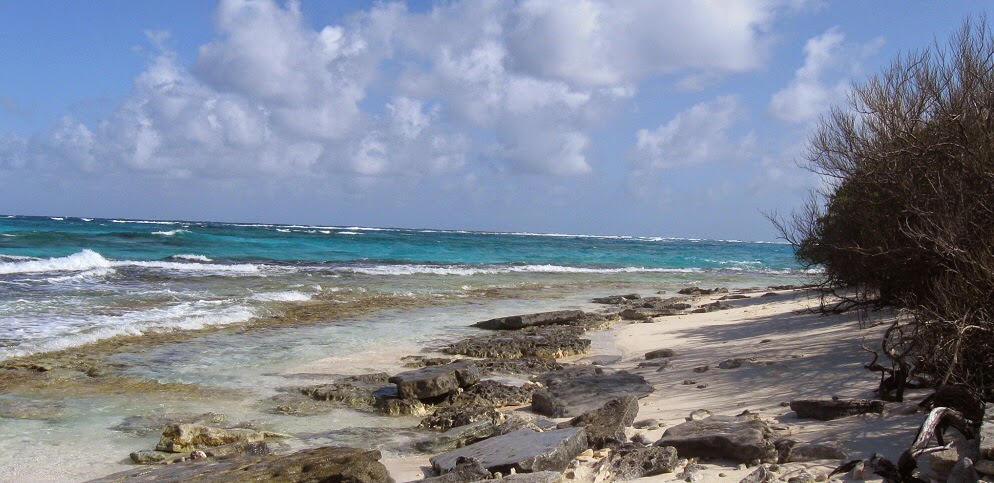
11 November 2014: An innovative approach to coastal erosion has been developed over the past two years as part of the coastal Ecosystem-based Adaptation project, which is implemented by the Secretariat of the Pacific Regional Environment Programme (SPREP) and funded by the Australian Government.


The approach, which aims to strengthen and rehabilitate beaches in the Pacific island region, has now been tested in the Talihau community in Vava'u, Tonga.


The beach rehabilitation guidelines and strategies have already been tested in Kiribati, Samoa and Vanuatu. They are designed to limit and, where possible, halt erosion on beaches in the region, and will, hopefully, be able to reverse the damage that has already occurred and increase coastal resilience to the impacts of sea-level rise.


The interventions are intended to be cost-effective, achievable and easily managed by local communities. In Vava'u, for example, representatives from all levels of government worked with community members to protect the degraded Talihau Paradise Beach from further erosion. The community of Talihau will continue to oversee the maintenance of the beach with assistance from the Tongan Ministry of Environment and the Vava'u Environmental Protection Association.


SPREP's Paul Anderson said that an assessment of the beach confirmed that human impacts were negatively impacting on the beach, with only six mature trees and no evidence of new growth, an indication of degradation caused by trampling from humans and animals. He discussed specific interventions, including fencing to prevent livestock from damaging beachside vegetation, preventing the mooring of boats on degraded areas, and talking to the community about the damaging impact of sand mining. Other interventions included replanting coastal vegetation and creating brush protection mats to build up the volume of sand. [SPREP News] More


‘Forest Man’ From Kerala, India

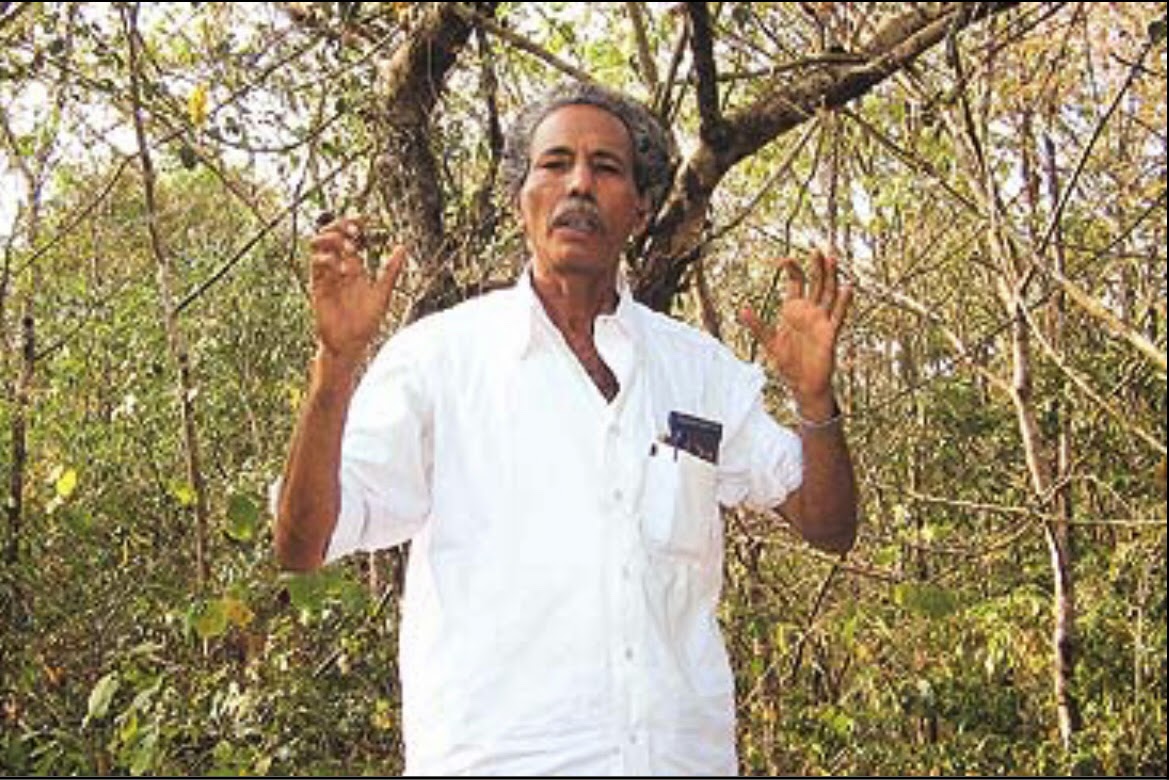
Almost 40 years ago, Abdul Kareem bought five acres of land in what was then a sparsely inhabited area in Kasargod district in Malabar, northern Kerala. As a travel agent his job involved travelling around five days a week. He thought he would use the land as a get-away to relax once in a while when he managed to get time off from his hectic work

Shortly after, he bought some more land, and in just a few years, his 30-odd acres were transformed into a thick, vibrant forest, making Abdul Kareem one of the few people in India to have actually created a forest—and that too almost single-handedly!

Abdul Kareem hadn’t bought the land in order to conserve the environment or do something about global warming, but in a while, as his forest grew, he turned into a passionate Nature lover, with his efforts bringing him numerous awards and much appreciation. ‘Caring for Nature is one major mission of my life,’ this enthusiastic, cheerful 68 year-old man says.

Abdul Kareem was born in a village near the sea. ‘There was no forest there, but you could see hills and jungles far away in the distance. As a child, I would fantasize about forests—they seemed so enchanting! Even then I loved plants, and I planted many saplings around my home.’ he says.

When Abdul Kareem bought the land, much of it was bare. The thick layer of laterite rock that covered much of the area did not allow for much vegetation to survive. But that did not deter this intrepid man. When he planted a hundred saplings, hoping to green the land, and only one survived (the rest wilted away in the heat), he did not give up. ‘I didn’t lose hope. I was inspired by the one sapling that survived!’ he relates. The next year he planted 500 saplings, and they all flourished!

Abdul Kareem lovingly tended to the saplings for a year, and after that they took care of themselves, with no human interference—not even needing to be watered or fertilized by human hands. ‘I let the forest grow naturally,’ he says. In a few years, the land was bursting with greenery, a dense forest hosting almost 300 plant species. Birds attracted by the foliage did their bit to help the forest grow by dropping seeds that they had picked up elsewhere.

Trudging along a mud-path that snakes its way through the forest, for a moment you might think you are in the middle of a wild life sanctuary, so dense is it! Abdul Kareem identifies certain plants as we move ahead. ‘This is an orchid!’ he says with childlike enthusiasm, ‘and that’s a shampoo tree! You can make shampoo out of it! Can you imagine! And that, there, is a medicinal plant!’

The hills around the forest were probably once under thick forest cover and home to numerous wild animals. Now, almost all the land is under cultivation—mainly cash crops like rubber—and the wildlife has probably almost completely disappeared. Abdul Kareem’s forest, however, attracts several species: wild boars, jackals, and, of course, snakes, butterflies, various insects and numerous birds, including peacocks.

We walk up to a little pond, and Abdul Kareem insists that I sample the water. ‘Natural water!’ he says gleefully. When I hesitate, he insists, ‘It’s very, very clean!’ He explains how by allowing the land to regenerate and turn into a forest, the water table in the area, which had sunk very low, has risen considerably. The temperature in and around the forest, he adds, is substantially less than elsewhere in the area. ‘See how even a little forest can make a difference to global warming!’ he exclaims.

As we head to the simple little cottage in the middle of the forest where he and his wife live, I ask Abdul Kareem if he makes any money out of the forest. ‘None at all. Earning from it is not my intention,’ he replies. ‘I don’t sell anything that comes from the forest.’

This large-hearted man allows his neighbours to draw water from the wells and ponds in the forest free of cost. For people who might want to pluck a few leaves or fruits of the medicinal plants that the forest abounds in he doesn’t charge anything.

‘A man from a top hotel chain once approached me. He wanted to buy the land to convert it into a hotel or an ayurvedic resort. He would have offered a huge sum of money, and even said I could remain here, in a small portion of the land, but I declined,’ Abdul Kareem says. ‘Even if you offer to let me stay in the White House, I’d rather stay in my forest! Almost all my children live in the Gulf, and although I occasionally visit them, I can’t get to stay there more than just a few days. After that, I pine to rush back to the forest!’

Land prices in the area have soared in recent years, and the cost of Abdul Kareem’s 32 acres of forest land must run into several crores of rupees now. Yet, the man is happy not earning any money from the forest, living in his simple home and making a living as a small travel agent and managing a petrol pump.

Truly amazing, isn’t it?

After taking me around the forest, Abdul Kareem says, ‘Spend the night here if you like. There’s a room here where you can stay. You can learn even more.’

The offer does seem tempting. For a moment, I imagine sitting in the verandah as the sun goes down, listening to frogs croaking and crickets chirping, and maybe even spotting a jackal on the prowl and then waking up to the plaintive cry of a peacock. But the auto-rickshaw I came in is waiting, and so I give Abdul Kareem a parting hug.

‘Your forest is truly amazing, and so are you!’ I say. More


IPCC’s Fifth Assessment Report on Climate Change. What does it mean for the Caribbean?IPCC’s Fifth Assessment Report on Climate Change. What does it mean for the Caribbean?

The Caribbean’s response to Climate Change is grounded in a firm regional commitment, policy and strategy. Our three foundation documents – The Liliendaal Declaration (July 2009), The Regional Framework for Achieving Development Resilient to Climate Change (July 2009) and its Implementation Plan (March 2012) – are the basis for climate action in the region.

The Fifth Assessment Report (AR5) of the United Nations Intergovernmental Panel on Climate Change (IPCC) underscores the importance, scientific rigour and utility of these landmark documents. The IPCC’s latest assessment confirms the Caribbean Community’s longstanding call to limit global temperature rise to 1.5 degrees celsius as outlined in the Liliendaal Declaration. At the Nations Nation Framework Convention on Climate Change (UNFCCC) Conference of the Parties (COP) Meeting in 2009, which took place in Copenhagen, Denmark, the Caribbean Community indicated to the world community that a global temperature rise above 1.50C would seriously affect the survival of the community.

In 2010 at the UNFCCC COP Meeting in Cancun, governments agreed that emissions ought to be kept at a level that would ensure global temperature increases would be limited to below 20C. At that time, the Alliance of Small Island States (AOSIS), which includes the Caribbean, re-iterated that any rise in temperature above 1.50C would seriously affect their survival and compromise their development agenda. The United Nations Human Development Report (2008) and the State of the World Report (2009) of The Worldwatch Institute supports this position and have identified 20C as the threshold above which irreversible and dangerous Climate Change will become unavoidable.

Accordingly, the Caribbean welcomes the IPCC’s Fifth Assessment Report prepared by over 2000 eminent scientists. It verifies observations in the Caribbean that temperatures are rising, extreme weather events are occurring more frequently, sea levels are rising, and there are more incidences of coral bleaching. These climatic changes will further exacerbate the limited availability of fresh water, agricultural productivity, result in more erosion and inundation, and increase the migration of fish from the Caribbean to cooler waters and more hospitable habitats. The cumulative effect is reduced food security, malnutrition, and productivity, thus increasing the challenges to achieving poverty reduction and socio-economic development.

The report notes that greenhouse gases emissions, the cause of Climate Change, continues to rise at an ever increasing rate. Unless this trend is arrested and rectified by 2050, global temperatures could rise by at least 4°C by 2100. This would be catastrophic for the Caribbean. However, the report is not all gloom and doom. More than half of the new energy plants for electricity are from renewable resources, a trend that must accelerate substantially if the goal of limiting global warming to below 2°C by 2100 is to remain feasible.

The IPCC AR5 Report should therefore serve as a further wake up call to our region that we cannot continue on a business as usual trajectory. It is an imperative that Climate Change be integrated in every aspect of the region’s development agenda, as well as its short, medium and long-term planning. The region must also continue to aggressively engage its partners at the bilateral and multilateral levels to reduce their emissions. The best form of adaptation is reduction in emissions level.

Dr Kenrick Leslie

The IPCC will adopt the Synthesis Report of the AR5 in Copenhagen, Denmark in late October 2014. Caribbean negotiators are already preparing to ensure that the most important information from the report are captured in the Synthesis Report.

See the highlights of the Caribbean Launch of the UN IPCC AR5 Report in this video:

Learn more about the implications of the IPCC AR5 Report via http://www.caribbeanclimate.bz and @CaribbeanClimate.

* Dr Kenrick Leslie is the Executive Director of the Caribbean Community Climate Change Centre, the regional focal point for Climate Change.

I’m fighting to keep my home above water

My name is Milañ Loeak, I’m from the Marshall Islands, and I bring you a message on behalf of my Climate Warrior brothers and sisters from across Oceania.

You’ve probably heard it all before — that the climate is changing, that the ocean is rising, that my home in the islands will be the first to go. But the people of the Pacific are not drowning, we are fighting. And the biggest threat to our homes is the fossil fuel industry.

So here’s how we’re fighting back: there’s a coal port in Newcastle, Australia and it’s the largest in the world, shipping approximately 617,000 tons of coal every single day. If the port were a country, it would be the 9th highest emitting country in the world. That’s why I have travelled to Australia to shut it down for a day.

Using traditional canoes, I and 30 other Pacific Climate Warriors are going to paddle into the oncoming path of coal ships. Behind us will be hundreds of Australians in kayaks, on surfboards and whatever else they can find, united with us as we stand up to the fossil fuel industry.

But we need more than hundreds of Australians standing with us — we are going to need you too.

The fossil fuel industry will try to dismiss us. They will launch their PR machine to say that we are just a small group acting alone and that we do not speak for others. But we know that we are not acting alone. We are standing with front line communities around the world when we say it is time to end our addiction to fossil fuels before it destroys our homes, our communities, and our culture.

As the Pacific Climate Warriors paddle into the water on October 17th, show that you stand with us — click here to sign on to our call for solidarity.

Stopping one day of coal exports alone won’t keep our homes above water, but it marks the rise of the Pacific Climate Warriors, and the beginning of our defense of the Pacific Islands.

I ask you to join us in this fight — because we cannot save the Pacific Islands on our own.

Warm Pacific wishes,

Milañ Loeak, Republic of the Marshall Islands


350.org is building a global climate movement. Become a sustaining donor to keep this movement strong and growing.


UNGA General Debate 2014 Addresses Climate Agreement, Financing, SIDS


United Nations27 September 2014: During days three and four of the UN General Assembly (UNGA) General Debate 2014, many speakers addressed climate change. Speakers focused on international and national action, including transitions to renewable energy, and financing. Small island developing States (SIDS) particularly urged action, emphasizing they are already experiencing adverse effects on food and water security, biodiversity and oceans.


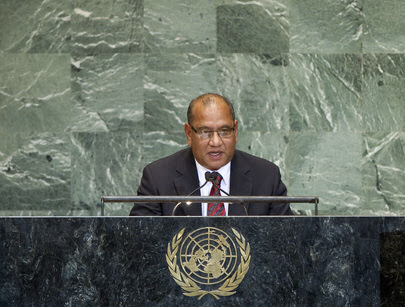
“Some members have criticized us for focusing too much on climate change and sea level rise, but these issues influence our every decision and affect every aspect of life on our islands,” said Christopher J. Loeak, President of the Marshall Islands, stressing that small island countries cannot afford to speak of climate change as a future threat. Tuilaepa Sailele Malielegaoi, Prime Minister of Samoa, underscored that apportioning blame serves no useful purpose, saying “those who exploit the traditional divide between developed and developing countries and ideological and political differences do so conveniently to mask their unwillingness to be part of the solution to an impending global catastrophe.” He suggested viewing the world as a single constituency where everyone must work together within the limits of their capacity and capability to address climate change. Charles Angelo Savarin, President of Dominica, Anote Tong, President of Kiribati, and Malielegaoi emphasized climate change is not an event in the future but an issue SIDS are already experiencing.


Several speakers commended the Climate Summit, welcoming its political momentum. Tong, Ikililou Dhoinine, President of the Comoros, Enele Sosene Sopoga, Prime Minister of Tuvalu, and Carlos Raúl Morales, Minister for Foreign Affairs of Guatemala, called for translating Summit commitments into action. Malielegaoi said the Summit underscored that the world is focusing more on symptoms of climate change than on the root causes.


Many supported a global, legally binding agreement on climate change by 2015, including Donald Rabindranauth Ramotar, President of Guyana, Tomislav Nikolić, President of Serbia, Alpha Condé, President of Guinea, Lubomír Zaorálek, Minister for Foreign Affairs of the Czech Republic, Salva Kiir, President of South Sudan, Frank-Walter Steinmeier, Minister for Foreign Affairs of Germany, Tong and Savarin. Malielegaoi said the agreement should be ambitious, effective, binding and capable of swift implementation. Hifikepunye Pohamba, President of Namibia, supported a coordinated global agreement. Denis Sassou Nguesso, President of the Republic of Congo, supported a binding agreement that included adaptation. Sopoga said a new protocol must: curb greenhouse gas (GHG) emissions; keep average temperature well below 1.5 degrees Celsius; include loss and damage and insurance mechanisms for SIDS; and provide adequate and accessible financing for SIDS' adaption support.


Noting Luxembourg will assume the Presidency of the Council of the EU in the second semester of 2015, Xavier Bettel, Prime Minister of Luxembourg, said his country would “spare no effort” to find an international agreement on climate, applicable to all countries, with the objective of keeping global warming below two degrees.


Sushil Koirala, Prime Minister of Nepal, supported a binding agreement on climate change with long-term and comprehensive global commitment based on common but differentiated responsibilities (CBDR), equity and respective capabilities. King Tupou VI of Tonga emphasized CBDR and equity principles.


Catherine Samba-Panza, President of the Transitional Government of the Central African Republic, urged ratification of the Doha amendment to the Kyoto Protocol.


Several speakers outlined national action on climate change, including Pohamba, Gjorge Ivanov, President of Macedonia, and Erlan A. Idrissov, Minister for Foreign Affairs of Kazakhstan. Bettel said the EU will present additional contributions to reduce GHG emissions and mitigate climate change, in accordance with the timetable agreed in Warsaw, Poland. At the national level, Bettel said Luxembourg is supporting carbon pricing.


Tong, Loeak and Tupou highlighted national action on adaptation and integrated disaster risk management (DRM). Tong said Kiribati's ‘migration with dignity' strategy is an investment in youth education to allow them to develop employable skills so that they can migrate to other countries voluntarily.


Several countries mentioned renewable energy efforts as part of contributions to addressing climate change, including Steinmeier, Sopoga, Nicos Anastasiades, President of Cyprus, Tomislav Nikolić, President of Serbia, and Morales. Savarin and Loeak described their efforts to increase renewable energy, including through SIDS DOCK, a platform for the development of sustainable energy in SIDS. Erlan A. Idrissov, Minister for Foreign Affairs of Kazakhstan, highlighted the promotion of best practices in sustainable energy, noting it is launching a project on the installation of biogas systems in nine Pacific SIDS. Sheikh Abdullah Bin Zayed Al Nahyan, Minister for Foreign Affairs of the United Arab Emirates (UAE), described his country's efforts and investments in renewable energy throughout the world. Muhammad Nawaz Sharif, Prime Minister of Pakistan, said his country's goals are aligned with the Sustainable Energy for All (SE4ALL) Initiative.


Emanuel Mori, President, Federated States of Micronesia, described its proposal to amend the Montreal Protocol to phase down the production and consumption of hydrofluorocarbons (HFCs), which are GHGs, to prevent temperature increases. He stressed success with the Montreal Protocol over the next six months is “our ticket to a successful outcome in Paris” and urged adoption of the HFC amendment.


On climate financing, Loeak urged the full capitalization of the Green Climate Fund (GCF) and other financial mechanisms to address climate change and support the post-2015 agenda. He applauded nations who have pledged specific amounts and urged delivery of real money by major economic powers who he said are also major polluters. Sopoga stressed adequate resources for the GCF, particularly access for SIDS. Nguesso identified innovative financing, technology transfer and capitalization of the GCF as critical. Koirala, Bangladesh and Serbia stressed financing for adaptation, with Koirala saying there should be special provisions for addressing least developed countries (LDCs) and SIDS mitigation and adaptation needs in additional to regular official development assistance (ODA). Bangladesh also recommended adequate, predictable and additional climate finance, support for capacity and institution building and access to locally adaptable technologies.


Bettel highlighted Luxembourg's contribution of 5 million Euros to the GCF, which is new and additional to its ODA. Steinmeier stated Germany's commitment of US$1 billion to the GCF.


Climate change should be included in the post-2015 agenda, according to Savarin and Morales. Sopoga supported a standalone Sustainable Development Goal (SDG) on climate change. Idrissov and San Marino highlighted links between climate change and sustainable development. Bangladesh reiterated the need to integrate the UNFCCC, DRR and SDG processes.


Tupou and Sopoga underscored the link between climate change and peace and security, with Tupou advocating for Ban to appoint a Special Representative on Climate and Security and Sopoga supporting addressing climate change and security through the UN Security Council. More


[UNGA General Debate 26 September 2014] [UNGA General Debate 27 September 2014] [UN Press Release on SIDS]


UNGA General Debate 2014 Addresses Climate Agreement, Financing, SIDS


United Nations27 September 2014: During days three and four of the UN General Assembly (UNGA) General Debate 2014, many speakers addressed climate change. Speakers focused on international and national action, including transitions to renewable energy, and financing. Small island developing States (SIDS) particularly urged action, emphasizing they are already experiencing adverse effects on food and water security, biodiversity and oceans.


“Some members have criticized us for focusing too much on climate change and sea level rise, but these issues influence our every decision and affect every aspect of life on our islands,” said Christopher J. Loeak, President of the Marshall Islands, stressing that small island countries cannot afford to speak of climate change as a future threat. Tuilaepa Sailele Malielegaoi, Prime Minister of Samoa, underscored that apportioning blame serves no useful purpose, saying “those who exploit the traditional divide between developed and developing countries and ideological and political differences do so conveniently to mask their unwillingness to be part of the solution to an impending global catastrophe.” He suggested viewing the world as a single constituency where everyone must work together within the limits of their capacity and capability to address climate change. Charles Angelo Savarin, President of Dominica, Anote Tong, President of Kiribati, and Malielegaoi emphasized climate change is not an event in the future but an issue SIDS are already experiencing.


Several speakers commended the Climate Summit, welcoming its political momentum. Tong, Ikililou Dhoinine, President of the Comoros, Enele Sosene Sopoga, Prime Minister of Tuvalu, and Carlos Raúl Morales, Minister for Foreign Affairs of Guatemala, called for translating Summit commitments into action. Malielegaoi said the Summit underscored that the world is focusing more on symptoms of climate change than on the root causes.


Many supported a global, legally binding agreement on climate change by 2015, including Donald Rabindranauth Ramotar, President of Guyana, Tomislav Nikolić, President of Serbia, Alpha Condé, President of Guinea, Lubomír Zaorálek, Minister for Foreign Affairs of the Czech Republic, Salva Kiir, President of South Sudan, Frank-Walter Steinmeier, Minister for Foreign Affairs of Germany, Tong and Savarin. Malielegaoi said the agreement should be ambitious, effective, binding and capable of swift implementation. Hifikepunye Pohamba, President of Namibia, supported a coordinated global agreement. Denis Sassou Nguesso, President of the Republic of Congo, supported a binding agreement that included adaptation. Sopoga said a new protocol must: curb greenhouse gas (GHG) emissions; keep average temperature well below 1.5 degrees Celsius; include loss and damage and insurance mechanisms for SIDS; and provide adequate and accessible financing for SIDS' adaption support.


Noting Luxembourg will assume the Presidency of the Council of the EU in the second semester of 2015, Xavier Bettel, Prime Minister of Luxembourg, said his country would “spare no effort” to find an international agreement on climate, applicable to all countries, with the objective of keeping global warming below two degrees.


Sushil Koirala, Prime Minister of Nepal, supported a binding agreement on climate change with long-term and comprehensive global commitment based on common but differentiated responsibilities (CBDR), equity and respective capabilities. King Tupou VI of Tonga emphasized CBDR and equity principles.


Catherine Samba-Panza, President of the Transitional Government of the Central African Republic, urged ratification of the Doha amendment to the Kyoto Protocol.


Several speakers outlined national action on climate change, including Pohamba, Gjorge Ivanov, President of Macedonia, and Erlan A. Idrissov, Minister for Foreign Affairs of Kazakhstan. Bettel said the EU will present additional contributions to reduce GHG emissions and mitigate climate change, in accordance with the timetable agreed in Warsaw, Poland. At the national level, Bettel said Luxembourg is supporting carbon pricing.


Tong, Loeak and Tupou highlighted national action on adaptation and integrated disaster risk management (DRM). Tong said Kiribati's ‘migration with dignity' strategy is an investment in youth education to allow them to develop employable skills so that they can migrate to other countries voluntarily.


Several countries mentioned renewable energy efforts as part of contributions to addressing climate change, including Steinmeier, Sopoga, Nicos Anastasiades, President of Cyprus, Tomislav Nikolić, President of Serbia, and Morales. Savarin and Loeak described their efforts to increase renewable energy, including through SIDS DOCK, a platform for the development of sustainable energy in SIDS. Erlan A. Idrissov, Minister for Foreign Affairs of Kazakhstan, highlighted the promotion of best practices in sustainable energy, noting it is launching a project on the installation of biogas systems in nine Pacific SIDS. Sheikh Abdullah Bin Zayed Al Nahyan, Minister for Foreign Affairs of the United Arab Emirates (UAE), described his country's efforts and investments in renewable energy throughout the world. Muhammad Nawaz Sharif, Prime Minister of Pakistan, said his country's goals are aligned with the Sustainable Energy for All (SE4ALL) Initiative.


Emanuel Mori, President, Federated States of Micronesia, described its proposal to amend the Montreal Protocol to phase down the production and consumption of hydrofluorocarbons (HFCs), which are GHGs, to prevent temperature increases. He stressed success with the Montreal Protocol over the next six months is “our ticket to a successful outcome in Paris” and urged adoption of the HFC amendment.


On climate financing, Loeak urged the full capitalization of the Green Climate Fund (GCF) and other financial mechanisms to address climate change and support the post-2015 agenda. He applauded nations who have pledged specific amounts and urged delivery of real money by major economic powers who he said are also major polluters. Sopoga stressed adequate resources for the GCF, particularly access for SIDS. Nguesso identified innovative financing, technology transfer and capitalization of the GCF as critical. Koirala, Bangladesh and Serbia stressed financing for adaptation, with Koirala saying there should be special provisions for addressing least developed countries (LDCs) and SIDS mitigation and adaptation needs in additional to regular official development assistance (ODA). Bangladesh also recommended adequate, predictable and additional climate finance, support for capacity and institution building and access to locally adaptable technologies.


Bettel highlighted Luxembourg's contribution of 5 million Euros to the GCF, which is new and additional to its ODA. Steinmeier stated Germany's commitment of US$1 billion to the GCF.


Climate change should be included in the post-2015 agenda, according to Savarin and Morales. Sopoga supported a standalone Sustainable Development Goal (SDG) on climate change. Idrissov and San Marino highlighted links between climate change and sustainable development. Bangladesh reiterated the need to integrate the UNFCCC, DRR and SDG processes.


Tupou and Sopoga underscored the link between climate change and peace and security, with Tupou advocating for Ban to appoint a Special Representative on Climate and Security and Sopoga supporting addressing climate change and security through the UN Security Council. More


[UNGA General Debate 26 September 2014] [UNGA General Debate 27 September 2014] [UN Press Release on SIDS]