China Suffers Drought, Water Shortage

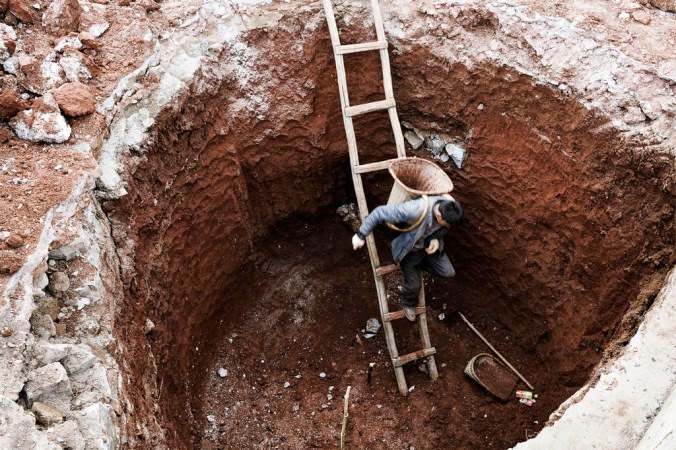
This summer has been one of the hottest in decades in Jilin Province, China, and several counties are facing the complete loss of their harvests.

Currently, Changling, Nongan, Gongzhuling and 10 other agricultural counties in Jilin are facing a severe drought. The severity of the drought is comparable to that in 1951.

A villager Ms. Lee from Wanglong village, Huajia Township, Nongan County, Changhun City, told Epoch Times: “The drought is very bad. All the corn leaves have turned yellow. Corns are not fully grown, only their tips are seen with barely any kernels.”

Since July 1 this year, the rainfall in Jilin Province totaled only 4.4 inches, which is about 48 percent less compared to the same period from previous years. This year had the second lowest rainfall in history; the least amount since 1951.

Over 14 million acres of farmland are affected.

Government data indicates the drought has impacted more than 1.3 million acres of farmland in the major agricultural areas of Jilin with no improvements in sight. According to the weather forecast, the average rainfall could be as low as a third of an inch per day.

Ms. Lee, a villager from Wanglong village said: “Even the water level of our own well is slowly dropping. It is only enough for domestic use. Our farmland has not been irrigated for over a month.”

Mr. Sun from Zhen-Chai village, Nongan County said that all their cucumber plants have perished from the drought.

Chinese media has reported two-thirds of the corn stalks have withered in some towns while others have completely perished.

Local governments have not taken any measure to tackle this problem and villagers are on their own. A staff member at Jilin Grain Bureau only briefly told Epoch Times that the situation was “unclear” and then hung up the phone.

Other Provinces Impacted

During the summer, a total of 12 provinces, including Shandong, Henan, Shaanxi Anhui, Hubei, Gangsu, and Xinjiang, have been affected by the drought. Over 14 million acres of farmland are affected.

Henan Province, for example, is witnessing the worst drought in the last 63 year with 740,000 people facing a temporary shortage of drinking water. In Shandong Province the cost of the lost harvest is reaching $630 million.

All these statistics put into question the recently announced food exports to Russia. After Russia announced it would stop importing food from Europe, the United States, and Australia, China immediately started building a warehouse on the Russian boarder to facilitate customs clearance for fruit going into Russia. More


Wednesday’s rainfall a ‘once in a 200-year’ weather event, climatologists say

Several weather records were broken Wednesday after 13.27 inches of rain fell at Islip Town's Long Island MacArthur Airport in what the Northeast Regional Climate Center calls a 24-hour 200-year storm event.

That means that “rainfall of this magnitude is only expected to occur once in a 200-year period,” according to the center's website.

At play was a complex weather system that the National Weather Service had been monitoring for days, warning of the threat of flash flooding, in which an upper level disturbance, a low pressure area at the surface and very moist environment all combined over the area, said Tim Morrin, weather service meteorologist in Upton.

The “bull's-eye” of the heaviest rainfall that deluged an area of western Suffolk was right near MacArthur Airport, he said.

“A very small micro-scale event took place” in that area, one that is yet to be explained, he said, but that will likely be researched extensively, with follow-up papers written. Such a phenomenon is “impossible to forecast,” he said, as “there's not enough skill in the computer models to pinpoint that kind of extreme” on such a small scale.

As for hourly rainfall, 5.34 inches fell from 5 to 6 a.m. Wednesday at the airport in Ronkonkoma, followed by another 4.37 inches from 6 to 7 a.m., according to the Climate Center. They may have come back-to-back, but each is considered a 500-year event, said Jessica Spaccio, a climatologist with the center, which is at Cornell University.

Records were also broken, and, “when we break a state record, that's pretty exciting,” Spaccio said

According to a preliminary report from the weather service, the previous New York State record for precipitation in a 24-hour period was broken. That was set Aug. 27 to 28, 2011, in Tannersville when 11.6 inches fell during what the service referred to as Hurricane/Tropical Storm Irene.

With half the month still to go, Wednesday's rainfall also resulted in a record for the month of August, previously 13.78 inches set in 1990, the weather service said. The airport's August rainfall now stands at 13.88 inches, said the weather service, which has maintained official records for the airport for the past 30 years.

While Long Island has been considered “abnormally dry” this year by the U.S. Drought Monitor, the 13.27 inches at the airport in just about one day exceeded normal rainfall for June, July and August combined — 11.68 inches — based on precipitation records from 1981 to 2010, according to the Climate Center.

Wednesday's rainfall also broke the airport's all-time daily rainfall record, which was 6.74 inches set Aug. 24, 1990, Spaccio said.

And as for the record rainfall for Aug. 13 — beating that was a piece of cake, with the previous record for that day 0.91 inches, set in 2013, the weather service said.

As for hourly rainfall amounts — top honors now go to Wednesday from 5 to 6 a.m. when 5.34 inches fell at the airport, followed by 4.37 inches the very next hour, Spaccio said. The highest previous amount was 2.64 inches, which fell in one hour on July 18, 2007. That's based on data maintained since July 1996, she said. More


2028: The End of the World As We Know It?

“There is nothing radical in what we’re discussing,” journalist and climate change activist Bill McKibben said before a crowd of nearly 1,000 at the University of California Los Angeles last night. “The radicals work for the oil companies.”

Bill McKibben

Taken on its own, a statement like that would likely sound hyperbolic to most Americans—fodder for a sound bite on Fox News. Anyone who saw McKibben’s lecture in full, however, would know he was not exaggerating.

McKibben was in Los Angeles as part of his nationwide “Do the Math” tour. Based on a recent article of his in Rolling Stone, (“The one with Justin Bieber on the cover,” McKibben joked) the event is essentially a lecture circuit based on a single premise: climate change is simple math—and the numbers do not look good. If immediate action isn’t taken by global leaders: “It’s game-over for the planet.”

The math, McKibben explained, works like this. Global leaders recently came to an international agreement based on the scientific understanding that a global temperature raise of 2°C would have “catastrophic” consequences for the future of humanity. In order to raise global temperatures to this catastrophic threshold, the world would have to release 565 gigatons of carbon dioxide into the atmosphere. Here’s the problem: Fossil fuel companies currently have 2,795 gigatons of carbon dioxide in their fuel reserves—and their business model depends on that fuel being sold and burned. At current rates of consumption, the world will have blown through its 565-gigaton threshold in 16 years.

To prevent the end of the world as we know it, it will require no less than the death of the most profitable industry in the history of humankind.

“As of tonight,” McKibben said, “we’re going after the fossil fuel industry.”

Obviously no easy task. The oil industry commands annual profits of $137 billion and the political power to match. As McKibben noted, “Oil companies follow the laws because they get to write them.”

However, there are some numbers on McKibben’s side. Recent polling data shows 74 percent of Americans now believe in climate change, and 68 percent view it as dangerous. The problem environmental activists are facing is in converting those favorable polling numbers into grassroots action.

Enter “Do the Math.”

Using McKibben’s popularity as an author, organizers are turning what would otherwise be a lecture circuit into a political machine. Before rolling into town, Do the Math smartly organizes with local environmental groups. Prior to McKibben’s lecture, these groups are allowed to take the stage and talk about local initiatives that need fighting. Contact information is gathered to keep the audience updated on those efforts. Instead of simply listening to McKibben, as they perhaps intended, the audience has suddenly become part of their local environmental movement.

It’s a smart strategy, and an essential one—because the problem of climate change is almost exclusively a political in nature. Between renewable energy and more efficient engineering, the technology already exists to stave off catastrophic global warming. Though its application is lagging in the United States, it is being employed on a mass scale in other countries. In socially-stratified China, with its billion-plus population and tremendous wealth inequalities, 25 percent of the country still manages to use solar arrays to heat its water. Germany—Europe’s economic powerhouse—in less than a decade, has managed to get upwards of half of its energy from sustainable sources.

The same can happen here in America—provided we have the will to make it happen. McKibben says the key to realizing that goal is to battle the lifeblood of the fossil fuel industry—its bottom line.

To start, he’s calling for an immediate global divestment from fossil fuel companies. “We’re asking that people who believe in the problem of climate change to stop profiting from it. Just like with divestment movement in South Africa over apartheid, we need to eliminate the oil companies veneer of respectability.”

In conjunction with the divestment regimen, continued protests against unsustainable energy projects will also be crucial. McKibben will be in Washington, D.C. on November 18 to lead a mass rally against climate change and the Keystone Pipeline. “We can no longer just assume that President Obama is going to do everything he promised during his campaign. We need to push him.”

“I don’t know if we’re going to win. But I do know we’re going to fight.” More


For the Caribbean, a United Front Is Key to Weathering Climate Change

PHILIPSBURG, St. Maarten, Jul 2 2014 (IPS) – As the costs of climate change continue to mount, officials with the Commonwealth grouping say it is vital that Small Island Developing States (SIDS) stick together on issues such as per capita income classification.

Seawall in Dominica

Deputy Commonwealth Secretary General (Economic and Social Development) Deodat Maharaj told IPS the classification affects the ability of countries like Antigua and Barbuda, Grenada and others to access financing from the international financial institutions.

“To my mind, the international system has to take special consideration of countries such as Antigua and Barbuda, Grenada and others,” he said.

“The example I like to use is the example of Grenada. You would recall Hurricane Ivan about 10 years ago. It damaged about 70 percent of the housing stock in Grenada. It cost a billion U.S. dollars in damages, equivalent to two years GDP.

“So the countries in the Caribbean can move from high income or middle income to almost zero income with an economic shock or natural disaster,” Maharaj added.

Maharaj, whose appointment took effect earlier this year, said the Commonwealth is preparing “an analytical framework based on research, a case, so that countries such as Grenada when there is a natural disaster their international debt obligation for a particular period of time will be suspended so that they don’t have to continue to pay their debt when it is that they have suffered a natural disaster.”

On the issue of collaboration, one of only three female prime ministers in the Caribbean has reaffirmed her country’s commitment to dealing with climate change and all the issues associated with the global phenomena.

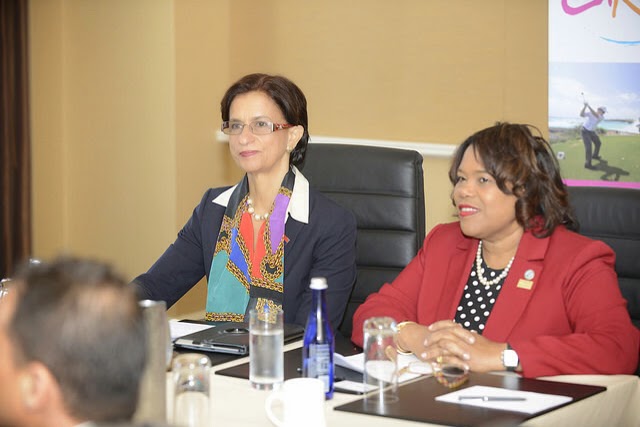
“I would like to reaffirm my strong belief in collaboration with other nations,” Sarah Wescot-Williams, the prime minister of St. Maarten, told IPS.

“Economic issues have forced us to look at ways and means of getting together and we are working collaboratively with other Caribbean nations to mitigate the effects of climate change as well as social issues of unemployment, crime and health.”

Prime Minister of St. Maarten Sarah Wescot-Williams (left)

St. Maarten recently developed and approved its National Energy Policy “and as such we have very specific goals and objectives to reach by 2020 in terms of reduction and promoting alternative, new green ideas, new green products,” Wescot-Williams explained.

She reiterated a point made while addressing regional leaders recently. “I told them we should not only look out for the bigger impacts of climate change or look at those developments as something that is far from us, far from our homes, but look at small things like beach erosion, something that St. Maarten is seeing.

“A report has been issued not very long ago indicating that unless specific measures are taken, a great part of what is now land will no longer be as far as the smaller islands, including St. Maarten, are concerned.”

How they are ranked by financial institutions such as the International Monetary Fund (IMF) and World Bank is a major issue for Caribbean countries.

Camillo Gonsalves, a former ambassador to the United Nations, says it affects these countries’ ability to secure the required funding to effectively deal with climate change.

He noted that most Caribbean countries are ranked as middle-income countries, and using that metric alone makes his country, St. Vincent and the Grenadines, with its one-billion-dollar Gross Domestic Product (GDP), “richer than China”.

“If that is the metric by which we determine economic health and access to concessionary financing, and our ability to borrow ourselves out of a crisis or to spend ourselves out of a crisis, it is clearly a flawed measure,” he said.

He noted that within three hours last Christmas Eve, a trough system left damage and loss in St. Vincent equal to 17 percent of GDP, while the country also suffered natural disasters in 2010, and 2011 – the loss and damage from each of which was in double digits.

This, however, is the measure by which the World Bank, the IMF determine the economic strength of Caribbean countries, Gonsalves said, adding that these international institutions do not consider the region’s vulnerabilities.

“The Caribbean small island developing states are among the most heavily indebted states in the world,” Gonsalves said, noting that the debt-to-GDP ratio in the region ranges from 20 percent in Haiti – which received significant debt forgiveness after the 2010 earthquake – to 139 percent in Jamaica, with St. Kitts and Nevis and Grenada at 105 and 115 per cent, respectively, even as the European Union has set itself a debt-to-GDP ratio of 65 per cent.

“If your debt-to-GDP ratio is 139 percent and you are struck by a natural disaster… how do you borrow yourself out of that crisis? Where do you find money immediately to build your roads, your houses, your bridges, your hospitals that have been damaged? How can you set money aside in preparation for the next climate event if you have a debt to GDP ratio of over 100 per cent or approaching 100 per cent, and your debt servicing charges are that high?” Gonsalves said.

Agreeing with Wescot-Williams and Maharaj that there is strength in unity, Gonsalves, who serves as foreign affairs minister for St. Vincent and the Grenadines, said the upcoming Third United Nations Conference on Small Island Developing States (SIDS) in Samoa is an ideal opportunity for regional countries to do more than just talk about collaboration.

“The issue of how we are ranked and classified has to be rectified – not addressed, not flagged, not considered. It has to be rectified in Samoa. That has to be one of our prime objectives going into this conference,” he said.

The Samoa conference will be held from Sep. 1-4 under the theme “The Sustainable Development of Small Island States Through Genuine and Durable Partnerships”.

It will seek to assess progress and remaining gaps; renew political commitment by focusing on practical and pragmatic actions for further implementation; identify new and emerging challenges and opportunities for the sustainable development of SIDS and means of addressing them; and identify priorities for the sustainable development of SIDS to be considered in the elaboration of the post-2015 U.N. development agenda.

Maharaj said “one big challenge” for his organisation is the advancement of the interest of small states.

“When I think about the Caribbean and I think about development…we need to think about development not only in terms of five years, 10 years or 15 years,” he said.

“I would like to think about and imagine what will the Caribbean be in the year 2050 at the time when our grand- and great-grandchildren will be around and many of us won’t be here,” Maharaj added. More


Time to ask why

Young people have the most to gain from solving the climate crisis — and the sooner the better.

They didn't cause the issue, but they'll have to live with it for decades. And for far too long, they and their interests have been ignored by leaders who refuse to protect the planet.

On September 23, this is going to change when exceptional young people get a chance to put their questions to the world's decision-makers — to speak for their generation at the U.N. Climate Summit in New York City.

Today, we begin searching for the people who will ask their leaders the tough questions about global warming. We're collecting videos of young people ages 13-21 posing tough Why? or Why not? questions about the climate crisis. We'll choose the best to attend the Summit and demand serious answers from the world's leaders.

If you're between the ages of 13 and 21, submit a video. If not, encourage someone you know to submit a video of their own.


Why do we continue burning fossil fuels that cause climate change? Why not switch to clean, renewable energy?

The answers are out there, but we won't get them unless we stand together and demand them — and refuse to be ignored.

Thanks for your continued support,

Al Gore
Founder and Chairman

SUBMIT A VIDEO


Geneva beckons Rolph Payet – Seychelles environment and energy minister lands top UN post

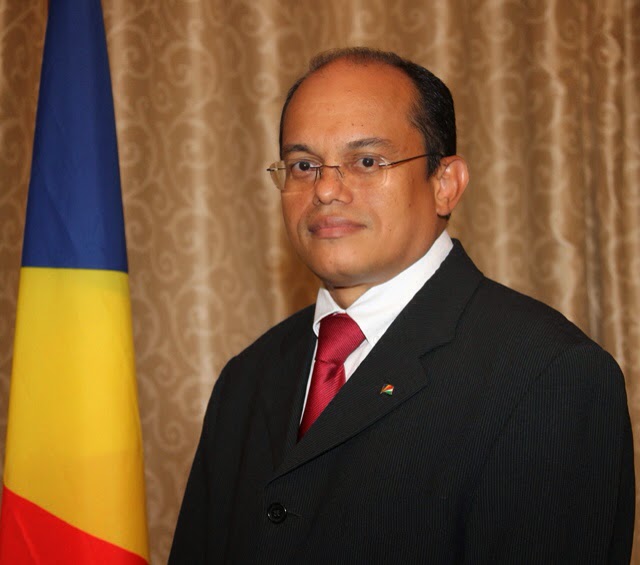
(Seychelles News Agency) – Seychelles Minister for Environment and Energy, Professor Rolph Payet has been appointed the new Executive Secretary of the Basel, Rotterdam and Stockholm Conventions by the United Nations Secretary General Ban Ki-moon.


Announcing the appointment in a press statement this afternoon, State House said Payet will contribute to the implementation of the mandates and missions of those three conventions including the formulation of their overall strategies and policies.

“He will also act in an advisory capacity to the UNEP Executive Director and the Presidents and the Bureaus of the conventions as well as their subsidiary bodies,” reads the statement.

The environment minister’s role will also include coordinating the preparation of the meetings and implement the substantive work programme of the conventions, including providing assistance to parties, in particular developing country parties and those with economies in transition.

He will also lead the development of strategies and policies and undertake fund raising and donor reporting, the strategic interagency work of the Secretariat in close coordination with UNEP and other Multilateral Environmental Agreements.

Responding to SNA in an email following this afternoon’s announcement, Payet said he is deeply honoured of such confidence in him to lead the conventions.

“I am equally happy that I have been chosen, coming from a Small Island Developing States, during this year dedicated to SIDS. My appointment represents the hard work of President James Michel and the government of Seychelles to continuously push so that Seychelles remains a leader in environment on the international scene. I will miss my work and even though I will be away from Seychelles I will continue to work for the benefit of my country,” he said.

Payet will take up his new post in October this year and he will be based in Geneva.

He will replace Kerstin Stendahl from Finland, who has been serving as interim since April this year following the retirement of US national Jim Willis as the Executive Director of the Basel, Rotterdam and Stockholm Conventions.

The Basel, Rotterdam and Stockholm Conventions.

The first convention is aimed at protecting human health and the environment from the effects of hazardous wastes.

This convention was adopted in 1989 and it entered into force in 1992.

The Rotterdam Convention, which entered into force ten years ago, also deals with the disposal of waste especially pesticides and industrial chemicals.

The third one, the Stockholm Convention which also came into force 10 years ago is a global treaty to protect human health and the environment from chemicals that remain intact in the environment for long periods. The latter or POPs is said to have serious consequences on humans and wildlife.

Seychelles president hails Payet’s appointment as “a memorable achievement.”

Seychelles President James Michel has hailed Payet’s appointment which he describes as “a memorable achievement.”

In a congratulatory message sent to the minister, Michel has wished him success in his new role and expressed his full cooperation and support in his tasks and challenges that lie ahead.

“Your appointment to this high office is a well-deserved recognition of your scientific and academic capabilities and crowns a professional life devoted to the environment and to the cause of Small Island Developing States. It also brings immense pride and satisfaction to Seychelles,” said Michel in the statement.

Michel said he would announce a new minister for environment and energy at a later date.

Payet and the environment cause

The 46 year old leaves vacant the portfolio of Environment and Energy which he assumed in March 2012.

Before that he was Special Advisor to the president on numerous environmental matters including sustainable development, biodiversity, climate change, energy and international environment policy

Payet who holds a Phd in Environmental Science from Linnaeus University of which is now an Associate Professor, is described as a leader in the protection of the environment on the international scene.

He has been at the forefront of several international discussions on issues affecting small islands developing states such as climate change, sustainable development, biodiversity and other environmental issues.

In recent years, he has been invited to participate or as a guest speaker on numerous international conference committees and panels including the United Nations General Assembly.

He has also contributed widely towards several publications on environmental issues.

Payet’s work in advancing environment, islands, ocean, biodiversity and climate issues at the global level has earned him numerous international awards and recognition.

In January 2007, he was recognised as a Young Global Leader by the World Economic Forum and in November that same year he shared in the IPCC Nobel Peace Prize as one of the authors of the Intergovernmental Panel on Climate Change (IPCC).

Locally, Payet has also helped to set up Seychelles first university, the University of Seychelles which was set up in September 2009. He is currently the pro chancellor of the university. More


“Containing the Resource Crisis”

LONDON – The proclamation of a new Cold War, following Russia’s annexation of Crimea, turned out to be alarmist and premature. However, it reflected the anxiety of today’s decision-makers in the face of a crumbling global order.


With emerging economies far from committed to established norms in international relations, many governments and multinational companies are feeling vulnerable about relying on others for vital resources – the European Union’s dependence on Russian gas being a case in point.

Competition for scarce resources is sorely testing our assumptions about global governance and cooperation, at a time when collective leadership is becoming ever more necessary. But even in the absence of overarching global legal frameworks, it is possible to maintain a sense of common security if the terms of resource investments are founded on long-term political understanding and commercial relationships, rather than short-term competition.

The stakes are high. Resource scarcity is closely linked to political risks. Consider, for example, the drought that decimated Russia’s 2010 wheat harvest. In response, Russia imposed export restrictions to shore up its domestic supplies, sending food prices soaring in its main export markets, especially Egypt. This in turn helped spark the political uprisings that spread rapidly across North Africa and the Middle East. Climate change is expected to trigger many more such chains of events.

One test case for such cooperation is the potentially explosive issue of the Nile Delta’s water resources. Britain’s colonial-era treaty has, since 1929, given Egypt a veto over any upstream river project that might affect the country’s water supply

One test case for such cooperation is the potentially explosive issue of the Nile Delta’s water resources. Britain’s colonial-era treaty has, since 1929, given Egypt a veto over any upstream river project that might affect the country’s water supply. Several Nile Basin countries, including Sudan and Ethiopia, have now ratified a new, Nile River Basin Cooperative Framework agreement, which Egypt has yet to sign. Given Egypt’s concerns about potential water shortages arising from Ethiopia’s new upstream hydropower plants, its assent is far from assured.

Indeed, in Egypt’s febrile political atmosphere, its newly elected president, General Abdul Fattah el-Sisi, may be tempted to escalate the threat of military action in response to Ethiopia’s hydropower projects. Such a move would send shockwaves through a region already reeling from conflict in South Sudan, Syria, Iraq, and Lebanon.

To avoid another dangerous political-environmental chain reaction, nudging all sides toward agreement will require achieving mutual recognition of resource concerns. Ethiopia must credibly guarantee the supply of water downstream, for example, by establishing a water-replenishment rate at its dam reservoirs that does not threaten the onward flow of water to Egypt. At the same time, Egypt, while retaining the fundamental right to protect its water supply, must recognize the interests of its upstream neighbors and be ready to negotiate in good faith a new Nile Basin treaty.

Multinational companies and sovereign investors like China, which have financed hydropower projects upstream, will come under increasing pressure to adopt a position. They, too, can play a positive role by considering the cross-border investments that will address critical interdependencies, like Egypt’s wasteful agricultural irrigation practices.

Similar resource-related tensions are surfacing in other parts of the world. Water stress and food security threaten to constrain India’s economic promise, as increasing coal-powered electricity generation diverts water resources away from agriculture. The political risks of investing in Nigeria’s agriculture sector are also rising as a result of the country’s demographic explosion, high inflation, weak rule of law, and insecure land rights, with wider political consequences.

These resource strains are aggravated by foreign investments that seek to meet developed-country consumers’ voracious demand for resources without attention to their impact on sustainability in the host countries. This virtual outsourcing of the industrialized world’s environmental impacts, apart from being hypocritical, is no basis for building a strategy for global environmental sustainability.

Instead, the world needs to invest in sustainable agriculture, renewable energy, and green infrastructure. To be sure, the most promising efforts by leading multinationals today must confront entrenched subsidies and vested political interests. Unless the necessary policy frameworks are put in place green investment initiatives will continue to struggle to achieve a meaningful scale. Moreover, developed and developing countries seem unable even to agree on a fair division of environmental responsibilities, even though they have become increasingly interdependent in trade, investment, and the supply of natural resources.

These difficulties should not stop us from trying. The Earth Security Initiative is working with the BMW Foundation to develop global roundtables on resource security over a two-year period, starting in Hangzhou, China, on July 17- 20. These high-level, informal meetings will bring together leaders from politics, business, and civil society in Europe and emerging economies in an effort to bridge just such differences.

We know what needs to be done, why it is important, and who must be involved to secure our planet’s long-term future. We must now address the equally vital question of how this will be achieved.

Read more at http://www.project-syndicate.org/commentary/alejandro-litovsky-addresses-the-increasingly-close-links-between-resource-scarcity-and-political-risk#qFDfi1xP668YyhLg.99


Has the era of the ‘climate change refugee’ begun?

A far-flung scattering of islands in a turquoise sea, Tuvalu is one of the planets' smallest and most remote nations, just west of the International Date Line, just south of the equator.

Funafuti, Tuvalu

Tuvalu's coastline consists of white and sandy beaches, green palm trees and mangroves. It is hard to imagine that anybody would want to leave this small island nation, located between Australia and Hawaii, voluntarily. But Tuvalu has become the epicenter of a landmark refugee ruling that could mark the beginning of a wave of similar cases: On June 4, a family was granted residency by the Immigration and Protection Tribunal in New Zealand after claiming to be threatened by climate change in its home country, Tuvalu. The news was first reported by the New Zealand Herald on Sunday.

The small Pacific island nation sits just two meters above sea level. If the current sea level rise continues, experts believe the island might disappear in approximately 30 to 50 years. Tuvalu shares this existential threat with many other island nations and coastal regions, which have struggled for years to raise international awareness about their tragic plight. Predictions for climate change-induced displacement range widely from 150 to 300 million people by 2050, with low-income countries having the far largest burden of disaster-induced migration, according to the Internal Displacement Monitoring Center.

Those threatened by sea-level rise, droughts or other natural catastrophes face an epochal problem: Victims of climate change are not recognized as refugees by the International Refugee Convention. In the Tuvalu case, Sigeo Alesana and his family reportedly left the island nation in 2007 and moved to New Zealand, where they lost their legal status in 2009. The family was not able to obtain work visas and had to apply for refugee and protected persons status in 2012. Although the claims were dismissed in March 2013 and an appeal was turned down, the family's case was finally approved. The case was closely followed by immigration and environmental lawyers all over the world.

Sigeo Alesana and his wife claimed before the tribunal that climate change had made life in Tuvalu more difficult due to much more frequently occurring inundations, that caused coastal erosion and made it difficult to grow crops. The tribunal explicitly mentioned climate change in its assessment saying that Alesana's children were particularly “vulnerable to natural disasters and the adverse impact of climate change.”

“I don't see it as delivering any kind of 'verdict' on climate change as such,” says Vernon Rive, a Senior Lecturer in Law at AUT Law School in Auckland. The New Zealand decision is very specific because the family based its application for residency on three arguments, Rive says. First, the family members claimed to be refugees; second, they argued to be “protected people“, and third, the family said its case fell under “exceptional humanitarian grounds.” Each of these arguments is based on an existing convention regarding refugees, but the family only succeeded because it claimed “exceptional humanitarian grounds,” which is a wording recognized in New Zealand's immigration legislation but not by many other governments.

In its judgment the New Zealand tribunal surprisingly acknowledged the humanitarian consequences of climate change among other factors, such as the presence of an elderly mother who required care. In its conclusion, however, the tribunal refrained from singling out climate change and stated that other factors would already have been sufficient to grant residency to the family. In other words: The tribunal avoided a clear decision on whether climate change can or cannot be reason enough for refugees to be granted residency. The mere fact that the tribunal mentioned the impacts of global warming as a contributing factor to the ruling is nevertheless remarkable. “What this decision will not do is open the gates to all people from places such as Kiribati, Tuvalu and Bangladesh who may suffer hardship because of the impacts of climate change,” Rive says.

While the tribunal's decision may not have the same impact everywhere, it could send a strong signal to a number of nations, such as Sweden and Finland, that often grant asylum to people affected by natural disasters. According to French climate change migration expert François Gemenne, governments need to get to grips with the reality of climate change refugees, irrespective of legal conventions. “I believe that bilateral or regional arrangements are going to become necessary,” says Gemenne, suggesting a raft of agreements will need to be put into place, between nations and among geopolitical blocs, that will ensure the protection of those displaced by rising waters.

But will there eventually be open doors for the victims of climate change? Some of the countries endangered by climate change fear that their citizens could effectively become “second class” citizens abroad. As a consequence, the island nation Kiribati – itself at risk from climate change – has set up a “Migration with Dignity” program which involves training its citizens as highly-skilled workers who are needed and welcomed in other countries if and when the residents of Kiribati are forced to move.

The recent New Zealand ruling could give smaller nations stronger leverage on the international stage. But do the world's leading statesmen, beset by a host of other crises, care? Michael Gerrard, Director for Climate Change Law at Columbia University, puts current progress in perspective: “The world community has not even begun to grapple with what is to come,” he tells WorldViews in an e-mail. More


The Climate War Room

Climate War Room – Sunday 3rd. August 2014

I have today changed the name of the Cayman Institute's climate change blog to the Climate War Room.

Having collaborated with Sir Richard Branson's Carbon War Room on their Ten Island Challenge, which is a major initiative to mitigate climate change through cutting down the global carbon output, I have realized that a similar initiative is needed to to raise awareness of the necessity for a global war on climate change rather than just carbon output.

Jim Hansen

For more input on the reality of the situation a good place to start would be Makiko Sato & James Hansen's website where they ask 'What Path is the Real World Following'? Jim Hansen was the former director of NASA's Goddard Institute of Space Studies who resigned because the United States Government would not let him speak out on climate change. Assessing ‘‘Dangerous Climate Change'' makes worrying reading.

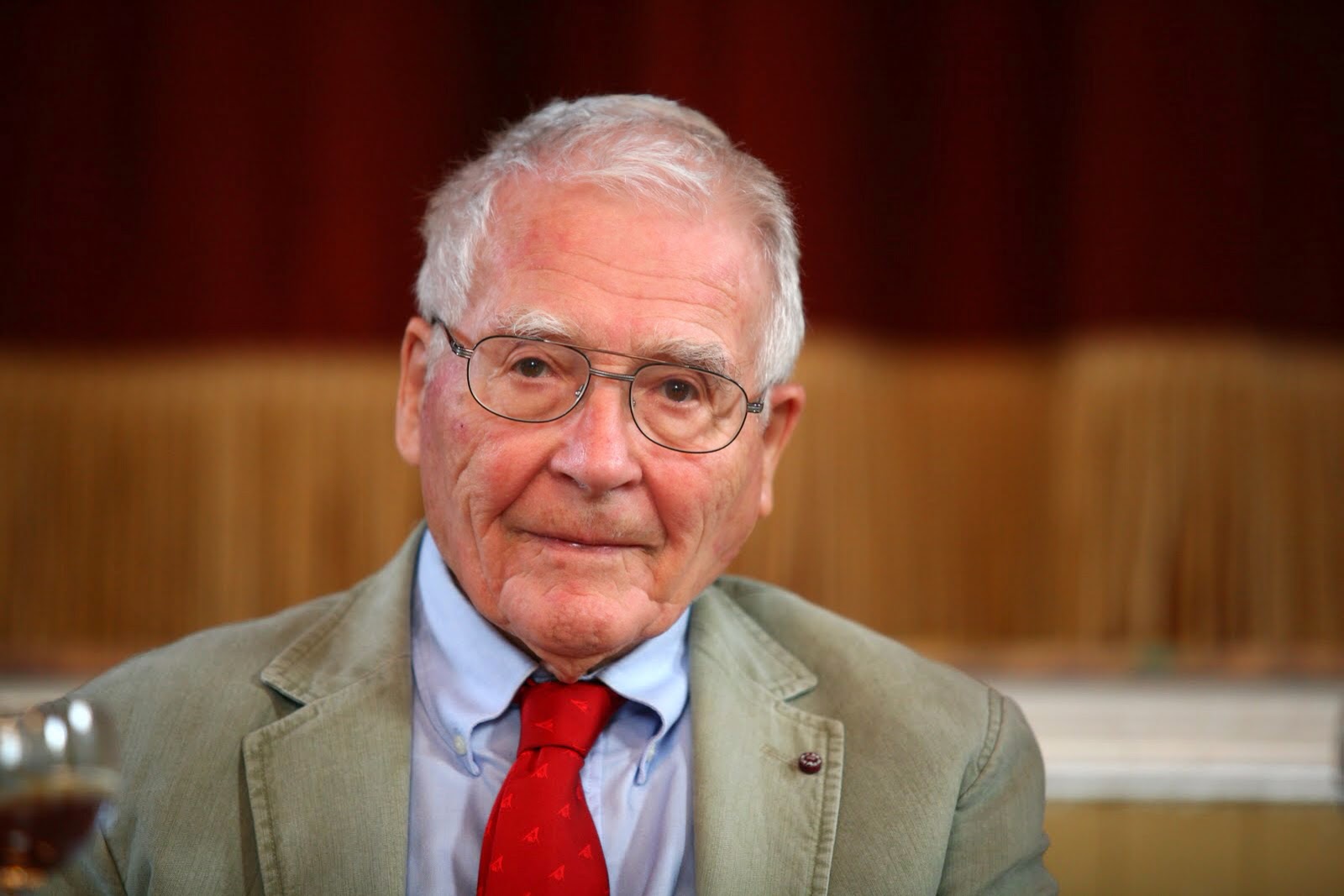
The world needs to take climate change, or as James Lovelock prefers to call it 'global heating' very seriously. Dr. Lovelock is the founder of the Gaia theory and on of the great thinkers of this century, his Cirriculum Vitae is very interesting and worth reading. Mary Midgley wrote on James Lovelock, published in the New Statesman on 14 July 2003.“Lovelock is an independent scientist. Though fanatically accurate over details, he never isolates those details from a wider, more demanding vision of their background. He thinks big. Preferring, as Darwin did, to work outside the tramlines of an institution, he has supported himself since 1963 through inventions and consultancies.”


We need to take the issue very seriously as a rapidly warming climate will change life as we know it. As Jim Hansen has tried to make us aware our children and grandchildren will effectively living on a different and not very nice planet.

James Lovelock

I implore you to research and read up on this subject. Speak out to your friends and neighbors and contact your political representatives and make your views known to them.

Nicholas Robson – Grand Cayman – Cayman Islands


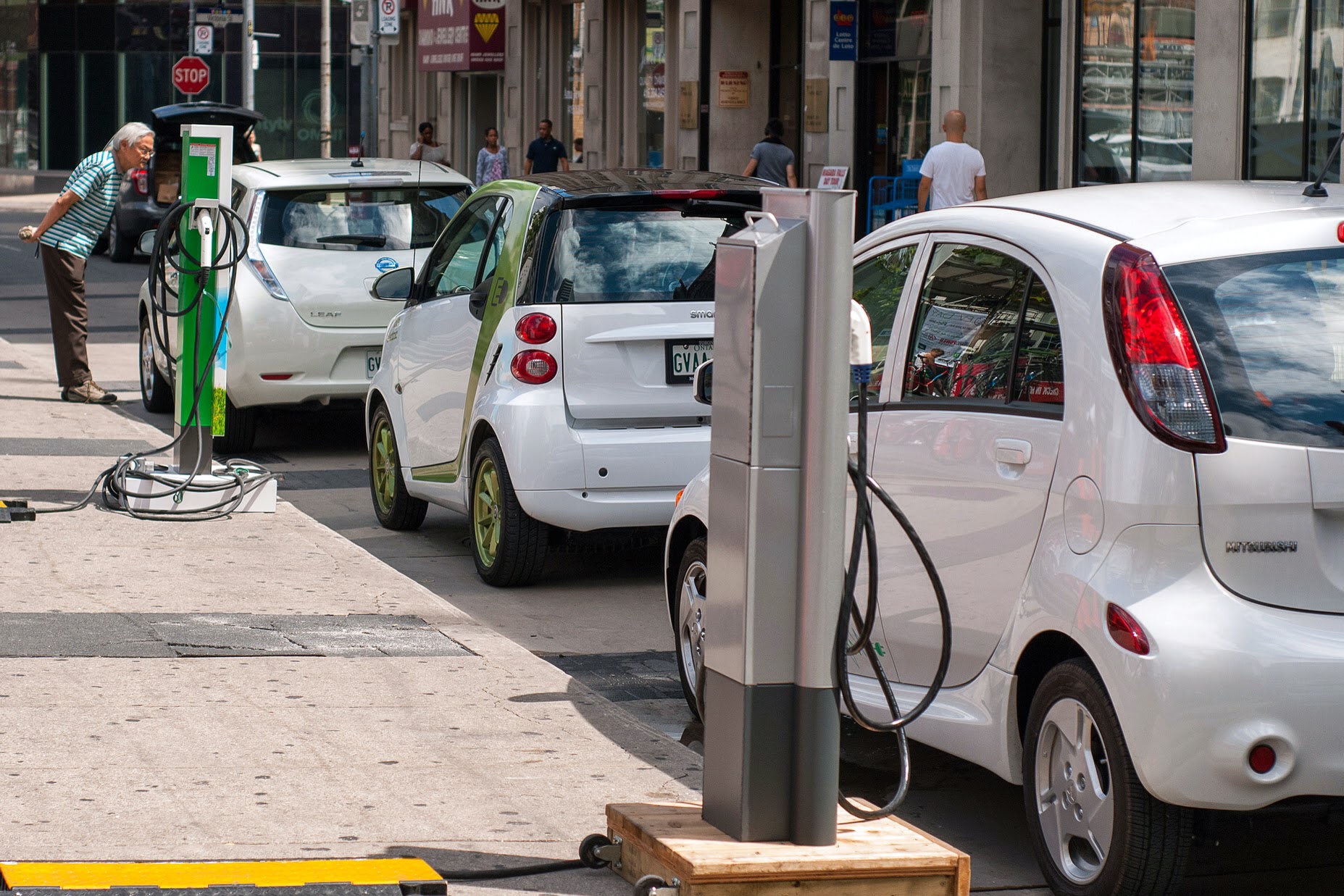
Utility Industry: We Need to Promote Electric Vehicles in Order to ‘Remain Viable’

The Edison Electric Institute, the power industry's main trade group, is calling on utilities to better promote electric cars in order to stimulate demand for electricity and help reverse trends that threaten the long-term viability of some in the industry.

Without a strategy to help connect more vehicles to the grid, utilities will continue to face slow growth and stagnant revenues, warns EEI in a new report. The organization calls electric vehicles a “quadruple win” for power companies looking to boost demand, find new ways to interact with customers, support environmental goals and mandates, and reduce operating costs through electrifying their own fleets.

“The bottom line is that the electric utility industry needs the electrification of the transportation sector to remain viable and sustainable in the long term,” conclude the authors.

Some leading investor-owned utilities have rolled out programs to support charging stations, created pilots to test integration of new vehicle-to-grid technologies and have supported studies to model how lots of electric vehicles would interact with the distribution system. But there hasn't yet been a strategic, industry-wide effort to support the electrification of transportation as a way to boost demand.

To understand why EEI is now calling for more electric vehicles, consider where the industry is headed. As the chart below illustrates, growth in retail demand has come to a virtual standstill.

At the same time, the states with the biggest solar PV markets are seeing that technology slow electricity demand growth even further. This is adding additional pressure on utilities (creating borderline disruption in some markets), as third-party developers capture much of the value from developing solar.

“Stagnant growth, rising costs, and a need for even greater infrastructure investment represent major challenges to the utility industry,” writes EEI. “Today’s electric utilities need a new source of load growth — one that fits within the political, economic and social environment.”

Part of the answer is electric vehicles, which could both grow electricity sales and help balance a future grid made up of much more distributed renewables.

Thus far, utilities have had a conflicted relationship with electric vehicles. Although sales continue to grow, consumer demand has been relatively low compared to initial estimates. That has prevented power companies from investing heavily in charging infrastructure. There are also legitimate concerns about how electric cars and trucks will impact circuits on local grids.

However, the potential upside is enormous. If the two charts above have utilities worried, the chart below should have them excited about the future.

As Opower pointed out in a recent analysis, owners of electric cars use nearly 60 percent more electricity than the average customer. And customers who own both a solar system and an electric car consume roughly the same amount of electricity from the grid as an average customer — offsetting much of the excess solar that utilities must buy back through net metering. More