By Activestills |Published September 4, 2014 PHOTOS: Israeli forces damage youth centers in Nablus raid

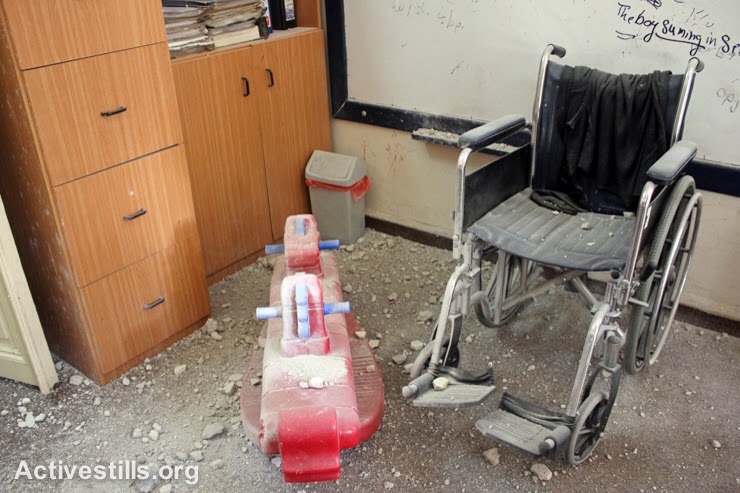
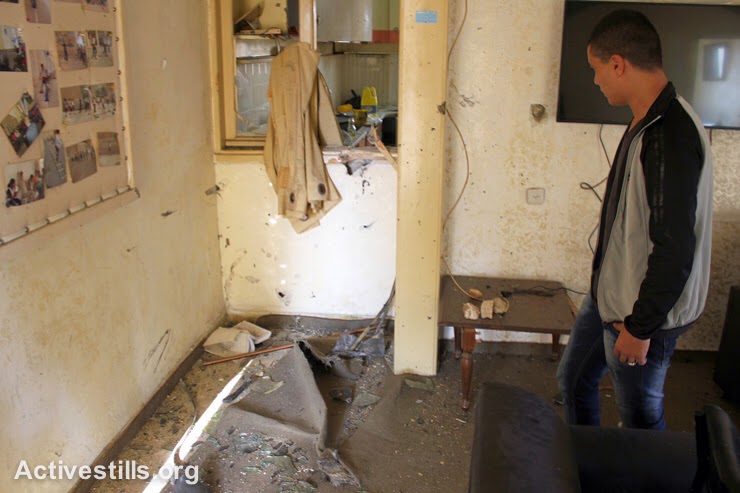
A youth sports club and center for children with disabilities in Nablus sustain serious damage after Israeli forces raid a multi-story building in search of wanted Palestinians.

As happens almost every night in Palestinian cities, towns and villages throughout the West Bank, Israeli forces raided Nablus neighborhoods at 1:30 a.m. on Wednesday. Military jeeps spread out to different areas of the city, especially to refugee camps.

The biggest military operation took place in the southern part of the city, where Israeli forces targeted six Palestinians who were sleeping in a local youth sports club. Their main target was Husam Al-Din Abu Riyala, 26, a Fatah activist who had been issued a summons order last month. Soldiers surrounded the building of the sport club, which was located on the third floor of an apartment building, while another group of soldiers occupied the roof of a neighboring house.

Locals reported that the military fired a heavy barrage of live ammunition towards the club while another group of soldiers used explosives to blow open the main door and enter the building.

Five youths managed to escape from windows, while Abu Riyala was shot in the foot with live bullets before being arrested, according to Ma’an News.

Following the arrest, the military operation ended with a raid on a health center for handicapped children and nursery school located in the same building. At 3:30 a.m., one of the workers from the health center managed to enter the building, discovering that doors had been bombed and other extensive damage.

In a nearby incident, Israeli forces raided Al-Ain Refugee Camp in Nablus in an attempt to arrest 77-year-old Palestinian legislative council member Ahmad Haj Ali of Hamas. Haj Ali was not in his house when the army arrived. Soldiers have stormed his house four times since May 2014, and sources close to his family told Ma’an News that they have threatened his family with killing him. According to Ma’an, Israeli authorities had issued orders to Haj Ali to turn himself in this summer as part of the massive arrest campaign launched against Hamas members, but that he had refused to comply.

Just a few weeks earlier, Zakaria Al-Aqra, 24, of Fatah, was killed by Israeli forces in a raid on his home in the West Bank village of Qabalan. According to the army, Al-Aqra was involved in multiple shooting incidents at Israeli soldiers and said it found arms in the building where he was killed. Six people in his family were wounded in the raid, in which part of the family house was demolished. More


UN Special Envoy Highlights Urgency of Climate Agreement

2 September 2014: Small island developing States (SIDS) leaders “really want a climate agreement,” according to Mary Robinson, the UN Special Envoy for Climate Change. Speaking on the margins of the Third International Conference on SIDS, Robinson stressed the urgent need to build climate resilient communities and reduce greenhouse gas (GHG) emissions.

Mary Robinson UN Special Envoy

Robinson has been meeting with SIDS leaders, UN officials and donors to discuss climate change impacts at the Conference. She stated that, while SIDS leaders are engaged in actions to establish and expand partnerships, build capacity and increase financing, they also support an agreement on climate change.

Noting that climate change has traditionally been a focus for ministers of environment and energy, Robinson underscored the importance for Heads of State to address climate change. “Once you have a Head of State focused [on climate change], it becomes a holistic issue,” according to Robinson.

Looking forward, Robinson highlighted the UN Secretary-General's Climate Summit, which will take place on 23 September 2014, in New York, US. She said her role will be to “encourage the importance of the urgency of getting a climate agreement” and called for Heads of State to say what their country will do to address climate change. Robinson underscored the importance of engaging with civil society and the private sector on climate negotiations to ensure a “good, robust, fair climate agreement.” More


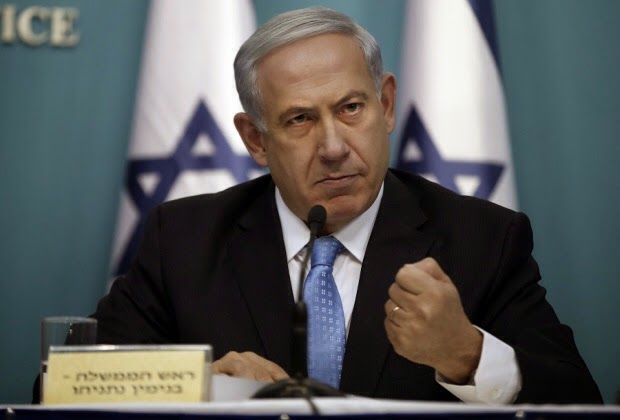
Land grab shows Netanyahu unbowed after Gaza

With Israel and Hamas locked in military stalemate after their 50-day confrontation in Gaza, attention had returned to reviving a peace process between Israel and Palestinian president Mahmoud Abbas.

That is the context for assessing Israel’s decision to antagonise all its main partners against Hamas – the United States, Europe, Egypt, Jordan and, in practice, Abbas’ Palestinian Authority – by announcing plans this week for the biggest land grab in the West Bank in three decades.

In normal circumstances, this would look like an example of shooting oneself in the foot. But, as Israeli analyst Jeff Halper pointed out, Israel rarely abides by normal rules.

“What Netanyahu is doing looks completely counter-intuitive. It makes no sense. You would think he would want less criticism right now from the international community. He needs the Palestinian Authority and Mahmoud Abbas to help him take back control of Gaza.”

Yesterday, US secretary of state John Kerry phoned Israeli Prime Minister Benjamin Netanyahu, reportedly to demand he reverse his decision.

Barack Obama’s administration is said to have been angered not only by the decision itself – which seized 1,000 acres of Palestinian land near Bethlehem – but by Israel’s failure even to warn it in advance.

Confrontation with US

Israeli analysts have noted that the clash over the land expropriation – intended to build a fifth West Bank city for settlers, called Gvaot, south of Jerusalem – marks yet another downturn in increasingly fraught relations between Israel and Washington.

“This is a major embarrassment to the US. There it is trying to coax Abbas back into negotiations while Israel blatantly undermines its efforts,” Halper told Middle East Eye.

Israeli officials have tried to play down the seizure as nothing more than a technicality, though it has not helped their justifications that the move’s timing has been widely presented as “revenge” for the murder in June of three Israeli teenagers in a location close by in the West Bank.

Officials argue that Palestinians have no private claims on the land; that it is part of the Gush Etzion settlement bloc, which, they claim, will be awarded to Israel in a final peace agreement; and that the area has long been earmarked for Israeli settlement.

In addition to Israel’s violation of international law in seizing the land, observers note that there are already five Palestinian communities there, and that the new settlement will contribute to Jerusalem’s encirclement, sealing it off from the West Bank and further damaging the prospects of a viable Palestinian state emerging.

Yesterday, Dror Etkes, an expert on the settlements for the Israeli peace organisation Peace Now, noted that the swath of land would create a territorial corridor between Israel and the Gush Etzion bloc.

Nearly a fifth of the expropriated land actually lies beyond Israel’s separation barrier, sometimes assumed to be the demarcation of its territorial acquisitiveness.

Payback for the settlers

Daniel Seidemann, a Jerusalem lawyer who specialises in land issues, told Middle East Eye that this latest decision was payback for the settlers, who had helped Netanyahu during the seven weeks of Operation Protective Edge by not opening up another front with the international community.

“During the Gaza operation, the settlers kept silent. They were like the dog that didn’t bark in the night. That was intentional. Netanyahu told them “sit back during the operation and I’ll make it up to you afterwards.”

In many ways, Washington’s opposition to this move echoes its anger at Netanyahu’s attempt in late 2012 to annex the so-called E1 area, west of Jerusalem, which also threatened to cut off Jerusalem from its Palestinian hinterland.

It remains to be seen whether US pressure will force a climbdown this time from Netanyahu, as it eventually did when he agreed to “delay” his E1 plans.

But whatever the final decision, the reality is that plans for encircling Jerusalem are constantly on the drawing board, and are making slow, incremental progress, as a report by the International Crisis Group revealed. Israeli leaders simply seek the best moment to try to browbeat Washington into submission on any particular component of the plan.

Netanyahu’s reasons for taking on the US now are likely to be complex.

Plummeting popularity

Not least in his calculations, he needs to show an achievement in the West Bank to answer the many domestic critics of his performance in Gaza.

His popularity has plummeted since he signed a ceasefire agreement. A majority of the Israeli public, and especially his supporters on the right, expected him to crush Hamas, not to negotiate terms with it.

He has also been under fire from government coalition rivals further to the right, such as Avigdor Lieberman and Naftali Bennett, who have implied not so subtly that he demonstrated weakness in Gaza.

The crisis he has now provoked is undoubtedly designed to deflect a little the attention of the Israeli public and media from what are seen as his failures in Gaza and show that he is playing hardball with the Palestinians.

But possibly even more useful, Netanyahu has engineered a confrontation with the US that will remind the Israeli public of the international climate within which he must work, both in relation to Gaza and the West Bank.

Faced with another showdown with Washington, Netanyahu can claim both that he is a tough-guy and that, much better than his political rivals, he knows how to navigate the intricacies of such diplomatic entanglements. He has taken on the White House on several notable occasions before and won.

And by grabbing land near the Gush Etzion settlements, Netanyahu has also chosen an issue over which it will be difficult for local critics to berate him.

Lieberman, who is the most famous resident of Nokdim, one of Gush Etzion’s settlements, has pointed out correctly that the area Netanyahu has seized “reflects a wide-ranging consensus in Israeli society.”

Voices of dissent

Tzipi Livni and Yair Lapid have been the only notable voices of dissent in the cabinet, but neither is likely to threaten the coalition’s survival by resigning on this matter.

Livni, who has cultivated strong ties to the Obama administration, has indicated that she supports the seizure in principle. Her opposition is over the timing, when Israel is isolated and needs US support in international forums.

More significant is what the decision to seize such a large area of land reveals about Netanyahu’s attitude towards Abbas and the two-state solution, as well as his approach to the international community.

Yariv Oppenheimer, the head of Peace Now, has called the move a “stab in the back … proving again that violence delivers Israeli concessions while nonviolence results in settlement expansion.”

According to polls, Hamas has surged in popularity among Palestinians since the ceasefire, and Netanyahu’s move will do nothing to revive Abbas’ fortunes.

Israel is reported to want Abbas’ assistance in taking back whatever limited control of Gaza Israel will allow, presumably as a prelude to enforcing Hamas’ disarmament. Abbas wants Gaza too, because it will strengthen his claim to being the true representative of the Palestinian people. On paper at least, Netanyahu and Abbas should be on the same page on this issue.

But the price from Abbas, as he revealed this week, is Israel’s cooperation with his newly minted peace plan, which Palestinian negotiator Saeb Erekat presented to Kerry yesterday.

Reports suggest the plan will echo Kerry’s original timetable and framework for the talks that collapsed in April, with nine months for the two sides to reach an agreement. Israel would be expected to withdraw from the agreed area, based on the pre-1967 borders, within three years.

However, this time Abbas will insist on no settlement building for the duration of the negotiations and there will be a tangible Palestinian threat if the process fails: unilateral moves in international forums, including pursuing war crimes trials at the International Criminal Court (ICC).

Opposition to statehood

Neither option – conceding Palestinian statehood, or risking war crimes trials – will appeal to Netanyahu. But if forced to make a choice, he would probably much rather call Abbas’ bluff over the ICC than allow him a state, even a demilitarised, non-sovereign one.

Back in July, Netanyahu made clear his fundamental opposition to allowing the Palestinians the trappings of statehood in the West Bank. He stated that “there cannot be a situation, under any agreement, in which we relinquish security control” of the West Bank. Noting that the West Bank was 20 times the size of Gaza, he added that he was not prepared to “create another 20 Gazas”.

In doing so, he effectively equated Abbas with Hamas, which in turn he has equated with the Islamic extremist group ISIS.

As Gideon Levy, a columnist for the Haaretz daily, has concluded: “The settlers have won. The settlements have accomplished their goal. The two-state solution is dead.”

So where does that leave Israel and Abbas?

In Abbas’ case, with a few stark choices. He could mount a more forceful campaign to win statehood at the United Nations, or he could go down the ICC route. Both would lead to a serious confrontation with the United States.

The final choice would be to hand over the keys of the Palestinian Authority, leaving Israel to pick up the mess – and the considerable bill – afterwards. That is reportedly what he told the emir of Qatar this week. If there was no agreement, “we will take the following measure: cessation of the security coordination and transfer of responsibility for PA territory to Netanyahu.”

Catastrophic scenarios

In Israel’s case, analysts see things going in one of two directions.

One possibility is that Israel will find its isolation and pariah status growing. The comparisons with apartheid will deepen, as will the paradigm shift to a one-state solution. Early signs will be a rapid increase in various forms of boycotts, such as an imminent one from the European Union on settlement produce.

It was this scenario that presumably prompted the concerns expressed in an editorial in today’s Haaretz about the latest land grab: “This is an intolerable display of arrogance and impudence, and its price is liable to be catastrophic.”

The other possibility, set out by Jeff Halper, who has been studying Israel’s system of control over the occupied territories for many years, posits an even bleaker future.

He believes Netanyahu may assume he can hold on to international support as he crushes all Palestinian hopes – military and diplomatic – of resistance to Israel’s complete dominance.

“Israel is denying the Palestinians a moment to regroup. The pressure is on them all the time, wearing them down, exhausting them as Israel takes control inch by inch.

Netanyahu, he says, may think that he can “pacify” Abbas and the Palestinians, with them coming to understand both that there is no political process and that in practice there are no countervailing forces on Israel.

“Rather than being an outcast, Israel believes it can convince everyone – the US, Europe, the Arab states – that it has the solutions. It excels in a kind of security politics, and claims to know how to beat ‘the terrorists’. Ultimately, that may gain it more credit with other states than respecting peace and human rights.”

Halper concedes that Netanyahu may be mistaken in such assumptions, leaving himself with no exit strategy when things turn sour.

Whoever is right, this week’s land grab indicates that Netanyahu is unbowed after Gaza and in no mood for making concessions. More


5 Crucial Lessons for the Left From Naomi Klein’s New Book

In her previous books The Shock Doctrine: The Rise of Disaster Capitalism (2007) and NO LOGO: No Space, No Choice, No Jobs (2000), Canadian author and activist Naomi Klein took on topics like neoliberal “shock therapy,” consumerism, globalization and “disaster capitalism,” extensively documenting the forces behind the dramatic rise in economic inequality and environmental degradation over the past 50 years.

Naomi Klein

But in her new book, This Changes Everything: Capitalism vs. the Climate (due in stores September 16), Klein casts her gaze toward the future, arguing that the dangers of climate change demand radical action now to ward off catastrophe. She certainly isn’t alone in pointing out the urgency of the threat, but what sets Klein apart is her argument that it is capitalism—not carbon—that is at the root of climate change, inexorably driving us toward an environmental Armageddon in the pursuit of profit. This Changes Everything is well worth a read (or two) in full, but we’ve distilled some of its key points here.

1. Band-Aid solutions don’t work.

“Only mass social movements can save us now. Because we know where the current system, left unchecked, is headed.”

Much of the conversation surrounding climate change focuses on what Klein dismisses as “Band-Aid solutions”: profit-friendly fixes like whizz-bang technological innovations, cap-and-trade schemes and supposedly “clean” alternatives like natural gas. To Klein, such strategies are too little, too late. In her drawn-out critique of corporate involvement in climate change prevention, she demonstrates how profitable “solutions” put forward by many think-tanks (and their corporate backers) actually end up making the problem worse. For instance, Klein argues that carbon trading programs create perverse incentives, allowing manufacturers to produce more harmful greenhouse gases, just to be paid to reduce them. In the process, carbon trading schemes have helped corporations make billions—allowing them to directly profit off the degradation of the planet. Instead, Klein argues, we need to break free of market fundamentalism and implement long-term planning, strict regulation of business, more taxation, more government spending and reversals of privatization to return key infrastructure to public control.

2. We need to fix ourselves, not fix the world.

“The earth is not our prisoner, our patient, our machine, or, indeed, our monster. It is our entire world. And the solution to global warming is not to fix the world, it is to fix ourselves.”

Klein devotes a full chapter of the book to geoengineering: the field of research, championed by a niche group of scientists, funders and media figures, that aims to fight global warming by altering the earth itself—say, by covering deserts with reflective material to send sunlight back to space or even dimming the sun to decrease the amount of heat reaching the planet. However, politicians and much of the global public have raised environmental, health and ethical concerns regarding these proposed science experiments with the planet, and Klein warns of the unknown consequences of creating “a Frankenstein’s world,” with multiple countries launching projects simultaneously. Instead of restoring an environmental equilibrium, Klein argues these “techno-fixes” will only further upset the earth’s balance, each one creating a host of new problems, requiring an endless chain of further “fixes.” She writes, “The earth—our life support system—would itself be put on life support, hooked up to machines 24/7 to prevent it from going full-tilt monster on us.”

3. We can’t rely on “well-intentioned” corporate funding.

“A great many progressives have opted out of the climate change debate in part because they thought that the Big Green groups, flush with philanthropic dollars, had this issue covered. That, it turns out, was a grave mistake.”

Klein strongly critiques partnerships between corporations and major environmental groups, along with attempts by “green billionaires” such as Bill Gates and Virgin Group’s Richard Branson to use capitalism to fighting global warming. When capitalism itself is a principal cause of climate change, Klein argues, it doesn’t make sense to expect corporations and billionaires to put the planet before profit. For example, though the Gates Foundation funds many major environmental groups dedicated to combating climate change, as of December 2013, it had at least $1.2 billion invested in BP and ExxonMobil. In addition, when Big Greens become dependent on corporate funding, they start to push a corporate agenda. For instance, organizations such as the Nature Conservancy and the Environmental Defense Fund, which have taken millions of dollars from pro-fracking corporate funders, such as Shell, Chevron and JP Morgan, are pitching natural gas as a cleaner alternative to oil and coal.

4. We need divestment, and reinvestment.

“The main power of divestment is not that it financially harms Shell and Chevron in the short term but that it erodes the social license of fossil fuel companies and builds pressure on politicians to introduce across-the-board emission reductions.”

Critics of the carbon divestment movement often claim that divestment will have minimal impact on polluters’ bottom lines. But Klein argues that this line of reasoning misses the point, quoting Canadian divestment activist Cameron Fenton's argument that “No one is thinking we’re going to bankrupt fossil fuel companies. But what we can do is bankrupt their reputations and take away their political power.” More importantly, divestment opens the door for reinvestment. A few million dollars out of the hands of ExxonMobil or BP frees up money that can now be spent developing green infrastructure or empowering communities to localize their economies. And some colleges, charities, pension funds and municipalities have already got the message: Klein reports that 13 U.S. colleges and universities, 25 North American cities, around 40 religious institutions and several major foundations have all made commitments to divest their endowments from fossil fuel stocks and bonds.

5. Confronting climate change is an opportunity to address other social, economic and political issues.

“When climate change deniers claim that global warming is a plot to redistribute wealth, it's not (only) because they are paranoid. It's also because they are paying attention.”

In The Shock Doctrine, Klein explained how corporations have exploited crises around the world for profit. In This Changes Everything, she argues that the climate change crisis can serve as a wake-up call for widespread democratic action. For instance, when a 2007 tornado destroyed most of Greensburg, Kansas, the town rejected top-down approaches to recovery in favor of community-based rebuilding efforts that increased democratic participation and created new, environmentally-friendly public buildings. Today, Greensburg is one of the greenest towns in the United States. To Klein, this example illustrates how people can use climate change to come together to build a greener society. It also can, and indeed must, spur a radical transformation of our economy: less consumption, less international trade (part of relocalizing our economies) and less private investment, and a lot more government spending to create the infrastructure we need for a green economy. “Implicit in all of this,” Klein writes, “is a great deal more redistribution, so that more of us can live comfortably within the planet’s capacity.” More


Can This Transform the Caribbean?

In the immortal words of Montserratian singer/songwriter, Arrow, the Caribbean is “…feelin’ hot, hot, hot!” And, that’s a good thing.

With a little help from Mother Nature, the islands of the Caribbean are learning to harness the power of high temperature geothermal energy beneath the earth’s surface.

In an effort to move away from reliance on expensive, fossil-fueled, diesel-powered generators toward a dependable, eco-friendly source of renewable energy, a number of forward-thinking Caribbean islands are aggressively searching for and identifying alternative sources of power beneath the surface.

Energy self-sufficiency, long sought-after by local governments may soon become a reality for some islands in the Caribbean.

While the road to sustainable geothermal power generation has no short cuts and faces a number of financial, administrative and physical challenges, the rewards can be substantial in the long-run.

Geothermal power produces an environmentally-friendly, long-lasting energy source that can provide electricity at significantly lower cost and, in some cases, may produce enough excess power, exported via submarine cables, to create a revenue stream between islands.

The Caribbean island of Montserrat is among the leaders in geothermal exploration.

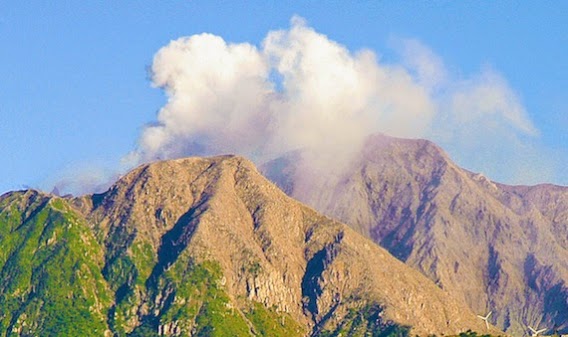
It is also on a mission of rebirth from the devastation caused by the eruption of the Soufrière Volcano in the mid-1990s which destroyed the capital town of Plymouth, left more than half of the island’s residents homeless and covered more than 30 percent of the island with lava and ash.

Today, Montserrat has plans for a new capital town, a new port, a vibrant hospitality and tourism industry and the regeneration of private enterprise equipped with a sustainable infrastructure. Geothermal power will play a major role in this transformation.

Ironically, the same geological forces that created the Soufrière Volcano will now be harnessed to power the island’s electricity grid from a geothermal source. Iceland Drilling Company Ltd., a leading high-tech company in the field of high temperature deep geothermal drilling, has successfully tested two geothermal wells on Montserrat and the foundation is now in place for a third well backed by the UK government, part of its continuing support for the British Overseas Territory’s Master Plan for Growth.

It is our hope that Montserrat’s geothermal resources and sustainable, “green” energy infrastructure will attract environmentally-conscious developers and investors as “founding fathers” of our new capital town.

Ultimately, “going green” in Montserrat may help the nation move to the forefront in eco-tourism while driving a self-sufficient economic future.

In Dominica, geothermal exploration supported by the European Union brings with it the hopes of clean energy generation sufficient to supply the entire island and provide electricity for export as well.

Nevis, another volcanic island, is hoping to become a regional supplier of power to nearby St. Kitts, among others, and has said it intends to begin exploratory well-digging at various sites around the island.

Geothermal power has the possibility of transforming the Caribbean.

It will allow for a rise in the standard of living, an increase in job opportunities and a cleaner environment for residents and visitors to enjoy.

If nations can reduce, or eliminate, their reliance on expensive, environmentally harmful fossil fuels, they will not only pave the way for energy independence but also create an attractive environment for investors to support sustainable practices and economic development that will benefit the entire region. More


Disaster risk and climate change dominate agenda at Small Island Developing States Conference

Over 2,000 delegates have gathered in the Samoan capital Apia for the 3rd International Conference on Small Island Developing States (SIDS).

The conference, which takes place every ten years, brings together representatives from governments, the UN, the International Federation of Red Cross and Red Crescent Societies (IFRC) and other development and civil society actors; to discuss emerging challenges facing countries in the three SIDS regions: the Pacific, the Caribbean, and the African, Indian Ocean, Mediterranean and South China Sea (AIMS).

President of the conference, Honourable Tuilaepa Lupesoliai Sailele Malielegaoi, Prime Minister of Samoa, said in his opening speech that sympathy and pity will not provide solace or halt the devastating impact of climate change.

“Our message is the same today as it was in Rio in 1992: climate change is a global problem, yet international action to address it remains grossly inadequate. We want all our partners to step forward and commit to address once and for all the root causes of climate change.”

This message was reinforced by UN Secretary General, Ban ki-Moon who highlighted the ever-increasing threat that many countries are confronting as a consequence of climate change. “The plight of millions of people in small island development states demands an international response. By failing to act, we condemn the most vulnerable to unacceptable disruption to their lives as a result of the actions of those a world away,” he said.

Sustaining development

The theme for SIDS 2014 is the sustainable development of Small Island Developing States through genuine and durable partnerships.

In his statement during the multi-stakeholder partnership dialogue on climate change and disaster risk management, IFRC president Tadateru Konoé, called upon governments to strengthen resilience and disaster preparedness as a first line of defence for vulnerable people.

“Small Island Developing States already cope with disproportionate consequences of disasters. The aim of IFRC and its member National Red Cross and Red Crescent Societies is to build their empirical knowledge and increase their resilience by bridging traditional community support systems with science and technology.”

During the conference the IFRC signed a three-year memorandum of understanding with the Secretariat of the Pacific Regional Environment Programme (SPREP) under which Red Cross National Societies in ten countries across the Pacific will work with National Meteorological Offices to make climate and weather information more accessible, relevant and user-friendly for users such as fishers and farmers.

“The partnership is about strengthening the local humanitarian response and reducing disaster risk by making climate and weather information relevant to the needs of communities living on the frontline of climate change,” said Jagan Chapagain, director of the IFRC in Asia Pacific.

Another unique project highlighted during a side event at the conference on displacement in the context of disasters and the effects of climate change was the ‘At the Water’s Edge’ project, involving the Grenada Red Cross, Government of Grenada, the Nature Conservancy and Grenada Fund for Conservation partnership. The project has shown how sharing community and environmental expertise through education, mangrove replanting and coral reef protection has helped to reduce disaster risk and strengthen the capacity of local communities to adapt to the effects of climate change.

In his closing remarks, President Konoé made it clear that while action was necessary to help communities adapt to the consequences of climate change, change in global policy is equally important. “The IFRC calls for the strong integration of climate change and disaster risk reduction into upcoming frameworks,” he said. “It is critical that governments arrive at a strong second Hyogo Framework for Action, a legally binding climate change agreement and a post-2015 development agreement with community resilience at its core. More


How the Brutalized Become Brutal

The horrific pictures of the beheading of American reporter James Foley, the images of executions of alleged collaborators in Gaza and the bullet-ridden bodies left behind in Iraq by the Islamic State of Iraq and the Levant are the end of a story, not the beginning.

A Palestinian youth wears a bandoleer
of cartridge casings left by the Israeli army
next to his destroyed home in Beit Hanoun,
Gaza Strip, earlier this month. AP/Hatem Moussa

They are the result of years, at times decades, of the random violence, brutal repression and collective humiliation the United States has inflicted on others.

Our terror is delivered to the wretched of the earth with industrial weapons. It is, to us, invisible. We do not stand over the decapitated and eviscerated bodies left behind on city and village streets by our missiles, drones and fighter jets. We do not listen to the wails and shrieks of parents embracing the shattered bodies of their children. We do not see the survivors of air attacks bury their mothers, fathers, brothers and sisters. We are not conscious of the long night of collective humiliation, repression and powerlessness that characterizes existence in Israel’s occupied territories, Iraq and Afghanistan. We do not see the boiling anger that war and injustice turn into a caldron of hate over time. We are not aware of the very natural lust for revenge against those who carry out or symbolize this oppression. We see only the final pyrotechnics of terror, the shocking moment when the rage erupts into an inchoate fury and the murder of innocents. And, willfully ignorant, we do not understand our own complicity. We self-righteously condemn the killers as subhuman savages who deserve more of the violence that created them. This is a recipe for endless terror.

Chaim Engel, who took part in the uprising at the Nazis’ Sobibor death camp in Poland, described what happened when he obtained a knife and confronted a German in an office. The act he carried out was no less brutal than the beheading of Foley or the executions in Gaza. Isolated from the reality he and the other inmates endured at the camp, his act was savage. Set against the backdrop of the extermination camp it was understandable.

“It’s not a decision,” Engel said. “You just react, instinctively you react to that, and I figured, ‘Let us to do, and go and do it.’ And I went. I went with the man in the office, and we killed this German. With every jab, I said, ‘That is for my father, for my mother, for all these people, all the Jews you killed.’ ”

Any good cop, like any good reporter, knows that every criminal has a story. No one, except for perhaps a few psychopaths, wakes up wanting to cut off another person’s head. Murder and other violent crimes almost always grow out of years of abuse of some kind suffered by the perpetrator. Even the most “civilized” among us are not immune to dehumanization.

The enemies on the modern battlefield seem elusive because death is usually delivered by industrial weapons such as aerial drones or fighter jets that are impersonal, or by insurgent forces that leave behind roadside bombs or booby traps or carry out hit-and-run ambushes. This elusiveness is the curse of modern warfare. The inability of Sunni fighters in Iraq to strike back at jets and drones has resulted in their striking a captured journalist and Shiite and Kurdish civilians.

U.S. soldiers and Marines in the occupations of Iraq and Afghanistan, and Israeli soldiers in assaults on Gaza, have been among those who committed senseless acts of murder. They routinely have gunned down unarmed civilians to revenge killings of members of their units. This is a reaction I saw in several wars. It is not rational. Those murdered were not responsible, even indirectly, for the deaths of their killers’ comrades, just as Foley and the Shiites and Kurds executed in Iraq were not responsible for the deaths of Sunni militants hit by the U.S. Air Force.

J. Glenn Gray, who fought in World War II, wrote about the peculiar nature of vengeance in “The Warriors: Reflections on Men in Battle”:

When the soldier has lost a comrade to this enemy or possibly had his family destroyed by them through bombings or through political atrocities, so frequently the case in World War II, his anger and resentment deepen into hatred. Then the war for him takes on the character of a vendetta. Until he has himself destroyed as many of the enemy as possible, his lust for vengeance can hardly be appeased. I have known soldiers who were avid to exterminate every last one of the enemy, so fierce was their hatred. Such soldiers took great delight in hearing or reading of mass destruction through bombings. Anyone who has known or been a soldier of this kind is aware of how hatred penetrates every fiber of his being. His reason for living is to seek revenge; not an eye for an eye and a tooth for a tooth, but a tenfold retaliation.

Those killed are not, to the killers, human beings but representations of what they fear and hate. The veneer of the victim’s humanity, they believe, is only a mask for an evil force. The drive for vengeance, for “tenfold retaliation,” among those who are deformed by violence cannot be satiated without rivers of blood—even innocent blood. And Americans do as much of this type of revenge killing as those we fight. Our instruments of war allow us to kill from a distance. We therefore often lack any real consciousness of killing. But this does not make us any less depraved. More


Ned Breslin: thinking big about water supply

Jordan Levy on Ned Breslin

Ned Breslin believes that too many organisations who are providing clean water and sanitation are chasing numbers. He wants to see them be bold enough to operate towards a long-term vision for clean water for everyone. This may seem simple, but he says this is not the way most in the sector operate. He believes these short-term achievements do not always contribute towards solving the systematic issues. I am inspired by Ned and his organisation because they don’t rely on short-term outputs to build legitimacy regardless of outside pressure to do so. They are not afraid to say that real solutions take time.

Ned Breslin on Water for People

The problem is clear. Three decades of support for water projects from NGOs, governments and large and small donors alike have not transformed people’s lives and country’s economic trajectories as such massive investments should.

Few celebrate the report from the World Health Organisation and Unicef (pdf) that shows progress on water supply worldwide – as contradictory evidence paints a much more unfortunate story. The European Union’s scathing audit of water aid investments and the Dutch government’s brave evaluation of their own work (pdf) offer sobering insight into water-sector history and challenges moving forward.

The impact of such failure is also sadly clear. Girls continue to fetch polluted water from muddy puddles and rivers, walking past broken hand-pumps and schools they would be attending if they had the time. To break this cycle, Water For People, the IRC, Water and Sanitation for the Urban Poor, One Drop, and some members of the Millennium Water Alliance are partnering with governments and the local private sector to change the water sector narrative.

We are testing this initiative – called Everyone Forever (EF) – across Africa, Asia and Latin America. The concept is that districts maintain water services for everyone without the need for further philanthropic aid or support.

EF takes a page from polio and smallpox eradication efforts that saturated entire districts, consisting of millions of people and hundreds and thousands of villages. “Everyone” is only achieved when every family, school and clinic in a target district has access to water services, that includes the hardest to reach, the poorest, the disabled, the politically marginalised and the socially ostracised. The poorest in those areas are receiving water services because other residents are covering their tariffs. “Forever” is only achieved when districts show they can sustain these investments over time as populations grow, water resources are threatened, economies change and infrastructure ages.

EF works with governments and insists that their financial support is essential for success. We have seen a 39% increase in government investments towards EF in the past year, with examples like the district of Rulindo in Rwanda now spending over $1m a year on water infrastructure.

Two districts – Chinda, Honduras and Cuchumuela, Bolivia – have reached full coverage verified by the national government. Another five areas are close, including an island in the Ganges in India where half a million pilgrims use the local sanitation system every year (pdf).

One mayor in Bolivia now brags about his district achieving “everyone” status. As a result, other mayors across the country are replicating EF, channeling their investments towards full district coverage. Similar spread is happening in India, Rwanda, Ghana, Uganda and Honduras.

Momentum is now building scaled work that excludes nobody, transcends individual communities and is focused on sustainability. Everyone Forever offers a model that is hard to argue against by politicians and development agencies. The alternative – more projects and hollow slogans of coverage delinked from investments – is simply not good enough anymore. More

Ned Breslin is the CEO of Water for the People. Follow @NedBreslin on Twitter.


Leaders sign historic sustainable energy & climate resilient treaty

September 2: Over 150 delegates and members of the international development community from more than 45 countries were stunned to see leader after leader approach the podium to sign a historic sustainable energy and climate resilient treaty that will significantly change the lives and destiny of over 20 million small islanders, for the better.

Led by the Deputy Prime Minister of Samoa, Hon. Fonotoe Nuafesili Pierre Lauofo, multiple leaders from the Pacific, Caribbean and African, Indian Ocean and Mediterranean Sea (AIMS) regions, forcefully raised their voices in unison and accepted responsibility for fulfilling the commitment to the Small Island Developing States (SIDS) Sustainable Energy mechanism – SIDS DOCK. The opening for signature of this historic SIDS DOCK Treaty – a SIDS-SIDS Initiative – was a major highlight of the first day of the United Nations (UN) Third International Conference on SIDS, taking place in Apia, Samoa, from 1-4 September.

The unprecedented and unexpected number of Heads of State and Government present, sent a strong signal to the standing room only audience, the SIDS population and the international community, demonstrating how deeply committed SIDS leaders are and that they all firmly believe that SIDS must, have and will take responsibility for charting the future of their countries towards a path that would see a total transformation of the SIDS economy away from fossil fuels, to that of one driven by low carbon technologies. The event was considered so important to the Republic of Cabo Verde, that the Prime Minister, Hon. José Maria Neves, excused himself and his entire delegation from the Plenary Hall, to ensure that Cabo Verde, a SIDS DOCK Founding Member was well-represented at the signing – the Cabo Verde Government has one of the most ambitious plans in SIDS, that aims to achieve 100 penetration of renewable energies in Cabo Verde, by 2020.

More than half the members of the Alliance of Small Island States (AOSIS) were present for the signing of the historic treaty, witnessed by the SIDS DOCK partners Denmark, Japan and Austria, whose kind and generous support facilitated SIDS DOCK start -up activities; also present were SIDS DOCK partners, the United Nations Development Programme (UNDP), the World Bank, the United Nations Industrial Development Organization (UNIDO) and the Clinton

Foundation. The treaty was signed by the governments of Barbados, Belize, Bahamas (Commonwealth of the), Dominica (Commonwealth of), Cabo Verde (Republic of), Cook Islands, Dominican Republic, Fiji (Republic of), Grenada, Guinea Bissau, Kiribati (Republic of), Niue, Palau (Republic of), Saint Kitts and Nevis, Saint Vincent and the Grenadines, Samoa (Independent State of), Seychelles (Republic of), and Tuvalu.

The Statute will remain open for signature in Apia, Samoa until September 5, and will reopen for signature in Belmopan, Belize, from September 6, 2014 until it enters into force. Belize is the host country for SIDS DOCK, with Samoa designated as the location for the Pacific regional office. More


UN warns frequency of extreme weather will grow with climate change

The UN is set to release a series of imagined, but probable weather forecasts to highlight how extreme weather events will increase in frequency and intensity over the next three decades.

The videos, to be released ahead of a crucial UN climate summit on September 23 in New York, use fictional weather forecasts to illustrate how global warming will change the world by 2050, if mitigation action is not taken.

A teaser video has been released, to be followed by 14 ‘weather reports from the future’ from around the world.

The forecasts are described as “imaginary but realistic” if global warming continues at the pace currently seen. Scientists warn that temperatures are currently on track to increase by 4C above pre-industrial levels, double the 2C limit that scientist believe would lead to irreversible tipping points.

Weather presenters from around the world were invited to make the videos, with the US Weather Channel and ARD in Germany taking part.

“What they created are only possible scenarios, of course, not true forecasts,” the WMO said.

“Nevertheless, they are based on the most up-to-date climate science, and they paint a compelling picture of what life would be like on a warmer planet.”

The UN is calling on world leaders to make “bold pledges” regarding climate change at the summit later this month. It is hoped the summit will act as a step towards the agreement of a global deal next year in Paris.

UN general-secretary Ban Ki-Moon commented, “Climate change is affecting the weather everywhere. It makes more extreme and disturbs established patterns. That means more disasters; more uncertainty.” More

Photo: U.S. Geological Survey via Flickr