ISIS and Our Times – Noam Chomsky

It is not pleasant to contemplate the thoughts that must be passing through the mind of the Owl of Minerva as the dusk falls and she undertakes the task of interpreting the era of human civilization, which may now be approaching its inglorious end.

Bajid Kandala refugee cam, Iraq

The era opened almost 10,000 years ago in the Fertile Crescent, stretching from the lands of the Tigris and Euphrates, through Phoenicia on the eastern coast of the Mediterranean to the Nile Valley, and from there to Greece and beyond. What is happening in this region provides painful lessons on the depths to which the species can descend.

The land of the Tigris and Euphrates has been the scene of unspeakable horrors in recent years. The George W. Bush-Tony Blair aggression in 2003, which many Iraqis compared to the Mongol invasions of the 13th century, was yet another lethal blow. It destroyed much of what survived the Bill Clinton-driven UN sanctions on Iraq, condemned as “genocidal” by the distinguished diplomats Denis Halliday and Hans von Sponeck, who administered them before resigning in protest. Halliday and von Sponeck's devastating reports received the usual treatment accorded to unwanted facts.

One dreadful consequence of the US-UK invasion is depicted in a New York Times “visual guide to the crisis in Iraq and Syria”: the radical change of Baghdad from mixed neighborhoods in 2003 to today's sectarian enclaves trapped in bitter hatred. The conflicts ignited by the invasion have spread beyond and are now tearing the entire region to shreds.

Much of the Tigris-Euphrates area is in the hands of ISIS and its self-proclaimed Islamic State, a grim caricature of the extremist form of radical Islam that has its home in Saudi Arabia. Patrick Cockburn, a Middle East correspondent for The Independent and one of the best-informed analysts of ISIS, describes it as “a very horrible, in many ways fascist organization, very sectarian, kills anybody who doesn't believe in their particular rigorous brand of Islam.”

Cockburn also points out the contradiction in the Western reaction to the emergence of ISIS: efforts to stem its advance in Iraq along with others to undermine the group's major opponent in Syria, the brutal Bashar Assad regime. Meanwhile a major barrier to the spread of the ISIS plague to Lebanon is Hezbollah, a hated enemy of the US and its Israeli ally. And to complicate the situation further, the US and Iran now share a justified concern about the rise of the Islamic State, as do others in this highly conflicted region.

Egypt has plunged into some of its darkest days under a military dictatorship that continues to receive US support. Egypt's fate was not written in the stars. For centuries, alternative paths have been quite feasible, and not infrequently, a heavy imperial hand has barred the way.

After the renewed horrors of the past few weeks it should be unnecessary to comment on what emanates from Jerusalem, in remote history considered a moral center.

Eighty years ago, Martin Heidegger extolled Nazi Germany as providing the best hope for rescuing the glorious civilization of the Greeks from the barbarians of the East and West. Today, German bankers are crushing Greece under an economic regime designed to maintain their wealth and power.

The likely end of the era of civilization is foreshadowed in a new draft report by the Intergovernmental Panel on Climate Change, the generally conservative monitor of what is happening to the physical world.

The report concludes that increasing greenhouse gas emissions risk “severe, pervasive and irreversible impacts for people and ecosystems” over the coming decades. The world is nearing the temperature when loss of the vast ice sheet over Greenland will be unstoppable. Along with melting Antarctic ice, that could raise sea levels to inundate major cities as well as coastal plains.

The era of civilization coincides closely with the geological epoch of the Holocene, beginning over 11,000 years ago. The previous Pleistocene epoch lasted 2.5 million years. Scientists now suggest that a new epoch began about 250 years ago, the Anthropocene, the period when human activity has had a dramatic impact on the physical world. The rate of change of geological epochs is hard to ignore.

One index of human impact is the extinction of species, now estimated to be at about the same rate as it was 65 million years ago when an asteroid hit the Earth. That is the presumed cause for the ending of the age of the dinosaurs, which opened the way for small mammals to proliferate, and ultimately modern humans. Today, it is humans who are the asteroid, condemning much of life to extinction.

The IPCC report reaffirms that the “vast majority” of known fuel reserves must be left in the ground to avert intolerable risks to future generations. Meanwhile the major energy corporations make no secret of their goal of exploiting these reserves and discovering new ones.

A day before its summary of the IPCC conclusions, The New York Times reported that huge Midwestern grain stocks are rotting so that the products of the North Dakota oil boom can be shipped by rail to Asia and Europe.

One of the most feared consequences of anthropogenic global warming is the thawing of permafrost regions. A study in Science magazine warns that “even slightly warmer temperatures [less than anticipated in coming years] could start melting permafrost, which in turn threatens to trigger the release of huge amounts of greenhouse gases trapped in ice,” with possible “fatal consequences” for the global climate.

Arundhati Roy suggests that the “most appropriate metaphor for the insanity of our times” is the Siachen Glacier, where Indian and Pakistani soldiers have killed each other on the highest battlefield in the world. The glacier is now melting and revealing “thousands of empty artillery shells, empty fuel drums, ice axes, old boots, tents and every other kind of waste that thousands of warring human beings generate” in meaningless conflict. And as the glaciers melt, India and Pakistan face indescribable disaster.

Sad species. Poor Owl.

© 2014 Noam Chomsky
Distributed by The New York Times Syndicate


Israel’s Video Justifying Destruction of a Hospital Was From 2009

The video clip showing apparent firing from an annex to the hospital was actually shot during Israel's 2008-09 “Operation Cast Lead,” and the audio clip accompanying it was from an incident unrelated to Al Wafa. (Screengrab: The Times of Israel)

A video distributed by the Israeli military in July suggesting that Palestinian fighters had fired from the Al Wafa Rehabilitation and Geriatric Hospital in Gaza City was not shot during the recent Israeli attack on Gaza, and both audio and video clips were manipulated to cover up the fact that they were from entirely different incidents, a Truthout investigation has revealed.

The video, released by the Israel Defense Forces (IDF) on July 23, the same day Israeli airstrikes destroyed Al Wafa, was widely reported by pro-Israeli publications and websites as proving that the hospital was destroyed because Hamas had turned the hospital into a military facility. But the video clip showing apparent firing from an annex to the hospital was actually shot during Israel's 2008-09 “Operation Cast Lead,” and the audio clip accompanying it was from an incident unrelated to Al Wafa.

The misleading video was only the last in a series of IDF dissimulations about Al Wafa hospital that included false claims that Hamas rockets had been launched from the hospital grounds, or very near it, and that the hospital had been damaged by an attack on the launching site.

The IDF began to prepare the ground for the destruction of Al Wafa hospital well before Israeli ground troops entered Gaza on July 17. On July 11, the IDF fired four warning rockets on the fourth floor of Al Wafa, making a large hole in the ceiling – the standard IDF signal that a building was going to be destroyed by an airstrike.

On July 17, the hospital was hit by a total of 15 rockets, according to Dr. Basman Alashi, Al Wafa's director. After the first few rockets, a phone call from the IDF “asked how much time do you need to evacuate?” he told Truthout. After the second and third floors were largely destroyed, the patients' rooms were filled with smoke and the hospital lost electricity, he gave the order to evacuate the hospital.

An IDF spokesman told Allison Deger of Mondoweiss that Hamas rocket launches had come “from exactly near the hospital, 100 meters near.” A slide show released by the IDF August 19 includes an aerial view of Al Wafa Hospital with two alleged rocket launching sites marked that are clearly much farther from the hospital than the 100 meters.

Even if that IDF claim of 100 meters were accurate, however, it was more than sufficient to allow the IDF to hit the launch site with precision-guided munitions without damaging the hospital. Israeli air to ground missiles, especially those fired from drones, are known to be able to hit small targets without causing collateral damage to nearby buildings. An IDF video posted on August 9, for example, shows a missile destroying what is said to be a hidden rocket launch site without harming a mosque only a few meters away from the explosion.

IDF spokesman Captain Eytan Buchman nevertheless blandly suggested that it was collateral damage from striking the launch site. He said the IDF was “left with no choice” but to “target the launcher with the most precise munitions capable of ensuring its destruction.”

On July 21, the IDF Spokesman's Office pushed its propaganda line linking Al Wafa and rocket launching sites even further, claiming in a tweet and on its blog, “Hamas fires rockets from Wafa hospital in the Gaza neighborhood of Shujaiya.” Under that headline was an aerial photo enhanced to highlight what was said to be Al Wafa Hospital, along with a red dot representing an M-75 rocket launch site that was not on the hospital grounds, but appeared to be a few meters away.

But the building shown in the aerial photo was not Al Wafa hospital, as Dr. Alashi quickly pointed out. A Google map of Al Wafa hospital shows none of the buildings resemble the one the IDF identified as Al Wafa. The building in the IDF image belongs to the Right to Life Society.

After that prevarication had been revealed, the IDF added a new claim that “the hospital grounds” had been used by Hamas and the Palestinian Islamic Jihad as “a post enabling terrorists to open fire at soldiers.”

The IDF said that Hamas had “fired at Israel and at IDF forces from the hospital” despite warnings from the IDF, and the IDF had been forced to attack targets on the hospital site.

The statement was accompanied by a video purporting to document the firing at Israeli troops. Based on the camera angle and altitude, the video was taken by an Israeli drone, according to a former US intelligence officer, with experience in interpreting military-related images, who analyzed the video for Truthout.

The first segment of the video is a grainy, black-and-white aerial shot of a building that starts with the legend, “Terrorists Threaten IDF from inside Wafa Hospital.” The building shown is not Al Wafa hospital, however, but an annex to the hospital that had been empty, both Dr. Alashi and Charlie Andeasson, a Swedish activist who was in the hospital when it was attacked on July 16, told Truthout.

The eight-second video shows what could be two brief bursts of fire from one of the windows on the third floor and then a third flash in a fourth story window. The former US intelligence officer confirmed that the footage of the building was selected from two different times of day. After the first three seconds of the video, the camera angle and the amount of light both change perceptibly. Nevertheless an exchange between the two voices on the audiotape accompanying the video continues as though the scene were continuous during the entire eight seconds.

The first voice heard on the audio recording says, in Hebrew, “Do you see this firing? Have spotted fires from within the house.” The English subtitles accompanying the audio add “hospital” in parentheses after the word “house,” but Seattle-based blogger on Israeli affairs Richard Silverstein, who speaks Hebrew, confirmed to Truthout after listening to the audio clip that the speaker uses the word “bayit,” which can only mean “house.”

A second voice then says, according to the subtitles, “Positive, fire from within the house.” But the speaker actually uses the term “small house” (“bayit ha katan hazeh”), according to Silverstein.

Those references to firing from a small house indicate that the audio clip was taken from an entirely different incident at another location. That device was obviously used because there was no audio of an incident involving firing from the hospital.

Dr. Alashi said he believes the eight-second video clip portrays firing from the annex that occurred in the 2008-09 Israeli attack on Gaza. “People confirmed to me that there was firing from the building then,” he told Truthout. That building was, in fact, attacked on January 16, 2009, by Israeli tanks only 70 meters away from the hospital, damaging the third and fourth floors of the building – the very floors from which the flashes are shown in the video – as the UN Fact-Finding Mission noted in its September 2009 report.

The last segment of the video showing the bombing of the Al Wafa hospital, bears the legend “secondary explosion” – meaning explosions of weapons – as each building is shown being destroyed, in line with the Israeli argument throughout the operation that Hamas stored rockets and other weapons in hospitals, schools and mosques.

The video fist shows the hospital itself being blown up, followed by heavy billowing smoke covering the entire hospital and then another flash of fire. But the former intelligence official who viewed the video said that flash indicated another Israeli missile strike on the target rather than a secondary explosion.

The clip then cuts to the destruction of the annex, again with the “secondary explosion” legend. The billowing smoke from the initial bomb explosion covers the building, and then two or three small puffs of darker smoke appear. Those puffs of smoke would suggest a secondary explosion, according to the former US intelligence officer. But he also observed that a hospital would have flammable materials other than hidden weapons that could cause the darker smoke to appear.

Given the existence of Hamas' complex network of tunnels, which provided plenty of storage space for its rockets and other weaponry, it would have made no sense for Hamas to store rockets in a hospital that it knew had already been targeted by the IDF.

In its final seconds, the video focuses in to show a square which the legend describes as a “tunnel opening near Al Wafa.” But Dr. Alashi told Truthout that it is actually a water well.

The IDF real reason for the destruction of Al Wafa hospital appears to be related to the determination to raise the cost to the civilian population of Gaza for Palestinian resistance, in line with the approach represented by its “Dahiya doctrine,” named after the Beirut suburb dominated by Hezbollah, much of which the Israeli Air Force reduced to rubble in the 2006 war.

That strategy, recognized as a violation of the international laws of war, was pursued most obviously in the complete destruction of every house in several square blocks in three separate areas of the Shujaiya district of Gaza City July 19-20. But it was also evident in IDF attacks on Al Wafa and in the series of mortar and artillery attacks on six different UN shelters from July 21 though August 3. Those attacks killed a total of 47 civilians and wounded 341, according to a survey of the incidents by The Guardian.

In none of the six cases where UN shelters were hit by IDF mortar shells was the military able to offer a plausible explanation, and in three cases, it offered no explanation whatever. More

Gareth Porter (@GarethPorter) is an independent investigative journalist and historian writing about US national security policy, and the recipient of the Gellhorn Prize for Journalism in 2012. His investigation of the US entry into war in Vietnam, Perils of Dominance: Imbalance of Power and the Road to War in Vietnam, was published by University of California Press in 2005.


Nearly Half the World’s Trash Is Burned, and That’s Worsening Climate Change

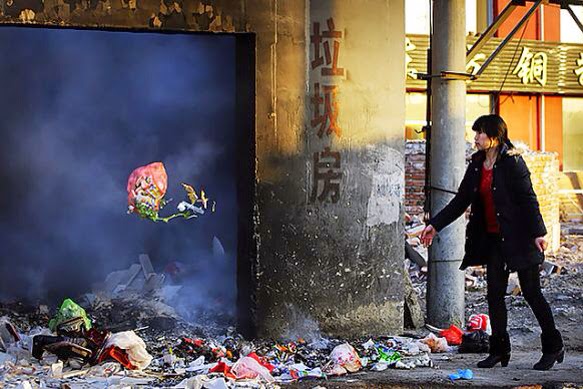
Nearly half the world’s trash is burned in the open, spewing pollutants into the atmosphere that contribute to climate change and affect human health, according to a new study.

Since such burning is largely unregulated and unreported, emissions of some pollutants have been underestimated by as much as 40 percent, said the researchers, who published their findings in the journalEnvironmental Science & Technology.

“I was shocked at the numbers,” said Christine Wiedinmyer, an atmospheric scientist at the National Center for Atmospheric Research and the study’s lead author. “They were much larger than I expected, particularly the air pollutants.”

The researchers estimated the amount of carbon dioxide, carbon monoxide, mercury, tiny particulate matter, and other pollutants released by burning trash.

Every year 970 million metric tons of food, paper, plastics, and metals are set aflame at homes, businesses, and dumps—roughly 41 percent of the world’s garbage, according to the study.

The garbage problem is likely to get worse. Researchers predict the world will triple its production of garbage to more than 11 million tons daily by 2100.

Fires can spring up at dumps with little warning. A fire in Iqaluit, the capital of the Canadian territory of Nunavut, broke out in May and burned for almost 100 days before fire crews began dousing the flames of the “dumpcano.” In March, a dump fire outside Bangkok blanketed neighborhoods with so much thick smoke that it could be seen by satellites.

Heavily populated countries, including China, the United States, India, Japan, Brazil, and Germany, produce the most waste, according to the study. China, India, Brazil, Mexico, Pakistan, and Turkey generate the most emissions from trash burning.

Trash burning produces mercury, chemicals known as polycyclic aromatic hydrocarbons, and fine particulate matter. These pollutants have been linked to heart and lung disease, neurological disorders, and cancer. Annual emissions of mercury and PAHs may have been underestimated by 10 to 40 percent, the researchers said.

Trash burning may also be clogging the air with far more particulate matter than was previously thought. A global tally of reported pollutants indicated that 34 million kilograms of tiny airborne particles called PM 2.5 are released into the air annually.

Wiedinmyer and her colleagues calculate that open burning shoots another 10 million kilograms into the atmosphere—an increase of 29 percent. In Sri Lanka, garbage burning produced five times more emissions of PM 10 (a larger particle) than was included in the official national tally.

These particles can penetrate deep into the lungs and have been associated with heart disease, asthma, and premature death. About 3.7 million people die prematurely from outdoor air pollution, according to the World Health Organization.

Open burning of garbage is closely related to poverty. Unregulated dump fires may be adjacent to settlements, putting the families that live there, especially women and children, at risk of health complications from the pollution. Some of these families derive income from the dump, removing valuable materials for resale.

The contribution of garbage burning to global carbon dioxide emissions is relatively small—only 5 percent of the 2010 global annual emissions. But on a country-by-country basis, it can be quite large. The study found that trash burning in Lesotho, Burundi, Mali, Somalia, and Sri Lanka produced more carbon dioxide than was recorded by the official registers.

Emissions from open burning of trash are rarely reported by environmental agencies, meaning the pollution goes uncounted and is left out of policy decisions.

Air Pollution Isn’t Just Bad for Your Health—It’s Taking Food off Your Plate

Brian Gullett, an environmental engineer at the United States Environmental Protection Agency and a coauthor of the paper, pointed out how difficult it is to calculate the emissions that come from open burning. Unlike with coal-burning power plants, no one knows the exact number of garbage-burning fires, and it can be difficult to trap and analyze the emissions.

Knowing where pollutants come from doesn’t change the burden they place on health, said Patrick Kinney, an expert on health and air pollution at Columbia University. But it does point to “which sources to go after in controlling the problem.”

Said Wiedinmyer, “If we’re looking at air pollution control strategies, we need to include all sources of air pollutants to get the most effective controls in place. If we’re missing a large source, it could lead to control strategies that aren’t going to work at all, or as well.” More


Iran-Contra Revisited

Iran-Contra Revisited: New Book Places Reagan at Center of 1980s Scandal

Lack of Legal or Legislative Closure to Affair Opened Path to Future Presidential Abuses

Narrative Spotlights Iranian, Israeli, Nicaraguan Perspectives

National Security Archive Electronic Briefing Book No. 483 – Posted September 5, 2014

For more information contact: +1 202/994-7000 or nsarchiv@gwu.edu

Washington, D.C., September 5, 2014 — A new book on the Iran-Contra affair shows that President Ronald Reagan stood at the epicenter of the scandal both in terms of his willingness to break the law in order to free American hostages in Lebanon and his failure to take account of the costs and consequences of his decisions, including the illicit conduct of numerous aides.

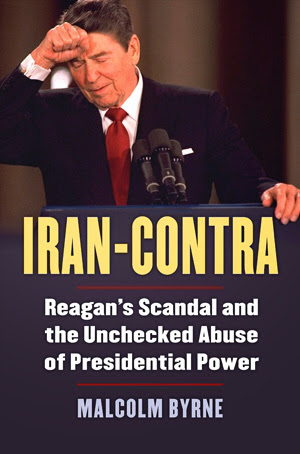
Advance praise for “Iran-Contra: Reagan’s Scandal and the Unchecked Abuse of Presidential Power” by Malcolm Byrne (University Press of Kansas, September 15, 2014), includes this from Seymour Hersh: “At last, the Reagan administration’s Iran-Contra affair finally has a comprehensive history worthy of the scandal … Malcolm Byrne has told the complex story in brilliant fashion.”

“Iran-Contra” details the historical, political, and institutional background against which the affair played out. Utilizing tens of thousands of pages of previously classified materials, the narrative describes in detail all the administration’s decisions and actions, and discusses the rationales invoked at the time as well as after the fact (explanations that sometimes differed widely).

Looking beyond the U.S. side, the volume explores — through documents and interviews — the views and actions of Iranians, Israelis, Nicaraguans, and others who played parts in the affair. Many of these insights are published here for the first time.

“Iran-Contra” is the first full-length account of the affair to study and assess the various official investigations that were convened — the Tower Commission, the joint congressional hearings, and the independent counsel’s inquiry. The limitations of each helped lead to an inconclusive end to the affair, which has had implications for the unchecked conduct of future presidents and their administrations.

While the scandal had many contributors — including Congress, which failed to avert either element of the affair or to pass meaningful legislation in its wake — the role of the president and his top aides stands out.

Today’s posting includes a revealing series of recently declassified high-level records that explore the president’s thinking and actions during the affair.

Check out today’s posting at the National Security Archive’s Website –http://www2.gwu.edu/~nsarchiv/NSAEBB/NSAEBB483/

Find us on Facebook – http://www.facebook.com/NSArchive

Unredacted, the Archive blog – http://nsarchive.wordpress.com/

________________________________________________________
THE NATIONAL SECURITY ARCHIVE is an independent non-governmental research institute and library located at The George Washington University in Washington, D.C. The Archive collects and publishes declassified documents acquired through the Freedom of Information Act (FOIA). A tax-exempt public charity, the Archive receives no U.S. government funding; its budget is supported by publication royalties and donations from foundations and individuals.
_________________________________________________________


Henan’s Big Drought. Is This From The South–North Water Transfer Project?

Mainland media reported that, since this summer, Henan Province rainfall is 60 percent less than usual over the same period since 1951, which is the lowest value over the same period of history. Pingdingshan City's main water source, Baiguishan reservoir water level is even lower than the dead water of 97.5 meters.

Henan Zhecheng County Shuangmiao Village Ms. Li, “over the entire summer it did not rain. The crops are dry. We are not allowed to irrigate the crops. If I use the well water, I probably cannot even have drinking water.”

Droughts have had a serious impact on local agriculture.

Ms. Li, “most places basically have no harvest. Individual crops can be harvested a little, but there is not much. If one place can harvest 40 percent, that’s the best.''

Hubei Province is rich in water during the main flood season this year. But rainfall in most areas decreased by more than 20 percent. 111 small reservoirs and over 50,000 ponds dried up; over 600 reservoirs are below the dead water level; Hanjiang River downstream water level dropped. Danjiangkou reservoir water level is only 142.77 meters on August 19. This is far below the SNWTP planned water level of 170 meters.

For this major disaster, the authorities explained that the drought is caused by a variety of climatic reasons. They claimed that, even if the current trend of precipitation is “north flood south dry”, it is still to “transfer water from south to north” to fill the gap of an especially severe water shortage in Beijing.

But the villagers in drought regions have different thoughts.

Ms. Li, ” we all think it is due to the SNWTP. In previous years, it was not as dry as in these years.”

Villagers discussed and believe that, SNWTP leads the Han River, the Yangtze River and the Yellow River water back and forth; the Three Gorges Reservoir also caused natural flowing rivers to change direction. Poor circulation, and loss of groundwater resources are also very serious. It has a massive impact not only to the surrounding geological environment, but also caused imbalances to the water, clouds, rain, and natural circulation system leading to a severe drought.

Living in Germany, water resources expert Wang Weiluo, has published many articles about Jiang Zemin who to “supply water to the 2008 Beijing Olympics”, hastily approved and launched the SNWTP in 2001. It introduced one billion cubic meters of water annually to Beijing, with diversion channels crossing more than 700 natural rivers in Central China. The project completely

broke the law of nature of these rivers; There is a serious engineering problem, even bigger than the Three Gorges, and the threat is to a wider area.

Beijing electrical engineer Mr. Tian, “in principle there is a problem, because it is not that the south is high, the north is low, and it naturally flows across. It is to artificially add a number of processes, which undermines the law of nature. I think this may be even worse than the Three Gorges Dam.”

Problems have been reported recently about SNWTP by the media. When the Diversion project tested the water on July 3 for the first time, the media exposed that the water source from Danjiangkou Reservoir exceeded the nitrogen content, and was seriously polluted. The official also acknowledged that water quality for nitrogen and phosphorus exceeded the standards. However he stressed that it would naturally degrade through long-distance transportation.

In late July, the mainland media also reported that SNWTP led to a decrease in the Han River water level. Due to the reduced water flow the fish were unable to spawn by end of July, while in previous years they had finished spawning. Yicheng city located by the Han River was without water three times since last year, the longest time was 48 hours.

In addition to the environmental damages, Beijing electrical engineer Mr. Tian pointed out that the drain from SNWTP is likely to outweigh the benefits.

Mr. Tian, “this unnatural process takes a lot of energy and wastes a lot of water. Introduce ten percent water, and finally arriving in Beijing, maybe even not two percent will get there.”

SNWTP has three water diversion routes, namely the east, middle and west line. Of which the middle and east lines cost amounted to 500 billion yuan, 2.5 times larger than the Three Gorges Project. The East line is pumped from the Yangtze River to Tianjin, Qingdao and Yantai direction. The Midline is from Danjiangkou Reservoir as a division of Yangtze tributary the Han River, in Beijing’s direction; The West line is from the upper Yangtze River to the Yellow River water diversion. The East line started in December 2002, until December 8, 2013 the water went through. The Midline started in December 2003, is expected to have water through in October 2014. The West Line has not been started yet. More


ADB Spotlights Pakistan’s Water Assessment and Management Plan


News: ADB Spotlights Pakistan’s Water Assessment and Management Plan

ADBSeptember 2014: The Asian Development Bank (ADB) has published a report titled ‘Water Balance: Achieving Sustainable Development through a Water Assessment and Management Plan – The Case of Federally Administered Tribal Areas (FATA), Pakistan.' The report presents the case of the development of the FATA Water Assessment and Management Plan, outlining elements necessary in such assessment, and emphasizing that inefficient and unsustainable management of development initiatives result from lack of information about water availability and cause watershed degradation.


Integrated water resources management (IWRM) was used as a core approach in the development of possible activities to promote the sustainable use of water resources in the FATA region. While noting much of the data used is historical, the report emphasizes that climate change is likely to alter current water availability patterns, and calls for integrating hydrological forecasting and climate change models into the assessment.


The report includes sections on: background; project area; assessing surface water availability; assessing groundwater; assessing water consumption; water balance model; water management plan; and conclusions. [Publication: Water Balance: Achieving Sustainable Development through a Water Assessment and Management Plan – The Case of Federally Administered Tribal Areas (FATA), Pakistan]


Read more: http://water-l.iisd.org/news/adb-spotlights-pakistans-water-assessment-and-management-plan/


High-level Event Discusses Renewable Energy in SIDS


News: High-level Event Discusses Renewable Energy in SIDS

1 September 2014: Participants recognized sustainable energy for all as a tool for eradicating poverty, combating climate change, creating economic opportunities and achieving sustainable development for all small island developing States (SIDS), at a high-level side event, titled ‘Linking SIDS and Sustainable Energy for All (SE4ALL): From Barbados to Samoa, and Beyond.' The event took place on the sidelines of the Third International Conference on SIDS, in Apia, Samoa, on 1 September 2014.


The SE4ALL side event aimed to build on commitments from the UN Conference on Sustainable Development (UNCSD, or Rio+20+) and the Barbados SIDS High-Level Conference on SE4ALL, to take stock of progress since these events and chart the way forward to ensure sustainable energy for all SIDS.


Speaking at the event, UN Secretary-General Ban Ki-moon said achieving the three targets of the SE4ALL initiative is an important part of putting the world on a pathway for keeping temperature rise below two degrees Celsius. He outlined the need for a new energy paradigm, particularly for SIDS, who he said are particularly vulnerable to climate change and faced inflated energy costs due to their remoteness, and he welcomed the proposal of a dedicated Sustainable Development Goal (SDG) on sustainable energy for all with a focus on access, efficiency and renewables. Ban encouraged all leaders to “bring bold actions and ideas and strong political vision and political will” to the UN Climate Summit.


“SIDS are creating opportunities and examples that, if replicated worldwide, could lead the transition from fossil fuel energy to renewable and sustainable energy,” said UN General Assembly President John Ashe in his remarks.


The panel was moderated by Helen Clark, UN Development Programme (UNDP) Administrator, and featured: Adnan Amin, Director-General, International Renewable Energy Agency (IRENA); Camillo Gonsalves, Foreign Minister of Saint Vincent and the Grenadines; Salvatore Bernabei, General Manager, Enel Green Power Chile and Andean Countries; Naoko Ishii, CEO and Chairperson of the Global Environment Facility (GEF); and Reginald Burke, Caribbean Policy Development Centre. Key messages included the importance of reducing risk to catalyze private investment, the leadership being taken by SIDS, and various SIDS initiatives on sustainable energy, such as SIDS Dock and IRENA's SIDS Lighthouse project.


Participants highlighted: energy costs and energy security; climate change; and challenges and vulnerabilities faced by SIDS, including their small size and the high costs of importing fossil fuels. They stressed SIDS' renewable energy potential and the importance of addressing energy access and efficiency, highlighting the role of partnerships to address these issues. [UN Press Release] [UN Secretary-General Statement] [UNDP Administrator Remarks] [IISD RS Meeting Coverage, 1 September] [IISD RS Sources]


read more: http://energy-l.iisd.org/news/high-level-event-discusses-renewable-energy-in-sids/


Peak Water

There is a lot of water on planet Earth – 326,000,000,000,000,000,000 gallons (329 trillion gallons), or 1,260,000,000,000,000,000,000 litres. About 70 percent of the planet is made of oceans and 98 percent of all the water on earth is in the oceans. That’s a lot of water.

Only 2 percent of all this water is fresh drinking water but most of that is locked up in the polar icecaps and glaciers – approximately 80 percent (or 1.6 percent of the planet’s water). Another 36 percent is in underground aquifers and wells and roughly 0.036 percent of our fresh water supply is found in lakes and rivers. That still leaves thousands of trillions of gallons for drinking. (Source: Environmental Science, howstuffworks)

But is that enough fresh drinking water for a population which is growing exponentially? Every second, four babies are born and two people die. In the time it will take to write this article, 20,000 people will have joined the human race.

‘Peak Oil’ has been extensively written about for many years “but the real threat to our future is peak water,” wrote Lester R. Brown, president of the Earth Policy Institute, in the summer of 2013 in theguardian. “There are substitutes for oil, but not for water. We can produce food without oil, but not without water.”

“The concept of “peak water” and its implications for the U.S. economy are less well explored and understood.” says Dr. Peter Gleick, President of the Pacific Institute. His April 2010 paper (Peak water limits to freshwater withdrawal and use) sparked such interest that the term “peak water” was chosen by The New York Times as one of their 33 “Words of the Year” for 2010. Gleick outlines three different definitions of “peak water”:

Peak Renewable Water. Most water resources are renewable, in the form of flows of rainfall, rivers, streams, and groundwater basins that are recharged over relatively short time frames. Renewable, however, does not mean unlimited. When human demands for water from a watershed reach 100% of renewable supply, we can’t take any more, and we reach “peak renewable” limits.

For a number of major river basins, we have reached the point of peak renewable water limits, including the Colorado River in the United States. All of the water of the Colorado (indeed, more than 100% of the average flow) is already spoken for through legal agreements with the seven US states and Mexico and in a typical year river flows now often fall to zero before they reach their ends. This is true for a growing number of rivers around the world.

Peak Nonrenewable Water. In some places, water comes from stocks of water that are effectively nonrenewable, such as groundwater aquifers with very slow recharge rates or groundwater systems damaged by compaction or other physical changes in the basin. When the use of water from a groundwater aquifer far exceeds natural recharge rates, this stock of groundwater will be depleted or fall to a level where the cost of extraction exceeds the value of the water when used, very much like oil fields. Continued production of water beyond natural recharge rates will become increasingly difficult and expensive as groundwater levels drop, leading to a peak of production, followed by diminishing withdrawals and use.

This kind of unsustainable groundwater use is already occurring in the Ogallala Aquifer in the Great Plains of the United States, the North China plains, parts of California’s Central Valley, and numerous regions in India. In these basins, extraction may not fall to zero, but current rates of pumping cannot be maintained. Worldwide, a significant fraction of current agricultural production depends on non-renewable groundwater. This is extremely dangerous for the reliability of long-term food supplies.

Peak Ecological Water. Water supports commercial and industrial activity and human health, but it is also fundamental for animals, plants, habitats, and environmentally dependent livelihoods. By some estimates, humans already appropriate almost 50% of all renewable and accessible freshwater flows, leading to significant ecological disruptions…the term “peak ecological water” refers to the point where taking more water for human use leads to ecological disruptions greater than the value that this increased water provides to humans.

Running Out of Water

The story of “Peak Water” is increasingly coming to the forefront in 2014 as large portions of the American mid-west are suffering through the worst drought in the last hundred years. Drinking water supplies from the tap have dried up in many communities forcing authorities to provide bottled-water rations and water for bathing and home use.

Tom Philpott writes in Mother Jones that the water crisis is much worse than previously known. Homeowners and farmers are having to drill deeper wells to harvest dwindling groundwater reserves. California has declared a drought emergency and imposed mandatory restrictions on water use with the levy of heavy fines for wasting water on non-essential activities – watering lawns and driveway, washing cars. National Geographic reports that:

Groundwater supplies in our major western aquifers — the Central Valley, the southern Ogallala and now those that underlie the Colorado River Basin – are disappearing. We simply pump out more water than is being naturally replenished, and as a result, groundwater levels are falling rapidly…..The American West is running out of water. More