Karachi thirsts for a water supply

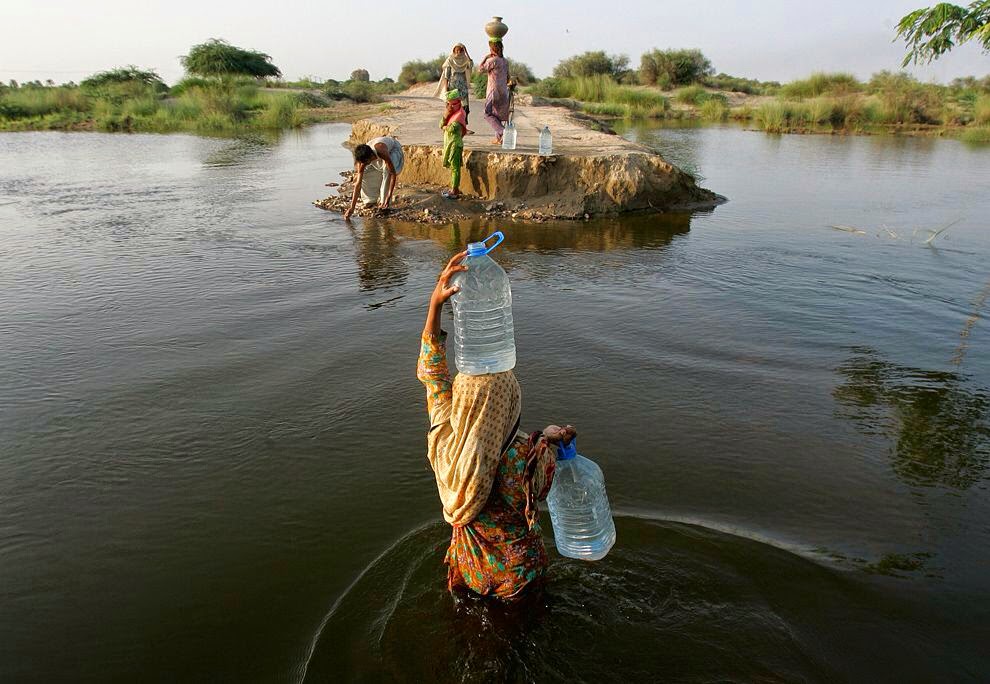
KARACHI: On the outskirts of the slums of Pakistan’s biggest city, protesters burning tires and throwing stones have what sounds like a simple demand: They want water at least once a week.

In Karachi people go days without getting water from city trucks, sometimes forcing them to use groundwater contaminated with salt. A recent drought has only made the problem worse. And as the city of roughly 18 million people rapidly grows, the water shortages are only expected to get worse.

“During the last three months they haven’t supplied a single drop of water in my neighbourhood,” protester Yasmeen Islam said. “It doesn’t make us happy to come on the roads to protest but we have no choice anymore.”

Karachi gets most of its water from the Indus River — about 550 million gallons per day — and another 100 million gallons from the Hub Dam that is supplied by water from neighbouring Balochistan province. But in recent years, drought has hurt the city’s supply.

Misbah Fareed, a senior official with the Karachi Water and Sewerage Board that runs the city’s water supplies, said that only meets about half the city’s needs — 1.2 billion gallons a day.

Karachi’s water distribution network has exacerbated the problem by forcing much of the city to get its water through tankers instead of directly from pipes. The Karachi Water and Sewerage Board operates 12 water hydrants around the city where tankers fill up and then distribute. Even people in the richest areas of the city get their water through tankers that come a few times a week to fill up underground cisterns.

But criminals have illegally tapped into the city’s water pipes and set up their own distribution points where they siphon off water and sell it.

“I personally know some people previously associated with drug mafias who now switched to the water tanker business,” Fareed said. “Just imagine how lucrative the business is.”

Other areas of Pakistan pump massive amounts of groundwater. But in the coastal city of Karachi, the underground water is too salty to drink. Many people have pumps but they use the water for things such as showering or washing clothes.

The water shortage is exacerbated by Karachi’s massive population. Pakistani military operations and American drone strikes in the northern tribal regions, as well as natural disasters such as flooding and earthquakes, have pushed people toward a city long seen as the economic heart of Pakistan.

The city is trying to increase the amount of water it gets from the Indus River by building another canal — dubbed the K4 project. But even if they were to get political approval from the capital to take more water from the river, it would take a minimum of four years to build.

But analysts say supply isn’t the only problem. Farhan Anwar, who runs an organisation called Sustainable Initiatives in Karachi, said the Karachi Water and Sewerage Board is horribly overstaffed and many of those are political appointees. The cost for water is also very low and the agency doesn’t collect all that it’s due, Anwar said. That’s made it difficult to upgrade the ageing pipes the system does have, meaning contamination and leakages are common.

Meanwhile, Karachi residents have to spend more money or walk further and further to get water. One elderly resident Aisha Saleem said in recent months even the little water they get from the water board is salty.

“Women and kids have to go miles by foot and carry drinking water every day,” she said More


Geneva beckons Rolph Payet – Seychelles environment and energy minister lands top UN post

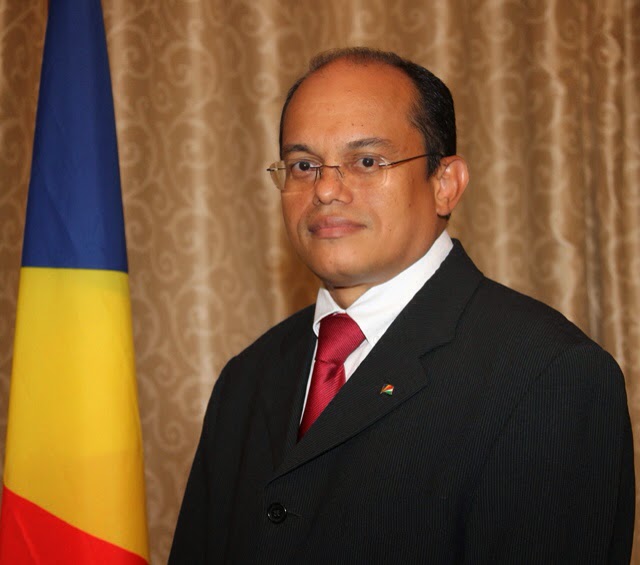
(Seychelles News Agency) – Seychelles Minister for Environment and Energy, Professor Rolph Payet has been appointed the new Executive Secretary of the Basel, Rotterdam and Stockholm Conventions by the United Nations Secretary General Ban Ki-moon.


Announcing the appointment in a press statement this afternoon, State House said Payet will contribute to the implementation of the mandates and missions of those three conventions including the formulation of their overall strategies and policies.

“He will also act in an advisory capacity to the UNEP Executive Director and the Presidents and the Bureaus of the conventions as well as their subsidiary bodies,” reads the statement.

The environment minister’s role will also include coordinating the preparation of the meetings and implement the substantive work programme of the conventions, including providing assistance to parties, in particular developing country parties and those with economies in transition.

He will also lead the development of strategies and policies and undertake fund raising and donor reporting, the strategic interagency work of the Secretariat in close coordination with UNEP and other Multilateral Environmental Agreements.

Responding to SNA in an email following this afternoon’s announcement, Payet said he is deeply honoured of such confidence in him to lead the conventions.

“I am equally happy that I have been chosen, coming from a Small Island Developing States, during this year dedicated to SIDS. My appointment represents the hard work of President James Michel and the government of Seychelles to continuously push so that Seychelles remains a leader in environment on the international scene. I will miss my work and even though I will be away from Seychelles I will continue to work for the benefit of my country,” he said.

Payet will take up his new post in October this year and he will be based in Geneva.

He will replace Kerstin Stendahl from Finland, who has been serving as interim since April this year following the retirement of US national Jim Willis as the Executive Director of the Basel, Rotterdam and Stockholm Conventions.

The Basel, Rotterdam and Stockholm Conventions.

The first convention is aimed at protecting human health and the environment from the effects of hazardous wastes.

This convention was adopted in 1989 and it entered into force in 1992.

The Rotterdam Convention, which entered into force ten years ago, also deals with the disposal of waste especially pesticides and industrial chemicals.

The third one, the Stockholm Convention which also came into force 10 years ago is a global treaty to protect human health and the environment from chemicals that remain intact in the environment for long periods. The latter or POPs is said to have serious consequences on humans and wildlife.

Seychelles president hails Payet’s appointment as “a memorable achievement.”

Seychelles President James Michel has hailed Payet’s appointment which he describes as “a memorable achievement.”

In a congratulatory message sent to the minister, Michel has wished him success in his new role and expressed his full cooperation and support in his tasks and challenges that lie ahead.

“Your appointment to this high office is a well-deserved recognition of your scientific and academic capabilities and crowns a professional life devoted to the environment and to the cause of Small Island Developing States. It also brings immense pride and satisfaction to Seychelles,” said Michel in the statement.

Michel said he would announce a new minister for environment and energy at a later date.

Payet and the environment cause

The 46 year old leaves vacant the portfolio of Environment and Energy which he assumed in March 2012.

Before that he was Special Advisor to the president on numerous environmental matters including sustainable development, biodiversity, climate change, energy and international environment policy

Payet who holds a Phd in Environmental Science from Linnaeus University of which is now an Associate Professor, is described as a leader in the protection of the environment on the international scene.

He has been at the forefront of several international discussions on issues affecting small islands developing states such as climate change, sustainable development, biodiversity and other environmental issues.

In recent years, he has been invited to participate or as a guest speaker on numerous international conference committees and panels including the United Nations General Assembly.

He has also contributed widely towards several publications on environmental issues.

Payet’s work in advancing environment, islands, ocean, biodiversity and climate issues at the global level has earned him numerous international awards and recognition.

In January 2007, he was recognised as a Young Global Leader by the World Economic Forum and in November that same year he shared in the IPCC Nobel Peace Prize as one of the authors of the Intergovernmental Panel on Climate Change (IPCC).

Locally, Payet has also helped to set up Seychelles first university, the University of Seychelles which was set up in September 2009. He is currently the pro chancellor of the university. More


“Containing the Resource Crisis”

LONDON – The proclamation of a new Cold War, following Russia’s annexation of Crimea, turned out to be alarmist and premature. However, it reflected the anxiety of today’s decision-makers in the face of a crumbling global order.


With emerging economies far from committed to established norms in international relations, many governments and multinational companies are feeling vulnerable about relying on others for vital resources – the European Union’s dependence on Russian gas being a case in point.

Competition for scarce resources is sorely testing our assumptions about global governance and cooperation, at a time when collective leadership is becoming ever more necessary. But even in the absence of overarching global legal frameworks, it is possible to maintain a sense of common security if the terms of resource investments are founded on long-term political understanding and commercial relationships, rather than short-term competition.

The stakes are high. Resource scarcity is closely linked to political risks. Consider, for example, the drought that decimated Russia’s 2010 wheat harvest. In response, Russia imposed export restrictions to shore up its domestic supplies, sending food prices soaring in its main export markets, especially Egypt. This in turn helped spark the political uprisings that spread rapidly across North Africa and the Middle East. Climate change is expected to trigger many more such chains of events.

One test case for such cooperation is the potentially explosive issue of the Nile Delta’s water resources. Britain’s colonial-era treaty has, since 1929, given Egypt a veto over any upstream river project that might affect the country’s water supply

One test case for such cooperation is the potentially explosive issue of the Nile Delta’s water resources. Britain’s colonial-era treaty has, since 1929, given Egypt a veto over any upstream river project that might affect the country’s water supply. Several Nile Basin countries, including Sudan and Ethiopia, have now ratified a new, Nile River Basin Cooperative Framework agreement, which Egypt has yet to sign. Given Egypt’s concerns about potential water shortages arising from Ethiopia’s new upstream hydropower plants, its assent is far from assured.

Indeed, in Egypt’s febrile political atmosphere, its newly elected president, General Abdul Fattah el-Sisi, may be tempted to escalate the threat of military action in response to Ethiopia’s hydropower projects. Such a move would send shockwaves through a region already reeling from conflict in South Sudan, Syria, Iraq, and Lebanon.

To avoid another dangerous political-environmental chain reaction, nudging all sides toward agreement will require achieving mutual recognition of resource concerns. Ethiopia must credibly guarantee the supply of water downstream, for example, by establishing a water-replenishment rate at its dam reservoirs that does not threaten the onward flow of water to Egypt. At the same time, Egypt, while retaining the fundamental right to protect its water supply, must recognize the interests of its upstream neighbors and be ready to negotiate in good faith a new Nile Basin treaty.

Multinational companies and sovereign investors like China, which have financed hydropower projects upstream, will come under increasing pressure to adopt a position. They, too, can play a positive role by considering the cross-border investments that will address critical interdependencies, like Egypt’s wasteful agricultural irrigation practices.

Similar resource-related tensions are surfacing in other parts of the world. Water stress and food security threaten to constrain India’s economic promise, as increasing coal-powered electricity generation diverts water resources away from agriculture. The political risks of investing in Nigeria’s agriculture sector are also rising as a result of the country’s demographic explosion, high inflation, weak rule of law, and insecure land rights, with wider political consequences.

These resource strains are aggravated by foreign investments that seek to meet developed-country consumers’ voracious demand for resources without attention to their impact on sustainability in the host countries. This virtual outsourcing of the industrialized world’s environmental impacts, apart from being hypocritical, is no basis for building a strategy for global environmental sustainability.

Instead, the world needs to invest in sustainable agriculture, renewable energy, and green infrastructure. To be sure, the most promising efforts by leading multinationals today must confront entrenched subsidies and vested political interests. Unless the necessary policy frameworks are put in place green investment initiatives will continue to struggle to achieve a meaningful scale. Moreover, developed and developing countries seem unable even to agree on a fair division of environmental responsibilities, even though they have become increasingly interdependent in trade, investment, and the supply of natural resources.

These difficulties should not stop us from trying. The Earth Security Initiative is working with the BMW Foundation to develop global roundtables on resource security over a two-year period, starting in Hangzhou, China, on July 17- 20. These high-level, informal meetings will bring together leaders from politics, business, and civil society in Europe and emerging economies in an effort to bridge just such differences.

We know what needs to be done, why it is important, and who must be involved to secure our planet’s long-term future. We must now address the equally vital question of how this will be achieved.

Read more at http://www.project-syndicate.org/commentary/alejandro-litovsky-addresses-the-increasingly-close-links-between-resource-scarcity-and-political-risk#qFDfi1xP668YyhLg.99


‘There Will Be No Water’ by 2040? Researchers Urge Global Energy Paradigm Shift

The world risks an “insurmountable” water crisis by 2040 without an immediate and significant overhaul of energy consumption and demand, a research team reported on Wednesday.

“There will be no water by 2040 if we keep doing what we're doing today,” said Professor Benjamin Sovacool of Denmark's Aarhus University, who co-authored two reports on the world's rapidly decreasing sources of freshwater.

Many troubling global trends could worsen these baseline projected shortages. According to the report, water resources around the world are “increasingly strained by economic development, population growth, and climate change.” The World Resources Institute estimates that in India, “water demand will outstrip supply by as much as 50 percent by 2030, a situation worsened further by the country's likely decline of available freshwater due to climate change,” the report states. “[P]ower demand could more than double in northern China, more than triple in India, and increase by almost three-quarters in Texas.”

“If we keep doing business as usual, we are facing an insurmountable water shortage — even if water was free, because it's not a matter of the price,” Sovacool said. “There's no time to waste. We need to act now.”

In addition to an expanding global population, economic development, and an increasing demand for energy, the report also finds that the generation of electricity is one of the biggest sources of water consumption throughout the world, using up more water than even the agricultural industry. Unlike less water-intensive alternative sources of energy like wind and solar systems, fossil fuel-powered and nuclear plants need enormous and continued water inputs to function, both for fueling thermal generators and cooling cycles.

The reports, Capturing Synergies Between Water Conservation and Carbon Dioxide Emissions in the Power Sectorand A Clash of Competing Necessities: Water Adequacy and Electric Reliability in China, India, France, and Texas and published after three years of research by Aarhus University, Vermont Law School and CNA Corporation, show that most power plants do not even log how much water they use to keep the systems going.

“It's a huge problem that the electricity sector do not even realize how much water they actually consume,” Sovacool said. “And together with the fact that we do not have unlimited water resources, it could lead to a serious crisis if nobody acts on it soon.”

Unless water use is drastically minimized, the researchers found that widespread drought will affect between 30 and 40 percent of the planet by 2020, and another two decades after that will see a severe water shortage that would affect the entire planet. The demand for both energy and drinking water would combine to aggressively speed up drought, which in turn could exacerbate large-scale health risks and other global development problems.

“The policy and technology choices made to meet demand will have immense implications for water withdrawals and consumption, and may also have significant economic, human health, and development consequences,” the report states.

The research says that utilizing alternative energy sources like wind and solar systems is vital to mitigating water consumption enough to stave off the crisis. “Unsubsidized wind power costs… are currently lower than coal or nuclear and they are continuing to drop,” the report states. When faced with its worst drought in 2011, Texas got up to 18 of its electricity from wind power and was able to avoid the kind of rolling blackouts that plague parts of China, where existing water shortages prevent power plants from operating.

An equally important step would be to shutter “thirsty” fossil fuel facilities in areas that are already experiencing water shortages, like China and India, where carbon emissions can be significantly more impactful.

“[We] have to decide where we spend our water in the future,” Sovacool said. “Do we want to spend it on keeping the power plants going or as drinking water? We don't have enough water to do both.” More


Water Resources Fact Sheet – Earth Policy Institute

JULY 30, 2014 Water scarcity may be the most underrated resource issue the world is facing today.

Seventy percent of world fresh water use is for irrigation.

Each day we drink nearly 4 liters of water, but it takes some 2,000 liters of water—500 times as much—to produce the food we consume.

1,000 tons of water is used to produce 1 ton of grain.

Between 1950 and 2000, the world’s irrigated area tripled to roughly 700 million acres. After several decades of rapid increase, however, the growth has slowed dramatically, expanding only 9 percent from 2000 to 2009. Given that governments are much more likely to report increases than decreases, the recent net growth may be even smaller.

The dramatic loss of momentum in irrigation expansion coupled with the depletion of underground water resources suggests that peak water may now be on our doorstep.

Today some 18 countries, containing half the world’s people, are overpumping their aquifers. Among these are the big three grain producers—China, India, and the United States.

Saudi Arabia is the first country to publicly predict how aquifer depletion will reduce its grain harvest. It will soon be totally dependent on imports from the world market or overseas farming projects for its grain.

While falling water tables are largely hidden, rivers that run dry or are reduced to a trickle before reaching the sea are highly visible. Among this group that has limited outflow during at least part of the year are the Colorado, the major river in the southwestern United States; the Yellow, the largest river in northern China; the Nile, the lifeline of Egypt; the Indus, which supplies most of Pakistan’s irrigation water; and the Ganges in India’s densely populated Gangetic basin.

Many smaller rivers and lakes have disappeared entirely as water demands have increased.

Overseas “land grabs” for farming are also water grabs. Among the prime targets for overseas land acquisitions are Ethiopia and the Sudans, which together occupy three-fourths of the Nile River Basin, adding to the competition with Egypt for the river’s water.

It is often said that future wars will more likely be fought over water than oil, but in reality the competition for water is taking place in world grain markets. The countries that are financially the strongest, not necessarily those that are militarily the strongest, will fare best in this competition.

Climate change is hydrological change. Higher global average temperatures will mean more droughts in some areas, more flooding in others, and less predictability overall.

Data and additional resources available at www.earth-policy.org

Research Contact: Janet Larsen (202) 496-9290 ex. 14 or jlarsen (at) earth-policy.org

Water Resources Fact Sheet
JULY 30, 2014

Water scarcity may be the most underrated resource issue the world is facing today.

Seventy percent of world fresh water use is for irrigation.

Each day we drink nearly 4 liters of water, but it takes some 2,000 liters of water—500 times as much—to produce the food we consume.

1,000 tons of water is used to produce 1 ton of grain.

Between 1950 and 2000, the world’s irrigated area tripled to roughly 700 million acres. After several decades of rapid increase, however, the growth has slowed dramatically, expanding only 9 percent from 2000 to 2009. Given that governments are much more likely to report increases than decreases, the recent net growth may be even smaller.

The dramatic loss of momentum in irrigation expansion coupled with the depletion of underground water resources suggests that peak water may now be on our doorstep.

Today some 18 countries, containing half the world’s people, are overpumping their aquifers. Among these are the big three grain producers—China, India, and the United States.

Saudi Arabia is the first country to publicly predict how aquifer depletion will reduce its grain harvest. It will soon be totally dependent on imports from the world market or overseas farming projects for its grain.

While falling water tables are largely hidden, rivers that run dry or are reduced to a trickle before reaching the sea are highly visible. Among this group that has limited outflow during at least part of the year are the Colorado, the major river in the southwestern United States; the Yellow, the largest river in northern China; the Nile, the lifeline of Egypt; the Indus, which supplies most of Pakistan’s irrigation water; and the Ganges in India’s densely populated Gangetic basin.

Many smaller rivers and lakes have disappeared entirely as water demands have increased.

Overseas “land grabs” for farming are also water grabs. Among the prime targets for overseas land acquisitions are Ethiopia and the Sudans, which together occupy three-fourths of the Nile River Basin, adding to the competition with Egypt for the river’s water.

It is often said that future wars will more likely be fought over water than oil, but in reality the competition for water is taking place in world grain markets. The countries that are financially the strongest, not necessarily those that are militarily the strongest, will fare best in this competition.

Climate change is hydrological change. Higher global average temperatures will mean more droughts in some areas, more flooding in others, and less predictability overall.

(PDF version)

Data and additional resources available at www.earth-policy.org
Research Contact: Janet Larsen (202) 496-9290 ex. 14 or jlarsen (at) earth-policy.org


Distributed Water Balance of the Nile Basin [HD]

Water is the new oil. This means that it will become, if it has not already done so, become a trigger for conflict.

See More


This visualization shows how satellite data and NASA models are being applied to study the hydrology of the Nile basin. The Tropical Rainfall Measurement Mission (TRMM) Multisensor Precipitation Analysis fTMPA) provides three-hourly estimates of rainfall rate across much of the globe.


Here we see the seasonal cycle of monthly precipitation derived from TMPA for Africa, including the Nile Basin. The annual migration of the Intertropical Convergence Zone (ITCZ) from the Nile Equatorial Lakes region around Lake Victoria, source of the White Nile, northward into Sudan and the highlands of Ethiopia, headwaters of the Blue Nile, and back is evident in the seasonal cycle in precipitation. This precipitation cycle drives flow through the Nile River system. The Nile basin, however, is intensely evaporative, and the majority of the water that falls as rain leaves the basin as evaporation rather than river flow—either from the humid headwaters regions or from large resen/oirs and irrigation developments in Egypt and Sudan.


The Atmosphere Land Exchange Inverse (ALEXI) evapotranspiration product, developed by USDA scientists, uses satellite data to map daily evapotranspiration across the entire Nile basin, providing unprecedented information on water consumption. The balance of rainfall and evapotranspi ration can be seen in seasonal patterns of soil moisture, as simulated by the NASA Nile Land Data Assimilation System (LDAS), which merges satellite information with a physically-based land surface model to simulate variability in soil moisture—a critical variable for rainfed agriculture and natural ecosystems. Finally, the twin satellites of the Gravity Recovery and Climate Experiment (GRACE) can be used to monitor variability in total water storage, including surface water, soil moisture, and groundwater. The annual cycle in GRACE estimates of water storage anomalies clearly shows the seasonal movement of water storage due to precipitation patterns and the movement of surface waters from headwaters regions into the wetlands of South Sudan and the resen/oirs of the lower Nile basin.

The Nile is the longest river in the world and its basin is shared by 11 countries. Reliable, spatially distributed estimates of hydrologic storage and fluxes can provide critical information for water managers contending with multiple resource demands, a variable and changing climate, and the risk of damaging floods and droughts. NASA observations and modeling systems offer unique capabilities to meet these information needs.

Completed: 7 May 2013

Animator: Trent L. Schindler (USRA) (Lead)

Producer: Jefferson Beck (USRA)

Scientists: David Toll (NASA/GSFC)

Ben Zaitchik (Johns Hopkins University)


India and Pakistan at Odds Over Shrinking Indus River

Nearly 30 percent of the world's cotton supply comes from India and Pakistan, much of that from the Indus River Valley. On average, about 737 billion gallons are withdrawn from the Indus River annually to grow cotton—enough to provide Delhi residents with household water for more than two years. (See a map of the region.)

Baseera Pakistan Aug 2010

“Pakistan's entire economy is driven by the textile industry,” said Michael Kugelman, a South Asia expert at the Woodrow Wilson International Center for Scholars. “The problem with Pakistan's economy is that most of the major industries use a ton of water—textiles, sugar, wheat—and there's a tremendous amount of water that's not only used, but wasted,” he added.

The same is true for India.

That impact is an important part of a complex water equation in countries already under strain from booming populations. More people means more demand for water to irrigate crops, cool machinery, and power cities. The Indus River, which begins in Indian-controlled Kashmir and flows through Pakistan on its way to the sea, is Pakistan's primary freshwater sourceon which 90 percent of its agriculture dependsand a critical outlet of hydropower generation for both countries.

(Related: “See the Global Water Footprint of Key Crops“)

Downstream provinces are already feeling the strain, with some dried-out areas being abandoned by fishermen and farmers forced to move to cities. That increases competition between urban and rural communities for water. “In areas where you used to have raging rivers, you have, essentially, streams or even puddles and not much else,” said Kugelman.

In years past, the coastal districts that lost their shares of the Indus' flows have become “economically orphaned,” the poorest districts in the country, according to Pakistani water activist Mustafa Talpur. Because Pakistani civil society is weak, he says, corruption and deteriorating water distribution tend to go hand in hand.

In the port city of Karachi, which depends for its water on the Indus, water theftin which public water is stolen from the pipes and sold from tankers in slums and around the citymay be a $500-million annual industry.

In the balance is the fate not only of people, but important aquatic species like the Indus River dolphin, which is now threatened to extinction by agricultural pollution and dams, among other pressures. Scientists estimate that fewer than 100 individuals remain.

Threat to Peace?

One of the potentially catastrophic consequences of the region's fragile water balance is the effect on political tensions.

In India, competition for water has a history of provoking conflict between communities. In Pakistan, water shortages have triggered food and energy crises that ignited riots and protests in some cities. Most troubling, Islamabad's diversions of water to upstream communities with ties to the government are inflaming sectarian loyalties and stoking unrest in the lower downstream region of Sindh.

But the issue also threatens the fragile peace that holds between the nations of India and Pakistan, two nuclear-armed rivals. Water has long been seen as a core strategic interest in the dispute over the Kashmir region, home to the Indus' headwaters. Since 1960, a delicate political accord called the Indus Waters Treaty has governed the sharing of the river's resources. But dwindling river flows will be harder to share as the populations in both countries grow and the per-capita water supply plummets.

Some growth models predict that by 2025, India's population will grow to triple what it wasand Pakistan's population to six times what it waswhen the Indus treaty was signed. Lurking in the background are fears that climate change is speeding up the melting of the glaciers that feed the river.

Mountain glaciers in Kashmir play a central role in regulating the river's flows, acting as a natural water storage tank that freezes precipitation in winter and releases it as meltwater in the summer. The Indus is dependent on glacial melting for as much as half of its flow. So its fate is uniquely tied to the health of the Himalayas. In the short term, higher glacial melt is expected to bring more intense flooding, like last year's devastating deluge.

Both countries are also racing to complete large hydroelectric dams along their respective stretches of the Kashmir river system, elevating tensions. India's projects are of a size and scope that many Pakistanis fear could be used to disrupt their hydropower efforts, as well as the timing of the flows on which Pakistani crops rely.

(Related: “Seven Simple Ways to Save Water“)

“Many in Pakistan are worried that, being in control of upstream waters, India can easily run Pakistan dry either by diverting the flow of water by building storage dams or using up all the water through hydroelectric power schemes,” said Pakistani security analyst Rifaat Hussain.

For years, Pakistani politicians have claimed India is responsible for Pakistan's water troubles. More recently, militant groups have picked up their rhetoric. Hafiz Saeed, the founder of the Pakistani militant group allegedly responsible for the 2008 terror attack in Mumbai, even accused India of “water terrorism.”

Hope for the Future

In the past few months, however, the situation has improved, according to Kugelman. “We've been hearing nearly unprecedented statements from very high-level Pakistani officials who have essentially acknowledged that India is not stealing Pakistan's water, and that Pakistan's water problems are essentially a function of internal mismanagement issues,” he said. Militants are still griping, he said, “but not as shrilly.”

This may be because the two countries are cooperating on water and other issues better than before, and because militants are now focusing less on their archenemy in India and more on coalition forces in Afghanistan.

“But I imagine this is momentary,” said Kugelman. “The facts on the ground—the water constraints in both India and Pakistan—have not abated. They're both still very serious and getting worse.”

What's needed, he says, is more conservation and adaptation—a smarter way of doing business. More

This Article is part the National Geographic Society’s freshwater initiative and is a multiyear global effort to inspire and empower individuals and communities to conserve freshwater and preserve the extraordinary diversity of life that rivers, lakes, and wetlands sustain.


The Unity of Water

MOSCOW – In May, Vietnam became the 35th and decisive signatory of the 1997 United Nations Convention on the Law of the Non-Navigational Uses of International Watercourses. As a result, 90 days later, on August 17, the convention will enter into force.

The fact that it took almost 50 years to draft and finally achieve the necessary ratification threshold demonstrates that something is very wrong with the modern system of multilateralism. Regardless of longstanding disagreements over how cross-border freshwater resources should be allocated and managed, and understandable preferences by governments and water professionals to rely on basin agreements rather than on international legal instruments, that half-century wait can be explained only by a lack of political leadership. So, though the world may celebrate the convention’s long-awaited adoption, we cannot rest on our laurels.

Roughly 60% of all freshwater runs within cross-border basins; only an estimated 40% of those basins, however, are governed by some sort of basin agreement. In an increasingly water-stressed world, shared water resources are becoming an instrument of power, fostering competition within and between countries. The struggle for water is heightening political tensions and exacerbating impacts on ecosystems.

But the really bad news is that water consumption is growing faster than population – indeed, in the twentieth century it grew at twice the rate. As a result, several UN agencies forecast that, by 2025, 1.8 billion people will be living in regions stricken with absolute water scarcity, implying a lack of access to adequate quantities for human and environmental uses. Moreover, two-thirds of the world’s population will face water-stress conditions, meaning a scarcity of renewable freshwater.

Without resolute counter-measures, demand for water will overstretch many societies’ adaptive capacities. This could result in massive migration, economic stagnation, destabilization, and violence, posing a new threat to national and international security.

The UN Watercourses Convention must not become just another ignored international agreement, filed away in a drawer. The stakes are too high. In today’s context of climate change, rising demand, population growth, increasing pollution, and overexploited resources, everything must be done to consolidate the legal framework for managing the world’s watersheds. Our environmental security, economic development, and political stability directly depend on it.

The convention will soon apply to all of the cross-border rivers of its signatories’ territories, not just the biggest basins. It will complement the gaps and shortcomings of existing agreements and provide legal coverage to the numerous cross-border rivers that are under increasing pressure.

Worldwide, there are 276 cross-border freshwater basins and about as many cross-border aquifers. Backed by adequate financing, political will, and the engagement of stakeholders, the convention can help address the water challenges that we are all facing. But will it?

An ambitious agenda should be adopted now, at a time when the international community is negotiating the contents of the Sustainable Development Goals (SDGs), the successor to the UN Millennium Development Goals, which will expire in 2015. We at Green Cross hope that the new goals, which are to be achieved by 2030, will include a stand-alone target that addresses water-resources management.

Moreover, the international community will soon have to agree on a climate-change framework to replace the Kyoto Protocol. Climate change directly affects the hydrological cycle, which means that all of the efforts that are undertaken to contain greenhouse-gas emissions will help to stabilize rainfall patterns and mitigate the extreme water events that so many regions are already experiencing.

But the UN Watercourses Convention’s entry into force raises as many new questions as existed in the period before its ratification. What will its implementation mean in practice? How will countries apply its mandates within their borders and in relation to riparian neighbors? How will the American and Asian countries that have largely ignored ratification respond?

Furthermore, how will the convention relate to the Convention on the Protection and Use of Transboundary Watercourses and International Lakes, which is already in force in most European and Central Asian countries and, since February 2013, has aimed to open its membership to the rest of the world? Similarly, how will the convention’s implementation affect existing regional and local cross-border freshwater agreements?

The countries that ratified the UN Watercourses Convention are expected to engage in its implementation and to go further in their efforts to protect and sustainably use their cross-border waters. What instruments, including financial, will the convention provide to them?

Several legal instruments can be implemented jointly and synergistically: the Ramsar Convention on Wetlands, the UN Convention to Combat Desertification, and the UN Framework Convention on Climate Change, to name just a few. The UN Watercourses Convention’s long-delayed enactment should be viewed as an opportunity for signatory states to encourage those that are not yet party to cooperative agreements to work seriously on these issues.

Clearly, politicians and diplomats alone cannot respond effectively to the challenges that the world faces. What the world needs is the engagement of political, business, and civil-society leaders; effective implementation of the UN Watercourses Convention is impossible without it.

This is too often overlooked, but it constitutes the key to the long-term success of cooperation that generates benefits for all. Inclusive participation by stakeholders (including the affected communities), and the development of the capacity to identify, value, and share the benefits of cross-border water resources, should be an integral part of any strategy to achieve effective multilateral collaboration. More


Drought in Syria: a Major Cause of the Civil War?

Syria's devastating civil war that began in March 2011 has killed over 200,000 people, displaced at least 4.5 million, and created 3 million refugees.

Figure 1. The highest level of drought,
“Exceptional”, was affecting much of
Western Syria in April 2014, as measured
by the one-year Standardized Precipitation
Index (SPI).
Image credit: NOAA's Global Drought Portal

While the causes of the war are complex, a key contributing factor was the nation's devastating 2006 – 2011 drought, one of the worst in the nation's history, according to new research accepted for publication in the journal Weather, Climate, and Society by water resources expert Dr. Peter Gleick of the Pacific Institute. The drought brought the Fertile Crescent's lowest 4-year rainfall amounts since 1940, and Syria's most severe set of crop failures in recorded history. The worst drought-affected regions were eastern Syria, northern Iraq, and Iran, the major grain-growing areas of the northern Fertile Crescent. In a press release that accompanied the release of the new paper, Dr. Gleick said that as a result of the drought, “the decrease in water availability, water mismanagement, agricultural failures, and related economic deterioration contributed to population dislocations and the migration of rural communities to nearby cities. These factors further contributed to urban unemployment, economic dislocations, food insecurity for more than a million people, and subsequent social unrest.”

More

Permaculture Design Certification Course for International Development & Social Entrepreneurship


Permaculture Design Certification Course for International Development & Social Entrepreneurship

June 21 – July 5, 2014

14-day immersion course at Quail Springs permaculture farm and community nestled in the beautiful high desert spring-fed canyon wilderness of Southern California

  • Increased Food Security
  • Community-Based Development
  • Waste Cycling
  • Sustainability Education
  • Clean Water and Drought Proofing
  • Health and Nutrition
  • Sustainable Vocations & Enterprise

The course gives participants theory and practice for integrating Permaculture's systems-thinking and design strategies into their work and study, while gaining an internationally recognized Permaculture Design Certification.


Lead Instructor

Warren Brush of Quail Springs, Casitas Valley Farms, and True Nature Design


Presenters & Guest Instructors

  • Jeanette Acosta – Tribal Indigenous Knowledge, Permaculture Teacher
  • Tara Blasco – Co-founder of Global Resource Alliance
  • Tom Cole – Former Director Save the Children Uganda, Consultant
  • Noah Jackson – Founder of Forest Voices
  • Jay Markert – Founder of Living Mandala
  • Alissa Sears – Leader of Strategic Planning & Global Betterment with Christie Communications
  • Janice Setser – Former Program Manager with Mercy Corps, Consultant
  • Melanie St. James – Co-Founder of Empowerment Works
  • Brenton Kelly, Andrew Clinard & Lindsay Allen – Quail Springs' Farm Management

Topics include: Integrated Design, Composting, Water Harvesting, Compost Toilets, Waste Cycling, Earthworks, Rocket Stoves, Design Priorities, Ecological Building, Aquaculture, Bio-Sand Filtration, Broad Acre Applications, Food Forestry, Bio-Engineering, Resilient Food Production, Greywater Systems, Livestock Integration, Soil building, Watershed Restoration, Integrated Pest Mgmt, Biomimicry, Appropriate Technology, Peacemaking, Conflict Resolution, Community Organizing, Drought Proofing Landscapes, Rebuilding Springs, Refugee Camp Strategies


Location & Hosting: The course is hosted at Quail Springs' 450-acre wilderness and working farm site focused on modeling and teaching the concepts and practices of sustainability. We are located 32 miles east of Santa Barbara and are surrounded by Los Padres National Forest. This land is an ideal drylands site for learning about Permaculture.


The Permaculture Design Course for International Development and Social Entrepreneurship is presented


by Quail Springs Permaculture


in association with

Casitas Valley Creamery & Farm

Christie Communications
Empowerment Works

Forest Voices

Global Resource Alliance
Living Mandala

Permaculture Research Institute of Kenya

Santa Barbara Permaculture Network

True Nature Design


Registration

Cost includes instruction, certification, catered meals, and camping accommodations.

Cost: $1,650 (a deposit of $300 reserves your space with the full balance due by June 10)

Special Promo: First 5 people to register in response to this announcement receive $300 off the course!

Discounts

PDC Refresher – $200 discount for participants with a previous 72-hr PDC
Register with a friend or family member for $150 off each, or with 2 friends or family members for $200 off each.

Check or Money Order – $25 discount, payment by check or money order


Please contact us at info@quailsprings.org for more info or to register

www.quailsprings.org/permaculture-design-course-for-international-development-social-entrepreneurship


INSTRUCTORS AND PRESENTERS

Warren Brush


Warren Brush

True Nature Design, Founder / Owner

Quail Springs Permaculture, Co-founder

Warren Brush is a certified Permaculture designer and teacher as well as a mentor and storyteller. He has worked for over 25 years in inspiring people of all ages to discover, nurture and express their inherent gifts while living in a sustainable manner. Warren is co-founder of Quail Springs Permaculture, Casitas Valley Farm, and his Permaculture design company, True Nature Design. He works extensively in Permaculture education and sustainable systems design in North America, Africa, Middle East, Europe, and Australia. He has devoted many years to mentoring youth and adults to inspire and equip them to live in a sustainable manner with integrity and a hopeful outlook. His mentoring includes working with those who are former child soldiers, orphans, indigenous peoples, youth, young adults and families.


Project Highlight: Casitas Valley Creamery & Farm, a Regenerative Earth enterprise, is a multi family and friend endeavor where we are demonstrating how we can create an investment vehicle that integrates permaculture design for ecological equitability and stability, community food resilience and economic viability. This 49 acre property located outside of Carpinteria, California is growing its multi enterprises to support a local culture that truly honors that which sustains us and is wrapped in our family hearth.

Jeanette Acosta


Jeanette Acosta

Tribal Indigenous Knowledge, Permaculture Teacher

Jeanette's ancestors were Native Americans. She serves indigenous people with her participation in numerous committees and groups, including a growing emphasis on building collaboration among Native American nations to protect sacred burial and ceremonial sites. Jeanette is a certified teacher and designer for permaculture and specializes in maritime culture, herbalism, ethnobotany and biodynamic principles. In her work, she emphasizes humankind's symbiotic relationship between earth and sky. Moreover, she is a spiritual counselor, couples' counselor, integrative medicine health care provider as well as a certified level 1 and level 2 Kundalini yoga and meditation teacher and teacher trainer. Her experience dealing with international business people, world diplomats, heads of states, renowned artists/celebrities, and politicians gives her a unique perspective on various cultures and customs.

Janice Setser


Janice Setser

International Development Consultant

Mercy Corps, Former Program Manager Tajikistan

Although Janice has lived, studied, and/or worked for the last 18 years in Bolivia, Ireland, Honduras, Cambodia, and Burma (Myanmar), it is Tajikistan that has held her attention and her passions for the longest period of time. For over nine years, she has managed a variety of development projects on health, nutrition, agriculture, disaster preparedness, economic development, and ecological restoration while working for the organization Mercy Corps.

Janice experienced an unusual sense of belonging, home, and even freedom in the mountainous region of Tajikistan. Through her work she developed a sensitive understanding of the physical, economic, environmental, social, and cultural constraints that locals face. Her dedication to the people in the region led her to venture into private sector development when her programs ended with Mercy Corps.


Project Highlight: Working independently for two years, Janice pursued her passion to empower the marginalized through social entrepreneurship and capacity building projects. To this end she cooperated with local beekeepers to develop the market for honey, worked with youth on their professional development, and collaborated with locals to sensitively advance tourism. Janice also personally dedicated herself to raising awareness about the possibilities for ecological restoration in the region.

Melanie St. James


Melanie St. James

Empowerment WORKS, Executive Director / Founder

The Global Summit, Executive Producer & Co-chair

Melanie is a creative social entrepreneur, dedicated to building a thriving world from the ground up. Melanie's global social change journey began in 1994 with a semester abroad to mainland China. After completing an international education in Spain, Italy, Cuba and Africa, with sustainable development field studies in Senegal and Zimbabwe (and being inspired by many creative social entrepreneurs there), Melanie identified Empowerment WORKS' flagship approach to turning local resources into solutions, now called, “7 Stages to Sustainability (7SS)”. In 2001, Melanie formed “Empowerment Works” as a global sustainability think-tank in action continuously working to connect the world's most culturally rich, yet economically challenged communities with the access to markets, tools and partners they need to thrive. In 2007 after participating in the World Social Forum in Kenya, Melanie co-developed and produced The Global Summit (2008- 2020) to unite social, economic and environmental movements for a sustainable future.

Project Highlight: Inspired in Senegal and Zimbabwe in 1999 & 2000, and registered in the USA as a 501c3 tax-exempt organization in 2001, Empowerment WORKS (EW) is a global sustainability think-tank in action dedicated to the advancement of whole-system, locally-led solutions for a thriving world. In the world's most culturally rich, yet economically challenged communities, access to markets, appropriate technologies and education can empower people to transform critical problems into opportunities for lasting social change. Empowerment WORKS brings these vital tools within the grasp of citizens on the front lines of poverty and climate change.

Noah Jackson


Noah Jackson

Forest Voices, Director / Co-founder

Noah Jackson is a conservation consultant and storyteller whose work combines photography, writing, and new media to document conservation and community issues. He has worked in Asia and Africa for over a decade, starting as a Peace Corps volunteer, and continuing through graduate work, a Fulbright fellowship, independent projects, and as an auditor and farmer trainer for the Rainforest Alliance. His storytelling work can be found in publications such as the National Geographic Traveler, the Rainforest Alliance Blog and Canopy newsletter.

Project Highlight: Forest Voices works to preserve the knowledge of forest communities and foster meaningful connections between people of different geographical regions and lifestyles. We employ diverse techniques-writing, video, photography-to nurture dialog within and between communities through storytelling programs, student courses, and direct trade programs. We help consumers of globally traded products such as coffee, tea and cocoa, understand and directly experience how good practices of trade and agroforestry can enhance the lives of farmers and conserve surrounding ecosystems.

Alissa Sears


Alissa Sears

Christie Communications, Strategic Planning / Global Betterment

Christie CommUnity Foundation, Executive Director

Alissa leads Christie Communications' Strategic Planning Division to develop results-oriented, comprehensive strategies across multiple industries for clients ranging from natural product companies to impact investment groups, social entrepreneurs to natural food and beverage products, green building to non-profit organizations and community groups.

She has also helped to create social enterprises and sustainable development programs in communities in Northern Sri Lanka, Sudan, Rwanda, Cambodia, Malawi, Chad, Bolivia, Mexico, in the US, and beyond. Alissa first began working in Northern Sri Lanka helping to develop Sri Lankan-run educational and leadership/sustainable development programs in the war-torn NorthEast. With the programs still running locally, Alissa has continued working to build integrated, scalable, market-based models that integrate the local community with local and international organizations and businesses for the benefit of the communities.

She is a Board Member of Safe Water International, The California Coast Venture Forum/Clean Business Investment Summit, the Weidemann Foundation, HumaniTourism, and an advisor to the 300in6 Initiative, Blue Ocean Sciences, Ocean Lovers Collective, The Chad Relief Foundation, Create Global Healing, the Playful Planet Foundation, Yellow Leaf Hammocks, and others.

Jay Markert


Jay Markert

Living Mandala, Founder


Jay Markert, known as Jay Ma, is a permaculture designer, facilitator, natural builder, and community organizer committed to cultural healing through Peacemaker Principles. Jay is a graduate of the pioneering two-year training intensive in Regenerative Design & Nature Awareness. Jay has facilitated educational programs, retreats, workshops, and events as well as community land development projects with organizations including the Regenerative Design Institute, the Institute of Noetic Sciences, Gaia University, Omega Institute, Harmony Festival, and others. Jay is co-founder and director of programs and development of Living Mandala, and works with other regenerative educators and institutions organizing educational courses, workshops, and events for ecological and social regeneration in the Pacific Northwest and beyond. He is currently an associate with Gaia University in Organized Learning for Eco-Social Regeneration. Jay is also a certified Permaculture Teacher, a Fire Walk Instructor through Sundoor International, and is passionate about renewing Rites of Passage experiential programs for people of all ages.

Brenton Kelly


Brenton Kelly

Quail Springs Permaculture, Farm Director & Educator

Brenton has over 25 years experience in soil building, gardening, non-toxic land management and animal husbandry. He co-owned Island Seed and Feed in Goleta for 10 years before joining the Quail Springs team, and has taught 1000s of folks about pastured poultry, bees, worms, vegetables, and more!

Lindsay Allen


Lindsay Allen

Quail Springs Permaculture, Farm Management Team

FoodWaterShelter, Permaculture Advisor

Lindsay joined the Quail Springs team this past winter after making the long trek across the country from her Massachusetts home. Before coming to Quail Springs she worked in organic farming and Permaculture in Massachusetts, Illinois, East Africa and Panama. She is currently co-managing the farm, helping to facilitate courses at Quail Springs, and is also the permaculture advisor for the non-profit FoodWaterShelter in Tanzania. These days, Lindsay is enjoying teaching and sharing the wonderful world of permaculture farming with others.


Payment plans are also available. Contact Kolmi Majumdar at info@quailsprings.org for more info.


Facebook Twitter LinkedIn Pinterest

Quail Springs Permaculture is nonprofit organization dedicated to demonstrating and teaching holistic ways of designing human environments, restoring and revitalizing the land and community, and facilitating deeper understandings of ourselves and one another through immersive experiences in nature.

Quail Springs Permaculture