It’s time to talk about what’s next

http://youtu.be/d6z4yDu3gco

It’s time to talk about what’s next.”

This statement also applies to the Cayman Islands, in fact is is more crucial to a Small Island Developing States (SIDS) than anywhere else. “It is time for Caymanians (Americans) to think boldly about… what it will take to move our country to a very different place, one where outcomes that are truly sustainable, equitable, and democratic are commonplace.’

Caymanians ask yourselves

‘Do we want cheaper energy generated by solar and wind’?

Ask ‘how will climate change affect us?’

Ask ‘how will sea level rise affect us?’

Ask ‘how will Cuba opening to US citizens affect us?’

These are questions that very few people or organizations in these islands are asking.

Those are the words of academic and author Gar Alperovitz, founder of the Democracy Collaborative, who—alongside veteran environmentalist Gus Speth—this week launched a new initiative called the “Next Systems Project” which seeks to address the interrelated threats of financial inequality, planetary climate disruption, and money-saturated democracies by advocating for deep, heretofore radical transformations of the current systems that govern the world’s economies, energy systems, and political institutions.

Micropower’s Quiet Takeover

In a cover story and article 14 years ago about the emergent disruption of utilities, The Economist’s Vijay Vaitheeswaran coined the umbrella term “micropower” to mean sources of electricity that are relatively small, modular, mass-producible, quick-to-deploy, and hence rapidly scalable—the opposite of cathedral-like power plants that cost billions of dollars and take about a decade to license and build.

His term combined two kinds of micropower: renewables other than big hydroelectric dams, and cogeneration of electricity together with useful heat in factories or buildings (also known as combined-heat-and-power, or CHP).

Besides being cost-competitive and rapidly scalable, why does micropower matter? First, as explained below, its operation releases little or no carbon.[1] Second, micropower enables individuals, communities, building owners, and factory operators to generate electricity, displacing dependence on centralized, inefficient, dirty generators. This democratizes energy choices, promotes competition, speeds learning and innovation, and can further accelerate deployment—because “vernacular” technologies accessible to many diverse market actors, even if individually small, tend to deploy faster in sum than a few big units requiring specialized institutions, complex approvals, intricate logistics, and hence long lead times.

Thanks to Bloomberg New Energy Finance, which tracks investments and generating capacity, and the global expert network REN21.net, which tracks capacity and (where known) electrical output, global progress in renewables has become rather transparent. Starting in 2005 and updated with a fifth edition in July 2014, RMI’s Micropower Database added a third source: industry sales data for cogeneration equipment. Tracking renewables, minus big hydro, plus cogeneration, this database documents the global progress of distributed, rapidly scalable, and (as we’ll see) no- or low-carbon generators.

The update’s most astonishing finding: micropower now produces about one-fourth of the world’s total electricity (Fig. 1).

MICROPOWER’S CLIMATE IMPLICATIONS

Operating modern renewables is essentially carbon-free, except for minor subsets fueled by biomass grown using unsustainable practices that gradually deplete soil carbon.[2] Of the estimated 3–5 percent of cogeneration fueled by biomass, most is in the forest products industry, whose biomass wastes produce most of its electricity and process heat.

Cogeneration in refineries often burns waste fuels that would otherwise be uselessly flared. Similarly, much industrial cogeneration harnesses waste heat previously thrown away. Where extra fuel is burned to make electricity as well as heat, typically far less is burned than when making them separately. If cogeneration also produces cooling and other services, it can convert as much as 93 percent of fuel energy into useful work, both in industry and in buildings. Moreover, the natural gas that fuels most cogeneration is only about half as carbon-intensive as the coal-fired power-only generation it often displaces.[3]

Big hydroelectric dams and nuclear power are also carbon-free in operation. Thus in 2013, nearly half of the world’s electricity was produced with little or no carbon release: 8.4 percent by modern renewables [4], 10.2 percent by nuclear power (set to be overtaken by modern renewables in 2015), 15.5 percent by cogeneration [5], and 13.5 percent by big hydroelectric dams (excluding the 2.8 percent small hydro classified under modern renewables).

The other half came from power-only plants, burning mainly coal. Those plants cost more to build, and often more just to run, than their competitors, so their orders are fading, their operations are dwindling, and over decades, they’ll retire in favor of cleaner, cheaper substitutes—both micropower and efficient use.

WINNERS AND LOSERS

Far from recognizing that they’re being rapidly overtaken, many advocates of coal or nuclear power stations don’t even acknowledge micropower as an important competitor—even as it grabs their markets and destroys their sales. In 2009, a senior strategic planner for a major nuclear vendor told me micropower was trivial—having failed to find it in official databases of utility-owned central power stations, without understanding the difference. And even at minor market share, micropower can have major effects. The solar 4.7 percent of Germany’s 2013 generation destroyed the incumbent utilities’ business model and wiped a half-trillion Euros off their market cap. More


Latin America And Caribbean Region Expected To Install 9 GW Of Solar In 5 Years

That solar photovoltaic (PV) technology is poised to become a dominant energy generation technology throughout the world is of no surprise to most, but the sheer wealth of possibility being forecast throughout the middle and southern hemispheres begins to give an idea of just how prevalent the technology will be by the end of the decade.

Figures published by NPD Solarbuzz have so far predicted that several of the major Asia Pacific nations will account for 60% of solar PV demand in 2014, while being primary drivers of growth over the next several years, at the same time as the Middle East and Africa region currently has close to 12 GW of solar demand in the pipeline.

So it should really come as no surprise that NPD Solarbuzz’s recent figures show that the Latin America and Caribbean region is set to install 9 GW of solar PV over the next five years.

Latin America and Caribbean Five-Year Cumulative Demand Forecast by Project Status

“Solar PV is now starting to emerge as a preferred energy technology for Latin American and Caribbean countries,” said Michael Barker, senior analyst at NPD Solarbuzz. “The region has high electricity prices and it also benefits from strong solar irradiation, which makes it a good candidate for solar PV deployment. As a result, experienced global solar PV developers are seeing strong solar PV growth potential in the region.”

NPD Solarbuzz’s Emerging PV Markets Report: Latin America and Caribbean shows that the total PV project pipeline now exceeds 22 GW of projects across all stages of development — with 1 GW of projects already under construction, and another 5 GW of projects have received the appropriate approval to proceed.

The Latin America and Caribbean region was previously home to many small-scale and off-grid solar PV applications, however governments are now looking to solar PV to address large-scale utility power requrements — specifically in Brazil, Chile, and Mexico.

“Many countries across the LAC region have the potential to develop into major solar PV markets in the future,” added Barker. “While project pipelines vary by country, there is a strong contribution from early-stage developments that have yet to finalize supply deals or find end-users to purchase the generated electricity, which presents both risks and opportunities for industry players.”

A number of countries throughout the developing and second-world countries are turning to renewable energy technologies to develop strong, future-proof, and economically efficient energy generation. Such a trend is being backed by major manufacturing companies who are focusing their efforts on these regions, hoping to increase their own profits while fulfilling renewable energy demand. More


Solar energy: a sunflower solution to electricity shortage

Computer giant IBM last week revealed the prototype of its advanced solar electricity generators: a 30ft-high concrete “sunflower” fitted with wafer-thin aluminium mirrors and a maze of tiny tubes for carrying coolant through the heart of each device.

The machines, which will be built in conjunction with the Swiss company Airlight Energy, can convert 80% of the sun’s radiation into electricity and hot water, it is claimed, with each generating 12 kilowatts of electricity and 20kW of heat on a sunny day, enough to supply several homes.

At the device’s official unveiling in Zurich, executives for both companies said they hoped that by 2017, when their sunflower generators should be ready for the market, they could be manufactured for half to one-third of the cost of comparable solar converters today. According to IBM, the machine’s secret lies with the microscopic tubes that carry water through the cluster of photovoltaic chips at the heart of each device. This system has already been adopted by IBM to cool its high-performance supercomputers. “We were inspired by the branched blood supply of the human body,” said Bruno Michel, from the IBM Research laboratories in Zurich.

The sunflower operates by tracking the sun so that it always points in the best direction for collecting its rays; these are then focused on to a cluster of photovoltaic cells that are mounted on a raised platform. The cells convert solar radiation into electricity. However, without the microchannel cooling system, which carries distilled water through the chips, temperatures would reach more than 1,000C. With the microcooling system, which carries water to within a few millimetres of the back of each chip, temperatures are kept down to 90C – a far safer, and far more efficient, operating level. Electricity is generated while the system also produces large amounts of hot water from the cooling system. “That hot water is a game changer,” added Michel. “Electricity is obviously vitally useful but so is the heat – for we can use it for desalinating water.”

At present, about 1.3 billion people have no access to electricity. However, that figure is dwarfed by the number – 2.5 billion – who have no access to proper sanitation. And according to figures supplied by Airlight Energy, that latter number is currently increasing at a rate of 9% a year. However, the IBM-Airlight sunflower is designed to tackle both problems. The electricity will have numerous uses while the hot water can be pumped through desalinators that use porous membranes to boil salt water and distil the result into pure, drinkable water. A large installation made up of several generators could provide enough fresh water for an entire town, it was claimed at last week’s launch.

Apart from sites in Africa, the Middle East and Australia, it is hoped the sunflower system will be used for remote hospitals, hotels and holiday resorts. IBM says it will instal its first two devices for free in 2016 and has asked towns around the world to put their names forward to be the first to have a solar sunflower erected on their land. More


Solar power could be world’s top electricity source by 2050

Solar energy could be the top source of electricity by 2050, aided by plummeting costs of the equipment to generate it, a report from the International Energy Agency (IEA), the West’s energy watchdog, said on Monday.

IEA Reports said solar photovoltaic (PV) systems could generate up to 16% of the world’s electricity by 2050, while solar thermal electricity (STE) – from “concentrating” solar power plants – could provide a further 11%.

“The rapid cost decrease of photovoltaic modules and systems in the last few years has opened new perspectives for using solar energy as a major source of electricity in the coming years and decades,” said IEA Executive Director Maria van der Hoeven.

Solar photovoltaic (PV) panels constitute the fastest-growing renewable energy technology in the world since 2000, although solar is still less than 1% of energy capacity worldwide.

The IEA said PV expansion would be led by China, followed by the United States, while STE could also grow in the United States along with Africa, India and the Middle East. More


OAS Workshop Seeks to Improve Caribbean Sustainable Energy Projects

20 August 2014: A regional workshop organized by the Organization of American States (OAS) discussed how to improve donor interventions regarding sustainable energy projects in the Caribbean.

The workshop, titled 'Development of Sustainable Energy Projects: Experiences, Strategies and Implementation,' took place on 19 August 2014 in Saint Lucia. The event brought together major donors for Caribbean energy projects with country representatives to: examine current and planned sustainable energy projects; discuss local barriers to commercialization of sustainable energy; identify Caribbean country project priorities and gaps in current assistance; and look at ways to foster collaboration and complementarity between projects.

During the opening session, OAS consultant Christina Becker-Birck provided an overview of the 80+ energy initiatives in the region, amounting since 2004 to around US$129 million in technical assistance and grants, about US$108 million in loans and lines of credit, with at least US$100 million pending and planned.

Philipp Blechinger, Reiner Lemoine Institut, outlined the results of a survey on barriers to the development of renewable energy technologies for power generation on Caribbean island States. Carolina Peña, OAS Sustainable Development Department (DSD), outlined OAS energy interventions in the region.

During a roundtable discussion on learning from success stories and failures, the Organization of Eastern Caribbean States (OECS) detailed its Sustainable Energy Programme on technical assistance and energy labeling. The Carbon War Room discussed its 10 Island Challenge to catalyze private investment and produce a Ten Island Renewable Roadmap/Blueprint. The Caribbean Development Bank outlined the proposed Sustainable Energy for the Eastern Caribbean (SEEC) and Geothermal Drill Risk Facility projects. The EU provided an overview of its support for energy projects in the region, and the Clean Energy Solutions Center (CESC) outlined its technical support.

The workshop was organized by the OAS DSD in the framework of the Sustainable Energy Capacity Building Initiative (SECBI) of the Energy and Climate Change Partnership of the Americas (ECPA). More


High-level Event Discusses Renewable Energy in SIDS


News: High-level Event Discusses Renewable Energy in SIDS

1 September 2014: Participants recognized sustainable energy for all as a tool for eradicating poverty, combating climate change, creating economic opportunities and achieving sustainable development for all small island developing States (SIDS), at a high-level side event, titled ‘Linking SIDS and Sustainable Energy for All (SE4ALL): From Barbados to Samoa, and Beyond.' The event took place on the sidelines of the Third International Conference on SIDS, in Apia, Samoa, on 1 September 2014.


The SE4ALL side event aimed to build on commitments from the UN Conference on Sustainable Development (UNCSD, or Rio+20+) and the Barbados SIDS High-Level Conference on SE4ALL, to take stock of progress since these events and chart the way forward to ensure sustainable energy for all SIDS.


Speaking at the event, UN Secretary-General Ban Ki-moon said achieving the three targets of the SE4ALL initiative is an important part of putting the world on a pathway for keeping temperature rise below two degrees Celsius. He outlined the need for a new energy paradigm, particularly for SIDS, who he said are particularly vulnerable to climate change and faced inflated energy costs due to their remoteness, and he welcomed the proposal of a dedicated Sustainable Development Goal (SDG) on sustainable energy for all with a focus on access, efficiency and renewables. Ban encouraged all leaders to “bring bold actions and ideas and strong political vision and political will” to the UN Climate Summit.


“SIDS are creating opportunities and examples that, if replicated worldwide, could lead the transition from fossil fuel energy to renewable and sustainable energy,” said UN General Assembly President John Ashe in his remarks.


The panel was moderated by Helen Clark, UN Development Programme (UNDP) Administrator, and featured: Adnan Amin, Director-General, International Renewable Energy Agency (IRENA); Camillo Gonsalves, Foreign Minister of Saint Vincent and the Grenadines; Salvatore Bernabei, General Manager, Enel Green Power Chile and Andean Countries; Naoko Ishii, CEO and Chairperson of the Global Environment Facility (GEF); and Reginald Burke, Caribbean Policy Development Centre. Key messages included the importance of reducing risk to catalyze private investment, the leadership being taken by SIDS, and various SIDS initiatives on sustainable energy, such as SIDS Dock and IRENA's SIDS Lighthouse project.


Participants highlighted: energy costs and energy security; climate change; and challenges and vulnerabilities faced by SIDS, including their small size and the high costs of importing fossil fuels. They stressed SIDS' renewable energy potential and the importance of addressing energy access and efficiency, highlighting the role of partnerships to address these issues. [UN Press Release] [UN Secretary-General Statement] [UNDP Administrator Remarks] [IISD RS Meeting Coverage, 1 September] [IISD RS Sources]


read more: http://energy-l.iisd.org/news/high-level-event-discusses-renewable-energy-in-sids/


Time to ask why

Young people have the most to gain from solving the climate crisis — and the sooner the better.

They didn't cause the issue, but they'll have to live with it for decades. And for far too long, they and their interests have been ignored by leaders who refuse to protect the planet.

On September 23, this is going to change when exceptional young people get a chance to put their questions to the world's decision-makers — to speak for their generation at the U.N. Climate Summit in New York City.

Today, we begin searching for the people who will ask their leaders the tough questions about global warming. We're collecting videos of young people ages 13-21 posing tough Why? or Why not? questions about the climate crisis. We'll choose the best to attend the Summit and demand serious answers from the world's leaders.

If you're between the ages of 13 and 21, submit a video. If not, encourage someone you know to submit a video of their own.


Why do we continue burning fossil fuels that cause climate change? Why not switch to clean, renewable energy?

The answers are out there, but we won't get them unless we stand together and demand them — and refuse to be ignored.

Thanks for your continued support,

Al Gore
Founder and Chairman

SUBMIT A VIDEO


Geneva beckons Rolph Payet – Seychelles environment and energy minister lands top UN post

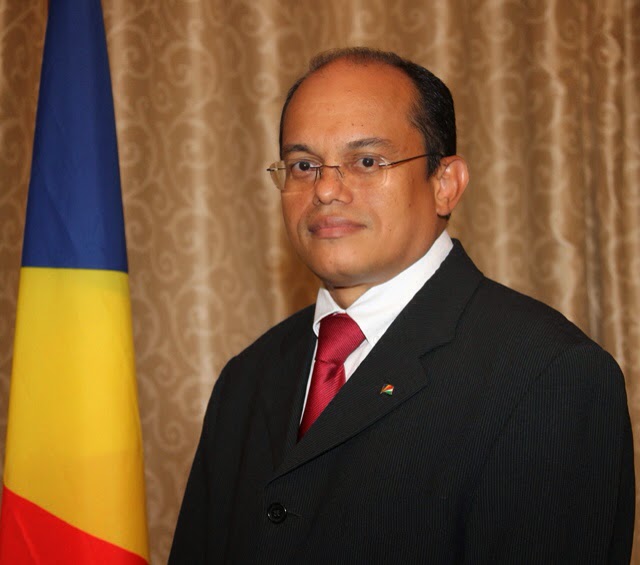
(Seychelles News Agency) – Seychelles Minister for Environment and Energy, Professor Rolph Payet has been appointed the new Executive Secretary of the Basel, Rotterdam and Stockholm Conventions by the United Nations Secretary General Ban Ki-moon.


Announcing the appointment in a press statement this afternoon, State House said Payet will contribute to the implementation of the mandates and missions of those three conventions including the formulation of their overall strategies and policies.

“He will also act in an advisory capacity to the UNEP Executive Director and the Presidents and the Bureaus of the conventions as well as their subsidiary bodies,” reads the statement.

The environment minister’s role will also include coordinating the preparation of the meetings and implement the substantive work programme of the conventions, including providing assistance to parties, in particular developing country parties and those with economies in transition.

He will also lead the development of strategies and policies and undertake fund raising and donor reporting, the strategic interagency work of the Secretariat in close coordination with UNEP and other Multilateral Environmental Agreements.

Responding to SNA in an email following this afternoon’s announcement, Payet said he is deeply honoured of such confidence in him to lead the conventions.

“I am equally happy that I have been chosen, coming from a Small Island Developing States, during this year dedicated to SIDS. My appointment represents the hard work of President James Michel and the government of Seychelles to continuously push so that Seychelles remains a leader in environment on the international scene. I will miss my work and even though I will be away from Seychelles I will continue to work for the benefit of my country,” he said.

Payet will take up his new post in October this year and he will be based in Geneva.

He will replace Kerstin Stendahl from Finland, who has been serving as interim since April this year following the retirement of US national Jim Willis as the Executive Director of the Basel, Rotterdam and Stockholm Conventions.

The Basel, Rotterdam and Stockholm Conventions.

The first convention is aimed at protecting human health and the environment from the effects of hazardous wastes.

This convention was adopted in 1989 and it entered into force in 1992.

The Rotterdam Convention, which entered into force ten years ago, also deals with the disposal of waste especially pesticides and industrial chemicals.

The third one, the Stockholm Convention which also came into force 10 years ago is a global treaty to protect human health and the environment from chemicals that remain intact in the environment for long periods. The latter or POPs is said to have serious consequences on humans and wildlife.

Seychelles president hails Payet’s appointment as “a memorable achievement.”

Seychelles President James Michel has hailed Payet’s appointment which he describes as “a memorable achievement.”

In a congratulatory message sent to the minister, Michel has wished him success in his new role and expressed his full cooperation and support in his tasks and challenges that lie ahead.

“Your appointment to this high office is a well-deserved recognition of your scientific and academic capabilities and crowns a professional life devoted to the environment and to the cause of Small Island Developing States. It also brings immense pride and satisfaction to Seychelles,” said Michel in the statement.

Michel said he would announce a new minister for environment and energy at a later date.

Payet and the environment cause

The 46 year old leaves vacant the portfolio of Environment and Energy which he assumed in March 2012.

Before that he was Special Advisor to the president on numerous environmental matters including sustainable development, biodiversity, climate change, energy and international environment policy

Payet who holds a Phd in Environmental Science from Linnaeus University of which is now an Associate Professor, is described as a leader in the protection of the environment on the international scene.

He has been at the forefront of several international discussions on issues affecting small islands developing states such as climate change, sustainable development, biodiversity and other environmental issues.

In recent years, he has been invited to participate or as a guest speaker on numerous international conference committees and panels including the United Nations General Assembly.

He has also contributed widely towards several publications on environmental issues.

Payet’s work in advancing environment, islands, ocean, biodiversity and climate issues at the global level has earned him numerous international awards and recognition.

In January 2007, he was recognised as a Young Global Leader by the World Economic Forum and in November that same year he shared in the IPCC Nobel Peace Prize as one of the authors of the Intergovernmental Panel on Climate Change (IPCC).

Locally, Payet has also helped to set up Seychelles first university, the University of Seychelles which was set up in September 2009. He is currently the pro chancellor of the university. More


Why Morgan Stanley Is Betting That Tesla Will Kill Your Power Company

There’s a reason that power companies are attacking rooftop solar across the nation: They see those silicon panels as nothing short of an existential threat.

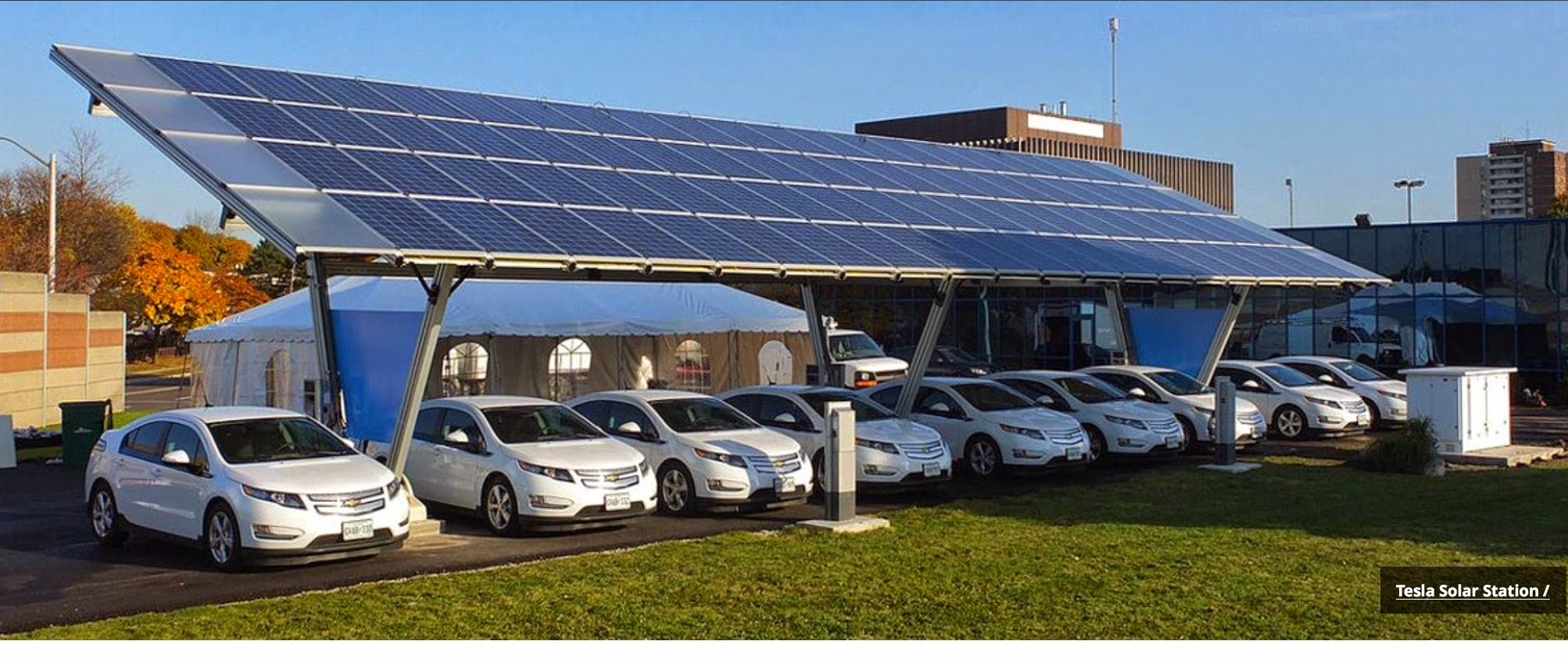
As the cost of solar continues to fall, and more people opt for the distributed power offered by solar, there will be less demand for big power plants and the utilities that operate them. And one major investment giant has now released three separate reports arguing that Tesla Motors is going to help kill power companies off altogether.

Earlier this year, Morgan Stanley stirred up controversy when it released a report that suggested that the increasing viability of consumer solar, paired with better battery technology—that allows people to generate, and store, their own electricity—could send the decades-old utility industry into a death spiral. Then, the firm released another one, further emphasizing the points made in the first. Now, it’s tripling down on the idea with yet another report that spells out how Tesla and home solar will “disrupt” utilities.

“There may be a ‘tipping point’ that causes customers to seek an off-grid approach,” the March report argued. ”The more customers move to solar, the [more the] remaining utility customers’ bills will rise, creating even further ‘headroom’ for Tesla’s off-grid approach.”

Yes, Tesla Motors, everyone’s favorite electric car company. And that’s where the controversy comes in. Morgan Stanley breathlessly pegged Tesla as “the most important auto company in the world” in part because its electric car business was pushing it to develop better energy storage technology, and then mass manufacture said batteries. That’s exactly what Tesla CEO Elon Musk and company will be doing at its forthcoming Gigafactory, which it is building in the Southwest with Panasonic.

With the new manufacturing facility, Morgan Stanley reasons, Tesla stands to double its business (adding another $2 billion in revenue) by selling the lithium ion batteries it typically ships under the hood of a Model S to homeowners with solar panels, too. If consumers can store energy the panels generate during the day for use at night, it would ostensibly render the need for utilities to pipe in faraway power—and their electric bills—obsolete.

Energy storage, when combined with solar power, could disrupt utilities in the US and Europe to the extent customers move to an off-grid approach

Musk is also the chairman of Solar City, a company that leases rooftop solar setups to homeowners, and one that would benefit from the battery tech. Now, the shadiness here is that Morgan Stanley released the report trumpeting Tesla’s crossover energy storage potential—causing Tesla’s stock to rise—right before it underwrote a fundraising round for… Tesla.

So the whole thing is very incestuous, and it does render some of the projections a little suspect, but the bottom line here is that private solar and battery companies are viable enough that they’ve attracted the backing of one of the world’s biggest financial services companies—over the multi-trillion dollar utility industry.

“Energy storage, when combined with solar power, could disrupt utilities in the US and Europe to the extent customers move to an off-grid approach,” Morgan Stanley writes in its third report this year emphasizing the prospect. ”We believe Tesla’s energy storage product will be economically viable in parts of the US and Europe, and at a fraction of the cost of current storage alternatives.”

In other words, Morgan Stanley has Tesla’s back, big time. It’s betting that Musk is going to make the best solar energy batteries money can buy.

Ironically enough, however, even staunch clean energy advocates are wary about Morgan Stanley’s finding that utilities are going the way of the buffalo. “Barring extraordinary circumstances, the economic case for grid defection is still very weak for US consumers,” Stephen Lacey, the senior editor of Greentech Media, wrote of the Morgan Stanley report. ”The electricity system offers valuable backup in case a customer over- or under-invests in an on-site system.”

It’s more likely, then, that people will still buy home solar—by the tens of millions, Greentech suggests—but not unplug from the grid entirely. Utilities will be diminished, but not broken. This process is underway in Europe already, where countries like Germany have powerful incentives for consumers to switch to solar.

Last year, the Economist called the sharp decline of European utilities “startling,” noting that together, they lost half their value—$600 billion—in just five years. Here in the states, utilities and conservative politicians are fighting solar tax credits to prevent the same thing from happening. For the most part, the utilities are losing.

All of this is, ideally, what needs to happen. Climate change is accelerating, and we need to transition away from those massive, fossil fuel-slurping power plants. Distributed solar is an increasingly powerful force behind that weaning process.

And even if some of Morgan Stanley’s calculations are shaky, the trends that Tesla is helping to amplify are anything but—clean, personalized (or community-wide) power will play a major role in shaping our energy future.

The fact that a greed-driven titan of finance like Morgan Stanley recognizes as much, and is willing to triple down on its bets on battery storage and distributed power, is a promising sign that the energy revolution is underway. More