The Pale Blue Dot


THE SAGAN SERIES – The Pale Blue Dot

Published on Oct 21, 2013 • Facebook – http://www.facebook.com/thesaganseries

Twitter – http://twitter.com/reidgower

G+ – http://bit.lyA/pHzQh


The Sagan Series is an educational project working in the hopes of promoting scientific literacy in the general population. Created by ©ReidGower http://twitter.com/reidgower

Copyright Disclaimer Under Section 1 07 of the Copyright Act 1976, allowance is made for “fair use” for purposes such as criticism, comment, news reporting, teaching, scholarship, and research. Fair use is a use permitted by copyright statute that might otherwise be infringing. Non-profit, educational or personal use tips the balance in favor of fair use. All copyrighted materials contained herein belong to their respective copyright holders, I do not claim ownership over any of these materials. I realize no profit, monetary or otherwise, from the exhibition of these videos.


ISIS and Our Times – Noam Chomsky

It is not pleasant to contemplate the thoughts that must be passing through the mind of the Owl of Minerva as the dusk falls and she undertakes the task of interpreting the era of human civilization, which may now be approaching its inglorious end.

Bajid Kandala refugee cam, Iraq

The era opened almost 10,000 years ago in the Fertile Crescent, stretching from the lands of the Tigris and Euphrates, through Phoenicia on the eastern coast of the Mediterranean to the Nile Valley, and from there to Greece and beyond. What is happening in this region provides painful lessons on the depths to which the species can descend.

The land of the Tigris and Euphrates has been the scene of unspeakable horrors in recent years. The George W. Bush-Tony Blair aggression in 2003, which many Iraqis compared to the Mongol invasions of the 13th century, was yet another lethal blow. It destroyed much of what survived the Bill Clinton-driven UN sanctions on Iraq, condemned as “genocidal” by the distinguished diplomats Denis Halliday and Hans von Sponeck, who administered them before resigning in protest. Halliday and von Sponeck's devastating reports received the usual treatment accorded to unwanted facts.

One dreadful consequence of the US-UK invasion is depicted in a New York Times “visual guide to the crisis in Iraq and Syria”: the radical change of Baghdad from mixed neighborhoods in 2003 to today's sectarian enclaves trapped in bitter hatred. The conflicts ignited by the invasion have spread beyond and are now tearing the entire region to shreds.

Much of the Tigris-Euphrates area is in the hands of ISIS and its self-proclaimed Islamic State, a grim caricature of the extremist form of radical Islam that has its home in Saudi Arabia. Patrick Cockburn, a Middle East correspondent for The Independent and one of the best-informed analysts of ISIS, describes it as “a very horrible, in many ways fascist organization, very sectarian, kills anybody who doesn't believe in their particular rigorous brand of Islam.”

Cockburn also points out the contradiction in the Western reaction to the emergence of ISIS: efforts to stem its advance in Iraq along with others to undermine the group's major opponent in Syria, the brutal Bashar Assad regime. Meanwhile a major barrier to the spread of the ISIS plague to Lebanon is Hezbollah, a hated enemy of the US and its Israeli ally. And to complicate the situation further, the US and Iran now share a justified concern about the rise of the Islamic State, as do others in this highly conflicted region.

Egypt has plunged into some of its darkest days under a military dictatorship that continues to receive US support. Egypt's fate was not written in the stars. For centuries, alternative paths have been quite feasible, and not infrequently, a heavy imperial hand has barred the way.

After the renewed horrors of the past few weeks it should be unnecessary to comment on what emanates from Jerusalem, in remote history considered a moral center.

Eighty years ago, Martin Heidegger extolled Nazi Germany as providing the best hope for rescuing the glorious civilization of the Greeks from the barbarians of the East and West. Today, German bankers are crushing Greece under an economic regime designed to maintain their wealth and power.

The likely end of the era of civilization is foreshadowed in a new draft report by the Intergovernmental Panel on Climate Change, the generally conservative monitor of what is happening to the physical world.

The report concludes that increasing greenhouse gas emissions risk “severe, pervasive and irreversible impacts for people and ecosystems” over the coming decades. The world is nearing the temperature when loss of the vast ice sheet over Greenland will be unstoppable. Along with melting Antarctic ice, that could raise sea levels to inundate major cities as well as coastal plains.

The era of civilization coincides closely with the geological epoch of the Holocene, beginning over 11,000 years ago. The previous Pleistocene epoch lasted 2.5 million years. Scientists now suggest that a new epoch began about 250 years ago, the Anthropocene, the period when human activity has had a dramatic impact on the physical world. The rate of change of geological epochs is hard to ignore.

One index of human impact is the extinction of species, now estimated to be at about the same rate as it was 65 million years ago when an asteroid hit the Earth. That is the presumed cause for the ending of the age of the dinosaurs, which opened the way for small mammals to proliferate, and ultimately modern humans. Today, it is humans who are the asteroid, condemning much of life to extinction.

The IPCC report reaffirms that the “vast majority” of known fuel reserves must be left in the ground to avert intolerable risks to future generations. Meanwhile the major energy corporations make no secret of their goal of exploiting these reserves and discovering new ones.

A day before its summary of the IPCC conclusions, The New York Times reported that huge Midwestern grain stocks are rotting so that the products of the North Dakota oil boom can be shipped by rail to Asia and Europe.

One of the most feared consequences of anthropogenic global warming is the thawing of permafrost regions. A study in Science magazine warns that “even slightly warmer temperatures [less than anticipated in coming years] could start melting permafrost, which in turn threatens to trigger the release of huge amounts of greenhouse gases trapped in ice,” with possible “fatal consequences” for the global climate.

Arundhati Roy suggests that the “most appropriate metaphor for the insanity of our times” is the Siachen Glacier, where Indian and Pakistani soldiers have killed each other on the highest battlefield in the world. The glacier is now melting and revealing “thousands of empty artillery shells, empty fuel drums, ice axes, old boots, tents and every other kind of waste that thousands of warring human beings generate” in meaningless conflict. And as the glaciers melt, India and Pakistan face indescribable disaster.

Sad species. Poor Owl.

© 2014 Noam Chomsky
Distributed by The New York Times Syndicate


Nearly Half the World’s Trash Is Burned, and That’s Worsening Climate Change

Nearly half the world’s trash is burned in the open, spewing pollutants into the atmosphere that contribute to climate change and affect human health, according to a new study.

Since such burning is largely unregulated and unreported, emissions of some pollutants have been underestimated by as much as 40 percent, said the researchers, who published their findings in the journalEnvironmental Science & Technology.

“I was shocked at the numbers,” said Christine Wiedinmyer, an atmospheric scientist at the National Center for Atmospheric Research and the study’s lead author. “They were much larger than I expected, particularly the air pollutants.”

The researchers estimated the amount of carbon dioxide, carbon monoxide, mercury, tiny particulate matter, and other pollutants released by burning trash.

Every year 970 million metric tons of food, paper, plastics, and metals are set aflame at homes, businesses, and dumps—roughly 41 percent of the world’s garbage, according to the study.

The garbage problem is likely to get worse. Researchers predict the world will triple its production of garbage to more than 11 million tons daily by 2100.

Fires can spring up at dumps with little warning. A fire in Iqaluit, the capital of the Canadian territory of Nunavut, broke out in May and burned for almost 100 days before fire crews began dousing the flames of the “dumpcano.” In March, a dump fire outside Bangkok blanketed neighborhoods with so much thick smoke that it could be seen by satellites.

Heavily populated countries, including China, the United States, India, Japan, Brazil, and Germany, produce the most waste, according to the study. China, India, Brazil, Mexico, Pakistan, and Turkey generate the most emissions from trash burning.

Trash burning produces mercury, chemicals known as polycyclic aromatic hydrocarbons, and fine particulate matter. These pollutants have been linked to heart and lung disease, neurological disorders, and cancer. Annual emissions of mercury and PAHs may have been underestimated by 10 to 40 percent, the researchers said.

Trash burning may also be clogging the air with far more particulate matter than was previously thought. A global tally of reported pollutants indicated that 34 million kilograms of tiny airborne particles called PM 2.5 are released into the air annually.

Wiedinmyer and her colleagues calculate that open burning shoots another 10 million kilograms into the atmosphere—an increase of 29 percent. In Sri Lanka, garbage burning produced five times more emissions of PM 10 (a larger particle) than was included in the official national tally.

These particles can penetrate deep into the lungs and have been associated with heart disease, asthma, and premature death. About 3.7 million people die prematurely from outdoor air pollution, according to the World Health Organization.

Open burning of garbage is closely related to poverty. Unregulated dump fires may be adjacent to settlements, putting the families that live there, especially women and children, at risk of health complications from the pollution. Some of these families derive income from the dump, removing valuable materials for resale.

The contribution of garbage burning to global carbon dioxide emissions is relatively small—only 5 percent of the 2010 global annual emissions. But on a country-by-country basis, it can be quite large. The study found that trash burning in Lesotho, Burundi, Mali, Somalia, and Sri Lanka produced more carbon dioxide than was recorded by the official registers.

Emissions from open burning of trash are rarely reported by environmental agencies, meaning the pollution goes uncounted and is left out of policy decisions.

Air Pollution Isn’t Just Bad for Your Health—It’s Taking Food off Your Plate

Brian Gullett, an environmental engineer at the United States Environmental Protection Agency and a coauthor of the paper, pointed out how difficult it is to calculate the emissions that come from open burning. Unlike with coal-burning power plants, no one knows the exact number of garbage-burning fires, and it can be difficult to trap and analyze the emissions.

Knowing where pollutants come from doesn’t change the burden they place on health, said Patrick Kinney, an expert on health and air pollution at Columbia University. But it does point to “which sources to go after in controlling the problem.”

Said Wiedinmyer, “If we’re looking at air pollution control strategies, we need to include all sources of air pollutants to get the most effective controls in place. If we’re missing a large source, it could lead to control strategies that aren’t going to work at all, or as well.” More


Leaders sign historic sustainable energy & climate resilient treaty

September 2: Over 150 delegates and members of the international development community from more than 45 countries were stunned to see leader after leader approach the podium to sign a historic sustainable energy and climate resilient treaty that will significantly change the lives and destiny of over 20 million small islanders, for the better.

Led by the Deputy Prime Minister of Samoa, Hon. Fonotoe Nuafesili Pierre Lauofo, multiple leaders from the Pacific, Caribbean and African, Indian Ocean and Mediterranean Sea (AIMS) regions, forcefully raised their voices in unison and accepted responsibility for fulfilling the commitment to the Small Island Developing States (SIDS) Sustainable Energy mechanism – SIDS DOCK. The opening for signature of this historic SIDS DOCK Treaty – a SIDS-SIDS Initiative – was a major highlight of the first day of the United Nations (UN) Third International Conference on SIDS, taking place in Apia, Samoa, from 1-4 September.

The unprecedented and unexpected number of Heads of State and Government present, sent a strong signal to the standing room only audience, the SIDS population and the international community, demonstrating how deeply committed SIDS leaders are and that they all firmly believe that SIDS must, have and will take responsibility for charting the future of their countries towards a path that would see a total transformation of the SIDS economy away from fossil fuels, to that of one driven by low carbon technologies. The event was considered so important to the Republic of Cabo Verde, that the Prime Minister, Hon. José Maria Neves, excused himself and his entire delegation from the Plenary Hall, to ensure that Cabo Verde, a SIDS DOCK Founding Member was well-represented at the signing – the Cabo Verde Government has one of the most ambitious plans in SIDS, that aims to achieve 100 penetration of renewable energies in Cabo Verde, by 2020.

More than half the members of the Alliance of Small Island States (AOSIS) were present for the signing of the historic treaty, witnessed by the SIDS DOCK partners Denmark, Japan and Austria, whose kind and generous support facilitated SIDS DOCK start -up activities; also present were SIDS DOCK partners, the United Nations Development Programme (UNDP), the World Bank, the United Nations Industrial Development Organization (UNIDO) and the Clinton

Foundation. The treaty was signed by the governments of Barbados, Belize, Bahamas (Commonwealth of the), Dominica (Commonwealth of), Cabo Verde (Republic of), Cook Islands, Dominican Republic, Fiji (Republic of), Grenada, Guinea Bissau, Kiribati (Republic of), Niue, Palau (Republic of), Saint Kitts and Nevis, Saint Vincent and the Grenadines, Samoa (Independent State of), Seychelles (Republic of), and Tuvalu.

The Statute will remain open for signature in Apia, Samoa until September 5, and will reopen for signature in Belmopan, Belize, from September 6, 2014 until it enters into force. Belize is the host country for SIDS DOCK, with Samoa designated as the location for the Pacific regional office. More


How extensive is California’s drought?

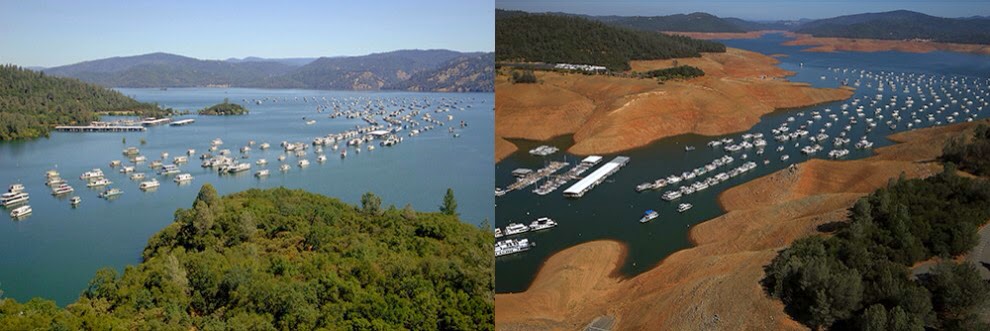
A snake-like trickle of water flows underneath Lake Oroville's Enterprise Bridge — just one striking example of how much California's chronic drought is affecting the state's lakes and reservoirs.

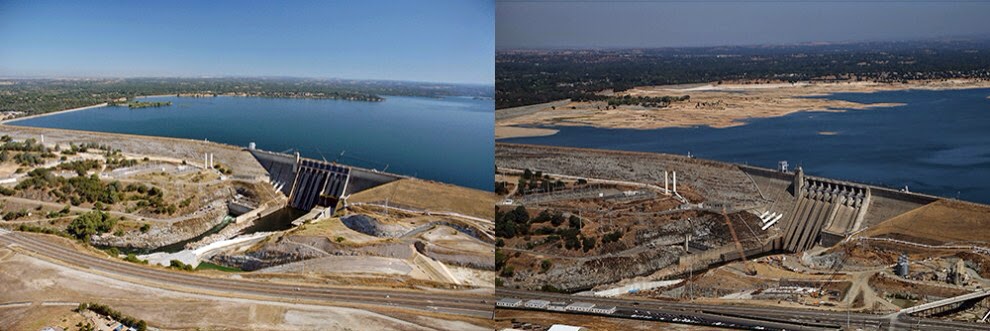
Situated at the foot of the Sierra Nevadas in Butte County, Lake Oroville is one of the largest reservoirs in California, second only to Shasta Lake. After enduring three straight years of drought, the lake is currently only filled to 32 percent of its capacity.

In any case, the drought in California is getting serious. Phase 2 of Los Angeles' mandatory water conservation ordinance is now in effect, which means a team of water-use inspectors are tasked with enforcing water restrictions and fining water wasters. If the drought continues through fall and winter, the ordinance will move to Phase 3, which entails even stricter rules and some prohibitions.

To get a better idea of the dire situation in the Golden State, continue below for a photo comparison of water levels taken in 2011 and 2014, looking at Lake Oroville and Folsom Lake, another major California reservoir located in Sacramento County that is now filled at 40 percent of its capacity.

Bidwell Marina, Lake Oroville

Folsam Dam, Folsom Lake

Enterprise Bridge, Lake Oroville


Time to ask why

Young people have the most to gain from solving the climate crisis — and the sooner the better.

They didn't cause the issue, but they'll have to live with it for decades. And for far too long, they and their interests have been ignored by leaders who refuse to protect the planet.

On September 23, this is going to change when exceptional young people get a chance to put their questions to the world's decision-makers — to speak for their generation at the U.N. Climate Summit in New York City.

Today, we begin searching for the people who will ask their leaders the tough questions about global warming. We're collecting videos of young people ages 13-21 posing tough Why? or Why not? questions about the climate crisis. We'll choose the best to attend the Summit and demand serious answers from the world's leaders.

If you're between the ages of 13 and 21, submit a video. If not, encourage someone you know to submit a video of their own.


Why do we continue burning fossil fuels that cause climate change? Why not switch to clean, renewable energy?

The answers are out there, but we won't get them unless we stand together and demand them — and refuse to be ignored.

Thanks for your continued support,

Al Gore
Founder and Chairman

SUBMIT A VIDEO


Geneva beckons Rolph Payet – Seychelles environment and energy minister lands top UN post

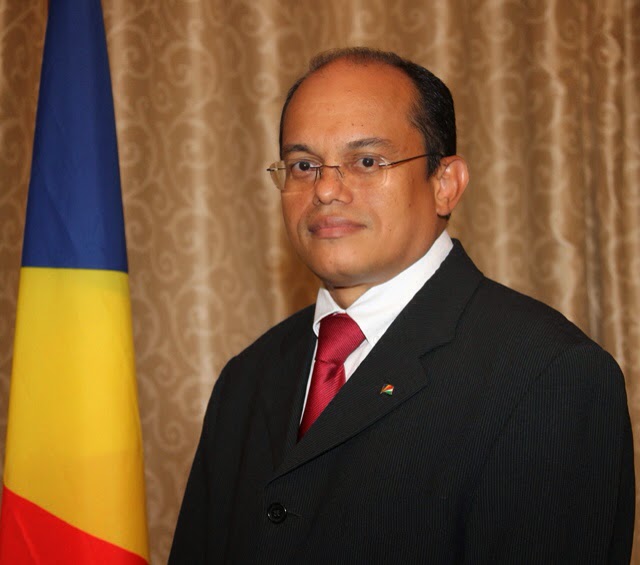
(Seychelles News Agency) – Seychelles Minister for Environment and Energy, Professor Rolph Payet has been appointed the new Executive Secretary of the Basel, Rotterdam and Stockholm Conventions by the United Nations Secretary General Ban Ki-moon.


Announcing the appointment in a press statement this afternoon, State House said Payet will contribute to the implementation of the mandates and missions of those three conventions including the formulation of their overall strategies and policies.

“He will also act in an advisory capacity to the UNEP Executive Director and the Presidents and the Bureaus of the conventions as well as their subsidiary bodies,” reads the statement.

The environment minister’s role will also include coordinating the preparation of the meetings and implement the substantive work programme of the conventions, including providing assistance to parties, in particular developing country parties and those with economies in transition.

He will also lead the development of strategies and policies and undertake fund raising and donor reporting, the strategic interagency work of the Secretariat in close coordination with UNEP and other Multilateral Environmental Agreements.

Responding to SNA in an email following this afternoon’s announcement, Payet said he is deeply honoured of such confidence in him to lead the conventions.

“I am equally happy that I have been chosen, coming from a Small Island Developing States, during this year dedicated to SIDS. My appointment represents the hard work of President James Michel and the government of Seychelles to continuously push so that Seychelles remains a leader in environment on the international scene. I will miss my work and even though I will be away from Seychelles I will continue to work for the benefit of my country,” he said.

Payet will take up his new post in October this year and he will be based in Geneva.

He will replace Kerstin Stendahl from Finland, who has been serving as interim since April this year following the retirement of US national Jim Willis as the Executive Director of the Basel, Rotterdam and Stockholm Conventions.

The Basel, Rotterdam and Stockholm Conventions.

The first convention is aimed at protecting human health and the environment from the effects of hazardous wastes.

This convention was adopted in 1989 and it entered into force in 1992.

The Rotterdam Convention, which entered into force ten years ago, also deals with the disposal of waste especially pesticides and industrial chemicals.

The third one, the Stockholm Convention which also came into force 10 years ago is a global treaty to protect human health and the environment from chemicals that remain intact in the environment for long periods. The latter or POPs is said to have serious consequences on humans and wildlife.

Seychelles president hails Payet’s appointment as “a memorable achievement.”

Seychelles President James Michel has hailed Payet’s appointment which he describes as “a memorable achievement.”

In a congratulatory message sent to the minister, Michel has wished him success in his new role and expressed his full cooperation and support in his tasks and challenges that lie ahead.

“Your appointment to this high office is a well-deserved recognition of your scientific and academic capabilities and crowns a professional life devoted to the environment and to the cause of Small Island Developing States. It also brings immense pride and satisfaction to Seychelles,” said Michel in the statement.

Michel said he would announce a new minister for environment and energy at a later date.

Payet and the environment cause

The 46 year old leaves vacant the portfolio of Environment and Energy which he assumed in March 2012.

Before that he was Special Advisor to the president on numerous environmental matters including sustainable development, biodiversity, climate change, energy and international environment policy

Payet who holds a Phd in Environmental Science from Linnaeus University of which is now an Associate Professor, is described as a leader in the protection of the environment on the international scene.

He has been at the forefront of several international discussions on issues affecting small islands developing states such as climate change, sustainable development, biodiversity and other environmental issues.

In recent years, he has been invited to participate or as a guest speaker on numerous international conference committees and panels including the United Nations General Assembly.

He has also contributed widely towards several publications on environmental issues.

Payet’s work in advancing environment, islands, ocean, biodiversity and climate issues at the global level has earned him numerous international awards and recognition.

In January 2007, he was recognised as a Young Global Leader by the World Economic Forum and in November that same year he shared in the IPCC Nobel Peace Prize as one of the authors of the Intergovernmental Panel on Climate Change (IPCC).

Locally, Payet has also helped to set up Seychelles first university, the University of Seychelles which was set up in September 2009. He is currently the pro chancellor of the university. More


The Climate War Room

Climate War Room – Sunday 3rd. August 2014

I have today changed the name of the Cayman Institute's climate change blog to the Climate War Room.

Having collaborated with Sir Richard Branson's Carbon War Room on their Ten Island Challenge, which is a major initiative to mitigate climate change through cutting down the global carbon output, I have realized that a similar initiative is needed to to raise awareness of the necessity for a global war on climate change rather than just carbon output.

Jim Hansen

For more input on the reality of the situation a good place to start would be Makiko Sato & James Hansen's website where they ask 'What Path is the Real World Following'? Jim Hansen was the former director of NASA's Goddard Institute of Space Studies who resigned because the United States Government would not let him speak out on climate change. Assessing ‘‘Dangerous Climate Change'' makes worrying reading.

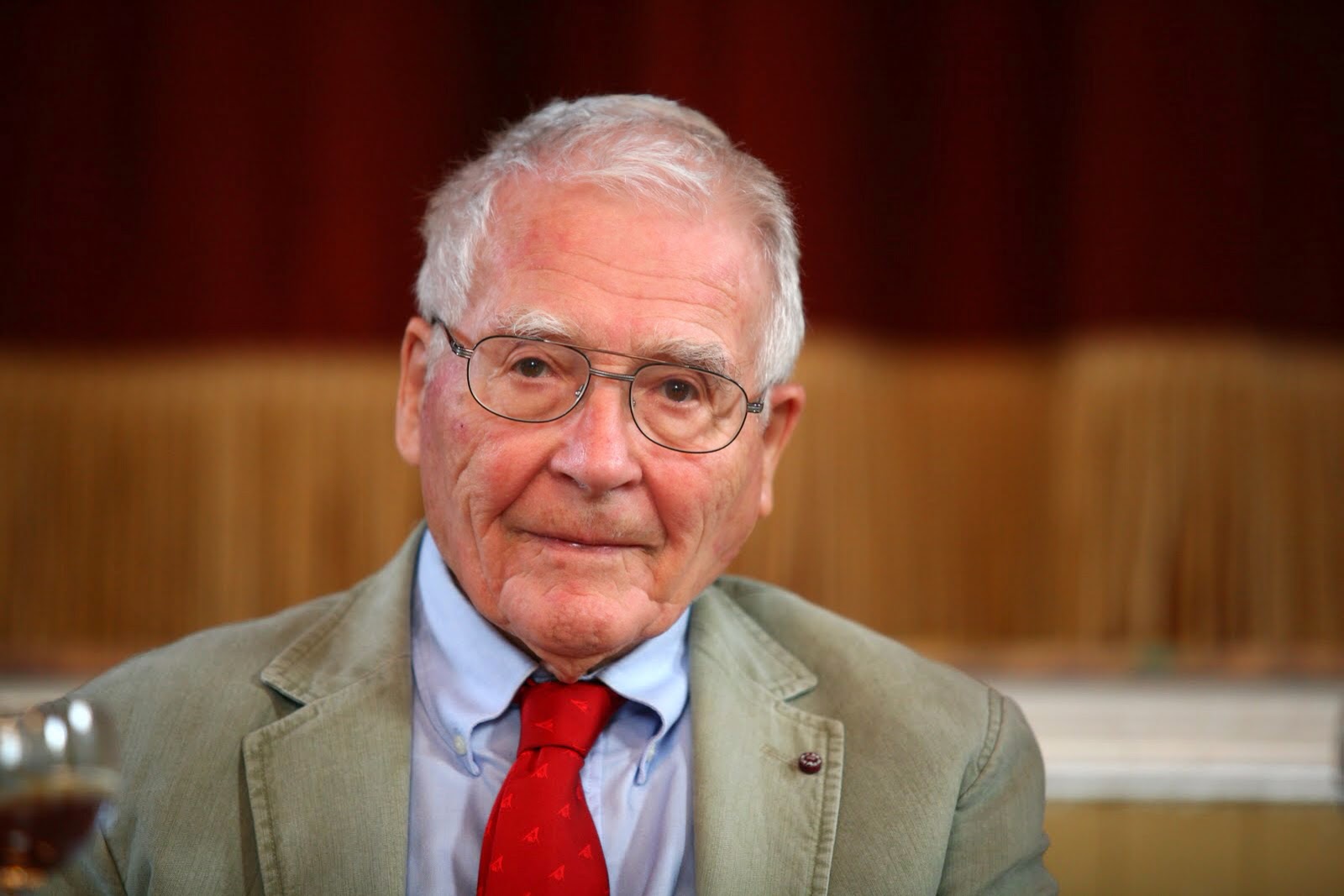
The world needs to take climate change, or as James Lovelock prefers to call it 'global heating' very seriously. Dr. Lovelock is the founder of the Gaia theory and on of the great thinkers of this century, his Cirriculum Vitae is very interesting and worth reading. Mary Midgley wrote on James Lovelock, published in the New Statesman on 14 July 2003.“Lovelock is an independent scientist. Though fanatically accurate over details, he never isolates those details from a wider, more demanding vision of their background. He thinks big. Preferring, as Darwin did, to work outside the tramlines of an institution, he has supported himself since 1963 through inventions and consultancies.”


We need to take the issue very seriously as a rapidly warming climate will change life as we know it. As Jim Hansen has tried to make us aware our children and grandchildren will effectively living on a different and not very nice planet.

James Lovelock

I implore you to research and read up on this subject. Speak out to your friends and neighbors and contact your political representatives and make your views known to them.

Nicholas Robson – Grand Cayman – Cayman Islands


Utility Industry: We Need to Promote Electric Vehicles in Order to ‘Remain Viable’

The Edison Electric Institute, the power industry's main trade group, is calling on utilities to better promote electric cars in order to stimulate demand for electricity and help reverse trends that threaten the long-term viability of some in the industry.

Without a strategy to help connect more vehicles to the grid, utilities will continue to face slow growth and stagnant revenues, warns EEI in a new report. The organization calls electric vehicles a “quadruple win” for power companies looking to boost demand, find new ways to interact with customers, support environmental goals and mandates, and reduce operating costs through electrifying their own fleets.

“The bottom line is that the electric utility industry needs the electrification of the transportation sector to remain viable and sustainable in the long term,” conclude the authors.

Some leading investor-owned utilities have rolled out programs to support charging stations, created pilots to test integration of new vehicle-to-grid technologies and have supported studies to model how lots of electric vehicles would interact with the distribution system. But there hasn't yet been a strategic, industry-wide effort to support the electrification of transportation as a way to boost demand.

To understand why EEI is now calling for more electric vehicles, consider where the industry is headed. As the chart below illustrates, growth in retail demand has come to a virtual standstill.

At the same time, the states with the biggest solar PV markets are seeing that technology slow electricity demand growth even further. This is adding additional pressure on utilities (creating borderline disruption in some markets), as third-party developers capture much of the value from developing solar.

“Stagnant growth, rising costs, and a need for even greater infrastructure investment represent major challenges to the utility industry,” writes EEI. “Today’s electric utilities need a new source of load growth — one that fits within the political, economic and social environment.”

Part of the answer is electric vehicles, which could both grow electricity sales and help balance a future grid made up of much more distributed renewables.

Thus far, utilities have had a conflicted relationship with electric vehicles. Although sales continue to grow, consumer demand has been relatively low compared to initial estimates. That has prevented power companies from investing heavily in charging infrastructure. There are also legitimate concerns about how electric cars and trucks will impact circuits on local grids.

However, the potential upside is enormous. If the two charts above have utilities worried, the chart below should have them excited about the future.

As Opower pointed out in a recent analysis, owners of electric cars use nearly 60 percent more electricity than the average customer. And customers who own both a solar system and an electric car consume roughly the same amount of electricity from the grid as an average customer — offsetting much of the excess solar that utilities must buy back through net metering. More