Reducing European Dependence on Russian Gas

Executive Summary

The main finding of this paper is that there is limited scope for significantly reducing overall European dependence on Russian gas before the mid-2020s.

However, countries in the Baltic region and south-eastern Europe which are highly dependent on Russian gas, and hence extremely vulnerable to interruptions, could substantially reduce and even eliminate imports of Russian gas by the early 2020s, by a combination of LNG supplies and pipeline gas from Azerbaijan. Similar measures could reduce (but not eliminate) the dependence of central Europe and Turkey on Russian gas. In the majority of countries, there is limited scope to reduce gas with oil products, and to the extent that it is replaced by coal in power generation carbon emissions will increase significantly.

Up to the mid-2020s, European companies are contractually obliged to import at least 115 bcm/year of Russian gas (approximately 75 per cent of the 2013 import level), a figure which reduces to around 65 bcm by 2030. Even if long-term contracts disappear, our modelling shows a requirement of at least 100 bcm/year of Russian gas up to 2030, and in some scenarios up to twice that volume. The main additional source of non-Russian gas for Europe up to 2030 will be LNG; pipeline gas imports from domestic and other imported sources are not envisaged to increase substantially and may decline. Russian gas deliveries to Europe will be highly competitive with all other pipeline gas and LNG (including US LNG) supplies throughout the period to 2030, and Gazprom's market power to impact European hub prices may be considerable.

Countries with strong geopolitical fears related to Russian gas dependence will need to either terminate, or not renew on expiry, their long-term contracts with Gazprom. This will result in substantial additional infrastructure costs for LNG import terminals and pipeline connections, or investments in alternative energy sources, energy conservation, and efficiency measures.

Whatever the political relationship between Russia, the European Union, and individual European countries, a continued natural gas relationship will be necessary and needs to be carefully managed. The most immediate problems are: a resolution of the Ukrainian transit situation, and a successful conclusion of the EU's regulatory treatment of the South Stream pipeline. Once the immediate crisis has passed, both sides need to discuss the future role of gas in EU energy balances, together with its potential contribution to the EU's ambitious carbon reduction targets. Download PDF


Cayman Renewable Energy Association Launches

Cayman Renewable Energy Association launched last week. In this segment we learn more about the group’s mission and what they see as the next step in implementing alternative energy in Cayman.

James E. Whittaker of GreenTech Group of Companies and Jim Knapp of Endless Energy talk to Vanessa Hansen of Cayman 27 about the premise of the organiization and why it’s important to have the association in Cayman.

Climate change and smart grid? There are more linkages than you think

When you think of climate change and energy, what springs to mind? Coal, fossil fuel, power plants, renewables, and efficiency are likely on your list, whether as contributors or mitigation options. But if demand response and smart grid are not on your list, it is incomplete.

Smart Grid

You are not alone. The EPA didn’t put them on its “list” when it put out its draft Clean Power Plan (111d) earlier this year. The fact is, however, that smart grid and things under its umbrella like DR, storage, etc. should be squarely on the table when climate-related plans are being made.

There are three questions regarding smart grid and climate change that are being asked these days. There is also one question that is not being asked but should be. They will all be part of the discussion at the upcoming National Summit on Smart Grid and Climate Change on December 2-3, but let’s take a quick look at them now.

The first two are:

  1. Can states use smart grid (and anything like DR, storage, etc that is under its umbrella) in their compliance plans under the EPA Clean Power Plan (111d)?
  2. If the answer to the first question is yes, will that give a boost to smart grid activity?

The third one is:

3. Which should happen first? Grid Hardening or Grid “Smartening”? Or should they be done together?

The first two questions fall into the category of climate mitigation and emissions reduction. Even before the EPA Plan came out, smart grid and DR were not seen as saving kWh, and therefore emissions. They were focused on kW reduction, and only for short amounts of time, usually on peak, right?

Well, that may have been true once, but that is not the case anymore. DR is no longer just about the peak. It has evolved into technology-based intelligent energy management. It has become dynamic efficiency, as opposed to traditional end-use efficiency. As such, it optimizes and reduces energy consumption and emissions. But even where DR is used solely as a peak management tool, studies show that there is little if any “bounce back” effect during the off-peak( i.e. not all of the usage that was reduced is replaced) and that on average there is a 4-5% overall reduction.

Let’s look at another smart grid option – Conservation Voltage Reduction (CVR). This option is essentially one where smart grid technology allows a utility to provide the same service to the customer while also lowering voltage, which in turn lowers usage and therefore emissions. CVR has been shown to generate around 1% savings, and customers don’t have to do anything.

Thankfully, with a little prodding by the SG and DR community, EPA has seen the light and now commonly speaks out to say that smart grid is definitely eligible for states to consider putting in their 111d compliance plans. EPA has clarified that the four specified “building blocks” in its plan were for purposes of determining goals. They are not prescriptive choices. States can put anything they want to in their plan, as long as they demonstrate that there will be reductions.

So that brings us to question 2 – what does that mean for smart grid? Well, if it is eligible to be used in a state plan, that should be good, right? Not necessarily. First, the people putting together the state plans need to not be hung up on the myth that there are no reductions from smart grid. EPA saying it is eligible only means it is on the shopping list for states. The key is getting them to select it, and that may take a focused education effort on the part of the smart grid and DR community. And it wouldn’t hurt if as part of that effort, states were reminded that they can’t plan to do large amounts of intermittent renewables on the system and not think about DR and smart grid – yet another reason to put them into a plan.

Finally, let’s examine question 3on climate adaptation. Whatever climate change scenario one subscribes to, few if any speak out against the need to prepare for change, whether it is sea level rise, storms, or rising temperatures. So is there a role for smart grid? At the National Summit on Smart Grid and Climate Change, an entire track has been devoted to that discussion.

When it comes to the electricity system, resiliency is the word one hears most. While definitions of that differ, two of the common attributes of a resilient system are flexibility and diversity. That means not putting all of your eggs into one power system, or one line. It means seeking strength through a distribution system that is really distributed – not just for delivery of power, but for generating it. That is where distributed energy resources (DER) and microgrids – both part of the smart grid diaspora – come into play. They help increase the resiliency of a system. Of course such a system needs management. But that is where the new smart grid technologies provide the ability to sense, monitor, communicate, and control.

The challenge in the question is this: some grid resiliency efforts in the wake of Superstorm Sandy and other similar events are focusing on grid hardening – not grid smartening. Now I agree that grid hardening sounds conceptually comforting. After all, raising the level of a substation so that storm waters will flow underneath it (a real example) is pretty straightforward and understandable. But where does that get us in the end? How has that modernized the grid? Don’t get me wrong, I believe that grid hardening should be pursued where it makes sense, but not at the total exclusion of grid smartening.

In an ideal world, states would be looking at a climate adaption plan at the same time they are putting together a climate mitigation plan. In that ideal world, smart grid would get bonus points for being something that can go into both plans. But we don’t live in an ideal world, and state agencies operate in silos. It may be up to the DR and smart grid communities to help them with their plans, and help them connect the dots that will make those plans better and create better opportunities for smart grid. More


Caribbean small islands will be first in region to suffer from rising sea levels

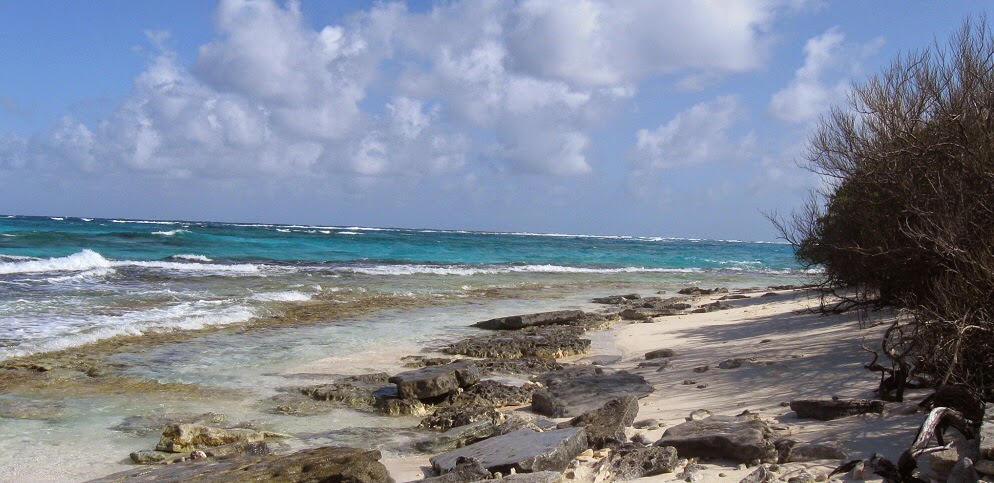
NAROBI, Kenya, Monday November 3, 2014, CMC – A top United Nations official has warned that the small islands of the Caribbean will be the first territories in the region to suffer the effects of rising sea levels due to climate change.

Executive Director of the United Nations Environment Program, Achim Steiner, said here on Saturday that the effects of climate change threaten the Caribbean’s tourism industries and, eventually, their “very existence”.

Speaking ahead of Sunday’s release of the Fifth Assessment Report from the Intergovernmental Panel on Climate Change, Steiner said sea-level rise will have an “immediate impact in economic terms” on the Caribbean Small Island Developing States (SIDS), stating that the Caribbean’s tourism infrastructure is 99 per cent along the coastline.

“Many small island nations are in a far more exposed situation simply because their territory is sometimes only two, three, four meters (6.5-13 ft.) above sea level,” he said, adding “therefore their very existence is being threatened.

“The changes also in, for instance, coral reefs and mangroves that are natural barriers and help strengthen the resilience of these countries, if coral reefs are dying then clearly countries become more vulnerable,” he added.

Steiner also cited the impact of more intense hurricanes and other extreme weather events on countries whose economies cannot bear the cost of reconstruction.

On a more hopeful note, he praised proactive efforts by some Caribbean countries, such as Barbados, where “energy efficiency efforts and renewable deployment are now on the agenda of investment and national development planning”.

The efforts of the Barbados government were one reason the United Nations decided to mark 2014 World Environment Day in Barbados, Steiner said. More


The Future Corporation – Paul Polak

TEDxMileh-ligh – Paul Polak – The Future Corporation

Uploaded on May 26, 201 1 • What is the future of the corporation? Paul Polak’s vision will likely transform your view of what’s possible through capitalism and may change the way current organizations view their business models. His talk details the tremendous shared value that lies within product and system designs for the bottom 90% of the income pyramid.

In the spirit of “ideas worth spreading,” TED has created TEDx. TEDx is a program of local, self-organized events that bring people together to share a TED-like experience. Our event is called TEDxMileHigh, where x = independently organized TED event. At a TEDx event, TEDTalks video and live speakers combine to spark deep discussion and connection in a small group. These local, self-organized events are branded TEDx, where x=independently organized

TED event. The TED Conference provides general guidance for the TEDx program, but individual TEDx events, including ours, are self-organized.

IPCC’s Fifth Assessment Report on Climate Change. What does it mean for the Caribbean?IPCC’s Fifth Assessment Report on Climate Change. What does it mean for the Caribbean?

The Caribbean’s response to Climate Change is grounded in a firm regional commitment, policy and strategy. Our three foundation documents – The Liliendaal Declaration (July 2009), The Regional Framework for Achieving Development Resilient to Climate Change (July 2009) and its Implementation Plan (March 2012) – are the basis for climate action in the region.

The Fifth Assessment Report (AR5) of the United Nations Intergovernmental Panel on Climate Change (IPCC) underscores the importance, scientific rigour and utility of these landmark documents. The IPCC’s latest assessment confirms the Caribbean Community’s longstanding call to limit global temperature rise to 1.5 degrees celsius as outlined in the Liliendaal Declaration. At the Nations Nation Framework Convention on Climate Change (UNFCCC) Conference of the Parties (COP) Meeting in 2009, which took place in Copenhagen, Denmark, the Caribbean Community indicated to the world community that a global temperature rise above 1.50C would seriously affect the survival of the community.

In 2010 at the UNFCCC COP Meeting in Cancun, governments agreed that emissions ought to be kept at a level that would ensure global temperature increases would be limited to below 20C. At that time, the Alliance of Small Island States (AOSIS), which includes the Caribbean, re-iterated that any rise in temperature above 1.50C would seriously affect their survival and compromise their development agenda. The United Nations Human Development Report (2008) and the State of the World Report (2009) of The Worldwatch Institute supports this position and have identified 20C as the threshold above which irreversible and dangerous Climate Change will become unavoidable.

Accordingly, the Caribbean welcomes the IPCC’s Fifth Assessment Report prepared by over 2000 eminent scientists. It verifies observations in the Caribbean that temperatures are rising, extreme weather events are occurring more frequently, sea levels are rising, and there are more incidences of coral bleaching. These climatic changes will further exacerbate the limited availability of fresh water, agricultural productivity, result in more erosion and inundation, and increase the migration of fish from the Caribbean to cooler waters and more hospitable habitats. The cumulative effect is reduced food security, malnutrition, and productivity, thus increasing the challenges to achieving poverty reduction and socio-economic development.

The report notes that greenhouse gases emissions, the cause of Climate Change, continues to rise at an ever increasing rate. Unless this trend is arrested and rectified by 2050, global temperatures could rise by at least 4°C by 2100. This would be catastrophic for the Caribbean. However, the report is not all gloom and doom. More than half of the new energy plants for electricity are from renewable resources, a trend that must accelerate substantially if the goal of limiting global warming to below 2°C by 2100 is to remain feasible.

The IPCC AR5 Report should therefore serve as a further wake up call to our region that we cannot continue on a business as usual trajectory. It is an imperative that Climate Change be integrated in every aspect of the region’s development agenda, as well as its short, medium and long-term planning. The region must also continue to aggressively engage its partners at the bilateral and multilateral levels to reduce their emissions. The best form of adaptation is reduction in emissions level.

Dr Kenrick Leslie

The IPCC will adopt the Synthesis Report of the AR5 in Copenhagen, Denmark in late October 2014. Caribbean negotiators are already preparing to ensure that the most important information from the report are captured in the Synthesis Report.

See the highlights of the Caribbean Launch of the UN IPCC AR5 Report in this video:

Learn more about the implications of the IPCC AR5 Report via http://www.caribbeanclimate.bz and @CaribbeanClimate.

* Dr Kenrick Leslie is the Executive Director of the Caribbean Community Climate Change Centre, the regional focal point for Climate Change.

Why we should give everyone a basic income

Why we should give everyone a basic income | Rutger Bregman | TEDxMaastricht

Published on Oct 21, 2014 • This talk was given at a local TEDx event, produced independently of the TED Conferences.

Rutger Bregman (1988} studied at Utrecht University and the University of California in Los Angeles, majoring in History. In September 2013 Bregman joined the online journalism platform De Correspondent. His article on basic income was nominated for the European Press Prize and was published by The Washington Post.

In September 2013 Bregman joined the online journalism platform ‘De Correspondent’. His article on basic income was nominated for the European Press Prize and was subsequently also published by the American newspaper The Washington Post. In September 2014 his newest book ‘Gratis geld voor iedereen En nog vijf grote ideeen die de wereld kunnen veranderen’ came out.

Website: http://tedxmaastricht.nl

Flickr: https ://www.flickr.com/photos/tedxmaastricht

Facebook:https://www.facebook.com/TEDxMaastricht

Twitter: https://twitter.com/TEDxMaastricht

About TEDx, x = independently organized event In the spirit of ideas worth spreading, TEDx is a program of local, self organized events that bring people together to share a TED-like experience.

Surprise: U.S. drug war in Afghanistan not going well

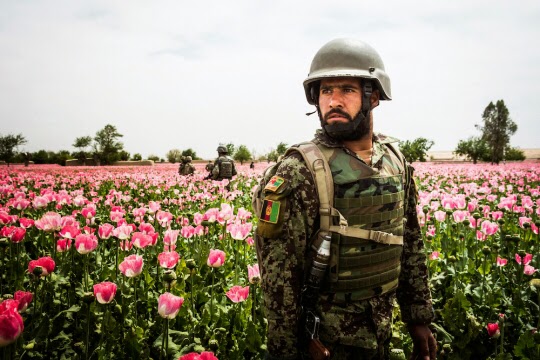
A new report has found the war on drugs in Afghanistan remains colossally expensive, largely ineffective and likely to get worse. This is particularly true in the case of opium production, says the U.S. Office of the Special Inspector General for Afghanistan Reconstruction.

In a damning report released Tuesday, the special inspector general, Justin F. Sopko, writes that “despite spending over $7 billion to combat opium poppy cultivation and to develop the Afghan government’s counternarcotics capacity, opium poppy cultivation levels in Afghanistan hit an all-time high in 2013,” hitting 209,000 hectares, surpassing the prior, 2007 peak of 193,000 hectares. Sopko adds that the number should continue to rise thanks to deteriorating security in rural Afghanistan and weak eradication efforts.

Though the figures it reports are jarring, the inspector general’s investigation highlights drug policy failures in Afghanistan that have been consistently documented for years. Indeed, Sopko himself has been raising concerns over the failing drug war in Afghanistan for some time. In January, he testified before the Senate Caucus on International Narcotics Control and described a series of discouraging conversations with counternarcotics officials from Afghanistan, the U.S., and elsewhere.

“In the opinion of almost everyone I spoke with, the situation in Afghanistan is dire with little prospect for improvement in 2014 or beyond,” Sopko told the lawmakers. “All of the fragile gains we have made over the last 12 years on women’s issues, health, education, rule of law, and governance are now, more than ever, in jeopardy of being wiped out by the narcotics trade which not only supports the insurgency, but also feeds organized crime and corruption.”

While many of the numbers included in the inspector general’s investigation have been made public before, the report serves as a reminder that, in addition to contributing to more than 70,000 deaths in Mexico over eight years, the bloody destabilization of Central America, and the expansion of the largest prison population in history in the United States, the ongoing U.S. effort to eliminate the market for illicit drugs at home and abroad is failing. Afghanistan is still considered the number one producer of opium in the world, responsible for as much as 90 percent of the market, which in turn supports the global heroin trade, even if only a small percentage of heroin from Afghanistan is believed to reach the U.S.

By June of 2014, U.S. departments and agencies — including the Pentagon, the State Department, USAID, the Drug Enforcement Administration and others — had spent a total of $7.6 billion to fight drugs in Afghanistan. Specifically, Sopko notes, the U.S. tax dollars poured into Afghanistan have been intended to support “the development of Afghan government counternarcotics capacity, operational support to Afghan counternarcotics forces; encouragement of alternative livelihoods for Afghan farmers; financial incentives to Afghan authorities to enforce counternarcotics laws; and, in limited instances, counternarcotics operations conducted by U.S. authorities in coordination with their Afghan counterparts.” The results, the inspector general points out, have left something to be desired.

Sopko reports that the resurgence in Afghan poppy cultivation has been driven by the high price of the crop, cheap and mobile labor, and “[a]ffordable deep-well technology,” which “has turned 200,000 hectares of desert in southwestern Afghanistan into arable land over the past decade.” According to figures from the United Nations Office on Drugs and Crime, from 2012 to 2013 the value of opium and the products derived from it increased by 50 percent, from $2 billion to $3 billion.

While U.S. efforts have failed to effectively diminish drug trafficking in Afghanistan, they have succeeded in making a handful of private security companies increasingly rich, a point that is not addressed in the inspector general’s report. In 2009, official responsibility for training Afghan police forces was shifted from the State Department to an obscure branch of the Pentagon known as Counter Narco-Terrorism Program Office (CNTPO), which took over the roughly $1 billion contract. In waging the privatized war on drugs, CNTPO has partnered with such corporate security giants as Raytheon, Lockheed Martin, ARINC, DynCorp and U.S. Training Center, a subsidiary of the firm formerly known as Blackwater.

With the pullout of U.S. forces looming — special operations units notwithstanding — the future of Afghanistan looks grim. Experts at the Afghanistan Analysts Network have noted the expanding power of warlords in Afghanistan’s rural regions. Meanwhile, security agreements between the Afghan government and the U.S. and NATO forces have avoided reining in CIA-backed paramilitaries that have shouldered much of the United States’ dirty work in the last 13 years of war. The rising viability of the opium trade, and the corruption it so often invites, adds yet another layer of complexity to an already fragile situation.

In his report, Sopko encourages the U.S. government and its coalition partners to look back on the years of counternarcotics efforts in Afghanistan and consider what today’s record high levels of poppy cultivation might suggest.

“In past years, surges in opium poppy cultivation have been met by a coordinated response from the U.S. government and coalition partners, which has led to a temporary decline in levels of opium production,” he writes. “However, the recent record-high level of poppy cultivation calls into question the long- term effectiveness and sustainability of those prior efforts.” More

Useful Background Reading


Reality of National Security State Trumps ‘Delusions’ of U.S. Democracy

In the halls of U.S. government, “policy in the national security realm is made by the concealed institutions,” political scientist argues in new book

“I think the American people are deluded.”

So says Tufts University political scientist Michael J. Glennon, whose new book, National Security and Double Government (Oxford University Press), describes a powerful bureaucratic network that's really pulling the strings on key aspects of U.S. foreign policy.

The 'double government' explains why the Obama version of national security is virtually indistinguishable from the one he inherited from President George W. Bush.

The American public believes “that when they vote for a president or member of Congress or succeed in bringing a case before the courts, that policy is going to change,” Glennon told the Boston Globe in an interview published Sunday. “Now, there are many counter-examples in which these branches do affect policy… But the larger picture is still true—policy by and large in the national security realm is made by the concealed institutions.”

Glennon argues that because managers of the military, intelligence, diplomatic, and law enforcement agencies operate largely outside the institutions meant to check or constrain them—the executive branch, the courts, Congress—national security policy changes very little from one administration to the next.

This explains, he says, why the Obama version of national security is virtually indistinguishable from the one he inherited from President George W. Bush. It's also why Guantanamo is still open; why whistleblowers are being prosecuted more; why NSA surveillance has expanded; why drone strikes have increased.

“I was curious why a president such as Barack Obama would embrace the very same national security and counterterrorism policies that he campaigned eloquently against,” Glennon said. Drawing on his own personal experiences as former legal counsel to the Senate Foreign Relations Committee, as well as conversations with dozens of individuals in U.S. military, law enforcement, and intelligence agencies and elected officials, Glennon drew the following conclusion: “National security policy actually bubbles up from within the bureaucracy. Many of the more controversial policies, from the mining of Nicaragua’s harbors to the NSA surveillance program, originated within the bureaucracy.”

To dismantle this so-called “double government”—a phrase coined by British journalist and businessman Walter Bagehot to describe the British government in the 1860s—will be a challenge, Glennon admits. After all, “There is very little profit to be had in learning about, and being active about, problems that you can’t affect, policies that you can’t change.”

But he is not hopeless. “The ultimate problem is the pervasive political ignorance on the part of the American people. And indifference to the threat that is emerging from these concealed institutions. That is where the energy for reform has to come from: the American people,” he said. “The people have to take the bull by the horns.” More

This work is licensed under a Creative Commons Attribution-Share Alike 3.0 License