UN Climate Summit 2014

Climate change is not a far-off problem. It is happening now and is having very real consequences on people’s lives. Climate change is disrupting national economies, costing us dearly today and even more tomorrow. But there is a growing recognition that affordable, scalable solutions are available now that will enable us all to leapfrog to cleaner, more resilient economies.UN Climate Summit 2014

There is a sense that change is in the air. UN Secretary-General Ban Ki-moon has invited world leaders, from government, finance, business, and civil society to Climate Summit 2014 this 23 September to galvanize and catalyze climate action. He has asked these leaders to bring bold announcements and actions to the Summit that will reduce emissions, strengthen climate resilience, and mobilize political will for a meaningful legal agreement in 2015. Climate Summit 2014 provides a unique opportunity for leaders to champion an ambitious vision, anchored in action that will enable a meaningful, global agreement in Paris in 2015. More


Henan’s Big Drought. Is This From The South–North Water Transfer Project?

Mainland media reported that, since this summer, Henan Province rainfall is 60 percent less than usual over the same period since 1951, which is the lowest value over the same period of history. Pingdingshan City's main water source, Baiguishan reservoir water level is even lower than the dead water of 97.5 meters.

Henan Zhecheng County Shuangmiao Village Ms. Li, “over the entire summer it did not rain. The crops are dry. We are not allowed to irrigate the crops. If I use the well water, I probably cannot even have drinking water.”

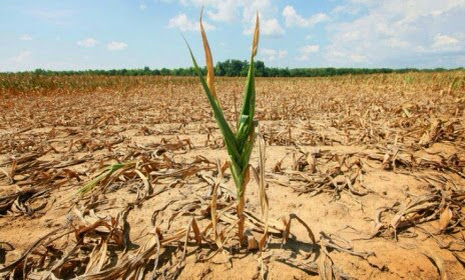
Droughts have had a serious impact on local agriculture.

Ms. Li, “most places basically have no harvest. Individual crops can be harvested a little, but there is not much. If one place can harvest 40 percent, that’s the best.''

Hubei Province is rich in water during the main flood season this year. But rainfall in most areas decreased by more than 20 percent. 111 small reservoirs and over 50,000 ponds dried up; over 600 reservoirs are below the dead water level; Hanjiang River downstream water level dropped. Danjiangkou reservoir water level is only 142.77 meters on August 19. This is far below the SNWTP planned water level of 170 meters.

For this major disaster, the authorities explained that the drought is caused by a variety of climatic reasons. They claimed that, even if the current trend of precipitation is “north flood south dry”, it is still to “transfer water from south to north” to fill the gap of an especially severe water shortage in Beijing.

But the villagers in drought regions have different thoughts.

Ms. Li, ” we all think it is due to the SNWTP. In previous years, it was not as dry as in these years.”

Villagers discussed and believe that, SNWTP leads the Han River, the Yangtze River and the Yellow River water back and forth; the Three Gorges Reservoir also caused natural flowing rivers to change direction. Poor circulation, and loss of groundwater resources are also very serious. It has a massive impact not only to the surrounding geological environment, but also caused imbalances to the water, clouds, rain, and natural circulation system leading to a severe drought.

Living in Germany, water resources expert Wang Weiluo, has published many articles about Jiang Zemin who to “supply water to the 2008 Beijing Olympics”, hastily approved and launched the SNWTP in 2001. It introduced one billion cubic meters of water annually to Beijing, with diversion channels crossing more than 700 natural rivers in Central China. The project completely

broke the law of nature of these rivers; There is a serious engineering problem, even bigger than the Three Gorges, and the threat is to a wider area.

Beijing electrical engineer Mr. Tian, “in principle there is a problem, because it is not that the south is high, the north is low, and it naturally flows across. It is to artificially add a number of processes, which undermines the law of nature. I think this may be even worse than the Three Gorges Dam.”

Problems have been reported recently about SNWTP by the media. When the Diversion project tested the water on July 3 for the first time, the media exposed that the water source from Danjiangkou Reservoir exceeded the nitrogen content, and was seriously polluted. The official also acknowledged that water quality for nitrogen and phosphorus exceeded the standards. However he stressed that it would naturally degrade through long-distance transportation.

In late July, the mainland media also reported that SNWTP led to a decrease in the Han River water level. Due to the reduced water flow the fish were unable to spawn by end of July, while in previous years they had finished spawning. Yicheng city located by the Han River was without water three times since last year, the longest time was 48 hours.

In addition to the environmental damages, Beijing electrical engineer Mr. Tian pointed out that the drain from SNWTP is likely to outweigh the benefits.

Mr. Tian, “this unnatural process takes a lot of energy and wastes a lot of water. Introduce ten percent water, and finally arriving in Beijing, maybe even not two percent will get there.”

SNWTP has three water diversion routes, namely the east, middle and west line. Of which the middle and east lines cost amounted to 500 billion yuan, 2.5 times larger than the Three Gorges Project. The East line is pumped from the Yangtze River to Tianjin, Qingdao and Yantai direction. The Midline is from Danjiangkou Reservoir as a division of Yangtze tributary the Han River, in Beijing’s direction; The West line is from the upper Yangtze River to the Yellow River water diversion. The East line started in December 2002, until December 8, 2013 the water went through. The Midline started in December 2003, is expected to have water through in October 2014. The West Line has not been started yet. More


ADB Spotlights Pakistan’s Water Assessment and Management Plan


News: ADB Spotlights Pakistan’s Water Assessment and Management Plan

ADBSeptember 2014: The Asian Development Bank (ADB) has published a report titled ‘Water Balance: Achieving Sustainable Development through a Water Assessment and Management Plan – The Case of Federally Administered Tribal Areas (FATA), Pakistan.' The report presents the case of the development of the FATA Water Assessment and Management Plan, outlining elements necessary in such assessment, and emphasizing that inefficient and unsustainable management of development initiatives result from lack of information about water availability and cause watershed degradation.


Integrated water resources management (IWRM) was used as a core approach in the development of possible activities to promote the sustainable use of water resources in the FATA region. While noting much of the data used is historical, the report emphasizes that climate change is likely to alter current water availability patterns, and calls for integrating hydrological forecasting and climate change models into the assessment.


The report includes sections on: background; project area; assessing surface water availability; assessing groundwater; assessing water consumption; water balance model; water management plan; and conclusions. [Publication: Water Balance: Achieving Sustainable Development through a Water Assessment and Management Plan – The Case of Federally Administered Tribal Areas (FATA), Pakistan]


Read more: http://water-l.iisd.org/news/adb-spotlights-pakistans-water-assessment-and-management-plan/


Peak Water

There is a lot of water on planet Earth – 326,000,000,000,000,000,000 gallons (329 trillion gallons), or 1,260,000,000,000,000,000,000 litres. About 70 percent of the planet is made of oceans and 98 percent of all the water on earth is in the oceans. That’s a lot of water.

Only 2 percent of all this water is fresh drinking water but most of that is locked up in the polar icecaps and glaciers – approximately 80 percent (or 1.6 percent of the planet’s water). Another 36 percent is in underground aquifers and wells and roughly 0.036 percent of our fresh water supply is found in lakes and rivers. That still leaves thousands of trillions of gallons for drinking. (Source: Environmental Science, howstuffworks)

But is that enough fresh drinking water for a population which is growing exponentially? Every second, four babies are born and two people die. In the time it will take to write this article, 20,000 people will have joined the human race.

‘Peak Oil’ has been extensively written about for many years “but the real threat to our future is peak water,” wrote Lester R. Brown, president of the Earth Policy Institute, in the summer of 2013 in theguardian. “There are substitutes for oil, but not for water. We can produce food without oil, but not without water.”

“The concept of “peak water” and its implications for the U.S. economy are less well explored and understood.” says Dr. Peter Gleick, President of the Pacific Institute. His April 2010 paper (Peak water limits to freshwater withdrawal and use) sparked such interest that the term “peak water” was chosen by The New York Times as one of their 33 “Words of the Year” for 2010. Gleick outlines three different definitions of “peak water”:

Peak Renewable Water. Most water resources are renewable, in the form of flows of rainfall, rivers, streams, and groundwater basins that are recharged over relatively short time frames. Renewable, however, does not mean unlimited. When human demands for water from a watershed reach 100% of renewable supply, we can’t take any more, and we reach “peak renewable” limits.

For a number of major river basins, we have reached the point of peak renewable water limits, including the Colorado River in the United States. All of the water of the Colorado (indeed, more than 100% of the average flow) is already spoken for through legal agreements with the seven US states and Mexico and in a typical year river flows now often fall to zero before they reach their ends. This is true for a growing number of rivers around the world.

Peak Nonrenewable Water. In some places, water comes from stocks of water that are effectively nonrenewable, such as groundwater aquifers with very slow recharge rates or groundwater systems damaged by compaction or other physical changes in the basin. When the use of water from a groundwater aquifer far exceeds natural recharge rates, this stock of groundwater will be depleted or fall to a level where the cost of extraction exceeds the value of the water when used, very much like oil fields. Continued production of water beyond natural recharge rates will become increasingly difficult and expensive as groundwater levels drop, leading to a peak of production, followed by diminishing withdrawals and use.

This kind of unsustainable groundwater use is already occurring in the Ogallala Aquifer in the Great Plains of the United States, the North China plains, parts of California’s Central Valley, and numerous regions in India. In these basins, extraction may not fall to zero, but current rates of pumping cannot be maintained. Worldwide, a significant fraction of current agricultural production depends on non-renewable groundwater. This is extremely dangerous for the reliability of long-term food supplies.

Peak Ecological Water. Water supports commercial and industrial activity and human health, but it is also fundamental for animals, plants, habitats, and environmentally dependent livelihoods. By some estimates, humans already appropriate almost 50% of all renewable and accessible freshwater flows, leading to significant ecological disruptions…the term “peak ecological water” refers to the point where taking more water for human use leads to ecological disruptions greater than the value that this increased water provides to humans.

Running Out of Water

The story of “Peak Water” is increasingly coming to the forefront in 2014 as large portions of the American mid-west are suffering through the worst drought in the last hundred years. Drinking water supplies from the tap have dried up in many communities forcing authorities to provide bottled-water rations and water for bathing and home use.

Tom Philpott writes in Mother Jones that the water crisis is much worse than previously known. Homeowners and farmers are having to drill deeper wells to harvest dwindling groundwater reserves. California has declared a drought emergency and imposed mandatory restrictions on water use with the levy of heavy fines for wasting water on non-essential activities – watering lawns and driveway, washing cars. National Geographic reports that:

Groundwater supplies in our major western aquifers — the Central Valley, the southern Ogallala and now those that underlie the Colorado River Basin – are disappearing. We simply pump out more water than is being naturally replenished, and as a result, groundwater levels are falling rapidly…..The American West is running out of water. More


Disaster risk and climate change dominate agenda at Small Island Developing States Conference

Over 2,000 delegates have gathered in the Samoan capital Apia for the 3rd International Conference on Small Island Developing States (SIDS).

The conference, which takes place every ten years, brings together representatives from governments, the UN, the International Federation of Red Cross and Red Crescent Societies (IFRC) and other development and civil society actors; to discuss emerging challenges facing countries in the three SIDS regions: the Pacific, the Caribbean, and the African, Indian Ocean, Mediterranean and South China Sea (AIMS).

President of the conference, Honourable Tuilaepa Lupesoliai Sailele Malielegaoi, Prime Minister of Samoa, said in his opening speech that sympathy and pity will not provide solace or halt the devastating impact of climate change.

“Our message is the same today as it was in Rio in 1992: climate change is a global problem, yet international action to address it remains grossly inadequate. We want all our partners to step forward and commit to address once and for all the root causes of climate change.”

This message was reinforced by UN Secretary General, Ban ki-Moon who highlighted the ever-increasing threat that many countries are confronting as a consequence of climate change. “The plight of millions of people in small island development states demands an international response. By failing to act, we condemn the most vulnerable to unacceptable disruption to their lives as a result of the actions of those a world away,” he said.

Sustaining development

The theme for SIDS 2014 is the sustainable development of Small Island Developing States through genuine and durable partnerships.

In his statement during the multi-stakeholder partnership dialogue on climate change and disaster risk management, IFRC president Tadateru Konoé, called upon governments to strengthen resilience and disaster preparedness as a first line of defence for vulnerable people.

“Small Island Developing States already cope with disproportionate consequences of disasters. The aim of IFRC and its member National Red Cross and Red Crescent Societies is to build their empirical knowledge and increase their resilience by bridging traditional community support systems with science and technology.”

During the conference the IFRC signed a three-year memorandum of understanding with the Secretariat of the Pacific Regional Environment Programme (SPREP) under which Red Cross National Societies in ten countries across the Pacific will work with National Meteorological Offices to make climate and weather information more accessible, relevant and user-friendly for users such as fishers and farmers.

“The partnership is about strengthening the local humanitarian response and reducing disaster risk by making climate and weather information relevant to the needs of communities living on the frontline of climate change,” said Jagan Chapagain, director of the IFRC in Asia Pacific.

Another unique project highlighted during a side event at the conference on displacement in the context of disasters and the effects of climate change was the ‘At the Water’s Edge’ project, involving the Grenada Red Cross, Government of Grenada, the Nature Conservancy and Grenada Fund for Conservation partnership. The project has shown how sharing community and environmental expertise through education, mangrove replanting and coral reef protection has helped to reduce disaster risk and strengthen the capacity of local communities to adapt to the effects of climate change.

In his closing remarks, President Konoé made it clear that while action was necessary to help communities adapt to the consequences of climate change, change in global policy is equally important. “The IFRC calls for the strong integration of climate change and disaster risk reduction into upcoming frameworks,” he said. “It is critical that governments arrive at a strong second Hyogo Framework for Action, a legally binding climate change agreement and a post-2015 development agreement with community resilience at its core. More


Brazil Vows Water Supply Is Under Control as Basins Dry

The state of Sao Paulo is facing its worst drought in eight decades, threatening the water supplies for 20 million people — but you wouldn’t know that by asking Brazil’s elected officials.

Sao Paulo Governor Geraldo Alckmin, who is seeking re-election in October, has been minimizing the crisis for the region, which includes South America’s largest city. The reaction is a far cry from the response in drought-stricken California, where Governor Jerry Brown has declared a state of emergency and residents are being fined for watering their lawns.

Sao Paulo state is already rationing water for more than 2 million people in 18 cities. The capital city’s main reservoir is now at only 12 percent of capacity, according to the water utility Cia. de Saneamento Basico do Estado de Sao Paulo, known as Sabesp. While the utility received a warning at the end of July that it risks running out of drinking water in 100 days, officials vow the situation is under control.

“Sao Paulo is denying this crisis because we are in the middle of the political campaign,” said Joao Simanke, a hydrogeologist consultant who worked for Sabesp for more than two decades. “The crisis is already in place and it is getting worse, but until now it has been possible to mask it.”

Blaming unusual weather in a city traditionally known as “drizzly Sao Paulo,” Alckmin denied last week he was slow to respond to the drop in the city’s main reservoir, which began in May 2013, because of the political cost of rationing.

“The situation in Sao Paulo is serious, but it is under control,” Mauro Arce, water resources secretary for the state, said in a telephone interview.

Reduced Flow

While Brazil’s largest city isn’t rationing water, thousands of residents are already complaining of reduced flow from their taps in the past two months.

In February, Sabesp began offering 30 percent discounts to customers who cut consumption by at least 20 percent of their 12-month average. The utility is spending money on special equipment to pull water known as “dead volume” from the very bottom of the Cantareira reservoir and to get supplies from other reservoirs.

In California, an estimated 82 percent of the state is experiencing extreme drought. Most of its major reservoirs are at less than half of capacity, state records show, as residents face restrictions on car washes and restaurants only serve water to customers who request it.

Spring Rains

Relief may be slow to come before more Sao Paulo residents have to contend with water limits. According to weather forecaster Climatempo, the spring season that starts in September will bring rains at or below historical averages — not enough to refill basins. The drenching El Nino rains that caused floods in southern Brazil won’t travel far enough north to help refill reservoirs in Sao Paulo.

Sao Paulo’s water situation is “scary,” given the historical humid weather condition of the region, said Benedito Braga, president of World Water Council, an international organization that promotes awareness of water issues.

“Sao Paulo’s situation is not devastating such as the California’s situation, because the American state has experienced droughts many times,” he said. “We have never seen anything similar in Sao Paulo, so we are in an uncomfortable situation.”

Sao Paulo should be already adopting more measures in an attempt to reduce water usage, such as a progressive water rate in which consumers pay more for exceeding a certain level of water consumption, said Braga, who was on the board of Brazil’s national water agency from 2001 to 2009.

‘Serious’ Situation

Sao Paulo’s water resources secretary said there’s no need to adopt more measures to reduce demand and pressure on the city’s water reservoirs. The government isn’t minimizing the crisis and it’s reaching out to increase awareness of the issue, Arce said. Irrigation in the upper reaches of rivers is already being limited, he said.

“The situation is serious and we are dealing with it with the seriousness it deserves,” Arce said. Sabesp says its voluntary demand reduction programs are working and some, including Gesner Oliveira, a consultant who served as Sabesp’s president from 2007 to 2010, agree.

“The set of measures adopted were correct to manage the situation of water scarcity,” said Oliveira.

But reductions in demand haven’t held steady. In July, water consumption in Sao Paulo rose as tourists filled the city for the World Cup soccer tournament and fewer people joined the consumption reduction program, Sabesp executives said on an Aug. 19 conference call.

Water Fines?

“The water saving campaign is not enough to avoid a bigger problem and people don’t exactly know what is going on,” said Samuel Barreto, a coordinator with the Nature Conservancy. “The government must better inform the population.”

Sao Paulo’s governor press office didn’t respond to a phone call seeking comment.

Marco Antonio Barros, superintendent of water production of Sabesp, downplayed the possibility the company would fine customers for excessive water use, saying such penalties took a long time to be established in California. Limiting secondary uses of water, for washing cars and other non-drinking consumption, is possible, he said.

According to a July report by Citigroup Inc., if the water flow remains below average for the remainder of the year, the Cantareira reservoir “will dry up by December in spite of the use of dead-storage volume.”

Sabesp expects to be able to supply water until the rainy season ends in March and says the chance of rationing in the capital by the end of the year is zero. Recovery of its reservoirs in the first months of the next season is unlikely “even if it rains a lot,” Sabesp Chief Financial Officer Rui Affonso said on the conference call. “The constancy of the rains is what matters.” More

To contact the reporter on this story: Vanessa Dezem in Sao Paulo at vdezem@bloomberg.net

To contact the editors responsible for this story: Reed Landberg at landberg@bloomberg.net Tina Davis, Randall Hackley


Karachi thirsts for a water supply

KARACHI: On the outskirts of the slums of Pakistan’s biggest city, protesters burning tires and throwing stones have what sounds like a simple demand: They want water at least once a week.

In Karachi people go days without getting water from city trucks, sometimes forcing them to use groundwater contaminated with salt. A recent drought has only made the problem worse. And as the city of roughly 18 million people rapidly grows, the water shortages are only expected to get worse.

“During the last three months they haven’t supplied a single drop of water in my neighbourhood,” protester Yasmeen Islam said. “It doesn’t make us happy to come on the roads to protest but we have no choice anymore.”

Karachi gets most of its water from the Indus River — about 550 million gallons per day — and another 100 million gallons from the Hub Dam that is supplied by water from neighbouring Balochistan province. But in recent years, drought has hurt the city’s supply.

Misbah Fareed, a senior official with the Karachi Water and Sewerage Board that runs the city’s water supplies, said that only meets about half the city’s needs — 1.2 billion gallons a day.

Karachi’s water distribution network has exacerbated the problem by forcing much of the city to get its water through tankers instead of directly from pipes. The Karachi Water and Sewerage Board operates 12 water hydrants around the city where tankers fill up and then distribute. Even people in the richest areas of the city get their water through tankers that come a few times a week to fill up underground cisterns.

But criminals have illegally tapped into the city’s water pipes and set up their own distribution points where they siphon off water and sell it.

“I personally know some people previously associated with drug mafias who now switched to the water tanker business,” Fareed said. “Just imagine how lucrative the business is.”

Other areas of Pakistan pump massive amounts of groundwater. But in the coastal city of Karachi, the underground water is too salty to drink. Many people have pumps but they use the water for things such as showering or washing clothes.

The water shortage is exacerbated by Karachi’s massive population. Pakistani military operations and American drone strikes in the northern tribal regions, as well as natural disasters such as flooding and earthquakes, have pushed people toward a city long seen as the economic heart of Pakistan.

The city is trying to increase the amount of water it gets from the Indus River by building another canal — dubbed the K4 project. But even if they were to get political approval from the capital to take more water from the river, it would take a minimum of four years to build.

But analysts say supply isn’t the only problem. Farhan Anwar, who runs an organisation called Sustainable Initiatives in Karachi, said the Karachi Water and Sewerage Board is horribly overstaffed and many of those are political appointees. The cost for water is also very low and the agency doesn’t collect all that it’s due, Anwar said. That’s made it difficult to upgrade the ageing pipes the system does have, meaning contamination and leakages are common.

Meanwhile, Karachi residents have to spend more money or walk further and further to get water. One elderly resident Aisha Saleem said in recent months even the little water they get from the water board is salty.

“Women and kids have to go miles by foot and carry drinking water every day,” she said More


How extensive is California’s drought?

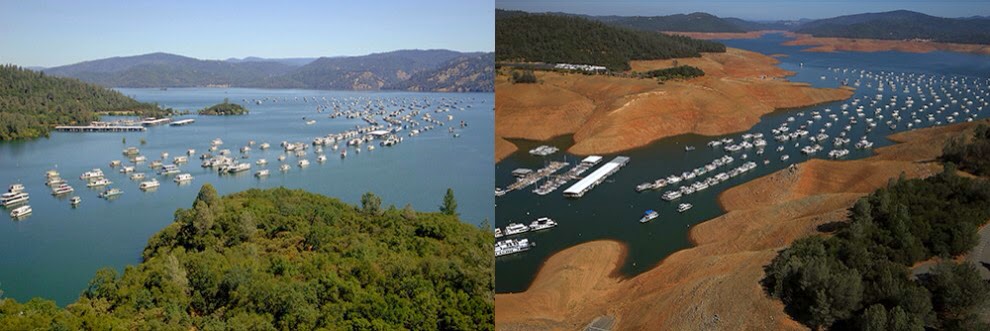
A snake-like trickle of water flows underneath Lake Oroville's Enterprise Bridge — just one striking example of how much California's chronic drought is affecting the state's lakes and reservoirs.

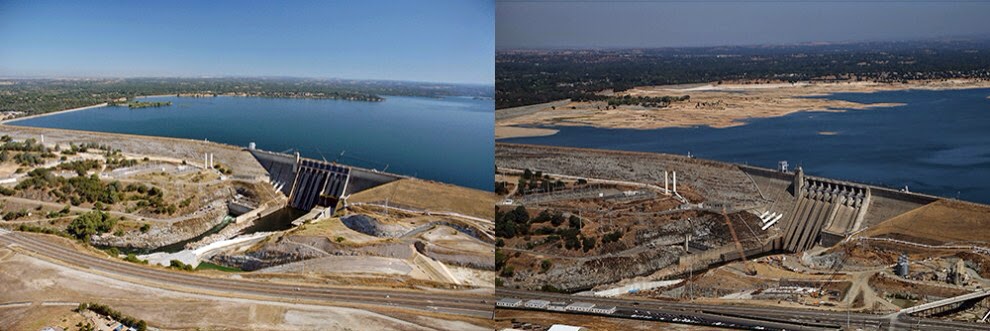
Situated at the foot of the Sierra Nevadas in Butte County, Lake Oroville is one of the largest reservoirs in California, second only to Shasta Lake. After enduring three straight years of drought, the lake is currently only filled to 32 percent of its capacity.

In any case, the drought in California is getting serious. Phase 2 of Los Angeles' mandatory water conservation ordinance is now in effect, which means a team of water-use inspectors are tasked with enforcing water restrictions and fining water wasters. If the drought continues through fall and winter, the ordinance will move to Phase 3, which entails even stricter rules and some prohibitions.

To get a better idea of the dire situation in the Golden State, continue below for a photo comparison of water levels taken in 2011 and 2014, looking at Lake Oroville and Folsom Lake, another major California reservoir located in Sacramento County that is now filled at 40 percent of its capacity.

Bidwell Marina, Lake Oroville

Folsam Dam, Folsom Lake

Enterprise Bridge, Lake Oroville


Beware, fellow plutocrats, the pitchforks are coming

Nick Hanauer: Beware, fellow plutocrats, the pitchforks are coming

Published on Aug 12, 2014 • Nick Hanauer is a rich guy, an unrepentant capitalist — and he has something to say to his fellow plutocrats: Wake up! Growing inequality is about to push our societies into conditions resembling prerevolutionary France. Hear his argument about why a dramatic increase in minimum wage could grow the middle class, deliver economic prosperity … and prevent a revolution.

TEDTalks is a daily video podcast of the best talks and performances from the TED Conference, where the world's leading thinkers and doers give the talk of their lives in 18 minutes (or less). Look for talks on Technology, Entertainment and Design – plus science, business, global issues, the arts and much more.

Find closed captions and translated subtitles in many languages at http://www.ted.com/translate

Follow TED news on Twitter: http://www.twitter.com/tednews

Like TED on Facebook: https ://www.facebook.com/TE D

Subscribe to our channel: http://www.youtube.com/user/TEDtalksDirector

Central America braces for drought-linked food crisis

Low rainfall linked to the El Nino weather phenomenon has led to drought in parts of Central America, causing widespread damage to crops, shortages and rising prices of food, and worsening hunger among the region’s poor.

An unusually hot season and extended dry spells have brought drought to areas in eastern and western Guatemala and El Salvador, southern Honduras and northern and central Nicaragua, destroying swathes of bean and maize crops, the region’s staple foods, and putting pressure on subsistence farmers and food prices.

“Extremely poor households across large areas of Guatemala, Nicaragua, Honduras, and El Salvador will experience a rapid deterioration in their food security in early 2015.

“Atypically high levels of humanitarian assistance, possibly the highest since Hurricane Mitch in 1998, will likely be required in order to avoid a food crisis,” said a recent report by the Famine Early Warning Systems Network (FEWS NET), run by the US Agency for International Development (USAID).

Thousands of families in the region have become too poor to buy enough food for survival because poor harvests are pushing up prices of staple foods while coffee producers are hiring fewer seasonal coffee pickers and paying lower wages because of a coffee leaf rust or roya epidemic across Central America.

In Nicaragua and Honduras, red bean prices rose by up to 129 percent between January and June 2014, according to FEWS NET.

Other livelihoods in Central America, including fishing and livestock breeding, have also been hard hit by the recent drought and the El Nino weather phenomenon, FEWS NET said.

El Nino, which can last more than a year, significantly raises surface temperatures in the central and eastern areas of the tropical Pacific Ocean, a phenomenon linked to major climate fluctuations around the world.

In response to the drought, the Guatemalan government has said it will begin distributing 4,000 tonnes of food aid to more than 170,000 families affected by the drought from early October, using government and United Nations World Food Programme (WFP) food reserves.

One of the poorest countries in Central America, Guatemala already struggles to feed its population, particularly those impoverished indigenous communities living in rural areas.

Around half Guatemala’s population of 15 million lives in poverty and the country has the world’s fourth highest rate of chronic malnutrition, which affects almost half the children under five, according to the WFP.

In neighboring Honduras, the government is distributing food, including rice, beans and flour, and vitamin supplements to 76,000 families, many subsistence farmers, affected by the drought.

First Blogged on http://robinwestenra.blogspot.com/