IWMI Launches Book on Developing Water-Related SDGs


IWMI logo20 October 2014: The International Water Management Institute (IWMI) has released a book, titled ‘On Target for People and Planet: Setting and Achieving Water-Related Sustainable Development Goals (SDGs),' which highlights that framing water-related SDGs in a water security context provides a more comprehensive framework than the human-needs approach of the Millennium Development Goals (MDGs).


The book calls for: recognizing economic water scarcity; balancing development and conservation needs; and exploring pragmatic solutions. The book also identifies four key challenges: development of broad partnerships within the water sector and beyond; accommodation of growth requirements particularly in Asia and Africa; large-scale investments in water resources and agriculture need to complement, rather than undermine small-scale producers; and integration of policies for coherent water management across sectors. Next steps are also identified in the book: supporting governments to set national targets; achieving water and food security-related SDGs; and measuring and tracking progress.


The book includes chapters on: water-food-energy nexus; water governance; water metrics; social inclusion; sustainable development and ecosystem services; managing water variability; water quality; and accessing and putting water to productive use in Sub-Saharan Africa. [Publication: On Target for People and Planet: Setting and Achieving Water-Related SDGs] More


Wells Dry, Fertile Plains Turn to Dust

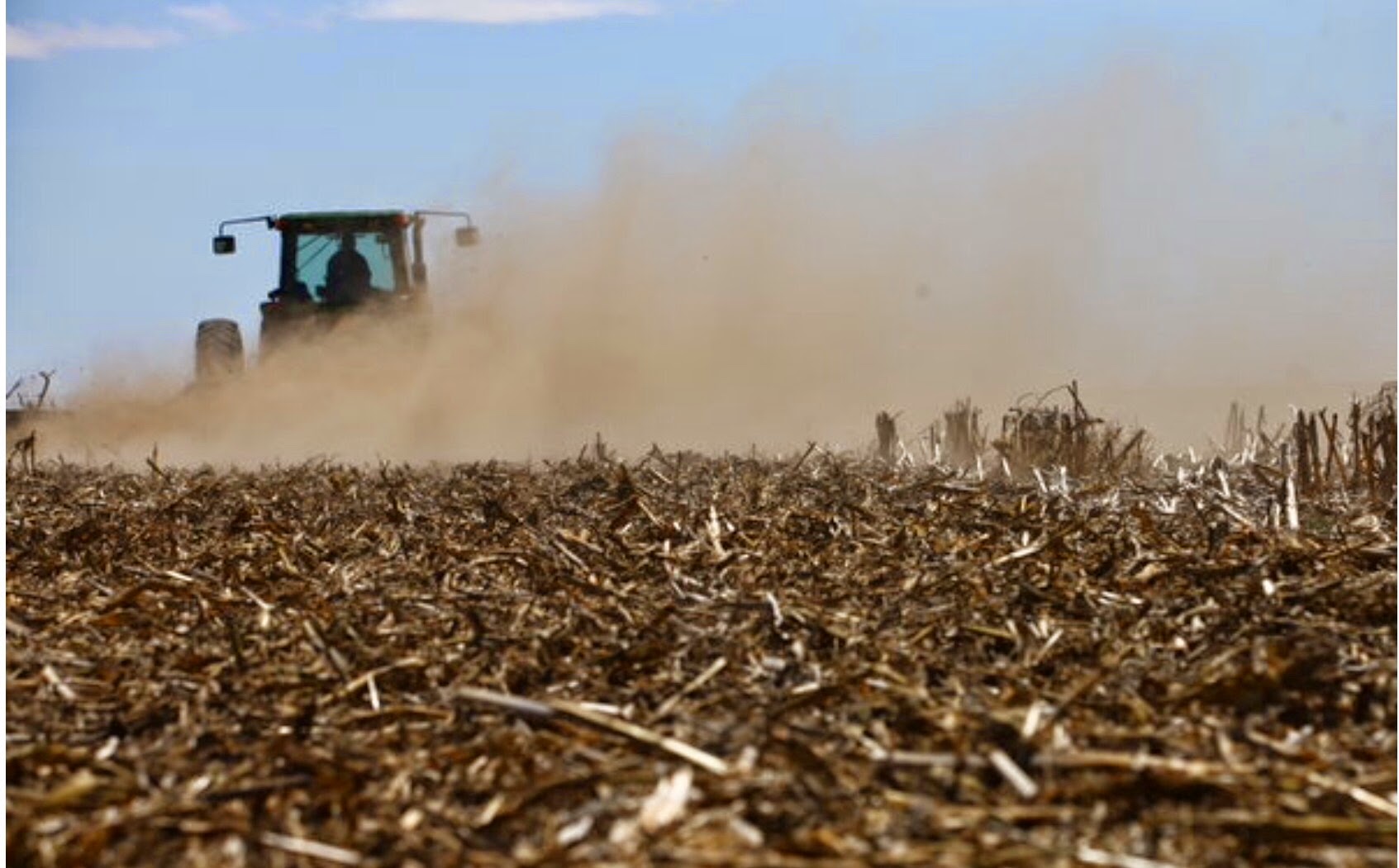
HASKELL COUNTY, Kan. — Forty-nine years ago, Ashley Yost’s grandfather sank a well deep into a half-mile square of rich Kansas farmland. He struck an artery of water so prodigious that he could pump 1,600 gallons to the surface every minute.

Last year, Mr. Yost was coaxing just 300 gallons from the earth, and pumping up sand in order to do it. By harvest time, the grit had robbed him of $20,000 worth of pumps and any hope of returning to the bumper harvests of years past.

“That’s prime land,” he said not long ago, gesturing from his pickup at the stubby remains of last year’s crop. “I’ve raised 294 bushels of corn an acre there before, with water and the Lord’s help.” Now, he said, “it’s over.”

The land, known as Section 35, sits atop the High Plains Aquifer, a waterlogged jumble of sand, clay and gravel that begins beneath Wyoming and South Dakota and stretches clear to the Texas Panhandle. The aquifer’s northern reaches still hold enough water in many places to last hundreds of years. But as one heads south, it is increasingly tapped out, drained by ever more intensive farming and, lately, by drought.

Vast stretches of Texas farmland lying over the aquifer no longer support irrigation. In west-central Kansas, up to a fifth of the irrigated farmland along a 100-mile swath of the aquifer has already gone dry. In many other places, there no longer is enough water to supply farmers’ peak needs during Kansas’ scorching summers.

And when the groundwater runs out, it is gone for good. Refilling the aquifer would require hundreds, if not thousands, of years of rains.

This is in many ways a slow-motion crisis — decades in the making, imminent for some, years or decades away for others, hitting one farm but leaving an adjacent one untouched. But across the rolling plains and tarmac-flat farmland near the Kansas-Colorado border, the effects of depletion are evident everywhere. Highway bridges span arid stream beds. Most of the creeks and rivers that once veined the land have dried up as 60 years of pumping have pulled groundwater levels down by scores and even hundreds of feet.

On some farms, big center-pivot irrigators — the spindly rigs that create the emerald circles of cropland familiar to anyone flying over the region — now are watering only a half-circle. On others, they sit idle altogether.

Two years of extreme drought, during which farmers relied almost completely on groundwater, have brought the seriousness of the problem home. In 2011 and 2012, the Kansas Geological Survey reports, the average water level in the state’s portion of the aquifer dropped 4.25 feet — nearly a third of the total decline since 1996.

And that is merely the average. “I know my staff went out and re-measured a couple of wells because they couldn’t believe it,” said Lane Letourneau, a manager at the State Agriculture Department’s water resources division. “There was a 30-foot decline.”

Kansas agriculture will survive the slow draining of the aquifer — even now, less than a fifth of the state’s farmland is irrigated in any given year — but the economic impact nevertheless will be outsized. In the last federal agriculture census of Kansas, in 2007, an average acre of irrigated land produced nearly twice as many bushels of corn, two-thirds more soybeans and three-fifths more wheat than did dry land.

Farmers will take a hit as well. Raising crops without irrigation is far cheaper, but yields are far lower. Drought is a constant threat: the last two dry-land harvests were all but wiped out by poor rains.

In the end, most farmers will adapt to farming without water, said Bill Golden, an agriculture economist at Kansas State University. “The revenue losses are there,” he said. “But they’re not as tremendously significant as one might think.”

Some already are. A few miles west of Mr. Yost’s farm, Nathan Kells cut back on irrigation when his wells began faltering in the last decade, and shifted his focus to raising dairy heifers — 9,000 on that farm, and thousands more elsewhere. At about 12 gallons a day for a single cow, Mr. Kells can sustain his herd with less water than it takes to grow a single circle of corn.

“The water’s going to flow to where it’s most valuable, whether it be industry or cities or feed yards,” he said. “We said, ‘What’s the higher use of the water?’ and decided that it was the heifer operation.”

The problem, others say, is that when irrigation ends, so do the jobs and added income that sustain rural communities.

“Looking at areas of Texas where the groundwater has really dropped, those towns are just a shell of what they once were,” said Jim Butler, a hydrogeologist and senior scientist at the Kansas Geological Survey.

The villain in this story is in fact the farmers’ savior: the center-pivot irrigator, a quarter- or half-mile of pipe that traces a watery circle around a point in the middle of a field. The center pivots helped start a revolution that raised farming from hardscrabble work to a profitable business.

Since the pivots’ debut some six decades ago, the amount of irrigated cropland in Kansas has grown to nearly three million acres, from a mere 250,000 in 1950. But the pivot irrigators’ thirst for water — hundreds and sometimes thousands of gallons a minute — has sent much of the aquifer on a relentless decline. And while the big pivots have become much more efficient, a University of California study earlier this year concluded that Kansas farmers were using some of their water savings to expand irrigation or grow thirstier crops, not to reduce consumption.

A shift to growing corn, a much thirstier crop than most, has only worsened matters. Driven by demand, speculation and a government mandate to produce biofuels, the price of corn has tripled since 2002, and Kansas farmers have responded by increasing the acreage of irrigated cornfields by nearly a fifth.

At an average 14 inches per acre in a growing season, a corn crop soaks up groundwater like a sponge — in 2010, the State Agriculture Department said, enough to fill a space a mile square and nearly 2,100 feet high.

Sorghum, or milo, gets by on a third less water, Kansas State University researchers say — and it, too, is in demand by biofuel makers. As Kansas’ wells peter out, more farmers are switching to growing milo on dry land or with a comparative sprinkle of irrigation water.

But as long as there is enough water, most farmers will favor corn. “The issue that often drives this is economics,” said David W. Hyndman, who heads Michigan State University’s geological sciences department. “And as long as you’ve got corn that’s $7, then a lot of choices get made on that.”

Of the 800 acres that Ashley Yost farmed last year in Haskell County, about 70 percent was planted in corn, including roughly 125 acres in Section 35. Haskell County’s feedlots — the county is home to 415,000 head of cattle — and ethanol plants in nearby Liberal and Garden City have driven up the price of corn handsomely, he said.

But this year he will grow milo in that section, and hope that by ratcheting down the speed of his pump, he will draw less sand, even if that means less water, too. The economics of irrigation, he said, almost dictate it.

“You’ve got $20,000 of underground pipe,” he said. “You’ve got a $10,000 gas line. You’ve got a $10,000 irrigation motor. You’ve got an $89,000 pivot. And you’re going to let it sit there and rot?

“If you can pump 150 gallons, that’s 150 gallons Mother Nature is not giving us. And if you can keep a milo crop alive, you’re going to do it.”

Mr. Yost’s neighbors have met the prospect of dwindling water in starkly different ways. A brother is farming on pivot half-circles. A brother-in-law moved most of his operations to Iowa. Another farmer is suing his neighbors, accusing them of poaching water from his slice of the aquifer.

A fourth grows corn with an underground irrigation system that does not match the yields of water-wasting center-pivot rigs, but is far thriftier in terms of water use and operating costs.

For his part, Mr. Yost continues to pump. But he also allowed that the day may come when sustaining what is left of the aquifer is preferable to pumping as much as possible.

Sitting in his Ford pickup next to Section 35, he unfolded a sheet of white paper that tracked the decline of his grandfather’s well: from 1,600 gallons a minute in 1964, to 1,200 in 1975, to 750 in 1976.

When the well slumped to 500 gallons in 1991, the Yosts capped it and drilled another nearby. Its output sank, too, from 1,352 gallons to 300 today.

This year, Mr. Yost spent more than $15,000 to drill four test wells in Section 35. The best of them produced 195 gallons a minute — a warning, he said, that looking further for an isolated pocket of water would be costly and probably futile.

“We’re on the last kick,” he said. “The bulk water is gone.” More


Water Resource Management- New Publication 2014

Department of Organic Food Quality and Food Culture, University of Kassel and Department of Archaeology and Heritage Management, Rajarata University, Sri Lanka are pleased to announce about the publication of their new research paper, titled “Water Resource Management in Dry Zonal Paddy Cultivation in Mahaweli River Basin, Sri Lanka: An Analysis of Spatial and Temporal Climate Change Impacts and Traditional Knowledge” in the Special Issue “Changes in precipitation and impacts on regional water resources”, Climate Journal International.

The paper may be accessed at http://www.mdpi.com/2225-1154/2/4/329

Abstract: Lack of attention to spatial and temporal cross-scale dynamics and effects could be understood as one of the lacunas in scholarship on river basin management. Within the water-climate-food-energy nexus, an integrated and inclusive approach that recognizes traditional knowledge about and experiences of climate change and water resource management can provide crucial assistance in confronting problems in megaprojects and multipurpose river basin management projects.

The Mahaweli Development Program (MDP), a megaproject and multipurpose river basin management project, is demonstrating substantial failures with regards to the spatial and temporal impacts of climate change and socioeconomic demands for water allocation and distribution for paddy cultivation in the dry zone area, which was one of the driving goals of the project at the initial stage. This interdisciplinary study explores how spatial and temporal climatic changes and uncertainty n weather conditions impact paddy cultivation in dry zonal areas with competing stakeholders' interest in the Mahaweli River Basin.

In the framework of embedded design in the mixed methods research approach, qualitative data is the primary source while quantitative analyses are used as supportive data. The key findings from the research analysis are as follows: close and in-depth consideration of spatial and temporal changes in climate systems and paddy farmers' socioeconomic demands altered by seasonal changes are important factors. These factors should be considered in the future modification of water allocation, application of distribution technologies, and decision-making with regards to water resource management in the dry zonal paddy cultivation of Sri Lanka. More


Naomi Klein’s ‘This Changes Everything’

“Every inhabitant of this planet must contemplate the day when this planet may no longer be habitable.” Thus spoke President Kennedy in a 1961 address to the United Nations.

Naomi Klein

The threat he warned of was not climate chaos — barely a blip on anybody’s radar at the time — but the hydrogen bomb. The nuclear threat had a volatile urgency and visual clarity that the sprawling, hydra-headed menace of today’s climate calamity cannot match. How can we rouse citizens and governments to act for concerted change? Will it take, as Naomi Klein insists, nothing less than a Marshall Plan for Earth?

“This Changes Everything: Capitalism vs. the Climate” is a book of such ambition and consequence that it is almost unreviewable. Klein’s fans will recognize her method from her prior books, “No Logo: Taking Aim at the Brand Bullies” (1999) and “The Shock Doctrine: The Rise of Disaster Capitalism” (2007), which, with her latest, form an antiglobalization trilogy. Her strategy is to take a scourge — brand-­driven hyperconsumption, corporate exploitation of disaster-struck communities, or “the fiction of perpetual growth on a finite planet” — trace its origins, then chart a course of liberation. In each book she arrives at some semihopeful place, where activists are reaffirming embattled civic values.

To call “This Changes Everything” environmental is to limit Klein’s considerable agenda. “There is still time to avoid catastrophic warming,” she contends, “but not within the rules of capitalism as they are currently constructed. Which is surely the best argument there has ever been for changing those rules.” On the green left, many share Klein’s sentiments. George Monbiot, a columnist for The Guardian, recently lamented that even though “the claims of market fundamentalism have been disproven as dramatically as those of state communism, somehow this zombie ideology staggers on.” Klein, Monbiot and Bill McKibben all insist that we cannot avert the ecological disaster that confronts us without loosening the grip of that superannuated zombie ideology.

That philosophy — ­neoliberalism — promotes a high-consumption, ­carbon-hungry system. Neoliberalism has encouraged mega-mergers, trade agreements hostile to environmental and labor regulations, and global hypermobility, enabling a corporation like Exxon to make, as McKibben has noted, “more money last year than any company in the history of money.” Their outsize power mangles the democratic process. Yet the carbon giants continue to reap $600 billion in annual subsidies from public coffers, not to speak of a greater subsidy: the right, in Klein’s words, to treat the atmosphere as a “waste dump.”

So much for the invisible hand. As the science fiction writer Kim Stanley Robinson observed, when it comes to the environment, the invisible hand never picks up the check.

Klein diagnoses impressively what hasn’t worked. No more claptrap about fracked gas as a bridge to renewables. Enough already of the international summit meetings that produce sirocco-quality hot air, and nonbinding agreements that bind us all to more emissions. Klein dismantles the boondoggle that is cap and trade. She skewers grandiose command-and-control schemes to re-engineer the planet’s climate. No point, when a hubristic mind-set has gotten us into this mess, to pile on further hubris. She reserves a special scorn for the partnerships between Big Green organizations and Immense Carbon, peddled as win-win for everyone, but which haven’t slowed emissions. Such partnerships remind us that when the lamb and the lion lie down together, only one of them gets eaten.

In democracies driven by lobbyists, donors and plutocrats, the giant polluters are going to win while the rest of us, in various degrees of passivity and complicity, will watch the planet die. “Any attempt to rise to the climate challenge will be fruitless unless it is understood as part of a much broader battle of worldviews,” Klein writes. “Our economic system and our planetary system are now at war.”

Klein reminds us that neoliberalism was once an upstart counterrevolution. Through an epic case of bad timing, the Reagan-Thatcher revolution, the rise of the anti-regulatory World Trade Organization, and the cult of privatizing and globalizing everything coincided with the rising public authority of climate science. In 1988, James Hansen, director of NASA’s Goddard Institute, delivered historic testimony at Congressional hearings, declaring that the science was 99 percent unequivocal: The world was warming and we needed to act collectively to reduce emissions. Just one year earlier, Margaret Thatcher famously declared: “There is no such thing as society. There are individual men and women and there are families.” In the battle since, between a collective strategy for forging an inhabitable long-term future and the antisocial, hyper-­corporatized, hyper-carbonized pursuit of short-term growth at any cost, well, there has been only one clear winner.

But counterrevolutions are reversible. Klein devotes much of her book to propitious signs that this can happen — indeed is happening. The global climate justice movement is spreading. Since the mid-1990s, environmental protests have been growing in China at 29 percent per year. Where national leaders have faltered, local governments are forging ahead. Hundreds of German cities and towns have voted to buy back their energy grids from corporations. About two-thirds of Britons favor renationalizing energy and rail.

The divestment movement against Big Carbon is gathering force. While it will never bankrupt the mega-corporations, it can reveal unethical practices while triggering a debate about values that recognizes that such practices are nested in economic systems that encourage, inhibit or even prohibit them.

The voices Klein gathers from across the world achieve a choral force. We hear a Montana goat rancher describe how an improbable alliance against Big Coal between local Native American tribes and settler descendants awakened in the latter a different worldview of time and change and possibility. We hear participants in Idle No More, the First Nations movement that has swept across Canada and beyond, contrast the “extractivist mind-set” with systems “designed to promote more life.”

One quibble: What’s with the subtitle? “Capitalism vs. the Climate” sounds like a P.R. person’s idea of a marquee cage fight, but it belies the sophistication and hopefulness of Klein’s argument. As is sometimes said, it is easier to imagine the end of the world than to imagine the end of capitalism. Klein’s adversary is neoliberalism — the extreme capitalism that has birthed our era of extreme extraction. Klein is smart and pragmatic enough to shun the never-never land of capitalism’s global overthrow. What she does, brilliantly, is provide a historically refined exposé of “capitalism’s drift toward monopoly,” of “corporate interests intent on capturing and radically shrinking the public sphere,” and of “the disaster capitalists who use crises to end-run around democracy.”

To change economic norms and ethical perceptions in tandem is even more formidable than the technological battle to adapt to the heavy weather coming down the tubes. Yet “This Changes Everything” is, improbably, Klein’s most optimistic book. She braids together the science, psychology, geopolitics, economics, ethics and activism that shape the climate question. The result is the most momentous and contentious environmental book since “Silent Spring.” More


Drought Is Taking California Back to the Wild, Wild West

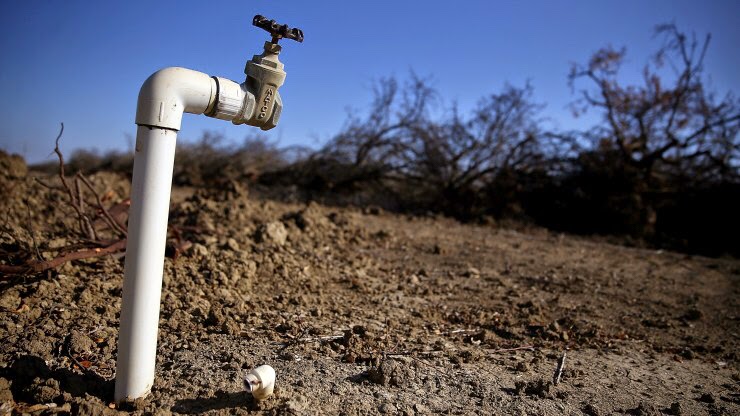
Mary Madden feels paranoid. Last fall Madden noticed something suspicious. The water filling the tanks outside her veterinary clinic in Los Gatos, Calif., was disappearing at an alarming rate. Madden checked for leaks but found none. Then she realized: Someone was stealing her water.

“I just couldn’t believe it,” she said. “You never imagine anyone would do something like that but there it was, vanishing right before our eyes.”

Madden decided to act. She installed security cameras. Then she put locks on the tanks. She even strung a chain across her driveway to keep out unwanted visitors. The theft stopped after the locks went on. But Madden never caught the thief, and she can’t stop thinking about who did it.

“This is a really small community, so you sit here and start going through everyone you know and wondering if it was them,” she said.

Madden is not alone. Water theft has become increasingly common in California as the state suffers through its worst drought on record. There’s no reliable tracking of just how much water has gone missing. But reports of theft rose dramatically in the past year. Officials say a black market set up to peddle water is thriving as wells run dry. And law enforcement is scrambling to respond.

Mendocino County has made catching water thieves a top priority. The sheriff’s office set up a water-theft hotline and investigates every tip. It also puts out patrols to sniff out suspicious activity.

In August, a sheriff’s deputy there followed a trail of water droplets up a dirt road where he discovered a truck outfitted with a water tank. A confession came quickly. The driver had siphoned water from a nearby canal and planned to sell it to the highest bidder.

The Public Works Department in Lemoore, in Kings County, hired someone to scan city streets for thieves after officials found evidence that someone has been stealing water from fire hydrants.

For now, a statewide effort to curb water theft has yet to materialize. So cities and counties have been left to devise their own methods of retribution.

Officials complain that the penalty for getting caught may not be sufficiently strict: Mendocino County counts water theft as a misdemeanor. County Supervisor Carre Brown considers that a slap on the wrist. “To me this is like looting during a disaster. It should be a felony,” Brown said.

Contra Costa County fines anyone caught stealing water $25. Amid worsening theft, the county may soon increase the penalty to $250 and up the amount to $500 for repeat offenders.

But even with all the attention from law enforcement, officials say that much of the theft has gone unpunished.

“This is something that’s very hard to pin down. If you don’t catch someone in the act, how do you prove they did it?” Mendocino County Sheriff Tom Allman said.

As a result, some California residents have taken matters into their own hands. Online forums and community message boards serve as informal channels where people can post a warning. Word-of-mouth has also proven effective at spreading information.

After Madden told people what had happened, neighbors started to keep an eye on her property. “People will tell me if they see a truck lingering nearby when I’m not there,” she said. “We all look out for each other.”

Rural communities where residents rely on well water and areas of the state that play host to agricultural operations and illegal marijuana cultivation have been particularly hard hit.

Thousands of gallons of water were stolen from a fire station in North San Juan, a town nestled in the foothills of the Sierra Nevada Mountains, at the height of wildfire season this summer. The theft was discovered after an engineer hit the station’s water tank and heard a hollow ringing sound rather than the usual thud.

“We were just absolutely stunned,” said Boyd Johnson, a battalion chief with the North San Juan fire department. “Fires are on everyone’s mind during the summer so to see this happen, I think it really scared people.”

Residents of North San Juan depend on wells for water. The area is also known for growing marijuana and located just a few hours north of California’s Central Valley, an area of the state where farmers rely on massive amounts of water to ensure the success of their crops.

This past summer thieves also made off with water from an elementary school and a public health clinic on the San Juan Ridge.

James Berardi, the principal of the school that was hit, says security cameras have been installed in an effort to catch thieves. The fire department is also taking precautions. After the theft, lockboxes with a combination padlock were put on each of the station’s water tanks.

“It slows us down a bit getting to the water, but at least we know it’s safe,” Johnson said.

A growing number of wells have run dry on the ridge as the drought drags on. And that, according to Caleb Dardick, a resident of nearby Nevada City, means the theft is unlikely to end anytime soon.

“People are becoming desperate,” Dardick said. “The situation has become really severe in the last few years.”

All this has made water a chief concern for residents of the state who say they never used to give water a second thought.

“I think about water constantly, obsessively,” Madden said. “I wake up every day dreading what might happen if we run out.” More


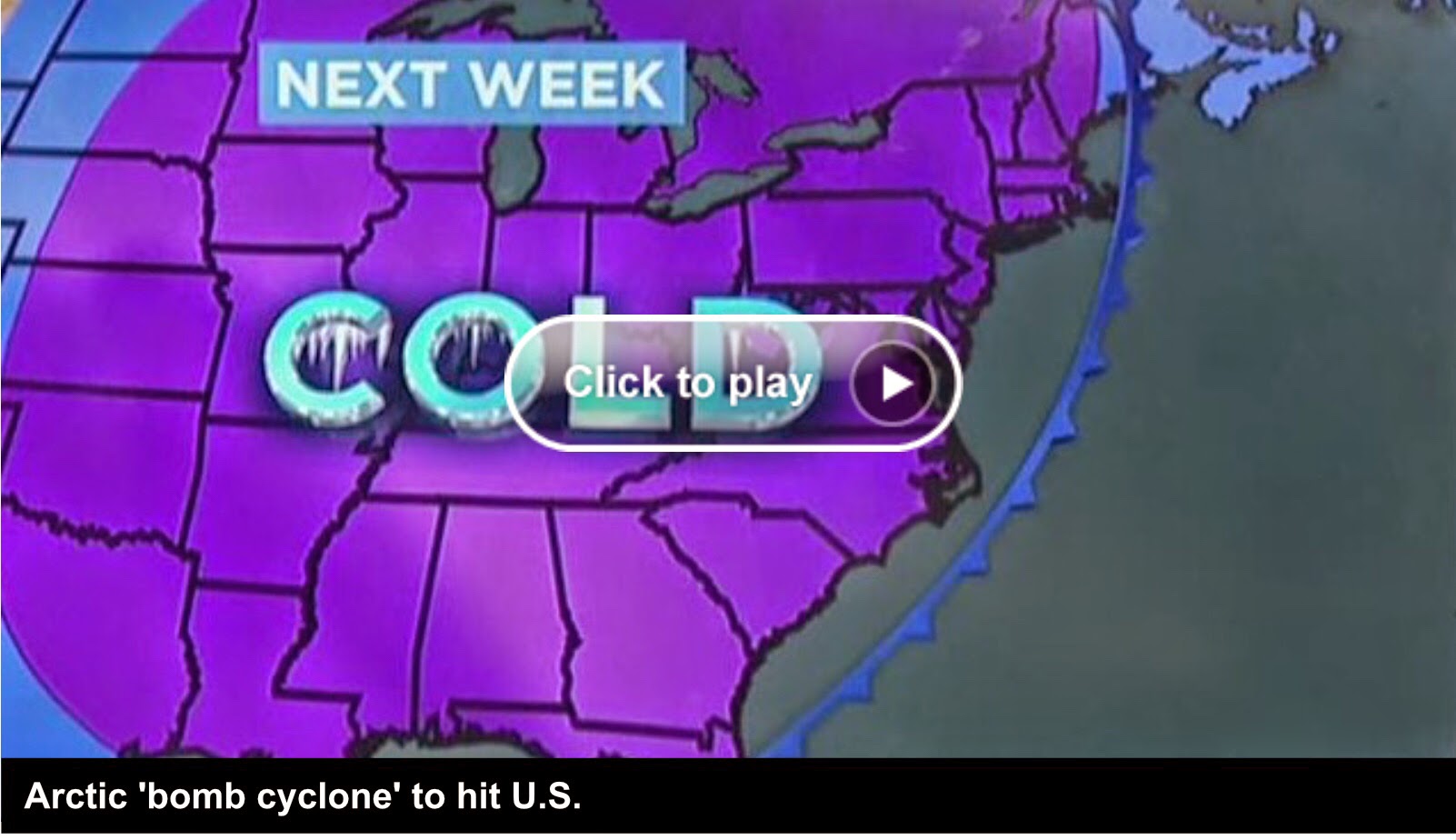
Arctic snap will ice Northern states, whipped down by ‘bomb cyclone’

(CNN)The ice man cometh. And does so early this year, after a former Pacific typhoon flew up toward the Arctic and rammed the jet stream.

The stream has whipped south, dragging down frigid air from Canada over the northern Plains and Mountain States and the Upper Midwest, according to the National Weather Service.

It is already plunging temperatures below freezing there and will hammer them into the teens and single digits in many places by midweek, even lower in others.

Great Falls, Montana, will shiver at 9 below zero on Tuesday night.

It’s the coldest weather of the season, the weather service said.

Minneapolis could soon get a foot of snow, the service said, with the Minnesota city experiencing below-freezing temperatures that could last for eight days.

Let it snow

The snap is forecast to lay down the first broad layer of wintry snow, flurries, sleet or ice — long before winter starts — from Montana down to Nebraska and over to Wisconsin.

It will accumulate in inches in the northern Rockies, northern Plains and Great Lakes.

People farther south will also shiver. “Much of the nation east of the Rockies is expected to see a major pattern change by the beginning of the work week,” the weather service said.

The western Dakotas are also forecast to get significant snow.

Lows will drop to freezing in Kansas City late Monday, then into the 20s a night later. The snap will stop short, leaving much of the Deep South and Southwest in a fall-like warm zone.

Rain is expected to hit Chicago and Milwaukee on Monday and Tuesday, with a few snowflakes mixed in, according to the service on Sunday afternoon.

Courtesy of Nuri

Residents in the northern United States can thank a whopping tropical cyclone in the Pacific Ocean for the wintry blast.

The remnants of super Typhoon Nuri rolled up north over Alaska’s Aleutian Islands on Friday, kicking off the ripple of Arctic air in the other direction.

Nuri is now the strongest known Northern Pacific cyclone on record, according to the National Weather Service Ocean Prediction Center.

Its remnants plowed into cold air adding violent energy as it went north, similar to what Superstorm Sandy did in the Atlantic two years ago. That earned it the weather moniker “bomb cyclone. More


Ocean acidification tops the annual list of important stories ignored by the mainstream media

Our oceans are acidifying — even if the nightly news hasn’t told you yet.

As humanity continues to fill the atmosphere with harmful gases, the planet is becoming less hospitable to life as we know it. The vast oceans absorb much of the carbon dioxide we have produced, from the industrial revolution through the rise of global capitalism. Earth’s self-sacrifice spared the atmosphere nearly 25 percent of humanity’s CO2 emissions, slowing the onslaught of many severe weather consequences.

Although the news media have increasingly covered the climate weirding of global warming — hurricane superstorms, fierce tornado clusters, overwhelming snowstorms, and record-setting global high temperatures — our ocean’s peril has largely stayed submerged below the biggest news stories.

The rising carbon dioxide in our oceans burns up and deforms the smallest, most abundant food at the bottom of the deep blue food chain. One vulnerable population is the tiny shelled swimmers known as the sea butterfly. In only a few short decades, the death and deformation of this fragile and translucent species could endanger predators all along the oceanic food web, scientists warn.

This “butterfly effect,” once unleashed, potentially threatens fisheries that feed over 1 billion people worldwide.

Since ancient times, humans fished the oceans for food. Now, we’re frying ocean life before we even catch it, starving future generations in the process. Largely left out of national news coverage, this dire report was brought to light by a handful of independent-minded journalists: Craig Welch from the Seattle Times, Julia Whitty of Mother Jones, and Eli Kintisch of ScienceNOW.

It is also the top story of Project Censored, an annual book and reporting project that features the year’s most underreported news stories, striving to unmask censorship, self-censorship, and propaganda in corporate-controlled media outlets. The book is set for release in late October.

“Information is the currency of democracy,” Ralph Nader, the prominent consumer advocate and many-time presidential candidate, wrote in his foreword to this year’s Project Censored 2015. But with most mass media owned by narrow corporate interests, “the general public remains uninformed.”

Whereas the mainstream media poke and peck at noteworthy events at single points in time, often devoid of historical context or analysis, Project Censored seeks to clarify understanding of real world issues and focus on what’s important. Context is key, and many of its “top censored” stories highlight deeply entrenched policy issues that require more explanation than a simple sound bite can provide.

Campus and faculty from over two dozen colleges and universities join in this ongoing effort, headquartered at Sonoma State University. Some 260 students and 49 faculty vet thousands of news stories on select criteria: importance, timeliness, quality of sources, and the level of corporate news coverage.

The top 25 finalists are sent to Project Censored’s panel of judges, who then rank the entries, with ocean acidification topping this year’s list.

“There are outlets, regular daily papers, who are independent and they’re out there,” Andy Lee Roth, associate director of Project Censored, told us. Too many news outlets are beholden to corporate interests, but Welch of the Seattle Times bucked the trend, Roth said, by writing some of the deepest coverage yet on ocean acidification.

“There are reporters doing the highest quality of work, as evidenced by being included in our list,” Roth said. “But the challenge is reaching as big an audience as [the story] should.”

Indeed, though Welch’s story was reported in the Seattle Times, a mid-sized daily newspaper, this warning is relevant to the entire world. To understand the impact of ocean acidification, Welch asks readers to “imagine every person on earth tossing a hunk of CO2 as heavy as a bowling ball into the sea. That’s what we do to the oceans every day.”

Computer modeler Isaac Kaplan, at the National Oceanic and Atmospheric Administration office in Seattle, told Welch that his early work predicts significant declines in sharks, skates and rays, some types of flounder and sole, and Pacific whiting, the most frequently caught commercial fish off the coast of Washington, Oregon, and California.

Acidification may also harm fisheries in the farthest corners of the earth: A study by the Arctic Monitoring and Assessment Programme outlines acidification’s threat to the arctic food chain.

“Decreases in seawater pH of about 0.02 per decade have been observed since the late 1960s in the Iceland and Barents Seas,” the study’s authors wrote in the executive summary. And destroying fisheries means wiping out the livelihoods of the native peoples of the Antarctic.

Acidification can even rewire the brains of fish, Welch’s story demonstrated. Studies found rising CO2 levels cause clown fish to gain athleticism, but have their sense of smell redirected. This transforms them into “dumb jocks,” scientists said, swimming faster and more vigorously straight into the mouths of their predators.

These Frankenstein fish were found to be five times more likely to die in the natural world. What a fitting metaphor for humanity, as our outsized consumption propels us towards an equally dangerous fate.

“It’s not as dramatic as say, an asteroid is hitting us from outer space,” Roth said of this slowly unfolding disaster, which is likely why such a looming threat to our food chain escapes much mainstream news coverage.

Journalism tends to be more “action focused,” Roth said, looking to define conflict in everything it sees. A recently top-featured story on CNN focused on President Barack Obama’s “awkward coffee cup salute” to a Marine, which ranks only slightly below around-the-clock coverage of the president’s ugly tan suit as a low point in mainstream media’s focus on the trivial.

As Nader noted, “‘important stories’ are often viewed as dull by reporters and therefore unworthy of coverage.” But mainstream media do cover some serious topics with weight, as it did in the wake of the police officer shooting of Michael Brown in Ferguson, Mo. So what’s the deciding factor?

As Roth tells it, corporate news focuses on “drama, and the most dramatic action is of course violence.”

But the changes caused by ocean acidification are gradual. Sea butterflies are among the most abundant creatures in our oceans, and are increasingly born with shells that look like cauliflower or sandpaper, making this and similar species more susceptible to infection and predators.

“Ocean acidification is changing the chemistry of the world’s water faster than ever before, and faster than the world’s leading scientists predicted,” Welch said, but it’s not getting the attention is deserves. “Combined nationwide spending on acidification research for eight federal agencies, including grants to university scientists by the National Science Foundation, totals about $30 million a year — less than the annual budget for the coastal Washington city of Hoquiam, population 10,000.”

Our oceans may slowly cook our food chain into new forms with potentially catastrophic consequences. Certainly 20 years from now, when communities around the world lose their main source of sustenance, the news will catch on. But will the problem make the front page tomorrow, while there’s still time to act?

Probably not, and that’s why we have Project Censored and its annual list: More


Ground water depletion driving global conflicts – NASA scientist

ROME, Nov 7 (Thomson Reuters Foundation) – Global ground water supplies, crucial for sustaining agriculture, are being depleted at an alarming rate with dangerous security implications, a leading scientist said.

Cracked ground of the Atibainha dam Brazil

“It's a major cause for concern because most of the places where it (ground water depletion) is happening are major food producing regions,” James Famiglietti, a University of California professor who conducts research for the National Aeronautics and Space Administration (NASA), said in an interview with the Thomson Reuters Foundation.

“India is the worst off, followed by the Middle East, and the U.S. is probably number three … the Chinese, particularly on the north China plain, are more water limited than people believe.”

Famiglietti's conclusions are based on his latest research paper “The global ground water crisis” published in the journal Nature Climate Change last month.

The study uses analysis of satellite images to warn that ground water in many of the world's largest aquifers is being exploited at a far faster rate than it can be naturally replenished.

Farming accounts for more than 80 percent of the United States' water use, according to the U.S. Department of Agriculture, and the figures are similar globally.

Famiglietti has been called to the Pentagon a number of times to discuss the potential impact of groundwater scarcity with leading military planners.

Water-related conflicts are already happening, he said, and security experts are bracing for more.

“In 90 percent of the world where there are violent conflicts, there are water scarcity issues,” he said.

Water scarcity has been one component driving Syria's civil war, he said. The agricultural sector lacks sufficient water to farm, and a “young generation of unhappy farmers moved to the city and conflict ensued”.

Oil-rich, water scarce countries in the Gulf currently rely on desalinated sea water for much of their water consumption.

Some analysts suggest that more countries will embrace energy-intensive desalination, particularly using nuclear technology, if current trends continue.

Famiglietti said this would not be a good option, as it requires too much energy, and won't be able to efficiently provide the volumes of water needed for large-scale agriculture.

Governments first need to acknowledge there is a problem, he said, and then factor scarcity into pricing, while investing in conservation and new technologies to promote efficiency. More


The Man Who Creates Artificial Glaciers To Meet The Water Needs Of Ladakh

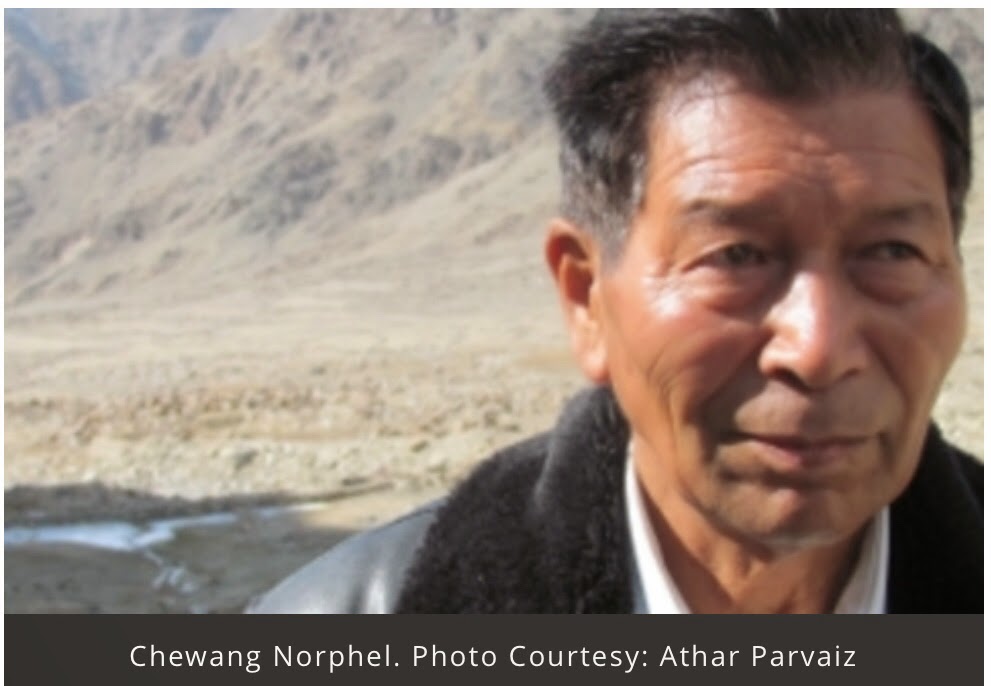
Ladakh’s beautiful mountains might be a paradise for tourists, but ask the locals who have to struggle to meet their basic water needs every year. Chewang Norphel put his engineering skills to a better use and created artificial glaciers to provide water in this cold and dry mountainous region. Know more about his remarkably innovative technology and how it works.

Chewang Norphel, a 79-year old retired civil engineer, has always been a solution provider. The story goes back to 1966 when he was posted in Zanskar, one of the most backward and remote areas in Ladakh, as Sub Divisional Officer. He, along with his team, had to construct school buildings, bridges, canals, roads etc. in that area. The task was very difficult to execute due to lack of skilled labour.

So he started doing the masonry work himself and trained a few villagers to help him. After some years, when he went back to that village, he found out that the villagers he had trained had become perfect mistry and were earning handsome salaries.

Today, he is called the “Ice Man of India” and has created 10 artificial glaciers in Ladakh to help people deal with water scarcity in this cold, mountainous region.

Ladakh, a beautiful location with magnificent scenery around and exquisite beauty, takes everyone’s breath away. But, it is not the same with the people of Ladakh as the cold, dry and infertile land makes their lives harder than we could imagine.

Fortunately, the situation is slowly changing as Ladakh now has artificial glaciers to meet their needs and people have Norphel to thank for his amazing contribution.

Born in 1936, Norphel comes from a farming background and has served in the government service for more than 36 years before he had to take an early retirement due to his bad health. Being at home was not something Norphel enjoyed doing, and at the same time, the poor living conditions in Ladakh constantly troubled him. He thought of putting his engineering skills to a better use.

“Almost all the villages in Ladakh have roads, culverts, bridges, buildings or irrigation systems made by me,”says Norphel. But his biggest contribution came in the form of artificial glaciers.

Being a cold mountain desert, Ladakh sees a low average rainfall of 50 mm annually making people dependent upon glaciers as their primary water source.

80 percent of the population depends on farming, and their main source of irrigation water is the water that comes from the melting of snow and glaciers. Because of global warming, the glaciers are receding quickly and as a result, farmers face a lot of difficulty in getting adequate water. On the other hand, a lot of water gets wasted during the winter months as, due to the severe cold climate, farmers cannot grow any crops in that season.

“So I thought that if we could conserve this water in the form of ice, it can be of help to farmers to some extent during the irrigation period, particularly during the sowing season. The artificial glaciers, being quite close to the villages, melt earlier than the natural glaciers. Also, getting water during the sowing period is the most crucial concern of the farmers because the natural glaciers start melting in the month of June and sowing starts in April and May,” he says.

The idea first came to him when he saw water dripping from a tap which was kept open so as to avoid the water from freezing in winter and bursting the tap. The water gradually froze into the shape of an ice sheet as it came in touch with the ground and made a pool.

It struck him that the water that melts from natural glaciers due to high temperatures in summer goes to waste as it flows into the river. Instead, if this water can be stored in summer and autumn so that it can form a glacier in winter, then this artificial glacier would melt in spring and provide water to the villagers at the right time.

It was now time for action, and he put all his engineering knowledge, field experience and passion to work. He started his first experiment in Phutse village. He made canals to divert the water from the main stream to small catchment areas located four kms away from the village. He also created a shaded area to keep the water frozen in winters.

And, as these glaciers are located at a lower altitude of 13,000 feet as compared to the original glaciers which are located at 18,000 feet, they start melting earlier than the mainstream ones and provide water to the villagers when they need it the most in April.

“The main technique used to create artificial glaciers is to control the velocity of water as much as possible. The region is a hilly area and that is why the gradient of streams is very steep. As a result, in the main streams the water usually does not freeze. So what we have done is we have diverted the water to a shadow area by constructing a diversion channel with a mild grade. When it reaches the site, the water is released downward of the hill, distributing it in a small quantity so that the velocity can be minimized, and side by side we have constructed ice retaining walls in series to store the frozen water. This is the entire methodology of the artificial glacier,” he explains.

Retaining walls for artificial glacier

His first project cost him Rs.90,000. The width of the glacier ranges generally from 50 to 200 feet and the depth from 2 to 7 feet. This low cost model used only locally sourced material and help from the local community. Norphel has successfully built 10 glaciers so far. The smallest one is 500 feet long in Umla and the largest is 2 km long in Phutse.

His efforts have increased the agricultural production, thereby increasing the income of the locals. This has also reduced the migration to cities. His simple technique has brought water closer to the villages, and most importantly, made it available when the villagers need it the most.

In the future, he wants to continue making the glaciers and plans to build in other areas like Lahol, Spiti, Zangskar, etc. The only thing that comes as a challenge is lack of adequate funds.

“As you sow, so you reap. There is no doubt that if one has strong determination and dedication, there is nothing impossible in the world. That is what I believe,” Norphel says.

His simple idea has received acclaim across the globe and he has proved that if man is the one responsible for disturbing nature, he also has the capacity to save it. You just need the right intention to do so. More


The Future Corporation – Paul Polak

TEDxMileh-ligh – Paul Polak – The Future Corporation

Uploaded on May 26, 201 1 • What is the future of the corporation? Paul Polak’s vision will likely transform your view of what’s possible through capitalism and may change the way current organizations view their business models. His talk details the tremendous shared value that lies within product and system designs for the bottom 90% of the income pyramid.

In the spirit of “ideas worth spreading,” TED has created TEDx. TEDx is a program of local, self-organized events that bring people together to share a TED-like experience. Our event is called TEDxMileHigh, where x = independently organized TED event. At a TEDx event, TEDTalks video and live speakers combine to spark deep discussion and connection in a small group. These local, self-organized events are branded TEDx, where x=independently organized

TED event. The TED Conference provides general guidance for the TEDx program, but individual TEDx events, including ours, are self-organized.