The Cayman InstituteDirector-General of The Cayman Institute.
Nicholas Robson has a rich background in the non-governmental (NGO) sector. He received his MA in Peace Studies from the University of Bradford. Nick has consulted for the British Red Cross in Disaster Management and is the founder of the Cayman Institute, a think tank doing policy research in areas such as global warming and climate change, energy security and economic sustainability for small island states. Nick also has a background in security and law enforcement. His geographical areas of interest are Central and South Asia and the Middle East as well as Small Island Developing States. He is also the Chief Coordinator of the South Asian Strategic Stability Institute (SASSI) based in London whose aims are to make a leading contribution to regional and international academic and policy-orientated research discourses about South Asian security.
His publications include Cayman Islands Energy Policy: Background Advisory Report and Sea Level Rise and Its Implications for the Cayman Islands. See
Specialties
-Geopolitical, strategic and security implications of climate & energy security
-Food and water security implications
-Climate / Refugee problem
-Global terrorism and climate change
-Disaster management and climate change
-Economic, political and social issues in the world's smallest countries and dependencies (including SIDS)
Counter Terrorism.
Disaster Response - IFRC.
Human Rights - Int’l Human Rights Academy (University of Utrecht).
UN training in Peace Keeping Operations (UNITAR)
by caribbeanclimate, caribbeanclimateblog.comSeptember 2: Over 150 delegates and members of the international development community from more than 45 countries were stunned to see leader after leader approach the podium to sign a historic sustainable energy and climate resilient treaty that will significantly change the lives and destiny of over 20 million small islanders, for the better.
Led by the Deputy Prime Minister of Samoa, Hon. Fonotoe Nuafesili Pierre Lauofo, multiple leaders from the Pacific, Caribbean and African, Indian Ocean and Mediterranean Sea (AIMS) regions, forcefully raised their voices in unison and accepted responsibility for fulfilling the commitment to the Small Island Developing States (SIDS) Sustainable Energy mechanism – SIDS DOCK. The opening for signature of this historic SIDS DOCK Treaty – a SIDS-SIDS Initiative – was a major highlight of the first day of the United Nations (UN) Third International Conference on SIDS, taking place in Apia, Samoa, from 1-4 September.
The unprecedented and unexpected number of Heads of State and Government present, sent a strong signal to the standing room only audience, the SIDS population and the international community, demonstrating how deeply committed SIDS leaders are and that they all firmly believe that SIDS must, have and will take responsibility for charting the future of their countries towards a path that would see a total transformation of the SIDS economy away from fossil fuels, to that of one driven by low carbon technologies. The event was considered so important to the Republic of Cabo Verde, that the Prime Minister, Hon. José Maria Neves, excused himself and his entire delegation from the Plenary Hall, to ensure that Cabo Verde, a SIDS DOCK Founding Member was well-represented at the signing – the Cabo Verde Government has one of the most ambitious plans in SIDS, that aims to achieve 100 penetration of renewable energies in Cabo Verde, by 2020.
More than half the members of the Alliance of Small Island States (AOSIS) were present for the signing of the historic treaty, witnessed by the SIDS DOCK partners Denmark, Japan and Austria, whose kind and generous support facilitated SIDS DOCK start -up activities; also present were SIDS DOCK partners, the United Nations Development Programme (UNDP), the World Bank, the United Nations Industrial Development Organization (UNIDO) and the Clinton
Foundation. The treaty was signed by the governments of Barbados, Belize, Bahamas (Commonwealth of the), Dominica (Commonwealth of), Cabo Verde (Republic of), Cook Islands, Dominican Republic, Fiji (Republic of), Grenada, Guinea Bissau, Kiribati (Republic of), Niue, Palau (Republic of), Saint Kitts and Nevis, Saint Vincent and the Grenadines, Samoa (Independent State of), Seychelles (Republic of), and Tuvalu.
The Statute will remain open for signature in Apia, Samoa until September 5, and will reopen for signature in Belmopan, Belize, from September 6, 2014 until it enters into force. Belize is the host country for SIDS DOCK, with Samoa designated as the location for the Pacific regional office. More
The UN is set to release a series of imagined, but probable weather forecasts to highlight how extreme weather events will increase in frequency and intensity over the next three decades.
The videos, to be released ahead of a crucial UN climate summit on September 23 in New York, use fictional weather forecasts to illustrate how global warming will change the world by 2050, if mitigation action is not taken.
A teaser video has been released, to be followed by 14 ‘weather reports from the future’ from around the world.
The forecasts are described as “imaginary but realistic” if global warming continues at the pace currently seen. Scientists warn that temperatures are currently on track to increase by 4C above pre-industrial levels, double the 2C limit that scientist believe would lead to irreversible tipping points.
Weather presenters from around the world were invited to make the videos, with the US Weather Channel and ARD in Germany taking part.
“What they created are only possible scenarios, of course, not true forecasts,” the WMO said.
“Nevertheless, they are based on the most up-to-date climate science, and they paint a compelling picture of what life would be like on a warmer planet.”
The UN is calling on world leaders to make “bold pledges” regarding climate change at the summit later this month. It is hoped the summit will act as a step towards the agreement of a global deal next year in Paris.
UN general-secretary Ban Ki-Moon commented, “Climate change is affecting the weather everywhere. It makes more extreme and disturbs established patterns. That means more disasters; more uncertainty.” More
Despite hailing as a victory the seven weeks of fighting that killed more than 2,100 Palestinians and destroyed large swathes of Gaza’s infrastructure, Israel’s prime minister, Benjamin Netanyahu, appears to have emerged as the main political casualty of Operation Protective Edge.
Jonathan Cook
Among Israeli Jews, polls continue to show strong backing for the army, the most revered of Israel’s national institutions.
Last week, a survey by the Jerusalem Post and Maariv newspapers revealed that 61 per cent of respondents agreed with the statement that the Israeli military – but not Israel – had won in Gaza.
“Israel”, in this case, is clearly understood as a synonym for Netanyahu, whose fortunes have taken a sharp downturn in the aftermath of the military campaign.
In late July, as Israel launched its ground offensive, Netanyahu’s approval ratings stood at 82 per cent. Days before the current ceasefire took effect on 26 August, that figure had slumped to 55 per cent.
Last week, as the ceasefire began, Channel 2 TV found that his popularity had plummeted even further, to 32 per cent. Half the country were reported to be positively dissatisfied with his performance.
No signs of remorse
Israelis’ unhappiness with their prime minister does not indicate, as elsewhere in the world, a backlash against a military campaign that killed more than 500 children, destroyed 20,000 buildings and displaced as many as half a million Palestinians. In Israel there are scant signs of remorse, even from the country’s last remaining self-declared liberals.
Netanyahu and his allies in the cabinet, including defence minister Moshe Yaalon, have been trying to play up Israel’s successes, arguing that the army scored an “impressive victory”. Yaalon noted that Hamas had used up most of its rockets, while Israel had destroyed Hamas’ tunnels, killed key leaders and wrecked its supporting infrastructure.
That assessment has been challenged not only by Palestinians in the occupied territories but by leaders of the Palestinian minority in Israel. At the weekend several Palestinian members of the Israeli parliamentattended a victory rally for Hamas near Acre.
One of them, Haneen Zoabi, told Middle East Eye: “This was the longest Israeli attack faced by Palestinians in modern times. It was longer even than the war against Lebanon in 2006. And yet the will of the Palestinian resistance was not broken, and the people of Gaza stood strong. Israel did not achieve any of its political or military aims. When bombarded by one of the strongest armies in the world, that is an undoubted victory.”
Even Netanyahu sounded barely convinced of Israel’s success at a “post-war” press conference. Comparing Hamas to Islamic extremist groups, he observed defensively that even the United States had been unable to defeat al-Qaeda. That refrain was repeated in a rash of interviews with Israeli TV at the weekend.
Herculean task
Few found the comparison persuasive. Settler leader Amiel Ungar noted disparagingly that Hamas’ “Gaza emirate occupies 360 square kilometers and is surrounded on all sides. A week earlier we were told that if the order came down, the IDF could overrun Gaza in seven days. Now a week's work had suddenly mushroomed into a herculean task that would last years.”
Netanyahu’s problem appears to stem from the fact that he has failed to convince his natural constituency on the right that he acted decisively in Gaza. They expected Hamas “smashed”, a term used by many on the right throughout the fighting, or at the very least that Israel would insist on the faction’s “demilitarisation”.
Many Israelis appear particularly incensed by televised scenes of Hamas in Gaza celebrating last week, following the ceasefire announcement. Under its terms, Israel agreed to allow in aid and building materials to ease the humanitarian situation and to extend the fishing zone for Gaza’s fishermen.
Among Israeli Jews, the celebrations in Gaza are widely seen as crowing at the relatively large death toll of Israeli soldiers in the Gaza fighting. Yesterday, it was reported that another soldier had died from wounds sustained in earlier fighting, bringing the total to 66 soldiers and seven civilians.
The high price in blood – even if small in comparison to the suffering of Palestinians in Gaza – placed an added burden on Netanyahu to show he had secured major achievements against Hamas, said Shlomo Bron, a retired general and analyst for the Institute for National Security Studies at Tel Aviv University.
Sacrifice for nothing
“The public is prepared to accept heavy losses if war aims are achieved,” he told Middle East Eye. “But if the sacrifice is seen as for nothing – and that is the view of those who bought into the narrative that Hamas could be destroyed – then Netanyahu is likely to get the blame.”
In addition, the military campaign’s costs to the Israeli economy are already becoming apparent. Yesterday, it was revealed that $560 million cuts were needed immediately, slashing 2 per cent off the budgets of every government department apart from the defence ministry.
To many Israelis, it looks as though the ceasefire has simply restored the status quo, with forthcoming negotiations in Cairo that, it is feared, may win Hamas bigger concessions.
Such concerns were underscored yesterday when an Israeli military source suggested to the Haaretz newspaper that the army’s preferred new approach, designed to prevent renewed confrontation with Hamas, was an easing of the seven-year siege on Gaza. Hamas’ main demand has long been an end to the blockade.
“If we can assist by expanding fishing grounds and easing restrictions on border crossings of people and goods into and from Israel, this will help maintain the quiet,” an unnamed official said.
Rather than making concessions, the Israeli public believes Netanyahu should have pressed on against Hamas. Such sentiments have been voiced by the Israeli prime minister’s rivals in the cabinet, such as Avigdor Lieberman and Naftali Bennett. They have called for the army to “finish the job”.
The Jerusalem Post poll found 58 per cent of Israelis believed the truce was a mistake and that the army should have pushed deeper into Gaza to degrade Hamas military capabilities.
Reflecting that mood, Lieberman’s told Channel 1 TV at the weekend: “The fact that a 20,000-strong terror group has endured for 50 days against the strongest army in the Middle East and has stayed in power – it bothers me very much.”
Confidence shaken
Yoav Bar, a leftwing activist and blogger from Haifa, noted that grand but misleading claims made early in the operation had undermined trust in the leadership’s competence. Early, on, he noted, “Israeli military commanders claimed that the resistance is running out of ammunition. By the end of the first week they declared that a third of the missiles were already used. After 51 days of war the only possible conclusion is that they didn’t have any idea how many rockets there were.”
Similar evasiveness over prior intelligence of Hamas’ extensive network of tunnels under Gaza, some of them leading into Israel, also shook Israelis’ confidence. How was it possible that the tunnels became the major justification for continuing the operation only after the ground invasion had begun?
David Horovitz, editor of the Times of Israel, said that, given the army’s near-sacred status in Israel, the blame was most likely to fall on Netanyahu.
The Israeli public, he pointed out, was “psychologically reliant on the assumption that its army can ultimately de-fang all threats, and that if the army fails to do so, that must be because it did not get the correct orders from the political leadership.”
Part of the disquiet, according to Moshe Arens, a former defence minister from Netanyahu’s Likud party, stems from a sense that Netanyahu lacks the political courage to deal with what is seen as a growing threat posed to Israel from Islamic extremism in the region.
That has not been helped by Netanyahu’s repeated efforts to equate Hamas with Islamic State, the jihadist group notorious for beheadings that has recently made major territorial gains across the region.
‘Al-Qaeda on the border’
At the weekend, Netanyahu told Channel 2 he had decided “not to invest all my resources” in Gaza at a time when “the Islamic State is galloping toward us, al-Qaeda is on the Golan borders.”
Arens wrote in the Haaretz newspaper yesterday that Israel’s operation in Gaza “could have been the beginning of a successful campaign against the fanatical Islamic terror spreading its tentacles through the Middle East, threatening not only Israel, but also many Arab countries.”
He and others have noted that the alignment of regional forces in Israel’s favour provided the best strategic environment Netanyahu could have hoped for. “Egypt, Jordan, Saudi Arabia and the Palestinian Authority were eager to see Israel defeat Hamas.”
Netanyahu’s approach to Gaza over the past two months has also risked exposing his own lack of a positive political vision. He appears afraid to destroy Hamas, but equally loath to make any concessions to bolster the position of Mahmoud Abbas.
Isaac Herzog, leader of the opposition Labour party, who had largely supported the operation, argued last week that the military offensive “could have been avoided” if Netanyahu had embraced diplomatic negotiations with Abbas.
Troubling inconsistency
That view may not be a majority one, but, as Horovitz notes, many Israeli Jews sense a troubling ambiguity in their prime minister’s attitude towards Abbas. Netanyahu has implied that Israel’s problems in Gaza could be solved by bringing in Abbas while at the same time also suggesting that the Palestinian leader is not a credible partner in the West Bank.
Bron said he had detected two trends among the Israeli public in the wake of Operation Protective Edge. The first group, Netanyahu’s natural constituency on the right, demanded Israel get even tougher with Hamas and the Palestinians.
The second trend – associated with those in the political centre and the left – believed the main lesson from Gaza was that there is no military solution to Israel’s conflict with the Palestinians and that Netanyahu must revive a diplomatic process.
Netanyahu has increasingly come to be identified with this latter view. At a cabinet meeting just before the ceasefire was agreed, Yaalon, his defence minister, observed: “There are no magic solutions.”
“This situation is full of political difficulties for Netanyahu. If there is no military solution, then he must engage in a diplomatic process. But if he does so, he will be seen as betraying his support base and this group will search for an alternative on the right who they feel better represents them.” More
There are many reasons why I didn’t write any political analysis at the time of this bloody war.
One reason is that I only wanted the war to be over, to stop the bloodshed, while I knew that the longer Gaza can stand in the face of the Israeli genocidal rampage, the better the chance that the aggressors will not get what they want and that the siege of Gaza, which, in the long term, is even more destructive to Human lives and development, will be lifted.
But the best excuse is that throughout this war the monstrous Israeli war machine seemed clumsy and clueless, while the Gaza resistance seemed to keep cool and know what they are doing.
I preferred to keep quiet and do my small thing by demonstrating against the aggression.
Now, that the war is over, what can we learn from it politically? I will…
Pakistani architect Yasmeen Lari uses local building techniques to rebuild villages in the flood-stricken Sindh region.
Yasmeen Lari - Architect
Yasmeen Lari is Pakistan’s first female architect and one of the most successful providers of disaster relief shelters in the world. She has built over 36,000 houses for victims of floods and earthquakes in Pakistan since 2010.
Shunning the structurally weak, mass-produced houses offered by international organisations, Lari uses vernacular techniques and local materials such as lime and bamboo. Her houses have a tiny carbon footprint and are simple enough for people to build themselves. With this, she hopes to demonstrate the role that architecture can play in humanitarian aid.
“I often tell my colleagues, let us not treat disaster-affected households as destitute, needing handouts … but with dignity,” she says.
Lari once built giant concrete and steel buildings for clients like the Pakistani State Oil company. But when disaster struck in 2005, she turned to traditional techniques to design flood and earthquake proof buildings for people in remote regions.
She returns to the Sindh region to see how her homes survived the 2013 floods and helps villagers in Awaran after the 2013 Balochistan earthquake.
Filmmaker’s view
By Faiza Ahmad Khan
Just a week before I left for Pakistan to film this documentary, the chief minister of my home state Rajasthan in India (which, incidentally, borders Sindh, the part of Pakistan that I was about to visit), pledged that within the next two years, there would be not a single mud house left standing in the state.
For many years the central government in India has already had a programme in place, which gives those in rural areas a sum of money to replace their traditional mud houses with brick and cement structures. Traditional is seen as poor and inferior and the fast track to “development” cannot, God forbid, be lined with mud and thatch houses.
While filming in Pakistan, I shared our chief minister’s announcement with an artisan who works with Yasmeen Lari at the Heritage Foundation in a village called Moak Sharif in Sindh.
“Thank God we’re decades behind India in this development business,” he said.
On one of my travels in Orissa in India, to a village called Govindpur that is resisting land acquisition for the mega steel company, POSCO, I met a woman who was rebuilding her kachcha house (made of natural materials, such as mud, bamboo and leave) despite being able to access government funding for a concrete house.
“We depend on this land for everything, we take what we know can be replenished. People in cities have no connection with the land so they don’t think twice about cutting down trees, mining the earth hollow. You think you’re separate from nature but you’re not. If this goes, you go,” she said.
What I am constantly being reminded of, as this country builds the capitalist dream, is that we stand to lose the wealth of traditional knowledge that pivots around this belief – ways to farm, heal, learn and live.
At the Heritage Foundation centre in Moak Sharif, Yasmeen Lari has been working to preserve traditional ways of building. The centre was set up by Yasmeen and her team in 2005 and has evolved to include a women’s centre, a small learning centre for children and a clinic to provide health care for the residents of the village.
Yasmeen believes that her role as an architect should not be restricted to designing houses and buildings. Instead, things should grow in an integrated way.
While I was there, they managed to get the government school, once barely functioning, in working order. Women from the village had organised themselves into a ‘mothers committee’ to oversee the school’s daily operations. And after I returned to India, every once in a while, Yasmeen would call and explain, with great delight, something new they were experimenting with – organic farming, bio fertilizers and natural soaps.
Through the making of this film I realised that building the “earth-way” means fluidity, not concreteness. It means working with the community, integrating it with structures of support and togetherness. Building homes, for Yasmeen, is about situating them. She guides her team to create this kind of space. Traditional, yes, but by no means can this approach be deemed irrelevant. More
“I’ll back you and protect you, I’m your guy … it’s very upsetting … all the Arabs are the same,” US PresidentBill Clinton told Israeli Prime Minister Ehud Barak in a 19 July 2000 meeting during the failed Camp David summit with Palestinian Authority president Yasser Arafat.
Only months earlier, in March 2000, Clinton displayed the same kind of obeisance to Barak — albeit without the racist slur this time — when he explained, “I’ll do my best … I’ve gone through the script … I’ll do a good job.” He said this while he attempted to reassure Barak during another failed summit, this time with then-president of Syria Hafez al-Assad.
That the US government has acted as Israel’s attorney rather than an honest mediator in peace negotiations has been known for some time, ever since the disclosure of a secret 1975 letter from President Gerald Ford to Prime Minister Yitzhak Rabin.
But these quotes from Ahron Bregman’s Cursed Victory: A History of Israel and the Occupied Territories (2014), which includes the actual “script” agreed upon between Clinton and Barak, make graphically clear the extent of the collusion between the two governments.
Top secret disclosures
Bregman’s book breaks new ground with a number of leaked top secret disclosures from Israeli sources. It shows that the recent revelation that Israel eavesdropped on current US Secretary of State John Kerry is really nothing new.
Israel also secretly recorded conversations between Clinton and Assad back in 2000. The only question unanswered is why, given the extent of the collusion, the Israeli government believed it was necessary to eavesdrop on its counterpart.
Bregman is a British-Israeli political scientist who teaches in the War Studies Department of King’s College London. He served in the Israeli army during the 1982 invasion of Lebanon. But during the first intifada, he openly announced his refusal to serve in the “occupied territories,” in an interview with Israeli newspaperHaaretz.
Facing prison for his refusal, he emigrated to the UK where he obtained a doctoral degree, and subsequently began a career as a lecturer and journalist, eventually authoring four other books on Israel.
Bregman believes that Cursed Victory is the first chronological history of Israel’s occupation of the West Bank including East Jerusalem, Gaza, Syria’s Golan Heights, and Egypt’s Sinai Peninsula following the 1967 war. His book differs from other studies which he says take a more thematic or analytical approach to the post-1967 occupation.
Perspective
Bregman’s perspective is that of a liberal Zionist. He briefly describes the 1947-1948 Nakba — the forced expulsion of Palestinians from their homeland — as a “civil war,” and suggests that Israel emerged as a colonialist country only after the 1967 war, hence the book’s title.
This perspective eventually weakens his concluding chapter and mars his analysis of the failure of Clinton’s Camp David summit. Nevertheless, many Palestinian voices are heard in the course of his chronology, and he rigorously details how Israel implemented the “three main pillars” of its post-1967 occupation through military force, laws and bureaucratic regulations and settlements — in the process, trampling on international law and Palestinians’ human rights.
Bregman’s top secret material appears mostly in the later chapters, which cover the period between 1995 and 2007 when his chronology ends. Many of the documents are not surprising, and their contents could be deduced from both US and Israeli public policy and behavior.
Still, the documentation reinforces what Palestinians have long maintained. We get to read, for example, the actual text of US Secretary of State Madeleine Albright’s reaffirmation of the US pledge to consult first with Israel in peace talks.
In a secret 1998 letter to Israeli prime minister Benjamin Netanyahu, Albright promised: “Recognizing the desirability of avoiding putting forward proposals that Israel would consider unsatisfactory, the US will conduct a thorough consultation process with Israel in advance with respect to any ideas the US may wish to offer the parties for their consideration.” As Bregman notes, this effectively gave “Israel carte blanche to veto any American peace proposals” it didn’t like.
Arafat’s death
Many Palestinians have long suspected that Israel assassinated Arafat by poisoning him. Bregman’s revelations point to this conclusion as well, although he concedes that the information leaked to him to date does not contain the “smoking gun” proof.
The clearest indication, he writes, is a 15 October 2000, document prepared by the Shabak (or Shin Bet), Israel’s secret service, which describes Arafat “as a serious threat to the security of the state. His disappearance outweighs the benefits of his continuing existence.”
After noting that in 2004, US President George W. Bush appeared to release Israeli Prime Minister Ariel Sharon from an earlier commitment not to harm Arafat, Bregman states that the US government had given Sharon “if not a green light to proceed with the killing, then at least an amber” light.
Ignoring Palestinian response
Bregman’s liberal Zionism is apparent in several instances in this work, including his suggestion that if Israel had used greater force it might have avoided the first intifada in 1987. But the most obvious example is his acceptance of the notion that the so-called Clinton Parameters, outlined after the failure of Camp David, represented the best deal the Palestinians could have hoped to get.
The deal Clinton offered, he says, was Palestinian sovereignty over the Haram al-Sharif (Dome of the Rock), the principal Muslim holy site in Jerusalem, in exchange for giving up even a symbolic right of return for Palestinian refugees.
Whereas throughout most of the book Bregman is conscientious in representing Palestinian viewpoints, here he largely ignores the official response of the Palestinian negotiating team to the Clinton Parameters.
Nor does he suggest that Palestinian negotiators had little reason to trust Clinton after he had already broken two key promises: one, that Clinton would not blame Arafat if the summit failed (which Clinton did), and two, that Israel would continue to withdraw from the occupied West Bank if the summit failed (which Israel did not).
More to the point, Bregman effectively dismisses the Palestinian right of return as a fundamental human right central to their struggle and to a just peace.
The parameters guaranteed little more than limited autonomy for Palestinians in less than 22 percent of historic Palestine, not full state sovereignty, and the Palestinian Authority would have had to depend on Israeli goodwill to withdraw its military presence in the Jordan Valley twelve years from the agreement.
The result is a disappointing concluding chapter in which the author suggests that the post-1967 occupation will eventually end simply because history shows that occupations don’t last.
In his final paragraph, he distinguishes between “good” colonialists (the British) and “bad” colonialists (the Israelis), but his fixation on 1967 means he misses entirely that Israeli settler-colonialism began not in 1967, but in the years leading up to the founding of the state in 1948. More
Rod Such is a former editor for World Book and Encarta encyclopedias. He is active with Americans United for Palestinian Human Rights, Jewish Voice for Peace-Portland Chapter and the Seattle Mideast Awareness Campaign.
He’s traveled half a million miles over the years – enough to go around the world 12 times, or to the moon and halfway back – so it’s little wonder that writer, photographer, conservationist and educator Martin Keeley continues to find inspiration for his work.
Keeley’s latest trips are with the Marvelous Mangrove education curriculum, a program that teaches schoolchildren about the importance of mangroves and the eco-systems which they support worldwide, as well as training teachers to teach both students and other teachers.
The program was developed by Cayman Brac-based Keeley in 1999 and initially was incorporated into Cayman’s primary school curriculum. It is part of the Mangrove Action Project, a conservation group comprised of more than 300 scientists and academics spanning more than 60 nations.
The Marvelous Mangrove program is now in 11 countries, with the expansion this year to South Sulawesi, Indonesia, and Queensland, Australia.
“For me, the mangrove trips continue to stimulate the creative process,” said the writer.
“They often inspire my poetry, and I reckon that in another six months or so I’ll have enough to publish another anthology. My photography also continues to benefit from my travels and exposure to other cultures and their environments.”
In addition, he says, he gets an in-depth perspective on the countries and the cultures where he works.
“I experience and observe firsthand their societies and the common problems they face – the huge and ever growing disparity between the obscenely wealthy and the desperately poor who are barely making it,” Keeley added.
“The contrasts I observed this summer between nations like Indonesia and Australia stimulate not only sympathy and anger between the haves and have-nots, but empathy with those whose daily struggle is that of survival, while others have little or no idea how lucky they are take for granted their secure and protective social environment.”
At the Indonesian trip, 30 teachers and educators spent three days in an intense workshop that, in the words of Keeley, “introduced them to the wonderful world of mangroves through hands-on science.”
A particular highlight was the surprise introduction of 15 school kids who came in and assisted for the afternoon, Keeley said.
“The setting is perfect, with elevated cabins connected by elevated walkways and the “hall” for the workshop itself in a Roman-style amphitheater that is open to the elements – roofed, but with shutters, not glass windows,” he said.
“The accommodation, theater and restaurant operate independent of the grid on solar power with water from local wells and storage systems which is treated through solar osmosis, although it sometimes has to be topped up by water trucks during the dry season. The food is all grown locally, and mostly seafood that is caught locally on a daily basis.”
The Australian leg of the trip, he said, was slightly different.
“Australia saw the launch of ‘Mangrovia,’ a huge inflatable red mangrove that students go inside to explore and hear storytelling,” Keeley said.
“In addition, Mangrovia’s creator, international festival artist Evelyn Roth, also designed and made 28 costumes of mangrove critters that are used in conjunction with the inflatable.
“Many Cayman students [and adults] have had similar experiences with my huge inflatable shark and the 30 mangrove critter costumes which go with it during the past 15 years! It’s an exciting way to learn.”
The issue of mangrove conservation has become more and more important in recent years, Keeley says, largely because of their environmental qualities.
“It has been known for many years, and the 2004 Asian Tsunami proved it beyond doubt, that mangroves are the first line of defense against major tropical storms, be they hurricanes or typhoons,” Mr. Keeley continued.
“Recent studies during the past six or seven years have also shown that, given the opportunity, mangroves will keep pace with sea level rise thereby extending that level of protection. In addition, recent research has shown that mangroves capture CO2 from the atmosphere and store it in leaves, roots, trunks and soil.
“No maximum storage capacity has been determined as the trees continuously store carbon in the soil for centuries or millennia. Obviously ripping out mangroves releases this stored CO2 and thereby adds to the acceleration of global warming.
“National governments from Vietnam and China to Belize and Guatemala have come to understand what local communities and scientists have been telling them for many years. Mangroves are the major source of more than 75 percent of reef species of fish and invertebrates – they are the spawning and nursery grounds for these species. Thousands of communities round the world rely on these aquatic species for their livelihoods and to feed their families.”
Next up for stamps on the increasingly-packed passport pages will be trips to Bangladesh and Kenya, scheduled for summer 2015. Keeley has already visited both briefly to get the ball rolling and he told Weekender that – funding permitting – translations of the materials and teacher training workshops will be introduced.
There seems no sign of slowing down there, either, for the Brac-based whirlwind.
“World-wide at least a dozen other countries are interested in the Marvellous Mangroves curriculum,” he concluded.
“As usual, it’s just a matter of time and, of course, money, to make it happen.” More
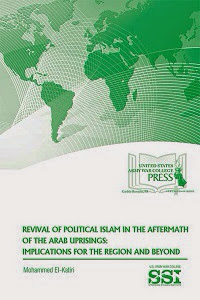
Regime change during the Arab Spring allowed Islamist political forces that had long been marginalized to achieve political influence in Tunisia, Egypt, and Libya. Morocco’s first government led by an Islamist party has been in power since January 2012. This trend caused widespread concern over the future direction of these states; but despite the tragic example of Egypt, few negative predictions have yet been borne out. The author cautions against an overly simplistic assessment of this rise in the influence and power of political Islam. He shows that the political crises besetting each of these Islamist governments are not necessarily of their own making, but instead are determined by objective circumstances. Dr. El-Katiri describes how, in several key respects, the aims of Islamist parties are in line with U.S. aspirations for the region.
29 AUGUST 2014Good to have Justin Raimondo at Anti-war.com set out the hugely suppressed but growing indicators that Israeli intelligence knew of the 9/11 attacks but failed to alert the Americans (while the Saudis were probably more directly involved in the attacks).
The definitive evidence is likely to be found in the censored 28 pages of the joint report of the intelligence committees of the two houses of Congress, as Raimondo highlights.
As to the Israeli interests at work in allowing 9/11 to take place, Raimondo misses revealing comments made by the two most senior Israeli intelligence officials at the time, statements I noted in my book “Israel and the Clash of Civilisations” (p. 103):
Israel’s National Security Adviser, General Uzi Dayan, and the head of the Mossad, Ephraim Halevy … reportedly told that year’s Herzliya conference [in 2001] that the 9/11 attacks were a ‘Hanukkah miracle’, offering Israel the chance to sideline and punish its enemies. Halevy spoke of the imminent arrival of ‘a world war different from all its predecessors’ and the emergence after 9/11 of a common perception combining ‘all the elements of Islamic terror into one clear and identifi able format’, creating ‘a genuine dilemma for every ruler and every state in our region. Each one must reach a moment of truth and decide how he will position himself in the campaign.’
Dayan, meanwhile, identified the targets, after Afghanistan, for the next stage of the regional campaign: ‘The Iran, Iraq and Syria triangle, all veteran supporters of terror which are developing weapons of mass destruction.’ He argued: ‘They must be confronted as soon as possible, and that is also understood in the US. Hezbollah and Syria have good reason to worry about the developments in this campaign, and that’s also true for the organizations and other states.’
Sounds like a rather accurate prediction of how things turned out, no?
The Haaretz article on 18 Dec 2001 that quoted the pair, written by Aluf Benn, now the paper’s editor-in-chief, was originally titled “For Israel, September 11 was a Hanukkah miracle”. The version on Haaretz that can now be found has excised all references to “Hanukkah” and “miracles”, and is under the much blander – and misleading – headline “Israel strives to import America’s war on terror“.
More likely, as I explain in my book, Israel tried to export to Washington, care of the neocons, its own “war on terror” – and its long-term designs for breaking up the Middle East into feuding sects and tribes. More
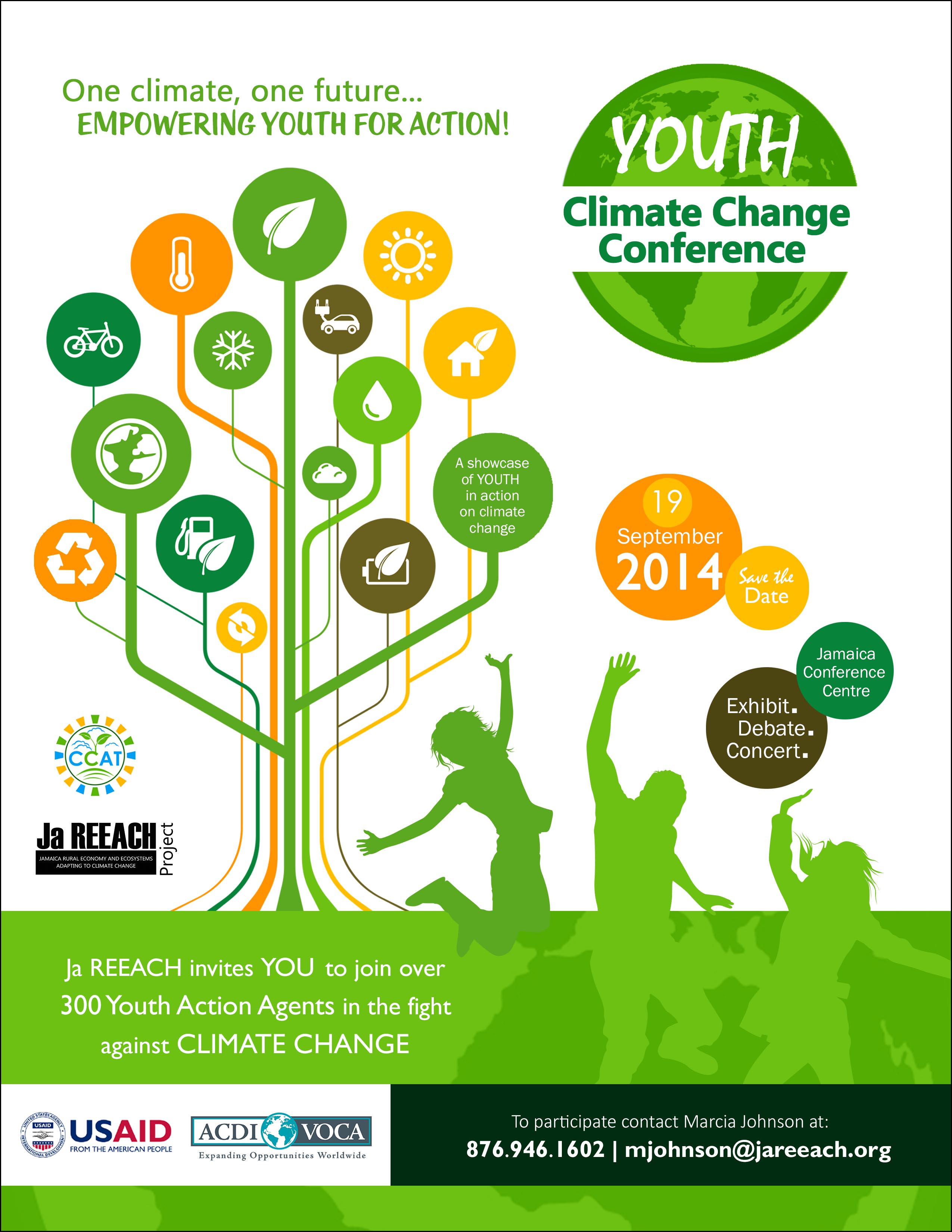
Themed, "One Climate, One Future...Empowering Youth for Action" high school delegates will deliberate on the availability, access, and quality of water in Jamaica, a relevant and timely issue considering the country's current drought condition.
The assembly will discuss the rights and use of water across Jamaica's social and economic sectors, focusing on tourism, agriculture and fisheries, manufacturing and industry, health and recreation, and the environment. The deliberations will be collated to formulate a youth position on risk management strategies and actions for sustainable use of the resource in the face of a changing climate.
The conference will also incorporate a poster competition, exhibit of climate information, water…


 © 2014