‘There Will Be No Water’ by 2040? Researchers Urge Global Energy Paradigm Shift

The world risks an “insurmountable” water crisis by 2040 without an immediate and significant overhaul of energy consumption and demand, a research team reported on Wednesday.

“There will be no water by 2040 if we keep doing what we're doing today,” said Professor Benjamin Sovacool of Denmark's Aarhus University, who co-authored two reports on the world's rapidly decreasing sources of freshwater.

Many troubling global trends could worsen these baseline projected shortages. According to the report, water resources around the world are “increasingly strained by economic development, population growth, and climate change.” The World Resources Institute estimates that in India, “water demand will outstrip supply by as much as 50 percent by 2030, a situation worsened further by the country's likely decline of available freshwater due to climate change,” the report states. “[P]ower demand could more than double in northern China, more than triple in India, and increase by almost three-quarters in Texas.”

“If we keep doing business as usual, we are facing an insurmountable water shortage — even if water was free, because it's not a matter of the price,” Sovacool said. “There's no time to waste. We need to act now.”

In addition to an expanding global population, economic development, and an increasing demand for energy, the report also finds that the generation of electricity is one of the biggest sources of water consumption throughout the world, using up more water than even the agricultural industry. Unlike less water-intensive alternative sources of energy like wind and solar systems, fossil fuel-powered and nuclear plants need enormous and continued water inputs to function, both for fueling thermal generators and cooling cycles.

The reports, Capturing Synergies Between Water Conservation and Carbon Dioxide Emissions in the Power Sectorand A Clash of Competing Necessities: Water Adequacy and Electric Reliability in China, India, France, and Texas and published after three years of research by Aarhus University, Vermont Law School and CNA Corporation, show that most power plants do not even log how much water they use to keep the systems going.

“It's a huge problem that the electricity sector do not even realize how much water they actually consume,” Sovacool said. “And together with the fact that we do not have unlimited water resources, it could lead to a serious crisis if nobody acts on it soon.”

Unless water use is drastically minimized, the researchers found that widespread drought will affect between 30 and 40 percent of the planet by 2020, and another two decades after that will see a severe water shortage that would affect the entire planet. The demand for both energy and drinking water would combine to aggressively speed up drought, which in turn could exacerbate large-scale health risks and other global development problems.

“The policy and technology choices made to meet demand will have immense implications for water withdrawals and consumption, and may also have significant economic, human health, and development consequences,” the report states.

The research says that utilizing alternative energy sources like wind and solar systems is vital to mitigating water consumption enough to stave off the crisis. “Unsubsidized wind power costs… are currently lower than coal or nuclear and they are continuing to drop,” the report states. When faced with its worst drought in 2011, Texas got up to 18 of its electricity from wind power and was able to avoid the kind of rolling blackouts that plague parts of China, where existing water shortages prevent power plants from operating.

An equally important step would be to shutter “thirsty” fossil fuel facilities in areas that are already experiencing water shortages, like China and India, where carbon emissions can be significantly more impactful.

“[We] have to decide where we spend our water in the future,” Sovacool said. “Do we want to spend it on keeping the power plants going or as drinking water? We don't have enough water to do both.” More


Water Resources Fact Sheet – Earth Policy Institute

JULY 30, 2014 Water scarcity may be the most underrated resource issue the world is facing today.

Seventy percent of world fresh water use is for irrigation.

Each day we drink nearly 4 liters of water, but it takes some 2,000 liters of water—500 times as much—to produce the food we consume.

1,000 tons of water is used to produce 1 ton of grain.

Between 1950 and 2000, the world’s irrigated area tripled to roughly 700 million acres. After several decades of rapid increase, however, the growth has slowed dramatically, expanding only 9 percent from 2000 to 2009. Given that governments are much more likely to report increases than decreases, the recent net growth may be even smaller.

The dramatic loss of momentum in irrigation expansion coupled with the depletion of underground water resources suggests that peak water may now be on our doorstep.

Today some 18 countries, containing half the world’s people, are overpumping their aquifers. Among these are the big three grain producers—China, India, and the United States.

Saudi Arabia is the first country to publicly predict how aquifer depletion will reduce its grain harvest. It will soon be totally dependent on imports from the world market or overseas farming projects for its grain.

While falling water tables are largely hidden, rivers that run dry or are reduced to a trickle before reaching the sea are highly visible. Among this group that has limited outflow during at least part of the year are the Colorado, the major river in the southwestern United States; the Yellow, the largest river in northern China; the Nile, the lifeline of Egypt; the Indus, which supplies most of Pakistan’s irrigation water; and the Ganges in India’s densely populated Gangetic basin.

Many smaller rivers and lakes have disappeared entirely as water demands have increased.

Overseas “land grabs” for farming are also water grabs. Among the prime targets for overseas land acquisitions are Ethiopia and the Sudans, which together occupy three-fourths of the Nile River Basin, adding to the competition with Egypt for the river’s water.

It is often said that future wars will more likely be fought over water than oil, but in reality the competition for water is taking place in world grain markets. The countries that are financially the strongest, not necessarily those that are militarily the strongest, will fare best in this competition.

Climate change is hydrological change. Higher global average temperatures will mean more droughts in some areas, more flooding in others, and less predictability overall.

Data and additional resources available at www.earth-policy.org

Research Contact: Janet Larsen (202) 496-9290 ex. 14 or jlarsen (at) earth-policy.org

Water Resources Fact Sheet
JULY 30, 2014

Water scarcity may be the most underrated resource issue the world is facing today.

Seventy percent of world fresh water use is for irrigation.

Each day we drink nearly 4 liters of water, but it takes some 2,000 liters of water—500 times as much—to produce the food we consume.

1,000 tons of water is used to produce 1 ton of grain.

Between 1950 and 2000, the world’s irrigated area tripled to roughly 700 million acres. After several decades of rapid increase, however, the growth has slowed dramatically, expanding only 9 percent from 2000 to 2009. Given that governments are much more likely to report increases than decreases, the recent net growth may be even smaller.

The dramatic loss of momentum in irrigation expansion coupled with the depletion of underground water resources suggests that peak water may now be on our doorstep.

Today some 18 countries, containing half the world’s people, are overpumping their aquifers. Among these are the big three grain producers—China, India, and the United States.

Saudi Arabia is the first country to publicly predict how aquifer depletion will reduce its grain harvest. It will soon be totally dependent on imports from the world market or overseas farming projects for its grain.

While falling water tables are largely hidden, rivers that run dry or are reduced to a trickle before reaching the sea are highly visible. Among this group that has limited outflow during at least part of the year are the Colorado, the major river in the southwestern United States; the Yellow, the largest river in northern China; the Nile, the lifeline of Egypt; the Indus, which supplies most of Pakistan’s irrigation water; and the Ganges in India’s densely populated Gangetic basin.

Many smaller rivers and lakes have disappeared entirely as water demands have increased.

Overseas “land grabs” for farming are also water grabs. Among the prime targets for overseas land acquisitions are Ethiopia and the Sudans, which together occupy three-fourths of the Nile River Basin, adding to the competition with Egypt for the river’s water.

It is often said that future wars will more likely be fought over water than oil, but in reality the competition for water is taking place in world grain markets. The countries that are financially the strongest, not necessarily those that are militarily the strongest, will fare best in this competition.

Climate change is hydrological change. Higher global average temperatures will mean more droughts in some areas, more flooding in others, and less predictability overall.

(PDF version)

Data and additional resources available at www.earth-policy.org
Research Contact: Janet Larsen (202) 496-9290 ex. 14 or jlarsen (at) earth-policy.org


Distributed Water Balance of the Nile Basin [HD]

Water is the new oil. This means that it will become, if it has not already done so, become a trigger for conflict.

See More


This visualization shows how satellite data and NASA models are being applied to study the hydrology of the Nile basin. The Tropical Rainfall Measurement Mission (TRMM) Multisensor Precipitation Analysis fTMPA) provides three-hourly estimates of rainfall rate across much of the globe.


Here we see the seasonal cycle of monthly precipitation derived from TMPA for Africa, including the Nile Basin. The annual migration of the Intertropical Convergence Zone (ITCZ) from the Nile Equatorial Lakes region around Lake Victoria, source of the White Nile, northward into Sudan and the highlands of Ethiopia, headwaters of the Blue Nile, and back is evident in the seasonal cycle in precipitation. This precipitation cycle drives flow through the Nile River system. The Nile basin, however, is intensely evaporative, and the majority of the water that falls as rain leaves the basin as evaporation rather than river flow—either from the humid headwaters regions or from large resen/oirs and irrigation developments in Egypt and Sudan.


The Atmosphere Land Exchange Inverse (ALEXI) evapotranspiration product, developed by USDA scientists, uses satellite data to map daily evapotranspiration across the entire Nile basin, providing unprecedented information on water consumption. The balance of rainfall and evapotranspi ration can be seen in seasonal patterns of soil moisture, as simulated by the NASA Nile Land Data Assimilation System (LDAS), which merges satellite information with a physically-based land surface model to simulate variability in soil moisture—a critical variable for rainfed agriculture and natural ecosystems. Finally, the twin satellites of the Gravity Recovery and Climate Experiment (GRACE) can be used to monitor variability in total water storage, including surface water, soil moisture, and groundwater. The annual cycle in GRACE estimates of water storage anomalies clearly shows the seasonal movement of water storage due to precipitation patterns and the movement of surface waters from headwaters regions into the wetlands of South Sudan and the resen/oirs of the lower Nile basin.

The Nile is the longest river in the world and its basin is shared by 11 countries. Reliable, spatially distributed estimates of hydrologic storage and fluxes can provide critical information for water managers contending with multiple resource demands, a variable and changing climate, and the risk of damaging floods and droughts. NASA observations and modeling systems offer unique capabilities to meet these information needs.

Completed: 7 May 2013

Animator: Trent L. Schindler (USRA) (Lead)

Producer: Jefferson Beck (USRA)

Scientists: David Toll (NASA/GSFC)

Ben Zaitchik (Johns Hopkins University)


India and Pakistan at Odds Over Shrinking Indus River

Nearly 30 percent of the world's cotton supply comes from India and Pakistan, much of that from the Indus River Valley. On average, about 737 billion gallons are withdrawn from the Indus River annually to grow cotton—enough to provide Delhi residents with household water for more than two years. (See a map of the region.)

Baseera Pakistan Aug 2010

“Pakistan's entire economy is driven by the textile industry,” said Michael Kugelman, a South Asia expert at the Woodrow Wilson International Center for Scholars. “The problem with Pakistan's economy is that most of the major industries use a ton of water—textiles, sugar, wheat—and there's a tremendous amount of water that's not only used, but wasted,” he added.

The same is true for India.

That impact is an important part of a complex water equation in countries already under strain from booming populations. More people means more demand for water to irrigate crops, cool machinery, and power cities. The Indus River, which begins in Indian-controlled Kashmir and flows through Pakistan on its way to the sea, is Pakistan's primary freshwater sourceon which 90 percent of its agriculture dependsand a critical outlet of hydropower generation for both countries.

(Related: “See the Global Water Footprint of Key Crops“)

Downstream provinces are already feeling the strain, with some dried-out areas being abandoned by fishermen and farmers forced to move to cities. That increases competition between urban and rural communities for water. “In areas where you used to have raging rivers, you have, essentially, streams or even puddles and not much else,” said Kugelman.

In years past, the coastal districts that lost their shares of the Indus' flows have become “economically orphaned,” the poorest districts in the country, according to Pakistani water activist Mustafa Talpur. Because Pakistani civil society is weak, he says, corruption and deteriorating water distribution tend to go hand in hand.

In the port city of Karachi, which depends for its water on the Indus, water theftin which public water is stolen from the pipes and sold from tankers in slums and around the citymay be a $500-million annual industry.

In the balance is the fate not only of people, but important aquatic species like the Indus River dolphin, which is now threatened to extinction by agricultural pollution and dams, among other pressures. Scientists estimate that fewer than 100 individuals remain.

Threat to Peace?

One of the potentially catastrophic consequences of the region's fragile water balance is the effect on political tensions.

In India, competition for water has a history of provoking conflict between communities. In Pakistan, water shortages have triggered food and energy crises that ignited riots and protests in some cities. Most troubling, Islamabad's diversions of water to upstream communities with ties to the government are inflaming sectarian loyalties and stoking unrest in the lower downstream region of Sindh.

But the issue also threatens the fragile peace that holds between the nations of India and Pakistan, two nuclear-armed rivals. Water has long been seen as a core strategic interest in the dispute over the Kashmir region, home to the Indus' headwaters. Since 1960, a delicate political accord called the Indus Waters Treaty has governed the sharing of the river's resources. But dwindling river flows will be harder to share as the populations in both countries grow and the per-capita water supply plummets.

Some growth models predict that by 2025, India's population will grow to triple what it wasand Pakistan's population to six times what it waswhen the Indus treaty was signed. Lurking in the background are fears that climate change is speeding up the melting of the glaciers that feed the river.

Mountain glaciers in Kashmir play a central role in regulating the river's flows, acting as a natural water storage tank that freezes precipitation in winter and releases it as meltwater in the summer. The Indus is dependent on glacial melting for as much as half of its flow. So its fate is uniquely tied to the health of the Himalayas. In the short term, higher glacial melt is expected to bring more intense flooding, like last year's devastating deluge.

Both countries are also racing to complete large hydroelectric dams along their respective stretches of the Kashmir river system, elevating tensions. India's projects are of a size and scope that many Pakistanis fear could be used to disrupt their hydropower efforts, as well as the timing of the flows on which Pakistani crops rely.

(Related: “Seven Simple Ways to Save Water“)

“Many in Pakistan are worried that, being in control of upstream waters, India can easily run Pakistan dry either by diverting the flow of water by building storage dams or using up all the water through hydroelectric power schemes,” said Pakistani security analyst Rifaat Hussain.

For years, Pakistani politicians have claimed India is responsible for Pakistan's water troubles. More recently, militant groups have picked up their rhetoric. Hafiz Saeed, the founder of the Pakistani militant group allegedly responsible for the 2008 terror attack in Mumbai, even accused India of “water terrorism.”

Hope for the Future

In the past few months, however, the situation has improved, according to Kugelman. “We've been hearing nearly unprecedented statements from very high-level Pakistani officials who have essentially acknowledged that India is not stealing Pakistan's water, and that Pakistan's water problems are essentially a function of internal mismanagement issues,” he said. Militants are still griping, he said, “but not as shrilly.”

This may be because the two countries are cooperating on water and other issues better than before, and because militants are now focusing less on their archenemy in India and more on coalition forces in Afghanistan.

“But I imagine this is momentary,” said Kugelman. “The facts on the ground—the water constraints in both India and Pakistan—have not abated. They're both still very serious and getting worse.”

What's needed, he says, is more conservation and adaptation—a smarter way of doing business. More

This Article is part the National Geographic Society’s freshwater initiative and is a multiyear global effort to inspire and empower individuals and communities to conserve freshwater and preserve the extraordinary diversity of life that rivers, lakes, and wetlands sustain.


The Unity of Water

MOSCOW – In May, Vietnam became the 35th and decisive signatory of the 1997 United Nations Convention on the Law of the Non-Navigational Uses of International Watercourses. As a result, 90 days later, on August 17, the convention will enter into force.

The fact that it took almost 50 years to draft and finally achieve the necessary ratification threshold demonstrates that something is very wrong with the modern system of multilateralism. Regardless of longstanding disagreements over how cross-border freshwater resources should be allocated and managed, and understandable preferences by governments and water professionals to rely on basin agreements rather than on international legal instruments, that half-century wait can be explained only by a lack of political leadership. So, though the world may celebrate the convention’s long-awaited adoption, we cannot rest on our laurels.

Roughly 60% of all freshwater runs within cross-border basins; only an estimated 40% of those basins, however, are governed by some sort of basin agreement. In an increasingly water-stressed world, shared water resources are becoming an instrument of power, fostering competition within and between countries. The struggle for water is heightening political tensions and exacerbating impacts on ecosystems.

But the really bad news is that water consumption is growing faster than population – indeed, in the twentieth century it grew at twice the rate. As a result, several UN agencies forecast that, by 2025, 1.8 billion people will be living in regions stricken with absolute water scarcity, implying a lack of access to adequate quantities for human and environmental uses. Moreover, two-thirds of the world’s population will face water-stress conditions, meaning a scarcity of renewable freshwater.

Without resolute counter-measures, demand for water will overstretch many societies’ adaptive capacities. This could result in massive migration, economic stagnation, destabilization, and violence, posing a new threat to national and international security.

The UN Watercourses Convention must not become just another ignored international agreement, filed away in a drawer. The stakes are too high. In today’s context of climate change, rising demand, population growth, increasing pollution, and overexploited resources, everything must be done to consolidate the legal framework for managing the world’s watersheds. Our environmental security, economic development, and political stability directly depend on it.

The convention will soon apply to all of the cross-border rivers of its signatories’ territories, not just the biggest basins. It will complement the gaps and shortcomings of existing agreements and provide legal coverage to the numerous cross-border rivers that are under increasing pressure.

Worldwide, there are 276 cross-border freshwater basins and about as many cross-border aquifers. Backed by adequate financing, political will, and the engagement of stakeholders, the convention can help address the water challenges that we are all facing. But will it?

An ambitious agenda should be adopted now, at a time when the international community is negotiating the contents of the Sustainable Development Goals (SDGs), the successor to the UN Millennium Development Goals, which will expire in 2015. We at Green Cross hope that the new goals, which are to be achieved by 2030, will include a stand-alone target that addresses water-resources management.

Moreover, the international community will soon have to agree on a climate-change framework to replace the Kyoto Protocol. Climate change directly affects the hydrological cycle, which means that all of the efforts that are undertaken to contain greenhouse-gas emissions will help to stabilize rainfall patterns and mitigate the extreme water events that so many regions are already experiencing.

But the UN Watercourses Convention’s entry into force raises as many new questions as existed in the period before its ratification. What will its implementation mean in practice? How will countries apply its mandates within their borders and in relation to riparian neighbors? How will the American and Asian countries that have largely ignored ratification respond?

Furthermore, how will the convention relate to the Convention on the Protection and Use of Transboundary Watercourses and International Lakes, which is already in force in most European and Central Asian countries and, since February 2013, has aimed to open its membership to the rest of the world? Similarly, how will the convention’s implementation affect existing regional and local cross-border freshwater agreements?

The countries that ratified the UN Watercourses Convention are expected to engage in its implementation and to go further in their efforts to protect and sustainably use their cross-border waters. What instruments, including financial, will the convention provide to them?

Several legal instruments can be implemented jointly and synergistically: the Ramsar Convention on Wetlands, the UN Convention to Combat Desertification, and the UN Framework Convention on Climate Change, to name just a few. The UN Watercourses Convention’s long-delayed enactment should be viewed as an opportunity for signatory states to encourage those that are not yet party to cooperative agreements to work seriously on these issues.

Clearly, politicians and diplomats alone cannot respond effectively to the challenges that the world faces. What the world needs is the engagement of political, business, and civil-society leaders; effective implementation of the UN Watercourses Convention is impossible without it.

This is too often overlooked, but it constitutes the key to the long-term success of cooperation that generates benefits for all. Inclusive participation by stakeholders (including the affected communities), and the development of the capacity to identify, value, and share the benefits of cross-border water resources, should be an integral part of any strategy to achieve effective multilateral collaboration. More


Himalayan Water Security: The Challenges for South and Southeast Asia

The scramble for control of natural resources to support economic and population growth, combined with the uncertain effects of climate change on the Tibetan Plateau, is raising tensions in Asia over Himalayan water resources.

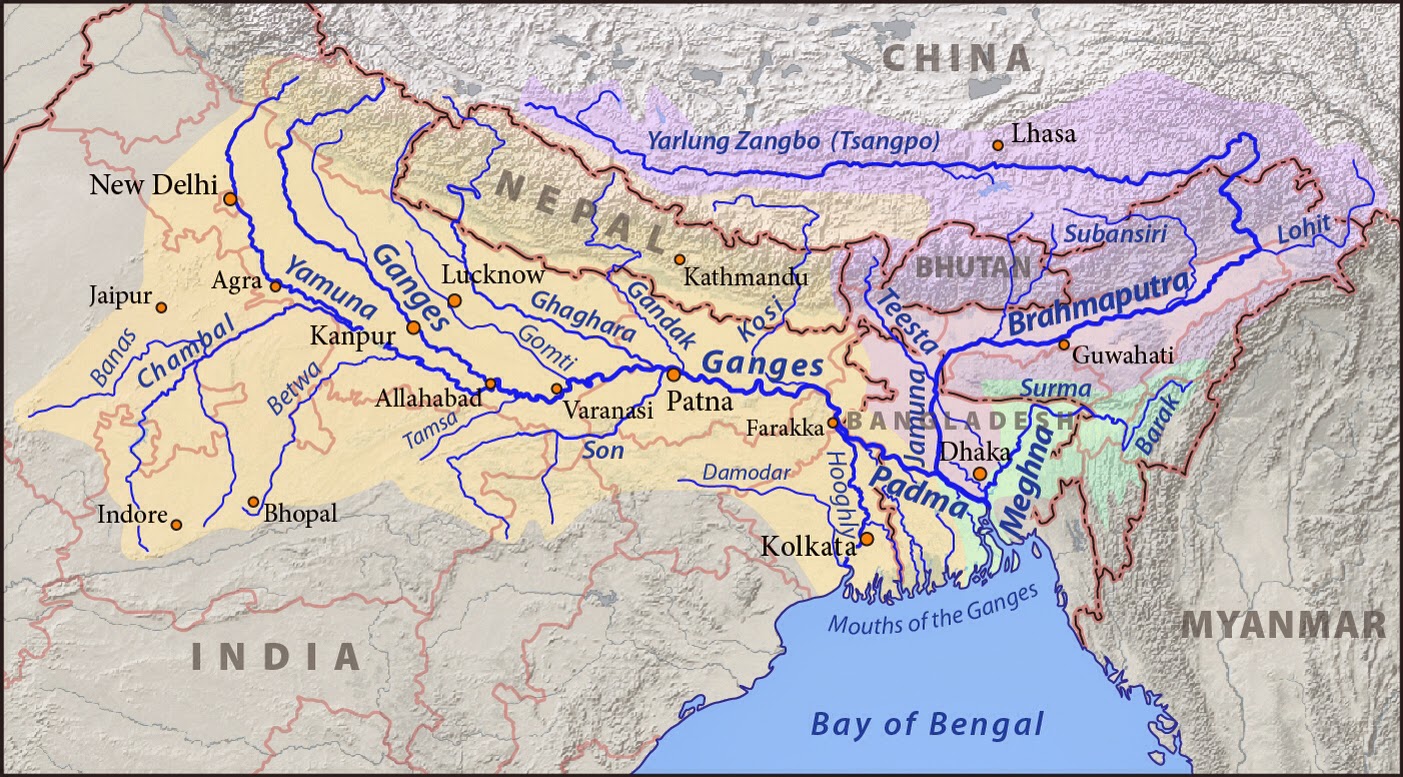
Ten of the region’s largest and longest rivers (the Amu Darya, Brahmaputra, Ganges, Indus, Irrawaddy, Mekong, Salween, Tarim, Yangtze, and Yellow) originate in the Himalayas. These rivers help provide water, food, and energy for nearly 4 billion people in China and across South and Southeast Asia—nearly half of the world’s population. However, depletion and diversion of these transborder resources to meet growing industrial, agricultural, and urban demands have the potential to trigger far-reaching economic, social, and environmental challenges.

The lack of comprehensive and effective regional frameworks for cooperation hinders sustainable management of these waterways. China, which controls the headwaters of these rivers, has an enormous need for Himalayan water to satisfy economic and energy demands but has little incentive to participate in formal water-sharing and water-management agreements with its neighbors. China’s dam-building and water-diversion projects are a source of major concern to the countries downstream, which often complain about Beijing’s lack of transparency and reluctance to share information. Although managing water-sharing relations with China might be the most prominent challenge, cooperation is not much easier at the middle and lower reaches of the rivers. Collaboration in South and Southeast Asia is frequently frustrated by competing national interests, economic priorities, political disputes, and weak regional organizations. In addition to the environmental impacts of man-made diversion projects and unsustainable freshwater usage, there is also inadequate cooperation on scientific research to understand and prepare for the effects of climate change on the region’s water supplies.

This Asia Policy roundtable contains seven essays that discuss the challenges and implications of water security in Asia and recommend steps that both upstream and downstream countries could take to better manage the region’s shared water resources.

Asia’s Unstable Water Tower: The Politics, Economics, and Ecology of Himalayan Water Projects
Kenneth Pomeranz

China’s Upstream Advantage in the Great Himalayan Watershed
Jennifer L. Turner, Susan Chan Shifflett, and Robert Batten

Melting the Geopolitical Ice in South Asia
Robert G. Wirsing

Himalayan Water Security: A South Asian Perspective
Tushaar Shah and Mark Giordano

Hydropower Dams on the Mekong: Old Dreams, New Dangers
Richard P. Cronin

Climate Change and Water Security in the Himalayan Region
Richard Matthew

Securing the Himalayas as the Water Tower of Asia: An Environmental Perspective
Jayanta Bandyopadhyay

Download PDF


As I have been arguing for a number of years South Asia needs to re-negotiate the Indus Water Treaty to encompass Afghainstan, Bangladesh, Bhutan, China, India, Nepal and Pakistan before the region starts to suffer from water insecurity and the effects of climate change. Editor


Drought in Syria: a Major Cause of the Civil War?

Syria's devastating civil war that began in March 2011 has killed over 200,000 people, displaced at least 4.5 million, and created 3 million refugees.

Figure 1. The highest level of drought,
“Exceptional”, was affecting much of
Western Syria in April 2014, as measured
by the one-year Standardized Precipitation
Index (SPI).
Image credit: NOAA's Global Drought Portal

While the causes of the war are complex, a key contributing factor was the nation's devastating 2006 – 2011 drought, one of the worst in the nation's history, according to new research accepted for publication in the journal Weather, Climate, and Society by water resources expert Dr. Peter Gleick of the Pacific Institute. The drought brought the Fertile Crescent's lowest 4-year rainfall amounts since 1940, and Syria's most severe set of crop failures in recorded history. The worst drought-affected regions were eastern Syria, northern Iraq, and Iran, the major grain-growing areas of the northern Fertile Crescent. In a press release that accompanied the release of the new paper, Dr. Gleick said that as a result of the drought, “the decrease in water availability, water mismanagement, agricultural failures, and related economic deterioration contributed to population dislocations and the migration of rural communities to nearby cities. These factors further contributed to urban unemployment, economic dislocations, food insecurity for more than a million people, and subsequent social unrest.”

More

The open source revolution is coming and it will conquer the 1% – ex CIA spy

Robert David Steele, former Marine, CIA case officer, and US co-founder of the US Marine Corps intelligence activity, is a man on a mission. But it's a mission that frightens the US intelligence establishment to its core.


With 18 years experience working across the US intelligence community, followed by 20 more years in commercial intelligence and training, Steele's exemplary career has spanned almost all areas of both the clandestine world.

Steele started off as a Marine Corps infantry and intelligence officer. After four years on active duty, he joined the CIA for about a decade before co-founding the Marine Corps Intelligence Activity, where he was deputy director. Widely recognised as the leader of the Open Source Intelligence (OSINT) paradigm, Steele went on to write the handbooks on OSINT for NATO, the US Defense Intelligence Agency and the U.S. Special Operations Forces. In passing, he personally trained 7,500 officers from over 66 countries.

In 1992, despite opposition from the CIA, he obtained Marine Corps permission to organise a landmark international conference on open source intelligence – the paradigm of deriving information to support policy decisions not through secret activities, but from open public sources available to all. The conference was such a success it brought in over 620 attendees from the intelligence world.

But the CIA wasn't happy, and ensured that Steele was prohibited from running a second conference. The clash prompted him to resign from his position as second-ranking civilian in Marine Corps intelligence, and pursue the open source paradigm elsewhere. He went on to found and head up the Open Source Solutions Network Inc. and later the non-profit Earth Intelligence Network which runs the Public Intelligence Blog.

I first came across Steele when I discovered his Amazon review of my third book, The War on Truth: 9/11, Disinformation and the Anatomy of Terrorism. A voracious reader, Steele is the number 1 Amazon reviewer for non-fiction across 98 categories. He also reviewed my latest book, A User's Guide to the Crisis of Civilization, but told me I'd overlooked an important early work – 'A More Secure World: Our Shared Responsibility, Report of the UN High-Level Panel on Threats, Challenges, and Change.'

Last month, Steele presented a startling paper at the Libtech conference in New York, sponsored by the Internet Society and Reclaim. Drawing on principles set out in his latest book, The Open-Source Everything Manifesto: Transparency, Truth and Trust, he told the audience that all the major preconditions for revolution – set out in his 1976 graduate thesis – were now present in the United States and Britain.

Steele's book is a must-read, a powerful yet still pragmatic roadmap to a new civilisational paradigm that simultaneously offers a trenchant, unrelenting critique of the prevailing global order. His interdisciplinary 'whole systems' approach dramatically connects up the increasing corruption, inefficiency and unaccountability of the intelligence system and its political and financial masters with escalating inequalities and environmental crises. But he also offers a comprehensive vision of hope that activist networks like Reclaim are implementing today.

“We are at the end of a five-thousand-year-plus historical process during which human society grew in scale while it abandoned the early indigenous wisdom councils and communal decision-making,” he writes in The Open Source Everything Manifesto. “Power was centralised in the hands of increasingly specialised 'elites' and 'experts' who not only failed to achieve all they promised but used secrecy and the control of information to deceive the public into allowing them to retain power over community resources that they ultimately looted.”

Today's capitalism, he argues, is inherently predatory and destructive:

“Over the course of the last centuries, the commons was fenced, and everything from agriculture to water was commoditised without regard to the true cost in non-renewable resources. Human beings, who had spent centuries evolving away from slavery, were re-commoditised by the Industrial Era.”

Open source everything, in this context, offers us the chance to build on what we've learned through industrialisation, to learn from our mistakes, and catalyse the re-opening of the commons, in the process breaking the grip of defunct power structures and enabling the possibility of prosperity for all.

“Sharing, not secrecy, is the means by which we realise such a lofty destiny as well as create infinite wealth. The wealth of networks, the wealth of knowledge, revolutionary wealth – all can create a nonzero win-win Earth that works for one hundred percent of humanity. This is the 'utopia' that Buckminster Fuller foresaw, now within our reach.”

The goal, he concludes, is to reject:


“… concentrated illicitly aggregated and largely phantom wealth in favor of community wealth defined by community knowledge, community sharing of information, and community definition of truth derived in transparency and authenticity, the latter being the ultimate arbiter of shared wealth.”

Despite this unabashedly radical vision, Steele is hugely respected by senior military intelligence experts across the world. As a researcher at the US Army War College's Strategic Studies Institute, he has authored several monographs advocating the need for open source methods to transform the craft of intelligence. He has lectured to the US State Department and Department of Homeland Security as well as National Security Councils in various countries, and his new book has received accolades from senior intelligence officials across multiple countries including France and Turkey.

Yet he remains an outspoken critic of US intelligence practices and what he sees as their integral role in aggravating rather than ameliorating the world's greatest threats and challenges.

This week, I had the good fortune of being able to touch base with Steele to dig deeper into his recent analysis of the future of US politics in the context of our accelerating environmental challenges. The first thing I asked him was where he sees things going over the next decade, given his holistic take.

“Properly educated people always appreciate holistic approaches to any challenge. This means that they understand both cause and effect, and intertwined complexities,” he said. “A major part of our problem in the public policy arena is the decline in intelligence with integrity among key politicians and staff at the same time that think tanks and universities and non-governmental organisations have also suffered a similar intellectual diminishment.

“My early graduate education was in the 1970's when Limits to Growth and World Federalism were the rage. Both sought to achieve an over-view of systemic challenges, but both also suffered from the myth of top-down hubris. What was clear in the 1970s, that has been obscured by political and financial treason in the past half-century, is that everything is connected – what we do in the way of paving over wetlands, or in poisoning ground water 'inadvertently' because of our reliance on pesticides and fertilisers that are not subject to the integrity of the 'Precautionary Principle,' ultimately leads to climate catastrophes that are acts of man, not acts of god.”

He points me to his tremendous collection of reviews of books on climate change, disease, environmental degradation, peak oil, and water scarcity. “I see five major overlapping threats on the immediate horizon,” he continues. “They are all related: the collapse of complex societies, the acceleration of the Earth's demise with changes that used to take 10,000 years now taking three or less, predatory or shock capitalism and financial crime out of the City of London and Wall Street, and political corruption at scale, to include the west supporting 42 of 44 dictators. We are close to multiple mass catastrophes.”

What about the claim that the US is on the brink of revolution? “Revolution is overthrow – the complete reversal of the status quo ante. We are at the end of centuries of what Lionel Tiger calls 'The Manufacture of Evil,' in which merchant banks led by the City of London have conspired with captive governments to concentrate wealth and commoditise everything including humans. What revolution means in practical terms is that balance has been lost and the status quo ante is unsustainable. There are two 'stops' on greed to the nth degree: the first is the carrying capacity of Earth, and the second is human sensibility. We are now at a point where both stops are activating.”

It's not just the US, he adds. “The preconditions of revolution exist in the UK, and most western countries. The number of active pre-conditions is quite stunning, from elite isolation to concentrated wealth to inadequate socialisation and education, to concentrated land holdings to loss of authority to repression of new technologies especially in relation to energy, to the atrophy of the public sector and spread of corruption, to media dishonesty, to mass unemployment of young men and on and on and on.”

So why isn't it happening yet?

“Preconditions are not the same as precipitants. We are waiting for our Tunisian fruit seller. The public will endure great repression, especially when most media outlets and schools are actively aiding the repressive meme of 'you are helpless, this is the order of things.' When we have a scandal so powerful that it cannot be ignored by the average Briton or American, we will have a revolution that overturns the corrupt political systems in both countries, and perhaps puts many banks out of business. Vaclav Havel calls this 'The Power of the Powerless.' One spark, one massive fire.”

But we need more than revolution, in the sense of overthrow, to effect change, surely. How does your manifesto for 'open source everything' fit into this? “The west has pursued an industrialisation path that allows for the privatisation of wealth from the commons, along with the criminalisation of commons rights of the public, as well as the externalisation of all true costs. Never mind that fracking produces earthquakes and poisons aquifers – corrupt politicians at local, state or province, and national levels are all too happy to take money for looking the other way. Our entire commercial, diplomatic, and informational systems are now cancerous. When trade treaties have secret sections – or are entirely secret – one can be certain the public is being screwed and the secrecy is an attempt to avoid accountability. Secrecy enables corruption. So also does an inattentive public enable corruption.”

Is this a crisis of capitalism, then? Does capitalism need to end for us to resolve these problems? And if so, how? “Predatory capitalism is based on the privatisation of profit and the externalisation of cost. It is an extension of the fencing of the commons, of enclosures, along with the criminalisation of prior common customs and rights. What we need is a system that fully accounts for all costs. Whether we call that capitalism or not is irrelevant to me. But doing so would fundamentally transform the dynamic of present day capitalism, by making capital open source. For example, and as calculated by my colleague JZ Liszkiewicz, a white cotton T-shirt contains roughly 570 gallons of water, 11 to 29 gallons of fuel, and a number of toxins and emissions including pesticides, diesel exhaust, and heavy metals and other volatile compounds – it also generally includes child labor. Accounting for those costs and their real social, human and environmental impacts has totally different implications for how we should organise production and consumption than current predatory capitalism.”

So what exactly do you mean by open source everything? “We have over 5 billion human brains that are the one infinite resource available to us going forward. Crowd-sourcing and cognitive surplus are two terms of art for the changing power dynamic between those at the top that are ignorant and corrupt, and those across the bottom that are attentive and ethical. The open source ecology is made up of a wide range of opens – open farm technology, open source software, open hardware, open networks, open money, open small business technology, open patents – to name just a few. The key point is that they must all develop together, otherwise the existing system will isolate them into ineffectiveness. Open data is largely worthless unless you have open hardware and open software. Open government demands open cloud and open spectrum, or money will dominate feeds and speeds.”

On 1st May, Steele sent an open letter to US vice president Joe Biden requesting him to consider establishing an Open Source Agency that would transform the operation of the intelligence community, dramatically reduce costs, increasing oversight and accountability, while increasing access to the best possible information to support holistic policy-making. To date, he has received no response.

I'm not particularly surprised. Open source everything pretty much undermines everything the national security state stands for. Why bother even asking vice president Biden to consider it? “The national security state is rooted in secrecy as a means of avoiding accountability. My first book, On Intelligence: Spies and Secrecy in an Open World – which by the way had a foreword from Senator David Boren, the immediate past chairman of the Senate Select Committee for Intelligence – made it quite clear that the national security state is an expensive, ineffective monstrosity that is simply not fit for purpose. In that sense, the national security state is it's own worst enemy – it's bound to fail.”

Given his standing as an intelligence expert, Steele's criticisms of US intelligence excesses are beyond scathing – they are damning. “Most of what is produced through secret methods is not actually intelligence at all. It is simply secret information that is, most of the time, rather generic and therefore not actually very useful for making critical decisions at a government level. The National Security Agency (NSA) has not prevented any terrorist incidents. CIA cannot even get the population of Syria correct and provides no intelligence – decision-support – to most cabinet secretaries, assistant secretaries, and department heads. Indeed General Tony Zinni, when he was commander in chief of the US Central Command as it was at war, is on record as saying that he received, 'at best,' a meagre 4% of what he needed to know from secret sources and methods.”

So does open source mean you are calling for abolition of intelligence agencies as we know them, I ask. “I'm a former spy and I believe we still need spies and secrecy, but we need to redirect the vast majority of the funds now spent on secrecy toward savings and narrowly focused endeavors at home. For instance, utterly ruthless counterintelligence against corruption, or horrendous evils like paedophilia.

“Believe it or not, 95% of what we need for ethical evidence-based decision support cannot be obtained through the secret methods of standard intelligence practices. But it can be obtained quite openly and cheaply from academics, civil society, commerce, governments, law enforcement organisations, the media, all militaries, and non-governmental organisations. An Open Source Agency, as I've proposed it, would not just meet 95% of our intelligence requirements, it would do the same at all levels of government and carry over by enriching education, commerce, and research – it would create what I called in 1995 a 'Smart Nation.'

“The whole point of Open Source Everything is to restore public agency. Open Source is the only form of information and information technology that is affordable to the majority, interoperable across all boundaries, and rapidly scalable from local to global without the curse of overhead that proprietary corporations impose.”

It's clear to me that when Steele talks about intelligence as 'decision-support,' he really does intend that we grasp “all information in all languages all the time” – that we do multidisciplinary research spanning centuries into the past as well as into the future. His most intriguing premise is that the 1% are simply not as powerful as they, and we, assume them to be. “The collective buying power of the five billion poor is four times that of the one billion rich according to the late Harvard business thinker Prof C. K. Prahalad – open source everything is about the five billion poor coming together to reclaim their collective wealth and mobilise it to transform their lives. There is zero chance of the revolution being put down. Public agency is emergent, and the ability of the public to literally put any bank or corporation out of business overnight is looming. To paraphrase Abe Lincoln, you cannot screw all of the people all of the time. We're there. All we lack is a major precipitant – our Tunisian fruit seller. When it happens the revolution will be deep and lasting.”

The Arab spring analogy has its negatives. So far, there really isn't much to root for. I want to know what's to stop this revolution from turning into a violent, destructive mess. Steele is characteristically optimistic. “I have struggled with this question. What I see happening is an end to national dictat and the emergence of bottom-up clarity, diversity, integrity, and sustainability. Individual towns across the USA are now nullifying federal and state regulations – for example gag laws on animal cruelty, blanket permissions for fracking. Those such as my colleague Parag Khanna that speak to a new era of city-states are correct in my view. Top down power has failed in a most spectacular manner, and bottom-up consensus power is emergent. 'Not in my neighborhood' is beginning to trump 'Because I say so.' The one unlimited resource we have on the planet is the human brain – the current strategy of 1% capitalism is failing because it is killing the Golden Goose at multiple levels. Unfortunately, the gap between those with money and power and those who actually know what they are talking about has grown catastrophic. The rich are surrounded by sycophants and pretenders whose continued employment demands that they not question the premises. As Larry Summers lectured Elizabeth Warren, 'insiders do not criticise insiders.'”

But how can activists actually start moving toward the open source vision now? “For starters, there are eight 'tribes' that among them can bring together all relevant information: academia, civil society including labor unions and religions, commerce especially small business, government especially local, law enforcement, media, military, and non-government/non-profit. At every level from local to global, across every mission area, we need to create stewardship councils integrating personalities and information from all eight tribes. We don't need to wait around for someone else to get started. All of us who recognise the vitality of this possibility can begin creating these new grassroots structures from the bottom-up, right now.”

So how does open source everything have the potential to 're-engineer the Earth'? For me, this is the most important question, and Steele's answer is inspiring. “Open Source Everything overturns top-down 'because I say so at the point of a gun' power. Open Source Everything makes truth rather than violence the currency of power. Open Source Everything demands that true cost economics and the indigenous concept of 'seventh generation thinking' – how will this affect society 200 years ahead – become central. Most of our problems today can be traced to the ascendance of unilateral militarism, virtual colonialism, and predatory capitalism, all based on force and lies and encroachment on the commons. The national security state works for the City of London and Wall Street – both are about to be toppled by a combination of Eastern alternative banking and alternative international development capabilities, and individuals who recognise that they have the power to pull their money out of the banks and not buy the consumer goods that subsidise corruption and the concentration of wealth. The opportunity to take back the commons for the benefit of humanity as a whole is open – here and now.”

For Steele, the open source revolution is inevitable, simply because the demise of the system presided over by the 1% cannot be stopped – and because the alternatives to reclaiming the commons are too dismal to contemplate. We have no choice but to step up.

“My motto, a play on the CIA motto that is disgraced every day, is 'the truth at any cost lowers all other costs'”, he tells me. “Others wiser than I have pointed out that nature bats last. We are at the end of an era in which lies can be used to steal from the public and the commons. We are at the beginning of an era in which truth in public service can restore us all to a state of grace.” More

Please see orginal article for more graphics, charts etc.