Cayman Renewable Energy Association Launches

Cayman Renewable Energy Association launched last week. In this segment we learn more about the group’s mission and what they see as the next step in implementing alternative energy in Cayman.

James E. Whittaker of GreenTech Group of Companies and Jim Knapp of Endless Energy talk to Vanessa Hansen of Cayman 27 about the premise of the organiization and why it’s important to have the association in Cayman.

Climate change and smart grid? There are more linkages than you think

When you think of climate change and energy, what springs to mind? Coal, fossil fuel, power plants, renewables, and efficiency are likely on your list, whether as contributors or mitigation options. But if demand response and smart grid are not on your list, it is incomplete.

Smart Grid

You are not alone. The EPA didn’t put them on its “list” when it put out its draft Clean Power Plan (111d) earlier this year. The fact is, however, that smart grid and things under its umbrella like DR, storage, etc. should be squarely on the table when climate-related plans are being made.

There are three questions regarding smart grid and climate change that are being asked these days. There is also one question that is not being asked but should be. They will all be part of the discussion at the upcoming National Summit on Smart Grid and Climate Change on December 2-3, but let’s take a quick look at them now.

The first two are:

  1. Can states use smart grid (and anything like DR, storage, etc that is under its umbrella) in their compliance plans under the EPA Clean Power Plan (111d)?
  2. If the answer to the first question is yes, will that give a boost to smart grid activity?

The third one is:

3. Which should happen first? Grid Hardening or Grid “Smartening”? Or should they be done together?

The first two questions fall into the category of climate mitigation and emissions reduction. Even before the EPA Plan came out, smart grid and DR were not seen as saving kWh, and therefore emissions. They were focused on kW reduction, and only for short amounts of time, usually on peak, right?

Well, that may have been true once, but that is not the case anymore. DR is no longer just about the peak. It has evolved into technology-based intelligent energy management. It has become dynamic efficiency, as opposed to traditional end-use efficiency. As such, it optimizes and reduces energy consumption and emissions. But even where DR is used solely as a peak management tool, studies show that there is little if any “bounce back” effect during the off-peak( i.e. not all of the usage that was reduced is replaced) and that on average there is a 4-5% overall reduction.

Let’s look at another smart grid option – Conservation Voltage Reduction (CVR). This option is essentially one where smart grid technology allows a utility to provide the same service to the customer while also lowering voltage, which in turn lowers usage and therefore emissions. CVR has been shown to generate around 1% savings, and customers don’t have to do anything.

Thankfully, with a little prodding by the SG and DR community, EPA has seen the light and now commonly speaks out to say that smart grid is definitely eligible for states to consider putting in their 111d compliance plans. EPA has clarified that the four specified “building blocks” in its plan were for purposes of determining goals. They are not prescriptive choices. States can put anything they want to in their plan, as long as they demonstrate that there will be reductions.

So that brings us to question 2 – what does that mean for smart grid? Well, if it is eligible to be used in a state plan, that should be good, right? Not necessarily. First, the people putting together the state plans need to not be hung up on the myth that there are no reductions from smart grid. EPA saying it is eligible only means it is on the shopping list for states. The key is getting them to select it, and that may take a focused education effort on the part of the smart grid and DR community. And it wouldn’t hurt if as part of that effort, states were reminded that they can’t plan to do large amounts of intermittent renewables on the system and not think about DR and smart grid – yet another reason to put them into a plan.

Finally, let’s examine question 3on climate adaptation. Whatever climate change scenario one subscribes to, few if any speak out against the need to prepare for change, whether it is sea level rise, storms, or rising temperatures. So is there a role for smart grid? At the National Summit on Smart Grid and Climate Change, an entire track has been devoted to that discussion.

When it comes to the electricity system, resiliency is the word one hears most. While definitions of that differ, two of the common attributes of a resilient system are flexibility and diversity. That means not putting all of your eggs into one power system, or one line. It means seeking strength through a distribution system that is really distributed – not just for delivery of power, but for generating it. That is where distributed energy resources (DER) and microgrids – both part of the smart grid diaspora – come into play. They help increase the resiliency of a system. Of course such a system needs management. But that is where the new smart grid technologies provide the ability to sense, monitor, communicate, and control.

The challenge in the question is this: some grid resiliency efforts in the wake of Superstorm Sandy and other similar events are focusing on grid hardening – not grid smartening. Now I agree that grid hardening sounds conceptually comforting. After all, raising the level of a substation so that storm waters will flow underneath it (a real example) is pretty straightforward and understandable. But where does that get us in the end? How has that modernized the grid? Don’t get me wrong, I believe that grid hardening should be pursued where it makes sense, but not at the total exclusion of grid smartening.

In an ideal world, states would be looking at a climate adaption plan at the same time they are putting together a climate mitigation plan. In that ideal world, smart grid would get bonus points for being something that can go into both plans. But we don’t live in an ideal world, and state agencies operate in silos. It may be up to the DR and smart grid communities to help them with their plans, and help them connect the dots that will make those plans better and create better opportunities for smart grid. More


IPCC’s Fifth Assessment Report on Climate Change. What does it mean for the Caribbean?IPCC’s Fifth Assessment Report on Climate Change. What does it mean for the Caribbean?

The Caribbean’s response to Climate Change is grounded in a firm regional commitment, policy and strategy. Our three foundation documents – The Liliendaal Declaration (July 2009), The Regional Framework for Achieving Development Resilient to Climate Change (July 2009) and its Implementation Plan (March 2012) – are the basis for climate action in the region.

The Fifth Assessment Report (AR5) of the United Nations Intergovernmental Panel on Climate Change (IPCC) underscores the importance, scientific rigour and utility of these landmark documents. The IPCC’s latest assessment confirms the Caribbean Community’s longstanding call to limit global temperature rise to 1.5 degrees celsius as outlined in the Liliendaal Declaration. At the Nations Nation Framework Convention on Climate Change (UNFCCC) Conference of the Parties (COP) Meeting in 2009, which took place in Copenhagen, Denmark, the Caribbean Community indicated to the world community that a global temperature rise above 1.50C would seriously affect the survival of the community.

In 2010 at the UNFCCC COP Meeting in Cancun, governments agreed that emissions ought to be kept at a level that would ensure global temperature increases would be limited to below 20C. At that time, the Alliance of Small Island States (AOSIS), which includes the Caribbean, re-iterated that any rise in temperature above 1.50C would seriously affect their survival and compromise their development agenda. The United Nations Human Development Report (2008) and the State of the World Report (2009) of The Worldwatch Institute supports this position and have identified 20C as the threshold above which irreversible and dangerous Climate Change will become unavoidable.

Accordingly, the Caribbean welcomes the IPCC’s Fifth Assessment Report prepared by over 2000 eminent scientists. It verifies observations in the Caribbean that temperatures are rising, extreme weather events are occurring more frequently, sea levels are rising, and there are more incidences of coral bleaching. These climatic changes will further exacerbate the limited availability of fresh water, agricultural productivity, result in more erosion and inundation, and increase the migration of fish from the Caribbean to cooler waters and more hospitable habitats. The cumulative effect is reduced food security, malnutrition, and productivity, thus increasing the challenges to achieving poverty reduction and socio-economic development.

The report notes that greenhouse gases emissions, the cause of Climate Change, continues to rise at an ever increasing rate. Unless this trend is arrested and rectified by 2050, global temperatures could rise by at least 4°C by 2100. This would be catastrophic for the Caribbean. However, the report is not all gloom and doom. More than half of the new energy plants for electricity are from renewable resources, a trend that must accelerate substantially if the goal of limiting global warming to below 2°C by 2100 is to remain feasible.

The IPCC AR5 Report should therefore serve as a further wake up call to our region that we cannot continue on a business as usual trajectory. It is an imperative that Climate Change be integrated in every aspect of the region’s development agenda, as well as its short, medium and long-term planning. The region must also continue to aggressively engage its partners at the bilateral and multilateral levels to reduce their emissions. The best form of adaptation is reduction in emissions level.

Dr Kenrick Leslie

The IPCC will adopt the Synthesis Report of the AR5 in Copenhagen, Denmark in late October 2014. Caribbean negotiators are already preparing to ensure that the most important information from the report are captured in the Synthesis Report.

See the highlights of the Caribbean Launch of the UN IPCC AR5 Report in this video:

Learn more about the implications of the IPCC AR5 Report via http://www.caribbeanclimate.bz and @CaribbeanClimate.

* Dr Kenrick Leslie is the Executive Director of the Caribbean Community Climate Change Centre, the regional focal point for Climate Change.

The Smithsonian Institution Announces an Official Climate Change Statement

Living in the Anthropocene: Prospects for Climate, Economics, Health, and Security

In conjunction with the one-day symposium “Living in the Anthropocene: Prospects for Climate, Economics, Health, and Security,” the Smithsonian has released the following statement on climate change:

Rapid and long-lasting climate change is a topic of growing concern as the world looks to the future. Scientists, engineers and planners are seeking to understand the impact of new climate patterns, working to prepare our cities against the perils of rising storms and anticipating threats to our food, water supplies and national security. Scientific evidence has demonstrated that the global climate is warming as a result of increasing levels of atmospheric greenhouse gases generated by human activities. A pressing need exists for information that will improve our understanding of climate trends, determine the causes of the changes that are occurring and decrease the risks posed to humans and nature.

Climate change is not new to the Smithsonian—our scholars have investigated the effects of climate change on natural systems for more than 160 years. We look at processes that occurred millions of years ago alongside developments taking place in today’s climate system.

The Smithsonian responds to climate change in four ways: by increasing knowledge of the human and natural environment through research; by making our findings available to the public; by protecting the Institution’s core asset, the national collections; and by operating our facilities and programs in a sustainable manner.

Research underlies all that we do. Scholars use the Smithsonian’s unparalleled collection of more than 138 million objects and specimens, together with our global network of marine and terrestrial monitoring stations, to examine climate change through multiple lenses. Smithsonian research scientists use satellite- and place-based sensors to study the changing composition of air, water and soil. They study climate history at geological and archaeological field sites around the world. Finally, they excel at baseline studies carried out over decades, which are recognized as essential to tracking the long-term effects of climate change.

The 500 Smithsonian scientists working around the world see the impact of a warming planet each day in the course of their diverse studies. A sample of our investigations includes anthropologists learning from the Native people of Alaska, who see warming as a threat to their 4,000-year-old culture; marine biologists tracking the impacts of climate change on delicate corals in tropical waters; and coastal ecologists investigating the many ways climate change is affecting the Chesapeake Bay.

The dissemination of knowledge gained through research is a public responsibility of the Smithsonian. Our scientists continually communicate with the scholarly community through publications and academic interactions. At the same time, the Smithsonian’s unique combination of museums and interconnected array of traveling exhibitions, publications, media and Web-based tools provide platforms to reach hundreds of millions of people each year across the world. Our goal is to explain in clear and objective terms the causes and effects of climate change as documented in our research and the research of our colleagues.

The Smithsonian has assembled collections of scientific specimens unsurpassed anywhere else in the world. These collections provide invaluable documentation of cultures and global biodiversity for scientists, scholars and the public. Extreme weather, rising sea levels and storm surges pose significant threats to the museums and research centers that house these collections, many of them located on low-lying land. Our charge is to protect, now and far into the future, this irreplaceable resource from the impacts of climate change and other hazards.

We are always striving to operate in ways that minimize the Smithsonian’s environmental footprint, meeting Institutional goals to decrease the use of potable water and fossil fuels, reduce direct and indirect greenhouse gas emissions and increase use of renewable energy. The National Museum of African American History and Culture is set to be the “greenest” Smithsonian museum yet, designed to achieve a LEED Gold rating, and the new Mathias Laboratory building at the Smithsonian Environmental Research Center is on track to receive LEED Platinum certification.

The Smithsonian will continue, as it has for more than a century and a half, to produce basic scientific information about climate change and to explore the cultural and historical significance of these changes. The urgency of climate change requires that we boost and expand our efforts to increase public knowledge and that we inspire others through education and by example. We live in what has come to be called the Anthropocene, or “The Age of Humans.” The Smithsonian is committed to helping our society make the wise choices needed to ensure that future generations inherit a diverse world that sustains our natural environments and our cultures for centuries to come. More


Iowa Roots: Speaking Truth to Power

James Hansen writes: I was lucky to be born in Iowa. The nature of my childhood and later education at the State University of Iowa, odd as it seems, have relevance to fundamental political matters that I hope Iowans will think about. I will argue that Iowa could alter our nation’s course on energy and climate, matters of monumental importance to our children and indeed to all life on Earth.

James Hansen

I was born in 1941 in a small farmhouse in western Iowa, the fifth of seven children. My father was an itinerant tenant farmer, moving from one farm to another, sharing crops with the owner.

By 1945 small farms were disappearing. My father took a job as bartender and we moved a small house to a lot in Denison Iowa. Our life then seems hard by today’s standards. There were three bedrooms for nine of us. Even after we got a septic system the toilet was in the cellar, which required going outdoors. The only sink was in the kitchen, which was also the dining room. Washing up was done in turn, quickly. Our parents quarreled vehemently when our mother took a job as a waitress. I shrank in fear from our father’s angry voice.

Yet it was a good life to grow up in small town Iowa in a time of rising expectations. Today’s young people face a harder situation, with diminishing opportunities. That hurts deeply because, as I will explain, it is unnecessary, a result of tragic political machinations for which we adults must accept responsibility.

Politics back then was simpler. My father shouted “give ‘em Hell, Harry!” and slapped the table while listening to President Truman on the radio. My father called the Republican Party “the rich man’s party.” But shortly before my parents divorced he took me to listen to General Eisenhower speaking from the back of a train, as he came through Denison on a whistle-stop campaign trip in 1952. My father decided that he “liked Ike”, so he voted Republican.

Politicians were more honest regarding fundamental situations. Truman was blunt, with courage to remove war-hero MacArthur, thus maintaining civilian control of policy. Eisenhower warned us about the rising military-industrial complex. Below I contrast this with today’s situation.

It was easier in those days for young people to get ahead. I had a paper route from 3rd grade and by high school was the distributor of the Omaha World Herald for Denison (competing with the Des Moines Register for customers). From such a job I could save enough for college, where costs were within reach of all. Costs today have exploded. With our federal government in cahoots with banks, many college students look forward to decades of debt, not a better life.

My good fortune was to go to the University of Iowa. Professor James Van Allen was building instruments in the basement of the physics building, including the one on the first U.S. satellite, which discovered Earth’s radiation belts. In an exciting research environment Prof. Van Allen taught us how science works. The only “authority” was the rigorous objectivity of science.

Prof. Van Allen did not shirk from speaking truth to power and the public. When microwave ovens were introduced and fear of microwave radiation began to spread, Prof. Van Allen offered to sit on a microwave oven while it cooked his dinner. He helped quell irrational fear.

Prof. Van Allen told me about new data on the planet Venus. It led me to study why Venus was so hot and to propose an instrument for a mission to Venus after I joined NASA. The extreme heat on Venus turned out to be caused by the large amount of CO2 in the planet’s atmosphere.

CO2 was known to be increasing rapidly on Earth, because of our burning of fossil fuels – coal, oil and gas. What would it mean for life on our planet? I formed a small team at the NASA Goddard Institute for Space Studies to study the problem.

We showed that Earth was warming by the amount expected due to the CO2 increase. Later we showed that Earth was out of energy balance: Earth is absorbing more energy from the sun than it is radiating to space as heat. This confirms the most fundamental physics, as it is the added CO2 that reduces heat radiation to space. The conclusion is based on data, not models.

One implication: more warming is “in the pipeline”, without additional increase of atmospheric CO2. In turn, it follows that CO2 emissions must be reduced rapidly or young people in coming decades will face unacceptable consequences: continually retreating shorelines, shifting climate zones with extermination of many species, increasing occurrence of climate extremes with widespread disruption to food and water supplies, more severe droughts and heat waves, more damaging forest fires, stronger storms, and greater flooding.

Implications for energy policy are crystal clear. Most remaining fossil fuels must be left in the ground, unless the CO2 is captured and buried. There is no serious scientific debate about this.

Remarkably, scientific analysis also shows that the policies needed to achieve fossil fuel phasedown would also address problems such as underemployment and growing income disparities. Why are such policies not pursued, if they are in the best interests of the public?

I learned why when I worked for the government. I was repeatedly warned not to connect the dots in the climate problem all the way to policy implications. End steps must be left to “policy-makers” and, it turns out, to special interests. NASA did not want to annoy the powers that be.

Scientists are trained to analyze complex problems and connect all the dots. If we fail to tell the whole story clearly, if we shirk speaking truth to power, we fail our children and grandchildren.

The truth is that present energy and climate policies of the United States and the United Nations are dishonest and tragic.

Out of one side of their mouths our leaders profess to understand that we have a planet in peril and that we must rapidly phase down CO2 emissions. At the same time they encourage pursuit of almost every fossil fuel that can be found, while knowing that such policies make achievement of climate goals impossible.

The fundamental reason that fossil fuel emissions continue to increase is that they appear to the consumer to provide the cheapest energy. This apparent cheapness is a mirage. Why? (1) We subsidize fossil fuels directly, and indirectly by protecting supply lines. (2) Impacts of air and water pollution are borne by the public; e.g., if your child gets asthma, you pay the costs, not the fossil fuel company. (3) Costs of climate catastrophes are borne by the victims and taxpayers.

We should make the price of fossil fuels honest by collecting a gradually rising carbon fee from fossil fuel companies. It is easy to collect, at domestic mines and ports of entry. 100% of the collected money should be given to the public, an equal amount to each legal resident, distributed electronically to bank accounts or debit cards. Not one dime to the government.

The person doing better than average in limiting his “carbon footprint” will make money. He will have an incentive to reduce fossil fuel use via future purchases. Entrepreneurs will have an incentive to develop no-carbon products. Businesses will be able to plan energy investments.

Detailed economic studies show that a carbon fee of $10 per ton of CO2, increasing $10 each year, will reduce U.S. CO2 emissions 33% in 10 years. That is 12 times more than the amount of carbon in the oil that would be carried by the Keystone XL pipeline.

While a tax would depress the economy, a fee with 100% of the money distributed to the public spurs the economy. After 10 years national employment increases 2.1 million jobs! The simple explanation is that honest pricing of energy makes the economy more efficient.

I should explain why I say that our governments’ policies are “dishonest and tragic.” They are dishonest because they pretend that policies that try to “cap” emissions could actually phase down emissions rapidly, for example the “cap-and-trade” of the Kyoto Protocol or Democratic bills in Congress. These amount to tax increases, they depress the economy, and they reduce emissions very little. And what “cap” would India accept – three times that of the U.S.? This is why governments allow all fossil fuel development, fracking, deep-ocean and Arctic drilling, mountaintop removal – because they know that their carbon policies are ineffectual.

Why tragic? Because policies that would actually work, fee-and-dividend in particular, do not cost the economy anything. They would spur the economy, create jobs, and modernize our infrastructure as we move to clean energies and energy efficiency.

Is it possible that Iowa, perhaps in cooperation with one or more neighboring states, such as Nebraska, Minnesota or Wisconsin, could help avert the tragedy? I believe it is conceivable that Midwest common sense could affect national and international policies by providing an example. A regional carbon fee cannot rise too high without disadvantaging local industry, because states do not have the practical ability to impose border tax adjustments. However, up to a reasonable level the net effect of a carbon fee would be beneficial, if the proceeds went to the public.

There is a conservative tendency in the Midwest. But conservatives are not the enemy of the planet. Historically conservatives have been the environments best friend. Conservation and creation care should be in the blood of conservatives.

A political divide has developed because conservatives fear that liberals will use the climate issue to increase taxes and government intrusion into their lives. These concerns provide fertile ground for anti-science nut-cases (global warming is a hoax!) to flourish.

Most conservatives I know are thoughtful. They do not want to go down in history as being responsible for blocking effective action to stabilize climate. Gaining their support for a rising revenue-neutral carbon fee, which is in fact a conservative approach, is possible.

A rigorously nonpartisan organization, Citizens Climate Lobby, has grown rapidly in the past several years. Their objective is to promote fee-and-dividend. They are unfailingly polite and respectful, but also knowledgeable and determined. They have met with legislators in almost all states. They could be a valuable resource in helping to organize a Midwest climate initiative.

Finally, I point out that, although a gradually rising carbon fee is the essential foundation for a successful policy to rapidly phase down our fossil fuel addiction, there are other requirements. The crucial technical need is abundant affordable carbon-free electricity generation.

Today, except for limited hydroelectric and biomass power plants, there are two options for baseload electricity: fossil fuels and nuclear power. We will not be able to phase out fossil fuel power plants without major contributions from nuclear power.

Most nuclear power plants in operation today are of a 40-50 year-old technology, yet they have saved millions of lives by displacing fossil fuel power plants. Fossil fuel air pollution kills more than 3.7 million people per year globally. Pollution is much less in the U.S. than in China or India, yet thousands of people are killed by it every year in the U.S. In contrast the one major nuclear accident in the U.S., at Three Mile Island, Pennsylvania, may result in the death of 1-2 people, which is undetectable among the 40,000 cancer deaths that will occur from other causes among the Pennsylvania residents exposed to radiation.

Modern nuclear technology has major improvements including passive shutdown in case of emergency and an ability to cool the nuclear fuel without external power. It is also possible to include reactors in the nuclear fleet that “burn” nuclear waste and utilize 99% of the energy in the nuclear fuel, compared with less than 1% in the older technology. Thus the nuclear waste problem can be solved and, if we choose, we can stop mining uranium because we have shown that an inexhaustible amount of nuclear fuel can be sieved from the ocean.

There is an analogy between the nuclear and aircraft industries. At the time of the earliest airplanes, who would have imagined that we would fly huge aircraft with more than 100 people at altitudes of 10 miles without parachutes! If a window broke at that altitude, everyone could die! So we worked on the technology. Now the chance you will lose your life by flying from New York to LA is much smaller than if you drove your car. Yes, there is still danger, especially due to human error, and we must be vigilant and develop control systems to minimize danger.

President Clinton in his State-of-the-Union message in 1993 made the chilling announcement that he was eliminating unnecessary programs such as nuclear power research and development. However, nuclear technology is not disappearing from Earth, on the contrary, and if the U.S. drifts further toward technical mediocrity, leaving nuclear leadership to nations such as Russia, the world will be a more dangerous place. If the United States chooses to focus on being a petro-state, the economic well-being of our children eventually will decline further.

Fortunately, all clean energy technologies would be spurred by the carbon fee-and-dividend approach, providing a broad revival of our technology leadership in many areas, especially clean energies which should all be free to compete rather than specified by politicians. The result would be greatly improved economic well-being for future generations.

It is not always easy to speak truth to power, but all citizens have the opportunity if they choose. I have one minor, easy suggestion for you to consider, and another requiring more effort. More


Latin America And Caribbean Region Expected To Install 9 GW Of Solar In 5 Years

That solar photovoltaic (PV) technology is poised to become a dominant energy generation technology throughout the world is of no surprise to most, but the sheer wealth of possibility being forecast throughout the middle and southern hemispheres begins to give an idea of just how prevalent the technology will be by the end of the decade.

Figures published by NPD Solarbuzz have so far predicted that several of the major Asia Pacific nations will account for 60% of solar PV demand in 2014, while being primary drivers of growth over the next several years, at the same time as the Middle East and Africa region currently has close to 12 GW of solar demand in the pipeline.

So it should really come as no surprise that NPD Solarbuzz’s recent figures show that the Latin America and Caribbean region is set to install 9 GW of solar PV over the next five years.

Latin America and Caribbean Five-Year Cumulative Demand Forecast by Project Status

“Solar PV is now starting to emerge as a preferred energy technology for Latin American and Caribbean countries,” said Michael Barker, senior analyst at NPD Solarbuzz. “The region has high electricity prices and it also benefits from strong solar irradiation, which makes it a good candidate for solar PV deployment. As a result, experienced global solar PV developers are seeing strong solar PV growth potential in the region.”

NPD Solarbuzz’s Emerging PV Markets Report: Latin America and Caribbean shows that the total PV project pipeline now exceeds 22 GW of projects across all stages of development — with 1 GW of projects already under construction, and another 5 GW of projects have received the appropriate approval to proceed.

The Latin America and Caribbean region was previously home to many small-scale and off-grid solar PV applications, however governments are now looking to solar PV to address large-scale utility power requrements — specifically in Brazil, Chile, and Mexico.

“Many countries across the LAC region have the potential to develop into major solar PV markets in the future,” added Barker. “While project pipelines vary by country, there is a strong contribution from early-stage developments that have yet to finalize supply deals or find end-users to purchase the generated electricity, which presents both risks and opportunities for industry players.”

A number of countries throughout the developing and second-world countries are turning to renewable energy technologies to develop strong, future-proof, and economically efficient energy generation. Such a trend is being backed by major manufacturing companies who are focusing their efforts on these regions, hoping to increase their own profits while fulfilling renewable energy demand. More


WHAT’S POSSIBLE: The U.N. Climate Summit Film

WHAT'S POSSIBLE: The U.N. Climate Summit Film

Published on Sep 23, 2014 • Presented to world leaders at the United Nations Climate Summit in New York, this short inspirational film shows that climate change is solvable. We have the technology to harness nature sustainably for a clean, prosperous energy future, but only if we act now. Narrated by Morgan Freeman, it calls on the people of the world to insist leaders get on the path of a livable climate and future for humankind.

Learn more about climate change and take action at takepart.com/climate.

WHAT'S POSSIBLE was created by director Louie Schwartzberg, writer Scott Z. Burns, Moving Art Studio, and Lyn

Davis Lear and the Lear Family Foundation.

SEQUEL ALERT! Sign up at MovingArt.com to be the first to hear about the launch of the sequel to WHAT'S

POSSIBLE: movingart.com/un/

Directed by Louie Schwartzberg

Written by Scott Z. Burns

Produced by Lyn Davis Lear

Narrated by Morgan Freeman

Music by Hans Zimmer


ISIS and Our Times – Noam Chomsky

It is not pleasant to contemplate the thoughts that must be passing through the mind of the Owl of Minerva as the dusk falls and she undertakes the task of interpreting the era of human civilization, which may now be approaching its inglorious end.

Bajid Kandala refugee cam, Iraq

The era opened almost 10,000 years ago in the Fertile Crescent, stretching from the lands of the Tigris and Euphrates, through Phoenicia on the eastern coast of the Mediterranean to the Nile Valley, and from there to Greece and beyond. What is happening in this region provides painful lessons on the depths to which the species can descend.

The land of the Tigris and Euphrates has been the scene of unspeakable horrors in recent years. The George W. Bush-Tony Blair aggression in 2003, which many Iraqis compared to the Mongol invasions of the 13th century, was yet another lethal blow. It destroyed much of what survived the Bill Clinton-driven UN sanctions on Iraq, condemned as “genocidal” by the distinguished diplomats Denis Halliday and Hans von Sponeck, who administered them before resigning in protest. Halliday and von Sponeck's devastating reports received the usual treatment accorded to unwanted facts.

One dreadful consequence of the US-UK invasion is depicted in a New York Times “visual guide to the crisis in Iraq and Syria”: the radical change of Baghdad from mixed neighborhoods in 2003 to today's sectarian enclaves trapped in bitter hatred. The conflicts ignited by the invasion have spread beyond and are now tearing the entire region to shreds.

Much of the Tigris-Euphrates area is in the hands of ISIS and its self-proclaimed Islamic State, a grim caricature of the extremist form of radical Islam that has its home in Saudi Arabia. Patrick Cockburn, a Middle East correspondent for The Independent and one of the best-informed analysts of ISIS, describes it as “a very horrible, in many ways fascist organization, very sectarian, kills anybody who doesn't believe in their particular rigorous brand of Islam.”

Cockburn also points out the contradiction in the Western reaction to the emergence of ISIS: efforts to stem its advance in Iraq along with others to undermine the group's major opponent in Syria, the brutal Bashar Assad regime. Meanwhile a major barrier to the spread of the ISIS plague to Lebanon is Hezbollah, a hated enemy of the US and its Israeli ally. And to complicate the situation further, the US and Iran now share a justified concern about the rise of the Islamic State, as do others in this highly conflicted region.

Egypt has plunged into some of its darkest days under a military dictatorship that continues to receive US support. Egypt's fate was not written in the stars. For centuries, alternative paths have been quite feasible, and not infrequently, a heavy imperial hand has barred the way.

After the renewed horrors of the past few weeks it should be unnecessary to comment on what emanates from Jerusalem, in remote history considered a moral center.

Eighty years ago, Martin Heidegger extolled Nazi Germany as providing the best hope for rescuing the glorious civilization of the Greeks from the barbarians of the East and West. Today, German bankers are crushing Greece under an economic regime designed to maintain their wealth and power.

The likely end of the era of civilization is foreshadowed in a new draft report by the Intergovernmental Panel on Climate Change, the generally conservative monitor of what is happening to the physical world.

The report concludes that increasing greenhouse gas emissions risk “severe, pervasive and irreversible impacts for people and ecosystems” over the coming decades. The world is nearing the temperature when loss of the vast ice sheet over Greenland will be unstoppable. Along with melting Antarctic ice, that could raise sea levels to inundate major cities as well as coastal plains.

The era of civilization coincides closely with the geological epoch of the Holocene, beginning over 11,000 years ago. The previous Pleistocene epoch lasted 2.5 million years. Scientists now suggest that a new epoch began about 250 years ago, the Anthropocene, the period when human activity has had a dramatic impact on the physical world. The rate of change of geological epochs is hard to ignore.

One index of human impact is the extinction of species, now estimated to be at about the same rate as it was 65 million years ago when an asteroid hit the Earth. That is the presumed cause for the ending of the age of the dinosaurs, which opened the way for small mammals to proliferate, and ultimately modern humans. Today, it is humans who are the asteroid, condemning much of life to extinction.

The IPCC report reaffirms that the “vast majority” of known fuel reserves must be left in the ground to avert intolerable risks to future generations. Meanwhile the major energy corporations make no secret of their goal of exploiting these reserves and discovering new ones.

A day before its summary of the IPCC conclusions, The New York Times reported that huge Midwestern grain stocks are rotting so that the products of the North Dakota oil boom can be shipped by rail to Asia and Europe.

One of the most feared consequences of anthropogenic global warming is the thawing of permafrost regions. A study in Science magazine warns that “even slightly warmer temperatures [less than anticipated in coming years] could start melting permafrost, which in turn threatens to trigger the release of huge amounts of greenhouse gases trapped in ice,” with possible “fatal consequences” for the global climate.

Arundhati Roy suggests that the “most appropriate metaphor for the insanity of our times” is the Siachen Glacier, where Indian and Pakistani soldiers have killed each other on the highest battlefield in the world. The glacier is now melting and revealing “thousands of empty artillery shells, empty fuel drums, ice axes, old boots, tents and every other kind of waste that thousands of warring human beings generate” in meaningless conflict. And as the glaciers melt, India and Pakistan face indescribable disaster.

Sad species. Poor Owl.

© 2014 Noam Chomsky
Distributed by The New York Times Syndicate


Nearly Half the World’s Trash Is Burned, and That’s Worsening Climate Change

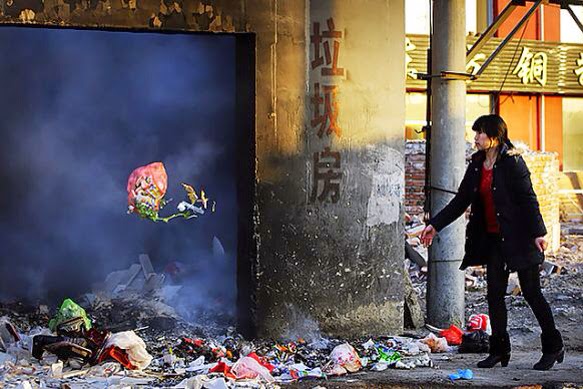
Nearly half the world’s trash is burned in the open, spewing pollutants into the atmosphere that contribute to climate change and affect human health, according to a new study.

Since such burning is largely unregulated and unreported, emissions of some pollutants have been underestimated by as much as 40 percent, said the researchers, who published their findings in the journalEnvironmental Science & Technology.

“I was shocked at the numbers,” said Christine Wiedinmyer, an atmospheric scientist at the National Center for Atmospheric Research and the study’s lead author. “They were much larger than I expected, particularly the air pollutants.”

The researchers estimated the amount of carbon dioxide, carbon monoxide, mercury, tiny particulate matter, and other pollutants released by burning trash.

Every year 970 million metric tons of food, paper, plastics, and metals are set aflame at homes, businesses, and dumps—roughly 41 percent of the world’s garbage, according to the study.

The garbage problem is likely to get worse. Researchers predict the world will triple its production of garbage to more than 11 million tons daily by 2100.

Fires can spring up at dumps with little warning. A fire in Iqaluit, the capital of the Canadian territory of Nunavut, broke out in May and burned for almost 100 days before fire crews began dousing the flames of the “dumpcano.” In March, a dump fire outside Bangkok blanketed neighborhoods with so much thick smoke that it could be seen by satellites.

Heavily populated countries, including China, the United States, India, Japan, Brazil, and Germany, produce the most waste, according to the study. China, India, Brazil, Mexico, Pakistan, and Turkey generate the most emissions from trash burning.

Trash burning produces mercury, chemicals known as polycyclic aromatic hydrocarbons, and fine particulate matter. These pollutants have been linked to heart and lung disease, neurological disorders, and cancer. Annual emissions of mercury and PAHs may have been underestimated by 10 to 40 percent, the researchers said.

Trash burning may also be clogging the air with far more particulate matter than was previously thought. A global tally of reported pollutants indicated that 34 million kilograms of tiny airborne particles called PM 2.5 are released into the air annually.

Wiedinmyer and her colleagues calculate that open burning shoots another 10 million kilograms into the atmosphere—an increase of 29 percent. In Sri Lanka, garbage burning produced five times more emissions of PM 10 (a larger particle) than was included in the official national tally.

These particles can penetrate deep into the lungs and have been associated with heart disease, asthma, and premature death. About 3.7 million people die prematurely from outdoor air pollution, according to the World Health Organization.

Open burning of garbage is closely related to poverty. Unregulated dump fires may be adjacent to settlements, putting the families that live there, especially women and children, at risk of health complications from the pollution. Some of these families derive income from the dump, removing valuable materials for resale.

The contribution of garbage burning to global carbon dioxide emissions is relatively small—only 5 percent of the 2010 global annual emissions. But on a country-by-country basis, it can be quite large. The study found that trash burning in Lesotho, Burundi, Mali, Somalia, and Sri Lanka produced more carbon dioxide than was recorded by the official registers.

Emissions from open burning of trash are rarely reported by environmental agencies, meaning the pollution goes uncounted and is left out of policy decisions.

Air Pollution Isn’t Just Bad for Your Health—It’s Taking Food off Your Plate

Brian Gullett, an environmental engineer at the United States Environmental Protection Agency and a coauthor of the paper, pointed out how difficult it is to calculate the emissions that come from open burning. Unlike with coal-burning power plants, no one knows the exact number of garbage-burning fires, and it can be difficult to trap and analyze the emissions.

Knowing where pollutants come from doesn’t change the burden they place on health, said Patrick Kinney, an expert on health and air pollution at Columbia University. But it does point to “which sources to go after in controlling the problem.”

Said Wiedinmyer, “If we’re looking at air pollution control strategies, we need to include all sources of air pollutants to get the most effective controls in place. If we’re missing a large source, it could lead to control strategies that aren’t going to work at all, or as well.” More


High-level Event Discusses Renewable Energy in SIDS


News: High-level Event Discusses Renewable Energy in SIDS

1 September 2014: Participants recognized sustainable energy for all as a tool for eradicating poverty, combating climate change, creating economic opportunities and achieving sustainable development for all small island developing States (SIDS), at a high-level side event, titled ‘Linking SIDS and Sustainable Energy for All (SE4ALL): From Barbados to Samoa, and Beyond.' The event took place on the sidelines of the Third International Conference on SIDS, in Apia, Samoa, on 1 September 2014.


The SE4ALL side event aimed to build on commitments from the UN Conference on Sustainable Development (UNCSD, or Rio+20+) and the Barbados SIDS High-Level Conference on SE4ALL, to take stock of progress since these events and chart the way forward to ensure sustainable energy for all SIDS.


Speaking at the event, UN Secretary-General Ban Ki-moon said achieving the three targets of the SE4ALL initiative is an important part of putting the world on a pathway for keeping temperature rise below two degrees Celsius. He outlined the need for a new energy paradigm, particularly for SIDS, who he said are particularly vulnerable to climate change and faced inflated energy costs due to their remoteness, and he welcomed the proposal of a dedicated Sustainable Development Goal (SDG) on sustainable energy for all with a focus on access, efficiency and renewables. Ban encouraged all leaders to “bring bold actions and ideas and strong political vision and political will” to the UN Climate Summit.


“SIDS are creating opportunities and examples that, if replicated worldwide, could lead the transition from fossil fuel energy to renewable and sustainable energy,” said UN General Assembly President John Ashe in his remarks.


The panel was moderated by Helen Clark, UN Development Programme (UNDP) Administrator, and featured: Adnan Amin, Director-General, International Renewable Energy Agency (IRENA); Camillo Gonsalves, Foreign Minister of Saint Vincent and the Grenadines; Salvatore Bernabei, General Manager, Enel Green Power Chile and Andean Countries; Naoko Ishii, CEO and Chairperson of the Global Environment Facility (GEF); and Reginald Burke, Caribbean Policy Development Centre. Key messages included the importance of reducing risk to catalyze private investment, the leadership being taken by SIDS, and various SIDS initiatives on sustainable energy, such as SIDS Dock and IRENA's SIDS Lighthouse project.


Participants highlighted: energy costs and energy security; climate change; and challenges and vulnerabilities faced by SIDS, including their small size and the high costs of importing fossil fuels. They stressed SIDS' renewable energy potential and the importance of addressing energy access and efficiency, highlighting the role of partnerships to address these issues. [UN Press Release] [UN Secretary-General Statement] [UNDP Administrator Remarks] [IISD RS Meeting Coverage, 1 September] [IISD RS Sources]


read more: http://energy-l.iisd.org/news/high-level-event-discusses-renewable-energy-in-sids/