Energy Efficiency Simply Makes Sense

What simple tool offers the entire world an extended energy supply, increased energy security, lower carbon emissions, cleaner air and extra time to mitigate climate change? Energy efficiency. What’s more, higher efficiency can avoid infrastructure investment, cut energy bills, improve health, increase competitiveness and enhance consumer welfare — all while more than paying for itself.

Maria van der Hoeven - IEA

The challenge is getting governments, industry and citizens to take the first steps towards making these savings in energy and money.

The International Energy Agency (IEA) has long spearheaded a global move toward improved energy efficiency policy and technology in buildings, appliances, transport and industry, as well as end-use applications such as lighting. That’s because the core of our mandate is energy security — the uninterrupted availability of energy at an affordable price. Greater efficiency is a principal way to strengthen that security: it reduces reliance on energy supply, especially imports, for economic growth; mitigates threats to energy security from climate change; and lessens the global economy’s exposure to disruptions in fossil fuel supply.

In short, energy efficiency makes sense.

In 2006, the IEA presented to the Group of Eight leading industrialized nations its 25 energy efficiency recommendations, which identify best practice and policy approaches to realize the full potential of energy efficiency for our member countries. Every two years, the Agency reports on the gains made by member countries, and today we are working with a growing number of international organizations, including the European Bank for Reconstruction and Development, the Asian Development Bank and the German sustainable development cooperation services provider GIZ.

The opportunities of this “invisible fuel” are many and rich. More than half of the potential savings in industry and a whopping 80 percent of opportunities in the buildings sector worldwide remain untouched. The 25 recommendations, if adopted fully by all 28 IEA members, would save $1 trillion in annual energy costs as well as deliver incalculable security benefits in terms of energy supply and environmental protection.

Achieving even a small fraction of those gains does not require new technological breakthroughs or ruinous capital outlays: the know-how exists, and the investments generate positive returns in fuel savings and increased economic growth. What is required is foresight, patience, changed habits and the removal of the barriers to implementation of measures that are economically viable. For instance, as the World Energy Outlook 2012 demonstrates, investing less than $12 trillion in more energy-efficient technologies would not only quickly pay for itself through reduced energy costs, it would also increase cumulative economic output to 2035 by $18 trillion worldwide.

While current efforts come nowhere close to realizing the full benefits that efficiency offers, some countries are taking big steps forward. Members of the European Union have pledged to cut energy demand by 20 percent by 2020, while Japan plans to trim its electricity consumption 10 percent by 2030. China is committed to reducing the amount of energy needed for each unit of gross domestic product by 16 percent in the next two years. The United States has leaped to the forefront in transportation efficiency standards with new fuel economy rules that could more than double vehicle fuel consumption.

Such transitions entail challenges for policy, and experience shows that government and the private sector must work together to achieve the sustainability goals that societies demand, learning what works and what does not, and following the right path to optimal deployment of technology. Looking forward, energy efficiency will play a vital role in the transition to the secure and sustainable energy future that we all seek. The most secure energy is the barrel or megawatt we never have to use.

Maria van der Hoeven is the Executive Director of the International Energy Agency, an autonomous organization which works to ensure reliable, affordable and clean energy for its 28 member countries and beyond. This commentary appeared first this month in IEA Energy, the Agency’s journal.


Ocean-based power plant previewed in North Side

North Side residents got a preview last week of a proposed electric power plant that will be moored off their coastline if its proponents get the necessary approvals.

Design for 25 Mw OTEC Plant

District MLA Ezzard Miller invited representatives of OTEC International LLC to the Craddock Ebanks Civic Centre on Thursday night to explain the ocean thermal power project to his constituents.

Eileen O’Rourke, the company’s chief operating officer, outlined the process by which heat in the upper layers of sea water can be turned into electricity. The process is known as Ocean Thermal Energy Conversion.

After years of research and experimentation, the technology to process this source of renewable energy is now commercially viable and a proposal has been made to be a wholesale supplier of electricity to Caribbean Utilities Company, Ms. O’Rourke said. Talks have already been held with the Caribbean Utilities Company and government officials.

The production plant would be on a purpose-built barge, or floating power platform, 140 feet wide and 200 feet long and moored less than a mile offshore. Most of the plant would be about 16 feet above the water line, with a small part of it rising another eight feet.

The structure would include pipes to circulate the sea water, moorings to the sea floor and a cable that would carry the generated power under the beach and under the road to a sub-station on land. The sub-station would connect to CUC, Ms. O’Rourke explained.

Meetings have already been held with such entities as the Department of Environment, Public Works and the Environmental Assessment Board. The plan is for necessary permits to be applied for starting in October.

“We hope to get all permits and approvals in the first quarter of 2015,” Ms. O’Rourke said.

The target date for operation of the offshore power plant is the first quarter of 2017.

Pilar Bush, managing director of AtWater Consulting, confirmed that an island-wide public consultation will be held later this month.

OTEC International chose Grand Cayman for its first commercial system because CUC was “an open and willing partner” and because the Cayman government wants to move away from relying on fossil fuels, Ms. O’Rourke said. She noted that one power platform would produce 6.25 megawatts of electricity and that quantity would eliminate the need for 2.9 million gallons of imported diesel fuel annually. CUC’s average production of electricity is around 70 megawatts, it was noted.

Another reason Grand Cayman was chosen was the “excellent sea conditions” – including water temperatures and deep water proximity to the shoreline. There is a well-documented history of local ocean conditions, including extreme storm conditions. North Side was chosen as the best location, she said.

In response to questions from the audience, company representatives referred to job opportunities and the development of safety protocols, along with design features for the protection of marine life.

Start-up costs for the building and installation of the power platform will be expensive, Ms. O’Rourke indicated, but sea water as a source of renewable energy means low operating costs and protection of the consumer from the volatility of oil prices.

Development of the requisite technology was funded by the Abell Foundation, a non-profit organization based in Maryland, USA since 1953, said Ms. O’Rourke, who is also treasurer of the foundation. One of its objectives is supporting innovative efforts to solve systemic social, economic and environmental problems.

In 2000, The Abell Foundation acquired an exclusive license to the OTEC technology developed over decades by Sea Solar Power’s J. Hilbert Anderson and his son James Anderson. In 2001, Abell established a limited liability company with the mission bring OTEC to commercialization. The company became OTEC International LLC (OTI). Bringing the economical, renewable energy solution of ocean thermal energy conversion to developed and emerging markets is important to both OTI and Abell. More


Utility Industry: We Need to Promote Electric Vehicles in Order to ‘Remain Viable’

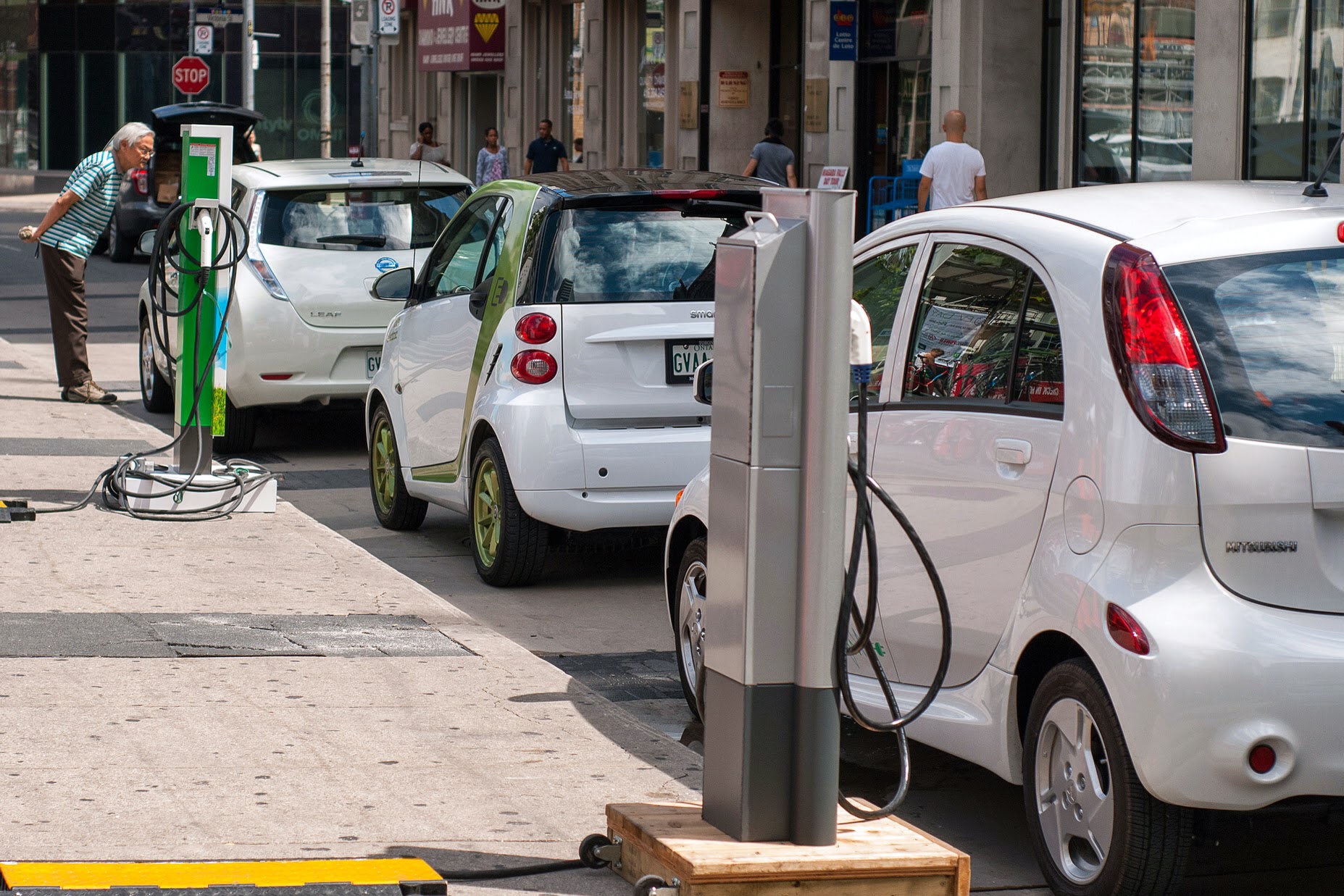
The Edison Electric Institute, the power industry's main trade group, is calling on utilities to better promote electric cars in order to stimulate demand for electricity and help reverse trends that threaten the long-term viability of some in the industry.

Without a strategy to help connect more vehicles to the grid, utilities will continue to face slow growth and stagnant revenues, warns EEI in a new report. The organization calls electric vehicles a “quadruple win” for power companies looking to boost demand, find new ways to interact with customers, support environmental goals and mandates, and reduce operating costs through electrifying their own fleets.

“The bottom line is that the electric utility industry needs the electrification of the transportation sector to remain viable and sustainable in the long term,” conclude the authors.

Some leading investor-owned utilities have rolled out programs to support charging stations, created pilots to test integration of new vehicle-to-grid technologies and have supported studies to model how lots of electric vehicles would interact with the distribution system. But there hasn't yet been a strategic, industry-wide effort to support the electrification of transportation as a way to boost demand.

To understand why EEI is now calling for more electric vehicles, consider where the industry is headed. As the chart below illustrates, growth in retail demand has come to a virtual standstill.

At the same time, the states with the biggest solar PV markets are seeing that technology slow electricity demand growth even further. This is adding additional pressure on utilities (creating borderline disruption in some markets), as third-party developers capture much of the value from developing solar.

“Stagnant growth, rising costs, and a need for even greater infrastructure investment represent major challenges to the utility industry,” writes EEI. “Today’s electric utilities need a new source of load growth — one that fits within the political, economic and social environment.”

Part of the answer is electric vehicles, which could both grow electricity sales and help balance a future grid made up of much more distributed renewables.

Thus far, utilities have had a conflicted relationship with electric vehicles. Although sales continue to grow, consumer demand has been relatively low compared to initial estimates. That has prevented power companies from investing heavily in charging infrastructure. There are also legitimate concerns about how electric cars and trucks will impact circuits on local grids.

However, the potential upside is enormous. If the two charts above have utilities worried, the chart below should have them excited about the future.

As Opower pointed out in a recent analysis, owners of electric cars use nearly 60 percent more electricity than the average customer. And customers who own both a solar system and an electric car consume roughly the same amount of electricity from the grid as an average customer — offsetting much of the excess solar that utilities must buy back through net metering. More


The Sunswift eVe solar-powered car broke a 26-year-old land speed record for electric vehicles

The Sunswift eVe solar-powered car broke a 26-year-old land speed record for electric vehicles on Wednesday at the Australian Automotive Research Center in Victoria. While the record still has to be ratified by the Fédération Internationale de l’Automobile, it would make eVe the fastest electric car to ever compete a 500 km set distance course by a significant margin, Gizmodo reported. The previous record, set in 1988, was an average speed of 73 kilometers per hour; the Sunswift eVe reached 100 km per hour average over the 500 km course.

Sunswift eVe, designed and built by students at the University of New South Wales, seeks to overcome the traditional obstacles that have impeded solar-powered cars, namely, offering both speed and range in the same vehicle.

“There are many solar cars out there with a long range, and many other solar cars capable of even higher speeds,” Rob Ireland, business team leader at Sunswift, told International Business Times. “However, we’re trying to do something ground-breaking and overcome both.”

The zero-emission solar and battery storage electric vehicle is capable of covering 800 km on a single charge and has a top speed of 140 km per hour (87 miles per hour). The car’s solar panels have an 800-watt output and when the sun isn’t shining, eVe relies on its battery pack, reducing drivers’ range anxiety. The car’s motor, “supplied by Australian national science agency CSIRO, operates at 97 percent efficiency, meaning eVe consumes as much power as a kitchen toaster,” according to IB Times.

For Wednesday’s record attempt, the solar panels on the roof and hood were used to charge the battery, but were covered for the actual run, as the attempt had to be completed on a single charge.

While the Sunswift eVe is not fully road legal, the team believes that isn’t far out of reach, telling Renew Economy they hope to have the vehicle on Australian roads within the year as “a symbol for a new era of sustainable driving.” And Ireland said the practicality of the two-seat, four-wheel car is unmatched among solar-powered vehicles.

In the run-up to their attempt at the land speed record, project director and third-year engineering student Hayden Smith explained to Renew Economy why it was so significant. “Five hundred kilometers is pretty much as far as a normal person would want to drive in a single day,” Smith said. “It’s another demonstration that one day you could be driving our car.” More


Major Companies Push for More, Easier Renewable Energy

Some of the largest companies in the United States have banded together to call for a substantial increase in the production of renewable electricity, as well as for more simplicity in purchasing large blocs of green energy.

A dozen U.S-based companies, most of which operate globally, say they want to significantly step up the amount of renewable energy they use, but warn that production levels remain too low and procurement remains too complex. The 12 companies have now put forward a set of principles aimed at helping to “facilitate progress on these challenges” and lead to a broader shift in the market.

“We would like our efforts to result in new renewable power generation,” the Corporate Renewable Energy Buyers’ Principles, released Friday, state. The companies note “our desire to promote new projects, ensure our purchases add new capacity to the system, and that we buy the most cost-competitive renewable energy products.”

The principles consist of six broad reforms, aimed at broadening and strengthening the renewable energy marketplace. Companies want more choice in their procurement options, greater cost competitiveness between renewable and traditional power sources, and “simplified processes, contracts and financing” around the long-term purchase of renewables.

Founding signatories to the principles, which were shepherded by civil society, include manufacturers and consumer goods companies (General Motors, Johnson & Johnson, Mars, Proctor & Gamble), tech giants (Facebook, HP, Intel, Sprint) and major retailers (Walmart, the outdoor-goods store REI).

These 12 companies combined have renewable energy consumption targets of more than eight million megawatt hours of energy through the end of this decade, according to organisers. Yet the new principles, meant to guide policy discussions, have come about due to frustration over the inability of the U.S. renewables market to keep up with spiking demand.

“The problem these companies are seeing is that they’re paying too much, even though they know that cost-effective renewable energy is available. These companies are used to having choices,” Marty Spitzer, director of U.S. climate policy at the World Wildlife Fund (WWF), a conservation and advocacy group that helped to spearhead the principles, told IPS.

WWF was joined in the initiative by the World Resources Institute and the Rocky Mountain Institute, both think tanks that focus on issues of energy and sustainability.

“The companies have also recognised that it’s often very difficult to procure renewables and bring them to their facilities,” Spitzer continues. “While most of them didn’t think of it this way at first, they’ve now realised that they have been experiencing a lot of the same problems.”

‘Too difficult’

In recent years, nearly two-thirds of big U.S. businesses have created explicit policies around climate goals and renewable energy usage, according to WWF. While there is increasing political and public compunction behind these new policies, a primary goal remains simple cost-cutting and long-term efficiencies.

“A significant part of the value to us from renewable energy is the ability to lock in energy price certainty and avoid fuel price volatility,” the principles note.

In part due to political deadlock in Washington, particularly around issues of climate and energy, renewable production in the United States remains too low to keep up with this corporate demand. According to the U.S. government, only around 13 percent of domestic energy production last year was from renewable sources.

Accessing even that small portion of the market remains unwieldy.

“We know cost-competitive renewable energy exists but the problem is that it is way too difficult for most companies to buy,” Amy Hargroves, director of corporate responsibility and sustainability for Sprint, a telecommunications company, said in a statement.

“Very few companies have the knowledge and resources to purchase renewable energy given today’s very limited and complex options. Our hope is that by identifying the commonalities among large buyers, the principles will catalyse market changes that will help make renewables more affordable and accessible for all companies.”

One of the most far-reaching sustainability commitments has come from the world’s largest retailer, Walmart. A decade ago, the company set an “aspirational” goal for itself, to be supplied completely by renewable energy.

Last year, it created a more specific goal aimed at helping to grow the global market for renewables, pledging to drive the production or procurement of seven billion kilowatt hours of renewable energy globally by the end of 2020, a sixfold increase over 2010. (The company is also working to increase the energy efficiency of its stores by 20 percent over this timeframe.)

While the company has since become a leader in terms of installing solar and wind projects at its stores and properties, it has experienced frustrations in trying to make long-term bulk purchases of renewable electricity from U.S. utilities.

“The way we finance is important … cost-competitiveness is very important, as is access to longer-term contracts,” David Ozment, senior director of energy at Walmart, told IPS. “We like to use power-purchase agreements to finance our renewable energy projects, but currently only around half of the states in the U.S. allow for these arrangements.”

Given Walmart’s size and scale, Ozment says the company is regularly asked by suppliers, regulators and utilities about what it is looking for in power procurement. The new principles, he says, offer a strong answer, providing direction as well as flexibility for whatever compulsion is driving a particular company’s energy choices, whether “efficiency, conservation or greenhouse gas impact”.

“We’ve seen the price of solar drop dramatically over the past five years, and we hope our participation helped in that,” he says. “Now, these new principles will hopefully create the scale to continue to drop the cost of renewables and make them more affordable for everyone.”

Internationally applicable

Ozment is also clear that the new principles need not apply only to U.S. operations, noting that the principles “dovetail” with what Walmart is already doing internationally.

In an e-mail, a representative for Intel, the computer chip manufacturer, likewise told IPS that the company is “interested in promoting renewables markets in countries where we have significant operations … at a high level, the need to make renewables both more abundant and easier to access applies outside the U.S.”

For his part, WWF’s Spitzer says that just one of the principles is specific to the U.S. regulatory context.

“Many other countries have their own instruments on renewable production,” he says, “but five out of these six principles are relevant and perfectly appropriate internationally.”

Meanwhile, both the principles and their signatories remain open-ended. Spitzer says that just since Friday he’s heard from additional companies interested in adding their support. More


Besieged by the rising tides of climate change, Kiribati buys land in Fiji

The people of Kiribati, a group of islands in the Pacific ocean particularly exposed to climate change, now own a possible refuge elsewhere. President Anote Tong has recently finalised the purchase of 20 sq km on Vanua Levu, one of the Fijiislands, about 2,000km away.

Abandoned house affected by sea water

The Church of England has sold a stretch of land mainly covered by dense forest for $8.77m. “We would hope not to put everyone on [this] one piece of land, but if it became absolutely necessary, yes, we could do it,” Tong told the Associated Press. Kiribati has a population of about 110,000 scattered over 33 small, low-lying islands extending over a total area of 3.5m sq km.

In 2009 the Maldives were the first to raise the possibility of purchasing land in another country in anticipation of being gradually submerged. At the time the government looked at options in India and Sri Lanka.

Now Kiribati has taken action. “Kiribati is just the first on a list which could get longer as time passes,” says Ronald Jumeau, Seychelles ambassador at the United Nations, who took part in the international negotiations on climate change in Bonn last month.

In March the Intergovernmental Panel on Climate Change published the volume on adaptation of its fifth assessment report, confirming in starker terms forecasts first outlined by scientists in 1990. Within a few decades, small islands in the Pacific and Indian oceans risk being extensively or even completely submerged. In places the sea level is rising by 1.2cm a year, four times faster than the global average.

The cost of protecting these places against rising sea levels, compared with national income, is among the highest in the world. Kiribati, Tuvalu and the Maldives are among the 10 countries where the financial impact of climate change is the most severe.

For many of these countries, which are represented by the Alliance of Small Island States, the impacts of climate change are “irreparable”, as Tong has often stressed. “Whatever is agreed within the United States today, with China [the two largest sources of CO2 emissions], it will not have a bearing on our future, because already, it's too late for us … And so we are the canary. But hopefully, that experience will send a very strong message that we might be on the frontline today, but others will be on the frontline next,” he said in an interview on CNN last month. This explains why small island states think it is so important to set up an international mechanism for loss and damage, to compensate for the irremediable consequences of global warming.

The international community approved the principle of such a mechanism in November 2013. “When a population is forced to leave its country, it is no longer a matter of adaptation,” Jumeau claims. “Where will these countries find funds? It is up to the industrialised countries, which caused global warming, to shoulder their responsibilities.” He wants to make the loss and damage mechanism a priority for the global deal on climate change slated to be signed in Paris in December 2015.

In the immediate future, the land purchased by Kiribati will above all be used to for agricultural and fish-farming projects to guarantee the nation's food security. With sea water increasingly contaminating the atolls' groundwater and catastrophic coral bleaching – total in some cases such as Phoenix atoll – there are growing food shortages. “Among the small islands, Kiribati is the country that has done most to anticipate its population's future needs,” says François Gemenne, a specialist on migrations at Versailles-Saint Quentin University, France. “The government has launched the 'migration with dignity' policy to allow people to apply for jobs on offer in neighbouring countries such as New Zealand. The aim is to avoid one day having to cope with a humanitarian evacuation.”

Kiribati has long-standing relations with Fiji. In the 1950s families from Banaba island, who had been displaced to make room for a phosphate mine, took refuge there, Gemenne recalls. More


Sir Richard Branson supports Many Strong Voices

Sir Richard Branson supports Many Strong Voices

The work of MSV to help raise the profile of people in the Arctic and Small Island Developing States (SIDS) and their struggle against climate change has gained the support of one of the world’s most influential business leaders.

Sir Richard Branson

Sir Richard Branson, founder of Virgin Airlines and a champion of green energy, has offered his support to MSV, which brings together the peoples of the Arctic and SIDS to meet the challenges of climate change.

“When it comes to climate change, arctic communities and small island states share similar struggles,” Branson said. “As they feel the impacts of rising sea levels and deteriorating coastal environments, organizations like Many Strong Voices collaborate, act and innovate to achieve lasting change.

“Their critical work fills the gap between those affected by adverse climate impacts and the political and business leaders focused on creating big picture solutions.”

Branson has invested considerable time and money in supporting global initiatives to reduce greenhouse gas emissions through the use of renewable resources and new technologies. Recently, he called on business leaders to take a stand against climate deniers.

MSV is coordinated by GRID-Arendal and the University College London. More

The Cayman Institute is a partner organization of Many Strong Voices


Solar is here

Solar is here.

That’s right. You know the solutions to the climate crisis are available today; we simply need the public (and political) will to implement them. Clean energy is urgently necessary, abundant, and becoming increasingly more affordable. That’s why on June 21, The Climate Reality Project is joining 12 other organizations in a day of action to support clean-energy solutions and show our commitment to bringing solar power to communities around the world.

If you don’t already have plans to take part on Saturday, don’t despair! Here are a few last minute ways to get involved:

  1. Sign: Send President Obama an email thanking him for putting solar panels on the roof of the White House.
  2. Share: Take your own #PutSolarOnIt photo and share it with your social media network.
  3. Discover: Check out the Mosaic website to find out if solar is right for you.
  4. Participate: Check out OFA’s website to find an event near you, some of which are being hosted by your fellow Climate Reality Leaders.

The reality is this: solar is affordable. It’s clean. And it’s powerful. The cost of solar panels has plummeted 60 percent since early 2011, and the number of installations keeps growing. The United States now has enough installed solar capacity to power more than 2.2 million homes. In several states, solar power is now competitive with other sources of energy without emitting the dangerous greenhouse gases that cause climate change.

Climate Reality Leaders are the first responders to the climate crisis and lead action across the globe. We’re proud so many of you will be participating on Saturday by hosting presentations, organizing events, and informing others about the benefits of solar power.

The Climate Reality Leadership Corps Team

Solar Array at Caledonian Bank, George Town, Cayman Islands


Climate change will ‘cost world far more than estimated’

Lord Stern, the world’s most authoritative climate economist, has issued a stark warning that the financial damage caused by global warming will be considerably greater than current models predict.

This makes it more important than ever to take urgent and drastic action to curb climate change by reducing carbon emissions, he argues.

Lord Stern, who wrote a hugely influential review on the financial implications of climate change in 2006, says the economic models that have been used to calculate the fiscal fallout from climate change are woefully inadequate and severely underestimate the scale of the threat.

As a result, even the recent and hugely authoritative series of reports from the UN Intergovernmental Panel on Climate Change (IPCC) are significantly flawed, he said.

“It is extremely important to understand the severe limitations of standard economic models, such as those cited in the IPCC report, which have made assumptions that simply do not reflect current knowledge about climate change and its … impacts on the economy,” said Lord Stern, a professor at the Grantham Institute, a research centre at the London School of Economics.

Professor Stern and his colleague Dr Simon Dietz will today publish the peer-reviewed findings of their research into climate change economic modelling in the The Economic Journal.

Their review is highly critical of established economic models which, among other things, fail to acknowledge the full breadth of climate change’s likely impact on the economy and are predicated on assumptions about global warming’s effect on output that are “without scientific foundation”.

Professor Stern, whose earlier research said it is far cheaper to tackle climate change now than in the future, added: “I hope our paper will prompt … economists to strive for much better models [and] … help policy-makers and the public recognise the immensity of the potential risks of unmanaged climate change.”

“Models that assume catastrophic damages are not possible fail to take account of the magnitude of the issues and the implications of the science,” he said.

Professor Stern and Dr Dietz say their findings strengthen the case for strong cuts in greenhouse gas emissions and imply that, unless this happens, living standards could even start to decline later this century.

For the study, they modified key features of the “dynamic integrated climate-economy” (Dice) model, initially devised by William Nordhaus in the 1990s. The changes take into account the latest scientific findings and some of the uncertainties about the major risks of climate change that are usually omitted.

The standard Dice model has been used in a wide range of economic studies of the potential impacts of climate change, some of which have been cited in the most recent IPCC report which has been released in three parts over the past nine months.

Dr Dietz said: “While this standard economic model has been useful for economists who estimate the potential impacts of climate change, our paper shows some major improvements are needed before it can reflect the extent of the risks indicated by the science.”

Dr Dietz said his aim was to show how a new version of the model could produce a range of results that are much more representative of the science and economics of climate change, taking into account the uncertainties.

“The new version of this standard economic model, for instance, suggests that the risks from climate change are bigger than portrayed by previous economic models and therefore strengthens the case for strong cuts in emissions of greenhouse gases,” he said.

The new model differs in that it considers a wider temperature range when estimating the impact of doubling the atmospheric concentration of greenhouse gases – a measure of “climate sensitivity”.

Whereas the standard model usually assumes a single temperature for climate sensitivity of about 3C, the new model uses a range of 1.5C to 6C, which the authors say more accurately reflects the scientific consensus.

The standard model also “implausibly” suggests a loss of global output of 50 per cent would only result after a rise in global average temperature of 18C, even though such warming would likely render the Earth uninhabitable for most species, including humans, Dr Dietz contends.

The new model includes the possibility that such damage could occur at much lower levels of global warming. Standard economic models rule out the possibility that global warming of 5-6C above pre-industrial levels could cause catastrophic damages, even though such temperatures have not occurred on Earth for tens of millions of years. Such an assertion, he says, is without scientific foundation and embodies a false assumption that the risks are known, with great confidence, to be small.

The new model also takes into account that climate change can damage not just economic output, but productivity. The standard model assumes that rising levels of greenhouse gases in the atmosphere only affect economic growth in a very limited way, according to Dr Dietz. More