In the immortal words of Montserratian singer/songwriter, Arrow, the Caribbean is “…feelin’ hot, hot, hot!” And, that’s agoodthing.
With a little help from Mother Nature, the islands of the Caribbean are learning to harness the power of high temperature geothermal energy beneath the earth’s surface.
In an effort to move away from reliance on expensive, fossil-fueled, diesel-powered generators toward a dependable, eco-friendly source of renewable energy, a number of forward-thinking Caribbean islands are aggressively searching for and identifying alternative sources of power beneath the surface.
Energy self-sufficiency, long sought-after by local governments may soon become a reality for some islands in the Caribbean.
While the road to sustainable geothermal power generation has no short cuts and faces a number of financial, administrative and physical challenges, the rewards can be substantial in the long-run.
Geothermal power produces an environmentally-friendly, long-lasting energy source that can provide electricity at significantly lower cost and, in some cases, may produce enough excess power, exported via submarine cables, to create a revenue stream between islands.
The Caribbean island of Montserrat is among the leaders in geothermal exploration.
It is also on a mission of rebirth from the devastation caused by the eruption of the Soufrière Volcano in the mid-1990s which destroyed the capital town of Plymouth, left more than half of the island’s residents homeless and covered more than 30 percent of the island with lava and ash.
Today, Montserrat has plans for a new capital town, a new port, a vibrant hospitality and tourism industry and the regeneration of private enterprise equipped with a sustainable infrastructure. Geothermal power will play a major role in this transformation.
Ironically, the same geological forces that created the Soufrière Volcano will now be harnessed to power the island’s electricity grid from a geothermal source. Iceland Drilling Company Ltd., a leading high-tech company in the field of high temperature deep geothermal drilling, has successfully tested two geothermal wells on Montserrat and the foundation is now in place for a third well backed by the UK government, part of its continuing support for the British Overseas Territory’s Master Plan for Growth.
It is our hope that Montserrat’s geothermal resources and sustainable, “green” energy infrastructure will attract environmentally-conscious developers and investors as “founding fathers” of our new capital town.
Ultimately, “going green” in Montserrat may help the nation move to the forefront in eco-tourism while driving a self-sufficient economic future.
In Dominica, geothermal exploration supported by the European Union brings with it the hopes of clean energy generation sufficient to supply the entire island and provide electricity for export as well.
Nevis, another volcanic island, is hoping to become a regional supplier of power to nearby St. Kitts, among others, and has said it intends to begin exploratory well-digging at various sites around the island.
Geothermal power has the possibility of transforming the Caribbean.
It will allow for a rise in the standard of living, an increase in job opportunities and a cleaner environment for residents and visitors to enjoy.
If nations can reduce, or eliminate, their reliance on expensive, environmentally harmful fossil fuels, they will not only pave the way for energy independence but also create an attractive environment for investors to support sustainable practices and economic development that will benefit the entire region. More
by caribbeanclimate, caribbeanclimateblog.comSeptember 2: Over 150 delegates and members of the international development community from more than 45 countries were stunned to see leader after leader approach the podium to sign a historic sustainable energy and climate resilient treaty that will significantly change the lives and destiny of over 20 million small islanders, for the better.
Led by the Deputy Prime Minister of Samoa, Hon. Fonotoe Nuafesili Pierre Lauofo, multiple leaders from the Pacific, Caribbean and African, Indian Ocean and Mediterranean Sea (AIMS) regions, forcefully raised their voices in unison and accepted responsibility for fulfilling the commitment to the Small Island Developing States (SIDS) Sustainable Energy mechanism – SIDS DOCK. The opening for signature of this historic SIDS DOCK Treaty – a SIDS-SIDS Initiative – was a major highlight of the first day of the United Nations (UN) Third International Conference on SIDS, taking place in Apia, Samoa, from 1-4 September.
The unprecedented and unexpected number of Heads of State and Government present, sent a strong signal to the standing room only audience, the SIDS population and the international community, demonstrating how deeply committed SIDS leaders are and that they all firmly believe that SIDS must, have and will take responsibility for charting the future of their countries towards a path that would see a total transformation of the SIDS economy away from fossil fuels, to that of one driven by low carbon technologies. The event was considered so important to the Republic of Cabo Verde, that the Prime Minister, Hon. José Maria Neves, excused himself and his entire delegation from the Plenary Hall, to ensure that Cabo Verde, a SIDS DOCK Founding Member was well-represented at the signing – the Cabo Verde Government has one of the most ambitious plans in SIDS, that aims to achieve 100 penetration of renewable energies in Cabo Verde, by 2020.
More than half the members of the Alliance of Small Island States (AOSIS) were present for the signing of the historic treaty, witnessed by the SIDS DOCK partners Denmark, Japan and Austria, whose kind and generous support facilitated SIDS DOCK start -up activities; also present were SIDS DOCK partners, the United Nations Development Programme (UNDP), the World Bank, the United Nations Industrial Development Organization (UNIDO) and the Clinton
Foundation. The treaty was signed by the governments of Barbados, Belize, Bahamas (Commonwealth of the), Dominica (Commonwealth of), Cabo Verde (Republic of), Cook Islands, Dominican Republic, Fiji (Republic of), Grenada, Guinea Bissau, Kiribati (Republic of), Niue, Palau (Republic of), Saint Kitts and Nevis, Saint Vincent and the Grenadines, Samoa (Independent State of), Seychelles (Republic of), and Tuvalu.
The Statute will remain open for signature in Apia, Samoa until September 5, and will reopen for signature in Belmopan, Belize, from September 6, 2014 until it enters into force. Belize is the host country for SIDS DOCK, with Samoa designated as the location for the Pacific regional office. More
Production company Tree Media, whose mission is to inspire positive social action, has just released the first of four films in the Green World Rising series focusing on solutions to the climate crisis.
The eight-minute film, CARBON, narrated by actor and dedicated environmentalist Leonardo DiCaprio, was created with support from the Leonardo DiCaprio Foundation and in collaboration with Thom Hartmann. The film’s goal is to draw attention to how some governments are already putting a price on carbon through carbon taxes and carbon trading to encourage polluters to shift from dirty energy sources to renewables prior to the UN Climate Summit in New York on Sep. 23. All four films will be released in the next month leading up to the summit.
“97% of climate scientists agree: climate change is happening now—and humans are responsible,” said DiCaprio. “We cannot sit idly by and watch the fossil fuel industry make billions at our collective expense. We must put a price on carbon—now.”
“We need serious action to address the most pressing issue of our time,” said Hartmann. “Communities across the world have taken action in the most direct and effective way possible by taxing and trading carbon. For us to beat this crisis, many more need to join.”
The film explains what a carbon tax and carbon trading are, how they can help us stop “using the atmosphere as a sewer,” as Joseph Romm of the Center for American Progress says in the film, and what ordinary people can do to push elected officials to act. More
Carbon
Published on Aug 20, 201 4 • CARBON is the first film in the Green World Rising Series, http:// www.greenworldrising.org “Carbon” is narrated by Leonardo DiCaprio, presented by Thorn Hartmann and directed by Leila Conners. Executive Producers are George DiCaprio, Earl Katz and Roee Sharon Peled. Carbon is produced by
Mathew Schmid and was written by Thorn Hartmann, Sam Sacks, Leila Conners and Mathew Schmid. Music is composed and performed by Jean-Pascal Beintus and intro drone by Francesco Lupica. Carbon is produced by Tree Media with the support of the Leonardo DiCaprio Foundation.
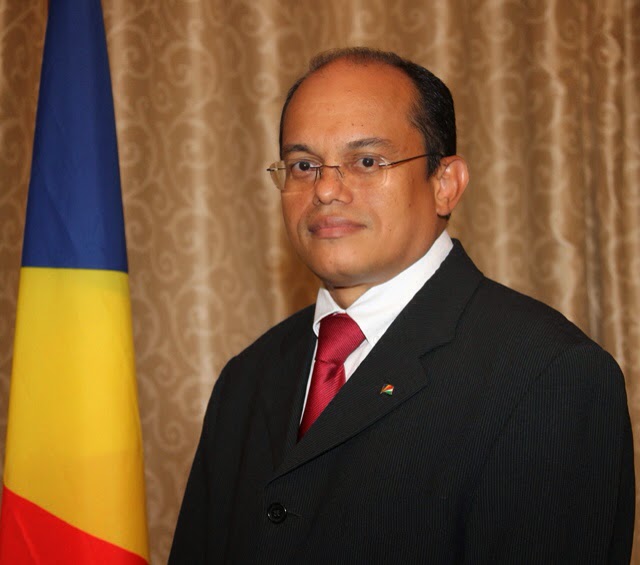
(Seychelles News Agency) – Seychelles Minister for Environment and Energy, Professor Rolph Payet has been appointed the new Executive Secretary of the Basel, Rotterdam and Stockholm Conventions by the United Nations Secretary General Ban Ki-moon.
Announcing the appointment in a press statement this afternoon, State House said Payet will contribute to the implementation of the mandates and missions of those three conventions including the formulation of their overall strategies and policies.
“He will also act in an advisory capacity to the UNEP Executive Director and the Presidents and the Bureaus of the conventions as well as their subsidiary bodies,” reads the statement.
The environment minister’s role will also include coordinating the preparation of the meetings and implement the substantive work programme of the conventions, including providing assistance to parties, in particular developing country parties and those with economies in transition.
He will also lead the development of strategies and policies and undertake fund raising and donor reporting, the strategic interagency work of the Secretariat in close coordination with UNEP and other Multilateral Environmental Agreements.
Responding to SNA in an email following this afternoon’s announcement, Payet said he is deeply honoured of such confidence in him to lead the conventions.
“I am equally happy that I have been chosen, coming from a Small Island Developing States, during this year dedicated to SIDS. My appointment represents the hard work of President James Michel and the government of Seychelles to continuously push so that Seychelles remains a leader in environment on the international scene. I will miss my work and even though I will be away from Seychelles I will continue to work for the benefit of my country,” he said.
Payet will take up his new post in October this year and he will be based in Geneva.
He will replace Kerstin Stendahl from Finland, who has been serving as interim since April this year following the retirement of US national Jim Willis as the Executive Director of the Basel, Rotterdam and Stockholm Conventions.
The Basel, Rotterdam and Stockholm Conventions.
The first convention is aimed at protecting human health and the environment from the effects of hazardous wastes.
This convention was adopted in 1989 and it entered into force in 1992.
The Rotterdam Convention, which entered into force ten years ago, also deals with the disposal of waste especially pesticides and industrial chemicals.
The third one, the Stockholm Convention which also came into force 10 years ago is a global treaty to protect human health and the environment from chemicals that remain intact in the environment for long periods. The latter or POPs is said to have serious consequences on humans and wildlife.
Seychelles president hails Payet’s appointment as “a memorable achievement.”
Seychelles President James Michel has hailed Payet’s appointment which he describes as “a memorable achievement.”
In a congratulatory message sent to the minister, Michel has wished him success in his new role and expressed his full cooperation and support in his tasks and challenges that lie ahead.
“Your appointment to this high office is a well-deserved recognition of your scientific and academic capabilities and crowns a professional life devoted to the environment and to the cause of Small Island Developing States. It also brings immense pride and satisfaction to Seychelles,” said Michel in the statement.
Michel said he would announce a new minister for environment and energy at a later date.
Payet and the environment cause
The 46 year old leaves vacant the portfolio of Environment and Energy which he assumed in March 2012.
Before that he was Special Advisor to the president on numerous environmental matters including sustainable development, biodiversity, climate change, energy and international environment policy
Payet who holds a Phd in Environmental Science from Linnaeus University of which is now an Associate Professor, is described as a leader in the protection of the environment on the international scene.
He has been at the forefront of several international discussions on issues affecting small islands developing states such as climate change, sustainable development, biodiversity and other environmental issues.
In recent years, he has been invited to participate or as a guest speaker on numerous international conference committees and panels including the United Nations General Assembly.
He has also contributed widely towards several publications on environmental issues.
Payet’s work in advancing environment, islands, ocean, biodiversity and climate issues at the global level has earned him numerous international awards and recognition.
In January 2007, he was recognised as a Young Global Leader by the World Economic Forum and in November that same year he shared in the IPCC Nobel Peace Prize as one of the authors of the Intergovernmental Panel on Climate Change (IPCC).
Locally, Payet has also helped to set up Seychelles first university, the University of Seychelles which was set up in September 2009. He is currently the pro chancellor of the university. More
Summary: Although in strict legal terms its status is ambig-uous, a 25-year exploration license for the marine area off the Gaza Strip was awarded by the Palestinian Authority in 1999.
The Gaza Marine field was discovered the following the year though its natural gas has yet to be exploited. Politics as well as failure to agree on commercial terms have been the principal reasons for the delay.
Exploitation of the field would provide the Palestinian Authority with an important revenue stream. Using Gaza Marine gas may also reduce the need of Israel to consume its own natural gas to generate electricity for the Palestinians. Ultimately the decision will be political, but, in economic terms, the case for the exploita-tion of Gaza Marine is strong. Download PDF
More than five years ago, Israel invaded Gaza under “Operation Cast Lead”.
The following article was first published by Global Research in January 2009 at the height of the Israeli bombing and invasion under Operation Cast Lead.
In the wake of the invasion, Palestinian gas fields were de facto confiscated by Israel in derogation of international law
A year following “Operation Cast Lead”, Tel Aviv announced the discovery of the Leviathan natural gas field in the Eastern Mediterranean “off the coast of Israel.”
At the time the gas field was: “ … the most prominent field ever found in the sub-explored area of the Levantine Basin, which covers about 83,000 square kilometres of the eastern Mediterranean region.” (i)
Coupled with Tamar field, in the same location, discovered in 2009, the prospects are for an energy bonanza for Israel, for Houston, Texas based Noble Energy and partners Delek Drilling, Avner Oil Exploration and Ratio Oil Exploration. (See Felicity Arbuthnot, Israel: Gas, Oil and Trouble in the Levant, Global Research, December 30, 2013
The Gazan gas fields are part of the broader Levant assessment area.
What is now unfolding is the integration of these adjoining gas fields including those belonging to Palestine into the orbit of Israel. (see map below).
It should be noted that the entire Eastern Mediterranean coastline extending from Egypt’s Sinai to Syria constitutes an area encompassing large gas as well as oil reserves.
War and Natural Gas: The Israeli Invasion and Gaza's Offshore Gas Fields
More than five years ago, Israel invaded Gaza under “Operation Cast Lead”.
The following article was first published by Global Research in January 2009 at the height of the Israeli bombing and invasion under Operation Cast Lead.
In the wake of the invasion, Palestinian gas fields were de facto confiscated by Israel in derogation of international law
A year following “Operation Cast Lead”, Tel Aviv announced the discovery of the Leviathan natural gas field in the Eastern Mediterranean “off the coast of Israel.”
At the time the gas field was: “ … the most prominent field ever found in the sub-explored area of the Levantine Basin, which covers about 83,000 square kilometres of the eastern Mediterranean region.” (i)
Coupled with Tamar field, in the same location, discovered in 2009, the prospects are for an energy bonanza for Israel, for Houston, Texas based Noble Energy and partners Delek Drilling, Avner Oil Exploration and Ratio Oil Exploration. (See Felicity Arbuthnot, Israel: Gas, Oil and Trouble in the Levant, Global Research, December 30, 2013
The Gazan gas fields are part of the broader Levant assessment area.
What is now unfolding is the integration of these adjoining gas fields including those belonging to Palestine into the orbit of Israel. (see map below).
It should be noted that the entire Eastern Mediterranean coastline extending from Egypt’s Sinai to Syria constitutes an area encompassing large gas as well as oil reserves.
levant gas map1 felicity
Michel Chossudovsky, January 3, 2014
War and Natural Gas: The Israeli Invasion and Gaza’s Offshore Gas Fields
by Michel Chossudovsky
January 8, 2009
The December 2008 military invasion of the Gaza Strip by Israeli Forces bears a direct relation to the control and ownership of strategic offshore gas reserves.
This is a war of conquest. Discovered in 2000, there are extensive gas reserves off the Gaza coastline.
British Gas (BG Group) and its partner, the Athens based Consolidated Contractors International Company(CCC) owned by Lebanon’s Sabbagh and Koury families, were granted oil and gas exploration rights in a 25 year agreement signed in November 1999 with the Palestinian Authority.
The rights to the offshore gas field are respectively British Gas (60 percent); Consolidated Contractors (CCC) (30 percent); and the Investment Fund of the Palestinian Authority (10 percent). (Haaretz, October 21, 2007).
The PA-BG-CCC agreement includes field development and the construction of a gas pipeline.(Middle East Economic Digest, Jan 5, 2001).
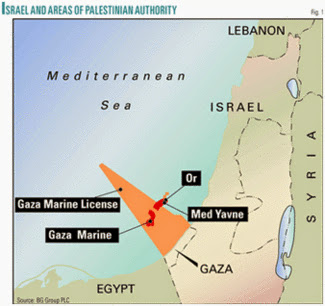
The BG licence covers the entire Gazan offshore marine area, which is contiguous to several Israeli offshore gas facilities. (See Map below). It should be noted that 60 percent of the gas reserves along the Gaza-Israel coastline belong to Palestine.
Map 1
The BG Group drilled two wells in 2000: Gaza Marine-1 and Gaza Marine-2. Reserves are estimated by British Gas to be of the order of 1.4 trillion cubic feet, valued at approximately 4 billion dollars. These are the figures made public by British Gas. The size of Palestine’s gas reserves could be much larger.
Who Owns the Gas Fields
The issue of sovereignty over Gaza’s gas fields is crucial. From a legal standpoint, the gas reserves belong to Palestine.
The death of Yasser Arafat, the election of the Hamas government and the ruin of the Palestinian Authority have enabled Israel to establish de facto control over Gaza’s offshore gas reserves.
British Gas (BG Group) has been dealing with the Tel Aviv government. In turn, the Hamas government has been bypassed in regards to exploration and development rights over the gas fields.
Map 2
The election of Prime Minister Ariel Sharon in 2001 was a major turning point. Palestine’s sovereignty over the offshore gas fields was challenged in the Israeli Supreme Court. Sharon stated unequivocally that “Israel would never buy gas from Palestine” intimating that Gaza’s offshore gas reserves belong to Israel.
In 2003, Ariel Sharon, vetoed an initial deal, which would allow British Gas to supply Israel with natural gas from Gaza’s offshore wells. (The Independent, August 19, 2003)
The election victory of Hamas in 2006 was conducive to the demise of the Palestinian Authority, which became confined to the West Bank, under the proxy regime of Mahmoud Abbas.
In 2006, British Gas “was close to signing a deal to pump the gas to Egypt.” (Times, May, 23, 2007). According to reports, British Prime Minister Tony Blair intervened on behalf of Israel with a view to shunting the agreement with Egypt.
The following year, in May 2007, the Israeli Cabinet approved a proposal by Prime Minister Ehud Olmert “to buy gas from the Palestinian Authority.” The proposed contract was for $4 billion, with profits of the order of $2 billion of which one billion was to go the Palestinians.
Tel Aviv, however, had no intention on sharing the revenues with Palestine. An Israeli team of negotiators was set up by the Israeli Cabinet to thrash out a deal with the BG Group, bypassing both the Hamas government and the Palestinian Authority:
“Israeli defence authorities want the Palestinians to be paid in goods and services and insist that no money go to the Hamas-controlled Government.” (Ibid, emphasis added)
The objective was essentially to nullify the contract signed in 1999 between the BG Group and the Palestinian Authority under Yasser Arafat.
Under the proposed 2007 agreement with BG, Palestinian gas from Gaza’s offshore wells was to be channeled by an undersea pipeline to the Israeli seaport of Ashkelon, thereby transferring control over the sale of the natural gas to Israel.
The deal fell through. The negotiations were suspended:
”Mossad Chief Meir Dagan opposed the transaction on security grounds, that the proceeds would fund terror”. (Member of Knesset Gilad Erdan, Address to the Knesset on “The Intention of Deputy Prime Minister Ehud Olmert to Purchase Gas from the Palestinians When Payment Will Serve Hamas,” March 1, 2006, quoted in Lt. Gen. (ret.) Moshe Yaalon, Does the Prospective Purchase of British Gas from Gaza’s Coastal Waters Threaten Israel’s National Security? Jerusalem Center for Public Affairs, October 2007)
Israel’s intent was to foreclose the possibility that royalties be paid to the Palestinians. In December 2007, The BG Group withdrew from the negotiations with Israel and in January 2008 they closed their office in Israel.(BG website).
Invasion Plan on The Drawing Board
The invasion plan of the Gaza Strip under “Operation Cast Lead” was set in motion in June 2008, according to Israeli military sources:
“Sources in the defense establishment said Defense Minister Ehud Barak instructed the Israel Defense Forces to prepare for the operation over six months ago [June or before June] , even as Israel was beginning to negotiate a ceasefire agreement with Hamas.”(Barak Ravid, Operation “Cast Lead”: Israeli Air Force strike followed months of planning, Haaretz, December 27, 2008)
That very same month, the Israeli authorities contacted British Gas, with a view to resuming crucial negotiations pertaining to the purchase of Gaza’s natural gas:
“Both Ministry of Finance director general Yarom Ariav and Ministry of National Infrastructures director general Hezi Kugler agreed to inform BG of Israel’s wish to renew the talks.
The sources added that BG has not yet officially responded to Israel’s request, but that company executives would probably come to Israel in a few weeks to hold talks with government officials.” (Globes online- Israel’s Business Arena, June 23, 2008)
The decision to speed up negotiations with British Gas (BG Group) coincided, chronologically, with the planning of the invasion of Gaza initiated in June. It would appear that Israel was anxious to reach an agreement with the BG Group prior to the invasion, which was already in an advanced planning stage.
Moreover, these negotiations with British Gas were conducted by the Ehud Olmert government with the knowledge that a military invasion was on the drawing board. In all likelihood, a new “post war” political-territorial arrangement for the Gaza strip was also being contemplated by the Israeli government.
In fact, negotiations between British Gas and Israeli officials were ongoing in October 2008, 2-3 months prior to the commencement of the bombings on December 27th.
In November 2008, the Israeli Ministry of Finance and the Ministry of National Infrastructures instructed Israel Electric Corporation (IEC) to enter into negotiations with British Gas, on the purchase of natural gas from the BG’s offshore concession in Gaza. (Globes, November 13, 2008)
“Ministry of Finance director general Yarom Ariav and Ministry of National Infrastructures director general Hezi Kugler wrote to IEC CEO Amos Lasker recently, informing him of the government’s decision to allow negotiations to go forward, in line with the framework proposal it approved earlier this year.
The IEC board, headed by chairman Moti Friedman, approved the principles of the framework proposal a few weeks ago. The talks with BG Group will begin once the board approves the exemption from a tender.” (Globes Nov. 13, 2008)
Gaza and Energy Geopolitics
The military occupation of Gaza is intent upon transferring the sovereignty of the gas fields to Israel in violation of international law.
What can we expect in the wake of the invasion?
What is the intent of Israel with regard to Palestine’s Natural Gas reserves?
A new territorial arrangement, with the stationing of Israeli and/or “peacekeeping” troops?
The militarization of the entire Gaza coastline, which is strategic for Israel?
The outright confiscation of Palestinian gas fields and the unilateral declaration of Israeli sovereignty over Gaza’s maritime areas?
If this were to occur, the Gaza gas fields would be integrated into Israel’s offshore installations, which are contiguous to those of the Gaza Strip. (See Map 1 above).
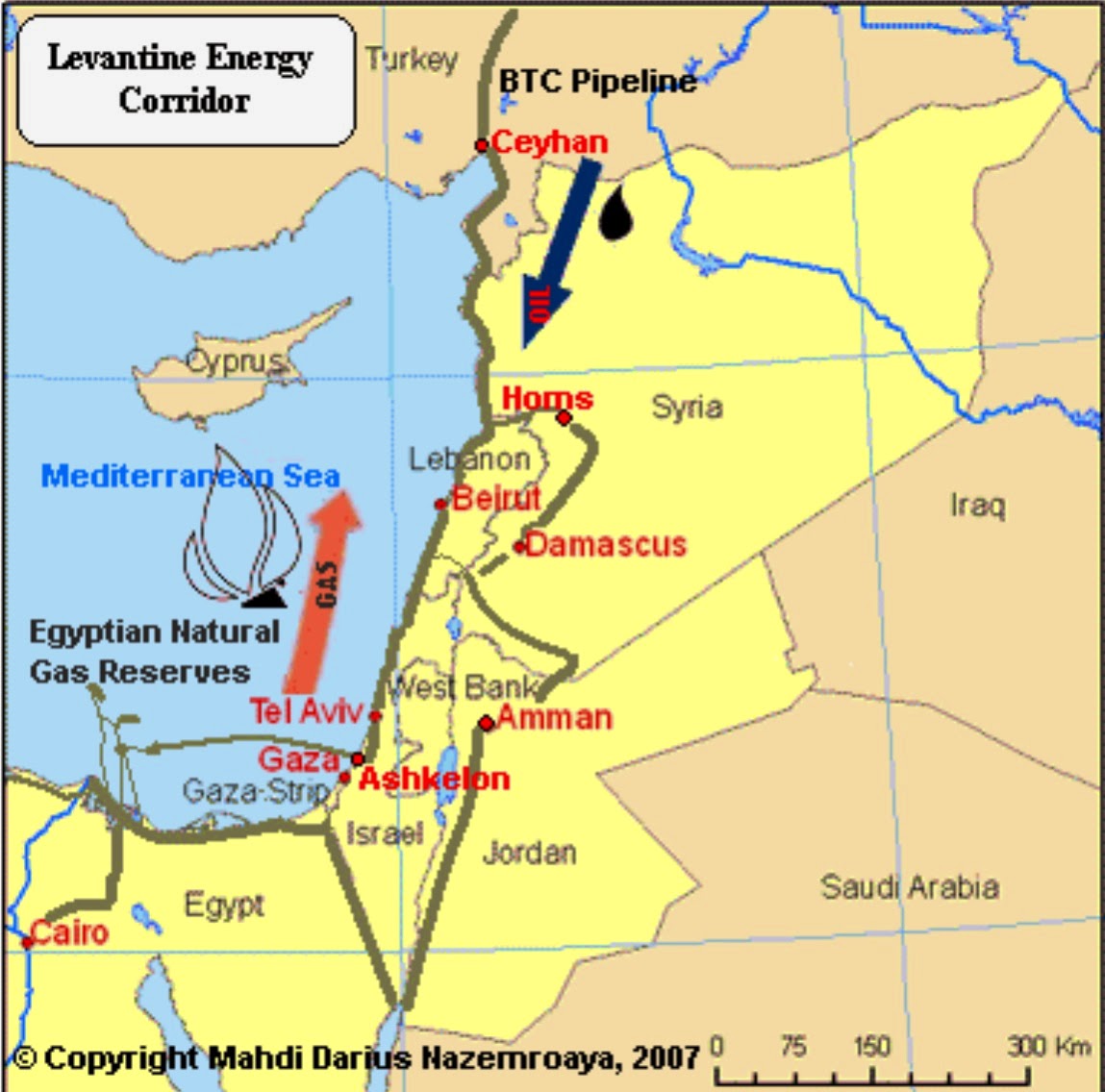
These various offshore installations are also linked up to Israel’s energy transport corridor, extending from the port of Eilat, which is an oil pipeline terminal, on the Red Sea to the seaport – pipeline terminal at Ashkelon, and northwards to Haifa, and eventually linking up through a proposed Israeli-Turkish pipeline with the Turkish port of Ceyhan.
Map 3
Ceyhan is the terminal of the Baku, Tblisi Ceyhan Trans Caspian pipeline. “What is envisaged is to link the BTC pipeline to the Trans-Israel Eilat-Ashkelon pipeline, also known as Israel’s Tipline.” (See Michel Chossudovsky, The War on Lebanon and the Battle for Oil, Global Research, July 23, 2006)
The UN Department of Economic and Social Affairs (DESA) has released a series of six briefing papers on priority themes for discussion during the Third International Conference on Small Island Development States (SIDS), set to take place in Apia, Samoa, from 1-4 September 2014.
August 2014:The SIDS conference will include six multi-stakeholder ‘Partnership Dialogues’ intended to strengthen existing partnerships and promote new ones. The UN briefing papers correspond to the partnership dialogue themes of: sustainable economic development; climate change and disaster risk management; social development in SIDS, health and non-communicable diseases (NCDs), youth and women; sustainable energy; oceans, seas and biodiversity; water and sanitation, food security and waste management. The papers suggest a wide range of opportunities that could be addressed through new or existing partnerships, especially public-private collaborations.
On sustainable economic development, the authors propose conducting investment impact monitoring, and establishing regional SIDS programmes to promote investment through public-private partnerships.
On climate change and disaster risk management, the authors suggest the adoption of risk financing instruments, such as contingency funds and insurance, as part of spatial and development planning initiatives.
On social development, they note that obesity and diabetes rates are “staggering” in the Pacific, and they aim to prevent premature morbidity and mortality from NCDs, including measures to protect SIDS from the negative impacts of bilateral and global trade agreements. They also aim to make education more relevant, and to improve labor market access and secure quality jobs for young people.
On sustainable energy, the authors recommend supporting an enabling environment for sustainable energy markets; facilitating access to modern, affordable and reliable energy services for rural households; decreasing reliance on fossil fuel imports; and improving women’s access to renewable and cost-effective energy.
On oceans, they recommend addressing the impacts of ocean acidification and climate change, promoting inclusive and sustainable development of local economies using the oceans, preventing marine and land-based pollution, and reversing the decline in fish stocks.
On water and sanitation, they propose strengthening regional mechanisms for managing hazardous wastes and ship-generated wastes; promoting resource efficiency as a means to reduce the generation of waste and wastewater, and incorporating climate information into practices and policies for supporting agriculture and food security. [Partnership Dialogue Briefs] [SIDS Conference Website] [SIDS Partnerships Platform]
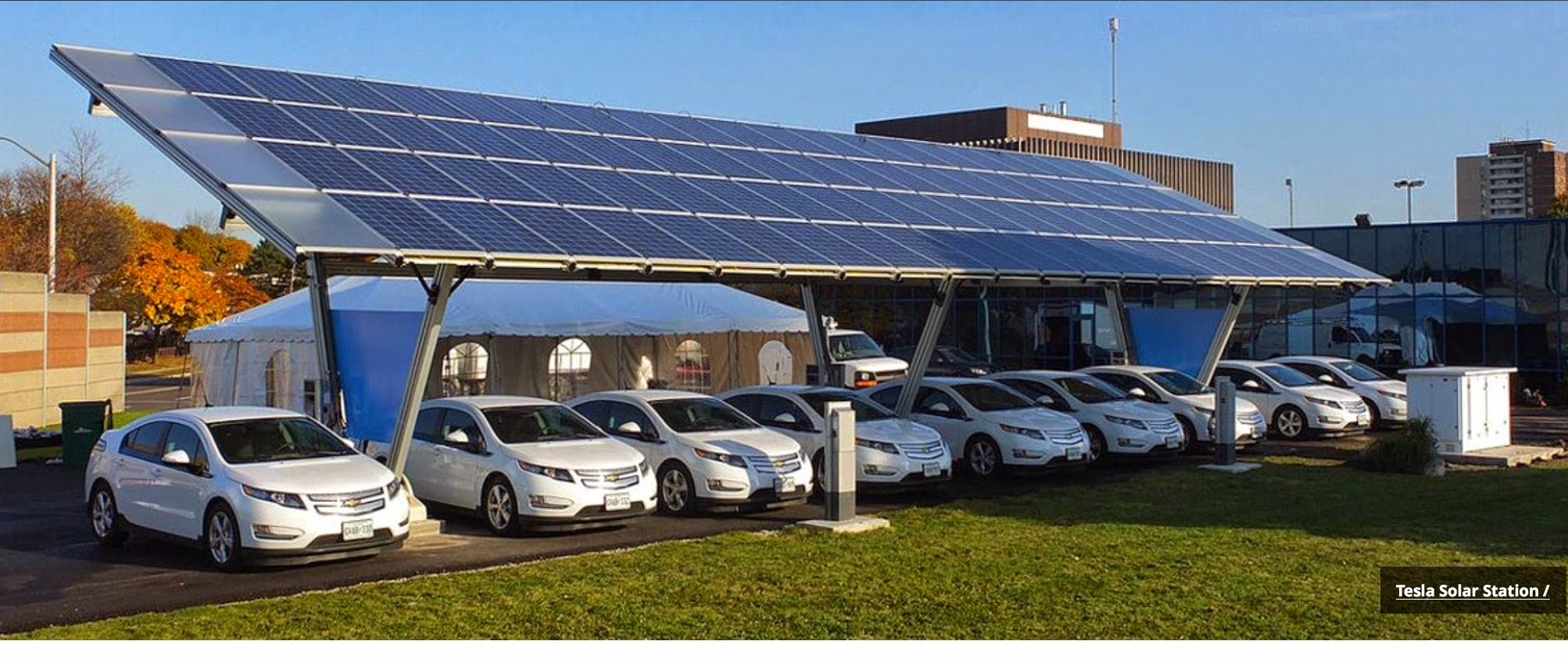
As the cost of solar continues to fall, and more people opt for the distributed power offered by solar, there will be less demand for big power plants and the utilities that operate them. And one major investment giant has now released three separate reports arguing that Tesla Motors is going to help kill power companies off altogether.
Earlier this year, Morgan Stanley stirred up controversy when it released a report that suggested that the increasing viability of consumer solar, paired with better battery technology—that allows people to generate, and store, their own electricity—could send the decades-old utility industry into a death spiral. Then, the firm released another one, further emphasizing the points made in the first. Now, it’s tripling down on the idea with yet another report that spells out how Tesla and home solar will “disrupt” utilities.
“There may be a ‘tipping point’ that causes customers to seek an off-grid approach,” the March report argued. ”The more customers move to solar, the [more the] remaining utility customers’ bills will rise, creating even further ‘headroom’ for Tesla’s off-grid approach.”
Yes, Tesla Motors, everyone’s favorite electric car company. And that’s where the controversy comes in. Morgan Stanley breathlessly pegged Tesla as “the most important auto company in the world” in part because its electric car business was pushing it to develop better energy storage technology, and then mass manufacture said batteries. That’s exactly what Tesla CEO Elon Musk and company will be doing at its forthcoming Gigafactory, which it is building in the Southwest with Panasonic.
With the new manufacturing facility, Morgan Stanley reasons, Tesla stands to double its business (adding another $2 billion in revenue) by selling the lithium ion batteries it typically ships under the hood of a Model S to homeowners with solar panels, too. If consumers can store energy the panels generate during the day for use at night, it would ostensibly render the need for utilities to pipe in faraway power—and their electric bills—obsolete.
Energy storage, when combined with solar power, could disrupt utilities in the US and Europe to the extent customers move to an off-grid approach
Musk is also the chairman of Solar City, a company that leases rooftop solar setups to homeowners, and one that would benefit from the battery tech. Now, the shadiness here is that Morgan Stanley released the report trumpeting Tesla’s crossover energy storage potential—causing Tesla’s stock to rise—right before it underwrote a fundraising round for… Tesla.
So the whole thing is very incestuous, and it does render some of the projections a little suspect, but the bottom line here is that private solar and battery companies are viable enough that they’ve attracted the backing of one of the world’s biggest financial services companies—over the multi-trillion dollar utility industry.
“Energy storage, when combined with solar power, could disrupt utilities in the US and Europe to the extent customers move to an off-grid approach,” Morgan Stanley writes in its third report this year emphasizing the prospect. ”We believe Tesla’s energy storage product will be economically viable in parts of the US and Europe, and at a fraction of the cost of current storage alternatives.”
In other words, Morgan Stanley has Tesla’s back, big time. It’s betting that Musk is going to make the best solar energy batteries money can buy.
Ironically enough, however, even staunch clean energy advocates are wary about Morgan Stanley’s finding that utilities are going the way of the buffalo. “Barring extraordinary circumstances, the economic case for grid defection is still very weak for US consumers,” Stephen Lacey, the senior editor of Greentech Media, wrote of the Morgan Stanley report. ”The electricity system offers valuable backup in case a customer over- or under-invests in an on-site system.”
It’s more likely, then, that people will still buy home solar—by the tens of millions, Greentech suggests—but not unplug from the grid entirely. Utilities will be diminished, but not broken. This process is underway in Europe already, where countries like Germany have powerful incentives for consumers to switch to solar.
Last year, the Economist called the sharp decline of European utilities “startling,” noting that together, they lost half their value—$600 billion—in just five years. Here in the states, utilities and conservative politicians are fighting solar tax credits to prevent the same thing from happening. For the most part, the utilities are losing.
All of this is, ideally, what needs to happen. Climate change is accelerating, and we need to transition away from those massive, fossil fuel-slurping power plants. Distributed solar is an increasingly powerful force behind that weaning process.
And even if some of Morgan Stanley’s calculations are shaky, the trends that Tesla is helping to amplify are anything but—clean, personalized (or community-wide) power will play a major role in shaping our energy future.
The fact that a greed-driven titan of finance like Morgan Stanley recognizes as much, and is willing to triple down on its bets on battery storage and distributed power, is a promising sign that the energy revolution is underway. More
What simple tool offers the entire world an extended energy supply, increased energy security, lower carbon emissions, cleaner air and extra time to mitigate climate change? Energy efficiency. What’s more, higher efficiency can avoid infrastructure investment, cut energy bills, improve health, increase competitiveness and enhance consumer welfare — all while more than paying for itself.
Maria van der Hoeven - IEA
The challenge is getting governments, industry and citizens to take the first steps towards making these savings in energy and money.
The International Energy Agency (IEA) has long spearheaded a global move toward improved energy efficiency policy and technology in buildings, appliances, transport and industry, as well as end-use applications such as lighting. That’s because the core of our mandate is energy security — the uninterrupted availability of energy at an affordable price. Greater efficiency is a principal way to strengthen that security: it reduces reliance on energy supply, especially imports, for economic growth; mitigates threats to energy security from climate change; and lessens the global economy’s exposure to disruptions in fossil fuel supply.
In short, energy efficiency makes sense.
In 2006, the IEA presented to the Group of Eight leading industrialized nations its 25 energy efficiency recommendations, which identify best practice and policy approaches to realize the full potential of energy efficiency for our member countries. Every two years, the Agency reports on the gains made by member countries, and today we are working with a growing number of international organizations, including the European Bank for Reconstruction and Development, the Asian Development Bank and the German sustainable development cooperation services provider GIZ.
The opportunities of this “invisible fuel” are many and rich. More than half of the potential savings in industry and a whopping 80 percent of opportunities in the buildings sector worldwide remain untouched. The 25 recommendations, if adopted fully by all 28 IEA members, would save $1 trillion in annual energy costs as well as deliver incalculable security benefits in terms of energy supply and environmental protection.
Achieving even a small fraction of those gains does not require new technological breakthroughs or ruinous capital outlays: the know-how exists, and the investments generate positive returns in fuel savings and increased economic growth. What is required is foresight, patience, changed habits and the removal of the barriers to implementation of measures that are economically viable. For instance, as the World Energy Outlook 2012 demonstrates, investing less than $12 trillion in more energy-efficient technologies would not only quickly pay for itself through reduced energy costs, it would also increase cumulative economic output to 2035 by $18 trillion worldwide.
While current efforts come nowhere close to realizing the full benefits that efficiency offers, some countries are taking big steps forward. Members of the European Union have pledged to cut energy demand by 20 percent by 2020, while Japan plans to trim its electricity consumption 10 percent by 2030. China is committed to reducing the amount of energy needed for each unit of gross domestic product by 16 percent in the next two years. The United States has leaped to the forefront in transportation efficiency standards with new fuel economy rules that could more than double vehicle fuel consumption.
Such transitions entail challenges for policy, and experience shows that government and the private sector must work together to achieve the sustainability goals that societies demand, learning what works and what does not, and following the right path to optimal deployment of technology. Looking forward, energy efficiency will play a vital role in the transition to the secure and sustainable energy future that we all seek. The most secure energy is the barrel or megawatt we never have to use.
Maria van der Hoeven is the Executive Director of the International Energy Agency, an autonomous organization which works to ensure reliable, affordable and clean energy for its 28 member countries and beyond. This commentary appeared first this month in IEA Energy, the Agency’s journal.
North Side residents got a preview last week of a proposed electric power plant that will be moored off their coastline if its proponents get the necessary approvals.
Design for 25 Mw OTEC Plant
District MLA Ezzard Miller invited representatives of OTEC International LLC to the Craddock Ebanks Civic Centre on Thursday night to explain the ocean thermal power project to his constituents.
Eileen O’Rourke, the company’s chief operating officer, outlined the process by which heat in the upper layers of sea water can be turned into electricity. The process is known as Ocean Thermal Energy Conversion.
After years of research and experimentation, the technology to process this source of renewable energy is now commercially viable and a proposal has been made to be a wholesale supplier of electricity to Caribbean Utilities Company, Ms. O’Rourke said. Talks have already been held with the Caribbean Utilities Company and government officials.
The production plant would be on a purpose-built barge, or floating power platform, 140 feet wide and 200 feet long and moored less than a mile offshore. Most of the plant would be about 16 feet above the water line, with a small part of it rising another eight feet.
The structure would include pipes to circulate the sea water, moorings to the sea floor and a cable that would carry the generated power under the beach and under the road to a sub-station on land. The sub-station would connect to CUC, Ms. O’Rourke explained.
Meetings have already been held with such entities as the Department of Environment, Public Works and the Environmental Assessment Board. The plan is for necessary permits to be applied for starting in October.
“We hope to get all permits and approvals in the first quarter of 2015,” Ms. O’Rourke said.
The target date for operation of the offshore power plant is the first quarter of 2017.
Pilar Bush, managing director of AtWater Consulting, confirmed that an island-wide public consultation will be held later this month.
OTEC International chose Grand Cayman for its first commercial system because CUC was “an open and willing partner” and because the Cayman government wants to move away from relying on fossil fuels, Ms. O’Rourke said. She noted that one power platform would produce 6.25 megawatts of electricity and that quantity would eliminate the need for 2.9 million gallons of imported diesel fuel annually. CUC’s average production of electricity is around 70 megawatts, it was noted.
Another reason Grand Cayman was chosen was the “excellent sea conditions” – including water temperatures and deep water proximity to the shoreline. There is a well-documented history of local ocean conditions, including extreme storm conditions. North Side was chosen as the best location, she said.
In response to questions from the audience, company representatives referred to job opportunities and the development of safety protocols, along with design features for the protection of marine life.
Start-up costs for the building and installation of the power platform will be expensive, Ms. O’Rourke indicated, but sea water as a source of renewable energy means low operating costs and protection of the consumer from the volatility of oil prices.
Development of the requisite technology was funded by the Abell Foundation, a non-profit organization based in Maryland, USA since 1953, said Ms. O’Rourke, who is also treasurer of the foundation. One of its objectives is supporting innovative efforts to solve systemic social, economic and environmental problems.
In 2000, The Abell Foundation acquired an exclusive license to the OTEC technology developed over decades by Sea Solar Power’s J. Hilbert Anderson and his son James Anderson. In 2001, Abell established a limited liability company with the mission bring OTEC to commercialization. The company became OTEC International LLC (OTI). Bringing the economical, renewable energy solution of ocean thermal energy conversion to developed and emerging markets is important to both OTI and Abell. More



 © 2014






 Democracy & Good Governance