HSBC to pay $43 mn in probe over Swiss subsidiary’s tax evasion

HSBC said it will pay 40 million Swiss francs ($43 million) in compensation to Geneva authorities to avoid charges of money laundering for its Swiss subsidiary. The fine is the biggest ever in Geneva’s history.

“The investigation found that neither the bank nor its employees are suspected of any current criminal offences,” HSBC said in a statement on Thursday, according to the Guardian. The bank added that the probe was closed.

The Genevan authorities said the payment, which is being described as “compensation”rather than a fine, was in line with the profits obtained by HSBC from processing illicit funds.

The bank also said it has improved practices to keep clients from using the bank “to evade taxes or launder money,” and drastically reduced the number of its accounts.

When announcing the fine, the judge warned HSBC it was its final warning.

“This is an excuse which will only apply once,” Olivier Jornot, Geneva’s chief prosecutor said, according to the Guardian. He also blamed the weakness of Swiss law with regards to criminal funds entering the financial system.

Geneva opened a money laundering investigation into HSBC’s alleged illegal tax activity earlier in February. Swiss police then raided the bank’s Geneva office. Europe’s largest bank came under fire after the International Consortium of Investigative Journalists published a report naming 100,000 clients that were using the bank to dodge taxes.

The revelations came from a list of HSBC’s clients stolen by a former HSBC computer technician, Herve Falciani, back in 2008. Falciani shared the confidential data with French authorities. More

————————————-

Why did the Cayman Islands not prosecute HSBC for allegedly money laundering in the Cayman Islands? Editor


Civil Aviation Unveils Design For New Cayman Air Terminal

The Cayman Islands Airports Authority (CIAA) has unveiled the interior conceptual drawings for the multi-million dollar expansion project at Owen Roberts International Airport (ORIA).

Commenting on the design created by Florida based firm RS&H Group, CIAA’s CEO Albert Anderson said, “The interior design is very impressive and I am confident that once completed the new expanded airport will be a first-class terminal facility

The CI$55 million expansion project should take around three years to complete and will nearly triple the current space at the airport. Construction on the first phase of the project is expected to begin this summer.

Here is the Cayman Islands Government's chance to save money and show their support for alternative energy. Covering the roof and parking lots with solar panels, and using LED lighting would set an example for Caymanians and Caymanian businesses to follow. Editor


Economic Legacy of Lee Kuan Yew: Lessons for Aspiring Countries

Developing countries have much to learn from Lee Kuan Yew, the first prime minister of Singapore who transformed the republic from a third world economy to one of the most advanced countries in one generation.

Lee Kuan Yew

The lessons for countries aspiring to learn from the Singapore development model are clear – strengthen institutions and improve governance.

But this is much easier said than done. To begin with aspiring countries need to improve the rule of law so that no one is above the law of the land. Equally crucial, they need to reduce corruption as corruption is regressive – small and medium-sized firms pay higher amounts in bribes than large firms.

Thirdly, they need to reform public institutions such as the civil service, bureaucracy, and public administration. Fourthly, they also need to improve the environment affecting the private sector through regulatory reforms, reforms of labour markets, and provision of clearly-defined property rights.

The dilemma is that such reforms generate benefits only in the longer term, making them hard for policymakers and politicians with a shorter time horizon to set as priorities. Yet without them, other policy measures to support sustained economic growth will become less effective and ultimately unravel.

Importance of good governance

Strong institutions and good governance – the economic legacy of Lee Kuan Yew for aspiring countries

The Singapore model of good governance is well-recognised. Development theorists of the past were of the view that economic development could be explained solely by factors like the availability of natural resources, high levels of saving and investment, and openness to foreign trade and investment.

More recently, the Growth Report published in 2008 by the Commission on Growth and Development headed by Nobel laureate Michael Spence has found that an additional factor has also to be good governance, based on mainly Singapore’s development experience under Lee.

As Senior Minister Goh Chok Tong, who participated in the Commission, puts it, for a delicious dish “besides having the right ingredients and the right recipe, you must have a master chef”.

Economic development does not just happen. It must be consciously chosen as an overarching goal by the government.

Good governance means a government that delivers political and economic stability, implements the correct macroeconomic policies, articulates a vision for the country and implements it.

This requires a capable, committed, and credible government, governments that people can trust in, and leaders who are above the board. An abundance of natural resources is neither necessary nor sufficient for a country’s economic development. What is required is good governance.

A case of good governance is Lee’s choice of the Singapore development model in the 1960s and beyond.

The Singapore Development Model

After the separation from Malaysia in 1965, Singapore was similar to a typical developing country of today. GNP per capita was about US$300, unemployment rates were high, and racial disharmony was rife. The announcement by the British in 1968 that they would withdraw their forces from Singapore was also expected to aggravate the unemployment situation further. How should jobs be created?

As the prime minister of a small country, Lee was always thinking big and making bold decisions in the interest of the country. Mr Lee adopted a development model based on export of labour-intensive manufactured goods to world markets. Lee invited multinational companies from all over to invest heavily in Singapore. Produce in Singapore and sell to the world, he told them.

To provide an attractive investment environment, the government built the appropriate infrastructure, cut tariffs and quotas, offered tax incentives, and implemented appropriate macroeconomic policies. The Economics Development Board (EDB) Singapore was established in 1961 to provide a business friendly environment to foreign investors and to convince them that Singapore was a good place to invest.

The National Wages Council (NWC) was also established in 1972 to make sure that the benefits of foreign investment were shared and also to accelerate Singapore’s move up the development ladder. Mr Lee also met foreign investors regularly and listened to them and their grievances.

Although pragmatic, Lee’s choice of an export-oriented development model driven mainly by foreign investment was a risky strategy at the time. This is because in the 1960s and 1970s, foreign investment was not welcome in the developing world.

The dependency theorists, in particular, argued that foreign investors from developed countries typically exploit cheap labour and extract natural resources of the developing countries. It is only after the success of the Singapore development model that export-oriented development strategies driven by foreign investment has been popularly adopted all over the world.

‘It’s not how you start but how you arrive’

In the 1980s and the 1990s the type of investment Singapore sought to attract shifted gradually from labour-intensive industries (eg, garments, textiles, and wigs) towards more high-tech and knowledge-based industries (eg, chips, wafer fabs, and disk drives).

Lee noted that, since the unemployment problem had been overcome, the new challenge was “how to improve the quality of the new investments and with it the education and skill levels of our workers”.

Lee’s attempt to make Singapore the Asian financial centre and global business hub is also bold. Unable to compete with Hong Kong then, Lee tried especially hard to convince foreign bankers and international financial institutions to come to Singapore by establishing integrity, efficiency, the rule of law, reliability, and stability.

In his words, “[the] history of our financial centre is the story of how we built up credibility as a place of integrity, and developed the officers with the knowledge and skills to regulate and supervise the banks, security houses and other financial institutions….”

Overall, Mr Lee’s development strategy which focused on strengthening institutions and improving governance was successful. Other developing countries will, however, face difficulties in adopting this strategy.

A case in point is South Asia. Countries in this region had begun their reform programmes in the early 1990s by focusing on macroeconomic areas – monetary and fiscal reforms, and industrial deregulation – which had contributed to a more rapid economic growth.

These reforms, however, eventually ran out of steam – because of red tape, endemic corruption, and lack of rule of law – and have contributed to the recent economic slowdown. Lee’s model followed his dictum, which he shared with the King of Bhutan: “It’s not how you start the journey that counts, but how you arrive.” More


Disconnected: Hundreds live with no power in Grand Cayman

(CNS): A freedom of information request to the Electricity Regulatory Authority (ERA) has revealed that more than 640 CUC customers have been cut off by the power supplier, mostly as a result of non-payment of bills. Many of those cut off are families who have been living without electricity for 90 days or more.

The request, which was submitted by a CNS reader, asked for the details of residential customers who had been cut off because their bills were not paid. The statistics show hundreds of people, including children, across Grand Cayman have been without a power supply for more than three months, confirming fears that the number of people living in real poverty is increasingly significant.

The ERA said it was not able to break down all the statistics because CUC merely tracks non-voluntary disconnections, which may also be due to safety reasons and not always because customers failed to pay their bills.

The ERA also explained that CUC did not indicate whether these more long term cut offs were commercial or domestic. Although some businesses may indeed be involuntarily disconnected, the situation would not be for extended periods, as any commercial enterprise without power would not last for very long. It is fair to assume that the disconnections are predominantly residential.

The largest number of disconnections are in the capital, where 306 premises have been cut off for more than three months, as at 24 November. Another 119 customers in Bodden Town were disconnected by CUC and some 117 in West Bay. Meanwhile, another 29 people were cut off in North Side and a further 23 in East End. A spokesperson for the ERA explained that the missing 47 are accounts that have been written off as CUC believes they are abandoned premises.

In addition, the ERA was able to state that 273 residential consumers had been disconnected for a period of less than 90 days, but these figures are constantly changing and any number could have been reconnected to the supply while additional households could have been cut off.

However, on 24 November there were 51 households in Bodden Town, six in East End, 50 in George Town, Seven in North Side and 59 in West Bay without power that had been disconnected within the last 90 days.

CUC recently confirmed to CNS that the firm is now cutting off power suppy without warning to customers who fail to pay their bills within 30 days. More


Why we should give everyone a basic income

Why we should give everyone a basic income | Rutger Bregman | TEDxMaastricht

Published on Oct 21, 2014 • This talk was given at a local TEDx event, produced independently of the TED Conferences.

Rutger Bregman (1988} studied at Utrecht University and the University of California in Los Angeles, majoring in History. In September 2013 Bregman joined the online journalism platform De Correspondent. His article on basic income was nominated for the European Press Prize and was published by The Washington Post.

In September 2013 Bregman joined the online journalism platform ‘De Correspondent’. His article on basic income was nominated for the European Press Prize and was subsequently also published by the American newspaper The Washington Post. In September 2014 his newest book ‘Gratis geld voor iedereen En nog vijf grote ideeen die de wereld kunnen veranderen’ came out.

Website: http://tedxmaastricht.nl

Flickr: https ://www.flickr.com/photos/tedxmaastricht

Facebook:https://www.facebook.com/TEDxMaastricht

Twitter: https://twitter.com/TEDxMaastricht

About TEDx, x = independently organized event In the spirit of ideas worth spreading, TEDx is a program of local, self organized events that bring people together to share a TED-like experience.

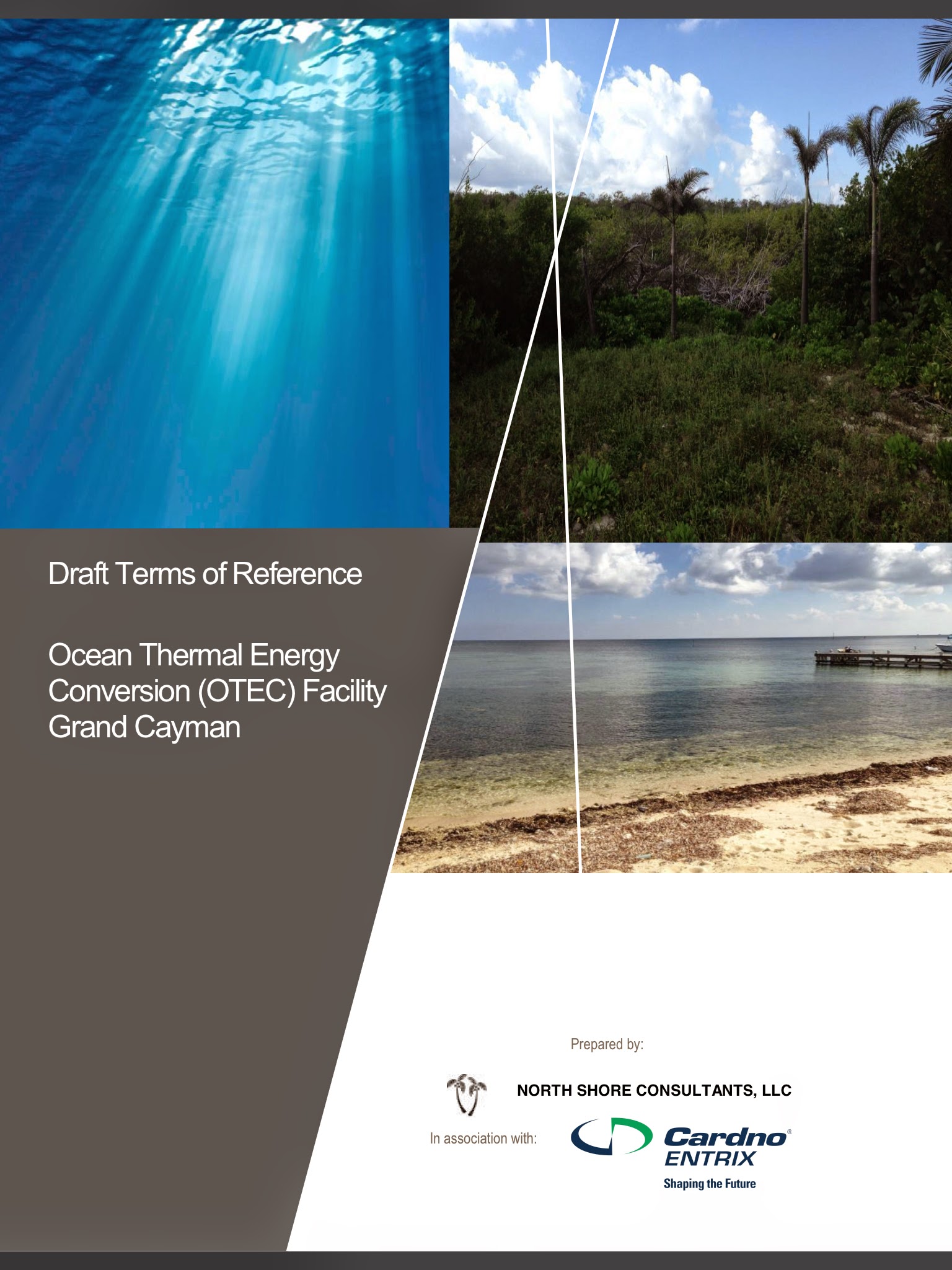
NOTICE OF INTENT TO FINALIZE THE TERMS OF REFERENCE FOR THE PROPOSED OCEAN THERMAL ENERGY CONVERSION PROJECT

REQUEST FOR COMMENTS AND NOTICE OF PUBLIC MEETING

The Environmental Assessment Board (EAB) is providing Notice to the Public of the publication of the Draft Terms of Reference (ToR) for the Environmental Impact Assessment (EIA) for a proposed Ocean Thermal Energy Conversion (OTEC) Project on the north shore of Grand Cayman. The public is invited to review and comment on the To R which has been developed in collaboration with the EAB, which includes representatives from the Department of Environment, Planning Authority. Port Authority, and the Electricity Regulatory Authority.

The prolect Proponent. OTEC international. LLC (OTI) ie undertaking an EIA for its proposed phased installation of 25 megawatts (MWe) of power. The Initial phase would be a 6.25Mwe floating power platform (FPP). The result of the ElA will be an Environmental Statement (ES) which will help to inform the decision-making process. Download PDF

Yo u r input will be considered in the finalization of the To R document which is available oniine at www.doe.ky or hard copies can be reviewed at the following locations:

1. Government Administration Building. 133 Elgin Avenue, George Town

2. George Town Public Library. 68 Edward Street

3. North Side Post Office. 896 North Side Road

Comments on the draft TOR may be submitted:

1) in writing during the public meeting.

2) electronically via e-mail to doe@gov.ky

3) mailed to Department of Environment, P.0. Box 10202. Grand Cayman, KY1-1002

4) hand delivered, in writing, to Department of Environment, Environmental Centre, 580 North Sound Road, George Town , Grand Cayman.

A public meeting will be held on Tuesday 23 September 2014 at the North Side Civic

centre to provide an opportunity for OTI and the EIA Consultant to outline the project and to invite comments and questions from the Public on the draft ToR. Representatives from OTI, the EIA Consultant and the EAB will be available to provide information and receive comments concerning the ToR . The presentation will commence at 7:30 p.m. and will be followed by a question and answer session at 8:00 p.m.

The period for written comments on the draft ToR opens on Friday 12 September for a duration of 21 days and will officially close at midnight on Friday 3 October 2014.


For the Caribbean, a United Front Is Key to Weathering Climate Change

PHILIPSBURG, St. Maarten, Jul 2 2014 (IPS) – As the costs of climate change continue to mount, officials with the Commonwealth grouping say it is vital that Small Island Developing States (SIDS) stick together on issues such as per capita income classification.

Seawall in Dominica

Deputy Commonwealth Secretary General (Economic and Social Development) Deodat Maharaj told IPS the classification affects the ability of countries like Antigua and Barbuda, Grenada and others to access financing from the international financial institutions.

“To my mind, the international system has to take special consideration of countries such as Antigua and Barbuda, Grenada and others,” he said.

“The example I like to use is the example of Grenada. You would recall Hurricane Ivan about 10 years ago. It damaged about 70 percent of the housing stock in Grenada. It cost a billion U.S. dollars in damages, equivalent to two years GDP.

“So the countries in the Caribbean can move from high income or middle income to almost zero income with an economic shock or natural disaster,” Maharaj added.

Maharaj, whose appointment took effect earlier this year, said the Commonwealth is preparing “an analytical framework based on research, a case, so that countries such as Grenada when there is a natural disaster their international debt obligation for a particular period of time will be suspended so that they don’t have to continue to pay their debt when it is that they have suffered a natural disaster.”

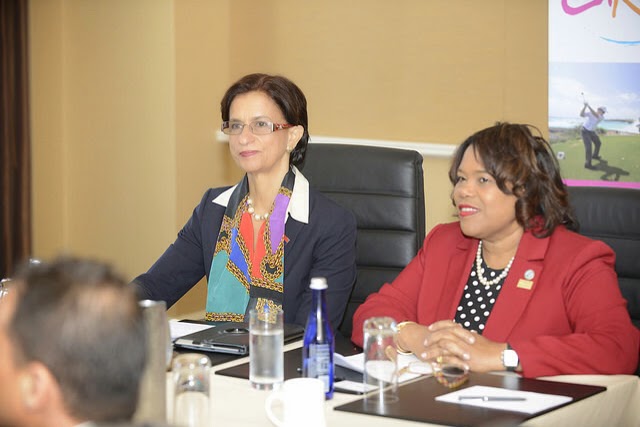
On the issue of collaboration, one of only three female prime ministers in the Caribbean has reaffirmed her country’s commitment to dealing with climate change and all the issues associated with the global phenomena.

“I would like to reaffirm my strong belief in collaboration with other nations,” Sarah Wescot-Williams, the prime minister of St. Maarten, told IPS.

“Economic issues have forced us to look at ways and means of getting together and we are working collaboratively with other Caribbean nations to mitigate the effects of climate change as well as social issues of unemployment, crime and health.”

Prime Minister of St. Maarten Sarah Wescot-Williams (left)

St. Maarten recently developed and approved its National Energy Policy “and as such we have very specific goals and objectives to reach by 2020 in terms of reduction and promoting alternative, new green ideas, new green products,” Wescot-Williams explained.

She reiterated a point made while addressing regional leaders recently. “I told them we should not only look out for the bigger impacts of climate change or look at those developments as something that is far from us, far from our homes, but look at small things like beach erosion, something that St. Maarten is seeing.

“A report has been issued not very long ago indicating that unless specific measures are taken, a great part of what is now land will no longer be as far as the smaller islands, including St. Maarten, are concerned.”

How they are ranked by financial institutions such as the International Monetary Fund (IMF) and World Bank is a major issue for Caribbean countries.

Camillo Gonsalves, a former ambassador to the United Nations, says it affects these countries’ ability to secure the required funding to effectively deal with climate change.

He noted that most Caribbean countries are ranked as middle-income countries, and using that metric alone makes his country, St. Vincent and the Grenadines, with its one-billion-dollar Gross Domestic Product (GDP), “richer than China”.

“If that is the metric by which we determine economic health and access to concessionary financing, and our ability to borrow ourselves out of a crisis or to spend ourselves out of a crisis, it is clearly a flawed measure,” he said.

He noted that within three hours last Christmas Eve, a trough system left damage and loss in St. Vincent equal to 17 percent of GDP, while the country also suffered natural disasters in 2010, and 2011 – the loss and damage from each of which was in double digits.

This, however, is the measure by which the World Bank, the IMF determine the economic strength of Caribbean countries, Gonsalves said, adding that these international institutions do not consider the region’s vulnerabilities.

“The Caribbean small island developing states are among the most heavily indebted states in the world,” Gonsalves said, noting that the debt-to-GDP ratio in the region ranges from 20 percent in Haiti – which received significant debt forgiveness after the 2010 earthquake – to 139 percent in Jamaica, with St. Kitts and Nevis and Grenada at 105 and 115 per cent, respectively, even as the European Union has set itself a debt-to-GDP ratio of 65 per cent.

“If your debt-to-GDP ratio is 139 percent and you are struck by a natural disaster… how do you borrow yourself out of that crisis? Where do you find money immediately to build your roads, your houses, your bridges, your hospitals that have been damaged? How can you set money aside in preparation for the next climate event if you have a debt to GDP ratio of over 100 per cent or approaching 100 per cent, and your debt servicing charges are that high?” Gonsalves said.

Agreeing with Wescot-Williams and Maharaj that there is strength in unity, Gonsalves, who serves as foreign affairs minister for St. Vincent and the Grenadines, said the upcoming Third United Nations Conference on Small Island Developing States (SIDS) in Samoa is an ideal opportunity for regional countries to do more than just talk about collaboration.

“The issue of how we are ranked and classified has to be rectified – not addressed, not flagged, not considered. It has to be rectified in Samoa. That has to be one of our prime objectives going into this conference,” he said.

The Samoa conference will be held from Sep. 1-4 under the theme “The Sustainable Development of Small Island States Through Genuine and Durable Partnerships”.

It will seek to assess progress and remaining gaps; renew political commitment by focusing on practical and pragmatic actions for further implementation; identify new and emerging challenges and opportunities for the sustainable development of SIDS and means of addressing them; and identify priorities for the sustainable development of SIDS to be considered in the elaboration of the post-2015 U.N. development agenda.

Maharaj said “one big challenge” for his organisation is the advancement of the interest of small states.

“When I think about the Caribbean and I think about development…we need to think about development not only in terms of five years, 10 years or 15 years,” he said.

“I would like to think about and imagine what will the Caribbean be in the year 2050 at the time when our grand- and great-grandchildren will be around and many of us won’t be here,” Maharaj added. More


Ocean-based power plant previewed in North Side

North Side residents got a preview last week of a proposed electric power plant that will be moored off their coastline if its proponents get the necessary approvals.

Design for 25 Mw OTEC Plant

District MLA Ezzard Miller invited representatives of OTEC International LLC to the Craddock Ebanks Civic Centre on Thursday night to explain the ocean thermal power project to his constituents.

Eileen O’Rourke, the company’s chief operating officer, outlined the process by which heat in the upper layers of sea water can be turned into electricity. The process is known as Ocean Thermal Energy Conversion.

After years of research and experimentation, the technology to process this source of renewable energy is now commercially viable and a proposal has been made to be a wholesale supplier of electricity to Caribbean Utilities Company, Ms. O’Rourke said. Talks have already been held with the Caribbean Utilities Company and government officials.

The production plant would be on a purpose-built barge, or floating power platform, 140 feet wide and 200 feet long and moored less than a mile offshore. Most of the plant would be about 16 feet above the water line, with a small part of it rising another eight feet.

The structure would include pipes to circulate the sea water, moorings to the sea floor and a cable that would carry the generated power under the beach and under the road to a sub-station on land. The sub-station would connect to CUC, Ms. O’Rourke explained.

Meetings have already been held with such entities as the Department of Environment, Public Works and the Environmental Assessment Board. The plan is for necessary permits to be applied for starting in October.

“We hope to get all permits and approvals in the first quarter of 2015,” Ms. O’Rourke said.

The target date for operation of the offshore power plant is the first quarter of 2017.

Pilar Bush, managing director of AtWater Consulting, confirmed that an island-wide public consultation will be held later this month.

OTEC International chose Grand Cayman for its first commercial system because CUC was “an open and willing partner” and because the Cayman government wants to move away from relying on fossil fuels, Ms. O’Rourke said. She noted that one power platform would produce 6.25 megawatts of electricity and that quantity would eliminate the need for 2.9 million gallons of imported diesel fuel annually. CUC’s average production of electricity is around 70 megawatts, it was noted.

Another reason Grand Cayman was chosen was the “excellent sea conditions” – including water temperatures and deep water proximity to the shoreline. There is a well-documented history of local ocean conditions, including extreme storm conditions. North Side was chosen as the best location, she said.

In response to questions from the audience, company representatives referred to job opportunities and the development of safety protocols, along with design features for the protection of marine life.

Start-up costs for the building and installation of the power platform will be expensive, Ms. O’Rourke indicated, but sea water as a source of renewable energy means low operating costs and protection of the consumer from the volatility of oil prices.

Development of the requisite technology was funded by the Abell Foundation, a non-profit organization based in Maryland, USA since 1953, said Ms. O’Rourke, who is also treasurer of the foundation. One of its objectives is supporting innovative efforts to solve systemic social, economic and environmental problems.

In 2000, The Abell Foundation acquired an exclusive license to the OTEC technology developed over decades by Sea Solar Power’s J. Hilbert Anderson and his son James Anderson. In 2001, Abell established a limited liability company with the mission bring OTEC to commercialization. The company became OTEC International LLC (OTI). Bringing the economical, renewable energy solution of ocean thermal energy conversion to developed and emerging markets is important to both OTI and Abell. More


The Climate War Room

Climate War Room – Sunday 3rd. August 2014

I have today changed the name of the Cayman Institute's climate change blog to the Climate War Room.

Having collaborated with Sir Richard Branson's Carbon War Room on their Ten Island Challenge, which is a major initiative to mitigate climate change through cutting down the global carbon output, I have realized that a similar initiative is needed to to raise awareness of the necessity for a global war on climate change rather than just carbon output.

Jim Hansen

For more input on the reality of the situation a good place to start would be Makiko Sato & James Hansen's website where they ask 'What Path is the Real World Following'? Jim Hansen was the former director of NASA's Goddard Institute of Space Studies who resigned because the United States Government would not let him speak out on climate change. Assessing ‘‘Dangerous Climate Change'' makes worrying reading.

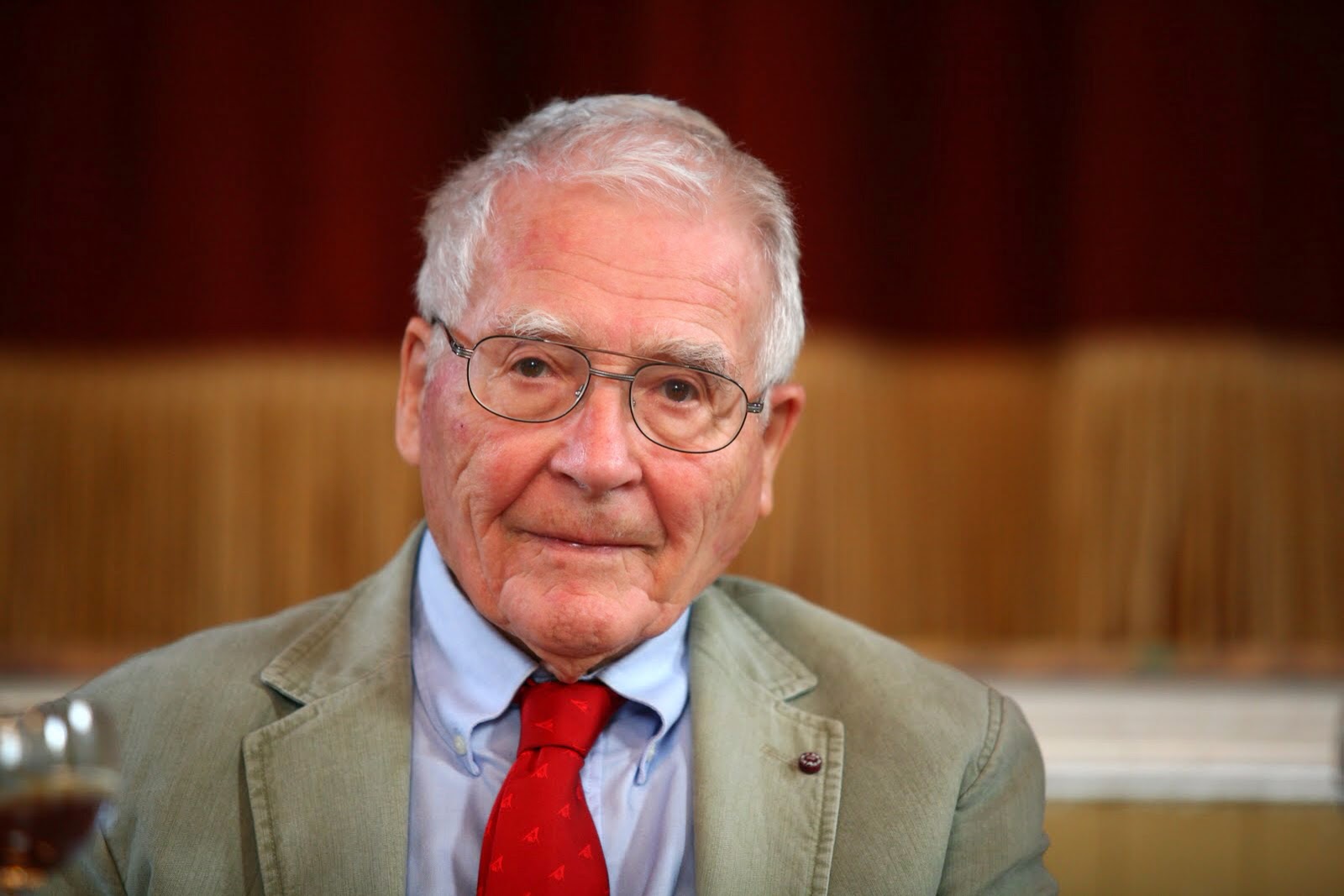
The world needs to take climate change, or as James Lovelock prefers to call it 'global heating' very seriously. Dr. Lovelock is the founder of the Gaia theory and on of the great thinkers of this century, his Cirriculum Vitae is very interesting and worth reading. Mary Midgley wrote on James Lovelock, published in the New Statesman on 14 July 2003.“Lovelock is an independent scientist. Though fanatically accurate over details, he never isolates those details from a wider, more demanding vision of their background. He thinks big. Preferring, as Darwin did, to work outside the tramlines of an institution, he has supported himself since 1963 through inventions and consultancies.”


We need to take the issue very seriously as a rapidly warming climate will change life as we know it. As Jim Hansen has tried to make us aware our children and grandchildren will effectively living on a different and not very nice planet.

James Lovelock

I implore you to research and read up on this subject. Speak out to your friends and neighbors and contact your political representatives and make your views known to them.

Nicholas Robson – Grand Cayman – Cayman Islands