Palestinian Recourse to the International Criminal Court: The Time has Come

Richard Falk's avatarGlobal Justice in the 21st Century

[Prefatory Note: “Palestine’s Dilemma: To Go or Not to Go to the International Criminal Court” was published on July 13, 2014 on the website of Middle East Eye, a site I strong recommend to all those with an interest in Middle East issues; this post represents a somewhat revised text, but within the framework of the original; the political plausibility of invoking the Inteernational Criminal Court to investigate allegations of criminality directed at Israel increases with each passing day.)

Ever since this latest Israeli major military operation against Gaza started on July 8, there have been frequent suggestions that Israel is guilty of war crimes, and that Palestine should do its best to activate the International Criminal Court (ICC) on its behalf. The evidence overwhelmingly supports basic Palestinian allegations—Israel is guilty either of aggression in violation of the UN Charter or is in flagrant violation of its obligations as the…

View original post 1,673 more words

We are wrong about desertification (Google / Agriit Institute)

Willem Van Cotthem's avatarDESERTIFICATION

Read at : Google Alert – desertification

http://agriit.wordpress.com/2014/07/20/how-to-combat-desertification-and-the-effects-of-climate-change-while-feeding-people/

How to combat desertification and the effects of climate change while feeding people

Rubanzayo Wa Mpiira

We live in a world where two thirds of its land is turning into a desert (most of this proportion has already turned into desert) and the world has to feed an increasing number of mouths that are growing towards 10 billion.

Fossil fuels – carbon, coal and gas – are by no means the only thing that is causing climate change and desertification. Desertification occurs only when we create too much bare ground. When rain falls on a bare ground, some of it keeps on the ground as flood while the remainder soaks into the soil. But because the ground is bare, water evaporates as fast as possible and the soil also releases carbon into the atmosphere.

We are told over and over repeatedly that desertification…

View original post 73 more words

Gaza Interview- Truthout

Richard Falk's avatarGlobal Justice in the 21st Century

[Prefatory note: This is an interview with a knowledgeable Greek journalist covering a range of issues associated with the Gaza ordeal]

“Blood on American Hands”: Richard Falk on Palestine

Monday, 21 July 2014 13:03

By CJ Polychroniou, Truthout | Interview

A man holds the body of a child during a burial for a family of seven people killed yesterday in an Israeli attack in the Shajaiya neighborhood of Gaza City, July 21, 2014. As the bloody conflict entered its 14th day amid diplomatic pressure for a cease-fire, the Palestinian death toll reached 500, and thousands of people streamed toward Gaza City from the north Monday. (Photo: Tyler Hicks / The New York Times)

For over 20 years, Israel and the United States have been working to separate Gaza from the West Bank, in violation of the Oslo Accords they had just signed declaring them to be an indivisible territorial…

View original post 2,333 more words

Israel intensifies bombardment on Gaza

Gilgit-Baltistan Times's avatarGilgit-Baltistan Times

Palestinians told to evacuate their homes as the Israeli offensive claims more than 200 people and injures 1500 others.


Residents Zeitoun were seen walking in the streets, carrying their belongings as they tried to evacuate [AP]
Gaza City – The Israeli army intensified its bombing of Gaza on Wednesday, hitting the homes of senior Hamas leaders and carrying out more than 50 airstrikes in a heavily-populated area in the northern strip.

The death toll climbed to 220 people, according to Palestinian medical officials, including 47 children. On Wednesday, four children were killed by naval shelling on a beach.

More than 1,500 people have been injured. One in five of those killed so far have been children, the NGO Save the Children said on Wednesday, and the vast majority were civilians, according to the United Nations.

The army also bombed the houses of several senior Hamas leaders, including Mahmoud al-Zahar.

Some…

View original post 628 more words

Water is the Deal

dannyheim's avatarEvolve Now

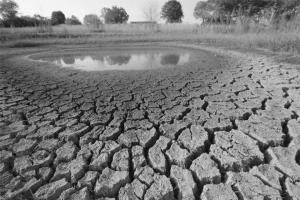
Drought-low-pond

No, I ain’t no kinda expert. But a little study and some everyday observation of the news can tell you a plenty. Let‘s go ahead and start of with some facts about water. These are from an organization called Changing the Present.

One sixth of the worlds population does not have access to safe drinking water.

 2.6 billion people worldwide do not have access to adequate sanitation.

 The number of people living in a water-stressed country is projected to climb from 470 million to three billion by 2050.

 2.2 million people in developing countries, most of them children, die every year from diseases associated with lack of access to safe drinking water, inadequate sanitation and poor hygiene.

 A child dies every 15 seconds from water-related diseases.

 World population has doubled since 1950. Our water consumption has increased six-fold.

 The average person in the developing world uses less than 3…

View original post 1,956 more words

They call us now.

A Facebook friend shared the following remarkable poem by Lena Khalaf Tuffaha, who is a co-founder of the Institute for Middle East Understanding based in Seattle. It catches the nightmarish absurdity of the latest invasion of Gaza.

They call us now.

Before they drop the bombs.

The phone rings

and someone who knows my first name

calls and says in perfect Arabic

“This is David.”

And in my stupor of sonic booms and glass shattering symphonies

still smashing around in my head

I think “Do I know any Davids in Gaza?”

They call us now to say

Run.

You have 58 seconds from the end of this message.

Your house is next.

They think of it as some kind of

war time courtesy.

It doesn’t matter that

there is nowhere to run to.

It means nothing that the borders are closed

and your papers are worthless

and mark you only for a life sentence

in this prison by the sea

and the alleyways are narrow

and there are more human lives

packed one against the other

more than any other place on earth

Just run.

We aren’t trying to kill you.

It doesn’t matter that

you can’t call us back to tell us

the people we claim to want aren’t in your house

that there’s no one here

except you and your children

who were cheering for Argentina

sharing the last loaf of bread for this week

counting candles left in case the power goes out.

It doesn’t matter that you have children.

You live in the wrong place

and now is your chance to run

to nowhere.

It doesn’t matter

that 58 seconds isn’t long enough

to find your wedding album

or your son’s favorite blanket

or your daughter’s almost completed college application

or your shoes

or to gather everyone in the house.

It doesn’t matter what you had planned.

It doesn’t matter who you are

Prove you’re human.

Prove you stand on two legs.

Run.

– Running Orders, by Lena Khalaf Tuffaha


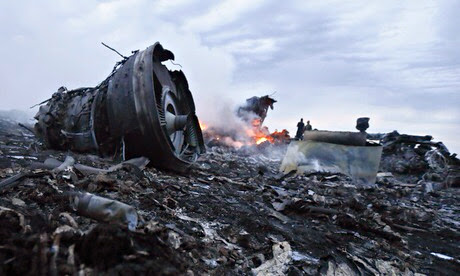
Sifting through the wreckage of MH17, searching for sense amid the horror

Any journalist should hesitate before saying this, but news can be bad for you. You don’t have to agree with the analyst who reckons “news is to the mind what sugar is to the body” to see that reading of horror and foreboding hour by hour, day after day, can sap the soul.

This week ended with a double dose, administered within the space of a few hours: Israel’s ground incursion into Gaza and, more shocking because entirely unexpected, the downing of Malaysia Airlines flight MH17 over Ukraine, killing all 298 on board.

So in Gaza we look at the wildly lopsided death tolls – nearly 300 Palestinians and two Israelis killed these past nine days.

The different responses these events stir in those of us who are distant, and the strategies we devise to cope with them, say much about our behaviour as consumers of news. But they also go some way to determining our reaction as citizens, as constituent members of the amorphous body we call public, or even world, opinion.

As I write, 18 of the 20 most-read articles on the Guardian website are about MH17. The entry into Gaza by Israeli forces stands at number 21. It’s not hard to fathom why the Malaysian jet strikes the louder chord. As the preacher might put it, “There but for the grace of God go I.” Stated baldly, most of us will never live in Gaza, but we know it could have been us boarding that plane in Amsterdam.

Which is why there is a morbid fascination with tales of the passenger who changed flights at the last minute, thereby cheating death, or with the crew member who made the opposite move, hastily switching to MH17 at the final moment, taking a decision that would have seemed so trivial at the time but which cost him his life. When we read about the debris – the holiday guidebooks strewn over the Ukrainian countryside, the man found next to an iPhone, the boy with his seatbelt still on – our imaginations put us on that flight. Of course we have sympathy for the victims and their families. But our fear is for ourselves.

It’s quite true that if the US truly decided that Israel’s 47-year occupation of Palestinian territory was no longer acceptable, that would bring change.

The reports from Gaza stir a different feeling. When we read the Guardian’s Peter Beaumont describe the sights he saw driving around the strip on Friday morningthree Palestinian siblings killed by an Israeli artillery shell that crashed into their bedroom, a father putting the remains of his two-year-old son into a plastic shopping bag – we are shaken by a different kind of horror. It is compassion for another human being, someone in a situation utterly different to ours. We don’t worry that this might happen to us, as we now might when we contemplate an international flight over a war zone. Our reaction is directed not inward, but outward. More

There is an interesting article by Chris Hedges entitled It's NOT going to be OK on the current economic disparity which, he believes could lead to a drastic decline in democracy as states respond to social protests. The question I ask is what can be done to slow or erradicate this process? Editor


CIA Station Chief Ordered out of Berlin, DOJ Declining to Investigate CIA Complaints that Senate Staff Hacked into Agency Computers while Completing Contentious Torture Report, and More: FRINFORMSUM 7/17/2014

Lauren Harper's avatarUNREDACTED: The National Security Archive Blog

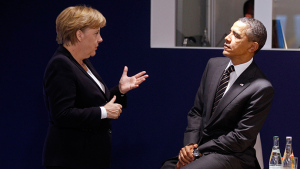
Germany's Chancellor Angela Merkel and President Barack Obama (Reuters / Kevin Lamarque) Germany’s Chancellor Angela Merkel and President Barack Obama (Reuters / Kevin Lamarque)

Berlin has ordered the CIA chief of station to leave Germany by the end of the week amid a growing espionage scandal, according to German newspapers. The German Foreign Office did not verify a timeline for departure, but did reiterate the German government’s expectation that the intelligence representative leave “promptly.” Chancellor Angela Merkel demanded the station chief’s departure last week after a year-long spying dispute, triggered by revelations that the National Security Agency (NSA) monitored Merkel’s cell phone, culminated with reports that a German intelligence official was spying for the CIA.

Maj. James Weirick, the Marine Corps whistleblower who accused a senior general and his staff of wrongdoing during the trial of Marines implicated in a video depicting US personnel urinating on dead Afghani insurgents, has been transferred. Weirick, who previously served as a staff judge advocate at…

View original post 977 more words

The Peak Oil Crisis: Better Than Fire

In addition to following the twists and turn of the world’s energy situation, I have been tracking the reporting on developments concerning several “exotic” and therefore controversial energy sources whose proponents say would be far more cost-effective than current alternatives to fossil fuels such as wind, solar and nuclear.
The reason for this interest is that if one believes global warming is caused by carbon emissions, then it certainly looks like there will not be much left of human civilization in a century or so. While the use of “conventional” alternatives is growing, the demand for energy to fuel economic growth is so great that it seems likely that, unless some outside force intervenes, mankind is going to burn fossil fuels until it is no longer economically possible to do so.
What is clearly necessary is some source of energy that is so cheap and easy to produce and so environmentally clean that everyone on earth will want to use the new energy source as soon as possible.
Fortunately, there are a handful of people out there who really are a few steps ahead of academia, government officials, and the mainstream media in the effort to save mankind from what is shaping up to be a many millennia-long disaster. In the past I have written about cold fusion or in the current jargon, low energy nuclear reactions (LENR). This technology is still alive, well, and seems destined to produce some commercially viable prototypes in the near future.
However, last week a company up in New Jersey call BlackLight Power and its founder announced a breakthrough which could be just what the world sorely needs in addition to touching off a new era in the history of mankind. I stress could for all the evidence is not in yet and useful prototypes have yet to be built, but BlackLight’s founder and inventor of the technology, Randall Mills, seems unusually forthright in his claims that there has indeed been a breakthrough on the exotic energy front. For those of the “its too good to be true” bent, keep in mind that discoveries do happen from time to time – electricity, internal combustion, and smart phones to name a few.
About 20 years ago Randall Mills announced that a more compact form of the hydrogen atom existed in the universe which he termed a hydrino. This form of hydrogen had its electron circling its proton at about 1/4th the distance from the nucleus as in a conventional hydrogen atom and therefore had much less energy. Mills went on to say he believed that the dark matter which makes up the bulk of the universe was composed of these compact hydrogen atoms which neither absorb nor emit light making them very difficult to detect. At the cosmological scale dark matter is only known to exist because of its gravitational pull on other mass. As most of the visible universe is composed of hydrogen, it seems to make sense that the invisible part is hydrogen too.
When Mills announced his hypothesis in 1991, it was, of course, denounced by the scientific establishment as ridiculous for if another form of hydrogen existed, we surely would have discovered it decades ago. To make the ensuing controversy still worse, Mills claimed that the accepted version of quantum mechanics had it wrong in its description of just what an electron is and that the classical physics of Newton and Maxwell works at the atomic as well as the cosmic scale. Such a claim is heresy of the first order in the land of the scientists so Mills and his hydrinos were quickly forgotten.
From mankind’s perspective, however, the interesting feature about the existence of two forms of hydrogen is that in converting the conventional hydrogen atom to a hydrino a spectacular amount of energy is released – on the order of 200 times as much as when hydrogen is joined with oxygen to form H2O. Thus began the 20-year search for the Holy Grail of our civilization – a way to transform hydrogen into hydrinos and release lots of energy.
As with the Wright brothers, all Mills had to do was to build a machine that took in water and send commerical amounts of energy out, then his thesis would have to be accepted. It took 20+ years to develop the theoretical basis for such a machine, but for the last six months Mills has been demonstrating crude prototypes to selected audiences. Fortunately for the rest of us, these demonstrations and considerable information on what is taking place have been appearing regularly on the internet. Although some remain skeptical, the length of time Mills has been working on this project, the size of his organization, the scale of his financial backing and the verification of his science by external laboratories strongly suggests that his claims are valid.
Mills’ machines are remarkably simple. After 20 years of research he has developed a metallic powder that will also absorb moisture (hydrogen) from the humidity in the air. A tiny amount of this damp powder is subjected to a low voltage, high amperage current and the hydrogen in the powder is zapped, for want of a better word, into hydrinos with a blinding flash of light. The hydrogen-depleted powder can then absorb more moisture from the atmosphere and be reused indefinitely.
While the mini-explosions that take place in Mills’ device are spectacular, they certainly were a long ways from a technology that might save the world until two weeks ago when he announced that the energy emitted from these “explosions” is mostly white light. The white light emitted is at least 50,000 times brighter than that of sunlight as it reaches the earth’s surface and given the latest in solar cell technology, can easily be converted into prodigious amounts of electricity using only the humidity in the air as the fuel. One design is anticipating that a one-foot cubic device will be able to produce 10 million watts of electric power.
To quote Mills, “nature has just given us the best gift that we have ever had, this is better than fire.” More


India and Pakistan at Odds Over Shrinking Indus River

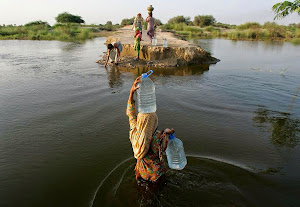
Nearly 30 percent of the world's cotton supply comes from India and Pakistan, much of that from the Indus River Valley. On average, about 737 billion gallons are withdrawn from the Indus River annually to grow cotton—enough to provide Delhi residents with household water for more than two years. (See a map of the region.)
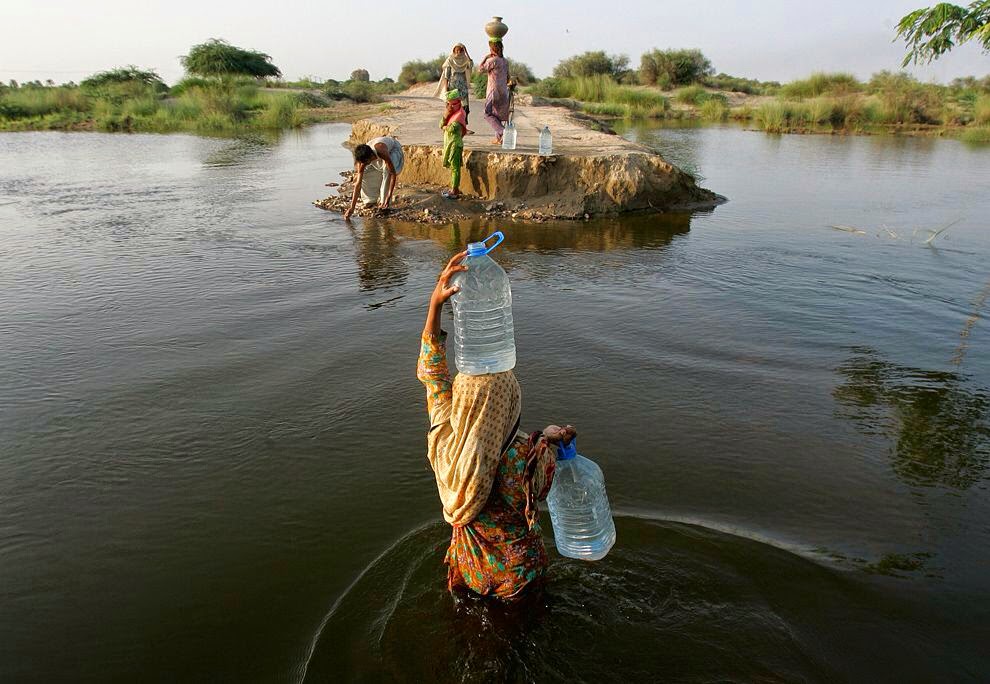
Baseera Pakistan Aug 2010

“Pakistan's entire economy is driven by the textile industry,” said Michael Kugelman, a South Asia expert at the Woodrow Wilson International Center for Scholars. “The problem with Pakistan's economy is that most of the major industries use a ton of water—textiles, sugar, wheat—and there's a tremendous amount of water that's not only used, but wasted,” he added.

The same is true for India.

That impact is an important part of a complex water equation in countries already under strain from booming populations. More people means more demand for water to irrigate crops, cool machinery, and power cities. The Indus River, which begins in Indian-controlled Kashmir and flows through Pakistan on its way to the sea, is Pakistan's primary freshwater sourceon which 90 percent of its agriculture dependsand a critical outlet of hydropower generation for both countries.

(Related: “See the Global Water Footprint of Key Crops“)

Downstream provinces are already feeling the strain, with some dried-out areas being abandoned by fishermen and farmers forced to move to cities. That increases competition between urban and rural communities for water. “In areas where you used to have raging rivers, you have, essentially, streams or even puddles and not much else,” said Kugelman.

In years past, the coastal districts that lost their shares of the Indus' flows have become “economically orphaned,” the poorest districts in the country, according to Pakistani water activist Mustafa Talpur. Because Pakistani civil society is weak, he says, corruption and deteriorating water distribution tend to go hand in hand.

In the port city of Karachi, which depends for its water on the Indus, water theftin which public water is stolen from the pipes and sold from tankers in slums and around the citymay be a $500-million annual industry.

In the balance is the fate not only of people, but important aquatic species like the Indus River dolphin, which is now threatened to extinction by agricultural pollution and dams, among other pressures. Scientists estimate that fewer than 100 individuals remain.

Threat to Peace?

One of the potentially catastrophic consequences of the region's fragile water balance is the effect on political tensions.

In India, competition for water has a history of provoking conflict between communities. In Pakistan, water shortages have triggered food and energy crises that ignited riots and protests in some cities. Most troubling, Islamabad's diversions of water to upstream communities with ties to the government are inflaming sectarian loyalties and stoking unrest in the lower downstream region of Sindh.

But the issue also threatens the fragile peace that holds between the nations of India and Pakistan, two nuclear-armed rivals. Water has long been seen as a core strategic interest in the dispute over the Kashmir region, home to the Indus' headwaters. Since 1960, a delicate political accord called the Indus Waters Treaty has governed the sharing of the river's resources. But dwindling river flows will be harder to share as the populations in both countries grow and the per-capita water supply plummets.

Some growth models predict that by 2025, India's population will grow to triple what it wasand Pakistan's population to six times what it waswhen the Indus treaty was signed. Lurking in the background are fears that climate change is speeding up the melting of the glaciers that feed the river.

Mountain glaciers in Kashmir play a central role in regulating the river's flows, acting as a natural water storage tank that freezes precipitation in winter and releases it as meltwater in the summer. The Indus is dependent on glacial melting for as much as half of its flow. So its fate is uniquely tied to the health of the Himalayas. In the short term, higher glacial melt is expected to bring more intense flooding, like last year's devastating deluge.

Both countries are also racing to complete large hydroelectric dams along their respective stretches of the Kashmir river system, elevating tensions. India's projects are of a size and scope that many Pakistanis fear could be used to disrupt their hydropower efforts, as well as the timing of the flows on which Pakistani crops rely.

(Related: “Seven Simple Ways to Save Water“)

“Many in Pakistan are worried that, being in control of upstream waters, India can easily run Pakistan dry either by diverting the flow of water by building storage dams or using up all the water through hydroelectric power schemes,” said Pakistani security analyst Rifaat Hussain.

For years, Pakistani politicians have claimed India is responsible for Pakistan's water troubles. More recently, militant groups have picked up their rhetoric. Hafiz Saeed, the founder of the Pakistani militant group allegedly responsible for the 2008 terror attack in Mumbai, even accused India of “water terrorism.”

Hope for the Future

In the past few months, however, the situation has improved, according to Kugelman. “We've been hearing nearly unprecedented statements from very high-level Pakistani officials who have essentially acknowledged that India is not stealing Pakistan's water, and that Pakistan's water problems are essentially a function of internal mismanagement issues,” he said. Militants are still griping, he said, “but not as shrilly.”

This may be because the two countries are cooperating on water and other issues better than before, and because militants are now focusing less on their archenemy in India and more on coalition forces in Afghanistan.

“But I imagine this is momentary,” said Kugelman. “The facts on the ground—the water constraints in both India and Pakistan—have not abated. They're both still very serious and getting worse.”

What's needed, he says, is more conservation and adaptation—a smarter way of doing business. More

This Article is part the National Geographic Society’s freshwater initiative and is a multiyear global effort to inspire and empower individuals and communities to conserve freshwater and preserve the extraordinary diversity of life that rivers, lakes, and wetlands sustain.