Launching the search for the Gretas of the future

Wanted: creative, innovative young minds who want to tackle the big problems facing the planet.

Whether a science genius, a chess prodigy or an advocate for a global cause, you must have the desire to serve others, and be aged 15 to 17.
A new global talent search for exceptional young leaders, inspired by teenage movers and shakers, such as Greta Thunberg, has been launched.
It is backed by the philanthropists Wendy and Eric Schmidt.
They hope to engage tomorrow’s leaders, by providing education and opportunities for them to identify problems, solutions, and ways they can work together, “for a lifetime in the service of humanity”, said Wendy Schmidt.
Young people are desperate to find ways to change the world and to create a new one that may look different, but they don’t always know how, added Eric Braverman, chief executive of Schmidt Futures.
“We have challenges relating to climate, to the benefits of economic development, to healthcare, as we can all see, all around the world, and we think to get the best solutions for the planet, you have to bet on exceptional people, you have to bet on human ingenuity and you have to do it early, and globally, and over and over again for a long time,” he explained.  Read More
Email ‘proves’ conspiracy in Doctors Express case

Email ‘proves’ conspiracy in Doctors Express case 

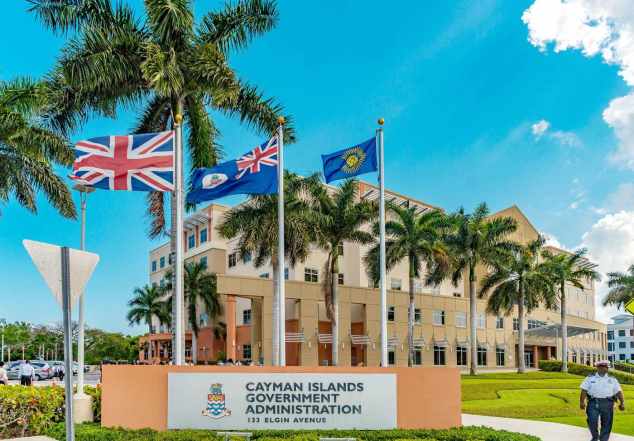
 The raid involved around 15 armed police and customs officers and took place at 4pm in the afternoon when patients were being treated and waiting to be treated for many different personal health concerns. 
Email ‘proves’ conspiracy in Doctors Express case 
===
Armed police officers raiding a a Doctor’s Surgery?
Have the Cayman Islands authorities gone completly insane?
Please bring back the Rule Of Law.
===

Spending $300 billion won’t fix climate change.

 A story out today in Bloomberg suggests we can solve climate change for $300 billion, which, as many astute readers have noticed, is a deal. As authors Adam Majendie and Pratik Parija point out, $300 billion is merely “the gross domestic product of Chile, or the world’s military spending every 60 days.” Seems pretty doable!
The plan comes from the United Nations and entails restoring degraded land back into productive soil that not only holds carbon, but also produces things that are useful to humans, like food. The Bloomberg piece focuses more on explaining the particulars of how it could be done than on fact-checking the likeliness that it will bury as much carbon as proposed. Restoring habitat and rehabilitating soil are generally good things to do regardless, though, and it seems at least possible that if we do enough of it, we really can bury as much carbon as they are suggesting.  Read More

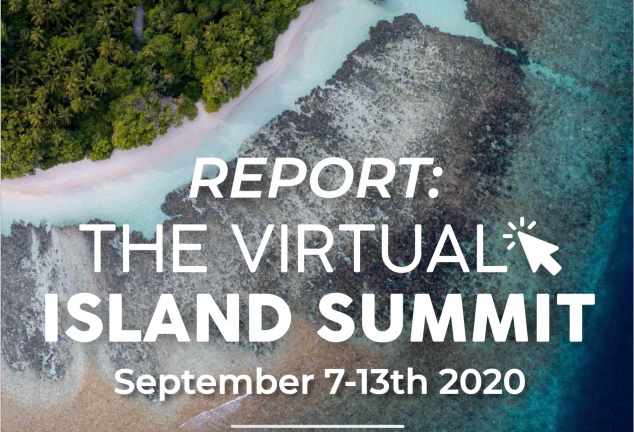
The Virtual Island Summit Report

THE VIRTUAL ISLAND SUMMIT REPORT EXECUTIVE SUMMARY – September 7-13th 2020
                   
The 2020 edition of the Virtual Island Summit focused on the theme, ‘Sharing knowledge for resilient, sustainable and prosperous islands worldwide’. The free and entirely online event connected global islands to share their common experiences, ideas, solutions and good practices through a digital platform.
With over 10,000 registrations and over 100,000 sessions views across all platforms, the Virtual Island Summit is one of, if not the biggest online event for sustainable development in the world. Representatives from over 500 islands participated from places as diverse as the Caribbean, Pacific, Arctic, Patagonia, Europe, Asia, the Indian Ocean and beyond. Attendees were from a broad range of backgrounds representing entrepreneurs, public sector, NGOs and academia.
This makes the Virtual Island Summit a unique opportunity to build “digital bridges” between some of the world’s most remote locations and break down some of the silos that can impede change. The Virtual Island Summit is a catalyst for action.
– James Ellsmoor, Director of Island Innovation

Reforestation Hubs: This initiative can give city trees a second life

Reforestation Hubs: This initiative can give city trees a second life
If, as the article states, city life is not healthy for trees, what effect does city life have on Homo Sapiens and other animal species?
Rather than repurposing dead city trees into furniture and other useful city infrastructure we should be looking for ways and means to make our cities more conducive to life of all species.
As the article states the city is a difficult place for a tree to survive. Compared to their counterparts in the countryside, urban trees generally get less water, suffer more intense heat, compete for space with unyielding infrastructure and frequently become riddled with disease and pests.
Recently, a theoretical construct called *One Health* has emerged from discussions within public health circles. We know that human health is not just the absence of sickness but the presence of wellness in its many dimensions. *Sonia Shah*, an investigative journalist and the author of *The Next Great Migration: The Beauty and Terror of Life on the Move*, says that our health is connected to the health of livestock, wildlife, and ecosystems. And so, if we think of human health that way, then it’s not just an issue for biomedical experts. It’s not just an issue for drug companies to come up with new medicines and new vaccines for us. What we have to do to create good health is to make sure that our livestock are healthy, to make sure that our wildlife and ecosystems are healthy. Every act we take to support a healthy outlook builds both healthier bodies for ourselves and a healthier planet. Hopefully, we will be able to tell our grandchildren of a time when many thought the pandemic was an enormous problem, but others knew there was a bigger one that our generation decided to solve, and did. We solved our problem of separation. https://bit.ly/35KMfNH

Capitalism Will Ruin the Earth By 2050, Scientists Say

 A spate of new scientific research starkly lays out the choice humankind faces in coming decades: 

By 2050, we could retain high levels of GDP, at the price of a world wracked by minerals and materials shortages, catastrophic climate change, and a stuttering clean energy transition —paving the way for a slowly crumbling civilization. 

Or, we could ditch the GDP fetish and enter a world of abundance, with energy consumption safely contained within planetary boundaries, and high-tech economies that support jobs, health and education for everyone without costing the earth.

Capitalism is on track to lead the world into mineral shortages and supply bottlenecks that could cut short efforts to decarbonize transport systems, guaranteeing dangerous climate change. 

Letting go of growth 

On the other hand, the authors find that the only scenario in which the world is able to cut greenhouse gas emissions by 80 percent in the transportation sector by 2050 involves “a radical shift towards light electric vehicles, shift of road freight to electric train, ambitious recycling mineral levels, drastic reductions in the demand for transportation (especially for those more polluting such as aviation) and a significant decrease in overall economic activity.”  

All this will require what the authors describe as “a profound change in the dominant economic paradigm”—namely, capitalism.  Read More

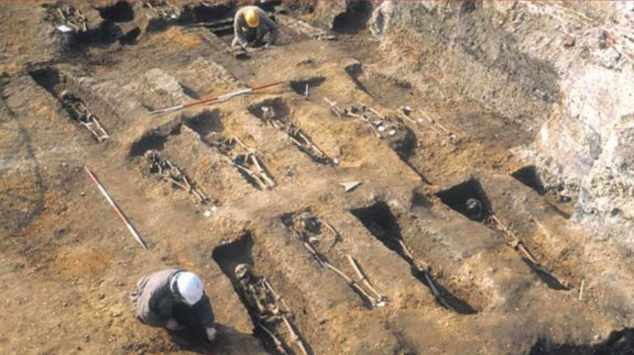
Plague history shows how a pandemic’s course can be shaped

David Earn, a professor in the department of mathematics and statistics at McMaster and lead author of the research, told CNN that while plague cases in London doubled every six weeks in the 14th century, by the 17th century, they were doubling every week and a half. 
“That’s an enormous difference,” he said. 
But this was not simply a case of the disease becoming more virulent — evolutionary geneticist Hendrik Poinar told CNN that while the spread of the disease accelerated, genetic analysis to date tentatively suggests that it may have become less infectious.
             But he also cautioned that pandemics will continue to threaten humans so long as people encroach 
            on the natural world, something scientists and environmental organizations have repeatedly warned.

“When there are shifts in the epidemiology of the disease, most of the shifts that occur can be translated to human intervention or things that go on outside of the actual genetics of the bug,” Poinar, a professor in the department of anthropology at McMaster and a co-author of the study, said. Read More

Are climate scientists being too cautious when linking extreme weather to climate change?

In this year of extreme weather events—from devastating West Coast wildfires to tropical Atlantic storms that have exhausted the alphabet—scientists and members of the public are asking when these extreme events can be scientifically linked to climate change.
Dale Durran, a professor of atmospheric sciences at the University of Washington, argues that climate science need to approach this question in a way similar to how weather forecasters issue warnings for hazardous weather.
In a new paper, published in the October issue of the Bulletin of the American Meteorological Society, he draws on the weather forecasting community’s experience in predicting extreme weather events such as tornadoes, flash floods, high winds and winter storms. If forecasters send out a mistaken alert too often, people will start to ignore them. If they don’t alert for severe events, people will get hurt. How can the atmospheric sciences community find the right balance? 

Read More

Canada’s ‘beautifully surprising’ basic income study shows how business needs to reconsider human nature

Poverty isn’t a lack of character; it’s a lack of cash
Dutch historian Rutger Bregman introduced a version of that phrase in his 2017 Ted Talk, and it’s become a go-to mantra for advocates of basic income.
The core idea is that people who have fallen on hard times aren’t in those circumstances because they’ve somehow failed at life, and are therefore undeserving of basic necessities. Often, “falling on hard times” simply means being born into a life of poverty, as is the case for nearly 10% of the world’s population, or 770 million people, who are currently living on less than $1.90 a day.
Even in the US, one in seven children are born poor, and millions of Americans are just one paycheck or one unexpected hospital bill away from poverty. As Williams wrote in the new study’s impact statement, “While the economic impact of homelessness costs everyone, ultimately it is the human cost that is so devastating.”
As Bregman and other proponents argue, any solution to poverty ought to begin by addressing the circumstances in which poverty flourishes — not correcting the character of those experiencing it.  Read More