Israel’s very own history of eugenics

This hour-long documentary, the Ringworm Children, raises so many disturbing questions about Israel and its relationship with the US that one hardly knows where to begin.

In the 1950s, waves of new immigrants swept into Israel. To the dismay of the country’s Ashkenazi leaders (those originating from Europe and the US), the great majority were from Arab countries. Levi Eshkol, a later prime minister, expressed a common sentiment when he called them “human rubbish”. Israel, deprived of “good-quality” Jews, was being forced to bring to its shores Arab Jews, seen as just as primitive and dirty as the Palestinians whom Israel had recently succeeded in ethnically cleansing.

Into this deeply racist atmosphere stepped Dr Chaim Sheba, a eugenicist, who believed that the Arabs Jews were bringing along with them diseases that threatened the Ashkenazi Jews. His obsession was ringworm, an innocuous childhood disease that affects the scalp. He went to the US, collected old military X-ray equipment and zapped tens of thousands of these children’s heads with potentially lethal doses of radiation. The survivors tell of their horrifying experiences during and after the treatment, and of the brothers and sisters they lost at a young age.

But this isn’t just a history lesson exploring an unusual aspect of Israel’s racist underpinnings. The documentary exposes a massive cover-up by the state: many of the children’s medical files – long thought to have been lost – were actually held by one of the doctors involved. Even after this disclosure, the state has continued to refuse the victims access to the files, despite the fact that such access may be vital in helping them receive the correct life-saving treatment, as well as proper compensation.

The final shocking twist is the discovery that all these experiments cost the equivalent of hundreds of millions of dollars in today’s terms – in fact, more than Israel’s entire annual budget at the time. How could Israel have afforded it?

The documentary suggests persuasively that the US, with its own long fascination with eugenics, most likely sub-contracted these experiments to Israel as a way to bypass the increasing domestic legal impediments it faced. The US presumably footed the huge bill.

There are a couple of troubling omissions in the documentary itself. The first is that Dr Sheba did not carry out these experiments on Arab Jews only. He also exposed many Palestinian children in Israel to the same huge doses, for the same racist reasons.

The other is that Dr Sheba is still venerated to this day in Israel and has one of the country’s most famous hospitals, the Chaim Sheba Medical Center, named after him. As the documentary makes clear, there was plenty of evidence by the 1950s of the extremely dangerous effects of radiation on humans. What Dr Sheba did was a form of genocide. That he is still honoured in Israel is, to my mind, no different from Germany naming a hospital in Berlin the Josef Mengele Medical Center.

But keeping Dr Sheba’s reputation unblemished is, I suspect, important to those who wish to prevent other, even more unseemly skeletons being unearthed over this affair.

(UPDATE BELOW)

The documentary, from 2003, is in five 10-min parts: More

UPDATE:

I often talk about “hasbara” (what Israelis translate as “explanation” but really means “propaganda”) but rarely have I found an example of it quite as blatant as the entry on the Ringworm Affair on Wikipedia. By the look of it, this entry has been written by an Israeli government hasbara team. One can almost hear the indignation in the text dismissing the documentary’s claims. But interestingly there is no attempt to refute the two accusations at the heart of the film: that the medical files are still being withheld from the victims, and that the sum needed for the experiments was astronomical and way beyond Israel’s means. So who paid for them and why?


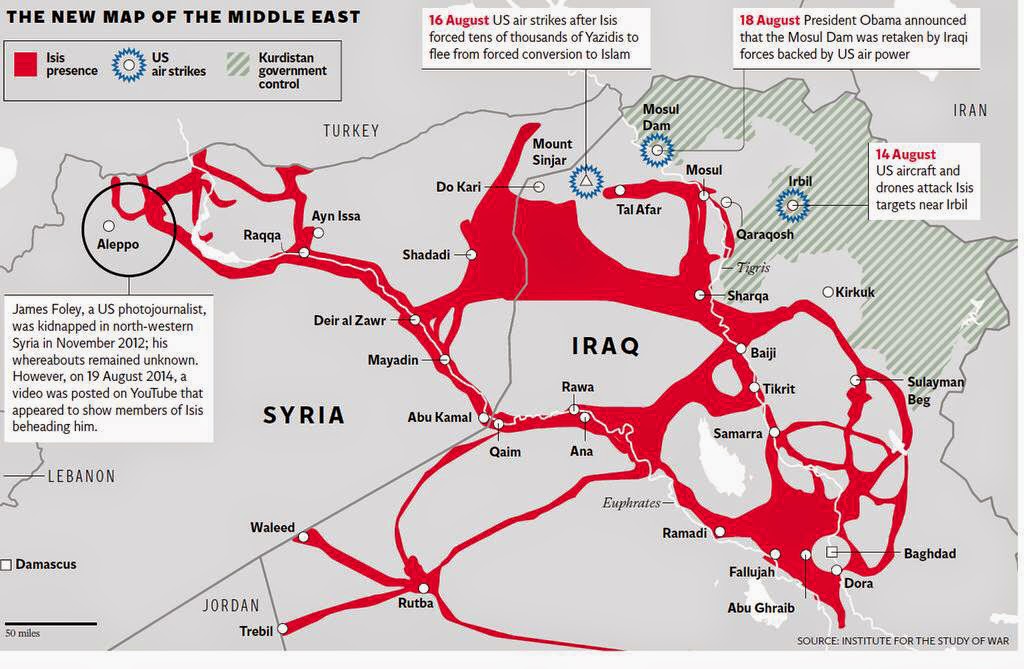
Peter Van Buren, Back to the Future in Iraq

On April 4, 1967, Martin Luther King delivered a speech at Riverside Church in New York City titled “Beyond Vietnam: A Time to Break Silence.” In it, he went after the war of that moment and the money that the U.S. was pouring into it as symptoms of a societal disaster.

President Lyndon Johnson’s poverty program was being “broken and eviscerated,” King said from the pulpit of that church, “as if it were some idle political plaything on a society gone mad on war… We were taking the black young men who had been crippled by our society and sending them eight thousand miles away to guarantee liberties in Southeast Asia which they had not found in southwest Georgia and East Harlem. I could not be silent in the face of such cruel manipulation of the poor.” Twice more in that ringing speech he spoke of “the madness of Vietnam” and called for it to cease.

Don’t think of that as just a preacher’s metaphor. There was a genuine madness on the loose — and not just in the “free-fire zones” of Vietnam but in policy circles here in the United States, in the frustration of top military and civilian officials who felt gripped by an eerie helplessness as they widened a terrible war on the ground and in the air. They were, it seemed, incapable of imagining any other path than escalation in the face of disaster and possible defeat. Even in the years of Ronald Reagan’s presidency, when there was a brief attempt to paint that lost war in a more heroic hue (“a noble cause,” the president called it), that sense of madness, or at least of resulting mental illness, lingered. It remained embedded in a phrase then regularly applied to Americans who were less than willing to once again head aggressively into the world. They were suffering from, it was said, “Vietnam syndrome.”

Today, almost 25 years into what someday might simply be called America’s Iraq War (whose third iteration we’ve recently entered), you can feel that a similar “madness” has Washington by the throat. Just as King noted of the Vietnam era, since 9/11 American domestic programs and agencies have been starved while money poured into the coffers of the Pentagon and an increasingly bloated national security state. The results have been obvious. In the face of the spreading Ebola virus in West Africa, for instance, the president can no longer turn to civilian agencies or organizations for help, but has to call on the U.S. military in an “Ebola surge” — even our language has been militarized — although its forces are not known for their skills, successes, or spendthrift ways when it comes to civilian “humanitarian” or nation-building operations.

We’ve already entered the period when strategy, such as it is, falls away, and our leaders feel strangely helpless before the drip, drip, drip of failure and the unbearable urge for further escalation. At this point, in fact, the hysteria in Washington over the Islamic State seems a pitch or two higher than anything experienced in the Vietnam years. A fiercely sectarian force in the Middle East has captured the moment and riveted attention, even though its limits in a region full of potential enemies seem obvious and its “existential threat” to the U.S. consists of the possibility that some stray American jihadi might indeed try to harm a few of us. Call it emotional escalation in a Washington that seems remarkably unhinged.

It took Osama bin Laden $400,000 to $500,000, 19 hijackers, and much planning to produce the fallen towers of 9/11 and the ensuing hysteria in this country that launched the disastrous, never-ending Global War on Terror. It took the leaders of the Islamic State maybe a few hundred bucks and two grim videos, featuring three men on a featureless plain in Syria, to create utter, blind hysteria here. Think of this as confirmation of Karl Marx’s famous comment that the first time is tragedy, but the second is farce.

One clear sign of the farcical nature of our moment is the inability to use almost any common word or phrase in an uncontested way if you put “Iraq” or “Islamic State” or “Syria” in the same sentence. Remember when the worst Washington could come up with in contested words was the meaning of “is” in Bill Clinton’s infamous statement about his relationship with a White House intern? Linguistically speaking, those were the glory days, the utopian days of official Washington.

Just consider three commonplace terms of the moment: “war,” “boots on the ground,” and “combat.” A single question links them all: Are we or aren’t we? And to that, in each case, Washington has no acceptable answer. On war, the secretary of state said no, we weren’t; the White House and Pentagon press offices announced that yes, we were; and the president fudged. He called it “targeted action” and spoke of America’s “unique capability to mobilize against an organization like ISIL,” but God save us, what it wasn't and wouldn't be was a “ground war.”

Only with Congress did a certain clarity prevail. Nothing it did really mattered. Whatever Congress decided or refused to decide when it came to going to war would be fine and dandy, because the White House was going to do “it” anyway. “It,” of course, was the Clintonesque “is” of present-day Middle Eastern policy. Who knew what it was, but here was what it wasn’t and would never be: “boots on the ground.” Admittedly, the president has already dispatched 1,600 booted troops to Iraq’s ground (with more to come), but they evidently didn’t qualify as boots on the ground because, whatever they were doing, they would not be going into “combat” (which is evidently the only place where military boots officially hit the ground). The president has been utterly clear on this. There would be no American “combat mission” in Iraq. Unfortunately, “combat” turns out to be another of those dicey terms, since those non-boots had barely landed in Iraq when Chairman of the Joint Chiefs Martin Dempsey started to raise the possibility that some of them, armed, might one day be forward deployed with Iraqi troops as advisers and spotters for U.S. air power in future battles for Iraq’s northern cities. This, the White House now seems intent on defining as not being a “combat mission.”

And we’re only weeks into an ongoing operation that could last years. Imagine the pretzeling of the language by then. Perhaps it might be easiest if everyone — Congress, the White House, the Pentagon, and Washington’s pundits — simply agreed that the United States is at “war-ish” in Iraq, with boots on the ground-ish in potentially combat-ish situations. Former State Department whistleblower and TomDispatch regular Peter Van Buren spent his own time in Iraq and wrote We Meant Well: How I Helped Lose the Battle for the Hearts and Minds of the Iraqi People about it. Now, he considers the mind-boggling strangeness of Washington doing it all over again, this time as the grimmest of farces. Tom

Apocalypse Now, Iraq Edition
Fighting in Iraq Until Hell Freezes Over
By Peter Van Buren

I wanted to offer a wry chuckle before we headed into the heavy stuff about Iraq, so I tried to start this article with a suitably ironic formulation. You know, a déjà-vu-all-over-again kinda thing. I even thought about telling you how, in 2011, I contacted a noted author to blurb my book, We Meant Well: How I Helped Lose the Battle for the Hearts and Minds of the Iraqi People, and he presciently declined, saying sardonically, “So you're gonna be the one to write the last book on failure in Iraq?”

I couldn't do any of that. As someone who cares deeply about this country, I find it beyond belief that Washington has again plunged into the swamp of the Sunni-Shia mess in Iraq. A young soldier now deployed as one of the 1,600 non-boots-on-the-ground there might have been eight years old when the 2003 invasion took place. He probably had to ask his dad about it. After all, less than three years ago, when dad finally came home with his head “held high,” President Obama assuredAmericans that “we’re leaving behind a sovereign, stable and self-reliant Iraq.” So what happened in the blink of an eye?

The Sons of Iraq

Sometimes, when I turn on the TV these days, the sense of seeing once again places in Iraq I'd been overwhelms me. After 22 years as a diplomat with the Department of State, I spent 12 long months in Iraq in 2009-2010 as part of the American occupation. My role was to lead two teams in “reconstructing” the nation. In practice, that meant paying for schools that would never be completed, setting up pastry shops on streets without water or electricity, and conducting endless propaganda events on Washington-generated themes of the week (“small business,” “women's empowerment,” “democracy building.”)

We even organized awkward soccer matches, where American taxpayer money was used to coerce reluctant Sunni teams into facing off against hesitant Shia ones in hopes that, somehow, the chaos created by the American invasion could be ameliorated on the playing field. In an afternoon, we definitively failed to reconcile the millennium-old Sunni-Shia divide we had sparked into ethnic-cleansing-style life in 2003-2004, even if the score was carefully stage managed into a tie by the 82nd Airborne soldiers with whom I worked.

In 2006, the U.S. brokered the ascension to power of Prime Minister Nouri al-Maliki, a Shia politician handpicked to unite Iraq. A bright, shining lie of a plan soon followed. Applying vast amounts of money, Washington’s emissaries created the Sahwa, or Sons of Iraq, a loose grouping of Sunnis anointed as “moderates” who agreed to temporarily stop killing in return for a promised place at the table in the New(er) Iraq. The “political space” for this was to be created by a massive escalation of the American military effort, which gained a particularly marketable name: the surge.

I was charged with meeting the Sahwa leaders in my area. My job back then was to try to persuade them to stay on board just a little longer, even as they came to realize that they'd been had. Maliki’s Shia government in Baghdad, which was already ignoring American entreaties to be inclusive, was hell-bent on ensuring that there would be no Sunni “sons” in its Iraq.

False alliances and double-crosses were not unfamiliar to the Sunni warlords I engaged with. Often, our talk — over endless tiny glasses of sweet, sweet tea stirred with white-hot metal spoons — shifted from the Shia and the Americans to their great-grandfathers' struggle against the British. Revenge unfolds over generations, they assured me, and memories are long in the Middle East, they warned.

When I left in 2010, the year before the American military finally departed, the truth on the ground should have been clear enough to anyone with the vision to take it in. Iraq had already been tacitly divided into feuding state-lets controlled by Sunnis, Shias, and Kurds. The Baghdad government had turned into a typical, gleeful third-world kleptocracy fueled by American money, but with a particularly nasty twist: they were also a group of autocrats dedicated to persecuting, marginalizing, degrading, and perhaps one day destroying the country’s Sunni minority.

U.S. influence was fading fast, leaving the State Department, a small military contingent, various spooks, and contractors hidden behind the walls of the billion-dollar embassy (the largest in the world!) that had been built in a moment of imperial hubris. The foreign power with the most influence over events was by then Iran, the country the Bush administration had once been determined to take down alongside Saddam Hussein as part of the Axis of Evil.

The Grandsons of Iraq

The staggering costs of all this — $25 billion to train the Iraqi Army, $60 billion for the reconstruction-that-wasn’t, $2 trillion for the overall war, almost 4,500 Americans dead and more than 32,000 wounded, and an Iraqi death toll of more than190,000 (though some estimates go as high as a million) — can now be measured against the results. The nine-year attempt to create an American client state in Iraq failed, tragically and completely. The proof of that is on today's front pages. More


Iran-Contra Revisited

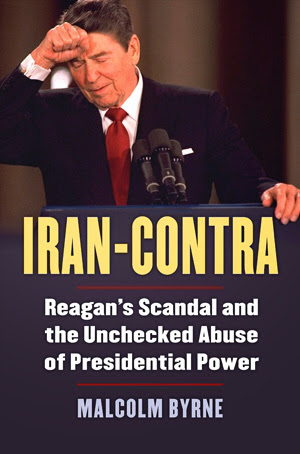
Iran-Contra Revisited: New Book Places Reagan at Center of 1980s Scandal

Lack of Legal or Legislative Closure to Affair Opened Path to Future Presidential Abuses

Narrative Spotlights Iranian, Israeli, Nicaraguan Perspectives

National Security Archive Electronic Briefing Book No. 483 – Posted September 5, 2014

For more information contact: +1 202/994-7000 or nsarchiv@gwu.edu

Washington, D.C., September 5, 2014 — A new book on the Iran-Contra affair shows that President Ronald Reagan stood at the epicenter of the scandal both in terms of his willingness to break the law in order to free American hostages in Lebanon and his failure to take account of the costs and consequences of his decisions, including the illicit conduct of numerous aides.

Advance praise for “Iran-Contra: Reagan’s Scandal and the Unchecked Abuse of Presidential Power” by Malcolm Byrne (University Press of Kansas, September 15, 2014), includes this from Seymour Hersh: “At last, the Reagan administration’s Iran-Contra affair finally has a comprehensive history worthy of the scandal … Malcolm Byrne has told the complex story in brilliant fashion.”

“Iran-Contra” details the historical, political, and institutional background against which the affair played out. Utilizing tens of thousands of pages of previously classified materials, the narrative describes in detail all the administration’s decisions and actions, and discusses the rationales invoked at the time as well as after the fact (explanations that sometimes differed widely).

Looking beyond the U.S. side, the volume explores — through documents and interviews — the views and actions of Iranians, Israelis, Nicaraguans, and others who played parts in the affair. Many of these insights are published here for the first time.

“Iran-Contra” is the first full-length account of the affair to study and assess the various official investigations that were convened — the Tower Commission, the joint congressional hearings, and the independent counsel’s inquiry. The limitations of each helped lead to an inconclusive end to the affair, which has had implications for the unchecked conduct of future presidents and their administrations.

While the scandal had many contributors — including Congress, which failed to avert either element of the affair or to pass meaningful legislation in its wake — the role of the president and his top aides stands out.

Today’s posting includes a revealing series of recently declassified high-level records that explore the president’s thinking and actions during the affair.

Check out today’s posting at the National Security Archive’s Website –http://www2.gwu.edu/~nsarchiv/NSAEBB/NSAEBB483/

Find us on Facebook – http://www.facebook.com/NSArchive

Unredacted, the Archive blog – http://nsarchive.wordpress.com/

________________________________________________________
THE NATIONAL SECURITY ARCHIVE is an independent non-governmental research institute and library located at The George Washington University in Washington, D.C. The Archive collects and publishes declassified documents acquired through the Freedom of Information Act (FOIA). A tax-exempt public charity, the Archive receives no U.S. government funding; its budget is supported by publication royalties and donations from foundations and individuals.
_________________________________________________________


New book reveals top-secret collusion between Israel, US during twenty years of “peace talks”

“I’ll back you and protect you, I’m your guy … it’s very upsetting … all the Arabs are the same,” US PresidentBill Clinton told Israeli Prime Minister Ehud Barak in a 19 July 2000 meeting during the failed Camp David summit with Palestinian Authority president Yasser Arafat.

Only months earlier, in March 2000, Clinton displayed the same kind of obeisance to Barak — albeit without the racist slur this time — when he explained, “I’ll do my best … I’ve gone through the script … I’ll do a good job.” He said this while he attempted to reassure Barak during another failed summit, this time with then-president of Syria Hafez al-Assad.

That the US government has acted as Israel’s attorney rather than an honest mediator in peace negotiations has been known for some time, ever since the disclosure of a secret 1975 letter from President Gerald Ford to Prime Minister Yitzhak Rabin.

But these quotes from Ahron Bregman’s Cursed Victory: A History of Israel and the Occupied Territories (2014), which includes the actual “script” agreed upon between Clinton and Barak, make graphically clear the extent of the collusion between the two governments.

Top secret disclosures

Bregman’s book breaks new ground with a number of leaked top secret disclosures from Israeli sources. It shows that the recent revelation that Israel eavesdropped on current US Secretary of State John Kerry is really nothing new.

Israel also secretly recorded conversations between Clinton and Assad back in 2000. The only question unanswered is why, given the extent of the collusion, the Israeli government believed it was necessary to eavesdrop on its counterpart.

Bregman is a British-Israeli political scientist who teaches in the War Studies Department of King’s College London. He served in the Israeli army during the 1982 invasion of Lebanon. But during the first intifada, he openly announced his refusal to serve in the “occupied territories,” in an interview with Israeli newspaperHaaretz.

Facing prison for his refusal, he emigrated to the UK where he obtained a doctoral degree, and subsequently began a career as a lecturer and journalist, eventually authoring four other books on Israel.

Bregman believes that Cursed Victory is the first chronological history of Israel’s occupation of the West Bank including East Jerusalem, Gaza, Syria’s Golan Heights, and Egypt’s Sinai Peninsula following the 1967 war. His book differs from other studies which he says take a more thematic or analytical approach to the post-1967 occupation.

Perspective

Bregman’s perspective is that of a liberal Zionist. He briefly describes the 1947-1948 Nakba — the forced expulsion of Palestinians from their homeland — as a “civil war,” and suggests that Israel emerged as a colonialist country only after the 1967 war, hence the book’s title.

This perspective eventually weakens his concluding chapter and mars his analysis of the failure of Clinton’s Camp David summit. Nevertheless, many Palestinian voices are heard in the course of his chronology, and he rigorously details how Israel implemented the “three main pillars” of its post-1967 occupation through military force, laws and bureaucratic regulations and settlements — in the process, trampling on international law and Palestinians’ human rights.

Bregman’s top secret material appears mostly in the later chapters, which cover the period between 1995 and 2007 when his chronology ends. Many of the documents are not surprising, and their contents could be deduced from both US and Israeli public policy and behavior.

Still, the documentation reinforces what Palestinians have long maintained. We get to read, for example, the actual text of US Secretary of State Madeleine Albright’s reaffirmation of the US pledge to consult first with Israel in peace talks.

In a secret 1998 letter to Israeli prime minister Benjamin Netanyahu, Albright promised: “Recognizing the desirability of avoiding putting forward proposals that Israel would consider unsatisfactory, the US will conduct a thorough consultation process with Israel in advance with respect to any ideas the US may wish to offer the parties for their consideration.” As Bregman notes, this effectively gave “Israel carte blanche to veto any American peace proposals” it didn’t like.

Arafat’s death

Many Palestinians have long suspected that Israel assassinated Arafat by poisoning him. Bregman’s revelations point to this conclusion as well, although he concedes that the information leaked to him to date does not contain the “smoking gun” proof.

The clearest indication, he writes, is a 15 October 2000, document prepared by the Shabak (or Shin Bet), Israel’s secret service, which describes Arafat “as a serious threat to the security of the state. His disappearance outweighs the benefits of his continuing existence.”

After noting that in 2004, US President George W. Bush appeared to release Israeli Prime Minister Ariel Sharon from an earlier commitment not to harm Arafat, Bregman states that the US government had given Sharon “if not a green light to proceed with the killing, then at least an amber” light.

Ignoring Palestinian response

Bregman’s liberal Zionism is apparent in several instances in this work, including his suggestion that if Israel had used greater force it might have avoided the first intifada in 1987. But the most obvious example is his acceptance of the notion that the so-called Clinton Parameters, outlined after the failure of Camp David, represented the best deal the Palestinians could have hoped to get.

The deal Clinton offered, he says, was Palestinian sovereignty over the Haram al-Sharif (Dome of the Rock), the principal Muslim holy site in Jerusalem, in exchange for giving up even a symbolic right of return for Palestinian refugees.

Whereas throughout most of the book Bregman is conscientious in representing Palestinian viewpoints, here he largely ignores the official response of the Palestinian negotiating team to the Clinton Parameters.

Nor does he suggest that Palestinian negotiators had little reason to trust Clinton after he had already broken two key promises: one, that Clinton would not blame Arafat if the summit failed (which Clinton did), and two, that Israel would continue to withdraw from the occupied West Bank if the summit failed (which Israel did not).

More to the point, Bregman effectively dismisses the Palestinian right of return as a fundamental human right central to their struggle and to a just peace.

The parameters guaranteed little more than limited autonomy for Palestinians in less than 22 percent of historic Palestine, not full state sovereignty, and the Palestinian Authority would have had to depend on Israeli goodwill to withdraw its military presence in the Jordan Valley twelve years from the agreement.

The result is a disappointing concluding chapter in which the author suggests that the post-1967 occupation will eventually end simply because history shows that occupations don’t last.

In his final paragraph, he distinguishes between “good” colonialists (the British) and “bad” colonialists (the Israelis), but his fixation on 1967 means he misses entirely that Israeli settler-colonialism began not in 1967, but in the years leading up to the founding of the state in 1948. More

Rod Such is a former editor for World Book and Encarta encyclopedias. He is active with Americans United for Palestinian Human Rights, Jewish Voice for Peace-Portland Chapter and the Seattle Mideast Awareness Campaign.


Why Island Wisdom Is Crucial to Help the World Adapt and Prepare for the Im

For decades, small island countries have been warning the world about the consequences of climate change. While many countries have been debating whether climate change is even happening or who is to blame, small islands have just had to deal with its impact, from extreme weather to rising sea levels and increasing environmental vulnerability.

Major storms have always been a fact of life for small islands. But in recent years they have intensified in their destructive capabilities. In 2004, Hurricane Ivan struck the Caribbean island of Grenada, causing widespread destruction. The financial cost of the disaster was estimated at more than $900 million – more than twice the country’s gross domestic product (GDP). Only 10 months later, the country was hit again, this time by Hurricane Emily, which caused another $50 million in damage.

In the Caribbean, changes in hurricane intensity and frequency could eventually result in additional annual losses of $450 million, largely due to disruption of a key source of revenue and jobs: tourism. Limited diversification and small market size means that small island economies are not resilient to disaster loss. This is true not just in the Caribbean, but the world over.

According to global risk models developed by the UN Office for Disaster Risk Reduction (UNISDR), six of the top 10 countries with the greatest proportion of resources at risk during hurricanes or cyclones are small islands. These losses will only increase due to sea-level rise, water scarcity, drought, and other factors.

The 38 small island developing states, which spread across the Caribbean, the Pacific and Indian Oceans, are not sitting and waiting for the next storm to hit. They have been taking measures to adapt to and manage the risks posed by climate change.

Several Caribbean islands came together seven years ago to create an insurance pool of easy-to-access disaster funding. Spreading the risk across countries reduces premiums and provides contributors with a safety net which can fund vital services when disaster strikes. Since 2007, more than $30 million has been paid out by the 16 participating countries. A similar initiative is under way in the Pacific region where the memories of the massive human toll and devastation due to Typhoon Haiyan that claimed more than 6,000 lives in the Philippines last November are still all too vivid.

Ideas and actions for reducing the risk from disasters will be at the forefront of the United Nations Conference on Small Island Developing States, to be held in Samoa from 1-4 September. The Conference will be a showcase for those living on the frontlines of climate change and could have a lasting and positive influence on the post-2015 development agenda.

The Conference is an acknowledgement by all the countries of the world of the unique circumstances that small island developing countries face. Their size, combined with their remoteness, and economies of scale, have made it that much more difficult for small islands to implement measures to become resilient. This is compounded by the impacts of climate change, a problem that is hardly of their own making as they collectively contribute less than 1 per cent of total greenhouse gas emissions. In fact, many are striving to become carbon neutral by using renewable energy, improving energy efficiency, and offsetting their greenhouse gas emissions.

Next week’s conference in Samoa is the first of two critical global gatherings. Just a few weeks later, on 23 September in New York, UN Secretary-General will host heads of State, CEOs and civil society leaders at the Climate Summit. The Summit aims to spur accelerated and ambitious actions to reduce emissions and build resilience to climate change worldwide, from the largest countries to the smallest island States. It’s about turning promises into performance.

With international attention on small islands, climate change and the post-2015 framework for disaster risk reduction, there has never been a better chance to turn the tide. Now is the time to listen, support and partner with those who have seen first-hand what climate change can do to your economy and your community. It would be one of the greatest tragedies of our time to continue to ignore the warnings from small islands; their issues will soon become our own. More

_________________

Han Seung-soo is the UN Secretary-General’s Special Envoy for Disaster Risk Reduction and Water and former Prime Minister of the Republic of Korea


The Historical Perspective of the 2014 Gaza Massacre

August 23, 2014ICH” – “PIPR” – – People in Gaza and elsewhere in Palestine feel disappointed at the lack of any significant international reaction to the carnage and destruction the Israeli assault has so far left behind it in the Strip.

The inability, or unwillingness, to act seems to be first and foremost an acceptance of the Israeli narrative and argumentation for the crisis in Gaza. Israel has developed a very clear narrative about the present carnage in Gaza.

It is a tragedy caused by an unprovoked Hamas missile attack on the Jewish State, to which Israel had to react in self-defence. While mainstream western media, academia and politicians may have reservations about the proportionality of the force used by Israel, they accept the gist of this argument. This Israeli narrative is totally rejected in the world of cyber activism and alternative media. There it seems the condemnation of the Israeli action as a war crime is widespread and consensual.

The main difference between the two analyses from above and from below is the willingness of activists to study deeper and in a more profound way the ideological and historical context of the present Israeli action in Gaza. This tendency should be enhanced even further and this piece is just a modest attempt to contribute towards this direction.

Ad Hoc Slaughter?

An historical evaluation and contextualization of the present Israeli assault on Gaza and that of the previous three ones since 2006 expose clearly the Israeli genocidal policy there. An incremental policy of massive killing that is less a product of a callous intention as it is the inevitable outcome of Israel’s overall strategy towards Palestine in general and the areas it occupied in 1967, in particular.

This context should be insisted upon, since the Israeli propaganda machine attempts again and again to narrate its policies as out of context and turns the pretext it found for every new wave of destruction into the main justification for another spree of indiscriminate slaughter in the killing fields of Palestine.

The Israeli strategy of branding its brutal policies as an ad hoc response to this or that Palestinian action is as old as the Zionist presence in Palestine itself. It was used repeatedly as a justification for implementing the Zionist vision of a future Palestine that has in it very few, if any, native Palestinians. The means for achieving this goal changed with the years, but the formula has remained the same: whatever the Zionist vision of a Jewish State might be, it can only materialize without any significant number of Palestinians in it. And nowadays the vision is of an Israel stretching over almost the whole of historic Palestine where millions of Palestinians still live.

This vision ran into trouble once territorial greed led Israel to try and keep the West Bank and the Gaza Strip within its rule and control ever since June 1967. Israel searched for a way to keep the territories it occupied that year without incorporating their population into its rights-bearing citizenry. All the while it participated in a ‘peace process’ charade to cover up or buy time for its unilateral colonization policies on the ground.

With the decades, Israel differentiated between areas it wished to control directly and those it would manage indirectly, with the aim in the long run of downsizing the Palestinian population to a minimum with, among other means, ethnic cleansing and economic and geographic strangulation. Thus the West Bank was in effect divided into a ‘Jewish’ and a ‘Palestinian’ zones – a reality most Israelis can live with provided the Palestinian Bantustans are content with their incarceration within these mega prisons. The geopolitical location of the West Bank creates the impression in Israel, at least, that it is possible to achieve this without anticipating a third uprising or too much international condemnation.

The Gaza Strip, due to its unique geopolitical location, did not lend itself that easily to such a strategy. Ever since 1994, and even more so when Ariel Sharon came to power as prime minister in the early 2000s, the strategy there was to ghettoize Gaza and somehow hope that the people there — 1.8 million as of today — would be dropped into eternal oblivion.

But the Ghetto proved to be rebellious and unwilling to live under conditions of strangulation, isolation, starvation and economic collapse. There was no way it would be annexed to Egypt, neither in 1948 nor in 2014. In 1948, Israel pushed into the Gaza area (before it became a strip) hundreds of thousands of refugees it expelled from the northern Naqab and southern coast who, so they hoped, would move even farther away from Palestine.

For a while after 1967, it wanted to keep as a township which provided unskilled labour but without any human and civil rights. When the occupied people resisted the continued oppression in two intifadas, the West Bank was bisected into small Bantustans encircled by Jewish colonies, but it did not work in the too small and too dense Gaza Strip. The Israelis were unable to ‘West Bank’ the Strip, so to speak. So they cordoned it as a Ghetto and when it resisted the army was allowed to use its most formidable and lethal weapons to crash it. The inevitable result of an accumulative reaction of this kind was genocidal.

Incremental Genocide

The killing of three Israeli teenagers, two of them minors, abducted in the occupied West Bank in June, which was mainly a reprisal for killings of Palestinian children in May, provided the pretext first and foremost for destroying the delicate unity Hamas and Fatah have formed in that month. A unity that followed a decision by the Palestinian Authority to forsake the ‘peace process’ and appeal to international organizations to judge Israel according to a human and civil rights’ yardstick. Both developments were viewed as alarming in Israel.

The pretext determined the timing – but the viciousness of the assault was the outcome of Israel’s inability to formulate a clear policy towards the Strip it created in 1948. The only clear feature of that policy is the deep conviction that wiping out the Hamas from the Gaza Strip would domicile the Ghetto there.

Since 1994, even before the rise of Hamas to power in the Gaza Strip, the very particular geopolitical location of the Strip made it clear that any collective punitive action, such as the one inflicted now, could only be an operation of massive killings and destruction. In other words: an incremental genocide.

This recognition never inhibited the generals who give the orders to bomb the people from the air, the sea and the ground. Downsizing the number of Palestinians all over historic Palestine is still the Zionist vision; an ideal that requires the dehumanisation of the Palestinians. In Gaza, this attitude and vision takes its most inhuman form.

The particular timing of this wave is determined, as in the past, by additional considerations. The domestic social unrest of 2011 is still simmering and for a while there was a public demand to cut military expenditures and move money from the inflated ‘defence’ budget to social services. The army branded this possibility as suicidal. There is nothing like a military operation to stifle any voices calling on the government to cut its military expenses.

Typical hallmarks of the previous stages in this incremental genocide reappear in this wave as well. As in the first operation against Gaza, ‘First Rains’ in 2006, and those which followed in 2009, ‘Cast Lead’, and 2012, ‘Pillar of Smoke’, one can witness again consensual Israeli Jewish support for the massacre of civilians in the Gaza Strip, without one significant voice of dissent. The Academia, as always, becomes part of the machinery. Various universities offered the state its student bodies to help and battle for the Israeli narrative in the cyberspace and alternative media.

The Israeli media, as well, toed loyally the government’s line, showing no pictures of the human catastrophe Israel has wreaked and informing its public that this time, ‘the world understands us and is behind us’. That statement is valid to a point as the political elites in the West continue to provide the old immunity to the Jewish state. The recent appeal by Western governments to the prosecutor in the international court of Justice in The Hague not to look into Israel’s crimes in Gaza is a case in point. Wide sections of the Western media followed suit and justified by and large Israel’s actions.

This distorted coverage is also fed by a sense among Western journalist that what happens in Gaza pales in comparison to the atrocities in Iraq and Syria. Comparisons like this are usually provided without a wider historical perspective. A longer view on the history of the Palestinians would be a much more appropriate way to evaluate their suffering vis-à-vis the carnage elsewhere.

Conclusion: Confronting Double-Standards

But not only historical view is needed for a better understanding of the massacre in Gaza. A dialectical approach that identifies the connection between Israel’s immunity and the horrific developments elsewhere is required as well. The dehumanization in Iraq and Syria is widespread and terrifying, as it is in Gaza. But there is one crucial difference between these cases and the Israeli brutality: the former are condemned as barbarous and inhuman worldwide, while those committed by Israel are still publicly licensed and approved by the president of the United States, the leaders of the EU and Israel’s other friends in the world.

The only chance for a successful struggle against Zionism in Palestine is the one based on a human and civil rights agenda that does not differentiate between one violation and the other and yet identifies clearly the victim and the victimizers. Those who commit atrocities in the Arab world against oppressed minorities and helpless communities, as well as the Israelis who commit these crimes against the Palestinian people, should all be judged by the same moral and ethical standards. They are all war criminals, though in the case of Palestine they have been at work longer than anyone else. It does not really matter what the religious identity is of the people who commit the atrocities or in the name of which religion they purport to speak. Whether they call themselves jihadists, Judaists or Zionists, they should be treated in the same way. More