The Climate War Room

Climate War Room – Sunday 3rd. August 2014

I have today changed the name of the Cayman Institute's climate change blog to the Climate War Room.

Having collaborated with Sir Richard Branson's Carbon War Room on their Ten Island Challenge, which is a major initiative to mitigate climate change through cutting down the global carbon output, I have realized that a similar initiative is needed to to raise awareness of the necessity for a global war on climate change rather than just carbon output.

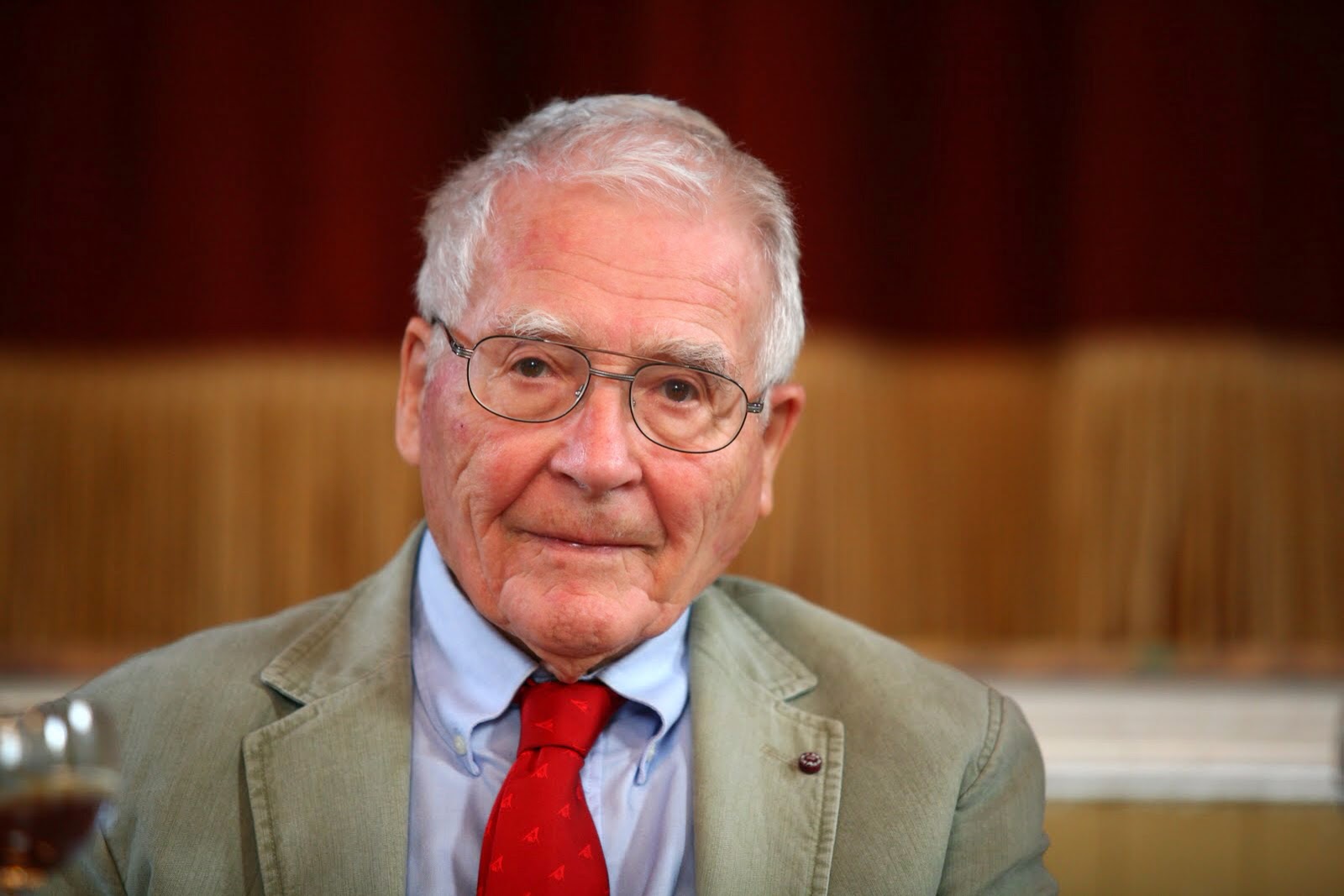
Jim Hansen

For more input on the reality of the situation a good place to start would be Makiko Sato & James Hansen's website where they ask 'What Path is the Real World Following'? Jim Hansen was the former director of NASA's Goddard Institute of Space Studies who resigned because the United States Government would not let him speak out on climate change. Assessing ‘‘Dangerous Climate Change'' makes worrying reading.

The world needs to take climate change, or as James Lovelock prefers to call it 'global heating' very seriously. Dr. Lovelock is the founder of the Gaia theory and on of the great thinkers of this century, his Cirriculum Vitae is very interesting and worth reading. Mary Midgley wrote on James Lovelock, published in the New Statesman on 14 July 2003.“Lovelock is an independent scientist. Though fanatically accurate over details, he never isolates those details from a wider, more demanding vision of their background. He thinks big. Preferring, as Darwin did, to work outside the tramlines of an institution, he has supported himself since 1963 through inventions and consultancies.”


We need to take the issue very seriously as a rapidly warming climate will change life as we know it. As Jim Hansen has tried to make us aware our children and grandchildren will effectively living on a different and not very nice planet.

James Lovelock

I implore you to research and read up on this subject. Speak out to your friends and neighbors and contact your political representatives and make your views known to them.

Nicholas Robson – Grand Cayman – Cayman Islands


The Asia Pacific Clean Energy Summit & Expo

The Asia Pacific Clean Energy Summit & Expo
Co-located with the Islands Innovation Summit & Showcase/ Pacific Defense Energy Summit & Showcase / Pacific Agriculture Innovation Summit

September 15-17, 2014
Honolulu Convention Center, Honolulu, HI
http://islandsconnect.com

The event is the preeminent meeting place for international leaders and energy experts at the forefront of the clean energy movement. Securing energy independence and developing a clean energy industry that promotes the vitality of our planet are two reasons why it is critical to reaffirm already established partnerships and build new ones throughout the Asia-Pacific region and the world. The summit will provide a forum for the high-level global networking necessary to advance this emerging clean energy culture.

Join a broad international community of over 1500 attendees from over 25 countries!

Keynote speakers include:

Neil Abercrombie, Governor, State of Hawai‘i
Major General Anthony Crutchfield, US Army, Chief of Staff, US Pacific Command (PACOM)

Kyle Datta, General Partner, Ulupono Initiative
Captain James Goudreau, Director, Navy Energy Coordination Office, US Navy
Rahul Gupta, Principal, Public Service Practice, Sustainability, and Cleantech, PricewaterhouseCooper

Mike Howard, President & CEO, Electric Power Research Institute (EPRI)
Taholo Kami, Regional Director, IUCN Oceania Regional Office (ORO)

Richard Lim, Director, State of Hawai‘i, Department of Business, Economic Development & Tourism (DBEDT)

Updated Program: http://www.islandsconnect.com/program/dag.html

Speaker List: http://www.islandsconnect.com/program/speakers.html

Register here: http://www.islandsconnect.com/register.html

** When registering, please use the Cayman Institute 20% discount code: 14CAY20

For further information, partnerships, island/community showcase, or group programs, please contact Regina Ramazzini at regina@techconnect.org

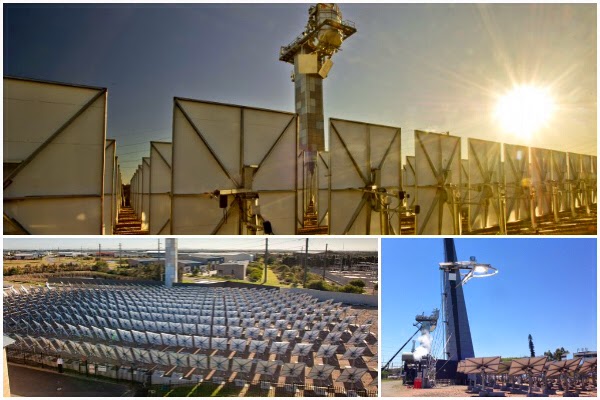
World first: Australian solar plant has generated “supercritical” steam that rivals fossil fuels’

A solar thermal test plant in Newcastle, Australia, has generated “supercritical” steam at a pressure of 23.5 mpa (3400 psi) and 570°C (1,058°F).

CSIRO is claiming it as a world record, and it’s a HUGE step for solar thermal energy.

“It's like breaking the sound barrier; this step change proves solar has the potential to compete with the peak performance capabilities of fossil fuel sources,” Dr Alex Wonhas, CSIRO’s Energy Director, told Colin Jeffrey for Gizmag.

The Energy Centre uses a field of more than 600 mirrors (known as heliostats) which are all directed at two towers housing solar receivers and turbines, Gizmag reports.

This supercritical steam is used to drive the world’s most advanced power plant turbines, but previously it’s only been possible to produce it by burning fossil fuels such as coal or gas.

“Instead of relying on burning fossil fuels to produce supercritical steam, this breakthrough demonstrates that the power plants of the future could instead be using the free, zero emission energy of the sun to achieve the same result,” Dr Wonhas explained.

Currently, commercial solar thermal or concentrating solar power power plants only operate a “subcritical” levels, using less pressurised steam. This means that they’ve never been able to match the output or efficiency of the world’s best fossil fuel power plants – until now.

The commercial development of this technology is still a fair way off, but this is an important first step towards a more sustainable future. More

Watch the video to see the plant in action.


The Peak Oil Crisis: Iraq on the Precipice

The daily newspapers are now full of stories predicting that Iraq, as we know it, will soon disintegrate into three or more warring states.

Tom Whipple

In the last two weeks Sunni insurgents led by the extremist ISIS have routed a good part of the Iraqi army, taken over much of northern Iraq not controlled by the Kurds, and now are moving close to Baghdad. Despite the dispatch of American and Iranian military advisors to at least assess the situation, most observers say government forces are too weak to drive back the insurgents and retake the lost territory. Washington is refusing to get involved unless the Shiite-dominated Iraqi government makes radical changes in its relations with the Sunnis and Kurds.

Our concern here, however, is what all this has to do with the world’s oil supply and, closer to home, our gasoline prices. In recent days we have been told innumerable times that most of Iraq’s oil is way south of Baghdad where it is relatively immune from the turmoil in the north – so there is little chance that Iraq's 2.5 million barrels a day (b/d) of exports will be affected. While this may true for the next few weeks or even months, the Sunni resurgence in the north is not a short-term problem and in the past week the ISIS has captured some formidable assets which could bring heavy pressure on, if not strangle, Baghdad.

ISIS now has control of one of three major refineries in Iraq which supplies the motor fuel and oil for power stations for the northern part of the country. Lines are already forming at gas stations. The ISIS controls the Euphrates and will likely gain control of the Haditha power dam, which supplies 360 MW to the national power grid. With control of the river dams, reduced flows of water could make life very difficult in southern Iraq before the summer is over. It is doubtful if the thousands of foreign oil workers that are expanding and overseeing Iraq’s oil production would stick around too long. Some non-essential-to-production foreigner oil workers are already leaving the country or moving to safer areas.

Another facet of last week’s developments is that the insurgent forces in Anbar province are getting very close to Baghdad’s airport. All it would take would be a few of the howitzers they captured from the Iraqi army and air travel into Baghdad could be restricted.

While it may be impossible for insurgent forces even of the fanatical variety to fight their way through thousands of Shiite militiamen to the southern Shiite shrines and oil fields, in a prolonged standoff (and this one has been going on for 1,400 years) serious harm is likely to be done to Iraq’s current and prospective oil production. Some observers are already saying that large increases in Iraqi oil production in the immediate future are unlikely, but as yet few are writing off the current 3.3 million barrels of daily oil production.

Let’s assume, however, that before this year or next is out, Iraqi oil exports drop substantially as it has in several other oil-exporting states undergoing similar political trauma. Just what does this mean for the world’s oil supply?

With 2.5 million additional barrels of oil disappearing from the market added to the 3.5 million that have already been lost due to lower production in Libya, Iran, Sudan, and Nigeria, the world markets would clearly be stressed.

The Saudis could probably come up with an extra million b/d for a while, but that is about it. Iran could sign a nuclear treaty this summer and be out from under sanctions, but it will take a while to develop significant increases in production. Libya, Sudan, Syria, Nigeria and Yemen show no signs of settling their internal political problems and start exporting significantly larger amounts of crude in the foreseeable future.

Keep in mind that global demand for oil has recently been increasing at a rate of about 1.2 million b/d or so every year, while depletion of existing oilfields requires that another 3-4 million b/d be brought into production each year just to keep even.

Many people, including government forecasters, are looking to increasing U.S. shale oil production and more deepwater oil from the Gulf of Mexico to keep the world’s supply and demand in balance without sharp price increases. Somewhere down the line there may be more oil produced from the Arctic; from Kazakhstan; from off the coast of Brazil; from East Africa; and even significant shale oil production from other than in the U.S. But it will be many years before these new sources can start producing significant amounts of crude, and none of these are likely to make up for any shortages that develop in the next few years.

Deepwater oil production from the Gulf of Mexico has been flat recently, and we are starting to get indications that the rapid increases in U.S. shale oil production, which have kept prices under control for several years, may be drawing to a close. The geology of shale oil production dictates that once it stops growing, a rapid decline in production is likely.

In sum, it looks as if there will be higher and possibly much higher oil and gas prices coming soon. If ISIS decides that the way to finish off the Shiite “infidels” is by cutting their oil revenues, then a bombing and terror campaign against southern Iraqi oil installations and oil workers would be a likely result. It would not take much to send the foreigners running. The Chinese are already moving out some of the 10,000 oil workers they have in southern Iraq, and others are likely to follow as we have seen in so many other places.

Where do oil and gas prices go? The official forecasters are only talking about another couple of dollars a barrel this year, but this is clearly too low if significant shortages develop.

By Tom Whipple of Post Carbon Institute


Besieged by the rising tides of climate change, Kiribati buys land in Fiji

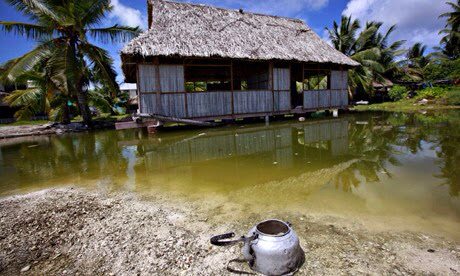
The people of Kiribati, a group of islands in the Pacific ocean particularly exposed to climate change, now own a possible refuge elsewhere. President Anote Tong has recently finalised the purchase of 20 sq km on Vanua Levu, one of the Fijiislands, about 2,000km away.

Abandoned house affected by sea water

The Church of England has sold a stretch of land mainly covered by dense forest for $8.77m. “We would hope not to put everyone on [this] one piece of land, but if it became absolutely necessary, yes, we could do it,” Tong told the Associated Press. Kiribati has a population of about 110,000 scattered over 33 small, low-lying islands extending over a total area of 3.5m sq km.

In 2009 the Maldives were the first to raise the possibility of purchasing land in another country in anticipation of being gradually submerged. At the time the government looked at options in India and Sri Lanka.

Now Kiribati has taken action. “Kiribati is just the first on a list which could get longer as time passes,” says Ronald Jumeau, Seychelles ambassador at the United Nations, who took part in the international negotiations on climate change in Bonn last month.

In March the Intergovernmental Panel on Climate Change published the volume on adaptation of its fifth assessment report, confirming in starker terms forecasts first outlined by scientists in 1990. Within a few decades, small islands in the Pacific and Indian oceans risk being extensively or even completely submerged. In places the sea level is rising by 1.2cm a year, four times faster than the global average.

The cost of protecting these places against rising sea levels, compared with national income, is among the highest in the world. Kiribati, Tuvalu and the Maldives are among the 10 countries where the financial impact of climate change is the most severe.

For many of these countries, which are represented by the Alliance of Small Island States, the impacts of climate change are “irreparable”, as Tong has often stressed. “Whatever is agreed within the United States today, with China [the two largest sources of CO2 emissions], it will not have a bearing on our future, because already, it's too late for us … And so we are the canary. But hopefully, that experience will send a very strong message that we might be on the frontline today, but others will be on the frontline next,” he said in an interview on CNN last month. This explains why small island states think it is so important to set up an international mechanism for loss and damage, to compensate for the irremediable consequences of global warming.

The international community approved the principle of such a mechanism in November 2013. “When a population is forced to leave its country, it is no longer a matter of adaptation,” Jumeau claims. “Where will these countries find funds? It is up to the industrialised countries, which caused global warming, to shoulder their responsibilities.” He wants to make the loss and damage mechanism a priority for the global deal on climate change slated to be signed in Paris in December 2015.

In the immediate future, the land purchased by Kiribati will above all be used to for agricultural and fish-farming projects to guarantee the nation's food security. With sea water increasingly contaminating the atolls' groundwater and catastrophic coral bleaching – total in some cases such as Phoenix atoll – there are growing food shortages. “Among the small islands, Kiribati is the country that has done most to anticipate its population's future needs,” says François Gemenne, a specialist on migrations at Versailles-Saint Quentin University, France. “The government has launched the 'migration with dignity' policy to allow people to apply for jobs on offer in neighbouring countries such as New Zealand. The aim is to avoid one day having to cope with a humanitarian evacuation.”

Kiribati has long-standing relations with Fiji. In the 1950s families from Banaba island, who had been displaced to make room for a phosphate mine, took refuge there, Gemenne recalls. More


Sir Richard Branson supports Many Strong Voices

Sir Richard Branson supports Many Strong Voices

The work of MSV to help raise the profile of people in the Arctic and Small Island Developing States (SIDS) and their struggle against climate change has gained the support of one of the world’s most influential business leaders.

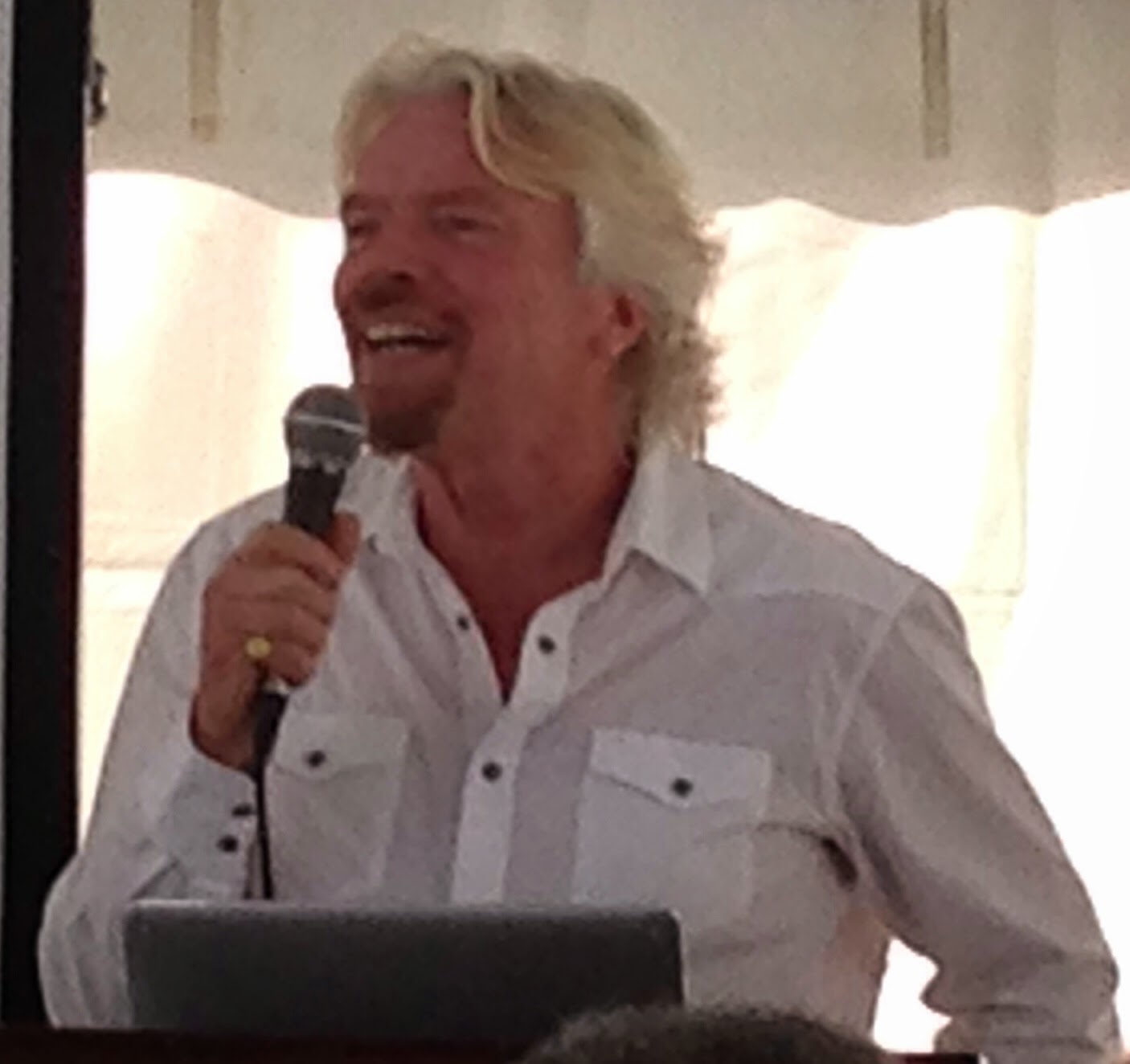
Sir Richard Branson

Sir Richard Branson, founder of Virgin Airlines and a champion of green energy, has offered his support to MSV, which brings together the peoples of the Arctic and SIDS to meet the challenges of climate change.

“When it comes to climate change, arctic communities and small island states share similar struggles,” Branson said. “As they feel the impacts of rising sea levels and deteriorating coastal environments, organizations like Many Strong Voices collaborate, act and innovate to achieve lasting change.

“Their critical work fills the gap between those affected by adverse climate impacts and the political and business leaders focused on creating big picture solutions.”

Branson has invested considerable time and money in supporting global initiatives to reduce greenhouse gas emissions through the use of renewable resources and new technologies. Recently, he called on business leaders to take a stand against climate deniers.

MSV is coordinated by GRID-Arendal and the University College London. More

The Cayman Institute is a partner organization of Many Strong Voices


Solar is here

Solar is here.

That’s right. You know the solutions to the climate crisis are available today; we simply need the public (and political) will to implement them. Clean energy is urgently necessary, abundant, and becoming increasingly more affordable. That’s why on June 21, The Climate Reality Project is joining 12 other organizations in a day of action to support clean-energy solutions and show our commitment to bringing solar power to communities around the world.

If you don’t already have plans to take part on Saturday, don’t despair! Here are a few last minute ways to get involved:

  1. Sign: Send President Obama an email thanking him for putting solar panels on the roof of the White House.
  2. Share: Take your own #PutSolarOnIt photo and share it with your social media network.
  3. Discover: Check out the Mosaic website to find out if solar is right for you.
  4. Participate: Check out OFA’s website to find an event near you, some of which are being hosted by your fellow Climate Reality Leaders.

The reality is this: solar is affordable. It’s clean. And it’s powerful. The cost of solar panels has plummeted 60 percent since early 2011, and the number of installations keeps growing. The United States now has enough installed solar capacity to power more than 2.2 million homes. In several states, solar power is now competitive with other sources of energy without emitting the dangerous greenhouse gases that cause climate change.

Climate Reality Leaders are the first responders to the climate crisis and lead action across the globe. We’re proud so many of you will be participating on Saturday by hosting presentations, organizing events, and informing others about the benefits of solar power.

The Climate Reality Leadership Corps Team

Solar Array at Caledonian Bank, George Town, Cayman Islands


Climate Change: Implications for Tourism

IPCC AR5: Climate Change: Implications for Tourism

June 2014

The Fifth Assessment Report from the Intergovernmental Panel on Climate Change is the most up-to-date, comprehensive and relevant analysis of our changing climate.

The tourism industry faces profound impacts from climate change – impacts that are already being felt. It represents one of the world’s largest industries, accounting for some 9% of global GDP and generates 27 more than $6 trillion in revenues each year. This briefing reviews how climate change is already impacting the tourism industry and the challenges and opportunities that lie ahead. More

Download PDF