Wastewater recycling, part of the solution to water shortage?

After the report on mountaineering and my experiences on the ascent to Mount Aconcagua, I return to the subject of water, and the opportunities and challenges in recycling it.

In earlier posts here I wrote about a very sophisticated system of wastewater recycling in Singapore, which turns it back into drinking water.
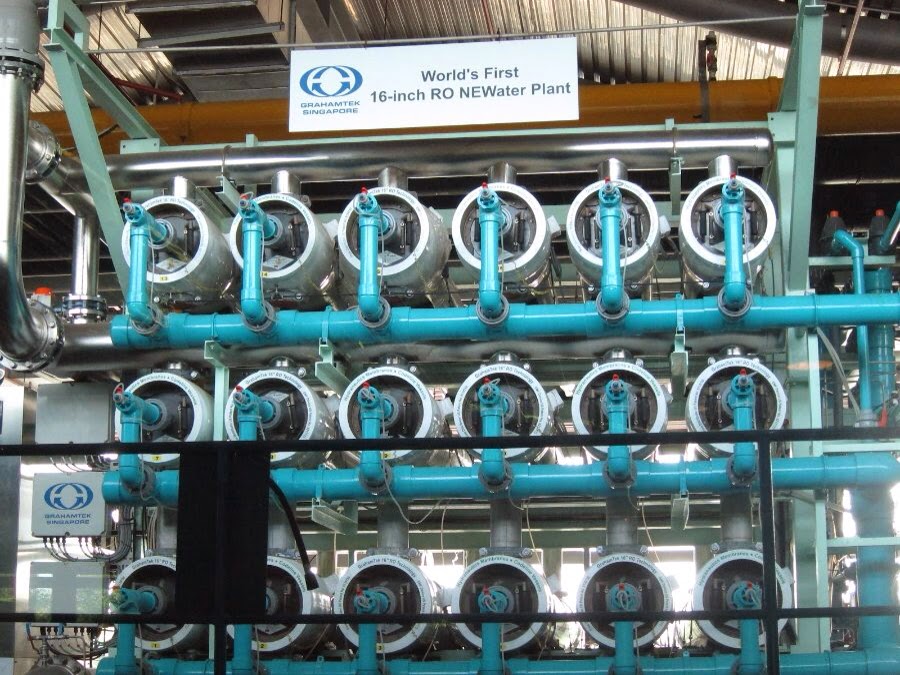
And at this year’s Singapore International Water Week, the Californian Orange County received the highest recognition, for a scheme where perfectly treated wastewater is pumped back into underground aquifers, to be later pumped up again as drinking water. It also serves as a barrier to seawater intrusion.

These two examples, especially Singapore, are probably the most far-reaching examples I know of achievement in water recycling.

Places like San Diego, hit by a drought, are now re-considering again the idea to follow the Singapore example, despite some opposition from civil society. So, to what extent is it possible to scale up these kinds of activities globally; is there potential for wastewater to contribute in a substantial way to closing the gap of some 300 cubic kilometres between the level of water withdrawals and sustainable supply?

Estimates show close to 300 cubic kilometres of wastewater is generated by municipalities per year (average 2003-12). This is the equivalent of some 50% of global average annual withdrawals for household use.

Part of the other 50% of withdrawals not counted as ‘wastewater’ may well be lost in leakage in pipes (in some countries this accounts for up to 70% of the water withdrawn by the municipal water supply schemes). Another part could be ‘used’ through evapotranspiration in lawns and gardens, etc.

As the table below shows, only about half of this wastewater is actually collected and treated, but less than 10% of the treated wastewater is directly reused.

Table 1: Municipal wastewater generation and treatment data 2003-2012, country groups by income per capita

Source: FAO aquastat


To get an idea of how municipal water could contribute to closing the gap between withdrawals and sustainable supply, let me go through the water supply chain.

The first step would require a better understanding of what happens with the 50% of municipal water apparently ‘disappearing’. Where this is down to leakage, governments have to set the right incentives so municipal water authorities address the issue.

One way proposed by the 2030 Water Resources Group (2030 WRG) in South Africa, which has been implemented by the government there, is to measure both water delivery and water intake, and to pay a premium to the schemes where the difference (i.e., water unaccounted for) gets smaller.

According to 2030 WRG cost-curve estimates, the cost savings would by far exceed the necessary spending to reduce the leakage.

As part of my proposals for targets within the water goal for post-2015 sustainable development, I suggest primary treatment of all wastewater by 2030 – an idea I will come back to in a later post.

So, what happens with 285 km³ of estimated wastewater generated, and what needs to be done? We will first have to increase collection, particularly in economically deprived areas, to make sure wastewater is collected and available for proper treatment.

Actually, only 36% of the world’s population has a sewage connection; this leaves 4.6 billion people unconnected. According to a WHO study, initial investment to set up a sewer connection is about USD 170 per capita; so the investment cost to connect them would be somewhere close to USD 800 billion. The annual cost of capital, repayment and operating cost is estimated at USD 1 per m³.

Next: treatment of both the up-to-now untreated collected – and the newly collected – wastewater. Estimates amount to USD 0.35 per m³. A big part of this cost is energy, an often forgotten link in the water-food-energy nexus framework.

And last but not least: less than 10% of treated wastewater is used directly. This can and must be increased. Direct use is, for instance, the Singapore approach, bringing treated water back to consumers as so-called ‘NEWater’.

Another example is Australia: around 1.4 cubic kilometers of municipal wastewater are treated, of which 0.4 cubic kilometers are used directly, mostly in agriculture.

At Nestlé we have a similar approach. All our factories treat wastewater (in fact the first wastewater treatment plant in the group was built in the 1930s, so we understood the need for this very early) and as much of this treated wastewater as possible is used directly.

At the same time, we should keep in mind indirect use, even though it’s often difficult to measure. Treated wastewater is returned to rivers and then often withdrawn again and treated further for human consumption.

One might, for instance, assume that a significant part of the water in the River Thames, once it reaches London, is treated wastewater from communities further up the river. Increasing the share of direct use of wastewater should clearly be encouraged – in a form accepted by local communities.

So, all in all there are some significant opportunities to use treated wastewater as a resource, helping to close the gap between freshwater withdrawals and sustainable supply. But these opportunities need to be carefully evaluated, to make sure they are fully accepted, but also cost and energy effective when compared to other solutions. Via Peter Brabeck-Letmathe – Linkedin More


Drought apocalypse begins in California as wells run dry

(NaturalNews) Water wells in central California have begun to run dry, reports the LA Times. (1) “Extreme drought conditions have become so harsh for the Central Valley community of East Porterville [that] many of its residents dependent on their own wells have run out of water.”

Tulare County has confirmed their wells have run out of water, and so far hundreds of homes have no running water.

According to the LA Times, rumors are also spreading that Child Protective Services officials will begin taking children away from families who have no running water, although the county claims the rumor is false.

It begins: the collapse of California's water aquifers

With this news, it is now official that the collapse of California's water aquifers has begun. With each passing month and year, more and more wells will run dry across the state as California plummets into the desert conditions from which it once sprang.

Extreme drought now covers 82% of California, according to the National Drought Mitigation Center. (2) Fifty-eight percent of the state is in “exceptional drought.”

During the unfolding of this drought, California farmers and cities have siphoned unprecedented volumes of water out of the state's underground aquifers. This is called “fossil water” and it can take centuries to regenerate. Once this fossil water is used up, it's gone.

35-year “megadrought” may be on the way

“The southwestern United States has fifty percent change of suffering a 'megadrought' that lasts 35 years,” reports the Daily Mail. (3)

“They say global warming has meant the chance of a decade long drought is at least 50 percent, and the chances of a 'megadrought' – one that lasts up to 35 years – ranges from 20 to 50 percent over the next century.”

One scientist is quoted in the story as saying, “This will be worse than anything seen during the last 2,000 years and would pose unprecedented challenges to water resources in the region.”

Unless politicians become magical wizards and figure out a way to create water out of nothing, what all this really means is that cities of the American southwest will not be able to support present-day populations. A mass migration (evacuation) out of the cities will be necessary sooner or later.

California's water deficit will lead to ecological and economic collapse

In an almost perfect reflection of California's state budget deficits, the state is also running an unsustainable water deficit. It is a mathematical certainty that when you remove far more water from the aquifers than is being replenished, the amount of water remaining in those aquifers will eventually reach zero.

This “zero day” water reality is still psychologically denied by most Californians. If the reality of this situation were widely recognized, California would be experiencing a glut of real estate inventory as millions of homeowners tried to sell their properties and evacuate the state. The fact that the real estate market has not yet collapsed in California tells us that Californians are still living in a state of denial about the future of their water supply.

Even as California's water supply collapses by the day, local farmers and towns have few options other than drilling for more water. “Drill! Drill! Drill!” is the mantra of the day, creating an 18-month backlog for well drilling companies. Each new well that's drilled must seek to go deeper than the previous wells which are running dry. It's a literal race to the bottom which can only end in catastrophe.

Then again, a willful acceleration toward catastrophe is merely a sign of the times when it comes to human civilization. There is almost no area in which humans have ever achieved balance: not in fossil fuels, metals mining, fossil water exploitation, debt creation, industrial chemical contamination, ecological exploitation or even global population. It's almost as if the human race is determined to destroy itself while racing to see who can achieve self destruction first. More


UN Climate Summit 2014

Climate change is not a far-off problem. It is happening now and is having very real consequences on people’s lives. Climate change is disrupting national economies, costing us dearly today and even more tomorrow. But there is a growing recognition that affordable, scalable solutions are available now that will enable us all to leapfrog to cleaner, more resilient economies.UN Climate Summit 2014

There is a sense that change is in the air. UN Secretary-General Ban Ki-moon has invited world leaders, from government, finance, business, and civil society to Climate Summit 2014 this 23 September to galvanize and catalyze climate action. He has asked these leaders to bring bold announcements and actions to the Summit that will reduce emissions, strengthen climate resilience, and mobilize political will for a meaningful legal agreement in 2015. Climate Summit 2014 provides a unique opportunity for leaders to champion an ambitious vision, anchored in action that will enable a meaningful, global agreement in Paris in 2015. More


Henan’s Big Drought. Is This From The South–North Water Transfer Project?

Mainland media reported that, since this summer, Henan Province rainfall is 60 percent less than usual over the same period since 1951, which is the lowest value over the same period of history. Pingdingshan City's main water source, Baiguishan reservoir water level is even lower than the dead water of 97.5 meters.

Henan Zhecheng County Shuangmiao Village Ms. Li, “over the entire summer it did not rain. The crops are dry. We are not allowed to irrigate the crops. If I use the well water, I probably cannot even have drinking water.”

Droughts have had a serious impact on local agriculture.

Ms. Li, “most places basically have no harvest. Individual crops can be harvested a little, but there is not much. If one place can harvest 40 percent, that’s the best.''

Hubei Province is rich in water during the main flood season this year. But rainfall in most areas decreased by more than 20 percent. 111 small reservoirs and over 50,000 ponds dried up; over 600 reservoirs are below the dead water level; Hanjiang River downstream water level dropped. Danjiangkou reservoir water level is only 142.77 meters on August 19. This is far below the SNWTP planned water level of 170 meters.

For this major disaster, the authorities explained that the drought is caused by a variety of climatic reasons. They claimed that, even if the current trend of precipitation is “north flood south dry”, it is still to “transfer water from south to north” to fill the gap of an especially severe water shortage in Beijing.

But the villagers in drought regions have different thoughts.

Ms. Li, ” we all think it is due to the SNWTP. In previous years, it was not as dry as in these years.”

Villagers discussed and believe that, SNWTP leads the Han River, the Yangtze River and the Yellow River water back and forth; the Three Gorges Reservoir also caused natural flowing rivers to change direction. Poor circulation, and loss of groundwater resources are also very serious. It has a massive impact not only to the surrounding geological environment, but also caused imbalances to the water, clouds, rain, and natural circulation system leading to a severe drought.

Living in Germany, water resources expert Wang Weiluo, has published many articles about Jiang Zemin who to “supply water to the 2008 Beijing Olympics”, hastily approved and launched the SNWTP in 2001. It introduced one billion cubic meters of water annually to Beijing, with diversion channels crossing more than 700 natural rivers in Central China. The project completely

broke the law of nature of these rivers; There is a serious engineering problem, even bigger than the Three Gorges, and the threat is to a wider area.

Beijing electrical engineer Mr. Tian, “in principle there is a problem, because it is not that the south is high, the north is low, and it naturally flows across. It is to artificially add a number of processes, which undermines the law of nature. I think this may be even worse than the Three Gorges Dam.”

Problems have been reported recently about SNWTP by the media. When the Diversion project tested the water on July 3 for the first time, the media exposed that the water source from Danjiangkou Reservoir exceeded the nitrogen content, and was seriously polluted. The official also acknowledged that water quality for nitrogen and phosphorus exceeded the standards. However he stressed that it would naturally degrade through long-distance transportation.

In late July, the mainland media also reported that SNWTP led to a decrease in the Han River water level. Due to the reduced water flow the fish were unable to spawn by end of July, while in previous years they had finished spawning. Yicheng city located by the Han River was without water three times since last year, the longest time was 48 hours.

In addition to the environmental damages, Beijing electrical engineer Mr. Tian pointed out that the drain from SNWTP is likely to outweigh the benefits.

Mr. Tian, “this unnatural process takes a lot of energy and wastes a lot of water. Introduce ten percent water, and finally arriving in Beijing, maybe even not two percent will get there.”

SNWTP has three water diversion routes, namely the east, middle and west line. Of which the middle and east lines cost amounted to 500 billion yuan, 2.5 times larger than the Three Gorges Project. The East line is pumped from the Yangtze River to Tianjin, Qingdao and Yantai direction. The Midline is from Danjiangkou Reservoir as a division of Yangtze tributary the Han River, in Beijing’s direction; The West line is from the upper Yangtze River to the Yellow River water diversion. The East line started in December 2002, until December 8, 2013 the water went through. The Midline started in December 2003, is expected to have water through in October 2014. The West Line has not been started yet. More


Peak Water

There is a lot of water on planet Earth – 326,000,000,000,000,000,000 gallons (329 trillion gallons), or 1,260,000,000,000,000,000,000 litres. About 70 percent of the planet is made of oceans and 98 percent of all the water on earth is in the oceans. That’s a lot of water.

Only 2 percent of all this water is fresh drinking water but most of that is locked up in the polar icecaps and glaciers – approximately 80 percent (or 1.6 percent of the planet’s water). Another 36 percent is in underground aquifers and wells and roughly 0.036 percent of our fresh water supply is found in lakes and rivers. That still leaves thousands of trillions of gallons for drinking. (Source: Environmental Science, howstuffworks)

But is that enough fresh drinking water for a population which is growing exponentially? Every second, four babies are born and two people die. In the time it will take to write this article, 20,000 people will have joined the human race.

‘Peak Oil’ has been extensively written about for many years “but the real threat to our future is peak water,” wrote Lester R. Brown, president of the Earth Policy Institute, in the summer of 2013 in theguardian. “There are substitutes for oil, but not for water. We can produce food without oil, but not without water.”

“The concept of “peak water” and its implications for the U.S. economy are less well explored and understood.” says Dr. Peter Gleick, President of the Pacific Institute. His April 2010 paper (Peak water limits to freshwater withdrawal and use) sparked such interest that the term “peak water” was chosen by The New York Times as one of their 33 “Words of the Year” for 2010. Gleick outlines three different definitions of “peak water”:

Peak Renewable Water. Most water resources are renewable, in the form of flows of rainfall, rivers, streams, and groundwater basins that are recharged over relatively short time frames. Renewable, however, does not mean unlimited. When human demands for water from a watershed reach 100% of renewable supply, we can’t take any more, and we reach “peak renewable” limits.

For a number of major river basins, we have reached the point of peak renewable water limits, including the Colorado River in the United States. All of the water of the Colorado (indeed, more than 100% of the average flow) is already spoken for through legal agreements with the seven US states and Mexico and in a typical year river flows now often fall to zero before they reach their ends. This is true for a growing number of rivers around the world.

Peak Nonrenewable Water. In some places, water comes from stocks of water that are effectively nonrenewable, such as groundwater aquifers with very slow recharge rates or groundwater systems damaged by compaction or other physical changes in the basin. When the use of water from a groundwater aquifer far exceeds natural recharge rates, this stock of groundwater will be depleted or fall to a level where the cost of extraction exceeds the value of the water when used, very much like oil fields. Continued production of water beyond natural recharge rates will become increasingly difficult and expensive as groundwater levels drop, leading to a peak of production, followed by diminishing withdrawals and use.

This kind of unsustainable groundwater use is already occurring in the Ogallala Aquifer in the Great Plains of the United States, the North China plains, parts of California’s Central Valley, and numerous regions in India. In these basins, extraction may not fall to zero, but current rates of pumping cannot be maintained. Worldwide, a significant fraction of current agricultural production depends on non-renewable groundwater. This is extremely dangerous for the reliability of long-term food supplies.

Peak Ecological Water. Water supports commercial and industrial activity and human health, but it is also fundamental for animals, plants, habitats, and environmentally dependent livelihoods. By some estimates, humans already appropriate almost 50% of all renewable and accessible freshwater flows, leading to significant ecological disruptions…the term “peak ecological water” refers to the point where taking more water for human use leads to ecological disruptions greater than the value that this increased water provides to humans.

Running Out of Water

The story of “Peak Water” is increasingly coming to the forefront in 2014 as large portions of the American mid-west are suffering through the worst drought in the last hundred years. Drinking water supplies from the tap have dried up in many communities forcing authorities to provide bottled-water rations and water for bathing and home use.

Tom Philpott writes in Mother Jones that the water crisis is much worse than previously known. Homeowners and farmers are having to drill deeper wells to harvest dwindling groundwater reserves. California has declared a drought emergency and imposed mandatory restrictions on water use with the levy of heavy fines for wasting water on non-essential activities – watering lawns and driveway, washing cars. National Geographic reports that:

Groundwater supplies in our major western aquifers — the Central Valley, the southern Ogallala and now those that underlie the Colorado River Basin – are disappearing. We simply pump out more water than is being naturally replenished, and as a result, groundwater levels are falling rapidly…..The American West is running out of water. More


Brazil Vows Water Supply Is Under Control as Basins Dry

The state of Sao Paulo is facing its worst drought in eight decades, threatening the water supplies for 20 million people — but you wouldn’t know that by asking Brazil’s elected officials.

Sao Paulo Governor Geraldo Alckmin, who is seeking re-election in October, has been minimizing the crisis for the region, which includes South America’s largest city. The reaction is a far cry from the response in drought-stricken California, where Governor Jerry Brown has declared a state of emergency and residents are being fined for watering their lawns.

Sao Paulo state is already rationing water for more than 2 million people in 18 cities. The capital city’s main reservoir is now at only 12 percent of capacity, according to the water utility Cia. de Saneamento Basico do Estado de Sao Paulo, known as Sabesp. While the utility received a warning at the end of July that it risks running out of drinking water in 100 days, officials vow the situation is under control.

“Sao Paulo is denying this crisis because we are in the middle of the political campaign,” said Joao Simanke, a hydrogeologist consultant who worked for Sabesp for more than two decades. “The crisis is already in place and it is getting worse, but until now it has been possible to mask it.”

Blaming unusual weather in a city traditionally known as “drizzly Sao Paulo,” Alckmin denied last week he was slow to respond to the drop in the city’s main reservoir, which began in May 2013, because of the political cost of rationing.

“The situation in Sao Paulo is serious, but it is under control,” Mauro Arce, water resources secretary for the state, said in a telephone interview.

Reduced Flow

While Brazil’s largest city isn’t rationing water, thousands of residents are already complaining of reduced flow from their taps in the past two months.

In February, Sabesp began offering 30 percent discounts to customers who cut consumption by at least 20 percent of their 12-month average. The utility is spending money on special equipment to pull water known as “dead volume” from the very bottom of the Cantareira reservoir and to get supplies from other reservoirs.

In California, an estimated 82 percent of the state is experiencing extreme drought. Most of its major reservoirs are at less than half of capacity, state records show, as residents face restrictions on car washes and restaurants only serve water to customers who request it.

Spring Rains

Relief may be slow to come before more Sao Paulo residents have to contend with water limits. According to weather forecaster Climatempo, the spring season that starts in September will bring rains at or below historical averages — not enough to refill basins. The drenching El Nino rains that caused floods in southern Brazil won’t travel far enough north to help refill reservoirs in Sao Paulo.

Sao Paulo’s water situation is “scary,” given the historical humid weather condition of the region, said Benedito Braga, president of World Water Council, an international organization that promotes awareness of water issues.

“Sao Paulo’s situation is not devastating such as the California’s situation, because the American state has experienced droughts many times,” he said. “We have never seen anything similar in Sao Paulo, so we are in an uncomfortable situation.”

Sao Paulo should be already adopting more measures in an attempt to reduce water usage, such as a progressive water rate in which consumers pay more for exceeding a certain level of water consumption, said Braga, who was on the board of Brazil’s national water agency from 2001 to 2009.

‘Serious’ Situation

Sao Paulo’s water resources secretary said there’s no need to adopt more measures to reduce demand and pressure on the city’s water reservoirs. The government isn’t minimizing the crisis and it’s reaching out to increase awareness of the issue, Arce said. Irrigation in the upper reaches of rivers is already being limited, he said.

“The situation is serious and we are dealing with it with the seriousness it deserves,” Arce said. Sabesp says its voluntary demand reduction programs are working and some, including Gesner Oliveira, a consultant who served as Sabesp’s president from 2007 to 2010, agree.

“The set of measures adopted were correct to manage the situation of water scarcity,” said Oliveira.

But reductions in demand haven’t held steady. In July, water consumption in Sao Paulo rose as tourists filled the city for the World Cup soccer tournament and fewer people joined the consumption reduction program, Sabesp executives said on an Aug. 19 conference call.

Water Fines?

“The water saving campaign is not enough to avoid a bigger problem and people don’t exactly know what is going on,” said Samuel Barreto, a coordinator with the Nature Conservancy. “The government must better inform the population.”

Sao Paulo’s governor press office didn’t respond to a phone call seeking comment.

Marco Antonio Barros, superintendent of water production of Sabesp, downplayed the possibility the company would fine customers for excessive water use, saying such penalties took a long time to be established in California. Limiting secondary uses of water, for washing cars and other non-drinking consumption, is possible, he said.

According to a July report by Citigroup Inc., if the water flow remains below average for the remainder of the year, the Cantareira reservoir “will dry up by December in spite of the use of dead-storage volume.”

Sabesp expects to be able to supply water until the rainy season ends in March and says the chance of rationing in the capital by the end of the year is zero. Recovery of its reservoirs in the first months of the next season is unlikely “even if it rains a lot,” Sabesp Chief Financial Officer Rui Affonso said on the conference call. “The constancy of the rains is what matters.” More

To contact the reporter on this story: Vanessa Dezem in Sao Paulo at vdezem@bloomberg.net

To contact the editors responsible for this story: Reed Landberg at landberg@bloomberg.net Tina Davis, Randall Hackley


Global Climate Inaction Will Mean Economic Turmoil for South Asia, Warns Bank

The first comprehensive study ever issued on the economic costs that uncontrolled climate change would inflict on South Asia predicts a staggering burden that would hit the region's poorest the hardest.


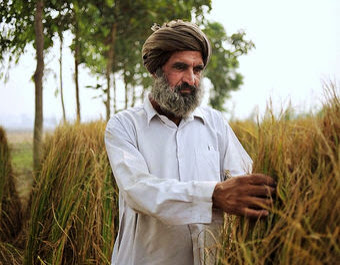
Rice Farmer in Punjab, India

“The impacts of climate change are likely to result in huge economic, social and environmental damage to South Asian countries, compromising their growth potential and poverty reduction efforts,” said the study, published by the Asian Development Bank.

The cuts in regional GDP are so deep that they might ripple around the world, as six developing countries with 1.4 billion people—a third of them living in poverty—pay the price of the world's continuing reliance on fossil fuels.

Projections like this feed into the urgency for action as world leaders prepare to meet at the United Nations next month to discuss the climate crisis. Recent warnings show that the steps nations seem willing to take will fall well short of what is needed.

Action now, the study shows, would pay immediate and lasting dividends to the countries it examined: Bangladesh, Bhutan, India, the Maldives, Nepal and Sri Lanka.

The study, published as a new 160-page book, says that if the world cuts fossil fuel consumption enough to keep warming within 2 degrees Celsius—the goal of UN negotiations—the costs to South Asian countries of adapting to rising seas and temperatures in the decades ahead might be cut almost in half.

But if business-as-usual continues, leading to a world that is 4 or 5 degrees warmer by 2100 than at the start of the industrial age, the outlook looks grim.

“Climate change will slash up to 9 percent off the South Asian economy every year by the end of this century if the world continues on its current fossil-fuel intensive path,” the bank said. “The human and financial toll could be even higher if the damage from floods, droughts, and other extreme weather events is included.”

Because this kind of estimate is inherently imprecise, the bank warned that the real damage could be much worse than expected. Under business-as-usual trends, there is a one in 20 chance that South Asia will lose 24 percent of its annual GDP by the end of the century, the study found.

Paying to stave off those damages will cost these nations dearly, the study said.

To avoid the damage that is expected if the world takes no action on climate change, South Asia would have to spend nearly $40 billion per year by 2050 on adaptation measures, or nearly half a percentage point of average annual GDP. By 2100, the costs would have to increase to $73 billion per year, or roughly nine-tenths of a point of GDP.

If the world were to achieve the 2-degree warming goal established by UN negotiators at climate treaty talks in Copenhagen in 2009—a goal also at the heart of culminating talks set for Paris in 2015—annual adaptation costs for South Asia would be considerably less: $31 billion a year at mid-century, and $41 billion at century's end.

And instead of losing nearly 9 percent of annual GDP by the end of the century, the study found, South Asia would lose about 2.5 percent by 2100 if the world lives up to the goals of Copenhagen. More


Beware, fellow plutocrats, the pitchforks are coming

Nick Hanauer: Beware, fellow plutocrats, the pitchforks are coming

Published on Aug 12, 2014 • Nick Hanauer is a rich guy, an unrepentant capitalist — and he has something to say to his fellow plutocrats: Wake up! Growing inequality is about to push our societies into conditions resembling prerevolutionary France. Hear his argument about why a dramatic increase in minimum wage could grow the middle class, deliver economic prosperity … and prevent a revolution.

TEDTalks is a daily video podcast of the best talks and performances from the TED Conference, where the world's leading thinkers and doers give the talk of their lives in 18 minutes (or less). Look for talks on Technology, Entertainment and Design – plus science, business, global issues, the arts and much more.

Find closed captions and translated subtitles in many languages at http://www.ted.com/translate

Follow TED news on Twitter: http://www.twitter.com/tednews

Like TED on Facebook: https ://www.facebook.com/TE D

Subscribe to our channel: http://www.youtube.com/user/TEDtalksDirector

Grain Harvest Fact Sheet

With grain providing much of the calories that sustain humanity, the status of the world grain harvest is a good indicator of the adequacy of the food supply.

Lester Brown

More than 2 billion tons of grain are produced each year worldwide, nearly half of it in just three countries: China, the United States, and India.

Corn, wheat, and rice account for most of the world’s grain harvest. Whereas rice and most wheat are consumed directly as food, corn is largely used for livestock and poultry feed, and for industrial purposes.

Global grain consumption has exceeded production in 8 of the last 14 years, leading to a drawdown in reserves.

Population growth is the oldest source of increasing grain demand. In recent years, the annual growth in grain use has doubled, largely a result of increased use for fuel ethanol and livestock and poultry feed.

In 2013, the United States harvested more than 400 million tons of grain. Of this, 129 million tons (30 percent) went to ethanol distilleries.

Rising yields are the key to expanding the grain harvest as there is little unused cropland. Since 1950, over 93 percent of world grain harvest growth has come from raising yields.

The global grain area planted per person has shrunk from about half an acre (0.2 hectares) in 1950 to a quarter acre (0.1 hectares) in 2013.

At 10 tons per hectare, U.S. corn yields are the highest of any major grain anywhere. In Iowa, some counties harvest up to 13 tons per hectare.

Global average grain yields more than tripled from 1.1 tons per hectare in 1950 to 3.5 tons per hectare in 2013. However, yield growth has slowed from 2.2 percent a year between 1950 and 1990 to 1.4 percent in the years since.

In France, Germany, and the United Kingdom, wheat yields have been flat for more than a decade. The story is similar for rice in Japan and South Korea.

World fertilizer use climbed from 14 million tons in 1950 to 181 million tons in 2013. But in many countries, fertilizer use has reached diminishing returns.

Since 2007, the world has experienced three major grain price spikes. The U.N. Food Price Index indicates that grain in 2014 was twice as expensive as in 2002–04.

Rising global temperatures threaten the world’s major food crops; the “rule of thumb” is that each 1-degree-Celsius rise in temperature (1.8 degrees Fahrenheit) above the growing season optimum can cut productivity by at least 10 percent. More