Optimism in The Virgin Islands about $50M per anum in funding to tackle Climate Change

caribbeanclimate's avatarcaribbeanclimate

Talking Climate Change (From L-R). Hon. Dr. Kedrick Pickering, Deputy Premier and Minister for Natural Resources and Labour; Mr. George de Berdt Romily, Climate Change Law and Policy Specialist at the Caribbean Community Climate Change Centre; and Dr. Ulric Trotz, Deputy Director and Science Adviser Caribbean Community Climate Change Centre. Photo Credit: Gordon French/BVI Platinum News Talking Climate Change (From L-R). Hon. Dr. Kedrick Pickering, Deputy Premier and Minister for Natural Resources and Labour; Mr. George de Berdt Romily, Climate Change Law and Policy Specialist at the Caribbean Community Climate Change Centre; and Dr. Ulric Trotz, Deputy Director and Science Adviser Caribbean Community Climate Change Centre.
Photo Credit: Gordon French/BVI Platinum News

The Virgin Islands is said to be well ahead of most small-island developing states on the issue of climate change adaptation and in the coming months could have in place the framework to access millions to mitigate against the effects of those changes.

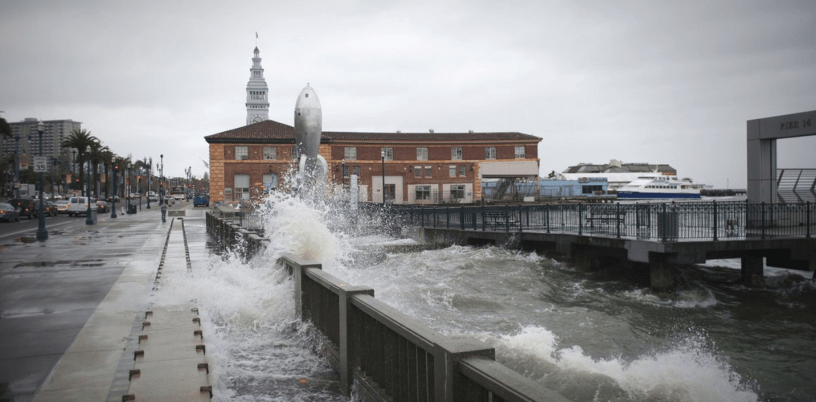
Some $50 million will be needed annually to cushion the effects of climate change which experts said has already started to manifest through sea level rise, unpredictable weather patterns and more intense hurricanes.

Deputy Premier and Minister of Natural Resources and Labour, Hon. Dr. Kedrick Pickering is leading the charge to ensure that…

View original post 309 more words

Gallery

The Heat Is On: Global Warming and the Caribbean

caribbeanclimate's avatarcaribbeanclimate

Caribbean countries are only too familiar with the ravages of climate change. Hurricanes yearly batter shores, floods wreak havoc and harvests wither. And the pace of global warming seems to quicken with every passing season.

“The potential threat is severe,” says Dr Mark Bynoe, an environmental economist whose research is funded by the Commonwealth Secretariat, pointing to a projected rise in global temperature of at least two degrees Celsius within this century.

“With a one-degree increase we could get a three- to six-foot rise in sea levels,” says Bynoe. “In a country like Guyana, where 90 per cent of the populace live on land that is as much as six feet below sea level, the impacts are unimaginable.”

Just as the effects of climate change are varied, manifested in sun-scorched crops or devastating tornadoes, so too the options for mitigating or adapting to change are wide-ranging – provided you have…

View original post 660 more words

Permaculture PDC in Palestine in September

Marda Permaculture Certification Course, Register Now!


For more information click here


Mega dry spell Spain’s worst in 150 years

Parts of Spain are currently suffering through their most intense dry spell in a century and a half with Valencia and Alicante among the worst affected regions. Future predictions are not too rosy either, meteorologists warn.

The last eight months have been brutally dry for large swathes of southern and eastern Spain.

While huge storms buffeted Spain’s Atlantic coasts and the Canary Islands during the winter and spring, Valencia and Alicante, as well as areas including Murcia, parts of Albacete province, and the Andalusian provinces of Jaén, Almería, Cadíz and Málaga have all been starved of rain.

In the last 150 years, there has never been “such a long and intense drought”, according to the country’s meteorological agency Aemet.

Indeed there are parts of the country where during “the second worst period of drought on record there was twice as much rain as now”, meteorologist José Antonio Maldonado told Spanish free daily 20 minutos.

Rainfall levels in many areas have been less than half of those seen from 1971 to 2000, while some places have seen less than 25 percent of those levels.

Most dams are still at somewhere between 74 percent and 90 percent of capacity thanks to rains from earlier years, but some farmers are already struggling to water their crops, or have gone out of business.

Spain is also facing an uncertain water future: a 2013 study by the Spanish National Research Council (CSIC) looking at the period from 1945 to 2005 found the country’s droughts were becoming more intense and more regular. More


    Which U.S. City Will Be the First Submerged by Climate Change?

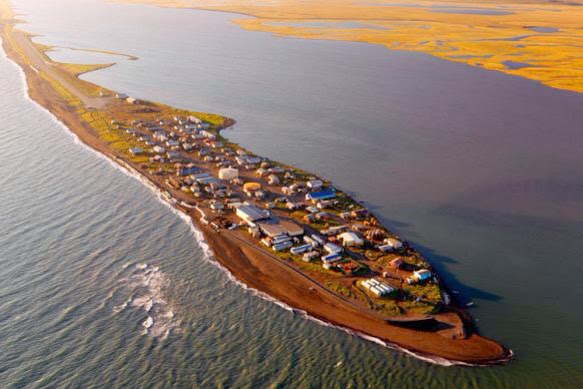
    A new Climate Central report shows which U.S. cities’ fates are locked in by sea-level rise. The long list of 1,400 cities includes not only obvious coastal candidates like Miami and New Orleans, but also inland cities such as Sacramento. They’re doomed to drown by 2100 even if carbon emissions immediately—like right now—drop to zero.

    Representative Henry Waxman (D-CA), a longstanding climate champion, tells TakePart: “As this report makes clear, climate change is no longer an issue for ‘later.’ Climate change is already affecting the United States and the window for effective action is closing fast. We must act now to protect the planet for our children and future generations.”

    Ben Strauss, one of the scientists behind the new report, began with a study that found for every degree Fahrenheit of global warming due to carbon pollution, global average sea-level will rise by about 4.2 feet in the long run. When multiplied by the current rate of carbon emissions, and the best estimate of global temperature sensitivity to pollution, this translates to a long-term sea-level rise commitment that is now growing at about one foot per decade. Strauss then analyzed the growth of the locked-in amount of sea-level rise and plotted it against a map of the United States.

    Carbon pollution to date has already locked in more than four feet of sea-level rise past today’s levels, Strauss finds. That’s enough, at high tide, to submerge more than half of today’s population in 316 coastal cities and towns, home to 3.6 million people, in the lower 48 states.

    “We have two sea levels: the sea level of today, and the far higher sea level that is already being locked in for some distant tomorrow,” Strauss writes.

    Rising tides have already harmed some coastal towns.

    “In Rhode Island, we’ve already seen almost 10 inches of sea-level rise at the Newport tide gauge since the 1930s, making coastal communities more vulnerable to floods, erosion, and the kind of property damage we saw during Hurricane Sandy. We must take immediate steps to limit the carbon pollution that is contributing to sea-level rise, and help coastal areas prepare for new realities,” Senator Sheldon Whitehouse tells TakePart.

    To the surprise of absolutely no one who has seen An Inconvenient Truth, Florida is the most threatened state. Louisiana, North Carolina, and New Jersey are also high on the list. Strauss didn’t consider the impact of armoring or defending cities in preparing his report, but notes that New Orleans may be defensible through sea walls, while Miami is indefensible because of its porous bedrock geology.

    Although California’s Sacramento and Stockton are thought of as inland cities, they’re connected to the Pacific Ocean through the Sacramento-San Joaquin Delta, a complex maze of marshes and levees. By 2040, 25 percent of Stockton will be underwater at high tide. By 2060, the same will be true of Sacramento, California’s state capitol. Coastal California cities such as Huntington Beach, the original Orange County Surf City, and Palo Alto, home of Stanford University, will likewise be inundated.

    Other cities projected to be 50 percent underwater: Galveston, Texas, by 2030; Norfolk, Virginia; and Coral Gables, Florida, by 2044. More


    The Environment Will Be Fine, It’s Us We Should Be Worried About

    A fresh perspective on the Cayman Islands environment by a talented young writer. Well worth reading.

    sevenshoremedia's avatarSEVEN SHORE

    Many people often dismiss environmentalism as some tree-hugger ideal that dismisses the needs of people. We’ve seen as much in recent discussions concerning the marina development in the Brac. A number of people have argued that it is pointless and, indeed, selfish on the part of conservationists who point to the protected status of the pond to stop it. How can these privileged liberals fight this stinking, vile hole in the ground which, they argue, prevents development in the Brac and the alleviation of their economic woes?

    Both sides, however, are correct to a degree. The concerns that dredging that area will leave the Brac and its population vulnerable to the wrath of storm are entirely valid. That the developers are reluctant to prove otherwise is what is really concerning. As it is now, if another storm were to fall upon the Brac and create greater destruction than Paloma did not…

    View original post 425 more words