Drought sees Rio’s main hydro plant turned off

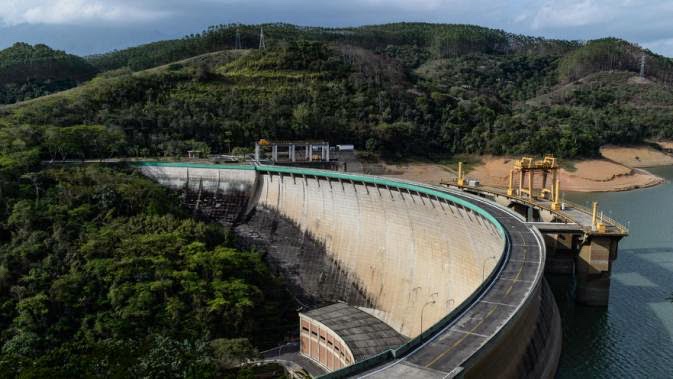
Rio de Janeiro (AFP) – A major Rio hydroelectric power plant was switched off after water levels slipped below an operational minimum following severe drought, Brazil's national grid told AFP on Thursday.

Water levels are also dwindling at three other plants that serve a region home to 16 million people, but an ONS spokesman denied there was any immediate threat to energy supplies.

“The hydroelectric plant was switched off Wednesday as there was no longer enough water to keep its turbines turning,” the spokesman said of the shutdown at the largest of the four sites.

Rio is laboring under weeks of scant rainfall as stifling temperatures approach 40 degrees Celsius (104 Fahrenheit).

The plants receive their water from the Paraiba do Sul river, which flows through the states of Sao Paulo and Minas Gerais, as well as Rio.

Last month, the states' governors agreed to begin work on improving the infrastructure of the sites as the drought shows little sign of abating.

Last year, Sao Paulo, Brazil's most populous state, suffered its worst drought in 80 years. More


Antibiotics, bacteria, resistance genes found in dust from feedlots

After testing dust in the air near cattle feedlots in the Southern High Plains, researchers at The Institute of Environmental and Human Health at Texas Tech University found evidence of antibiotics, feedlot-derived bacteria and DNA sequences that encode for antibiotic resistance.

The study was published online in the National Institutes of Environmental Science’s peer-reviewed journal, Environmental Health Perspectives. The research was funded through a grant from Texas Tech’s College of Arts and Sciences. It is the first study documenting aerial transmission of antibiotic resistance from an open-air farm setting.

Phil Smith, an associate professor of terrestrial ecotoxicology at the institute, said that while scientists couldn’t assess if the amounts of these materials were dangerous to human health, it helped explain a previously uncharacterized pathway by which antibiotic-resistant bacteria could travel long distances into places inhabited by humans.

The findings come weeks after a report commissioned by British Prime Minister David Cameron concluded that failure to battle drug-resistant infections and their causes could result in 10 million extra deaths a year by 2050 at a cost of $100 trillion to the global economy.

“You can look in the news, and people are raising red flags about antibiotic resistance all the time,” Smith said. “Microbes are pretty promiscuous with their genetic information, and they share it across species fairly easily. We know it’s there. We know what causes it, but we don’t have a really good handle on how it’s transmitted and how it moves in the environment. This is an attempt to provide better clarity on that issue.

“Everyone is fairly certain antibiotic resistance comes from extensive use of antibiotics in animal-based agriculture. About 70 percent of all antibiotics used are for animal agricultural purposes. Overuse contributes to antibiotic resistance. But how does it happen? How does it get from where the drugs are used into the human environment and natural environment?”

Smith said scientists collected air samples upwind and downwind of each feedlot. After analysis, they found greater amounts of bacteria, antibiotics and DNA sequences responsible for antibiotic resistance downwind of the feedlots compared to upwind, which helped scientists determine the source of the materials they found.

Because the antibiotics are present on the particulate matter with bacteria, the selective pressure for bacteria to retain their resistance remains during their flight, said Greg Mayer, an associate professor of molecular toxicology at the institute.

With wind blowing regularly on the Southern High Plains, the antibiotics and bacteria can travel on the dust and particulate matter far from the original starting point at the feedlot. Add the infamous West Texas dust storms into the picture, and these materials have the potential to travel hundreds of miles into cities and towns and possibly around the globe.

“I think implications for the spread of some feedlot-derived, antibiotic-resistant bacteria into urban areas is paramount to the research,” Mayer said. “Now, we haven’t yet taken samples from an urban area to determine whether bacteria from that particulate matter originated from feedlots or whether it still has antibiotic resistant bacteria on it. However, this study is proof of the principle that antibiotic-resistant bacteria could plausibly travel through the air.

“Further studies are now needed to show where the particulate matter is traveling and what is happening to its passengers when it gets there.” More


That Was Easy: In Just 60 Years, Neoliberal Capitalism Has Nearly Broken Planet Earth

A pair of new studies show how various forms of human activity, driven by a flawed economic system and vast consumption, is laying waste to Earth's natural systems

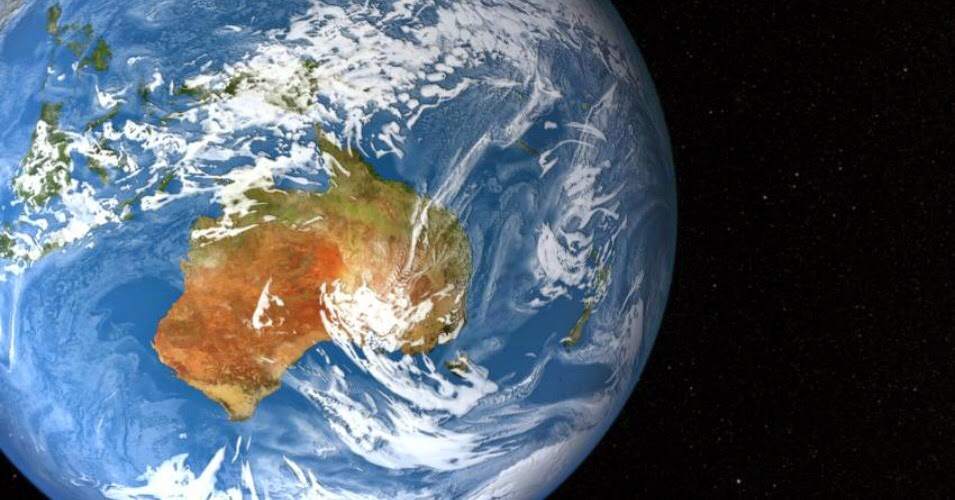
The conclusion that the world's dominant economic model—a globalized form of neoliberal capitalism, largely based on international trade and fueled by extracting and consuming natural resources—is the driving force behind planetary destruction will not come as a shock, but the model's detailed description of how this has worked since the middle of the 20th century makes a more substantial case than many previous attempts. (Photo: NASA)

Humanity's rapacious growth and accelerated energy needs over the last generation—particularly fed by an economic system that demands increasing levels of consumption and inputs of natural resources—are fast driving planetary systems towards their breaking point, according to a new pair of related studies.

“It is difficult to overestimate the scale and speed of change. In a single lifetime humanity has become a geological force at the planetary-scale.” —Prof. Will Steffen

Prepared by researchers at the Stockholm Resilience Centre, the first study looks specifically at how “four of nine planetary boundaries have now been crossed as a result of human activity.” Published in the journal Nature on Thursday, the 18 researchers involved with compiling evidence for the report—titled 'Planetary Boundaries 2.0'—found that when it comes to climate change, species extinction and biodiversity loss, deforestation and other land-system changes, and altered biogeochemical cycles (such as changes to how key organic compounds like phosphorus and nitrogen are operating in the environment), the degradation that has already take place is driving the Earth System, as a whole, into a new state of imbalance.

“Transgressing a boundary increases the risk that human activities could inadvertently drive the Earth System into a much less hospitable state, damaging efforts to reduce poverty and leading to a deterioration of human well-being in many parts of the world, including wealthy countries,” said Professor Will Steffen, a researcher at the Centre and the Australian National University, Canberra, who was lead author for both studies.

In addition to the four boundaries that have already been crossed, the study looked five other ways in which the planetary systems are under assault by human activity. They include: stratospheric ozone depletion; ocean acidification; freshwater use; atmospheric aerosol loading (microscopic particles in the atmosphere that affect climate and living organisms); and the introduction of novel entities into ecosystems (e.g. organic pollutants, radioactive materials, nanomaterials, and micro-plastics).

“I don't think we've broken the planet but we are creating a much more difficult world,” Sarah Cornell, another report author, told Reuters.

In this interview with Wired last year, Johan Rockström, executive director of the Stockholm Resilience Centre, described the idea about planetary boundaries in details:

Related to the findings of the first study, the second report examines what it calls the “Great Acceleration” and is an assessment of the speed and influence that specific factors have had in damaging the planetary systems described in Planetary Boundaries 2.0. Using a series of indicators, the study compares the relationship, over time, between 12 'socio-economic factors'—including economic growth (GDP); population; foreign direct investment; energy consumption; and water use—on one side with 12 'Earth system trends'—like the carbon cycle; the nitrogen cycle and biodiversity—on the other.

Using what it calls a “planetary dashboard,” the research charts the spread and speed of human activity from the start of the industrial revolution in 1750 to 2010, and the subsequent changes in the Earth System – e.g. greenhouse gas levels, ocean acidification, deforestation and biodiversity deterioration. The analysis found that increased human activity—and “predominantly the global economic system”—has unseated all other factors as the primary driver of change in the Earth System, which the report describes as “the sum of our planet's interacting physical, chemical, biological and human processes.” The most striking, i.e. “accelerated,” changes to that system have occurred in the last sixty years.

“It’s clear the economic system is driving us towards an unsustainable future and people of my daughter’s generation will find it increasingly hard to survive. History has shown that civilisations have risen, stuck to their core values and then collapsed because they didn’t change. That’s where we are today.” —Prof. Will Steffen”It is difficult to overestimate the scale and speed of change. In a single lifetime humanity has become a geological force at the planetary-scale,” said Steffen, who also led the Acceleration study.

The conclusion that the world's dominant economic model—a globalized form of neoliberal capitalism, largely based on international trade and fueled by extracting and consuming natural resources—is the driving force behind planetary destruction will not come as a shock, but the model's detailed description of how this has worked since the middle of the 20th century makes a more substantial case than many previous attempts.

“When we first aggregated these datasets, we expected to see major changes but what surprised us was the timing. Almost all graphs show the same pattern. The most dramatic shifts have occurred since 1950. We can say that around 1950 was the start of the Great Acceleration,” says Steffen. “After 1950 we can see that major Earth System changes became directly linked to changes largely related to the global economic system. This is a new phenomenon and indicates that humanity has a new responsibility at a global level for the planet.”

The paper makes a point to acknowledge that consumption patterns and the rise of what has become known as the Anthropocene Era does not fall equally on the human population and its examination of the economic system which is underpinning planetary destruction is one rife with inequality, in which certain populations consume at vastly higher levels than others.

According to the report, “The new study also concludes that the bulk of economic activity, and so too, for now, the lion's share of consumption, remain largely within the OECD countries, which in 2010 accounted for about 74% of global GDP but only 18% of the global population. This points to the profound scale of global inequality, which distorts the distribution of the benefits of the Great Acceleration and confounds international efforts, for example climate agreements, to deal with its impacts on the Earth System.”

A worrying trend, notes the paper, is how a growing global middle class—exemplified by those in the BRICS nations of Brazil, Russia, India, China, and South Africa—is an increasing threat to the planet as the consumer mindset established in the OECD nations, particularly the U.S., spreads.

In an interview with the Guardian, Steffen spoke clearly about the overall impacts of the two new studies as he sounded the alarm over humanity's trajectory. “People say the world is robust and that’s true, there will be life on Earth, but the Earth won’t be robust for us,” he said. “Some people say we can adapt due to technology, but that’s a belief system, it’s not based on fact. There is no convincing evidence that a large mammal, with a core body temperature of 37C, will be able to evolve that quickly. Insects can, but humans can’t and that’s a problem.”

“It’s clear the economic system is driving us towards an unsustainable future and people of my daughter’s generation will find it increasingly hard to survive. History has shown that civilisations have risen, stuck to their core values and then collapsed because they didn’t change. That’s where we are today.”

What increasing amounts of strong evidence shows, he said, is that that there “tipping points” that the human race should simply not “want to cross.” More

This work is licensed under a Creative Commons Attribution-Share Alike 3.0 License


University library place of learning in volatile Pakistan city

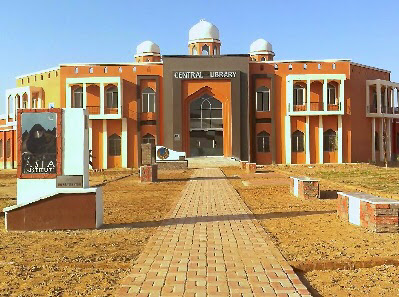
BANNU, Pakistan – Central Asia Institute (CAI) has completed and turned over to the Pakistan government a 34,000-square-foot university library in one of the most volatile regions of the country.

The Central Library at University of Science and Technology-Bannu is the only project of its kind that CAI has done. It was requested by the university’s founding vice chancellor, Asmat Ullah Khan, in 2011.

“This university is a newly established institution with a total age of six years since its inception in November 2005,” Khan wrote in his initial request. “The day-and-nights continuous efforts of the university administration have made a record progress in the developmental works and the quality education in this remote, underdeveloped region of the province, although the financial constraints have always been the main obstacles in the achievement of the desired objectives.”

One longed-for objective was a library.

“The university was in dire need of a library,” said CAI’s former Pakistan director, Lt. Col. (Ret.) Ilyas Mirza, who is from the region. “Their budget being too meager, (it) could hardly afford something of the size of what CAI donated to them.”

Plus, he added, “I wanted the youth of this area, victims of the war on terror, to have a state of-the-art library facility and access to a real source of learning.”

CONFLICT ZONE

Bannu’s location at the edge of North Waziristan, near the Pakistan-Afghanistan border, puts it in a sort of “no-go zone” for any international aid organizations, said CAI Co-Founder Greg Mortenson.

“Bannu, unfortunately, has become the epicenter of violence in the fighting between militants and the Pakistan police and army, and the U.S. further antagonizing the locals by drone bombings” Mortenson said. “It’s a consistently high-threat, high-conflict area, traditionally conservative, and often overlooked.”

The city is about 118 miles south of Peshawar, 23 miles east of the Pakistan-Afghan border, and just a little more than one mile east of North Waziristan, headquarters of the Pakistan Taliban and other terrorist networks.

The university is also just 700 meters from Bannu jail, which the Taliban attacked on April 15, 2012, just 15 days after work began on the library.

More than 200 heavily armed Tehreek-e-Taliban Pakistan (TTP) militants arrived predawn in numerous vehicles carrying AK-47s, hand grenades, and rocket launchers, according to news reports. They blew up the main gate, destroyed the boundary wall, and freed 384 prisoners, including some of Pakistan’s “most-wanted” criminals.

“The next 23 months were full of risk,” Mirza said. “Yet we continued and achieved something that CAI can be proud of.”

Acting Library Director Mohammad Hussain said the entire campus is grateful for the new library.

“I have been working at Bannu University since 2006, and we only had a room with some books for the library,” said Hussain, who is working on his PhD in library sciences from the University of Sargodha in Pakistan. “Now we have one of the best libraries in Khyber Pakhtunkhwa province that we are very proud of.”

CAMPUS CENTERPIECE

The two-story, red brick library situated in the center of the campus was completed in 2014.

“It is now for the university to encourage its faculty and students to make maximum use of it,” Mirza said. “Let it be turned into a real place of learning.”

Bannu is a conservative region and CAI and the university designed the library with separate study areas for males and females. However, some students do mingle in co-ed areas of the library while working on class projects.

In addition to the library, CAI donated a water-supply system for the university and awarded scholarships to nine graduate-level female students for two years of study.

Bannu is situated at the convergence of the Kurram and Gambila rivers, which irrigate the traditional barley, wheat, and corn crops. British visitors to the region in the mid 1800s referred to Bannu as a paradise, said Mortenson, who has visited the Bannu region several times since 1996. It also has a rich history as a place of religious tolerance.

“Until recently, it was a place where Muslims, Christians, Sikhs and Hindus lived in harmony for centuries,” he said.

Hamza Ameer, a writer who visited Bannu four times in 2014 to document the displacement of refugees from the North Waziristan conflict, described a special place in Bannu called Holy Street, “a symbol of religious harmony, patience, and acceptance for the world,” he wrote.

“The street starts with a church, whose wall is attached [to] a Shiite Imam Bargah [Mosque], wall of who is attached to a Hindu Ram Mandir [temple], attached to a Muslim mosque,” Ameer wrote.

FILL IT WITH BOOKS

But despite that history of tolerance, the region is now in turmoil. In addition to the fighting, the influx of Waziristan refugees, said to total as many as 500,000, has made the city and surrounding areas chaotic, Mirza said.

“The library should be a center of peace and calm amid all the conflict and difficulties,” he said.

Although CAI will remain in contact with library and university officials, maintenance of the new building and work to build a good collection of books is the responsibility of the university and Pakistan’s Ministry of Higher Education.

“We have very few resources to enhance the library,” Hussain said. “The KP Higher Education Commission and federal government do not have funds allocated for the ongoing maintenance of the library, and this year the federal government made significant cuts in education funding.”

At the present time, a library support group is being formed to raise awareness and generate more support for books, technology, training, and supplies. However, the recent militant activity, escalating conflict, and lack of federal funding have made progress difficult.

The university has received several donations of books, mostly science, technology, and curriculum-related. But it badly needs more books.

Hussain and others within the university administration expressed hope that libraries in the United States, Canada, and Europe might take an interest in their library and work with them to expand the collection.

“Any joint effort to promote higher education, reading, and learning in the region could also be a catalyst for promoting tolerance, just as the city of Bannu has done for two centuries,” Mortenson said.

Inquiries regarding library support or book donations can be directed to:

Central Library University of Science & Technology-Bannu Bannu, Khyber Pakhtunkhwa Province
Pakistan 28100
Phone + 92-928-633817
Email pro@ustb.edu.pk

QUOTE: “Books permit us to voyage through time, to tap the wisdom of our ancestors. The library connects us with the insight and knowledge … of the greatest minds that ever were, with the best teachers, drawn from the entire planet and from all our history, to instruct us without tiring, and to inspire us to make our own contribution to the collective knowledge of the human species.” ― Carl Sagan


Pakistani Taliban: The fault in their narrative

On December 16, 2014, Pakistani Taliban massacred over 132 children when they attacked a high school in Peshawar.

Taliban in the spring of 2013

They rationalized this attack as a reaction to the violence perpetrated against them (whether by the Pakistani military or US drones). This narrative attempts to shift blame for the violence away from the Taliban, creating an environment where the population becomes sympathetic to their rationales, even while disagreeing with their tactics. Therefore, it is increasingly important to challenge the Taliban narrative.

First, simply claiming to be fighting in reaction to military operations, does not make it true. Taliban in Pakistan were targeting civilians long before the start of any military campaigns. Lethal force was employed against them because the militants had started violence against the Pakistan state, rather than vice versa.

Second, while civilians are in fact being harmed by both the Pakistani military and the US drones, it is not clear if these victims are necessarily joining the Taliban. In fact, there is considerable evidence of child recruitment and forcible recruitment within the Taliban organizations.

Third, in the context of Afghanistan, in his study Jason Lyall found that while insurgents do increase their attacks after the use of force by the counter-insurgency, civilian casualties play an insignificant role in motivating these attacks. To put it simply, terrorist do not care about civilian casualties. By definition, terrorism is a tactic that deliberately targets civilians. Militants increase attacks because their own survival is threatened, and violence is a way of bolstering their bargaining leverage. The choice of targeting a school does show desperation on their part. To quote a Pakistani general, “The militants know they won’t be able to strike at the heart of the military, they don’t have the capacity. So they are going for soft targets.”

The use of lethal force against terrorist groups is a hard sell in today’s political climate, as experts often argue that it exacerbates the problem of terrorism. However, if the use of weapons is to be reduced in the “war against terrorism,” then it is important to challenge the terrorists’ narrative and condemn their actions in an unapologetic fashion. This will shrink the sympathetic space that makes it easier for these groups to operate, making their demise more likely. More


Global warming reduces wheat production markedly if no adaptation takes place

Future global wheat harvest is likely to be reduced by six per cent per each degree Celsius of local temperature increase if no adaptation takes place. Worldwide this would correspond to 42 million tons of yield reduction, which equals a quarter of current global wheat trade, experts warn.

Future global wheat harvest is likely to be reduced by six per cent per each degree Celsius of local temperature increase if no adaptation takes place. Worldwide this would correspond to 42 million tons of yield reduction, which equals a quarter of current global wheat trade.

Wheat plays an important role in feeding the world, but climate change threatens its future harvest. Without adaptation, global aggregate wheat production is projected to decline on average by six per cent for each additional degree Celsius temperature increase. Worldwide this would correspond to 42 million tons yield reduction for one 1°C global warming.

This result has been generated by an international research consortium to which Natural Resources Institute Finland (previously known as MTT Agrifood Research Finland) substantially contributed. The results were published online in the high impact journal Nature Climate Change.

Losses expected throughout the world

The researchers found out that in response to global temperature increases, grain yield declines are predicted for most regions in the world. Considering present global production of 701 million tons of wheat in 2012, this means a possible reduction of 42 million tons per one degree Celsius of temperature increase.

“To put this in perspective, the amount is equal to a quarter of global wheat trade, which reached 147 million tons in 2013. In addition, wheat yield declines due to climate change are likely to be larger than previously thought and should be expected earlier, starting even with small increases in temperature,” points out Prof. Dr. Reimund Rötter from Natural Resources Institute Finland.

“Therefore it is essential to understand how different climate factors interact and impact food production when reaching decisions on how to adapt to the effects of climate change.”

Increased variability weakens stability in grain supply

In the study, the researchers systematically tested 30 different wheat crop models against field experiments in which growing season mean temperatures ranged from 15 °C to 26 °C. The temperature impact on yield decline varied widely across field test conditions. In addition, year-to-year variability increased at some locations because of greater yield reductions in warmer years and lesser reductions in cooler years.

“Increased yield variability is critical economically as it could weaken regional and global stability in wheat grain supply and food security, amplifying market and price fluctuations, as experienced during recent years,” says Professor Rötter.

In its recent Assessement Report (AR5), the Intergovernmental Panel on Climate Change (IPCC) projects that global mean temperature may rise up to 5 °Celsius by the end of this century.

“Timely and adequate adaptation, such as cultivating more heat-tolerant wheat cultivars could substantially reduce climate change induced risks,” Rötter continues.

Unique and multi-locational study

Agrosystems modellers, Dr. Fulu Tao, Dr. Taru Palosuo and Prof. Dr. Reimund Rötter from Natural Resources Institute Finland participated to this collaborative research under the umbrella of AgMIP, The Agricultural Model Intercomparison and Improvement Project coordinated by Columbia University, NASA and University of Florida, USA. Apart from Finland, scientists from Germany, France, Denmark, Netherlands, Spain, UK, Columbia, Mexico, India, China, Australia, Canada and USA participated in this global study.

In a unique study set-up, the scientists first compared simulation results from a large ensemble of wheat crop growth models with experimental data, including artificial heating experiments and multi-locational field trials. They found that discrepancies between observation and simulation varied among individual models, whereby deviations increased with increasing growing season temperature.

Most reliable estimates of observed yields over the range of temperature regimes were achieved by using the multi-model ensemble median estimate. Based on these test results, scientists subsequently applied the multi-model ensemble to estimate wheat yields under increasing temperature in the main cultivation areas of the world. More


The Great Global Lie By Richard W. Rahn

Offshore financial centers owe their prosperity to tax transparency, not tax evasion

Grand Cayman, Cayman Islands — January 13, 2015 – Cayman is prosperous, in part, because of a great global lie, which causes many big rich nations to pursue bad economic policies. The global lie is that the developed countries have too little government, rather than too much


That lie causes countries to tax themselves far above the level that would maximize the general welfare and job creation. That lie causes governments to spend money on many nonproductive activities and to spend money far less efficiently than the private sector for the same activity. Finally, that lie causes governments to regulate excessively and often in a destructive manner. The simple and obvious empirical fact that most developing and developed countries with smaller government sectors have grown faster in recent decades than those countries with big government sectors is ignored both by the politicians and many in the media

The Economist magazine is just out with its annual lists of economic forecasts for the major developed countries. It makes for depressing reading. The euro area (including Germany, France, Italy and Spain) and Japan had less than 1 percent growth in 2014, and are forecast to average only about 1 percent growth in 2015, which is little more than stagnation. Britain and the United States are doing the best — having growth of about 2.9 percent for Britain and 2.3 percent for the United States in 2014 — with a forecast of approximately 3 percent growth for both in 2015. These numbers are all well below the averages for the great prosperity that lasted for the 25-year period from 1983 to 2007. The unemployment rate for the eurozone at the end of this past year was 11.5 percent (depression levels)

The political classes in these countries, rather than taking responsibility for their own misguided policies, look for scapegoats. Their favorite scapegoats are high-growth countries with low tax rates on savings and investment. They blame offshore financial centers like Cayman, Hong Kong, Bermuda, and even mid-sized countries like Switzerland for engaging in “unfair tax competition.

Critics of Cayman and other offshore financial centers call them “tax havens,” ignoring the fact that they all have many taxes, particularly on consumption — which is good tax policy — rather than on productive labor and capital — which is bad tax policy. The statist political actors in the high-tax jurisdictions will not admit that people do not work, save and invest if they are going to be overly taxed and otherwise abused by their own governments. Those who are able will pick up some of their marbles and move them to places where they will be better treated.

Cayman and other offshore financial centers originally arose because of a need to have places that facilitate the movement of marbles (aka savings). Cayman is too small (only 100 square miles and 50,000 people) to be the ultimate destination of wealth trying to escape oppression — but it has the rule of law, an honest court system and protects private property — which allows it to become a protected way station for productive investment throughout the world, including the United States.

Cayman now has almost total tax transparency with the United Kingdom, the European Union and the United States as a result of tax information exchange agreements; yet its financial sector continues to grow — more company licenses, more of the world's hedge funds (with total assets of almost $2 trillion), and more insurance companies. This growth is not driven by tax evasion, but mainly by regulatory and civil court efficiency and integrity

The chairman of the Cayman Islands Stock Exchange, Anthony Travers, recently wrote in the IFC Review: “Paradoxically, what now becomes clear as a result of this increased tax transparency is that the historical arguments of the NGOs [non-governmental organizations] in relation to the extent of tax evasion in the offshore jurisdictions are proven to be the purest nonsense. Not only have the Tax Information Exchange Agreements failed to generate any discernible revenue but what will now be shown is that the tax revenues generated for the benefit of the USA and the U.K. Treasuries from FATCA [Foreign Account Tax Compliance Act] will be marginal.”

The fact is the world would be poorer with even less growth if the offshore financial centers did not exist — because the amount of productive investment and its efficient allocation would be less. The offshore centers are merely a response to bad tax, regulatory and spending policies in most of the major, rich countries. The major countries could conquer the offshore centers, but as the smart people know, that would make the rich countries poorer, and without a convenient scapegoat. Or, the rich countries could reduce the size of their own governments, cut tax rates on capital, and make their regulatory systems cost-efficient. Such actions would reignite growth and job creation — but reduce the power of the political and international bureaucratic classes — so they continue the big lie.Richard W. Rahn

Richard W. Rahn is a senior fellow at the Cato Institute and chairman of the Institute for Global Economic Growth.


http://www.washingtontimes.com/news/2015/jan/12/richard-rahn-cayman-islands-owe-prosperty-to-trans/


GRID-Arendal Highlights Blue Forests Project Launch

December 2014: GRID-Arendal's interim marine newsletter highlights the launch of the Global Environment Facility's (GEF) Blue Forests Project, which will explore how to harness the value of carbon and other coastal ecosystem services to improve ecosystem management.

The Blue Forests Project aims to increase recognition of the role of mangroves, seagrasses and saltmarshes in climate change mitigation and adaptation. It will also address knowledge gaps on the role of blue forests in storing and sequestering carbon and sheltering towns from storms. The project will be implemented in Ecuador, Indonesia, Kenya, Madagascar, Mozambique and the United Arab Emirates (UAE) as well as in a to-be-determined location in Central America.

The newsletter also highlights: the Norwegian Blue Forests Network, an initiative that focuses on harnessing the potential of blue forests to capture and store atmospheric carbon as well as other ecosystem services; and a GRID-Arendal and Blue Climate Solutions report, ‘Fish Carbon: Exploring Marine Vertebrate Carbon Services.' The report highlights the potential of marine vertebrates to address climate change and prevent global biodiversity loss and presents eight “fish carbon” mechanisms.

GRID-Arendal also announced that it will begin producing a common newsletter for all its programmes beginning in January 2015, making this newsletter the last one focused solely on marine issues. More

[GRID-Arendal Newsletter] [GRID-Arendal News on Blue Forests Project] [Blue Forests Project Website] [GRID-Arendal News on Norwegian Blue Forests Network] [Publication: Fish Carbon: Exploring Marine Vertebrate Carbon Services]


International Dialogue on Underwater Munitions Highlighting Sea-Dumped Chemical Weapons

International Dialogue on Underwater Munitions

Deadly Depths

Underwater munitions pollute the marine environment with toxic chemicals. We have learned that there is a “need to clean” both chemical and conventional weapons based on potential human health impacts, as well as environmental implications through depleting fish stocks (CHEMSEA Findings Report 2013, Search and Assessment of Sea Dumped Chemical Weapons and Porter, JW, Barton J and Torres 2011, Ecological, Radiological and Toxicological Effects of Naval Bombardment on Coral Reefs of Isla de Vieques, Puerto Rico).

Terrence Long

Underwater Munitions are “Point Source Emitters of Pollution”. This means that in most cases, if we remove the source: we remove the problem. Off-the-shelf-technology developed by private sector, oil and gas industry, and military's unmanned systems programs, already exists to detect, map, recover and dispose of underwater munitions and the toxic waste they create. The International Dialogues on Underwater Munitions (IDUM's) mission is to promote the creation of an internationally binding treaty on all classes (biological, chemical, conventional, and radiological) of underwater munitions, to lead to the cleanup of our Oceans worldwide. IDUM hosts and attends international forums to facilitate collaboration with international leaders and organizations to better understand the socio-economic impact on both human health and environment from years of decaying underwater munitions. IDUM cooperates with researchers, industry, and government to foster collaborative solutions that further the clean-up of our oceans. We believe through international diplomacy via national and international programs, dialogue, conferences, workshops, committees, senate hearings, and commissions, we can come together globally to clean our One Ocea

IDUM is considered the international group of experts in Policy, Science, Technology and Responses to Underwater Munitions. We have been extremely effective in furthering international discussion, and creating a united appeal to international governments, as well as creating an International Technology Advisory Board on Sea Dumped Munitions. In support of our efforts, IDUM has been recognized in proceedings for Organization for the Prohibition of Chemical Weapons (OPCW), Third Review Conference of State Parties, 2014 Noble Peace Prize winner and United Nations (Secretary General Report Sixty-eight session on Sustainable development) for our contributions within the Resolution on sea dumped chemical munitions.

IDUM takes action:

IDUM mobilizes working groups for policy science and technology of sea dumped munitions, and has hosted five (5) international dialogues. We have participated as an observer for Helsinki Commission Heads of Delegations for Protection of the Baltic Sea, as well as provided consultations within HELCOM MUNI Ad Hoc Working Groups on Sea Dumped Chemical Weapons. IDUM has also been a “Special Invited Guest” of the OSPAR Commission for the Protection of the North-East Atlantic Oceans, and participates as Co- Directors for CHEMSEA – Search and Assessment of Chemical Weapons, Baltic Sea and NATO Science for Peace and Security (SPS) – MODUM Project.

IDUM is on the Scientific Committee Polish Naval Academy for Marine Security Yearbook and board of directors for International Centre for Chemical Safety and Security (ICCSS). Most recently, IDUM has been invited to centralize our cooperation with global peace and security organizations at The Hague. Our Chairman, Mr. T. P. Long, will manage the office in The Hague and cooperate with the international community of The Hague (including States Parties and the United Nations) to represent your concerns in an open and transparent process.

Mission Statement

The International Dialogue on Underwater Munitions (IDUM) is a non-governmental organization/Society founded in 2004 by Mr. Terrence P. Long following his appearance at a Canadian Senate Hearing with the Senate Standing Committee on Fisheries and Oceans. The IDUM's mission is to promote the creation of an internationally binding treaty on all classes (biological, chemical, conventional, and radiological) of underwater munitions. This treaty would encourage countries to collaborate on underwater munitions policy, research, science, and responses including environmentally-friendly remediation in affected regions. The IDUM is an internationally recognized body where all stakeholders (diplomats, government departments including external affairs, environmental protection and fishery departments, industry, fishermen, salvage divers, oil and gas, militaries and others) can come together in an open and transparent forum to discuss underwater munitions, seek solutions, and promote international teamwork on their issues related to underwater munitions. The IDUM promotes constructive engagement with all stakeholders rather than disengagement so that we may learn from one another's situation and determine how we can best respond in the future with everyone's considerations. What we have learned is that off-the-shelf-technology, developed by the oil and gas industry and military's unmanned systems programs, does exist to address underwater munitions sites. And there is a “Need to clean” based on the potential human health and environmental impact on our health care systems and fish stocks. Underwater munitions in some form or another will continue to pollute the marine environment over time. It’s just a question of “When”. Underwater Munitions are “Point Source Emitters of Pollution”. In most cases, remove the source and you remove the problem.

Chairman's Message

“The IDUM is collaborating with international leaders and organizations to better understand the socio-economic impact on both human health and environment from years of decaying underwater munitions. The organization is facilitating this through international diplomacy via national and international programs, dialogues, conferences, workshops, committees, senate hearings, and international commissions. Most notable are the international efforts of the Government of Lithuania that resulted in the unanimous passing of the United Nations Resolution on Sea Dumped Chemical Weapons in December 2010 at the United Nations. Internationally, we must organize and continue our work together to collect, process, and provide information on underwater munitions to the Secretary General of the United Nations. Any tangible approach would require a multilateral response from all stakeholders including institutional capacity-building and the creation of an International Donor Trust Fund.” Visit the IDUM Website