Surprise: U.S. drug war in Afghanistan not going well

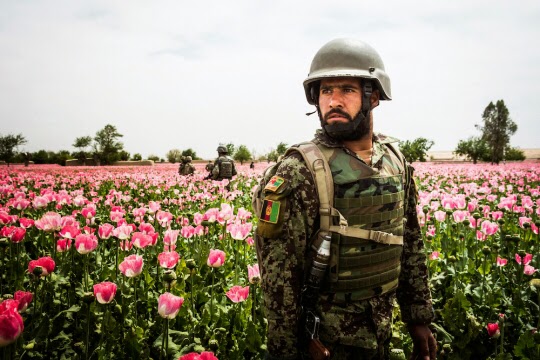
A new report has found the war on drugs in Afghanistan remains colossally expensive, largely ineffective and likely to get worse. This is particularly true in the case of opium production, says the U.S. Office of the Special Inspector General for Afghanistan Reconstruction.

In a damning report released Tuesday, the special inspector general, Justin F. Sopko, writes that “despite spending over $7 billion to combat opium poppy cultivation and to develop the Afghan government’s counternarcotics capacity, opium poppy cultivation levels in Afghanistan hit an all-time high in 2013,” hitting 209,000 hectares, surpassing the prior, 2007 peak of 193,000 hectares. Sopko adds that the number should continue to rise thanks to deteriorating security in rural Afghanistan and weak eradication efforts.

Though the figures it reports are jarring, the inspector general’s investigation highlights drug policy failures in Afghanistan that have been consistently documented for years. Indeed, Sopko himself has been raising concerns over the failing drug war in Afghanistan for some time. In January, he testified before the Senate Caucus on International Narcotics Control and described a series of discouraging conversations with counternarcotics officials from Afghanistan, the U.S., and elsewhere.

“In the opinion of almost everyone I spoke with, the situation in Afghanistan is dire with little prospect for improvement in 2014 or beyond,” Sopko told the lawmakers. “All of the fragile gains we have made over the last 12 years on women’s issues, health, education, rule of law, and governance are now, more than ever, in jeopardy of being wiped out by the narcotics trade which not only supports the insurgency, but also feeds organized crime and corruption.”

While many of the numbers included in the inspector general’s investigation have been made public before, the report serves as a reminder that, in addition to contributing to more than 70,000 deaths in Mexico over eight years, the bloody destabilization of Central America, and the expansion of the largest prison population in history in the United States, the ongoing U.S. effort to eliminate the market for illicit drugs at home and abroad is failing. Afghanistan is still considered the number one producer of opium in the world, responsible for as much as 90 percent of the market, which in turn supports the global heroin trade, even if only a small percentage of heroin from Afghanistan is believed to reach the U.S.

By June of 2014, U.S. departments and agencies — including the Pentagon, the State Department, USAID, the Drug Enforcement Administration and others — had spent a total of $7.6 billion to fight drugs in Afghanistan. Specifically, Sopko notes, the U.S. tax dollars poured into Afghanistan have been intended to support “the development of Afghan government counternarcotics capacity, operational support to Afghan counternarcotics forces; encouragement of alternative livelihoods for Afghan farmers; financial incentives to Afghan authorities to enforce counternarcotics laws; and, in limited instances, counternarcotics operations conducted by U.S. authorities in coordination with their Afghan counterparts.” The results, the inspector general points out, have left something to be desired.

Sopko reports that the resurgence in Afghan poppy cultivation has been driven by the high price of the crop, cheap and mobile labor, and “[a]ffordable deep-well technology,” which “has turned 200,000 hectares of desert in southwestern Afghanistan into arable land over the past decade.” According to figures from the United Nations Office on Drugs and Crime, from 2012 to 2013 the value of opium and the products derived from it increased by 50 percent, from $2 billion to $3 billion.

While U.S. efforts have failed to effectively diminish drug trafficking in Afghanistan, they have succeeded in making a handful of private security companies increasingly rich, a point that is not addressed in the inspector general’s report. In 2009, official responsibility for training Afghan police forces was shifted from the State Department to an obscure branch of the Pentagon known as Counter Narco-Terrorism Program Office (CNTPO), which took over the roughly $1 billion contract. In waging the privatized war on drugs, CNTPO has partnered with such corporate security giants as Raytheon, Lockheed Martin, ARINC, DynCorp and U.S. Training Center, a subsidiary of the firm formerly known as Blackwater.

With the pullout of U.S. forces looming — special operations units notwithstanding — the future of Afghanistan looks grim. Experts at the Afghanistan Analysts Network have noted the expanding power of warlords in Afghanistan’s rural regions. Meanwhile, security agreements between the Afghan government and the U.S. and NATO forces have avoided reining in CIA-backed paramilitaries that have shouldered much of the United States’ dirty work in the last 13 years of war. The rising viability of the opium trade, and the corruption it so often invites, adds yet another layer of complexity to an already fragile situation.

In his report, Sopko encourages the U.S. government and its coalition partners to look back on the years of counternarcotics efforts in Afghanistan and consider what today’s record high levels of poppy cultivation might suggest.

“In past years, surges in opium poppy cultivation have been met by a coordinated response from the U.S. government and coalition partners, which has led to a temporary decline in levels of opium production,” he writes. “However, the recent record-high level of poppy cultivation calls into question the long- term effectiveness and sustainability of those prior efforts.” More

Useful Background Reading


Reality of National Security State Trumps ‘Delusions’ of U.S. Democracy

In the halls of U.S. government, “policy in the national security realm is made by the concealed institutions,” political scientist argues in new book

“I think the American people are deluded.”

So says Tufts University political scientist Michael J. Glennon, whose new book, National Security and Double Government (Oxford University Press), describes a powerful bureaucratic network that's really pulling the strings on key aspects of U.S. foreign policy.

The 'double government' explains why the Obama version of national security is virtually indistinguishable from the one he inherited from President George W. Bush.

The American public believes “that when they vote for a president or member of Congress or succeed in bringing a case before the courts, that policy is going to change,” Glennon told the Boston Globe in an interview published Sunday. “Now, there are many counter-examples in which these branches do affect policy… But the larger picture is still true—policy by and large in the national security realm is made by the concealed institutions.”

Glennon argues that because managers of the military, intelligence, diplomatic, and law enforcement agencies operate largely outside the institutions meant to check or constrain them—the executive branch, the courts, Congress—national security policy changes very little from one administration to the next.

This explains, he says, why the Obama version of national security is virtually indistinguishable from the one he inherited from President George W. Bush. It's also why Guantanamo is still open; why whistleblowers are being prosecuted more; why NSA surveillance has expanded; why drone strikes have increased.

“I was curious why a president such as Barack Obama would embrace the very same national security and counterterrorism policies that he campaigned eloquently against,” Glennon said. Drawing on his own personal experiences as former legal counsel to the Senate Foreign Relations Committee, as well as conversations with dozens of individuals in U.S. military, law enforcement, and intelligence agencies and elected officials, Glennon drew the following conclusion: “National security policy actually bubbles up from within the bureaucracy. Many of the more controversial policies, from the mining of Nicaragua’s harbors to the NSA surveillance program, originated within the bureaucracy.”

To dismantle this so-called “double government”—a phrase coined by British journalist and businessman Walter Bagehot to describe the British government in the 1860s—will be a challenge, Glennon admits. After all, “There is very little profit to be had in learning about, and being active about, problems that you can’t affect, policies that you can’t change.”

But he is not hopeless. “The ultimate problem is the pervasive political ignorance on the part of the American people. And indifference to the threat that is emerging from these concealed institutions. That is where the energy for reform has to come from: the American people,” he said. “The people have to take the bull by the horns.” More

This work is licensed under a Creative Commons Attribution-Share Alike 3.0 License


Perpetual War, Indefinite Detention, And Torture: The U.S. And Israel’s Shared Values

The United States and Israel have “shared values” but not when it comes to upholding democracy and the rule of law. Their shared values are perpetual war, torture, indefinite detention, and military courts.
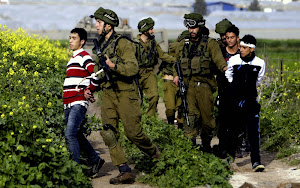
Israeli soldiers arrest Palestinian
minors in the West Bank city of Jenin

Guantanamo is a perfect example of this. Both states have been in a state of perpetual war for quite some time with Israel against the Palestinians since its founding in 1948 while the U.S. can trace back its war to its founding in 1776 and the colonization of Native American lands. Today’s global war on terror is the latest chapter in that saga. Under perpetual war, the United States and Israel can justify a litany of draconian policies, such as indefinite detention, torture, and extrajudicial killing.

International human rights law prohibits torture and detention without charge or trial. The UN Convention Against Torture strictly forbids torture, even in “exceptional circumstances” like “a state of war or threat of war, internal political instability or any other public emergency.” Meanwhile, article 9 of the International Covenant on Civil and Political Rights states, “No one shall be subjected to arbitrary arrest or detention.” The rights to a fair trial, due process, and to be free from torture and inhumane treatment are basic human rights that governments are obliged to uphold. Yet, both the United States and Israel practice indefinite detention – also known as “administrative detention” in Israel – and torture.

Administrative detention and torture in Israel

Israel has detained thousands of Palestinians in the occupied territories without charge or trial over the years “for periods ranging from several months to several years,” according to Israeli human rights group B’Tselem. B’Tselem figures also report that, “At the end of May 2014, 196 Palestinian administrative detainees were held in facilities run by the Israel Prison Service (IPS).” Israel recently locked up over 250 Palestinians in administrative detention as part of its operation to find the three missing but killed Israeli settlers, putting the current population at around 450.

Three Israeli laws allow and regulate Israel’s administrative detention powers – the Administrative Detention Order, theEmergency Powers (Detention) Law, and the Internment of Unlawful Combatants Law.

The Administrative Detention Order, which applies to the West Bank except East Jerusalem, allows military commanders to detain a person for a maximum of six months “for reasons to do with regional security or public security.” Commanders can repeatedly add six months of administrative detention, since there is no limit on extensions. The 1979 Emergency Powers Law allows the defense minister to detain a person for up to six months, like the Order, and extend the detention repeatedly six months at a time. It applies to Israeli residents, residents living in Israeli occupied territories, and residents of other countries, such as Lebanon. However, this law grants detainees more protections than the Order does. The 2002 Internment of Unlawful Combatants Law allows for the administrative detention of a civilian who directly or indirectly participates in hostilities against Israel or is a member of a force that does so. Under this law, persons can be detained for an unlimited period of time. This law is used to detain Palestinians living in the Gaza Strip.

While the occupation is illegal and unjust, Israel, as an occupying power, has an international legal responsibility to uphold the welfare of Palestinians living under its control. International humanitarian law permitssome internment (or detention without charge or trial) in wartime but only “for imperative reasons of security,” according to Article 78 of the Fourth Geneva Convention. Internment [detention] also has to be done on a case-by-case basis rather than implemented widely.

B’Tselem names the numerous ways in which Israel’s use of administrative detention violates its international legal responsibilities as an occupying power. One is its “[e]xtremely extensive use” in contravention of international law. “Administrative detention has become routine practice, rather than an exceptional measure,” according to B’Tselem. Relatedly, administrative detention is used as “an alternative to criminal proceedings” with authorities using it “as a quick and efficient alternative to criminal trial, primarily when they do not have sufficient evidence to charge the individual, or when they do not want to reveal their evidence.” Administrative detention also lacks due process as detainees “are not provided meaningful information on the reasons for their detention and are not given an opportunity to refute the suspicions against them.” Additionally, detention periods are repeatedly extended, which leaves Palestinians detained for several months to years without charge or trial. Israel has also used administrative detention against political opponents, including non-violent political activists. Finally, many Palestinian administrative detainees are held inside Israel.

In 1999, Israel’s High Court of Justice issued a ruling that prohibited interrogators from using methods of torture as a means of interrogation. Before that ruling, Israeli security forces regularly “tortured thousands of Palestinian detainees each year,” according to the Public Committee Against Torture in Israel. In 1987, an Israeli government commission, headed by former Supreme Court President Moshe Landau, issued a report that provided a framework for Israel’s torture regime. The Landau Commission recommended Shin Bet interrogators utilize torture methods, namely “psychological pressure” and a “moderate degree of physical pressure,” against people suspected of “hostile terrorist activity.” It argued that “an effective interrogation is impossible” without some physical force.

Despite the High Court’s 1999 ban on torture, rights groups like the Public Committee Against Torture in Israel (PCATI) point out that the Israeli intelligence agency Shin Bet and other law enforcement agencies still commit acts of torture. The PCATI largely relied on testimonies from Palestinian prisoners and forensic evaluations. In response, the Shin Bet denies it commits torture and argues that its interrogation methods are not only lawful but save lives.

Methods of torture and ill treatment of Palestinian prisoners since 1999, according to the PCATI, include “sleep deprivation, binding to a chair in painful positions, beatings, slapping, kicking, threats, verbal abuse and degradation,” special methods like “bending the body into painful positions,” “forcing the interrogee to crouch in a frog-like position (‘kambaz’), choking, shaking and other violent and degrading acts (hair-pulling, spitting, etc.),” and psychological torture. Prisoners, some of whom are children, in solitary confinement often face “sleep deprivation, exposure to extreme heat and cold, permanent exposure to artificial light, detention in sub-standard conditions.”

The High Court’s ruling has loopholes for Israeli intelligence to circumvent the torture ban. One is the “necessity defense”, which, according to PCATI, “under certain circumstances, exempts interrogators who employ illegal interrogation techniques, including physical violence, from criminal responsibility.” Another is well-known the “ticking bomb” scenario, where torture is allowed to prevent an imminent threat, such as a bomb about to explode. PCATI argues that the government exploited this loophole to declare more detainees ticking time bombs and overstepping the court’s intended scope. PCATI also accused the Shin Bet “taking advantage of the fact that only sleep deprivation for the sake of deprivation is illegal, not sleep deprivation indirectly caused from an extended interrogation,” according to the Jerusalem Post.

Guantanamo, U.S. global war on terror

The 2001 Authorization for Use of Military Force, passed shortly after 9/11, authorizes the President of the United States “to use all necessary and appropriate force against those nations, organizations, or persons” who “planned, authorized, committed, or aided” the 9/11 terrorist attacks “or harbored such organizations or persons.” This bill gives the United States wide power to wage perpetual war around the world against alleged terrorist groups.

When the Obama administration entered office, it not only kept the AUMF in place, but expanded the bill’s scope to continue the global war on terror. The Obama administration interprets the AUMF to include “associated forces” – essentially co-belligerents – of al-Qaeda, even though the bill does not include those words. Last year, the Washington Post reportedthat Obama administration officials were debating whether the AUMF could be stretched to include “associates of associates” of al-Qaeda, including groups like al-Nusra Front in Syria or Ansar al-Sharia in North Africa. Thus, Obama has shifted the war on terror’s goalposts and continued its perpetuity.

The AUMF is the legal linchpin for the United States’ global war on terror. It justifies the U.S. detention facility at Guantanamo Bay, indefinite detention, kill-or-capture raids, extraordinary rendition, and drone strikes. But it is not the only legal measure for doing so. Last year, a week before President Obama’s national security speech, Obama administration officials told the Senate that even without AUMF, the government could use other laws to continue lethal operations against suspected terrorists, such as self-defense under international law. While both states engage in perpetual war under the language of “fighting terror,” Israel’s battlefield mostly extends to the West Bank and Gaza Strip, while the United States’ is the entire world.

The Guantanamo Bay detention facility was opened in 2002, as the global war on terror began. When the U.S. invaded Afghanistan, it provided bounties to tribal allies and Pakistani security forces to capture anyone believed to be connected with al-Qaeda or the Taliban and send them to American forces. This led to large swaths of low-level fightersand guys at the wrong place at the wrong timegetting snatched up thanks to informants looking for money or scores to settle with their enemies. ASeton Hall study pointed out that only 5 percent of Guantanamo detainees were captured by U.S. forces, while 86 percent were captured by Pakistan or the Northern Alliance and handed to the United States.

Presently, there are 149 men detained in Guantanamo. Of those, 79 are cleared for release, 37 are designated for indefinite detention without charge or trial, 6 currently being tried in military commissions, and 36 who could go to trial. However, Guantanamo chief prosecutor Brig. Gen. Mark Martins told reporters last summer that 20 could be “realistically prosecuted.”

Recently, Defense Secretary Chuck Hagel told Congress that the military intends to release six Guantanamo detainees to Uruguay – four of whom are Syrian, one is Palestinian, and the other is Tunisian. All six have been cleared for release for over four years. This would bring the number of detainees cleared for release down to 73 and total Guantanamo inmate population to 143. Meanwhile, the U.S. government deems the indefinite detainees too difficult to prosecute, as there is little to no admissible evidence against them (some was obtained through torture), but too dangerous to release. According to Martins, these indefinite detainees will remain in Guantanamo “until the end of hostilities” against al-Qaeda, the Taliban, and “associated forces.” Thus making them prisoners of war in an endless war.

In 2012, President Obama signed the National Defense Authorization Act (NDAA), sections of which allow the military to indefinitely detain American citizens on US soil who allegedly “substantially supported al Qaeda, the Taliban, and associated forces.” When Obama stepped into office, he pledged to close the U.S. prison in Guantanamo. But the other half of his plan was less advertised. In order to close Guantanamo, Obama’s original plan was to to move some Guantanamo detainees to an Illinois prison. Moreover, his administration decided, early on, to continue utilizing indefinite detention, much to the chagrin of civil liberties groups. However, Congress, particularly members of the Republican Party, fought against this plan not out of opposition to indefinite detention but because they did not want “terrorists” on American soil. This past May, the Obama administration’s legal team told Congress that if Guantanamo detainees “were relocated to a prison inside the United States, it is unlikely that a court would order their release onto domestic soil,” reported The New York Times.

Despite the fear-mongering of releasing “terrorist” from Guantanamo, according to a New America Foundation study, only 4 percent of released Guantanamo detainees engage in “militant activities against U.S. targets.”

Abuses in Guantanamo, according to a 2006 Center for Constitutional Rights report, include beatings, shackling, solitary confinement, sexual harassment and rape, sleep deprivation, medical abuse, and religious and cultural humiliation. Some Guantanamo detainees were detained in secret CIA prisons before arriving at the U.S. military prison in Cuba. An ICRC report on the treatment of 14 “high value” detainees held in CIA black sites revealed that torture techniques in the secret prisons included sleep and food deprivation, playing of loud music, waterboarding, beatings, stress positions, cold temperatures and water, prolonged shackling, threats, and forced shaving. Around 100 detainees were held in CIA black sites and themajority of them were tortured. More


The West’s Repeated Mistakes Over Eastern Europe

Something very similar is happening now in the countries east of the European Union and west of Russia. As the people of Ukraine’s Euromaidan protest movement showed in January 2014 on Kiev’s Independence Square, they were not going to accept a post–Cold War status quo in which Russia sets the agenda. They wanted to choose their own political path.

It seems that history is repeating itself. This time round, NATO is not prepared to help the countries in Europe’s East, while the EU is divided and weak over how to deal with Russian President Vladimir Putin’s invasion of eastern Ukraine and illegal annexation of Crimea in March.

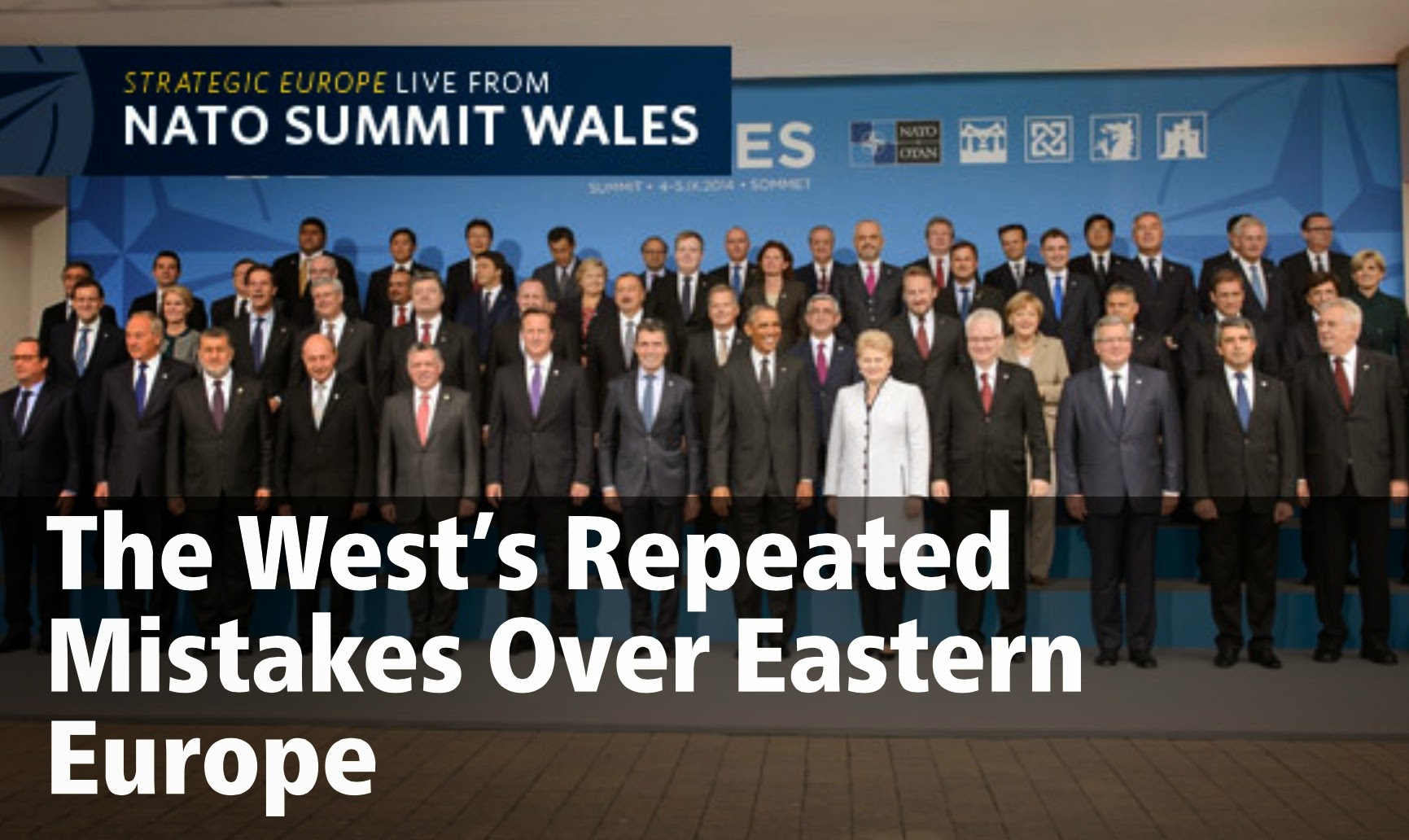
During a press conference with Ukrainian President Petro Poroshenko on September 4 at the NATO summit in Wales, the alliance’s Secretary General Anders Fogh Rasmussen tried to put the best spin on NATO help to Ukraine. Since NATO is not prepared even to consider the idea of Ukraine one day becoming a member of the organization, Rasmussen—and indeed Poroshenko—didn’t mention the “m-word.”

“It is for the Ukrainian people to decide . . . [their] future relationship with NATO,” the secretary general said—as if Putin will allow that to happen.

Rasmussen did say that NATO allies had pledged to provide support to help Ukraine improve its own security. “Our support is concrete and tangible. . . . Ukraine has stood by NATO. Now in these difficult times, NATO stands by Ukraine.”

Rasmussen explained how the allies had established “a comprehensive and tailored package of measures” to help Ukraine. The focus of NATO support would be on four areas: rehabilitation for injured troops, cyberdefense, logistics, and command and control and communications. “And allies will assist Ukraine with around €15 million [$19 million] through NATO,” Rasmussen added. NATO would not be supplying weapons. But that won’t stop individual countries from doing so.

Above all, the NATO chief insisted that an independent, sovereign, and stable Ukraine firmly committed to democracy and the rule of law was key to Euro-Atlantic security. “We stand united in our support of Ukraine’s sovereignty and territorial integrity,” he said.

Actually, the West is only rhetorically united over Ukraine’s sovereignty and territorial integrity. Western nations have no real intentions of matching that statement with deeds to allow Ukraine to regain territory in eastern Ukraine that has been taken over by rebels backed by Russian troops and tanks—let alone Crimea.

As for the EU, it is prepared to impose more sanctions on Russia—but with many misgivings and criticisms from several member states, especially Hungary, Slovakia, and the Czech Republic. That is despite the fact that until twenty-five years ago, these countries were under the Soviet yoke.

The measures undertaken by NATO and the EU are insufficient because they perpetuate the new rules of the game that Putin is writing across Eastern Europe. And because the West’s responses give him no reason to desist, at least for the moment, Western countries are repeating the mistakes they made when Eastern European civil society reared its head during the Communist era. The West is not prepared to stand up to Putin’s Russia.

Instead, willy-nilly, the West is allowing a new cordon sanitaire of countries to take hold between Russia and the EU. But if Putin and European leaders believe that this buffer zone is going to represent a new, stable “post-post–Cold War” status quo, they are seriously mistaken.

The reason is that civil society across these countries, from Belarus to Armenia, will not accept these new demarcation lines on a permanent basis. Just as Poles challenged their country’s Communist regime in 1980, the same will happen across the states in Europe’s East.

That has already happened in Ukraine. And despite the war in eastern Ukraine and the continuing influence of the country’s oligarchs, the supporters of the Euromaidan are not prepared to let this revolution fail. They are not naive enough to believe that the EU and NATO will come to their rescue. Instead, against all the odds, they will continue to struggle for their freedom to choose their own political path. More


Did US intelligence tie Israel to 9/11?

Jonathan Cook

29 AUGUST 2014 Good to have Justin Raimondo at Anti-war.com set out the hugely suppressed but growing indicators that Israeli intelligence knew of the 9/11 attacks but failed to alert the Americans (while the Saudis were probably more directly involved in the attacks).

The definitive evidence is likely to be found in the censored 28 pages of the joint report of the intelligence committees of the two houses of Congress, as Raimondo highlights.

As to the Israeli interests at work in allowing 9/11 to take place, Raimondo misses revealing comments made by the two most senior Israeli intelligence officials at the time, statements I noted in my book “Israel and the Clash of Civilisations” (p. 103):

Israel’s National Security Adviser, General Uzi Dayan, and the head of the Mossad, Ephraim Halevy … reportedly told that year’s Herzliya conference [in 2001] that the 9/11 attacks were a ‘Hanukkah miracle’, offering Israel the chance to sideline and punish its enemies. Halevy spoke of the imminent arrival of ‘a world war different from all its predecessors’ and the emergence after 9/11 of a common perception combining ‘all the elements of Islamic terror into one clear and identifi able format’, creating ‘a genuine dilemma for every ruler and every state in our region. Each one must reach a moment of truth and decide how he will position himself in the campaign.’

Dayan, meanwhile, identified the targets, after Afghanistan, for the next stage of the regional campaign: ‘The Iran, Iraq and Syria triangle, all veteran supporters of terror which are developing weapons of mass destruction.’ He argued: ‘They must be confronted as soon as possible, and that is also understood in the US. Hezbollah and Syria have good reason to worry about the developments in this campaign, and that’s also true for the organizations and other states.’

Sounds like a rather accurate prediction of how things turned out, no?

The Haaretz article on 18 Dec 2001 that quoted the pair, written by Aluf Benn, now the paper’s editor-in-chief, was originally titled “For Israel, September 11 was a Hanukkah miracle”. The version on Haaretz that can now be found has excised all references to “Hanukkah” and “miracles”, and is under the much blander – and misleading – headline “Israel strives to import America’s war on terror“.

More likely, as I explain in my book, Israel tried to export to Washington, care of the neocons, its own “war on terror” – and its long-term designs for breaking up the Middle East into feuding sects and tribes. More

http://original.antiwar.com/justin/2014/08/28/did-certain-foreign-governments-facilitate-the-911-attacks/


USA-Israel vs. Arab-Muslim Worlds: What Happens? – by Johan Galtung

25 Aug 2014

Nothing good. But let us have a look at it in the standard peace studies way: Diagnosis-analyzing, Prognosis- forecasting, and Therapy–remedies, even solutions.

Johan Galtung

“Israel-Palestine” is the discourse Tel Aviv-Washington prefers. They have all the strong cards: overwhelming military power, political veto in the United Nations Security Council, the economic upper hand in interlocking economies–not just oil cash from Saudi Arabia-Qatar–and the idea of working for a solution with Washington as “mediator”–only USA can bring the two together, gently or roughly–toward a sustainable peace.

It is needed a great distance from reality to believe in that spin. USA and Israel are interlocked by a much deeper tie: they came into being in the same way; flagging a divine mandate for a land without a people for a people without a land. Goes one goes the other.

Palestine is also part of something much bigger than itself: the Arab people with its tortured history of 500 years of colonialism and imperialism, and the religion of Islam. Two nationalisms, carried by Fatah and Hamas in Palestine, both potentially giving rise to a much bigger state, Arabia (not only Saudi), and to a region, the Islamic Umma, beyond an organization of the Islamic Community (of states).

USA is co-responsible for the current Israeli genocide in Gaza and seen as such by most of the world. Hate one hate the other.

Israeli expansion implies conflict with neighbors and their neighbors into the Arab-Muslim worlds. Your problems are my problems say the USA. So far. But one layer deeper is the US hyphenation of Judaism and Christianity to Judaeo-Christianity, leaving out the third Abrahamic religion. The stark reality is three religions hating and killing each other through millennia–but the hyphen, like in Israel-USA, calls for an alliance of 2 against 1. A political program.

Add to this the three imperialisms suffered by the Arab nation. Four centuries Ottoman Empire; four decades English-French imperialism from Sykes-Picot to Nasser; US-Israeli imperialism to make the Middle East region safe for Israel and democracy. However, democracy is rule by the consent of the ruled, not colonialism-imperialism by the consent–so far–of the demos in the rulers, USA and Israel.

The collisions are massive, involving ever more of the huge Muslim part of the world beyond the Arab part. How will this evolve?

More fear, more hatred; more terrorism, more state terrorism. USA-Israel will probably keep the military superiority for some time. But much else is happening. Both are heading downhill in the sense of losing the support they had. USA is losing its world hegemony–even within NATO where Germany de facto is siding more with Russia than with the USA over Ukraine–and Israel by its fall from the moral high grounds into the immoral abyss even among the many deeply touched by the shoa. Israel aggravates its own situation by gluing the etiquette “anti-Semitic” to its increasingly numerous and powerful critics.

But where are the Arab and Muslim worlds heading? Not downhill.

The Ottoman Empire was a relatively benign Sunni “family of nations” with a caliphate also centered in Istanbul. No effort to recreate an Arabia ruled by Turkey is acceptable to the Arab nation. But also unacceptable is Sykes-Picot Western colonialism with four colonies or “mandates”; Iraq-Palestine, Syria-Lebanon. Blindness, ignorance or stupidity is needed to be surprised at the Islamic State (IS). Sykes-Picot could not stand, but the US invasion from 2003 reified those artificial creations, one of them in the meantime divided by the UK into Israel-rump Palestine-Jordan. IS was highly predictable: extremist brutality bred by oppression, and a vision: An ottoman empire with a caliphate without a special role for Turkey.

Without Sykes-Picot no Balfour, without Balfour no Israel. The Ottoman Empire had no Israel. A problem of USA-Israel’s own making.

Patrick Cockburn in the London Review of Books 21 Aug 2014 points to a third of Syria and a quarter of Iraq, with a population beyond Denmark, quickly conquered, heading for Baghdad and Damascus–the capitals of two major Islamic dynasties. Assad may fall, so may al-Maliki’s successor(s). Al Qaeda will join IS. Their problem is Iran and the Kurds, possibly with US-engineered wars that may unravel as such. We will soon see. Imagine IS conquering Baghdad, what happens to the megalomaniac US embassy? IS uses Saddam Hussein assets like the Tikrit clan and his military. But Saddam reified Sykes-Picot as Iraq’s ruler installed by the USA till he turned against them in 1988 in the Arab-Persian Gulf.

Anyhow, stop the present IS and a new will emerge out of the same Arab nation holism and dialectic; much stronger forces in the longer run than USA-Israel on a downhill slope with the USA possibly heading for racist fascism at home and abroad. But how about Islam?

Two major factors in its favor. The counter-cyclical pendulum between Christian and Islamic dominance–up for one means down for the other being so similar–is moving from the Christian-secular toward the Islamic pole. One factor is Islam’s message of togetherness and sharing, very attractive to the victims of egocentrism, greed and inequality in the Western world. Add to that something similar to the IS factor: the long term move toward an Islamic umma, not a state system ruled by kings-emirs-sultans, even against theshahada.

And who created so much of that state system? The West, through its colonialism. What we witness today is not only IS but all over Muslim youth trying to be the umma, uniting across even colonial borders, between Iraq and Syria–like the Tutsi bridge between anglophone, francophone and afrophone Africa. Be the future you want.

Solutions beyond USA-Israel going down and the Arab-Muslim worlds up? Yes: dialogue, searching together for how all four could become masters in their own house and only that. The challenge of the century.

__________________________________

Johan Galtung, a professor of peace studies, dr hc mult, is rector of the TRANSCEND Peace University-TPU. He is author of over 150 books on peace and related issues, including ‘50 Years-100 Peace and Conflict Perspectives,’ published by the TRANSCEND University Press-TUP.

Editorials and articles originated on TMS may be freely reprinted, disseminated, translated and used as background material, provided an acknowledgement and link to the source, TRANSCEND Media Service-TMS, is included. Thank you.

Click here to download this article as a PDF file.

This article originally appeared on Transcend Media Service (TMS) on 25 August 2014.

This work is licensed under a CC BY-NC 3.0 United States License.


Militarized cops’ scary new toys: The ugly next frontier in “crowd control”

The horror we saw in Ferguson may be just the start. Here’s some other police gear our military is working on.

Police in Ferguson, Mo., Aug. 11, 2014

Now that the sight of American police decked out as if they are replaying the events of Blackhawk Down has alerted the American public to the militarization of our police agencies, perhaps they will finally be receptive to the warnings that some of us have been making for years about the next generation of weapons that are being developed for “crowd control.” As we’ve seen over the past few days, regardless of whether it’s created for military purposes, this gear tends to eventually end up on the streets of the United States.

In Ferguson this week the police used one of these new weapons, the LRAD, also known as a sound cannon. These were developed fairly recently as an interdiction device to repel pirates or terrorists in the aftermath of the attack on the USS Cole. But their use as a weapon to disperse crowds quickly became obvious. In Ferguson it seems to have served mostly as a warning device, but it can cause substantial pain and hearing damage if it’s deployed with the intent to send crowds running in the opposite direction. It’s been used liberally by police departments for the past few years, even at such benign public gatherings as a sand castle competition in San Diego, California. The police chief (as it happens, the former FBI agent in charge at the Ruby Ridge standoff) explained that it was there in case they needed it. Evidently, San Diego takes its sand castle competitions very seriously.

But the LRAD is a toy compared to some of the other weapons the military industrial complex has been developing to deal with “crowd control.” Take Shockwave, the new electric shock weapon developed by Taser International, a sort of taser machine gun:

The cartridges are tethered by 25-foot wires, which can be fired from a distance of up to 100 meters in a 20-degree arc. The “probes” on the end of the cartridges can pierce through clothing and skin, emitting 50,000 volts of electricity in the process.

“Full area coverage is provided to instantaneously incapacitate multiple personnel within that region” Taser explains.

“Multiple Shockwave units can be stacked together (like building blocks) either horizontally or vertically in order to extend area coverage or vertically to allow for multiple salvo engagements.” The product description states.

The weapons can also be vehicle mounted or “daisy chained” according to Taser. Clearly it is anticipated that these things will be used on sizable crowds, meaning an increased likelihood of indiscriminate targeting.

advertisement

The Department of Defense touts the use of these weapons as battlefield devices, but considering the huge market for military gear among police forces, it’s fairly obvious that they have been developed for domestic use as well. You can watch a demonstration of the device here. You’ll note the demo opens with the question: “What if you could drop everyone in a given area to the ground with the push of a button?” (They leave out the part where they are all screaming and writhing in terrible pain …)

And then there’s Taser’s new shotgun style taser called the XREP (for Extended Range External Projectile).It has the advantage of being able to be shot from a real gun and it delivers 20 long excruciating seconds of unbearable pain as opposed to the wimpy 5 seconds of the regular taser — which kills people with regularity. (You can see a demonstration of that one here.) The Taser drone is still in development but it’s sure to be a very welcome addition to the electroshock weapon arsenal.

If we believe, as Joe Scarborough does, that citizens are required to instantly comply with police regardless of the situation, these devices are perfect enforcement tools. On the other hand, if you believe that citizens have a right to peacefully protest and that police are not automatically entitled to deference in all circumstances, then you might want to think twice about the use of these weapons. They are only barely better than allowing police to shoot into crowds with bullets. Tasers can kill people and cause them to badly injure themselves and they are far too easy for police to use indiscriminately since the public has been brainwashed into believing they are harmless.

But there’s more. The military has been developing something called the Active Denial System, also known as the Pentagon’s Ray Gun. “60 Minutes” did a laudatory story on it a few years back in which it showed the training exercises the Army was using to test the weapon for potential use in Iraq. The funny thing was that the exercises featured soldiers dressed as protesters carrying signs that said “world peace,” “love for all,” which the “60 Minutes” correspondent characterized as something soldiers might confront in Iraq. (Who knew there was a large contingent of American-style hippies in Iraq staging antiwar protests?) The weapon itself is something out of science fiction: It’s a beam of electromagnetic radiation that heats the skin to a painful 130 degrees allegedly without inflicting permanent damage. They claim there have been almost no side effects or injuries. It just creates terrible pain and panics the peaceniks into dispersing on command. What could be better than that? Imagine how great it would be if any time a crowd gathers and the government wants to shut it down, they can just zap it with heat and send everyone screaming in agony and running in the opposite direction.

In his thorough Harper’s investigation on this subject, reporter Ando Arike explained the purpose behind all these new technologies:

[We have] an international arms-development effort involving an astonishing range of technologies: electrical weapons that shock and stun; laser weapons that cause dizziness or temporary blindness; acoustic weapons that deafen and nauseate; chemical weapons that irritate, incapacitate, or sedate; projectile weapons that knock down, bruise, and disable; and an assortment of nets, foams, and sprays that obstruct or immobilize. “Non-lethal” is the Pentagon’s approved term for these weapons, but their manufacturers also use the terms “soft kill,” “less-lethal,” “limited effects,” “low collateral damage,” and “compliance.” The weapons are intended primarily for use against unarmed or primitively armed civilians; they are designed to control crowds, clear buildings and streets, subdue and restrain individuals, and secure borders. The result is what appears to be the first arms race in which the opponent is the general population.

As I wrote earlier, in a couple of weeks the Soft-kill Convention, also known as Urban Shield, will be holding its annual trade show in Oakland, California. Police agencies from all over the world will attend to try out the various types of modern weapons that will be on display there. The super high-tech weapons described above are probably some years away from the commercial market. But it’s highly likely they will make their way to the police eventually through one of the many ways the weapons manufacturers manage to put this equipment in the hands of civilian authorities — if the federal government continues to make money available for that purpose.

Hopefully, Ferguson has alerted the public to the danger to our civil rights and liberties brought by the federal government arming police forces to the teeth with military gear. But it’s going to take vigilance to ensure that the next time we see civil unrest and peaceful protests on the streets of America, the authorities won’t be responding with electroshock or laser weapons or electromagnetic radiation devices designed purely for the purpose of gaining instant compliance from people in a crowd. If Americans foolishly accept these weapons as an improvement on the harsher methods we might see today there is a grave danger that we will be giving authorities much more power to quell dissent. In a free society it shouldn’t be easy to quell dissent. If it is, that society won’t be free for very long. More