Caribbean small islands will be first in region to suffer from rising sea levels

NAROBI, Kenya, Monday November 3, 2014, CMC – A top United Nations official has warned that the small islands of the Caribbean will be the first territories in the region to suffer the effects of rising sea levels due to climate change.

Executive Director of the United Nations Environment Program, Achim Steiner, said here on Saturday that the effects of climate change threaten the Caribbean’s tourism industries and, eventually, their “very existence”.

Speaking ahead of Sunday’s release of the Fifth Assessment Report from the Intergovernmental Panel on Climate Change, Steiner said sea-level rise will have an “immediate impact in economic terms” on the Caribbean Small Island Developing States (SIDS), stating that the Caribbean’s tourism infrastructure is 99 per cent along the coastline.

“Many small island nations are in a far more exposed situation simply because their territory is sometimes only two, three, four meters (6.5-13 ft.) above sea level,” he said, adding “therefore their very existence is being threatened.

“The changes also in, for instance, coral reefs and mangroves that are natural barriers and help strengthen the resilience of these countries, if coral reefs are dying then clearly countries become more vulnerable,” he added.

Steiner also cited the impact of more intense hurricanes and other extreme weather events on countries whose economies cannot bear the cost of reconstruction.

On a more hopeful note, he praised proactive efforts by some Caribbean countries, such as Barbados, where “energy efficiency efforts and renewable deployment are now on the agenda of investment and national development planning”.

The efforts of the Barbados government were one reason the United Nations decided to mark 2014 World Environment Day in Barbados, Steiner said. More


Micropower’s Quiet Takeover

In a cover story and article 14 years ago about the emergent disruption of utilities, The Economist’s Vijay Vaitheeswaran coined the umbrella term “micropower” to mean sources of electricity that are relatively small, modular, mass-producible, quick-to-deploy, and hence rapidly scalable—the opposite of cathedral-like power plants that cost billions of dollars and take about a decade to license and build.

His term combined two kinds of micropower: renewables other than big hydroelectric dams, and cogeneration of electricity together with useful heat in factories or buildings (also known as combined-heat-and-power, or CHP).

Besides being cost-competitive and rapidly scalable, why does micropower matter? First, as explained below, its operation releases little or no carbon.[1] Second, micropower enables individuals, communities, building owners, and factory operators to generate electricity, displacing dependence on centralized, inefficient, dirty generators. This democratizes energy choices, promotes competition, speeds learning and innovation, and can further accelerate deployment—because “vernacular” technologies accessible to many diverse market actors, even if individually small, tend to deploy faster in sum than a few big units requiring specialized institutions, complex approvals, intricate logistics, and hence long lead times.

Thanks to Bloomberg New Energy Finance, which tracks investments and generating capacity, and the global expert network REN21.net, which tracks capacity and (where known) electrical output, global progress in renewables has become rather transparent. Starting in 2005 and updated with a fifth edition in July 2014, RMI’s Micropower Database added a third source: industry sales data for cogeneration equipment. Tracking renewables, minus big hydro, plus cogeneration, this database documents the global progress of distributed, rapidly scalable, and (as we’ll see) no- or low-carbon generators.

The update’s most astonishing finding: micropower now produces about one-fourth of the world’s total electricity (Fig. 1).

MICROPOWER’S CLIMATE IMPLICATIONS

Operating modern renewables is essentially carbon-free, except for minor subsets fueled by biomass grown using unsustainable practices that gradually deplete soil carbon.[2] Of the estimated 3–5 percent of cogeneration fueled by biomass, most is in the forest products industry, whose biomass wastes produce most of its electricity and process heat.

Cogeneration in refineries often burns waste fuels that would otherwise be uselessly flared. Similarly, much industrial cogeneration harnesses waste heat previously thrown away. Where extra fuel is burned to make electricity as well as heat, typically far less is burned than when making them separately. If cogeneration also produces cooling and other services, it can convert as much as 93 percent of fuel energy into useful work, both in industry and in buildings. Moreover, the natural gas that fuels most cogeneration is only about half as carbon-intensive as the coal-fired power-only generation it often displaces.[3]

Big hydroelectric dams and nuclear power are also carbon-free in operation. Thus in 2013, nearly half of the world’s electricity was produced with little or no carbon release: 8.4 percent by modern renewables [4], 10.2 percent by nuclear power (set to be overtaken by modern renewables in 2015), 15.5 percent by cogeneration [5], and 13.5 percent by big hydroelectric dams (excluding the 2.8 percent small hydro classified under modern renewables).

The other half came from power-only plants, burning mainly coal. Those plants cost more to build, and often more just to run, than their competitors, so their orders are fading, their operations are dwindling, and over decades, they’ll retire in favor of cleaner, cheaper substitutes—both micropower and efficient use.

WINNERS AND LOSERS

Far from recognizing that they’re being rapidly overtaken, many advocates of coal or nuclear power stations don’t even acknowledge micropower as an important competitor—even as it grabs their markets and destroys their sales. In 2009, a senior strategic planner for a major nuclear vendor told me micropower was trivial—having failed to find it in official databases of utility-owned central power stations, without understanding the difference. And even at minor market share, micropower can have major effects. The solar 4.7 percent of Germany’s 2013 generation destroyed the incumbent utilities’ business model and wiped a half-trillion Euros off their market cap. More


Belize Fights to Save a Crucial Barrier Reef

BELIZE CITY, Oct 20 2014 (IPS) Home to the second longest barrier reef in the world and the largest in the Western Hemisphere, which provides jobs in fishing, tourism and other industries which feed the lifeblood of the economy, Belize has long been acutely aware of the need to protect its marine resources from both human and natural activities.

However, there has been a recent decline in the production and export of marine products including conch, lobster, and fish, even as tourism figures continue to increase.

“What happens on the land will eventually reach the sea, via our rivers.” — Dr. Kenrick Leslie

The decline is not helped by overfishing and the harvest of immature conch and lobster outside of the standard fishing season. But the primary reason for less conch and lobster in Belize’s waters, according to local experts, is excess ocean acidity which is making it difficult for popular crustacean species such as conch and lobster, which depend on their hard, spiny shells to survive, to grow and mature.

According to the executive director of the Caribbean Community Climate Change Center (CCCCC), Dr. Kenrick Leslie, acidification is as important and as detrimental to the sustainability of the Barrier Reef and the ocean generally as warming of the atmosphere and other factors generally associated with climate change.

Carbon dioxide which is emitted in the atmosphere from greenhouse gases is absorbed into the ocean as carbonic acid, which interacts with the calcium present in the shells of conch and lobster to form calcium carbonate, dissolving those shells and reducing their numbers. Belize also faces continuous difficulties with coral bleaching, which has attacked several key sections of the reef in recent years.

Dr. Leslie told IPS that activities on Belize’s terrestrial land mass are also contributing to the problems under Belize’s waters. “What happens on the land will eventually reach the sea, via our rivers,” he noted.

To fight these new problems, there is need for more research and accurate, up to the minute data.

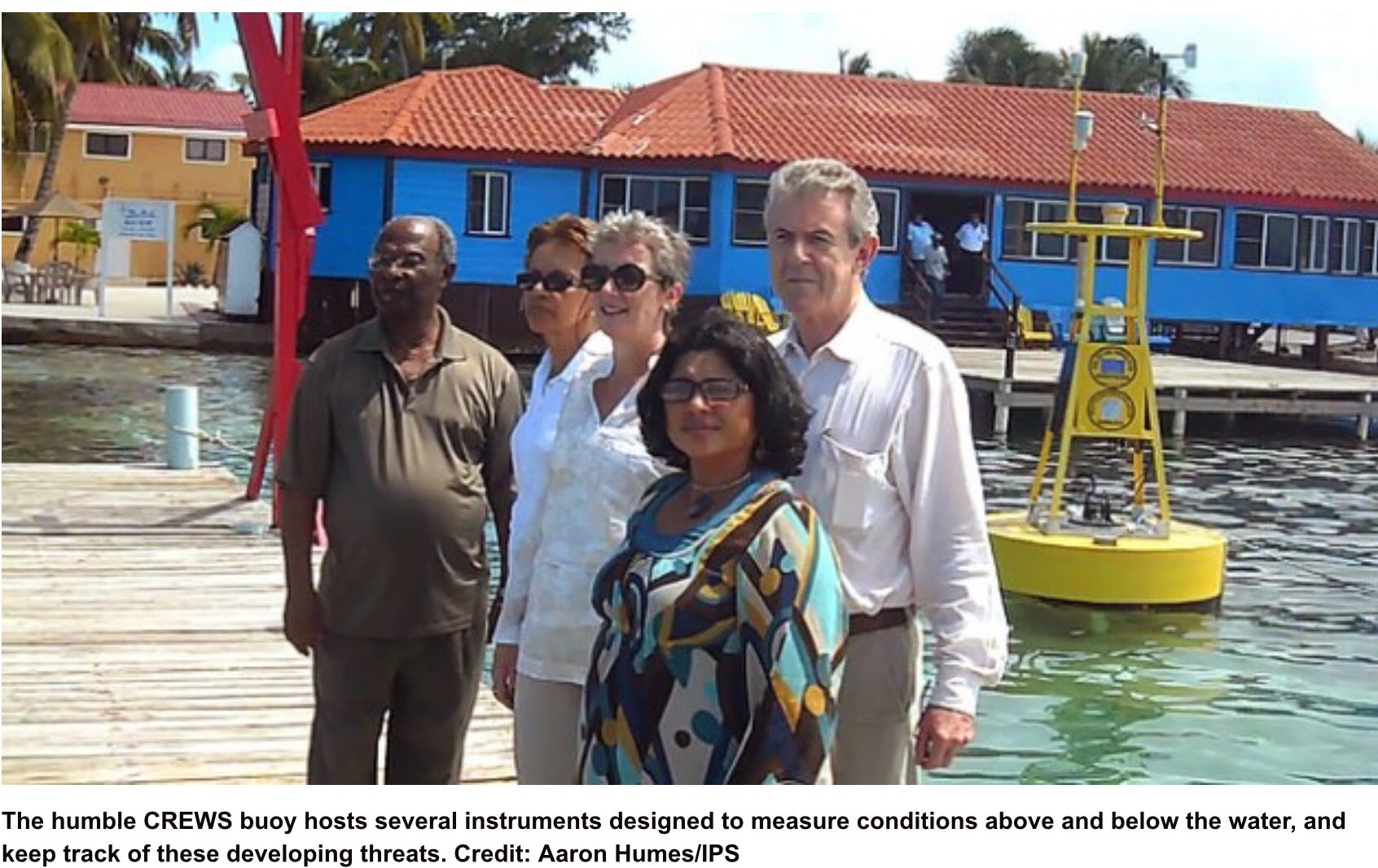
Last month, the European Union (EU), as part of its Global Climate Change Alliance Caribbean Support Project handed over to the government of Belize and specifically the Ministry of Forestry, Fisheries and Sustainable Development for its continued usage a Coral Reef Early Warning System (CREWS) buoy based at South Water Caye off the Stann Creek District in southern Belize. More


UNGA General Debate 2014 Addresses Climate Agreement, Financing, SIDS


United Nations27 September 2014: During days three and four of the UN General Assembly (UNGA) General Debate 2014, many speakers addressed climate change. Speakers focused on international and national action, including transitions to renewable energy, and financing. Small island developing States (SIDS) particularly urged action, emphasizing they are already experiencing adverse effects on food and water security, biodiversity and oceans.
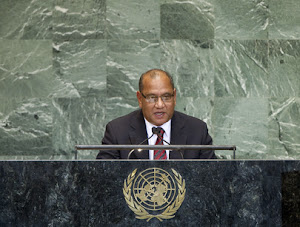

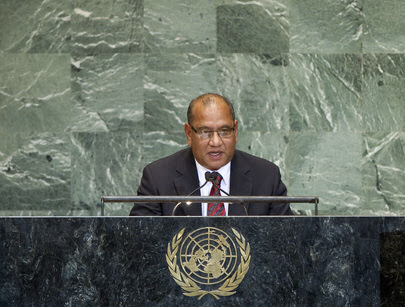
“Some members have criticized us for focusing too much on climate change and sea level rise, but these issues influence our every decision and affect every aspect of life on our islands,” said Christopher J. Loeak, President of the Marshall Islands, stressing that small island countries cannot afford to speak of climate change as a future threat. Tuilaepa Sailele Malielegaoi, Prime Minister of Samoa, underscored that apportioning blame serves no useful purpose, saying “those who exploit the traditional divide between developed and developing countries and ideological and political differences do so conveniently to mask their unwillingness to be part of the solution to an impending global catastrophe.” He suggested viewing the world as a single constituency where everyone must work together within the limits of their capacity and capability to address climate change. Charles Angelo Savarin, President of Dominica, Anote Tong, President of Kiribati, and Malielegaoi emphasized climate change is not an event in the future but an issue SIDS are already experiencing.


Several speakers commended the Climate Summit, welcoming its political momentum. Tong, Ikililou Dhoinine, President of the Comoros, Enele Sosene Sopoga, Prime Minister of Tuvalu, and Carlos Raúl Morales, Minister for Foreign Affairs of Guatemala, called for translating Summit commitments into action. Malielegaoi said the Summit underscored that the world is focusing more on symptoms of climate change than on the root causes.


Many supported a global, legally binding agreement on climate change by 2015, including Donald Rabindranauth Ramotar, President of Guyana, Tomislav Nikolić, President of Serbia, Alpha Condé, President of Guinea, Lubomír Zaorálek, Minister for Foreign Affairs of the Czech Republic, Salva Kiir, President of South Sudan, Frank-Walter Steinmeier, Minister for Foreign Affairs of Germany, Tong and Savarin. Malielegaoi said the agreement should be ambitious, effective, binding and capable of swift implementation. Hifikepunye Pohamba, President of Namibia, supported a coordinated global agreement. Denis Sassou Nguesso, President of the Republic of Congo, supported a binding agreement that included adaptation. Sopoga said a new protocol must: curb greenhouse gas (GHG) emissions; keep average temperature well below 1.5 degrees Celsius; include loss and damage and insurance mechanisms for SIDS; and provide adequate and accessible financing for SIDS' adaption support.


Noting Luxembourg will assume the Presidency of the Council of the EU in the second semester of 2015, Xavier Bettel, Prime Minister of Luxembourg, said his country would “spare no effort” to find an international agreement on climate, applicable to all countries, with the objective of keeping global warming below two degrees.


Sushil Koirala, Prime Minister of Nepal, supported a binding agreement on climate change with long-term and comprehensive global commitment based on common but differentiated responsibilities (CBDR), equity and respective capabilities. King Tupou VI of Tonga emphasized CBDR and equity principles.


Catherine Samba-Panza, President of the Transitional Government of the Central African Republic, urged ratification of the Doha amendment to the Kyoto Protocol.


Several speakers outlined national action on climate change, including Pohamba, Gjorge Ivanov, President of Macedonia, and Erlan A. Idrissov, Minister for Foreign Affairs of Kazakhstan. Bettel said the EU will present additional contributions to reduce GHG emissions and mitigate climate change, in accordance with the timetable agreed in Warsaw, Poland. At the national level, Bettel said Luxembourg is supporting carbon pricing.


Tong, Loeak and Tupou highlighted national action on adaptation and integrated disaster risk management (DRM). Tong said Kiribati's ‘migration with dignity' strategy is an investment in youth education to allow them to develop employable skills so that they can migrate to other countries voluntarily.


Several countries mentioned renewable energy efforts as part of contributions to addressing climate change, including Steinmeier, Sopoga, Nicos Anastasiades, President of Cyprus, Tomislav Nikolić, President of Serbia, and Morales. Savarin and Loeak described their efforts to increase renewable energy, including through SIDS DOCK, a platform for the development of sustainable energy in SIDS. Erlan A. Idrissov, Minister for Foreign Affairs of Kazakhstan, highlighted the promotion of best practices in sustainable energy, noting it is launching a project on the installation of biogas systems in nine Pacific SIDS. Sheikh Abdullah Bin Zayed Al Nahyan, Minister for Foreign Affairs of the United Arab Emirates (UAE), described his country's efforts and investments in renewable energy throughout the world. Muhammad Nawaz Sharif, Prime Minister of Pakistan, said his country's goals are aligned with the Sustainable Energy for All (SE4ALL) Initiative.


Emanuel Mori, President, Federated States of Micronesia, described its proposal to amend the Montreal Protocol to phase down the production and consumption of hydrofluorocarbons (HFCs), which are GHGs, to prevent temperature increases. He stressed success with the Montreal Protocol over the next six months is “our ticket to a successful outcome in Paris” and urged adoption of the HFC amendment.


On climate financing, Loeak urged the full capitalization of the Green Climate Fund (GCF) and other financial mechanisms to address climate change and support the post-2015 agenda. He applauded nations who have pledged specific amounts and urged delivery of real money by major economic powers who he said are also major polluters. Sopoga stressed adequate resources for the GCF, particularly access for SIDS. Nguesso identified innovative financing, technology transfer and capitalization of the GCF as critical. Koirala, Bangladesh and Serbia stressed financing for adaptation, with Koirala saying there should be special provisions for addressing least developed countries (LDCs) and SIDS mitigation and adaptation needs in additional to regular official development assistance (ODA). Bangladesh also recommended adequate, predictable and additional climate finance, support for capacity and institution building and access to locally adaptable technologies.


Bettel highlighted Luxembourg's contribution of 5 million Euros to the GCF, which is new and additional to its ODA. Steinmeier stated Germany's commitment of US$1 billion to the GCF.


Climate change should be included in the post-2015 agenda, according to Savarin and Morales. Sopoga supported a standalone Sustainable Development Goal (SDG) on climate change. Idrissov and San Marino highlighted links between climate change and sustainable development. Bangladesh reiterated the need to integrate the UNFCCC, DRR and SDG processes.


Tupou and Sopoga underscored the link between climate change and peace and security, with Tupou advocating for Ban to appoint a Special Representative on Climate and Security and Sopoga supporting addressing climate change and security through the UN Security Council. More


[UNGA General Debate 26 September 2014] [UNGA General Debate 27 September 2014] [UN Press Release on SIDS]




UNGA General Debate 2014 Addresses Climate Agreement, Financing, SIDS


United Nations27 September 2014: During days three and four of the UN General Assembly (UNGA) General Debate 2014, many speakers addressed climate change. Speakers focused on international and national action, including transitions to renewable energy, and financing. Small island developing States (SIDS) particularly urged action, emphasizing they are already experiencing adverse effects on food and water security, biodiversity and oceans.


“Some members have criticized us for focusing too much on climate change and sea level rise, but these issues influence our every decision and affect every aspect of life on our islands,” said Christopher J. Loeak, President of the Marshall Islands, stressing that small island countries cannot afford to speak of climate change as a future threat. Tuilaepa Sailele Malielegaoi, Prime Minister of Samoa, underscored that apportioning blame serves no useful purpose, saying “those who exploit the traditional divide between developed and developing countries and ideological and political differences do so conveniently to mask their unwillingness to be part of the solution to an impending global catastrophe.” He suggested viewing the world as a single constituency where everyone must work together within the limits of their capacity and capability to address climate change. Charles Angelo Savarin, President of Dominica, Anote Tong, President of Kiribati, and Malielegaoi emphasized climate change is not an event in the future but an issue SIDS are already experiencing.


Several speakers commended the Climate Summit, welcoming its political momentum. Tong, Ikililou Dhoinine, President of the Comoros, Enele Sosene Sopoga, Prime Minister of Tuvalu, and Carlos Raúl Morales, Minister for Foreign Affairs of Guatemala, called for translating Summit commitments into action. Malielegaoi said the Summit underscored that the world is focusing more on symptoms of climate change than on the root causes.


Many supported a global, legally binding agreement on climate change by 2015, including Donald Rabindranauth Ramotar, President of Guyana, Tomislav Nikolić, President of Serbia, Alpha Condé, President of Guinea, Lubomír Zaorálek, Minister for Foreign Affairs of the Czech Republic, Salva Kiir, President of South Sudan, Frank-Walter Steinmeier, Minister for Foreign Affairs of Germany, Tong and Savarin. Malielegaoi said the agreement should be ambitious, effective, binding and capable of swift implementation. Hifikepunye Pohamba, President of Namibia, supported a coordinated global agreement. Denis Sassou Nguesso, President of the Republic of Congo, supported a binding agreement that included adaptation. Sopoga said a new protocol must: curb greenhouse gas (GHG) emissions; keep average temperature well below 1.5 degrees Celsius; include loss and damage and insurance mechanisms for SIDS; and provide adequate and accessible financing for SIDS' adaption support.


Noting Luxembourg will assume the Presidency of the Council of the EU in the second semester of 2015, Xavier Bettel, Prime Minister of Luxembourg, said his country would “spare no effort” to find an international agreement on climate, applicable to all countries, with the objective of keeping global warming below two degrees.


Sushil Koirala, Prime Minister of Nepal, supported a binding agreement on climate change with long-term and comprehensive global commitment based on common but differentiated responsibilities (CBDR), equity and respective capabilities. King Tupou VI of Tonga emphasized CBDR and equity principles.


Catherine Samba-Panza, President of the Transitional Government of the Central African Republic, urged ratification of the Doha amendment to the Kyoto Protocol.


Several speakers outlined national action on climate change, including Pohamba, Gjorge Ivanov, President of Macedonia, and Erlan A. Idrissov, Minister for Foreign Affairs of Kazakhstan. Bettel said the EU will present additional contributions to reduce GHG emissions and mitigate climate change, in accordance with the timetable agreed in Warsaw, Poland. At the national level, Bettel said Luxembourg is supporting carbon pricing.


Tong, Loeak and Tupou highlighted national action on adaptation and integrated disaster risk management (DRM). Tong said Kiribati's ‘migration with dignity' strategy is an investment in youth education to allow them to develop employable skills so that they can migrate to other countries voluntarily.


Several countries mentioned renewable energy efforts as part of contributions to addressing climate change, including Steinmeier, Sopoga, Nicos Anastasiades, President of Cyprus, Tomislav Nikolić, President of Serbia, and Morales. Savarin and Loeak described their efforts to increase renewable energy, including through SIDS DOCK, a platform for the development of sustainable energy in SIDS. Erlan A. Idrissov, Minister for Foreign Affairs of Kazakhstan, highlighted the promotion of best practices in sustainable energy, noting it is launching a project on the installation of biogas systems in nine Pacific SIDS. Sheikh Abdullah Bin Zayed Al Nahyan, Minister for Foreign Affairs of the United Arab Emirates (UAE), described his country's efforts and investments in renewable energy throughout the world. Muhammad Nawaz Sharif, Prime Minister of Pakistan, said his country's goals are aligned with the Sustainable Energy for All (SE4ALL) Initiative.


Emanuel Mori, President, Federated States of Micronesia, described its proposal to amend the Montreal Protocol to phase down the production and consumption of hydrofluorocarbons (HFCs), which are GHGs, to prevent temperature increases. He stressed success with the Montreal Protocol over the next six months is “our ticket to a successful outcome in Paris” and urged adoption of the HFC amendment.


On climate financing, Loeak urged the full capitalization of the Green Climate Fund (GCF) and other financial mechanisms to address climate change and support the post-2015 agenda. He applauded nations who have pledged specific amounts and urged delivery of real money by major economic powers who he said are also major polluters. Sopoga stressed adequate resources for the GCF, particularly access for SIDS. Nguesso identified innovative financing, technology transfer and capitalization of the GCF as critical. Koirala, Bangladesh and Serbia stressed financing for adaptation, with Koirala saying there should be special provisions for addressing least developed countries (LDCs) and SIDS mitigation and adaptation needs in additional to regular official development assistance (ODA). Bangladesh also recommended adequate, predictable and additional climate finance, support for capacity and institution building and access to locally adaptable technologies.


Bettel highlighted Luxembourg's contribution of 5 million Euros to the GCF, which is new and additional to its ODA. Steinmeier stated Germany's commitment of US$1 billion to the GCF.


Climate change should be included in the post-2015 agenda, according to Savarin and Morales. Sopoga supported a standalone Sustainable Development Goal (SDG) on climate change. Idrissov and San Marino highlighted links between climate change and sustainable development. Bangladesh reiterated the need to integrate the UNFCCC, DRR and SDG processes.


Tupou and Sopoga underscored the link between climate change and peace and security, with Tupou advocating for Ban to appoint a Special Representative on Climate and Security and Sopoga supporting addressing climate change and security through the UN Security Council. More


[UNGA General Debate 26 September 2014] [UNGA General Debate 27 September 2014] [UN Press Release on SIDS]


Whether We Engage or Do Nothing… This Changes Everything

The following is an excerpt taken from the introduction of Naomi Klein's newly published book, This Changes Everything: Capitalism vs. the Climate, and appears at Common Dreams with permission from the book's publisher Simon & Shuster. All rights reserved.

“Most projections of climate change presume that future changes—greenhouse gas emissions, temperature increases and effects such as sea level rise—will happen incrementally. A given amount of emission will lead to a given amount of temperature increase that will lead to a given amount of smooth incremental sea level rise. However, the geological record for the climate reflects instances where a relatively small change in one element of climate led to abrupt changes in the system as a whole. In other words, pushing global temperatures past certain thresholds could trigger abrupt, unpredictable and potentially irreversible changes that have massively disruptive and large-scale impacts. At that point, even if we do not add any additional CO2 to the atmosphere, potentially unstoppable processes are set in motion. We can think of this as sudden climate brake and steering failure where the problem and its consequences are no longer something we can control.” —Report by the American Association for the Advancement of Science, the world’s largest general scientific society, 2014

“I love that smell of the emissions.” — Sarah Palin, 2011

I denied climate change for longer than I care to admit. I knew it was happening, sure. Not like Donald Trump and the Tea Partiers going on about how the continued existence of winter proves it’s all a hoax. But I stayed pretty hazy on the details and only skimmed most of the news stories, especially the really scary ones. I told myself the science was too complicated and that the environmentalists were dealing with it. And I continued to behave as if there was nothing wrong with the shiny card in my wallet attesting to my “elite” frequent flyer status

Climate change is… hard to keep it in your head for very long. We engage in this odd form of on-again-off-again ecological amnesia for perfectly rational reasons. We deny because we fear that letting in the full reality of this crisis will change everything. And we are right.”

A great many of us engage in this kind of climate change denial. We look for a split second and then we look away. Or we look but then turn it into a joke (“more signs of the Apocalypse!”). Which is another way of looking away.

Or we look but tell ourselves comforting stories about how humans are clever and will come up with a technological miracle that will safely suck the carbon out of the skies or magically turn down the heat of the sun. Which, I was to discover while researching this book, is yet another way of looking away.

“Climate change is… hard to keep it in your head for very long. We engage in this odd form of on-again-off-again ecological amnesia for perfectly rational reasons. We deny because we fear that letting in the full reality of this crisis will change everything. And we are right.”

Or we look but try to be hyper-rational about it (“dollar for dollar it’s more efficient to focus on economic development than climate change, since wealth is the best protection from weather extremes”)—as if having a few more dollars will make much difference when your city is underwater. Which is a way of looking away if you happen to be a policy wonk. Or we look but tell ourselves we are too busy to care about something so distant and abstract—even though we saw the water in the subways in New York City, and the people on their rooftops in New Orleans, and know that no one is safe, the most vulnerable least of all. And though perfectly understandable, this too is a way of looking away.

Or we look but tell ourselves that all we can do is focus on ourselves. Meditate and shop at farmers’ markets and stop driving—but forget trying to actually change the systems that are making the crisis inevitable because that’s too much “bad energy” and it will never work. And at first it may appear as if we are looking, because many of these lifestyle changes are indeed part of the solution, but we still have one eye tightly shut.

Or maybe we do look—really look—but then, inevitably, we seem to forget. Remember and then forget again. Climate change is like that; it’s hard to keep it in your head for very long. We engage in this odd form of on-again-off-again ecological amnesia for perfectly rational reasons. We deny because we fear that letting in the full reality of this crisis will change everything. And we are right.

We know that if we continue on our current path of allowing emissions to rise year after year, climate change will change everything about our world. Major cities will very likely drown, ancient cultures will be swallowed by the seas, and there is a very high chance that our children will spend a great deal of their lives fleeing and recovering from vicious storms and extreme droughts. And we don’t have to do anything to bring about this future. All we have to do is nothing. Just continue to do what we are doing now, whether it’s counting on a techno-fix or tending to our gardens or telling ourselves we’re unfortunately too busy to deal with it.

All we have to do is not react as if this is a full-blown crisis. All we have to do is keep on denying how frightened we actually are. And then, bit by bit, we will have arrived at the place we most fear, the thing from which we have been averting our eyes. No additional effort required.

There are ways of preventing this grim future, or at least making it a lot less dire. But the catch is that these also involve changing everything. For us high consumers, it involves changing how we live, how our economies function, even the stories we tell about our place on earth. The good news is that many of these changes are distinctly un-catastrophic. Many are downright exciting. But I didn’t discover this for a long while.

“All we have to do is not react as if this is a full-blown crisis. All we have to do is keep on denying how frightened we actually are. And then, bit by bit, we will have arrived at the place we most fear, the thing from which we have been averting our eyes. No additional effort required.”

I remember the precise moment when I stopped averting my eyes to the reality of climate change, or at least when I first allowed my eyes to rest there for a good while. It was in Geneva, in April 2009, and I was meeting with Bolivia’s ambassador to the World Trade Organization (WTO), who was then a surprisingly young woman named Angélica Navarro Llanos. Bolivia being a poor country with a small international budget, Navarro Llanos had recently taken on the climate portfolio in addition to her trade responsibilities. Over lunch in an empty Chinese restaurant, she explained to me (using chopsticks as props to make a graph of the global emission trajectory) that she saw climate change both as a terrible threat to her people—but also an opportunity.

A threat for the obvious reasons: Bolivia is extraordinarily dependent on glaciers for its drinking and irrigation water and those white-capped mountains that tower over its capital were turning gray and brown at an alarming rate. The opportunity, Navarro Llanos said, was that since countries like hers had done almost nothing to send emissions soaring, they were in a position to declare themselves “climate creditors,” owed money and technology support from the large emitters to defray the hefty costs of coping with more climate-related disasters, as well as to help them develop on a green energy path.

She had recently given a speech at a United Nations climate conference in which she laid out the case for these kinds of wealth transfers, and she gave me a copy. “Millions of people,” it read, “in small islands, least developed countries, landlocked countries as well as vulnerable communities in Brazil, India and China, and all around the world—are suffering from the effects of a problem to which they did not contribute. . . . If we are to curb emissions in the next decade, we need a massive mobilization larger than any in history. We need a Marshall Plan for the Earth. This plan must mobilize financing and technology transfer on scales never seen before. It must get technology onto the ground in every country to ensure we reduce emissions while raising people’s quality of life. We have only a decade.” More


ECLAC, CARICOM Highlight Vulnerabilities, Opportunities in Caribbean SIDS

3 September 2014: During a side event at the Third International Conference on Small Island Developing States (SIDS), representatives of Caribbean SIDS and the UN discussed critical factors that underpin the vulnerability of Caribbean SIDS.


‘The vulnerability of Caribbean SIDS revisited – it's all about size' took place in Apia, Samoa, on 3 September 2014, and was organized by the Economic Commission for Latin America and the Caribbean (ECLAC) in collaboration with the Caribbean Community (CARICOM) Secretariat.


Speakers discussed trade and finance, governance and institutional capacity, disaster management, regional integration and opportunities arising from the small size of SIDS, as well as the fact that the majority of Caribbean SIDS are classified as middle-income countries, based on gross domestic product (GDP).


Raúl García-Buchaca, ECLAC, said middle-income status based on GDP fails to consider inequalities at the national level. John Ashe, President of the UN General Assembly (UNGA), focused on the particular vulnerabilities of Caribbean SIDS, and suggested mainstreaming them into the post-2015 development agenda. Winston Dookeran, Minister of Foreign Affairs, Trinidad and Tobago, called for working with development partners and international financial institutions to build buffers to external shocks, and declared that “Size may well be an opportunity rather than a limitation.”


Carolyn Rodrigues-Birkett, Minister of Foreign Affairs, Guyana, said the Caribbean would require over 7% growth to be sustainable, and mentioned the challenge in diversifying Caribbean economies within the new global economic order. Camillo Gonsalves, Minister of Foreign Affairs, Saint Vincent and the Grenadines, said that because of their small GDP, SIDS are unable to finance adaptation and recovery from natural disasters, and recommended regional integration, development financing, preferential trade, and debt relief and restructuring to assist in this regard.


Participants also introduced a vulnerability-resilience profile for arriving at an index, said the SIDS resilience fund could be a good measure in this regard, and underscored that the human capital must be recognized, public policy revolutionized, and political structure transformed. [ECLAC Press Release] [Statement of UNGA President] More


Nation-building policies in Timor-Leste: disaster risk reduction, including climate change adaptation

“Nation building policies in Timor-Leste: disaster risk reduction, including climate change adaptation”.

Few studies have explored the relationships between nation-building, disaster risk reduction and climate change adaptation. Focusing on small island developing states, this paper examines nation-building in Timor-Leste, a small island developing state that recently achieved independence. Nation-building in Timor-Leste is explored in the context of disaster risk reduction, which necessarily includes climate change adaptation. The study presents a synopsis of Timor-Leste's history and its nation-building efforts as well as an overview of the state of knowledge of disaster risk reduction including climate change adaptation. It also offers an analysis of significant gaps and challenges in terms of vertical and horizontal governance, large donor presence, data availability and the integration of disaster risk reduction and climate change adaptation for nation-building in Timor-Leste. Relevant and applicable lessons are provided from other small island developing states to assist Timor-Leste in identifying its own trajectory out of underdevelopment while it builds on existing strengths.

  1. Jessica Mercer1,*,
  2. Ilan Kelman2,3,
  3. Francisco do Rosario4,
  4. Abilio de Deus de Jesus Lima5,
  5. Augusto da Silva6,
  6. Anna-Maija Beloff7 and
  7. Alex McClean8

Article first published online: 5 SEP 2014

DOI: 10.1111/disa.12082


http://onlinelibrary.wiley.com/doi/10.1111/disa.12082/abstract


UN Climate Summit 2014

Climate change is not a far-off problem. It is happening now and is having very real consequences on people’s lives. Climate change is disrupting national economies, costing us dearly today and even more tomorrow. But there is a growing recognition that affordable, scalable solutions are available now that will enable us all to leapfrog to cleaner, more resilient economies.UN Climate Summit 2014

There is a sense that change is in the air. UN Secretary-General Ban Ki-moon has invited world leaders, from government, finance, business, and civil society to Climate Summit 2014 this 23 September to galvanize and catalyze climate action. He has asked these leaders to bring bold announcements and actions to the Summit that will reduce emissions, strengthen climate resilience, and mobilize political will for a meaningful legal agreement in 2015. Climate Summit 2014 provides a unique opportunity for leaders to champion an ambitious vision, anchored in action that will enable a meaningful, global agreement in Paris in 2015. More


UN Special Envoy Highlights Urgency of Climate Agreement

2 September 2014: Small island developing States (SIDS) leaders “really want a climate agreement,” according to Mary Robinson, the UN Special Envoy for Climate Change. Speaking on the margins of the Third International Conference on SIDS, Robinson stressed the urgent need to build climate resilient communities and reduce greenhouse gas (GHG) emissions.

Mary Robinson UN Special Envoy

Robinson has been meeting with SIDS leaders, UN officials and donors to discuss climate change impacts at the Conference. She stated that, while SIDS leaders are engaged in actions to establish and expand partnerships, build capacity and increase financing, they also support an agreement on climate change.

Noting that climate change has traditionally been a focus for ministers of environment and energy, Robinson underscored the importance for Heads of State to address climate change. “Once you have a Head of State focused [on climate change], it becomes a holistic issue,” according to Robinson.

Looking forward, Robinson highlighted the UN Secretary-General's Climate Summit, which will take place on 23 September 2014, in New York, US. She said her role will be to “encourage the importance of the urgency of getting a climate agreement” and called for Heads of State to say what their country will do to address climate change. Robinson underscored the importance of engaging with civil society and the private sector on climate negotiations to ensure a “good, robust, fair climate agreement.” More