5 Crucial Lessons for the Left From Naomi Klein’s New Book

In her previous books The Shock Doctrine: The Rise of Disaster Capitalism (2007) and NO LOGO: No Space, No Choice, No Jobs (2000), Canadian author and activist Naomi Klein took on topics like neoliberal “shock therapy,” consumerism, globalization and “disaster capitalism,” extensively documenting the forces behind the dramatic rise in economic inequality and environmental degradation over the past 50 years.

Naomi Klein

But in her new book, This Changes Everything: Capitalism vs. the Climate (due in stores September 16), Klein casts her gaze toward the future, arguing that the dangers of climate change demand radical action now to ward off catastrophe. She certainly isn’t alone in pointing out the urgency of the threat, but what sets Klein apart is her argument that it is capitalism—not carbon—that is at the root of climate change, inexorably driving us toward an environmental Armageddon in the pursuit of profit. This Changes Everything is well worth a read (or two) in full, but we’ve distilled some of its key points here.

1. Band-Aid solutions don’t work.

“Only mass social movements can save us now. Because we know where the current system, left unchecked, is headed.”

Much of the conversation surrounding climate change focuses on what Klein dismisses as “Band-Aid solutions”: profit-friendly fixes like whizz-bang technological innovations, cap-and-trade schemes and supposedly “clean” alternatives like natural gas. To Klein, such strategies are too little, too late. In her drawn-out critique of corporate involvement in climate change prevention, she demonstrates how profitable “solutions” put forward by many think-tanks (and their corporate backers) actually end up making the problem worse. For instance, Klein argues that carbon trading programs create perverse incentives, allowing manufacturers to produce more harmful greenhouse gases, just to be paid to reduce them. In the process, carbon trading schemes have helped corporations make billions—allowing them to directly profit off the degradation of the planet. Instead, Klein argues, we need to break free of market fundamentalism and implement long-term planning, strict regulation of business, more taxation, more government spending and reversals of privatization to return key infrastructure to public control.

2. We need to fix ourselves, not fix the world.

“The earth is not our prisoner, our patient, our machine, or, indeed, our monster. It is our entire world. And the solution to global warming is not to fix the world, it is to fix ourselves.”

Klein devotes a full chapter of the book to geoengineering: the field of research, championed by a niche group of scientists, funders and media figures, that aims to fight global warming by altering the earth itself—say, by covering deserts with reflective material to send sunlight back to space or even dimming the sun to decrease the amount of heat reaching the planet. However, politicians and much of the global public have raised environmental, health and ethical concerns regarding these proposed science experiments with the planet, and Klein warns of the unknown consequences of creating “a Frankenstein’s world,” with multiple countries launching projects simultaneously. Instead of restoring an environmental equilibrium, Klein argues these “techno-fixes” will only further upset the earth’s balance, each one creating a host of new problems, requiring an endless chain of further “fixes.” She writes, “The earth—our life support system—would itself be put on life support, hooked up to machines 24/7 to prevent it from going full-tilt monster on us.”

3. We can’t rely on “well-intentioned” corporate funding.

“A great many progressives have opted out of the climate change debate in part because they thought that the Big Green groups, flush with philanthropic dollars, had this issue covered. That, it turns out, was a grave mistake.”

Klein strongly critiques partnerships between corporations and major environmental groups, along with attempts by “green billionaires” such as Bill Gates and Virgin Group’s Richard Branson to use capitalism to fighting global warming. When capitalism itself is a principal cause of climate change, Klein argues, it doesn’t make sense to expect corporations and billionaires to put the planet before profit. For example, though the Gates Foundation funds many major environmental groups dedicated to combating climate change, as of December 2013, it had at least $1.2 billion invested in BP and ExxonMobil. In addition, when Big Greens become dependent on corporate funding, they start to push a corporate agenda. For instance, organizations such as the Nature Conservancy and the Environmental Defense Fund, which have taken millions of dollars from pro-fracking corporate funders, such as Shell, Chevron and JP Morgan, are pitching natural gas as a cleaner alternative to oil and coal.

4. We need divestment, and reinvestment.

“The main power of divestment is not that it financially harms Shell and Chevron in the short term but that it erodes the social license of fossil fuel companies and builds pressure on politicians to introduce across-the-board emission reductions.”

Critics of the carbon divestment movement often claim that divestment will have minimal impact on polluters’ bottom lines. But Klein argues that this line of reasoning misses the point, quoting Canadian divestment activist Cameron Fenton's argument that “No one is thinking we’re going to bankrupt fossil fuel companies. But what we can do is bankrupt their reputations and take away their political power.” More importantly, divestment opens the door for reinvestment. A few million dollars out of the hands of ExxonMobil or BP frees up money that can now be spent developing green infrastructure or empowering communities to localize their economies. And some colleges, charities, pension funds and municipalities have already got the message: Klein reports that 13 U.S. colleges and universities, 25 North American cities, around 40 religious institutions and several major foundations have all made commitments to divest their endowments from fossil fuel stocks and bonds.

5. Confronting climate change is an opportunity to address other social, economic and political issues.

“When climate change deniers claim that global warming is a plot to redistribute wealth, it's not (only) because they are paranoid. It's also because they are paying attention.”

In The Shock Doctrine, Klein explained how corporations have exploited crises around the world for profit. In This Changes Everything, she argues that the climate change crisis can serve as a wake-up call for widespread democratic action. For instance, when a 2007 tornado destroyed most of Greensburg, Kansas, the town rejected top-down approaches to recovery in favor of community-based rebuilding efforts that increased democratic participation and created new, environmentally-friendly public buildings. Today, Greensburg is one of the greenest towns in the United States. To Klein, this example illustrates how people can use climate change to come together to build a greener society. It also can, and indeed must, spur a radical transformation of our economy: less consumption, less international trade (part of relocalizing our economies) and less private investment, and a lot more government spending to create the infrastructure we need for a green economy. “Implicit in all of this,” Klein writes, “is a great deal more redistribution, so that more of us can live comfortably within the planet’s capacity.” More


Ned Breslin: thinking big about water supply

Jordan Levy on Ned Breslin

Ned Breslin believes that too many organisations who are providing clean water and sanitation are chasing numbers. He wants to see them be bold enough to operate towards a long-term vision for clean water for everyone. This may seem simple, but he says this is not the way most in the sector operate. He believes these short-term achievements do not always contribute towards solving the systematic issues. I am inspired by Ned and his organisation because they don’t rely on short-term outputs to build legitimacy regardless of outside pressure to do so. They are not afraid to say that real solutions take time.

Ned Breslin on Water for People

The problem is clear. Three decades of support for water projects from NGOs, governments and large and small donors alike have not transformed people’s lives and country’s economic trajectories as such massive investments should.

Few celebrate the report from the World Health Organisation and Unicef (pdf) that shows progress on water supply worldwide – as contradictory evidence paints a much more unfortunate story. The European Union’s scathing audit of water aid investments and the Dutch government’s brave evaluation of their own work (pdf) offer sobering insight into water-sector history and challenges moving forward.

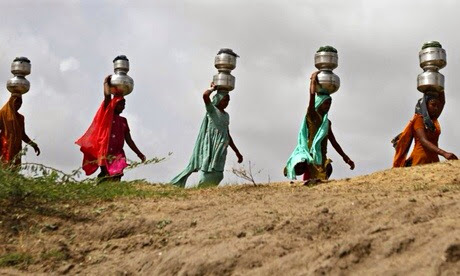
The impact of such failure is also sadly clear. Girls continue to fetch polluted water from muddy puddles and rivers, walking past broken hand-pumps and schools they would be attending if they had the time. To break this cycle, Water For People, the IRC, Water and Sanitation for the Urban Poor, One Drop, and some members of the Millennium Water Alliance are partnering with governments and the local private sector to change the water sector narrative.

We are testing this initiative – called Everyone Forever (EF) – across Africa, Asia and Latin America. The concept is that districts maintain water services for everyone without the need for further philanthropic aid or support.

EF takes a page from polio and smallpox eradication efforts that saturated entire districts, consisting of millions of people and hundreds and thousands of villages. “Everyone” is only achieved when every family, school and clinic in a target district has access to water services, that includes the hardest to reach, the poorest, the disabled, the politically marginalised and the socially ostracised. The poorest in those areas are receiving water services because other residents are covering their tariffs. “Forever” is only achieved when districts show they can sustain these investments over time as populations grow, water resources are threatened, economies change and infrastructure ages.

EF works with governments and insists that their financial support is essential for success. We have seen a 39% increase in government investments towards EF in the past year, with examples like the district of Rulindo in Rwanda now spending over $1m a year on water infrastructure.

Two districts – Chinda, Honduras and Cuchumuela, Bolivia – have reached full coverage verified by the national government. Another five areas are close, including an island in the Ganges in India where half a million pilgrims use the local sanitation system every year (pdf).

One mayor in Bolivia now brags about his district achieving “everyone” status. As a result, other mayors across the country are replicating EF, channeling their investments towards full district coverage. Similar spread is happening in India, Rwanda, Ghana, Uganda and Honduras.

Momentum is now building scaled work that excludes nobody, transcends individual communities and is focused on sustainability. Everyone Forever offers a model that is hard to argue against by politicians and development agencies. The alternative – more projects and hollow slogans of coverage delinked from investments – is simply not good enough anymore. More

Ned Breslin is the CEO of Water for the People. Follow @NedBreslin on Twitter.


UN warns frequency of extreme weather will grow with climate change

The UN is set to release a series of imagined, but probable weather forecasts to highlight how extreme weather events will increase in frequency and intensity over the next three decades.

The videos, to be released ahead of a crucial UN climate summit on September 23 in New York, use fictional weather forecasts to illustrate how global warming will change the world by 2050, if mitigation action is not taken.

A teaser video has been released, to be followed by 14 ‘weather reports from the future’ from around the world.

The forecasts are described as “imaginary but realistic” if global warming continues at the pace currently seen. Scientists warn that temperatures are currently on track to increase by 4C above pre-industrial levels, double the 2C limit that scientist believe would lead to irreversible tipping points.

Weather presenters from around the world were invited to make the videos, with the US Weather Channel and ARD in Germany taking part.

“What they created are only possible scenarios, of course, not true forecasts,” the WMO said.

“Nevertheless, they are based on the most up-to-date climate science, and they paint a compelling picture of what life would be like on a warmer planet.”

The UN is calling on world leaders to make “bold pledges” regarding climate change at the summit later this month. It is hoped the summit will act as a step towards the agreement of a global deal next year in Paris.

UN general-secretary Ban Ki-Moon commented, “Climate change is affecting the weather everywhere. It makes more extreme and disturbs established patterns. That means more disasters; more uncertainty.” More

Photo: U.S. Geological Survey via Flickr


Small islands to sign historic treaty in Samoa

Small islands to sign historic treaty in Samoa, to help finance climate change adaptation

Representatives from 31 small islands and low lying countries that are members of the Alliance of Small Island States (AOSIS) will reaffirm their commitment to the Small Island Developing States (SIDS) Sustainable Energy mechanism – SIDS DOCK – at an Official Ceremony for the Opening of Signature for the Statute Establishing the SIDS DOCK, on 1 September 2014, during the upcoming United Nations (UN) Third International Conference on SIDS, in Apia, Samoa, from 1-4 September. The opening for signature of this historic SIDS-SIDS Treaty is a significant highlight and outcome of the Conference, and a major step toward the treaty’s entry into force.

Representatives scheduled to attend the ceremony confirmed their continuing support for, and preparation to sign the Statute as soon as possible, and reiterated their resolve to continue cooperating to achieve its prompt entry into force and to support the SIDS DOCK goal of 25-50-25 by 2033: Island Energy For Island Life. SIDS need to mobilize and facilitate in excess of USD 20 billion by 2033, about USD 1 billion per year, to help finance the transformation of the SIDS energy sector in order to achieve a 25 percent (from the 2005 baseline) increase in energy efficiency, generation of a minimum of 50 percent of electric power from renewable sources, and a 25 percent decrease in conventional transportation fuel use, in order to significantly increase financial resources to enable climate change adaptation in SIDS.

The Hon. Roosevelt Skerrit, Prime Minister and Minister of Foreign Affairs and Finance, for the Commonwealth of Dominica, and acting in his country’s capacity as Chair of the SIDS DOCK Steering Committee, said that SIDS DOCK represents a significant achievement in solidifying SIDS-SIDS relationships and cooperation and is, “an extraordinary lesson learned of what can happen when a genuine partner takes ‘a chance’ on a new and innovative idea that has the potential to help SIDS adapt and become more resilient to the changing climate and sea level rise.” Recognising that the lives of more than 20 million people in small islands and low lying states are at high risk, the majority of them young people, the Government of Denmark was the first country to provide support for SIDS DOCK start-up activities with a grant of USD 14.5 million in 2010, during climate talks in Copenhagen, Denmark. This gesture and demonstration of support was followed by a grant of USD 15 million, over two years in 2011, from the Government of Japan during climate talks in Cancun, Mexico.

In March 2014, in partnership with the United Nations Industrial and Development Organization (UNIDO), the Government of Austria extended support under a Memorandum of Understanding, with a grant of 1 million euros, for start-up activities for Centres for Renewable Energy and Energy Efficiency in the Caribbean (CCREEE), the Pacific (PCREEE), and support to African SIDS through the Economic Community of West African States (ECOWAS) ECREEE in Cabo Verde, and at a later date, support for a centre in the Indian Ocean region (IOCREEE). The new centres will also act as SE4ALL Hubs, assisting SIDS to translate commitments to actions. SIDS DOCK is highly complementary to the work being done under the Sustainable Energy For All (SE4All) Initiative, a personal initiative of the UN Secretary-General, Ban Ki-moon, that has SIDS as the largest group of signatories and with the highest ambitions.

During the Third International Conference on SIDS, the Government of Samoa and its people will host hundreds of representatives from small islands and low lying states, donors, investors and civil society groups, to what is expected to be the most important conference on SIDS to date, and one that is expected to define SIDS in a Post-2015 world, with genuine partnerships at the core of the agenda. SIDS DOCK is well-positioned to participate in the SIDS Post-2015 Agenda with its partners, the Governments of Denmark, Japan and Austria; the United Nations Development Programme (UNDP) and the United Nations Industrial and Development Organization (UNIDO); The World Bank; and The Clinton Foundation – Clinton Climate Initiative (CCI).

During the Signing Ceremony on September 1, the Dominican Prime Minister will invite other members of the AOSIS to consider joining the organisation. The Statute will remain open for signature in Apia, Samoa until September 5, and will re-open for signature in Belmopan, Belize, from September 6, 2014 until it enters into force. Belize is the host country for SIDS DOCK, with Samoa designated as the location for the Pacific regional office. More


Why Island Wisdom Is Crucial to Help the World Adapt and Prepare for the Im

For decades, small island countries have been warning the world about the consequences of climate change. While many countries have been debating whether climate change is even happening or who is to blame, small islands have just had to deal with its impact, from extreme weather to rising sea levels and increasing environmental vulnerability.

Major storms have always been a fact of life for small islands. But in recent years they have intensified in their destructive capabilities. In 2004, Hurricane Ivan struck the Caribbean island of Grenada, causing widespread destruction. The financial cost of the disaster was estimated at more than $900 million – more than twice the country’s gross domestic product (GDP). Only 10 months later, the country was hit again, this time by Hurricane Emily, which caused another $50 million in damage.

In the Caribbean, changes in hurricane intensity and frequency could eventually result in additional annual losses of $450 million, largely due to disruption of a key source of revenue and jobs: tourism. Limited diversification and small market size means that small island economies are not resilient to disaster loss. This is true not just in the Caribbean, but the world over.

According to global risk models developed by the UN Office for Disaster Risk Reduction (UNISDR), six of the top 10 countries with the greatest proportion of resources at risk during hurricanes or cyclones are small islands. These losses will only increase due to sea-level rise, water scarcity, drought, and other factors.

The 38 small island developing states, which spread across the Caribbean, the Pacific and Indian Oceans, are not sitting and waiting for the next storm to hit. They have been taking measures to adapt to and manage the risks posed by climate change.

Several Caribbean islands came together seven years ago to create an insurance pool of easy-to-access disaster funding. Spreading the risk across countries reduces premiums and provides contributors with a safety net which can fund vital services when disaster strikes. Since 2007, more than $30 million has been paid out by the 16 participating countries. A similar initiative is under way in the Pacific region where the memories of the massive human toll and devastation due to Typhoon Haiyan that claimed more than 6,000 lives in the Philippines last November are still all too vivid.

Ideas and actions for reducing the risk from disasters will be at the forefront of the United Nations Conference on Small Island Developing States, to be held in Samoa from 1-4 September. The Conference will be a showcase for those living on the frontlines of climate change and could have a lasting and positive influence on the post-2015 development agenda.

The Conference is an acknowledgement by all the countries of the world of the unique circumstances that small island developing countries face. Their size, combined with their remoteness, and economies of scale, have made it that much more difficult for small islands to implement measures to become resilient. This is compounded by the impacts of climate change, a problem that is hardly of their own making as they collectively contribute less than 1 per cent of total greenhouse gas emissions. In fact, many are striving to become carbon neutral by using renewable energy, improving energy efficiency, and offsetting their greenhouse gas emissions.

Next week’s conference in Samoa is the first of two critical global gatherings. Just a few weeks later, on 23 September in New York, UN Secretary-General will host heads of State, CEOs and civil society leaders at the Climate Summit. The Summit aims to spur accelerated and ambitious actions to reduce emissions and build resilience to climate change worldwide, from the largest countries to the smallest island States. It’s about turning promises into performance.

With international attention on small islands, climate change and the post-2015 framework for disaster risk reduction, there has never been a better chance to turn the tide. Now is the time to listen, support and partner with those who have seen first-hand what climate change can do to your economy and your community. It would be one of the greatest tragedies of our time to continue to ignore the warnings from small islands; their issues will soon become our own. More

_________________

Han Seung-soo is the UN Secretary-General’s Special Envoy for Disaster Risk Reduction and Water and former Prime Minister of the Republic of Korea


UN Outlines Expectations for SIDS Conference


21 August 2014: The UN announced key outcomes that are expected from the Third International Conference on Small Island Developing States (SIDS) taking place in Apia, Samoa, on 1-4 September, including over 300 new, SIDS-focused partnerships that will be monitored for their achievements.


Wu Hongbo, Secretary-General of the SIDS Conference and UN Under-Secretary-General for Economic and Social Affairs, highlighted that the preparatory process leading to the Conference has already produced an agreed outcome document, called the SIDS Accelerated Modalities of Action Pathway, or ‘SAMOA Pathway.' He said the early agreement on the outcome document clears the way for the Conference itself to focus on developing partnerships that will support ‘concrete and focused actions' to tackle the specific development issues faced by SIDS.


The document outlines agreed actions in the areas of economic growth, decent work, climate change, and health and non-communicable diseases (NCDs). Wu stressed that governments alone will not be able to deliver sustainable development, and that partnerships with the private sector and civil society will be needed.


A UN press release said that heads of 21 UN agencies will attend the Samoa conference, and that the UN Department of Economic and Social Affairs (DESA) will continue to maintain a SIDS partnerships platform, and will monitor the implementation of SIDS-focused initiatives. More


IISD Reporting Services will be providing daily coverage of the four pre-conference fora, the conference plenary sessions and six Partnership Dialogues, and selected side events. [UN Press Release] [SAMOA Pathway] [SIDS Conference Website] [IISD RS Meeting Coverage]


Al Gore’s “Turning Point”

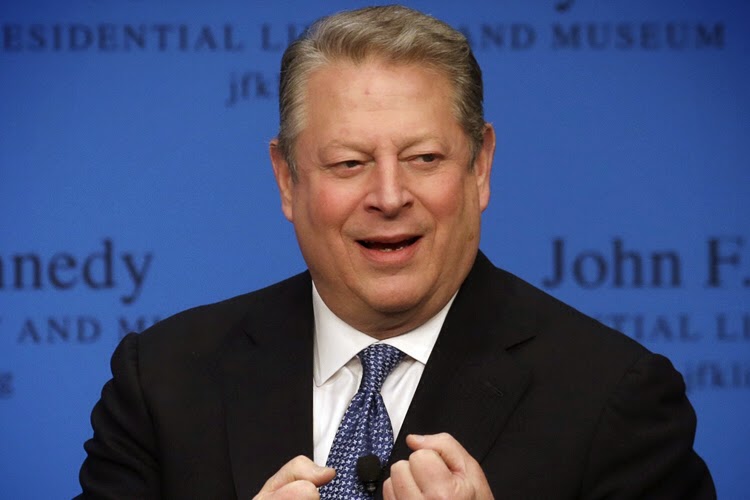
Eight years after Al Gore wrote a book and made a movie to impress upon us the “planetary emergency of global warming” (his subtitle for An Inconvenient Truth), he wrote an article with a more optimistic feel- ing in the 18 June 2014 issue of Rolling Stone. He begins “The Turning Point: New Hope for Climate” as follows:

Al Gore - Climate Reality Leadership Corp

In the struggle to solve the climate crisis, a powerful, largely unnoticed shift is taking place. The forward journey for human civilization will be difficult and dangerous, but it is now clear that we will ultimately prevail. The only question is how quickly we can accelerate and com- plete the transition to a low-carbon civilization.

The “surprising – even shocking – good news” is “our ability to convert sunshine into usable energy . . . much cheaper far more rapidly than anyone had predicted,” Gore writes: the cost of photovoltaic electricity is competitive with that from other sources in at least 79 countries, and the 43% decrease in cost of wind- generated electricity since 2009 has made it cheaper than coal-generated electricity. By 2020 more than 80% of world population will live where photovoltaic electricity is competi- tive with other sources.

As evidence of this “largely unnoticed shift,” he notes that Germany now generates 37% of its electricity from wind and solar, a percentage expected to reach 50% by 2020, and that nine of ten European coal and gas plants are losing money. Worldwide, capacity for 17 gi- gawatts of solar electricity was installed in 2010, for 39 in 2003, with expectations of 55 in 2014. China claims it will have a capacity of 70 solar gigawatts by 2017. (A gigawatt is the power generating capacity of a standard electric power plant.)

Gore states that in the U.S. 166 coal-fired plants have closed or announced closings in the last 4.5 years, and 183 proposed coal-fired plants have been canceled since 2005. He acknowledges that some of this shift from coal is to natural gas obtained by hydrofracturing (“fracking”) but focuses on the emergence of “on-site and grid battery storage and microgrids,” noting that the Edison Electric Institute (the U.S. utility trade group) has labeled this trend as the “largest near-term threat” to the present elec- tric utility system. He likens this threat to that posed by cell phones to the landline telephone system. He cites Citigroup’s recognition of the decreased cost of solar and wind electricity and battery storage (long seen as a barrier to intermittent energy from renewable). In addition, he notes a reduction of 49% in energy intensity (energy in- put per dollar output in gross domestic product) since 1980.

Gore observes that the Koch brothers have led the fight against rooftop solar electricity and for keeping the present fossil-fueled electric plants, one of their arguments being that net metering allows producers of solar electricity to benefit from the grid without paying for it. Al- though Gore neglects to mention that in net metering the utility pays the generator only the wholesale price for the surplus generation, he does note that solar electricity gen- eration has the advantage of peaking with electricity de- mand, thereby saving utilities from having to install new peak generation capacity (a point also made by keynoter Perez at the kickoff to develop the solar lessons for School Power Naturally, reported in our Winter 2003 issue).

Gore likens global warming to a fever for planet Earth and notes that the presently-gathering El Niño is expected to result in a pronounced global temperature increase. (Coverage in our Winter 2010 issue of a talk to the American Physical Society and the American Association of Physics Teachers on 15 February 2010 by Judith Lean of the Naval Research Laboratory attributes this to the phase of the 22-year solar cycle.) He correlates the de- struction from Supertyphoon Haiyan and Superstorm Sandy with greater surface water temperature (5.4oF for the former, 9oF for the latter). He notes that higher water temperatures also mean higher sea level and disruption of water supplies that depend on snowmelt. And he adds that even more severe catastrophes are in the offing, like the irreversible collapse of a portion of the West Antarc- tic ice sheet. In addition to heightened sea level, warmer climate also means an atmosphere capable of holding more water vapor and delivering more severe storms, as have been seen in Pensacola (FL), and Nashville (TN). At the same time, global warming will exacerbate the dryness of the drier parts of the Earth through greater evaporation of what little water there is in the ground. Gore also observes that climate change brings concern to the military for both the safety of its bases and the new types of world conflict it will have to deal with.

Gore concedes that these many “knock-on consequences of the climate crisis” are enough to cause anyone to despair. But, as he writes in his opening paragraph, “we will have to take care to guard against despair,” lest we become deterred from the action we must pursue. Though there be light at the end of the tunnel, he points out that we are in the tunnel. Among the things he says we need are “a price on carbon in our markets” and “green banks” to finance “green” projects.

“Damage has been done, and the period of consequences will continue for some time to come, but there is still time to avoid the catastrophes that most threaten our future.”

Though U.S. greenhouse gas emissions had decreased from 2008 to 2012, due to recovery from the recession, they increased 2.4% in 2013. Gore calls for the U.S. to match the European Union’s commitment to reduce carbon dioxide emissions 40% by 2030.

Gore’s concluding reasons for optimism are that “Rapid technological advancements in renewable energy are stranding carbon investments; grassroots movements are building opposition to the holding of such assets; and new legal restrictions on collateral flows of pollution . . . are further reducing the value of coal, tar sands, and oil and gas assets.” “Damage has been done,” he adds, “and the period of consequences will continue for some time to come, but there is still time to avoid the catastrophes that most threaten our future.”


Global Climate Inaction Will Mean Economic Turmoil for South Asia, Warns Bank

The first comprehensive study ever issued on the economic costs that uncontrolled climate change would inflict on South Asia predicts a staggering burden that would hit the region's poorest the hardest.


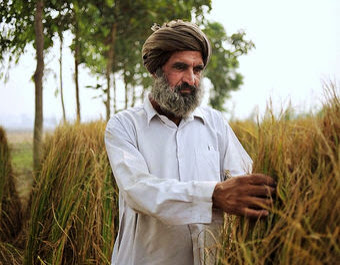
Rice Farmer in Punjab, India

“The impacts of climate change are likely to result in huge economic, social and environmental damage to South Asian countries, compromising their growth potential and poverty reduction efforts,” said the study, published by the Asian Development Bank.

The cuts in regional GDP are so deep that they might ripple around the world, as six developing countries with 1.4 billion people—a third of them living in poverty—pay the price of the world's continuing reliance on fossil fuels.

Projections like this feed into the urgency for action as world leaders prepare to meet at the United Nations next month to discuss the climate crisis. Recent warnings show that the steps nations seem willing to take will fall well short of what is needed.

Action now, the study shows, would pay immediate and lasting dividends to the countries it examined: Bangladesh, Bhutan, India, the Maldives, Nepal and Sri Lanka.

The study, published as a new 160-page book, says that if the world cuts fossil fuel consumption enough to keep warming within 2 degrees Celsius—the goal of UN negotiations—the costs to South Asian countries of adapting to rising seas and temperatures in the decades ahead might be cut almost in half.

But if business-as-usual continues, leading to a world that is 4 or 5 degrees warmer by 2100 than at the start of the industrial age, the outlook looks grim.

“Climate change will slash up to 9 percent off the South Asian economy every year by the end of this century if the world continues on its current fossil-fuel intensive path,” the bank said. “The human and financial toll could be even higher if the damage from floods, droughts, and other extreme weather events is included.”

Because this kind of estimate is inherently imprecise, the bank warned that the real damage could be much worse than expected. Under business-as-usual trends, there is a one in 20 chance that South Asia will lose 24 percent of its annual GDP by the end of the century, the study found.

Paying to stave off those damages will cost these nations dearly, the study said.

To avoid the damage that is expected if the world takes no action on climate change, South Asia would have to spend nearly $40 billion per year by 2050 on adaptation measures, or nearly half a percentage point of average annual GDP. By 2100, the costs would have to increase to $73 billion per year, or roughly nine-tenths of a point of GDP.

If the world were to achieve the 2-degree warming goal established by UN negotiators at climate treaty talks in Copenhagen in 2009—a goal also at the heart of culminating talks set for Paris in 2015—annual adaptation costs for South Asia would be considerably less: $31 billion a year at mid-century, and $41 billion at century's end.

And instead of losing nearly 9 percent of annual GDP by the end of the century, the study found, South Asia would lose about 2.5 percent by 2100 if the world lives up to the goals of Copenhagen. More


Greenland ice loss doubles from late 2000s

A new assessment from Europe’s CryoSat spacecraft shows Greenland to be losing about 375 cu km of ice year.

The team has produced elevation models for the ice sheets

Added to the discharges coming from Antarctica, it means Earth’s two big ice sheets are now dumping roughly 500 cu km of ice in the oceans annually.

“The contribution of both ice sheets together to sea level rise has doubled since 2009,” said Angelika Humbert from Germany’s Alfred Wegener Institute.

“To us, that’s an incredible number,” she told BBC News.

In its report to The Cryosphere journal, the AWI team does not actually calculate a sea-level rise equivalent number, but if this volume is considered to be all ice (a small part will be snow) then the contribution is likely to be on the order of just over a millimetre per year.

This is the latest study to use the precision altimetry data being gathered by the European Space Agency’s CryoSat platform.

The satellite was launched in 2010 with a sophisticated radar instrument specifically designed to measure the shape of the polar ice sheets.

The AWI group, led by senior researcher Veit Helm, has taken just over two years’ worth of data centred on 2012/2013 to build what are called digital elevation models (DEMs) of Greenland and Antarctica, and to asses their evolution.

These models incorporate a total of 14 million individual height measurements for Greenland and another 200 million for Antarctica.

When compared with similar data-sets assembled by the US space agency’s IceSat mission between 2003 and 2009, the scientists are able then to calculate changes in ice volume beyond just the CryoSat snapshot.

Negative shifts are the result of surface melting and ice discharge; positive trends are the consequence of precipitation – snowfall.

Greenland is experiencing the biggest reductions in elevation currently, losing about 375 cu km a year (plus or minus 24 cu km per year), with most of the action occurring at the west and south-east coast of the continent.

Significant thinning is seen also in the North East Greenland Ice Stream (NEGIS).

“This has three outlet glaciers and one of these, the Zachariae Isstrom, has retreated quite a bit and some volume loss has already been reported. But we see now that this volume loss is really propagating to upper areas, much further into the interior of the ice sheet than has been recorded before,” explained Prof Humbert.

In Antarctica, the annual volume loss is about 128 cu km per year (plus or minus 83 cu km per year).

As other studies have found, this is concentrated in the continent’s western sector, in the area of the Amundsen Sea Embayment.

Big glaciers here, such as Thwaites and Pine Island, are thinning and retreating at a rapid rate.

Some thickening is seen also, such as in Dronning Maud Land, where colossal snowfalls have been reported. But this accumulation does not offset the losses occurring in West Antarctica.

A British-led group recently reported its own Antarctica DEM, using a different algorithm to process the numbers in the CryoSat data.

The AWI outcomes look very similar, and the German team has transferred the exact same approach to Greenland so it can have confidence in comparing the two continents.

The losses also look consistent with the analysis coming out of the American Grace mission, which uses a different type of satellite to monitor gravity changes in the polar regions – to, in essence, weigh the amount of ice being dumped into the sea.

Prof Andy Shepherd, who was part of the British group that reported its findings in May, commented: “This is yet another exciting result from CryoSat, thanks to the team at AWI, charting yet more new ground by providing the first complete survey of ice volume changes in Greenland.

“However, the increased ice losses that have been detected are a worrying reminder that the polar ice sheets are still experiencing dramatic changes, and will inevitably raise concerns about future global sea-level rise.” More