Utility Industry: We Need to Promote Electric Vehicles in Order to ‘Remain Viable’

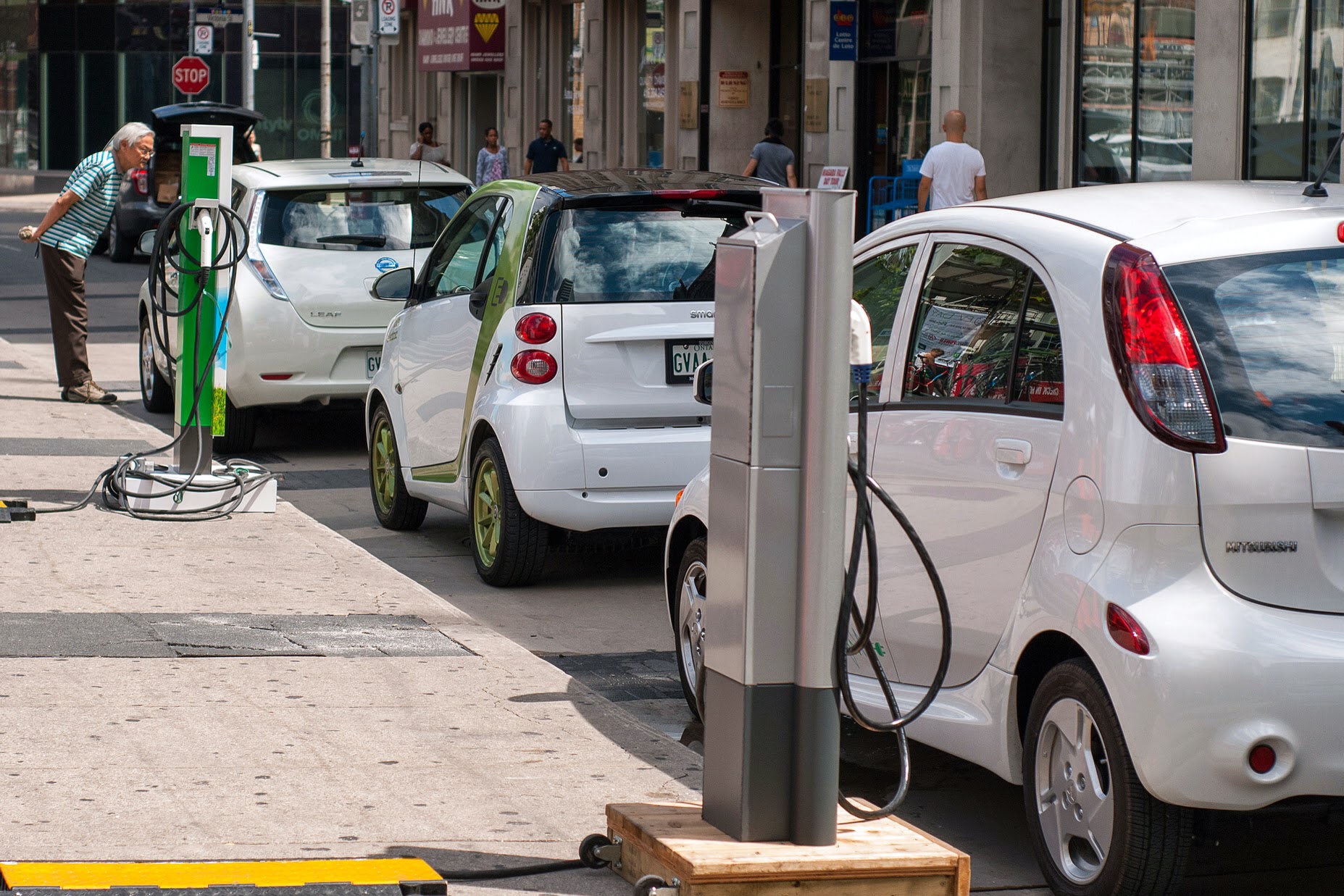
The Edison Electric Institute, the power industry's main trade group, is calling on utilities to better promote electric cars in order to stimulate demand for electricity and help reverse trends that threaten the long-term viability of some in the industry.

Without a strategy to help connect more vehicles to the grid, utilities will continue to face slow growth and stagnant revenues, warns EEI in a new report. The organization calls electric vehicles a “quadruple win” for power companies looking to boost demand, find new ways to interact with customers, support environmental goals and mandates, and reduce operating costs through electrifying their own fleets.

“The bottom line is that the electric utility industry needs the electrification of the transportation sector to remain viable and sustainable in the long term,” conclude the authors.

Some leading investor-owned utilities have rolled out programs to support charging stations, created pilots to test integration of new vehicle-to-grid technologies and have supported studies to model how lots of electric vehicles would interact with the distribution system. But there hasn't yet been a strategic, industry-wide effort to support the electrification of transportation as a way to boost demand.

To understand why EEI is now calling for more electric vehicles, consider where the industry is headed. As the chart below illustrates, growth in retail demand has come to a virtual standstill.

At the same time, the states with the biggest solar PV markets are seeing that technology slow electricity demand growth even further. This is adding additional pressure on utilities (creating borderline disruption in some markets), as third-party developers capture much of the value from developing solar.

“Stagnant growth, rising costs, and a need for even greater infrastructure investment represent major challenges to the utility industry,” writes EEI. “Today’s electric utilities need a new source of load growth — one that fits within the political, economic and social environment.”

Part of the answer is electric vehicles, which could both grow electricity sales and help balance a future grid made up of much more distributed renewables.

Thus far, utilities have had a conflicted relationship with electric vehicles. Although sales continue to grow, consumer demand has been relatively low compared to initial estimates. That has prevented power companies from investing heavily in charging infrastructure. There are also legitimate concerns about how electric cars and trucks will impact circuits on local grids.

However, the potential upside is enormous. If the two charts above have utilities worried, the chart below should have them excited about the future.

As Opower pointed out in a recent analysis, owners of electric cars use nearly 60 percent more electricity than the average customer. And customers who own both a solar system and an electric car consume roughly the same amount of electricity from the grid as an average customer — offsetting much of the excess solar that utilities must buy back through net metering. More


Israel accused of war crimes (UK Parliament)

Israel accused of war crimes (UK Parliament)

265,718 views

Published on Jul 15, 201 4 • Highlights from a UK parliamentary debate in which MPs variously accused Israel of war crimes, disproportionate violence, ruining peace negotiations by building illegal settlements, running the worlds largest outdoor prison, collective punishment, and attacking water supplies, hospitals, supply centres and all manner of other civilian targets. I have edited out the contributions of Foreign Secretary, William Hague, because nearly all of them displayed a shameful lack of compassion for the sufferings of the Palestinian people (Hague is a prominent member of an organisation called the “Conservative Friends of Israel” and is well aware of the funding that involvement brings to his party and his own political campaigns) The debate took place on the 14th of July 2014

‘There Will Be No Water’ by 2040? Researchers Urge Global Energy Paradigm Shift

The world risks an “insurmountable” water crisis by 2040 without an immediate and significant overhaul of energy consumption and demand, a research team reported on Wednesday.

“There will be no water by 2040 if we keep doing what we're doing today,” said Professor Benjamin Sovacool of Denmark's Aarhus University, who co-authored two reports on the world's rapidly decreasing sources of freshwater.

Many troubling global trends could worsen these baseline projected shortages. According to the report, water resources around the world are “increasingly strained by economic development, population growth, and climate change.” The World Resources Institute estimates that in India, “water demand will outstrip supply by as much as 50 percent by 2030, a situation worsened further by the country's likely decline of available freshwater due to climate change,” the report states. “[P]ower demand could more than double in northern China, more than triple in India, and increase by almost three-quarters in Texas.”

“If we keep doing business as usual, we are facing an insurmountable water shortage — even if water was free, because it's not a matter of the price,” Sovacool said. “There's no time to waste. We need to act now.”

In addition to an expanding global population, economic development, and an increasing demand for energy, the report also finds that the generation of electricity is one of the biggest sources of water consumption throughout the world, using up more water than even the agricultural industry. Unlike less water-intensive alternative sources of energy like wind and solar systems, fossil fuel-powered and nuclear plants need enormous and continued water inputs to function, both for fueling thermal generators and cooling cycles.

The reports, Capturing Synergies Between Water Conservation and Carbon Dioxide Emissions in the Power Sectorand A Clash of Competing Necessities: Water Adequacy and Electric Reliability in China, India, France, and Texas and published after three years of research by Aarhus University, Vermont Law School and CNA Corporation, show that most power plants do not even log how much water they use to keep the systems going.

“It's a huge problem that the electricity sector do not even realize how much water they actually consume,” Sovacool said. “And together with the fact that we do not have unlimited water resources, it could lead to a serious crisis if nobody acts on it soon.”

Unless water use is drastically minimized, the researchers found that widespread drought will affect between 30 and 40 percent of the planet by 2020, and another two decades after that will see a severe water shortage that would affect the entire planet. The demand for both energy and drinking water would combine to aggressively speed up drought, which in turn could exacerbate large-scale health risks and other global development problems.

“The policy and technology choices made to meet demand will have immense implications for water withdrawals and consumption, and may also have significant economic, human health, and development consequences,” the report states.

The research says that utilizing alternative energy sources like wind and solar systems is vital to mitigating water consumption enough to stave off the crisis. “Unsubsidized wind power costs… are currently lower than coal or nuclear and they are continuing to drop,” the report states. When faced with its worst drought in 2011, Texas got up to 18 of its electricity from wind power and was able to avoid the kind of rolling blackouts that plague parts of China, where existing water shortages prevent power plants from operating.

An equally important step would be to shutter “thirsty” fossil fuel facilities in areas that are already experiencing water shortages, like China and India, where carbon emissions can be significantly more impactful.

“[We] have to decide where we spend our water in the future,” Sovacool said. “Do we want to spend it on keeping the power plants going or as drinking water? We don't have enough water to do both.” More


A New Thirty Years’ War in the Middle East?

wjastore's avatarThe Contrary Perspective

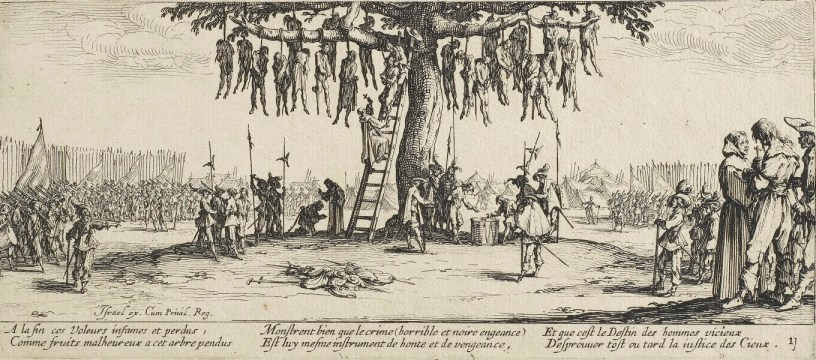
Jacques Callot captured the miseries of the Thirty Years' War.  Here we see a mass hanging Jacques Callot captured the miseries of the Thirty Years’ War. Here we see a mass hanging

W.J. Astore

The Middle East of the early 21st century is looking more and more like the Thirty Years’ War of the early 17th century that tore apart the Germanic states of the Holy Roman Empire.  Religious sectarianism?  In the 17th century, Catholics and Protestants killed each other with gusto.  Disunity?  Yes, within and among the various Germanic states of the Holy Roman Empire.  Great power intervention that made matters far worse?  Yes, Protestant Sweden and Catholic France intervened in a big way, among a host of other lesser powers. Privatized, for-profit militaries that threw more fuel on the fire?  Yes, Albrecht von Wallenstein, the greatest mercenary captain of the age, created his own empire until he was assassinated in 1634.

The war finally ended when it burnt itself out, and…

View original post 232 more words

The Sunswift eVe solar-powered car broke a 26-year-old land speed record for electric vehicles

The Sunswift eVe solar-powered car broke a 26-year-old land speed record for electric vehicles on Wednesday at the Australian Automotive Research Center in Victoria. While the record still has to be ratified by the Fédération Internationale de l’Automobile, it would make eVe the fastest electric car to ever compete a 500 km set distance course by a significant margin, Gizmodo reported. The previous record, set in 1988, was an average speed of 73 kilometers per hour; the Sunswift eVe reached 100 km per hour average over the 500 km course.

Sunswift eVe, designed and built by students at the University of New South Wales, seeks to overcome the traditional obstacles that have impeded solar-powered cars, namely, offering both speed and range in the same vehicle.

“There are many solar cars out there with a long range, and many other solar cars capable of even higher speeds,” Rob Ireland, business team leader at Sunswift, told International Business Times. “However, we’re trying to do something ground-breaking and overcome both.”

The zero-emission solar and battery storage electric vehicle is capable of covering 800 km on a single charge and has a top speed of 140 km per hour (87 miles per hour). The car’s solar panels have an 800-watt output and when the sun isn’t shining, eVe relies on its battery pack, reducing drivers’ range anxiety. The car’s motor, “supplied by Australian national science agency CSIRO, operates at 97 percent efficiency, meaning eVe consumes as much power as a kitchen toaster,” according to IB Times.

For Wednesday’s record attempt, the solar panels on the roof and hood were used to charge the battery, but were covered for the actual run, as the attempt had to be completed on a single charge.

While the Sunswift eVe is not fully road legal, the team believes that isn’t far out of reach, telling Renew Economy they hope to have the vehicle on Australian roads within the year as “a symbol for a new era of sustainable driving.” And Ireland said the practicality of the two-seat, four-wheel car is unmatched among solar-powered vehicles.

In the run-up to their attempt at the land speed record, project director and third-year engineering student Hayden Smith explained to Renew Economy why it was so significant. “Five hundred kilometers is pretty much as far as a normal person would want to drive in a single day,” Smith said. “It’s another demonstration that one day you could be driving our car.” More


Jet Stream So Weak Winds Are Running From Pacific to Atlantic Across the North Pole

robertscribbler's avatarrobertscribbler

image

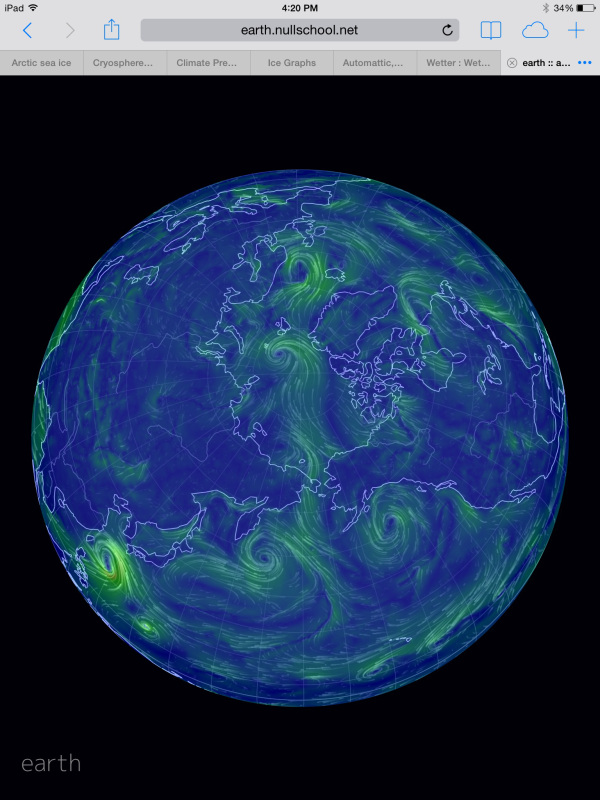
(Winds flowing north from just west of Hawaii, through the Bering Strait, over the North Pole and on into the North Atlantic as seen by NOAA’s GFS model and imaged by Earth Nullschool.)

This is a very odd pattern for global surface winds.

In the central Pacific, along a band above 20 North Latitude and about 500 miles west of Hawaii, a broad stream of easterly winds yesterday took a turn toward the north. The wind field was then pulled into a long frontal boundary spinning out from a large low pressure system off Irkutsk, Russian and driven on toward the Western Aleutian Island Chain.

The winds continued their sprint northward through the Bering Strait before being again captured by a low, this time over the East Siberian Sea. Sped on by this second nudge, the winds, running at 15-25 mph, spilled over the North Pole and into a…

View original post 337 more words

In Gaza, no one knows who will survive

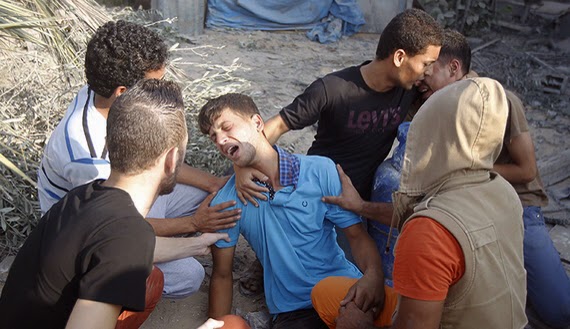
GAZA CITY, Gaza Strip — No one feels the suffering of Gaza’s people except the actual victims. It seems that only the person who has been injured feels injury. Only the dead suffer in death. Only those who lose their homes experience the loss.

The images of children being killed by tons of iron and gunpowder has become a political goal. No matter the size of our grief, it remains small compared to that of the actual victims who have been injured, have lost loved ones or no longer have a home.

What Israel is doing to the civilians of Gaza is shocking — indiscriminate shelling and killing, destruction of entire residential buildings with occupants inside. They say that death by bombing is painless, but no one knows from where death will come. There is no safe place for you or your family. You wonder why planes and shells are trying to kill you as you sit with your family. Why are they killing your children in front of you? Killing you in front of them? Killing all of you, leaving no witness to your final moments?

Israel's intent to destroy the Dawud building, which is next to my family's house and has been bombed several times, was conveyed in a phone call to a building resident. Then the Israelis fired a warning rocket on the afternoon of July 21. Everyone in the neighborhood began screaming — nearby residents, the people in our house (from which the building can be seen), the owner of a nearby restaurant and shop.

We and the neighbors went outside and left the keys in the doors. The moment of horror is not when the missile pulverizes your body, but when you realize that it is on the way, whether after receiving notice or from the actual sound of the approaching shell.

We reached a safe place. The initial shock dissipated, and our thoughts turned to the pictures and memories we had left behind in the house: babies' first steps, the drawing on the wall, my sister’s wedding party in the living room.

You think that you are ready to start over as long as no one dies, but the sadness in your heart makes you go on with your life even after having lost your child or your mother to a shell that tore them to pieces. The shell disfigures a body to the point that it becomes unrecognizable. We try to console the orphans, but do we really know how someone who lost his father or mother feels?

My family sought shelter in my cousins’ home. Earlier, at the beginning of the war, my cousins had sought shelter in our home, but suddenly their home became safer than ours. In this war, it is hard to compare how safe different locations are. We ponder the mood of the fighter pilots as to which family they will target that night. For example, they warned the tower block next to us, but they bombed another one without warning, killing the al-Kilani family. There is a complete disregard for civilian life.

It is a war of religious ideologies. The bloodshed has come to be seen as for the sake of God or heaven or the Promised Land. Feelings are ignored as long as the political goal is being attained, and the religious reward is on the way. When this happens, ideology trumps humanity.

In the first week of the war, the media followed the story of Shaima al-Masri, 4. The only family she has left is her father Ibrahim al-Masri. Sitting next to his daughter, who lies in a bed in al-Shifa Hospital, he told Al-Monitor, “I thought that sending my wife to her sister’s home will make her safe. But minutes later, I heard the explosion. I ran down the street, then I received a phone call that my son had been martyred. At the hospital’s entrance, I was told that my wife was martyred. I found my eldest daughter, Asil, in critical condition. She woke up for a few seconds and asked me where her mother was, but then she died in the operating room … I later went to where they got martyred and found that a plane had targeted them 10 meters before they reached the house of my wife’s sister.” Shaima’s mother, Sahar, her brother, Mohammed, 14, and her sister, Asil, 17, all died in an Israeli air strike in the northern Gaza Strip on July 9.

Where can children be safe? That was the question I kept asking myself as I moved my children from house to house. I was separated from my family for the first time when they decided to remain in my uncle’s house. I preferred to take my son and daughter to another place until I could find an apartment where we could again gather. I learned that some people had left Gaza for Egypt. I don't think I can do the same. I found one apartment, but its Palestinian owner doesn’t accept Palestinians, only foreigners! Such is the racism and greed that the war brings out in some people.

If you listen to the partisan radio, you would think that our strength is equal to Israel’s. It is a high moment and the point of no return for the ideologues, whose stubbornness is equal to the blood being shed. In their opinion, what I am saying is defeatist, but it is simply natural fear for my family and sadness for the rest of the children. Words of regret can no longer heal the pain.

I finally found an apartment next to the port. I want my family to survive. I don’t know, no one knows, whether my family has survived or if we have only temporarily escaped death.

I returned to al-Shifa, looking for the wounded from the al-Salam residential building. I was informed, “There are no wounded. All of them arrived dead.” Less than a day later came the Khuza’a disaster and the indiscriminate shelling of Khan Yunis— a new Shajaiya.

I entered the pediatric surgery room, where I found a child named Louay Siam, 9, entirely wrapped in bandages. His face and head were burned, but you could still see his tears. His brother Uday Siam, 12, lie in the next room with burns so severe his bones were exposed.

Their cousin Mohammed Siam told Al-Monitor, “His mother, grandmother and aunt were preparing pies on the roof of the house. The children were playing in front of them when the Israeli jet bombed them. Nine of them died.”

The Siam family had fled from the Zeitoun neighborhood east of Gaza to their relatives in the al-Rammal neighborhood in central Gaza, a supposedly “safe” area according to the Israeli army in the warning messages it sends so families can leave their homes for those areas. The planes followed them there.

Abu Zeid Abu Nasser, a neighbor of the Siams, said, “Uday and Louay's father is a seller of fruits and vegetables that come from Israel. He has nothing to do with any political party … I don’t know why the plane bombed them … They’ve [the Israelis] gone crazy.”

Abu Nasser pointed to the plastic tube in Louay’s nose that sucks the ash from his lungs. He said, “[Louay’s] condition prevents him from drinking water … He is crying because he’s thirsty.”

In our new apartment, you can hear the sound of the sea mixed with the sound of Israeli drones crossing the sky. Israel's warships fire shells. It’s dark everywhere. The electricity has been out since Israel hit the main station on July 23. On our battery-powered radio, we heard Khaled Meshaal, head of Hamas’ political bureau, saying, “We will not accept a truce without achieving our conditions.” My heart sank, and I got ready for another day of counting new casualties. More


Water Resources Fact Sheet – Earth Policy Institute

JULY 30, 2014 Water scarcity may be the most underrated resource issue the world is facing today.

Seventy percent of world fresh water use is for irrigation.

Each day we drink nearly 4 liters of water, but it takes some 2,000 liters of water—500 times as much—to produce the food we consume.

1,000 tons of water is used to produce 1 ton of grain.

Between 1950 and 2000, the world’s irrigated area tripled to roughly 700 million acres. After several decades of rapid increase, however, the growth has slowed dramatically, expanding only 9 percent from 2000 to 2009. Given that governments are much more likely to report increases than decreases, the recent net growth may be even smaller.

The dramatic loss of momentum in irrigation expansion coupled with the depletion of underground water resources suggests that peak water may now be on our doorstep.

Today some 18 countries, containing half the world’s people, are overpumping their aquifers. Among these are the big three grain producers—China, India, and the United States.

Saudi Arabia is the first country to publicly predict how aquifer depletion will reduce its grain harvest. It will soon be totally dependent on imports from the world market or overseas farming projects for its grain.

While falling water tables are largely hidden, rivers that run dry or are reduced to a trickle before reaching the sea are highly visible. Among this group that has limited outflow during at least part of the year are the Colorado, the major river in the southwestern United States; the Yellow, the largest river in northern China; the Nile, the lifeline of Egypt; the Indus, which supplies most of Pakistan’s irrigation water; and the Ganges in India’s densely populated Gangetic basin.

Many smaller rivers and lakes have disappeared entirely as water demands have increased.

Overseas “land grabs” for farming are also water grabs. Among the prime targets for overseas land acquisitions are Ethiopia and the Sudans, which together occupy three-fourths of the Nile River Basin, adding to the competition with Egypt for the river’s water.

It is often said that future wars will more likely be fought over water than oil, but in reality the competition for water is taking place in world grain markets. The countries that are financially the strongest, not necessarily those that are militarily the strongest, will fare best in this competition.

Climate change is hydrological change. Higher global average temperatures will mean more droughts in some areas, more flooding in others, and less predictability overall.

Data and additional resources available at www.earth-policy.org

Research Contact: Janet Larsen (202) 496-9290 ex. 14 or jlarsen (at) earth-policy.org

Water Resources Fact Sheet
JULY 30, 2014

Water scarcity may be the most underrated resource issue the world is facing today.

Seventy percent of world fresh water use is for irrigation.

Each day we drink nearly 4 liters of water, but it takes some 2,000 liters of water—500 times as much—to produce the food we consume.

1,000 tons of water is used to produce 1 ton of grain.

Between 1950 and 2000, the world’s irrigated area tripled to roughly 700 million acres. After several decades of rapid increase, however, the growth has slowed dramatically, expanding only 9 percent from 2000 to 2009. Given that governments are much more likely to report increases than decreases, the recent net growth may be even smaller.

The dramatic loss of momentum in irrigation expansion coupled with the depletion of underground water resources suggests that peak water may now be on our doorstep.

Today some 18 countries, containing half the world’s people, are overpumping their aquifers. Among these are the big three grain producers—China, India, and the United States.

Saudi Arabia is the first country to publicly predict how aquifer depletion will reduce its grain harvest. It will soon be totally dependent on imports from the world market or overseas farming projects for its grain.

While falling water tables are largely hidden, rivers that run dry or are reduced to a trickle before reaching the sea are highly visible. Among this group that has limited outflow during at least part of the year are the Colorado, the major river in the southwestern United States; the Yellow, the largest river in northern China; the Nile, the lifeline of Egypt; the Indus, which supplies most of Pakistan’s irrigation water; and the Ganges in India’s densely populated Gangetic basin.

Many smaller rivers and lakes have disappeared entirely as water demands have increased.

Overseas “land grabs” for farming are also water grabs. Among the prime targets for overseas land acquisitions are Ethiopia and the Sudans, which together occupy three-fourths of the Nile River Basin, adding to the competition with Egypt for the river’s water.

It is often said that future wars will more likely be fought over water than oil, but in reality the competition for water is taking place in world grain markets. The countries that are financially the strongest, not necessarily those that are militarily the strongest, will fare best in this competition.

Climate change is hydrological change. Higher global average temperatures will mean more droughts in some areas, more flooding in others, and less predictability overall.

(PDF version)

Data and additional resources available at www.earth-policy.org
Research Contact: Janet Larsen (202) 496-9290 ex. 14 or jlarsen (at) earth-policy.org


Inside the Huge Solar Farm That Powers Apple’s iCloud

Inside the Huge Solar Farm That Powers Apple's iCloud

This story was originally published by the Guardian and is reproduced here as part of the Climate Desk collaboration. The article was reported by the Guardian's Suzanne Goldenberg, and the video was produced by Climate Desk's James West.

The skies are threatening to pour on the Apple solar farm but as the woman in charge of the company's environmental initiatives points out: The panels are still putting out some power. Apple is still greening its act.

The company, which once drew fire from campaigners for working conditions in China and heavy reliance on fossil fuels, is now leading other technology companies in controlling its own power supply and expanding its use of renewable energy.

After converting all of its data centers to clean energy, the Guardian understands Apple is poised to use solar power to manufacture sapphire screens for the iPhone 6, at a factory in Arizona.

And in a departure for its reputation for secretiveness, Apple is going out of its way to get credit for its green efforts.

“We know that our customers expect us to do the right thing about these issues,” Lisa Jackson, the vice-president of environmental initiatives told the Guardian.

Apple's solar farm is said to be the
largest privately owned array in
the US. James West/Climate Desk

This week the company invited journalists on a rare tour of its data center in North Carolina to showcase its efforts.

Until a year ago, the telegenic Jackson was the front woman for Barack Obama's environmental ambitions as the administrator of the Environmental Protection Agency.

Now she is leading the effort to shrink Apple's carbon footprint—and make sure customers realize the company is doing its bit to decarbonize its products and the internet.

Data centers require huge loads of electricity to maintain climatic conditions and run the servers carrying out billions of electronic transactions every day.

With Apple's solar farm, customers could now be confident that downloading an app or video-chatting a friend would not increase carbon pollution, Jackson said.

“If you are using your iPhone, iPad, Siri or downloading a song, you don't have to worry if you are contributing to the climate change problem in the world because Apple has already thought about that for you. We've taken care of that. We're using clean energy,” she said.

The company is also moving to install solar and geothermal power at a plant in Mesa, Arizona, that has been manufacturing sapphire glass. Apple would not directly comment on the Arizona factory but the state's governor, Jan Brewer, has publicly praised the company's decision to relocate there and to use solar and geothermal in manufacturing.

“We are aware that almost 70 percent of our carbon footprint is in our supply chain,” Jackson said. “We are actively working on the facilities that we have here in the United States.”

The initiatives mark a turnaround for Apple, which was criticized in the past for working conditions and the use of toxic chemicals at its factories in China and for its heavy reliance on carbon intensive sources such as coal to power the cloud.

Greenpeace now says the company is out ahead of competitors like Google and Facebook, which also operate data centers in North Carolina.

“They are the gold standard in the state right now,” said David Pomerantz, a senior Greenpeace campaigner. “There are a lot of data centers in North Carolina and definitely none has moved as aggressively as Apple has to power with renewable energy,” he said.

The 55,000 solar panels tracking the course of the sun from a 400,000 square meter field across the road from Apple's data center in Maiden were not in the picture seven years ago when Duke Energy and local government officials sought to entice Apple to open up a data center in North Carolina.

Duke Energy, which has a near monopoly over power supply in the Carolinas, set out to lure big companies like Apple, Facebook and Google to the state with offers of cheap and reliable power for the data centers that are the hub of internet.

Data centers, with their densely packed rows of servers and requirements for climatically controlled conditions, are notorious energy hogs. Some use as much power as a small city. In Apple's case, the North Carolina data center requires as much power as about 14,000 homes—about three times as much as the nearby town of Maiden.

Charging up a smart phone or tablet takes relatively little electricity, but watching an hour of streamed or internet video every week for a year uses up about as much power as running two refrigerators for a year because of the energy powering data centers elsewhere.

That made data centers a perfect fit for Duke, said Tom Williams, the company's director of external relations. With the decline in textile and furniture factories that had been a mainstay in the state, the company had a glut of electricity.

“What the data centers wanted from Duke was low cost and reliable power. Those two things—cost and reliability—are fundamental to their operations,” he told the Guardian. “What we like about these data centers is that it's an additional load on our system.”

In the early days, Apple bought renewable energy credits to cover the center's electricity use. In 2012, the company built its first solar farm across the road from the data center.

Apple built a second solar farm, and announced plans this month for a third, all roughly about the same size, to keep up with the growing use of data. It also operates fuel cells, running on biogas pumped in from a landfill. All of the power generated on-site is fed into the electricity grid.

“On any given day 100 percent of the data center's needs are being generated by the solar power and the fuel cells,” Jackson said.

The company has been less successful in its efforts to get other companies to switch to solar power. Duke, in cooperation with Apple, launched an initiative last year to encourage other big electricity users to go solar but so far there have been no takers.

Renewable energy accounts for barely 2 percent of the power generated in North Carolina, and Duke does not see the share growing significantly by 2020. More