Gaza: Widespread Impact of Power Plant Attack

(Jerusalem, Palestine) – The apparent Israeli shellfire that knocked out the Gaza Strip’s only electrical power plant on July 29, 2014, has worsened the humanitarian crisis for the territory’s 1.7 million people. Damaging or destroying a power plant, even if it also served a military purpose, would be an unlawful disproportionate attack under the laws of war, causing far greater civilian harm than military gain.

The shutdown of the Gaza Power Plant has had an impact on the population far beyond power outages. It has drastically curtailed the pumping of water to households and the treatment of sewage, both of which require electric power. It also caused hospitals, already straining to handle the surge of war casualties, to increase their reliance on precarious generators. And it has affected the food supply because the lack of power has shut off refrigerators and forced bakeries to reduce their bread production.

“If there were one attack that could be predicted to endanger the health and well-being of the greatest number of people in Gaza, hitting the territory’s sole electricity plant would be it,” said , deputy Middle East and North Africa director. “Deliberately attacking the power plant would be a war crime.”

The spokesperson for the Energy Distribution Authority, Jamal Dardasawi, was quoted in the media as saying that Israeli tank shells hit one of Gaza Power Plant’s fuel storage tanks. The attack caused a massive explosion and a fire that damaged other parts of the facility and took much of the day to extinguish.

The plant’s shutdown cut off all power for much of the territory. For years, Gazans have been living with electricity service for only part of each day, and those who can afford fuel run private generators to provide back-up power. A week after the strike, some service was restored to most neighborhoods, but less than the limited pre-conflict levels.

Shortly after the attack was reported, Israel denied targeting the plant but said its forces might have hit it accidentally. Human Rights Watch was unable to determine whether Palestinian fighters were deployed in the area when the plant was hit. However, Fathi al-Sheikh Khalil, deputy chairman of the Energy and Natural Resources Authority in Gaza, said that the al-Nusseirat area, where the plant is located, was being heavily bombed at the time of the strike. Khalil said that Gaza firefighters phoned him to say they could not approach the plant because of the ongoing attacks in the vicinity. As a result, the fire spread from the small storage tank that was initially hit to a larger one, he said.

The strike came at about 3 a.m. on a day of bombardment that was widely described as the heaviest in the first three weeks of fighting. Israeli airstrikes that day destroyed a central mosque and the home of the Hamas political leader, Ismail Haniya, and damaged government buildings and a building that housed the offices of Hamas-controlled television and radio stations. Israeli military operations that day killed about 100 Palestinians.

Israeli military operations have caused massive damage to Gaza’s infrastructure, including housing, factories, hospitals, mosques, and schools.

Under the laws of war, power plants, like airports, are considered dual-use objects – civilian objects that also benefit an armed force. As such they can be military objectives, subject to attack. However, any attack on a dual-use object must be proportionate. Attacks that can be expected to cause more harm to civilians and civilian structures than the anticipated military gain of the attack are prohibited. Expected civilian harm encompasses casualties over time as well as immediate civilian losses. Thus any attack on the Gaza Power Plant that would cause a significant shutdown would invariably be disproportionate, violating international humanitarian law.

Israel has denied attacking the power plant. Brig. Gen. Yaron Rosen, the commander of the Israeli Air Support and Helicopter Air Division, said on July 29 that Israel “has no interest” in attacking the plant. “We transfer to them the electricity, we transfer in the gas, we transfer in the food in order to prevent a humanitarian disaster,” he said. “So we attacked the power plant?” Rosen said it was possible Israel hit the power plant accidentally and that an internal investigation was under way. An August 4 CNN story on the electricity crisis stated that an Israeli Defense Ministry spokesperson had told CNN that Israeli forces were not involved in the attack.

Ribhi al-Sheikh, deputy head of the Palestine Water Authority, said the lack of electricity had idled wells – except where generators were able to provide some back-up power – as well as water treatment and desalination plants. Idling wells endangers crops that require water at the hottest time of year.

Most urban households in Gaza need electricity to pump water to rooftop tanks. Ghada Snunu, a worker for a nongovernmental organization, said on August 4 that her home in Gaza City had been without electricity since the attack on the power plant, forcing her family to buy water in jerry cans and to conserve the used household water to empty the toilets. The collapse of electricity service meant that many Gazans lacked access to the 30 liters of water that is the estimated amount needed per capita daily for drinking, cooking, hygiene and laundering, said Mahmoud Daher, head of the Gaza office of the UN World Health Organization.

Daher said that hospitals have been given priority for scarce electricity, with Shifa, the territory’s largest hospital, getting the most, at 16 hours a day. If the fuel required to run generators were to run out, or a generator to fail, a hospital could lose power.

An official at al-Quds Hospital in Gaza City told Human Rights Watch on August 7 that because of electricity interruptions:

We use a large generator for six to eight hours per day, then have to rely on three smaller ones, because the large one cannot be run full-time. If the large one goes, we don’t know how we would repair it, because of the lack of spare parts. It powers the oxygen station, the hospital’s two elevators, and the air conditioners – this amounts to 80 percent of the hospital’s total electricity consumption. When we use the smaller generators, they can only power one elevator, and none of the air conditioners, which makes it difficult for staff to work long hours in the August heat, and dangerous for patients.

Israeli forces had reportedly struck the power plant both earlier in the current fighting and in previous conflicts, Human Rights Watch said. The plant had been hit on five occasions since early July, according to the International Committee of the Red Cross. It closed briefly after shelling by Israeli forces on July 22 and 23, said Gisha, an Israeli nongovernmental organization. One of the strikes knocked out one of the plant’s generator sets, said Khalil of the Energy Authority.

He said repairing it and the storage tanks will take more than a year, but the plant can make temporary repairs that will enable it to produce 50 megawatts sooner, though at a higher cost. The power plant, in central Gaza, produced about 60 megawatts of power before the current fighting began, the deputy minister of the Palestine Energy Authority in Ramallah, Abdelkarim Abdeen, told Human Rights Watch.

Khalil said that about two days before the July 29 strike, Israeli authorities had passed a message to him via the UN Office for the Coordination of Humanitarian Affairs (OCHA) that the power plant was not a target and that its workers could move safely within the compound. No workers were hurt in the strike, he said.

In addition to the output from the plant, Gaza normally gets 120 megawatts of power from Israel via 10 transmission lines and 28 from Egypt via 3 lines. However, the recent fighting damaged 8 of the Israeli lines and 2 of the Egyptian lines, reducing the supply coming from Israel to 24 megawatts and from Egypt to 18 megawatts as of August 4, Abdeen said.

Damage to the Israeli and Egyptian power lines and then the attack on the power plant cut Gaza’s electricity supply to about 20 percent of the 200 megawatts it had before the conflict began. Gaza’s electricity needs are estimated at 350 megawatts, so power rationing and rolling blackouts were the norm even before war damage slashed the amount of power available.

Since the August 5 ceasefire, electricity power supplies have increased as repair crews have restored eight of the Israeli and all three of the Egyptian lines. Before the ceasefire, conflict conditions had made it hazardous for technicians to perform the necessary repairs, the International Committee of the Red Cross said. As of August 7, households were reportedly getting between three and seven hours of electricity, depending on their location in the Gaza Strip.

Eight years ago, on June 28, 2006, Israeli missiles hit the plant eight times, knocking out its transformers, three days after Hamas fighters in Gaza captured the Israeli soldier Gilad Shalit. Israel then delayed or blocked the delivery of material needed to fully repair the Gaza power plant. Then, in 2008, Israel cut its deliveries of electricity and fuel to Gaza for the declared purpose of pressuring armed groups to end their rocket attacks against civilians in Israel, a form of collective punishment in violation of the laws of war.

Israel has attacked power plants in hostilities outside of Gaza. During its armed conflict with Hezbollah, Israel deliberately bombed electricity plants in southern Lebanon, including on June 24, 1999, February 8, 2000, and May 5, 2000. The day after the 1999 attack, Israeli Brig. Gen. Dan Halutz said at a news conference that the Lebanese infrastructure targets “had been selected a long time ago,” and that the Israeli “government decided to carry out an attack on Lebanese infrastructure and not only on Hezbollah objectives…to stress that all power brokers in Lebanon who support Hezbollah’s murderous activity are liable to attack.” The attacks on electricity plants violated the laws of war prohibition against disproportionate attacks because their expected harm to the civilian population was greater than the military gain achieved.

The laws of war obligate countries responsible for violations to make full reparations for the loss or injury caused. This would involve at a minimum providing materials and assistance to permit the prompt restoration of the power plant to its pre-war capacity. Even while fighting continues, Israel should ensure humanitarian agencies have access to restore destroyed power lines, given their crucial humanitarian impact on the civilian population More


Life in occupied Palestine

A video that Israel and the United States does not want you to see. Anna, a Jewish American from the International Womens Peace Service (IWPS) speaks about documenting human rights abuses in occupied Palesting and supporting non-violent resistance.


Which Ocean Species Will Outlast the Rising Acidity of Seawater?

Many of the projected effects of climate change on the world’s oceans are already visible, such as melting polar ice caps and rising sea levels. But invisible changes may be the most threatening to human food sources, beginning with the tiny species like plankton that inhabit the bottom of the oceans’ food chain.

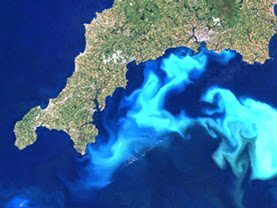
Strength in numbers: A satellite’s view
of billions of E. huxleyi, blankets of tiny
plankton floating off the east coast of
southern England. Credit: NASA

As emissions from human activities increase atmospheric carbon dioxide, they, in turn, are modifying the chemical structure of global waters, making them more acidic.

Many researchers have speculated that most aquatic species won’t be able to adapt in time to survive the acidification that has already begun, but there are some who are more optimistic. One of them is Jennifer Sunday, a postdoctoral ecologist and evolutionary biologist at Canada’s Simon Fraser University.

“You hear people say species aren’t going to adapt in time,” she explained in an interview, “but I just knew that we don’t really know that. This really motivated me to start thinking about a study to test this. We can and did put some science and data to this question.”

Sunday and her team published a review earlier this year in Trends in Ecology and Evolution, aiming to help researchers improve their chances of finding potential survivors. It suggests that more studies should focus on identifying species with enough genetic variety to produce a mutant that can adapt.

Sunday feels that the better researchers get at searching for adapters, the more will be found.

The process that creates this risk is swift and globe-spanning. Oceans absorb roughly a quarter of the rising CO2 emissions from the atmosphere, so as that concentration increases, the oceans absorb more of the gas. In the past 150 years, human-induced climate change has changed the ocean acidity from roughly pH 8.3 to pH 8. (In the pH scale, 1 is most acidic, 7 is neutral and 14 is basic, or least acidic).

“It’s anywhere from 10 to 100 times faster than anything we’ve seen over the last million years,” said Richard Feely, a chemical oceanographer and senior researcher with the National Oceanic and Atmospheric Administration. “That’s just according to our good records.” And acidity is only expected to rise.

“By the end of this century,” Feely said, “projections are an increase by another 100 to 130 percent.”

Which tiny sea creatures can win the lottery?Changes in pH levels can have massive effects on marine life, a fact that has led many scientists to believe that most species can’t withstand large increases in acidification. When CO2 mixes with ocean waters, it binds calcium molecules that are usually free for marine creatures to build shells. The more acidic waters can also corrode existing shells.

Sunday isn’t the first to try and isolate survivor species. Several teams worldwide have already been exploring the potential of marine life species to adapt to predicted climate changes.

In 2009, a European team published their research on the tiny circular plankton Emiliania huxleyi, made up of light-reflecting mineralized calcium ovals. These tiny plankton sometimes float in populations so large, they’ve been spotted from outer space.

Looking at strains of the plankton under varying CO2 levels, researchers found that while some plankton had difficulties forming their shells when the water was more acidic, others did not, causing researchers to speculate that the plankton might be able to use another form of calcium to substitute in shell making. Other studies have shown that certain species thought incapable of evolving quickly can, in fact, rapidly adapt.

Evolution is like a lottery. The faster a species reproduces, the greater the number of unique ticket combinations it creates in the genes of its offspring. For species that produce the right genetic mutation, their number is drawn and the prize is survival.

“This is particularly important when you want to look at a species’ ability to cope with change,” said Jennifer Pistevos, a master of research student at the Marine Biological Association, who studied clone populations of Celleporella hyalina, a tiny organism she found to have an amazing ability to reproduce in both more acidic and warmer water conditions.

“Faster reproduction rates give us a chance to see how vulnerable a species is,” Pistevos said.

In 2012, Sunday and colleagues spanning three continents reviewed past studies, and based on this work, propose future research dedicated to efforts to locate adapters by incorporating more experimental evolution into the studies.

Experimental evolution identifies members of a species born with the winning genetic ticket instead of those who can come up with the correct number during their lifetime. Being born with the winning ticket means these individuals may be able to ride the acidifying tides in the kind of time frame needed—which is immediately.

Questions that can’t be answered in the labSunday and her team also suggest more work should consider a species’ response to multiple environmental changes, such as increased temperature and oxidation levels, as well as multiple stages of life. Currently, many studies only follow a species at a specific point in its members’ lives, such as infancy. Without tracking an organism over its life span and in a complicated and changing environment, it’s hard to say whether observed changes will translate into overall survival.

Although Sunday sees her work as laying the groundwork for less pessimistic predictions of the future fate of marine life, not everyone agrees that the approach is realistic. Aran Mooney, a biologist at the Woods Hole Oceanographic Institute who studies the effects of ocean acidification on Atlantic long-fin squid larvae, said some methods Sunday recommends are not practical for studying all species.

“Overall, the review is very good for us,” he said. “The authors point out some great goals and the limitations we face.” But for species like squid, Mooney said, Sunday’s suggestions are unlikely to be used.

“Measuring squid evolution in the lab might be doable to some extent,” Mooney said, “but it isn’t really possible to raise multiple generations or even young to adult—[they] don’t do all that well in captivity.”

Though Sunday agreed that predicting exactly how oceans will look in the future remains hard, researchers are starting to look in the right places. “The question just seemed too difficult before,” she said. “We wanted to put our advice out there so people could see it’s not impossible for species to adapt in time.”

“I do predict some species will adapt,” concluded Sunday, “but not all. Ultimately, it’s pretty shocking to think we’ll be losing species and it will be because of us.” More

The third in a series. To see the first two parts, click here and here.


Chevening scholarship opens to future leaders

Chevening scholarship opens to future leaders

Professionals and public servants from the Cayman Islands looking to further their education are being urged to apply for the United Kingdom’s prestigious Chevening Scholarship.

The award is a product of the UK’s flagship scholarship programme funded by the Foreign and Commonwealth Office. It recognises exceptional and budding leaders, offering them financial support for a Master’s level degree beginning September 2015 at one of the UK’s leading universities.

To be eligible for a Chevening Scholarship, applicants must be a citizen of a Chevening-eligible country and intend to return there after their studies; hold a degree that is equivalent to at least an upper second-class honours degree in the UK; have completed at least two years’ work or equivalent experience before applying for a Chevening Scholarship; be able to meet the Chevening minimum English language requirement; and be able to obtain the correct visa, and receive an unconditional offer from a UK university.

The programme’s team is particularly interested to hear from applicants in the Cayman Islands who wish to study good governance, financial management, public administration and law, commercial / economic development and environment.

Applicants have until 15 November 2014 to submit their application.

A Chevening scholarship is usually offered for a one-year Master’s degree, in any subject at any of the UK’s leading universities. It includes a monthly stipend, travel to and from the recipients country, a thesis or dissertation grant and tuition fees. Applicants should read the online guidance and be able to demonstrate how they meet the Chevening selection criteria before submitting an application. Further details of closing dates and priority subject areas are available at www.chevening.org/apply.


Gallery

The Small Islands Weather Together Partnership is LIVE!

caribbeanclimate's avatarcaribbeanclimate

The Small Islands Weather Together partnership is now live!

What is Partnership?
The “Small Islands, Weather Together” partnership is designed to show how the small island nations of the world are working together to improve their vital weather and climate services.  This initiative has been developed by the World Meteorological Organisation (WMO) and the Secretariat of the Pacific Regional Environment Programme (SPREP)  in support of the Third International Conference on Small Island Developing States which will be held in Apia, Samoa, from 1-4 September, 2014.

sids-logo-2

What’s the problem?
Because of climate change many of the world’s small island nations face an increase in the devastating impacts of extreme weather events such as cyclones and flash floods.
Many National Meteorological Services in small island nations still lack the basic infrastructure, technology and expertise they need to serve their vulnerable communities. So we know that investing in stronger weather and climate services could…

View original post 130 more words

Has the era of the ‘climate change refugee’ begun?

A far-flung scattering of islands in a turquoise sea, Tuvalu is one of the planets' smallest and most remote nations, just west of the International Date Line, just south of the equator.

Funafuti, Tuvalu

Tuvalu's coastline consists of white and sandy beaches, green palm trees and mangroves. It is hard to imagine that anybody would want to leave this small island nation, located between Australia and Hawaii, voluntarily. But Tuvalu has become the epicenter of a landmark refugee ruling that could mark the beginning of a wave of similar cases: On June 4, a family was granted residency by the Immigration and Protection Tribunal in New Zealand after claiming to be threatened by climate change in its home country, Tuvalu. The news was first reported by the New Zealand Herald on Sunday.

The small Pacific island nation sits just two meters above sea level. If the current sea level rise continues, experts believe the island might disappear in approximately 30 to 50 years. Tuvalu shares this existential threat with many other island nations and coastal regions, which have struggled for years to raise international awareness about their tragic plight. Predictions for climate change-induced displacement range widely from 150 to 300 million people by 2050, with low-income countries having the far largest burden of disaster-induced migration, according to the Internal Displacement Monitoring Center.

Those threatened by sea-level rise, droughts or other natural catastrophes face an epochal problem: Victims of climate change are not recognized as refugees by the International Refugee Convention. In the Tuvalu case, Sigeo Alesana and his family reportedly left the island nation in 2007 and moved to New Zealand, where they lost their legal status in 2009. The family was not able to obtain work visas and had to apply for refugee and protected persons status in 2012. Although the claims were dismissed in March 2013 and an appeal was turned down, the family's case was finally approved. The case was closely followed by immigration and environmental lawyers all over the world.

Sigeo Alesana and his wife claimed before the tribunal that climate change had made life in Tuvalu more difficult due to much more frequently occurring inundations, that caused coastal erosion and made it difficult to grow crops. The tribunal explicitly mentioned climate change in its assessment saying that Alesana's children were particularly “vulnerable to natural disasters and the adverse impact of climate change.”

“I don't see it as delivering any kind of 'verdict' on climate change as such,” says Vernon Rive, a Senior Lecturer in Law at AUT Law School in Auckland. The New Zealand decision is very specific because the family based its application for residency on three arguments, Rive says. First, the family members claimed to be refugees; second, they argued to be “protected people“, and third, the family said its case fell under “exceptional humanitarian grounds.” Each of these arguments is based on an existing convention regarding refugees, but the family only succeeded because it claimed “exceptional humanitarian grounds,” which is a wording recognized in New Zealand's immigration legislation but not by many other governments.

In its judgment the New Zealand tribunal surprisingly acknowledged the humanitarian consequences of climate change among other factors, such as the presence of an elderly mother who required care. In its conclusion, however, the tribunal refrained from singling out climate change and stated that other factors would already have been sufficient to grant residency to the family. In other words: The tribunal avoided a clear decision on whether climate change can or cannot be reason enough for refugees to be granted residency. The mere fact that the tribunal mentioned the impacts of global warming as a contributing factor to the ruling is nevertheless remarkable. “What this decision will not do is open the gates to all people from places such as Kiribati, Tuvalu and Bangladesh who may suffer hardship because of the impacts of climate change,” Rive says.

While the tribunal's decision may not have the same impact everywhere, it could send a strong signal to a number of nations, such as Sweden and Finland, that often grant asylum to people affected by natural disasters. According to French climate change migration expert François Gemenne, governments need to get to grips with the reality of climate change refugees, irrespective of legal conventions. “I believe that bilateral or regional arrangements are going to become necessary,” says Gemenne, suggesting a raft of agreements will need to be put into place, between nations and among geopolitical blocs, that will ensure the protection of those displaced by rising waters.

But will there eventually be open doors for the victims of climate change? Some of the countries endangered by climate change fear that their citizens could effectively become “second class” citizens abroad. As a consequence, the island nation Kiribati – itself at risk from climate change – has set up a “Migration with Dignity” program which involves training its citizens as highly-skilled workers who are needed and welcomed in other countries if and when the residents of Kiribati are forced to move.

The recent New Zealand ruling could give smaller nations stronger leverage on the international stage. But do the world's leading statesmen, beset by a host of other crises, care? Michael Gerrard, Director for Climate Change Law at Columbia University, puts current progress in perspective: “The world community has not even begun to grapple with what is to come,” he tells WorldViews in an e-mail. More


UN Releases Six Briefs for SIDS Conference Partnership Dialogues

The UN Department of Economic and Social Affairs (DESA) has released a series of six briefing papers on priority themes for discussion during the Third International Conference on Small Island Development States (SIDS), set to take place in Apia, Samoa, from 1-4 September 2014.

August 2014: The SIDS conference will include six multi-stakeholder ‘Partnership Dialogues’ intended to strengthen existing partnerships and promote new ones. The UN briefing papers correspond to the partnership dialogue themes of: sustainable economic development; climate change and disaster risk management; social development in SIDS, health and non-communicable diseases (NCDs), youth and women; sustainable energy; oceans, seas and biodiversity; water and sanitation, food security and waste management. The papers suggest a wide range of opportunities that could be addressed through new or existing partnerships, especially public-private collaborations.

On sustainable economic development, the authors propose conducting investment impact monitoring, and establishing regional SIDS programmes to promote investment through public-private partnerships.

On climate change and disaster risk management, the authors suggest the adoption of risk financing instruments, such as contingency funds and insurance, as part of spatial and development planning initiatives.

On social development, they note that obesity and diabetes rates are “staggering” in the Pacific, and they aim to prevent premature morbidity and mortality from NCDs, including measures to protect SIDS from the negative impacts of bilateral and global trade agreements. They also aim to make education more relevant, and to improve labor market access and secure quality jobs for young people.

On sustainable energy, the authors recommend supporting an enabling environment for sustainable energy markets; facilitating access to modern, affordable and reliable energy services for rural households; decreasing reliance on fossil fuel imports; and improving women’s access to renewable and cost-effective energy.

On oceans, they recommend addressing the impacts of ocean acidification and climate change, promoting inclusive and sustainable development of local economies using the oceans, preventing marine and land-based pollution, and reversing the decline in fish stocks.

On water and sanitation, they propose strengthening regional mechanisms for managing hazardous wastes and ship-generated wastes; promoting resource efficiency as a means to reduce the generation of waste and wastewater, and incorporating climate information into practices and policies for supporting agriculture and food security. [Partnership Dialogue Briefs] [SIDS Conference Website] [SIDS Partnerships Platform]


Why Morgan Stanley Is Betting That Tesla Will Kill Your Power Company

There’s a reason that power companies are attacking rooftop solar across the nation: They see those silicon panels as nothing short of an existential threat.

As the cost of solar continues to fall, and more people opt for the distributed power offered by solar, there will be less demand for big power plants and the utilities that operate them. And one major investment giant has now released three separate reports arguing that Tesla Motors is going to help kill power companies off altogether.

Earlier this year, Morgan Stanley stirred up controversy when it released a report that suggested that the increasing viability of consumer solar, paired with better battery technology—that allows people to generate, and store, their own electricity—could send the decades-old utility industry into a death spiral. Then, the firm released another one, further emphasizing the points made in the first. Now, it’s tripling down on the idea with yet another report that spells out how Tesla and home solar will “disrupt” utilities.

“There may be a ‘tipping point’ that causes customers to seek an off-grid approach,” the March report argued. ”The more customers move to solar, the [more the] remaining utility customers’ bills will rise, creating even further ‘headroom’ for Tesla’s off-grid approach.”

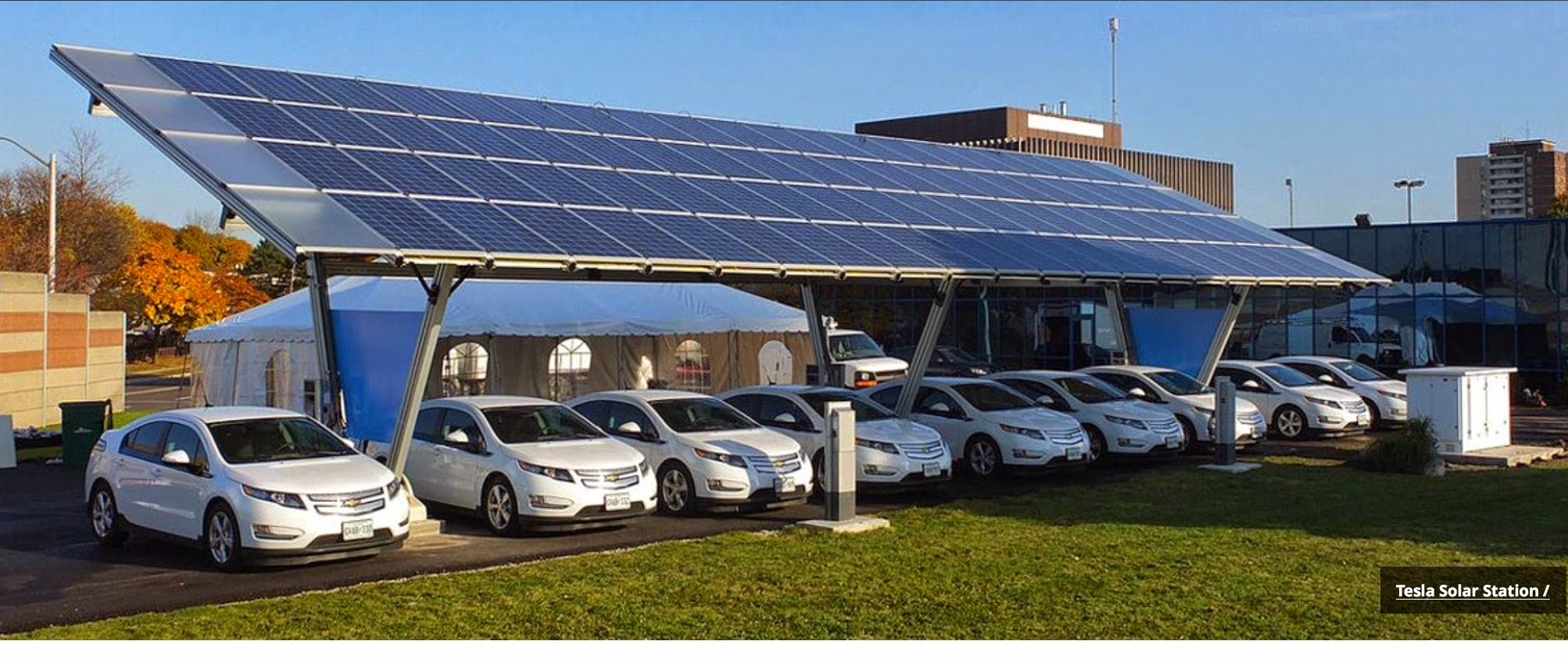
Yes, Tesla Motors, everyone’s favorite electric car company. And that’s where the controversy comes in. Morgan Stanley breathlessly pegged Tesla as “the most important auto company in the world” in part because its electric car business was pushing it to develop better energy storage technology, and then mass manufacture said batteries. That’s exactly what Tesla CEO Elon Musk and company will be doing at its forthcoming Gigafactory, which it is building in the Southwest with Panasonic.

With the new manufacturing facility, Morgan Stanley reasons, Tesla stands to double its business (adding another $2 billion in revenue) by selling the lithium ion batteries it typically ships under the hood of a Model S to homeowners with solar panels, too. If consumers can store energy the panels generate during the day for use at night, it would ostensibly render the need for utilities to pipe in faraway power—and their electric bills—obsolete.

Energy storage, when combined with solar power, could disrupt utilities in the US and Europe to the extent customers move to an off-grid approach

Musk is also the chairman of Solar City, a company that leases rooftop solar setups to homeowners, and one that would benefit from the battery tech. Now, the shadiness here is that Morgan Stanley released the report trumpeting Tesla’s crossover energy storage potential—causing Tesla’s stock to rise—right before it underwrote a fundraising round for… Tesla.

So the whole thing is very incestuous, and it does render some of the projections a little suspect, but the bottom line here is that private solar and battery companies are viable enough that they’ve attracted the backing of one of the world’s biggest financial services companies—over the multi-trillion dollar utility industry.

“Energy storage, when combined with solar power, could disrupt utilities in the US and Europe to the extent customers move to an off-grid approach,” Morgan Stanley writes in its third report this year emphasizing the prospect. ”We believe Tesla’s energy storage product will be economically viable in parts of the US and Europe, and at a fraction of the cost of current storage alternatives.”

In other words, Morgan Stanley has Tesla’s back, big time. It’s betting that Musk is going to make the best solar energy batteries money can buy.

Ironically enough, however, even staunch clean energy advocates are wary about Morgan Stanley’s finding that utilities are going the way of the buffalo. “Barring extraordinary circumstances, the economic case for grid defection is still very weak for US consumers,” Stephen Lacey, the senior editor of Greentech Media, wrote of the Morgan Stanley report. ”The electricity system offers valuable backup in case a customer over- or under-invests in an on-site system.”

It’s more likely, then, that people will still buy home solar—by the tens of millions, Greentech suggests—but not unplug from the grid entirely. Utilities will be diminished, but not broken. This process is underway in Europe already, where countries like Germany have powerful incentives for consumers to switch to solar.

Last year, the Economist called the sharp decline of European utilities “startling,” noting that together, they lost half their value—$600 billion—in just five years. Here in the states, utilities and conservative politicians are fighting solar tax credits to prevent the same thing from happening. For the most part, the utilities are losing.

All of this is, ideally, what needs to happen. Climate change is accelerating, and we need to transition away from those massive, fossil fuel-slurping power plants. Distributed solar is an increasingly powerful force behind that weaning process.

And even if some of Morgan Stanley’s calculations are shaky, the trends that Tesla is helping to amplify are anything but—clean, personalized (or community-wide) power will play a major role in shaping our energy future.

The fact that a greed-driven titan of finance like Morgan Stanley recognizes as much, and is willing to triple down on its bets on battery storage and distributed power, is a promising sign that the energy revolution is underway. More


Caribbean energy experts recommend creation of new Caribbean Centre for Renewable Energy and Energy Efficiency (CCREEE)

caribbeanclimate's avatarcaribbeanclimate

SIDS Press release logos

The technical design and institutional set-up of the Caribbean Centre for Renewable Energy and Energy Efficiency (CCREEE) was successfully validated by energy experts and specialists of CARICOM Member States in a regional workshop, held from 21 to 22 July 2014 in Roseau, Dominica. The event was co-organized by the Small Island Developing States (SIDS) Sustainable Energy Initiative – SIDS DOCK, the United Nations Industrial Development Organization (UNIDO) and the Government of the Commonwealth of Dominica, with financial support of the Austrian Development Cooperation (ADC).

The workshop follows-up on the official request of SIDS DOCK to UNIDO in August 2013, to assist the small island developing states in the Caribbean, Pacific, Indian Ocean and Africa, in the creation of a SIDS network of regional sustainable energy centres. With technical assistance from UNIDO, a consultative preparatory process for the Caribbean centre was launched in close coordination with the Energy Unit of…

View original post 595 more words

Sixty-Nine Years After Hiroshima, Time for Renewed Action for Nuclear Disarmament and Human Survival

Daryl G. Kimball's avatar

HIROSHIMA, JAPAN - AUGUST 05:  A-Bomb Dome is seen near Hiroshima Peace Memorial Park on August 5, 2010 in Hiroshima, Japan, on the eve of the 65th anniversary of the Hiroshima atomic bombing. The world's first atomic bomb was dropped on Hiroshima by the United States during World War II, killing an estimated 70,000 people instantly with many thousands more dying over the following years from the effects of radiation. Three days later another atomic bomb was dropped on Nagasaki.  (Photo by Kiyoshi Ota/Getty Images) A-Bomb Dome is seen near Hiroshima Peace Memorial Park on August 5, 2010 in Hiroshima, Japan,. (Photo by Kiyoshi Ota/Getty Images)

By Daryl G. Kimball

Since the devastating U.S. atomic bombings of Hiroshima and Nagasaki 69 years ago this week, the catastrophic effects of nuclear weapons have motivated ordinary citizens to push their leaders to pursue arms control and disarmament measures to reduce the threat of nuclear weapons use.

For decades, it has been well understood that the direct effects of a large-scale nuclear conflict could result in several hundred million human fatalities, while the indirect effects would be far greater, leading to the loss of billions of lives.

An April 1979 U.S. Arms Control and Disarmament Agency report found that an exchange of U.S. and Soviet nuclear forces involving a total of approximately 18,000 strategic warheads would kill 25-100 million people in both the U.S. and the Soviet…

View original post 3,102 more words