Behind the veil of the Islamic State is a war for water

A little known fact of the war in Syria is that it started at the end of the worst drought in Syrian history, a biblical drought which forced over 1 million farmers into the cities.

Pulitzer Prize-winner Thomas L. Friedman interviewed Syrian refugees and farmers in Syria about the link between this drought and the start of the civil war. He comes to the conclusion that the drought certainly played some role and was probably a key tipping point for a bad situation to turn into a full scale war. In the documentary “Years of living dangerously” we see how wiki-leaked diplomatic cables and high level US officials such as Condoleezza Rice acknowledge this link.
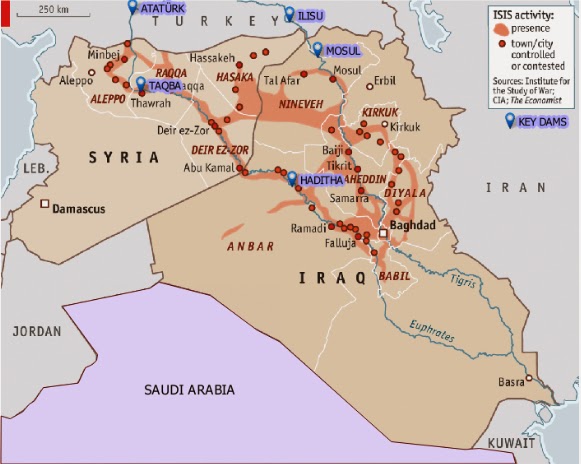
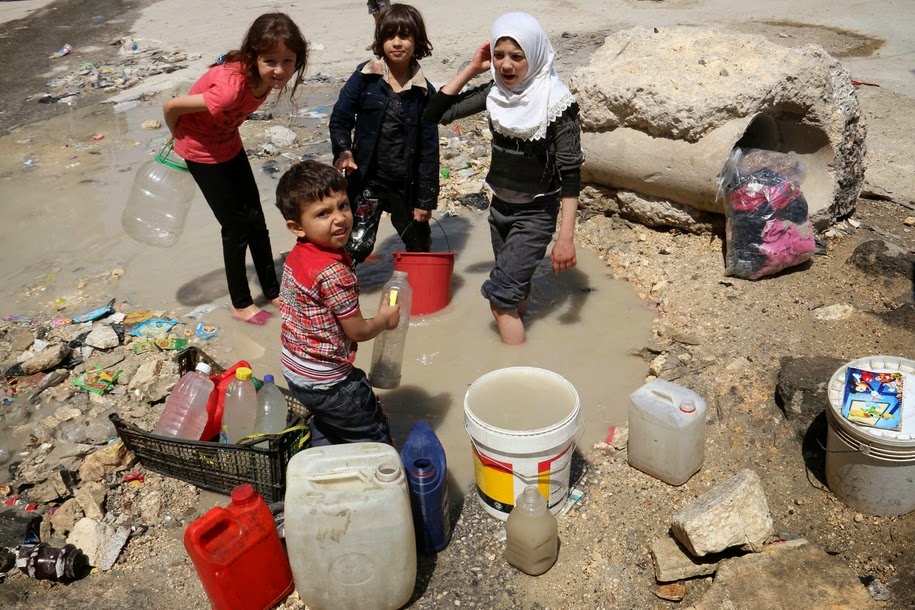
But there’s a lot more happening to explain why behind the veil of a quest for an Islamic State (IS), there’s also a war for water in Syria and Iraq. Making the plight of citizens worse is the continued targeting of water supply networks by both regime and opposition forces, which have attacked strategic lifelines, such as water channels, to gain control of territory and to punish and put pressure on their opponents.

Opening the flood gates …

The Islamic State’s quest for hydrological control began in Syria, when it captured the Tabqa Dam in 2013. Rebel-held areas had been systematically denied electricity by President Bashar al-Assad’s forces in their effort to turn the population against the insurgency. The Tabqa Dam was built more than 40 years ago with Russian help and aimed to make Syria self-sufficient in energy production. Behind the dam is Lake Assad, which provides millions of Syrians with drinking water and is a vital irrigation source for farms. After the capture of the dam, IS opened the flood-gates to get maximum electricity supply for the areas they control and win favour with the local population. As a result, the lake dropped six metres, to a record low in May, which worsened the plight of millions of already destitute Syrians as severe water cuts began to hit Aleppo province.
Conflict over the water flowing though the Euphrates and Tigris is of course nothing new and predates religious wars. They were the first rivers to be used for large scale irrigation, in the region once known as the Fertile Crescent. Somewhere between 1720 and 1684 BC, a grandson of Hammurabi dammed the Tigris to prevent the retreat of rebels led by Iluma-Ilum, who declared the independence of Babylon. The Euphrates was already used as a weapon somewhere around 2500 BC, in another fight for Babylon, when the king of Umma cut the banks of irrigation canals alongside the Euphrates dug by his neighbor, the king of Girsu.

The Euphrates and Tigris are the two major and longest rivers in the Middle East. They both originate in Turkey. The Euphrates flows through Syria and Iraq to reach the Persian Gulf while the Tigris flows through Kurdish territory, meeting up with the Euphrates in the Southern Mesopotamian Marshes of Iraq. There are currently at least 46 dams in the Tigris-Euphrates basin, with at least 8 more planned or under construction. These dams have become key pieces of geo-political control in the region.

… and shutting down the flows

While one act of war is opening the flood gates, another is closing them. In 1974, Iraq threatened to bomb the same Tabqa Dam in Syria, alleging that the dam had reduced the flow of Euphrates River water to Iraq. But between then and now, Turkey, through its position upstream, has taken over as the most powerful regional commander of water, by completing the giant Ataturk Dam. In 1990 Syria and Iraq protested that Turkey now has a weapon of war: by closing the gates they could leave them dry. They had good reason to protest. In mid-1990 Turkish president Turgut Özal threatened to restrict water flow to Syria to force it to withdraw support for Kurdish rebels operating in southern Turkey.

In April 2014, the Islamic State blamed the low water levels in Lake Assad to Turkey’s closure of the Ataturk Dam. Sources found by Al Jazeera said that these claims are disputed. But even if the allegations are only partly true: they were used by the Islamic State to issue threats to ‘liberate Istanbul’, if that was necessary. So while Turkey, IS and Assad fight over water, millions of ordinary Syrians and Iraqi’s see their water levels drop dramatically. Not just by a new drought, with rainfall down by 50-85 percent since October 2013, but mostly due to a power struggle.

Tensions over water control in the region are set to heat up further if Turkey completes the Ilisu Dam on the Tigris River near the border of Syria. The Ilisu Dam will generate 1,200 MW and is part of the vast and ambitious Southeastern Anatolia Project, known as GAP after its Turkish title (Guneydogu Anadolu Projesi): a network comprising 22 dams and 19 power plants. The Ilisu reservoir will flood 52 villages and 15 towns, including Hasankeyf, a Kurdish town of 5,500 people, which is the only town in Anatolia that has survived since the Middle Ages and is under archaeological protection. It will displace approximately 16,000 people in the troubled Kurdish region.

The World Bank (WB), the British construction company Balfour Beatty and the Italian company Impreglio have all withdrawn from the problematic project. So have international funds and export credit from Austria, Germany and Switzerland. However, the project is currently funded by Turkish banks. Iraq and also Syria will be the most heavily impacted if the dam and others go through, with the most extreme projections holding that, owing to a combination of climate change and upstream dam activity, the Tigris and Euphrates rivers won’t have sufficient flow to reach the sea by as early as 2040.

If you live in Syria or Iraq and the water irrigating your field stops coming you might join the ranks of any army promising to attack those who kept the water for themselves – no matter if they tell you the truth or not. As is often the case in conflicts or epidemics it is not the facts themselves that count most but what people believe to be the facts. Those who can convince it’s the enemies fault that there’s not enough water will have the key to where the hearts and minds of the people will go to – no matter what the facts are.

The US finally finds a Weapon of Mass Destruction in Iraq

The Tabqa Dam is not the only dam attacked by IS. They are also trying to take the Haditha Dam, the second-largest in Iraq, raising the possibility of catastrophic damage and flooding. On Sunday, the US was bombing IS positions close to the dam. The IS militants are also fighting for control of the Euphrates River Dam, about 120 miles northwest of Baghdad and government forces were fighting to halt their advance. Insurgents from IS seized the Falluja Dam in Iraq in February and closed the floodgates to cause upstream flooding and to cut downstream water supply. Some 40.000 people were displaced just to flood the area around the city of Falluja to force government troops to retreat and lift a siege, while cutting water supplies and hydroelectricity generation for other parts of the country. All that was peanuts compared to what IS did next.

On August 7 IS captured the 1GW Mosul Dam on the Tigris – sending shock waves through Bagdad, Kuwait and the US. Whoever controls the Mosul Dam, the largest in Iraq, controls most of the country’s water and power resources. Located on the Tigris River upstream of Mosul, the dam, 3.6 km long and with 320 MW of capacity daily, formerly known as the Saddam dam, was built beginning in 1980 at a cost of 1.5$ billion USD, to bolster the regime during the Iran-Iraq war by a German-Italian consortium that was led by Hochtief Aktiengesellschaft. Its construction submerged many archaeological sites in the region yet more troubling is that because the dam was constructed on a foundation of soluble gypsum, it requires continuous grouting of the dam’s foundation to promote stability. Due to the engineering problems it presents it has been described recently by US engineers as “the most dangerous dam in the world.” And that was before the “most dangerous terror group ever” captured it.

A senior U.S. administration official said that “The failure of the Mosul Dam could threaten the lives of large numbers of civilians, threaten U.S. personnel and facilities – including the U.S. Embassy in Baghdad – and prevent the Iraqi government from providing critical services to the Iraqi populace,” (Source: Reuters). A 2006 U.S. Army Corps of Engineers report obtained by the Washington Post said the dam, which blocks the Tigris and holds 12 billion cubic meters of water, could flood two cities killing over a half a million people if it were destroyed or collapsed. The tsunami going to Mosul, a city of 1.7 million people, can be 20m high if the dam breaks with a full reservoir.

But even without a catastrophic failure, the dam is already at the epicenter of the war. Soon after the Islamic State captured the Mosul Dam they cut supplies to some villages in the north of the country that have not joined their cause. Recapturing this instrument of war was a sufficient reason for US forced to deploy air power to support Kurdish forces to recapture the dam. Saving the Yazidis from their mountain captured most media attention, but a key reason for the US to bomb Iraqi soil for the first time since 2011 was the fact that IS took the Mosul Dam. After bombing IS positions for several days, freshly re-equipped Kurdish fighters recently regained control of the dam.

Mega Dams & Water Management Practices

The importance of hydro-infrastructure in these battles and how it can be wielded firstly underlines the need for a serious re-appraisal of water management practices. Big dams (with funding from Multilateral agencies such as the WB, national and regional development banks, private equity and pension funds as well as from the Clean Development Mechanism, etc.) cause large scale displacement of populations, are ecologically destructive, wash away any other source of livelihood, and often saddle countries with debt while performing well below planned outputs as regards electricity generation. Moreover, compounded by climate change, contemporary ecological crises are leading to ever more conflict over trans-boundary water rights, such as for example between Ethiopia and Egypt, which are also on the verge of war over the construction of the Grand Renaissance and Gibe 3 dams, which would become Africa’s tallest. The world’s Big Dam Fan Club should take note of what has just happened in Syria and Iraq and realise that once disaster hits, hatred will not go to any God but to those who constructed the weapon of mass destruction. Water, rather than oil, is shaping up to be the key strategic resource in the region. More


Paving Way for War Crimes Charges, Palestinians Move to Join International Criminal Court

Following the defeat of a United Nations Security Council resolution that demanded an end to Israeli occupation and recognition of Palestinian statehood, Palestine's president Mahmoud Abbas signed a Palestinian request to join the International Criminal Court on Wednesday, a move that the Guardian wrote sets “Palestinians on a diplomatic collision course with Israel and the U.S.”

“There is aggression practiced against our land and our country, and the Security Council has let us down—where shall we go?” Mr. Abbas reportedly said at his headquarters in the West Bank city of Ramallah, as he signed the Rome Statute, the founding charter of the Hague court, as well as over a dozen other international treaties and conventions.

“We want to complain to this organization,” he said, referring to the court. “As long as there is no peace, and the world doesn’t prioritize peace in this region, this region will live in constant conflict. The Palestinian cause is the key issue to be settled.”

As expected, the decision elicited an angry response from Israel. “The one who needs to fear the International Criminal Court in the Hague is the Palestinian Authority, which has a unity government with Hamas, a terror organization like (the Islamic State group) which commits war crimes,” Prime Minister Benjamin Netanyahu said in a statement.

According to the Associated Press, Netanyahu called Israel's soldiers “the most moral army in the world” and said the country would take unspecified “retaliatory steps.”

The AP noted that “turning to the International Criminal Court marks a major policy shift by transforming Abbas' relations with Israel from tense to openly hostile. Abbas has been threatening to join the court since 2012, but held off under American and Israeli pressure. The Palestinians can use the court to challenge the legality of Israeli settlement construction on occupied lands and to pursue war crimes charges connected to military activity.”

The State Department criticized the move as well. In a statement issued Wednesday, it said it was “deeply troubled by today’s Palestinian action regarding the ICC,” and called it “an escalatory step that will not achieve any of the outcomes most Palestinians have long hoped to see for their people.” More


Israel’s Gas Dream – The End Is Nigh

In the five years since the discovery of the Tamar and Leviathan natural gas fields off the coast of Israel, the Israeli energy discourse has focused on questions like what to do with the gas, how much of it to export and to whom, and what the fairest distribution of profits would be among the gas partners, headed by Noble Energy and Delek Energy, and the Israeli public.

Click to expand

But after years of delays and billions of dollars spent, a new and increasingly likely scenario should be considered – the premature – and tragic – death of the Israeli gas dream. I alluded to this option in an August 2013 article titled “Israel's Zero Gas Game” in which I warned that Israel has become so busy dividing the pie that its leaders forgot it must first be baked and that due to the failure of the government to present a clear vision for the country's energy sector, articulate the rights and responsibilities of foreign investors and most importantly set rules and stick to them, “the gas will be left in the ground and the startup nation will be more worthy of the title 'shutdown nation'.” Perhaps that sounded crazy at the time. Today, with the decision of the Israeli Anti-Trust Authority to revoke an arrangement permitting Noble-Delek partners to develop Leviathan, declaring them a cartel – a move that will require the separation of Leviathan from Tamar and the sale of Leviathan to a new partnership, effectively postponing the development of Leviathan indefinitely – the scenario of “zero gas” – and perhaps even the withdrawal of Noble from Israel altogether – should be considered seriously.

In deciding to enter Israel Noble has taken a huge financial, regulatory and geopolitical risk. However, the size of the discoveries, the potential of finding oil under the gas layers and the doubling of the company's market capitalization made the move easy to justify to its shareholders. But the Texas company, the only international energy company that was willing to set foot in Israel, was welcomed with no red carpet. Instead it was ushered through a Via Dolorosa of bureaucratic torture which eliminated any chance for gas production before the end of 2018 – ten years from the beginning of exploration. A ten year lead time from discovery to production is a lot to ask of a publicly traded company which has to satisfy quarterly thinking and profit hungry shareholders. But in light of Noble's recent stock performance, dropping from $80 in the summer to $50 today, the decision of the Israeli government provides an impetus to the company's leadership, not to mention the new CEO David Stover, to reconsider the commitment to Israel and begin to seek greener pastures.

There are very few oil and gas companies who have both the experience of drilling in deep waters and the willingness to associate themselves with Israel, especially in light of Noble's experience.

The Israeli government's ruling has huge implications for the future of the region as it means that at best the supply of gas from Leviathan will be delayed into the 2020s. At worst it will not happen at all. The government's concern about a gas monopoly is a legitimate one, especially during an election campaign when issues of cost of living dominate the local political discourse. But its hopes that the hot potato called Leviathan can somehow be sold to new partners require a lot of faith. There are many people with money who may be tempted to buy into a partnership in a 22 trillion cubic feet (tcf) field, but owning a stake in a gas field without an operator at hand is like owning a gold mine on the moon. There are very few oil and gas companies who have both the experience of drilling in deep waters and the willingness to associate themselves with Israel, especially in light of Noble's experience. With falling energy prices worldwide, the chance of a Noble-like operator popping out of nowhere is slim. This means that in its desire to avoid the creation of a monopoly, Israel is taking the risk that Leviathan, the world's largest offshore gas discovery of the past decade, will not be developed for many years to come – if ever. The losers will first and foremost be the Israeli people who will lose not only billions of dollars in tax revenue and the main engine of growth of their economy but also the prospects of securing their energy supply for generations. The scenario is equally bad for Jordan, Egypt and the Palestinian Authority who are counting on Leviathan gas for their economic well-being and which have all signed letters of intent to buy Israeli gas despite local opposition from their respective Israel-hating Islamists. Europe will also be a casualty since a portion of Leviathan was aimed for two LNG terminals in Egypt from where it would have been shipped to European countries aspiring to become less dependent on Russia's gas.

Other than the handful of lawyers who will earn millions litigating the dispute between Noble and the Israeli government in international courts, the biggest winner will be Cyprus. In December 2011 Noble announced the discovery of 7 tcf in a field northwest of Leviathan called Aphrodite (block 12). Other blocks have been opened for bids since attracting interest from a handful of large oil and gas companies including Total of France, Kogas of South Korea, ENI of Italy and Petronas of Malaysia. But with all eyes on Leviathan, Cyprus became an uninteresting side show. This may soon change. Cyprus may not be a paragon of regulatory stability and certainly not an investors' haven and its tense relations with Turkey pose some geopolitical risk, but the fatigue from Israel's energy shenanigans could bring about a shift from Israel to Cyprus as the new center of gravity in the East Mediterranean energy play.

There is no polite way of saying this. Israel's latest decision is tantamount to nationalization of the kind seen in Argentina, Venezuela, Mexico and Russia. All of those governments sugarcoated their decision invoking the need to protect the public interest. The investment community and global oil industry got the message and wrote off those countries. With this miserable decision, Israel has just lodged itself into this notorious club. The price will be paid in spades – and sooner than most Israelis realize. More

————-

As the map above shows the gas field in offshore Gaza who should be the benefliciaries. Under international law Israel has no legal claim and Gaza most certainly does. I would give Gaza an income to rebuild the infrastracture destroyed by Israel as well as giving them fossil fuel to generate electricity. Editor


Palestinian landowners have waited too many years for Israeli wheels of justice to turn.

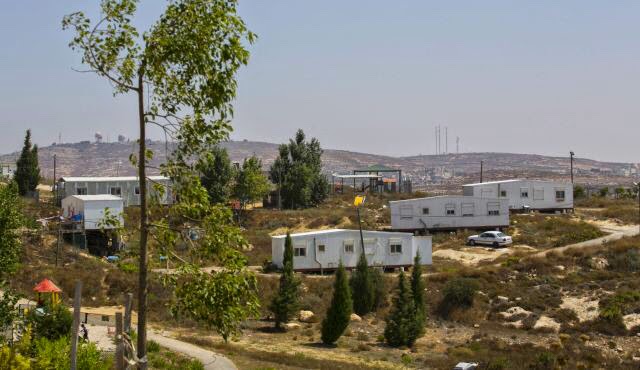
It is impossible to overstate the significance of the High Court of Justice ruling ordering the state to demolish within two years the Amona illegal outpost, which was built on private Palestinian land. After years of evasion, legal tricks, forged documents and unfulfilled pledges, even the High Court came to realize that the state cannot be trusted, not to mention the settlers, to voluntarily agree to return the land they plundered from their owners.

Amona was born in sin in 1997, when a group of settlers established residence in an area that had been earmarked for an archaeological site and a Mekorot Water Company reservoir. Cease and desist orders issued by Civil Administration inspectors in 2004 halted building for four years, but it resumed in force despite new stop-work orders.

In 2006, after the High Court ordered the demolition of Amona’s permanent structures, the settlers made clear that they were not bound by the court’s authority and they turned the “battle for Amona” into a national event in which they violently confronted the police. If there was no alternative to demolition, they would make Amona a “national trauma” that would threaten any future plans to evacuate outposts or settlements.

Even now, after the High Court ruling, the settler leaders are adamant: “We swear today to fight this with all our might,” Amona spokesman Avihai Boaron said. This is nothing but a continuation of the settlers’ common view that the state and its institutions are their servants, and when they do not fulfill their mission they must be fought. Particularly infuriating is the idea that “the left-wing government and the High Court are leading the country”; That is, in the struggle between land theft and the law, the High Court is not only a legal and ideological enemy but it also violates the political reality in which the right wing is in control. That perception is no less distorted and dangerous than the settlers’ position that the theft of Palestinian land is part of the Redemption.

The government of Israel cannot continue to avoid carrying out the High Court’s ruling, according to which “there is no possibility of authorizing the construction, even retroactively,” — a recognition of the tricks the cabinet could try. Two years is sufficient time to find alternative housing, and it would be best not to not wait until the last moment. The Palestinian landowners have waited too many years for the Israeli wheels of justice to turn. They have the right to have their property returned to them, with appropriate compensation. More


Israel’s looming gas empire requires a final solution in Gaza

“The destruction which I have seen coming here is beyond description,” said UN secretary-general, Ban Ki Moon, after his October tour of the Gaza Strip.

Operation Protective Edge, Israel’s military incursion into Gaza this past summer, wrought an unprecedented level of devastation on the tiny strip of land inhabited by 1.8 million people. The operation had damaged or destroyed over 100,000 homes, affecting more than 600,000 Palestinians – a third of the population.

Mowing the grass

“Basically the town is unliveable,” said Mayor Mohammed al-Kafarna about Beit Hanoun. “There is no power, water or communications. There are not basics for life.” One major sewage pipe serving nearly half a million people had been severed, sending huge quantities of raw sewage into the sea and on fields.

In 2012, a UN report warned that Gaza “will not be liveable by 2020”. The following year, Israel’s tightening of its blockade prompted Filippo Grande, commissioner-general of the UN Works and Relief Agency (UNWRA), to say that “Gaza is quickly becoming uninhabitable.”

Israel’s massive bombardment of Gaza this summer has fast-tracked that outcome. This is no accident. While Israeli officials will not admit it, this strategic goal can be surmised from the statements of those close to key officials in Netanyahu’s administration. More

Dismantling Gaza

“The only durable solution,” wrote Martin Sherman in the Jerusalem Post during the summer onslaught, “requires dismantling Gaza, humanitarian relocation of the non-belligerent Arab population, and extension of Israeli sovereignty over the region”: a recipe for ethnic cleansing and colonisation. He complained that the elected Israeli government is constrained by an unelected “left-wing” political discourse wedded to “the two-state concept and the land-for-peace doctrine,” both of which must be rejected.

For Sherman, the current strategy of periodically “mowing the grass” – “a new round of fighting every time the Palestinian violence reaches levels Israel finds unacceptable” – must be replaced by a final solution: “The grass needs to be uprooted – once and for all.”

Sherman is no pariah. On the contrary, his ideas increasingly represent the thinking of senior Israeli cabinet officials. As founding director of the Israel Institute for Strategic Studies (IISS), an initiative dedicated to laying “the foundations of a new assertive Zionist-compliant paradigm,” Sherman’s platform is endorsed by the following key Israeli leaders: Yaakov Amidror, Israel’s national security adviser until 2013; Uzi Landau, minister of tourism and ex-minister for energy; and Moshe Ya’alon, vice prime minister and incumbent defence minister.

Colonisation

These connections reveal critical elements of Israel’s security strategy. Amidror, for instance, has long advocated that Israel directly occupy Gaza “for many years,” to prevent a situation where “Hamas is strengthened into an entity similar to Hezbollah.”

His successor, Yossi Cohen, who presided with Ya’alon over Operation Protective Edge and who has previously served as deputy head of Shin Bet (Israel’s domestic security agency), told Israeli Army Radio that the operation had successfully created conditions that would facilitate the Palestinian Authority’s (PA) return to power in Gaza at Hamas’ expense. Hamas needed to be “demilitarised”, he said.

Israeli foreign minister Avigdor Lieberman agreed: “As long as Hamas controls Gaza, we won’t be able to ensure the safety of Israel's citizens in the South and we won't be able to make a peace agreement.” Earlier during the latest invasion of Gaza, Lieberman recommended that Israel consider re-occupying Gaza to end rocket attacks.

Palestinian statehood: A threat to Israel’s energy hegemony?

Another Sherman endorser, Uzi Landau, who is currently minister of tourism, was minister for energy and water from 2009 to 2013. There he oversaw Israel’s resource policies, especially concerning gas discoveries and export options. In 2011, when the PA was bidding to secure formal UN recognition of Palestinian statehood, Landau told Israeli radio that Israel should unilaterally declare its sovereignty over the Jordan Valley, West Bank settlements, and all of Gaza to head off the bid. He had previously been dispatched by the foreign ministry to Chile, Colombia and Australia to lobby against the PA campaign.

Why would Landau, then energy and water minister, be sent to lobby against Palestinian statehood?

In recent years, Israel had made increasingly significant energy discoveries throwing light on the link. In December 2010, the Texas based energy company Noble energy announced that it had discovered 25 trillion cubic feet of gas in the offshore Leviathan field (downgraded more recently to 17 trillion). This followed the US Geological Survey’s (USGS) assessment earlier in the year of an estimated 122 trillion cubic feet of technically recoverable gas in the Levant basin, encompassing the waters of Israel, Syria, Lebanon, Cyprus and Gaza. This is “bigger than anything we have assessed in the United States,” said a USGS spokesperson at the time.

Landau’s advisers: Israel’s gas could deplete in decades

The new discoveries would turn Israel into a gas-export powerhouse, with potentially transformative implications across the region. But there were potential pitfalls.

In 2012, the chief scientists of Landau’s energy and water ministry warned the government that Israel did not have sufficient gas resources to sustain both exports and domestic demand. Citing a gap of “100 to 150 billion cubic metres between the demand projections that were presented to the committee and the most recent projections,” they said that Israel’s “gas reserves are likely to last even less than 40 years!”

By 2055, the chief scientists argued, even if Israel chose not to export any gas, it would entirely exhaust its offshore reserves. But if Israel exports significant quantities of gas, and if it turns out that much of its gas turns out to be not commercially extractable, then the breaking point could arrive decades earlier. “The more gas we use now, the sooner we'll need to start importing gas or oil or to find alternative technology.”

Landau and his colleagues obviously took the report seriously enough that, according to Ha'aretz, they excluded the report’s findings from the committee determining Israel’s gas export policy.

Threat of war

Complicating matters further, many of the recently discovered oil and gas resources Israel is claiming for itself are in disputed territorial waters where maritime boundaries are not clearly defined.

In the summer of 2010, Landau said that Israel would “not hesitate to use force” to protect its offshore gas discoveries. He was responding to claims that Leviathan’s deposits extend into Lebanon’s territorial waters.

Similarly, two offshore fields that Israel is already exploiting have been claimed by the Palestinian Authority to extend into Gaza's offshore territory – Mari-B, which is near depletion, and Noa North, both of which are being developed by Noble Energy.

Gaza’s gas: The key to peace?

In March 2014, just a few months before the IDF launched Operation Protective Edge in Gaza, the German Marshall Fund of the United States published a policy brief on Israel’s interests in Gaza’s gas fields by Simon Henderson, director of the Gulf and Energy Policy Program at the Washington Institute for Near East Policy (WINEP) in Washington DC. WINEP is notable for its influence amongst US foreign policymakers. Current and former WINEP members have had senior roles in successive US administrations, including Obama's, and its alumni have gone onto serve across various US government agencies on Middle East policy.

Henderon’s policy brief in particular pinpointed the Gaza Marine, where just over 1 trillion cubic feet of gas was discovered by BG Group in 2000. Gaza Marine could supply all of Palestinian power for up to 20 years. Although the election of Hamas in 2006 in Gaza left negotiations over the gas between Israel and the PA at a stalemate, according to Henderson: “In late 2011 and early 2012, there was renewed Israeli interest in devising a way to exploit the natural gas of Gaza Marine.”

International diplomatic interest further increased in 2013, with Quartet Middle East envoy Tony Blair and US secretary of state John Kerry seeing the Gaza Marine as integral to a potential peace package. In October 2013, Israeli officials conceded that the Israeli government was “very supportive” of the project. All this is corroborated by British Foreign Office files released under Freedom of Information.

Israel’s vision for the Gaza Marine includes a range of options. Apart from boosting PA revenues dramatically, “Using Gaza Marine gas may also reduce the need of Israel to consume its own natural gas to generate electricity for the Palestinians,” observed Henderson. “Such usage will also marginally lower Israel’s dependence on fields controlled by the Noble Energy/Delek group, which currently holds the licenses for the Tamar field and all the other Israeli fields likely to come on stream in the next few years.”

Gaza’s gas, Henderson continued, “would be available for transfer into Israel’s natural gas main network, feeding power stations and petrochemicals across the country.” The gas could also be used for Gaza’s power plant, or even to power the West Bank. In the latter case, “the Gaza Marine natural gas would be fed to an Israel power plant to generate electricity. That electricity would then be supplied to the West Bank.”

Gaza’s gas: The key to exports?

But there is another dimension to the strategic significance of the Gaza Marine: Israel’s gas ambitions. This was alluded to by Ariel Ezrahi, senior energy adviser in Tony Blair’s Office of the Quartet Representative in east Jerusalem, who noted that the biggest obstacle to Israel becoming a regional gas exporter is the opposition of domestic Arab populations in Jordan, Egypt, Turkey and elsewhere.

This opposition could, however, be overcome if Israel finds a way to integrate Gaza’s gas into the export equation, so that Arab publics find a way to see gas deals with Israel as acceptable: “… it would be wise for Israel to at least consider the contribution of the Palestinian dimension to these deals,” said Ezrahi. “I think it’s a mistake for Israel to rush into regional agreements without at least considering the Palestinian dimension and how it can contribute to Israeli interests.” Israel should use the Gaza Marine “as an asset as they strive to join the regional power grid, and as a bridge to the Arab world,” by selling Palestinian “gas to various markets,” or promoting a deal with the corporations developing Israel’s “Tamar and Leviathan [fields] that will allow for the sale of cheap gas to the [Palestinian] Authority.”

Hamas: The obstacle

For Israel, the existence of Hamas remains the chief obstacle to any of these scenarios. According to Simon Henderson: “The main challenge to Secretary Kerry’s vision is that the Gaza Marine natural gas field is offshore the Gaza Strip, controlled by Hamas, whose authority is not recognised by the PA, which is based in Ramallah. Additionally, the United States regards Hamas as a terrorist organisation and Washington is therefore legally constrained from cooperating with it.”

In other words, from the perspective of Israeli hawks and the entities of the Quartet – the US, EU, UN and Russia – the fundamental obstacle to both the proposed ‘peace package’ and Israel’s interests in becoming a regional energy hegemony, is the continued existence of Hamas in Gaza.

In 2007, incumbent defence minister Ya’alon advised in an influential policy paper that there was only one way to solve this problem: “It is clear that without an overall military operation to uproot Hamas control of Gaza, no drilling work can take place without the consent of the radical Islamic movement.” Ya’alon is yet another Israeli government official who endorses Martin Sherman’s IISS initiative.

Since then, successive Israeli military operations – including Operation Protective Edge – have aimed at degrading Hamas’ power in Gaza by making the entire civilian population of the strip pay the price. Through excessive military action to devastate Gaza’s critical infrastructure until much of the strip is virtually “uninhabitable,” Israel has successfully accelerated this process.

Strangulating Gaza

Under the new ceasefire agreement with Hamas after the operation, Israel had secured even more Draconian powers to enforce its ongoing siege of Gaza. This included a partial military re-occupation by maintaining a 100 metre buffer zone inside Gaza; a joint Israeli, UN and PA committee to supervise the process for goods being permitted into Gaza; tight monitoring of imports of construction materials, as well as their use inside Gaza, to guarantee they would not be used by Hamas to build ‘terror tunnels’ and weapons; and on the table for discussion, Israel’s top priority was to make the total demilitarisation of Gaza a precondition for reconstruction and rehabilitation.

Under this extraordinary scheme, Gaza will be under constant surveillance by Israeli drones, and the PA-UN supervisory committee will submit all details of homes needing rebuilding to an Israeli database for close monitoring and approval.

Against this context, the decision by the EU General Court to remove Hamas from a list of terrorist groups along with the European Parliament’s new resolution recognising “in principle… Palestinian statehood and the two-state solution,” takes on new meaning.

To move forward, what remains of the aborted Kerry-Quartet vision for ‘peace’ encompassing the exploitation of Gaza’s gas, requires Hamas’s military capabilities – already infinitesimal compared to Israeli’s $15.5 billion military budget – to be degraded to the point of being utterly negligible.

The EU’s latest measures appear designed to incentivize the Palestinians and Hamas to comply with this vision of a pliable, demilitarised Gaza as a step toward a ‘two-state’ solution dominated and controlled by Israel: the carrot. Israel’s threat and use of force to smash Gaza into an uninhabitable no-man’s land, in which the US and the EU are complicit through extensive trade and military aid to Israel, is the stick.


Joining Forces to Combat Climate Change and Re-ignite the Global Economy

The world’s three biggest carbon emitters—the United States, China, and the European Union—have all announced emissions goals or limits in the past few months. That’s great news, but global fossil fuel demand continues to rise, and with it, so do climate change’s risks—to economy, to environment, to security, to human health, to people living in poverty in areas where climate change will have devastating impact.

The most recent IPCC report (AR5) found that “warming of the climate system is unequivocal,” “human influence on the climate system is clear,” and “limiting climate change will require substantial and sustained reductions in greenhouse gas emissions.”

The 2014 report Risky Business: The Economic Risks of Climate Change in the United States detailed the serious economic harm we can expect from climate change if we continue on our current path. But the challenge before us is about more than averting the worst economic impacts of climate change. As highlighted in the recently released Better Growth, Better Climate report from The New Climate Economy, it’s also about finding enormous economic opportunity in clean energy solutions that both tackle global warming and unlock growth opportunities for all.

The transformation to a low-carbon future is arguably the greatest business opportunity of our time. Combating climate change through energy efficiency, renewable energy technologies, clean transportation, and smarter land use can reap rewards as great economically as environmentally.

Fortunately, an energy revolution is rising all around us—enabled by smart policies in mindful markets, and led by business for profit. Efficient energy use fuels more economic activity than oil, at far lower cost, while its potential gets ever bigger and cheaper. In each of the past three years, the world invested a quarter-trillion dollars—more than the market cap of the world’s coal industry—to add over 80 billion watts of renewable capacity (excluding big hydro dams). Generating capacity added last year was 37 percent renewable in the United States, 53 percent in the world, 68 percent in China, 72 perent in Europe. Last year, the world invested over $600 billion in efficiency, renewables, and cogeneration.

This growth is accelerating: solar power is scaling faster than cellphones. Last year alone, China added more solar capacity than the U.S. has added in 60 years. Electric vehicle sales are growing twice as fast as hybrid cars did at a comparable stage. Shrewd companies are realizing climate solutions’ enormous business opportunities—a prospect scarcely dimmed by cheaper oil, which makes only a few percent of the world’s electricity.

Global companies like IKEA, Google, Apple, Facebook, Salesforce, and Walmart have committed to 100 percent renewable power. Tesla’s stock is up an astounding 660 percent over the past two years and has half the market value of General Motors Corp. The NEX index, which tracks clean energy companies worldwide, grew by 50 percent over the past two years—far outperforming the general market—while equity raisings by quoted clean energy companies more than doubled. Many of the world’s top financial firms concur that the era of coal and of big power plants is drawing to a close; Germany’s biggest utility is divesting those assets to focus on efficiency and renewables.

Yet we need to create even bigger and faster change. Which is why we are delighted to announce that our two nonprofit organizations—Rocky Mountain Institute and the Carbon War Room—are joining forces. By uniting two of the world’s preeminent nonprofit practitioners of market-based energy and climate solutions, we will help turn the toughest long-term energy challenges into vast opportunities for entrepreneurs to create wealth and public benefit for all. More