Russia’s Strategic Pakistan Play

Russia’s decision to go ahead with the sale of Mi-35 attack helicopters to Pakistan, even in the face of official Indian concerns, is being seen by some quarters as evidence of a “major” regional re-alignment in the wake of the American drawdown in Afghanistan.

In fact, the Russia-Pakistan dialogue for regional integration has been underway for some time now and beyond security cooperation, it is more fundamentally driven by Moscow’s push towards ‘southern” markets and Pakistan’s need for a capable yet politically “manageable” strategic sector trade and investment partner. The Mi-35 sale (if it does materialize) reflects the fact that the geo-economic stakes for both sides are now high enough for them to make a concerted push towards a long term compartmentalized working relationship in a manner not dissimilar to the way in which their more traditional partners – India for Russia and America for Pakistan – deal with each other. Indeed, in a world characterized by both competition and cooperation the heady rhetoric of “strategic partnership” means little and it is the transactional content that weighs on any relationship. Far more than cooperation in counter-terrorism, Russia and Pakistan will have to move forward quickly on Putin’s commitment to invest in the latter’s energy and metallurgy sectors for their relationship to be meaningful.

Mi-35

It could be argued that it was actually America’s entry into the region a decade ago that ultimately accentuated the circumstances that impel Russia and Pakistan closer to each other. Pakistan’s counter-terrorism cooperation with America salved with military aid has been toxic for domestic stability, as the situation in FATA and Waziristan reveal. As the tempo of internal stability operations has increased, Pakistan is keen to diversify away from America for certain classes of weaponry to a source that can supply cheaper and more rugged alternatives with a much smaller political price on the domestic front. The Mi-35 fits that bill and is likely to prove useful for Pakistani operations against the Tehrik-i-Taliban Pakistan (TTP) in mountainous areas, given its pedigree from the Afghan theater. At the moment Pakistan is using AH-1 Cobra Gunships that were originally obtained from America for use against Indian armoured formations in the plains and are proving expensive to use in operations against the TTP. Pakistan may not wish to be saddled with too much expensive American equipment that it can”t afford without generous aid.

Russia until recently was “reluctant” to transfer equipment that could be labelled as offensive in nature such as the Mi-35, and was holding back probably with an eye on a number of Indian military procurement tenders such as the multi-billion dollar medium multirole combat aircraft (MMRCA) competition. In 2010, Russia’s UAC, which was participating in the tender, even made noises about blocking the re-export of 150 KlimovRD-93 turbofans from China for Pakistan Air force’s future mainstay, the JF-17, on the grounds that it would compete with the Russian Mig-29 in international markets. By 2013, however, with Russia having lost out on the MMRCA tender and other Indian competitions, the Russians reiterated their commitment to continue supplies of the RD-93 and the JF-17 Block II commenced production in late 2013. So while much is being made of the Mi-35 sale, the fact is the Pakistanis seem set to rely on Russian engines for a majority of their fleet in the coming decades. When seen along with the fact that Russia supplied IL-78 MP refuelling tankers to Pakistan between 2009 and 2012, it is clear that comfort levels on both sides have been growing for quite a while now.

However, Russia is now willing to supply tactical equipment to Pakistan, especially in categories such as attack helicopters, where India either has domestic projects or may buy American. In many of these categories, though Pakistani spending ability given relatively cheaper Russian equipment is not insignificant, the pull for the Russians also comes from securing greater Pakistani willingness to help the Russians maintain security over energy infrastructure transiting areas like Eastern Afghanistan.

Once again, the American push to set up energy transit corridors from Central Asia to India such as the Turkmenistan-Afghanistan-Pakistan-India (TAPI) gas pipeline has created a situation of Russia-Pakistan commonality. Russia has for some time expressed an interest in joining the TAPI project and is now pushing decisively for it even while proposing new oil pipelines next to it. Russia is also eager to partner in the Iran-Pakistan-India pipeline project, opposed by the Americans, but with clear potential if Pakistan agrees to guarantee delivery of gas to the India border. Of course, besides military supplies, Russia can also offer Pakistan a lot of useful intelligence in the latter’s fight against the TTP given that group’s link with various Central Asian terrorist organizations.

For Pakistan, the opening of Russia as a source for weapons greatly increases Pakistan’s leg room vis-à-vis American pressure at the strategic level. Moreover while Pakistan is certainly eager to get involved in trilateral military projects with Russia and China like the JF-17 (which may now even be exported to Myanmar), direct Russian weapon sales are also coveted since the Pakistani military does not want to field only Chinese weapons either.

In fact, as terrorist activities in Xingjiang increase and Pakistan’s internal security situation worsens, the Chinese have been rather selective in their Pakistani investments. For instance, Pakistan’s decrepit railways have actually had to turn to India for help and are looking to lease up to 50 diesel engines as rolling stock. While Indian industry has been making overtures to Nawaz Sharif’s government to open up to cross border investment, the Pakistani military is still looking to a politically less sensitive prospect to shore up the flagging core sectors of the Pakistani economy clearly in need of reliable foreign capital.

Of course, if former Pakistani Army Chief General Kayani’s views are anything to go by, the military understands that there can be no Pakistan without a viable economy. While in uniform, it was Kayani who made a couple of visits to Russia and today the Russians are being wooed as a source for investment in Pakistan’s flagship Thar Coal Project as well as a strategic partner for upgrading the South Asian country’s moribund steel industry. Chechnya it seems is more distant than Kashmir or even Xingjiang and Russia could yet prove a politically acceptable partner for meeting an energy crisis ridden Pakistan’s requirements in quite a few sectors.

For Russia the benefits of succeeding in Pakistan are worth the risk, since it could leverage influence over Af-Pak to reach Indian shores. Indeed, even Pakistan’s Gwadar port, much touted as a Chinese “pearl” could actually host a LNG liquefaction facility that could send cheaper gas supplies than Qatar to import terminals in South India. However, both Russia and Pakistan will have to work quicker to remove long-standing trade disputes for a more conducive environment.

India will of course watch closely to see whether the Russians are indeed able to use the dependencies they are creating in Pakistan for closer regional energy integration. That the Russians are increasing strategic options for their neighbor when even the Saudis are handing over Lashkar-e-Taiba terrorists will obviously be of concern to New Delhi. That is especially so since the Pakistanis themselves are masters at selective counterterrorism at a time when many jihadists in Syria and Afghanistan may soon be looking for a re-direct.

Saurav Jha is a commentator on energy and security. Follow him on twitter @SJha1618.


Ocean-based power plant previewed in North Side

North Side residents got a preview last week of a proposed electric power plant that will be moored off their coastline if its proponents get the necessary approvals.

Design for 25 Mw OTEC Plant

District MLA Ezzard Miller invited representatives of OTEC International LLC to the Craddock Ebanks Civic Centre on Thursday night to explain the ocean thermal power project to his constituents.

Eileen O’Rourke, the company’s chief operating officer, outlined the process by which heat in the upper layers of sea water can be turned into electricity. The process is known as Ocean Thermal Energy Conversion.

After years of research and experimentation, the technology to process this source of renewable energy is now commercially viable and a proposal has been made to be a wholesale supplier of electricity to Caribbean Utilities Company, Ms. O’Rourke said. Talks have already been held with the Caribbean Utilities Company and government officials.

The production plant would be on a purpose-built barge, or floating power platform, 140 feet wide and 200 feet long and moored less than a mile offshore. Most of the plant would be about 16 feet above the water line, with a small part of it rising another eight feet.

The structure would include pipes to circulate the sea water, moorings to the sea floor and a cable that would carry the generated power under the beach and under the road to a sub-station on land. The sub-station would connect to CUC, Ms. O’Rourke explained.

Meetings have already been held with such entities as the Department of Environment, Public Works and the Environmental Assessment Board. The plan is for necessary permits to be applied for starting in October.

“We hope to get all permits and approvals in the first quarter of 2015,” Ms. O’Rourke said.

The target date for operation of the offshore power plant is the first quarter of 2017.

Pilar Bush, managing director of AtWater Consulting, confirmed that an island-wide public consultation will be held later this month.

OTEC International chose Grand Cayman for its first commercial system because CUC was “an open and willing partner” and because the Cayman government wants to move away from relying on fossil fuels, Ms. O’Rourke said. She noted that one power platform would produce 6.25 megawatts of electricity and that quantity would eliminate the need for 2.9 million gallons of imported diesel fuel annually. CUC’s average production of electricity is around 70 megawatts, it was noted.

Another reason Grand Cayman was chosen was the “excellent sea conditions” – including water temperatures and deep water proximity to the shoreline. There is a well-documented history of local ocean conditions, including extreme storm conditions. North Side was chosen as the best location, she said.

In response to questions from the audience, company representatives referred to job opportunities and the development of safety protocols, along with design features for the protection of marine life.

Start-up costs for the building and installation of the power platform will be expensive, Ms. O’Rourke indicated, but sea water as a source of renewable energy means low operating costs and protection of the consumer from the volatility of oil prices.

Development of the requisite technology was funded by the Abell Foundation, a non-profit organization based in Maryland, USA since 1953, said Ms. O’Rourke, who is also treasurer of the foundation. One of its objectives is supporting innovative efforts to solve systemic social, economic and environmental problems.

In 2000, The Abell Foundation acquired an exclusive license to the OTEC technology developed over decades by Sea Solar Power’s J. Hilbert Anderson and his son James Anderson. In 2001, Abell established a limited liability company with the mission bring OTEC to commercialization. The company became OTEC International LLC (OTI). Bringing the economical, renewable energy solution of ocean thermal energy conversion to developed and emerging markets is important to both OTI and Abell. More


Britain ‘attempts to censor’ US report on torture sites

The government stands accused of seeking to conceal Britain’s role in extraordinary rendition, ahead of the release of a declassified intelligence report that exposes the use of torture at US secret prisons around the world.

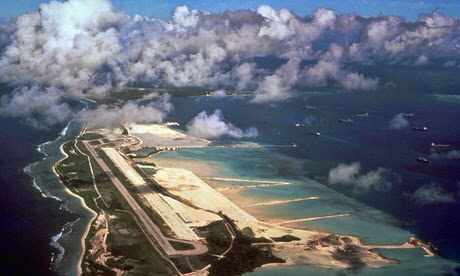
Diego Garcia

The Senate report on the CIA’s interrogation programme, due to be released in days, will confirm that the US tortured terrorist suspects after 9/11. In advance of the release, Barack Obama admitted on Friday: “We tortured some folks. We did some things that were contrary to our values.”

Now, in a letter to the human rights group Reprieve, former foreign secretary William Hague has confirmed that the UK government has held discussions with the US about what it intends to reveal in the report which, according to al-Jazeera, acknowledges that the British territory of Diego Garcia was used for extraordinary rendition.

“We have made representations to seek assurances that ordinary procedures for clearance of UK material will be followed in the event that UK material provide[d] to the Senate committee were to be disclosed,” Hague wrote.

Cori Crider, a director at Reprieve, accused the UK government of seeking to redact embarrassing information: “This shows that the UK government is attempting to censor the US Senate’s torture report. In plain English, it is a request to the US to keep Britain’s role in rendition out of the public domain.”

Lawyers representing a number of terrorist suspects held at Guantánamo Bay believe their clients were rendered via Diego Garcia. Papers found in Libya indicated that the US planned to transport Abdul-Hakim Belhaj, an opponent of Muammar Gaddafi, and his wife via the territory, an atoll in the Indian Ocean leased by Britain to the US. The government has denied Belhaj was rendered via Diego Garcia, but there are suspicions that others were held on the atoll.

Crider said the UK’s attempts to lobby the US into redacting parts of the report “turns the government’s defence in the Libyan renditions case of Abdul-Hakim Belhaj and his wife entirely on its head”.

The government has consistently sought to block Belhaj from bringing a case against it.

“The government protested America would be angered if this kidnap case ever went to trial – and now we learn the British government is leaning on the Americans not to air Britain’s dirty laundry. It exposes their litigation stance as mere posturing,” she added.

Confirmation that a British territory was involved in extraordinary rendition could leave the government vulnerable to legal action. Last month the European court of human rights ruled that the Polish government actively assisted the CIA’s European “black site” programme, which saw detainees interrogated in secret prisons across the continent.

The court concluded it was “established beyond reasonable doubt” that Abu Zubaydah, a Guantánamo detainee the US mistakenly believed to be a senior member of al-Qaida, was flown from a secret site in Thailand to another CIA prison in Stare Kiejkuty in northern Poland.

The judges concluded that not only was Poland “informed of and involved in the preparation and execution of the [High Value Detainee] Programme on its territory”, but also “for all practical purposes, facilitated the whole process, created the conditions for it to happen and made no attempt to prevent it”, prompting lawyers to ask what else it has been used for since. More


WHO Director-General, west African presidents to launch intensified Ebola outbreak response plan

“The scale of the Ebola outbreak, and the persistent threat it poses, requires WHO and Guinea, Liberia and Sierra Leone to take the response to a new level, and this will require increased resources, in-country medical expertise, regional preparedness and coordination,” says Dr Chan.

“The countries have identified what they need, and WHO is reaching out to the international community to drive the response plan forward.”

The Ebola Virus Disease Outbreak Response Plan in West Africa identifies the need for several hundred more personnel to be deployed in affected countries to supplement overstretched treatment facilities. Hundreds of international aid workers, as well as 120-plus WHO staff, are already supporting national and regional response efforts. But more are urgently required. Of greatest need are clinical doctors and nurses, epidemiologists, social mobilization experts, logisticians and data managers. The plan also outlines the need to increase preparedness systems in neighbouring nations and strengthen global capacities.

Key elements of the new plan, which draws on lessons learnt from other outbreaks, include strategies to:

  • stop transmission of Ebola virus disease in the affected countries through scaling up effective, evidence-based outbreak control measures; and
  • prevent the spread of Ebola virus disease to the neighbouring at-risk countries through strengthening epidemic preparedness and response measures.

WHO and affected and neighbouring countries will renew efforts to mobilize communities and strengthen communication so that people know how to avoid infection and what to do if they fear they may have come into contact with the virus.

Improving prevention, detecting and reporting suspected cases, referring people infected with the disease for medical care, as well as psychosocial support, are key. The plan also emphasizes the importance of surveillance, particularly in border areas, of risk assessments and of laboratory-based diagnostic testing of suspected cases. Also highlighted is the need to improve ways to protect health workers, a scarce resource in all three countries, from infection.

Finally, reinforcing coordination of the overall health response is critical. In particular, this includes strengthening capacities of the WHO-run Sub-regional Outbreak Coordination Centre, which was opened this month in Conakry, Guinea, to consolidate and streamline support to West African countries by all major partners and assist in resource mobilization.

The scale of the ongoing outbreak is unprecedented, with approximately 1323 confirmed and suspected cases reported, and 729 deaths in Guinea, Liberia and Sierra Leone since March 2014.

For more information, contact:

Gregory Hartl
WHO Department of Communications
Telephone: +41 22 791 4458
Mobile: +41 79 203 6715
Email: hartlg@who.int

Tarik Jasarevic
WHO Department of Communications
Telephone: +41 22 791 50 99
Mobile: +41 79 367 62 14
Email: jasarevict@who.int

Paul Garwood
WHO Department of Communications
Telephone: +41 22 791 1578
Mobile: +41 7 96 03 72 94
Email: garwoodp@who.int


The Climate War Room

Climate War Room – Sunday 3rd. August 2014

I have today changed the name of the Cayman Institute's climate change blog to the Climate War Room.

Having collaborated with Sir Richard Branson's Carbon War Room on their Ten Island Challenge, which is a major initiative to mitigate climate change through cutting down the global carbon output, I have realized that a similar initiative is needed to to raise awareness of the necessity for a global war on climate change rather than just carbon output.

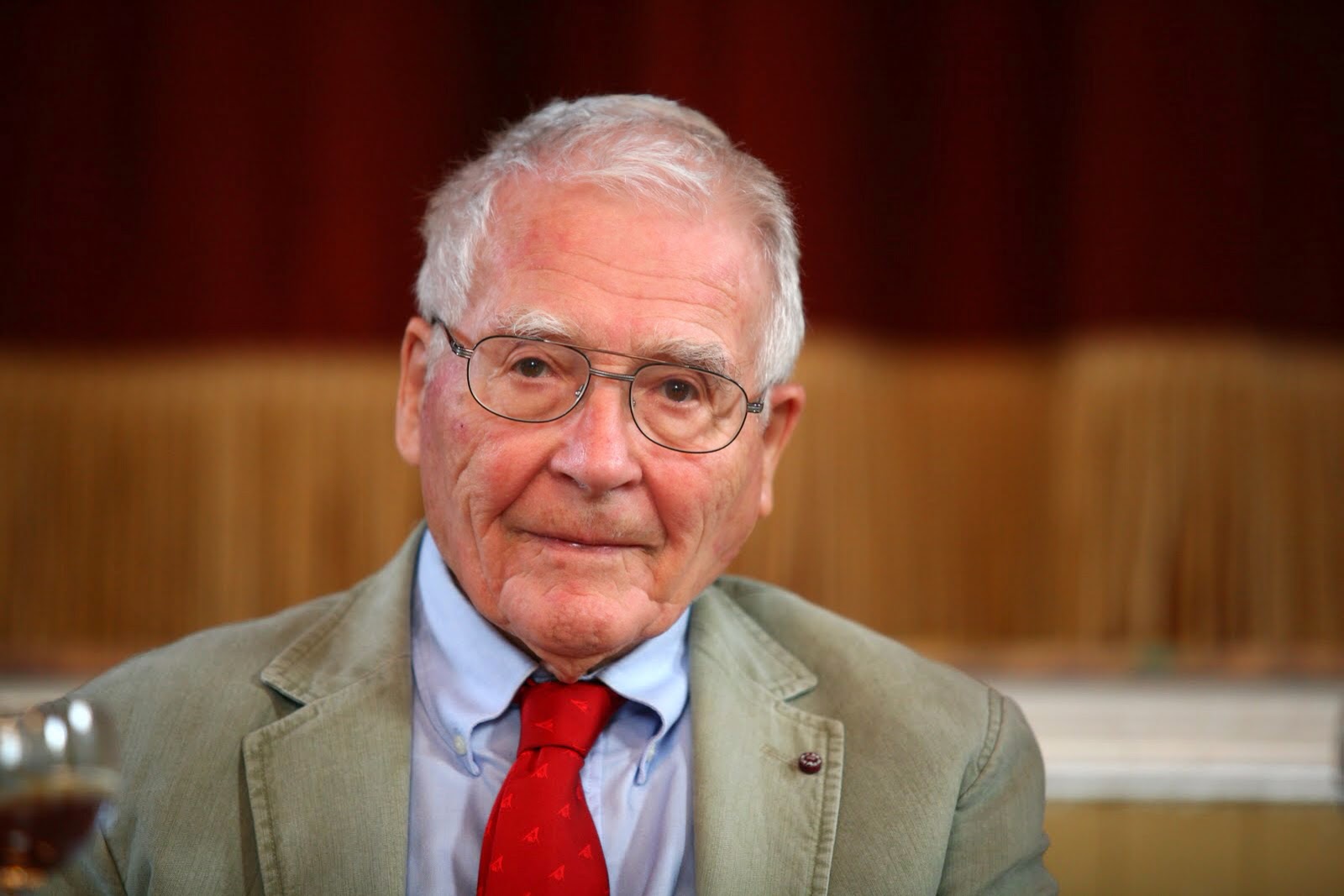
Jim Hansen

For more input on the reality of the situation a good place to start would be Makiko Sato & James Hansen's website where they ask 'What Path is the Real World Following'? Jim Hansen was the former director of NASA's Goddard Institute of Space Studies who resigned because the United States Government would not let him speak out on climate change. Assessing ‘‘Dangerous Climate Change'' makes worrying reading.

The world needs to take climate change, or as James Lovelock prefers to call it 'global heating' very seriously. Dr. Lovelock is the founder of the Gaia theory and on of the great thinkers of this century, his Cirriculum Vitae is very interesting and worth reading. Mary Midgley wrote on James Lovelock, published in the New Statesman on 14 July 2003.“Lovelock is an independent scientist. Though fanatically accurate over details, he never isolates those details from a wider, more demanding vision of their background. He thinks big. Preferring, as Darwin did, to work outside the tramlines of an institution, he has supported himself since 1963 through inventions and consultancies.”


We need to take the issue very seriously as a rapidly warming climate will change life as we know it. As Jim Hansen has tried to make us aware our children and grandchildren will effectively living on a different and not very nice planet.

James Lovelock

I implore you to research and read up on this subject. Speak out to your friends and neighbors and contact your political representatives and make your views known to them.

Nicholas Robson – Grand Cayman – Cayman Islands


When injustice becomes law…Gaza teaches Resistance as the only law.

Unknown's avatarنادية حرحش

I have always loved this quote : ” When Injustice becomes Law, Resistance becomes Duty ” .
Thanks to Gaza , it became worthy of stating again .
Despite all the murders ,
the destruction.
The unprecedented failure of humanity,
yet again.
Despite the conspiracies of the world,
east and west.
The treason of brothers,
the treachery of the beloved.
Gaza managed to stand up and alone.
Defeating the defeat of humanity .
Retaining the courage of the cowardice world.
Proving once and again ..
that Resistance is an obligation
when injustice is the law.

Resistance!!!!

View original post

German TV Airs Maidan Massacre World Shocker. News Media Blackout In United States.

Jerry Alatalo's avatarTHE ONENESS of HUMANITY

Posted April 18, 2014

by Jerry Alatalo

Germany television’s equivalent to American TV’s “60 Minutes” last week aired a report which contradicts the Barack Obama and new Ukrainian administrations’ claims that ousted President Viktor Yanukovych is responsible for the sniper murder of over 100 Ukrainian citizens and police officers in late February 2014.

The story has become front page news in Europe and Russia, but for some reason has yet to be reported on any media outlet to the American people. There are two reasons men and women have a very legitimate questioning stance on this German report. Number one is that there has been a great deal of language coming out of Americans’ television sets which paints Russia as the aggressor who needs to become stopped, and the possibility of Russia going ahead to annex more land in Ukraine and other areas in the region.

There is the perception that Viktor Yanukovych is…

View original post 1,070 more words

Utility Industry: We Need to Promote Electric Vehicles in Order to ‘Remain Viable’

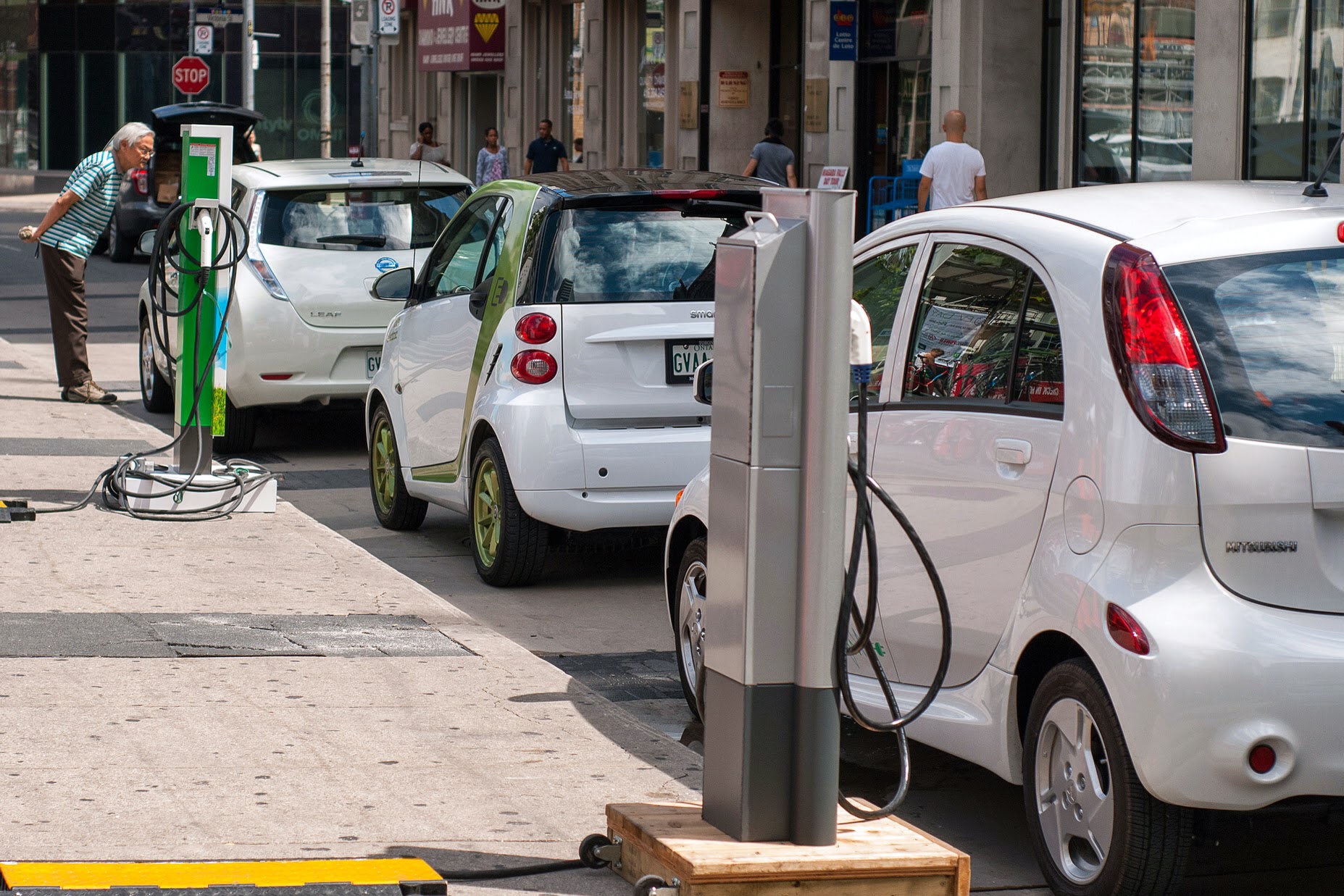
The Edison Electric Institute, the power industry's main trade group, is calling on utilities to better promote electric cars in order to stimulate demand for electricity and help reverse trends that threaten the long-term viability of some in the industry.

Without a strategy to help connect more vehicles to the grid, utilities will continue to face slow growth and stagnant revenues, warns EEI in a new report. The organization calls electric vehicles a “quadruple win” for power companies looking to boost demand, find new ways to interact with customers, support environmental goals and mandates, and reduce operating costs through electrifying their own fleets.

“The bottom line is that the electric utility industry needs the electrification of the transportation sector to remain viable and sustainable in the long term,” conclude the authors.

Some leading investor-owned utilities have rolled out programs to support charging stations, created pilots to test integration of new vehicle-to-grid technologies and have supported studies to model how lots of electric vehicles would interact with the distribution system. But there hasn't yet been a strategic, industry-wide effort to support the electrification of transportation as a way to boost demand.

To understand why EEI is now calling for more electric vehicles, consider where the industry is headed. As the chart below illustrates, growth in retail demand has come to a virtual standstill.

At the same time, the states with the biggest solar PV markets are seeing that technology slow electricity demand growth even further. This is adding additional pressure on utilities (creating borderline disruption in some markets), as third-party developers capture much of the value from developing solar.

“Stagnant growth, rising costs, and a need for even greater infrastructure investment represent major challenges to the utility industry,” writes EEI. “Today’s electric utilities need a new source of load growth — one that fits within the political, economic and social environment.”

Part of the answer is electric vehicles, which could both grow electricity sales and help balance a future grid made up of much more distributed renewables.

Thus far, utilities have had a conflicted relationship with electric vehicles. Although sales continue to grow, consumer demand has been relatively low compared to initial estimates. That has prevented power companies from investing heavily in charging infrastructure. There are also legitimate concerns about how electric cars and trucks will impact circuits on local grids.

However, the potential upside is enormous. If the two charts above have utilities worried, the chart below should have them excited about the future.

As Opower pointed out in a recent analysis, owners of electric cars use nearly 60 percent more electricity than the average customer. And customers who own both a solar system and an electric car consume roughly the same amount of electricity from the grid as an average customer — offsetting much of the excess solar that utilities must buy back through net metering. More


Israel accused of war crimes (UK Parliament)

Israel accused of war crimes (UK Parliament)

265,718 views

Published on Jul 15, 201 4 • Highlights from a UK parliamentary debate in which MPs variously accused Israel of war crimes, disproportionate violence, ruining peace negotiations by building illegal settlements, running the worlds largest outdoor prison, collective punishment, and attacking water supplies, hospitals, supply centres and all manner of other civilian targets. I have edited out the contributions of Foreign Secretary, William Hague, because nearly all of them displayed a shameful lack of compassion for the sufferings of the Palestinian people (Hague is a prominent member of an organisation called the “Conservative Friends of Israel” and is well aware of the funding that involvement brings to his party and his own political campaigns) The debate took place on the 14th of July 2014