Gaza: Widespread Impact of Power Plant Attack

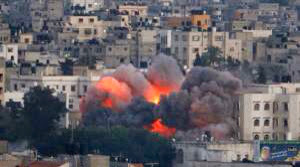
(Jerusalem, Palestine) – The apparent Israeli shellfire that knocked out the Gaza Strip’s only electrical power plant on July 29, 2014, has worsened the humanitarian crisis for the territory’s 1.7 million people. Damaging or destroying a power plant, even if it also served a military purpose, would be an unlawful disproportionate attack under the laws of war, causing far greater civilian harm than military gain.

The shutdown of the Gaza Power Plant has had an impact on the population far beyond power outages. It has drastically curtailed the pumping of water to households and the treatment of sewage, both of which require electric power. It also caused hospitals, already straining to handle the surge of war casualties, to increase their reliance on precarious generators. And it has affected the food supply because the lack of power has shut off refrigerators and forced bakeries to reduce their bread production.

“If there were one attack that could be predicted to endanger the health and well-being of the greatest number of people in Gaza, hitting the territory’s sole electricity plant would be it,” said , deputy Middle East and North Africa director. “Deliberately attacking the power plant would be a war crime.”

The spokesperson for the Energy Distribution Authority, Jamal Dardasawi, was quoted in the media as saying that Israeli tank shells hit one of Gaza Power Plant’s fuel storage tanks. The attack caused a massive explosion and a fire that damaged other parts of the facility and took much of the day to extinguish.

The plant’s shutdown cut off all power for much of the territory. For years, Gazans have been living with electricity service for only part of each day, and those who can afford fuel run private generators to provide back-up power. A week after the strike, some service was restored to most neighborhoods, but less than the limited pre-conflict levels.

Shortly after the attack was reported, Israel denied targeting the plant but said its forces might have hit it accidentally. Human Rights Watch was unable to determine whether Palestinian fighters were deployed in the area when the plant was hit. However, Fathi al-Sheikh Khalil, deputy chairman of the Energy and Natural Resources Authority in Gaza, said that the al-Nusseirat area, where the plant is located, was being heavily bombed at the time of the strike. Khalil said that Gaza firefighters phoned him to say they could not approach the plant because of the ongoing attacks in the vicinity. As a result, the fire spread from the small storage tank that was initially hit to a larger one, he said.

The strike came at about 3 a.m. on a day of bombardment that was widely described as the heaviest in the first three weeks of fighting. Israeli airstrikes that day destroyed a central mosque and the home of the Hamas political leader, Ismail Haniya, and damaged government buildings and a building that housed the offices of Hamas-controlled television and radio stations. Israeli military operations that day killed about 100 Palestinians.

Israeli military operations have caused massive damage to Gaza’s infrastructure, including housing, factories, hospitals, mosques, and schools.

Under the laws of war, power plants, like airports, are considered dual-use objects – civilian objects that also benefit an armed force. As such they can be military objectives, subject to attack. However, any attack on a dual-use object must be proportionate. Attacks that can be expected to cause more harm to civilians and civilian structures than the anticipated military gain of the attack are prohibited. Expected civilian harm encompasses casualties over time as well as immediate civilian losses. Thus any attack on the Gaza Power Plant that would cause a significant shutdown would invariably be disproportionate, violating international humanitarian law.

Israel has denied attacking the power plant. Brig. Gen. Yaron Rosen, the commander of the Israeli Air Support and Helicopter Air Division, said on July 29 that Israel “has no interest” in attacking the plant. “We transfer to them the electricity, we transfer in the gas, we transfer in the food in order to prevent a humanitarian disaster,” he said. “So we attacked the power plant?” Rosen said it was possible Israel hit the power plant accidentally and that an internal investigation was under way. An August 4 CNN story on the electricity crisis stated that an Israeli Defense Ministry spokesperson had told CNN that Israeli forces were not involved in the attack.

Ribhi al-Sheikh, deputy head of the Palestine Water Authority, said the lack of electricity had idled wells – except where generators were able to provide some back-up power – as well as water treatment and desalination plants. Idling wells endangers crops that require water at the hottest time of year.

Most urban households in Gaza need electricity to pump water to rooftop tanks. Ghada Snunu, a worker for a nongovernmental organization, said on August 4 that her home in Gaza City had been without electricity since the attack on the power plant, forcing her family to buy water in jerry cans and to conserve the used household water to empty the toilets. The collapse of electricity service meant that many Gazans lacked access to the 30 liters of water that is the estimated amount needed per capita daily for drinking, cooking, hygiene and laundering, said Mahmoud Daher, head of the Gaza office of the UN World Health Organization.

Daher said that hospitals have been given priority for scarce electricity, with Shifa, the territory’s largest hospital, getting the most, at 16 hours a day. If the fuel required to run generators were to run out, or a generator to fail, a hospital could lose power.

An official at al-Quds Hospital in Gaza City told Human Rights Watch on August 7 that because of electricity interruptions:

We use a large generator for six to eight hours per day, then have to rely on three smaller ones, because the large one cannot be run full-time. If the large one goes, we don’t know how we would repair it, because of the lack of spare parts. It powers the oxygen station, the hospital’s two elevators, and the air conditioners – this amounts to 80 percent of the hospital’s total electricity consumption. When we use the smaller generators, they can only power one elevator, and none of the air conditioners, which makes it difficult for staff to work long hours in the August heat, and dangerous for patients.

Israeli forces had reportedly struck the power plant both earlier in the current fighting and in previous conflicts, Human Rights Watch said. The plant had been hit on five occasions since early July, according to the International Committee of the Red Cross. It closed briefly after shelling by Israeli forces on July 22 and 23, said Gisha, an Israeli nongovernmental organization. One of the strikes knocked out one of the plant’s generator sets, said Khalil of the Energy Authority.

He said repairing it and the storage tanks will take more than a year, but the plant can make temporary repairs that will enable it to produce 50 megawatts sooner, though at a higher cost. The power plant, in central Gaza, produced about 60 megawatts of power before the current fighting began, the deputy minister of the Palestine Energy Authority in Ramallah, Abdelkarim Abdeen, told Human Rights Watch.

Khalil said that about two days before the July 29 strike, Israeli authorities had passed a message to him via the UN Office for the Coordination of Humanitarian Affairs (OCHA) that the power plant was not a target and that its workers could move safely within the compound. No workers were hurt in the strike, he said.

In addition to the output from the plant, Gaza normally gets 120 megawatts of power from Israel via 10 transmission lines and 28 from Egypt via 3 lines. However, the recent fighting damaged 8 of the Israeli lines and 2 of the Egyptian lines, reducing the supply coming from Israel to 24 megawatts and from Egypt to 18 megawatts as of August 4, Abdeen said.

Damage to the Israeli and Egyptian power lines and then the attack on the power plant cut Gaza’s electricity supply to about 20 percent of the 200 megawatts it had before the conflict began. Gaza’s electricity needs are estimated at 350 megawatts, so power rationing and rolling blackouts were the norm even before war damage slashed the amount of power available.

Since the August 5 ceasefire, electricity power supplies have increased as repair crews have restored eight of the Israeli and all three of the Egyptian lines. Before the ceasefire, conflict conditions had made it hazardous for technicians to perform the necessary repairs, the International Committee of the Red Cross said. As of August 7, households were reportedly getting between three and seven hours of electricity, depending on their location in the Gaza Strip.

Eight years ago, on June 28, 2006, Israeli missiles hit the plant eight times, knocking out its transformers, three days after Hamas fighters in Gaza captured the Israeli soldier Gilad Shalit. Israel then delayed or blocked the delivery of material needed to fully repair the Gaza power plant. Then, in 2008, Israel cut its deliveries of electricity and fuel to Gaza for the declared purpose of pressuring armed groups to end their rocket attacks against civilians in Israel, a form of collective punishment in violation of the laws of war.

Israel has attacked power plants in hostilities outside of Gaza. During its armed conflict with Hezbollah, Israel deliberately bombed electricity plants in southern Lebanon, including on June 24, 1999, February 8, 2000, and May 5, 2000. The day after the 1999 attack, Israeli Brig. Gen. Dan Halutz said at a news conference that the Lebanese infrastructure targets “had been selected a long time ago,” and that the Israeli “government decided to carry out an attack on Lebanese infrastructure and not only on Hezbollah objectives…to stress that all power brokers in Lebanon who support Hezbollah’s murderous activity are liable to attack.” The attacks on electricity plants violated the laws of war prohibition against disproportionate attacks because their expected harm to the civilian population was greater than the military gain achieved.

The laws of war obligate countries responsible for violations to make full reparations for the loss or injury caused. This would involve at a minimum providing materials and assistance to permit the prompt restoration of the power plant to its pre-war capacity. Even while fighting continues, Israel should ensure humanitarian agencies have access to restore destroyed power lines, given their crucial humanitarian impact on the civilian population More


Life in occupied Palestine

A video that Israel and the United States does not want you to see. Anna, a Jewish American from the International Womens Peace Service (IWPS) speaks about documenting human rights abuses in occupied Palesting and supporting non-violent resistance.


Britain ‘attempts to censor’ US report on torture sites

The government stands accused of seeking to conceal Britain’s role in extraordinary rendition, ahead of the release of a declassified intelligence report that exposes the use of torture at US secret prisons around the world.

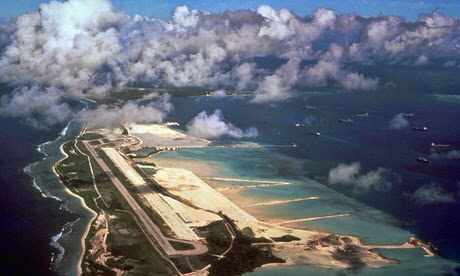
Diego Garcia

The Senate report on the CIA’s interrogation programme, due to be released in days, will confirm that the US tortured terrorist suspects after 9/11. In advance of the release, Barack Obama admitted on Friday: “We tortured some folks. We did some things that were contrary to our values.”

Now, in a letter to the human rights group Reprieve, former foreign secretary William Hague has confirmed that the UK government has held discussions with the US about what it intends to reveal in the report which, according to al-Jazeera, acknowledges that the British territory of Diego Garcia was used for extraordinary rendition.

“We have made representations to seek assurances that ordinary procedures for clearance of UK material will be followed in the event that UK material provide[d] to the Senate committee were to be disclosed,” Hague wrote.

Cori Crider, a director at Reprieve, accused the UK government of seeking to redact embarrassing information: “This shows that the UK government is attempting to censor the US Senate’s torture report. In plain English, it is a request to the US to keep Britain’s role in rendition out of the public domain.”

Lawyers representing a number of terrorist suspects held at Guantánamo Bay believe their clients were rendered via Diego Garcia. Papers found in Libya indicated that the US planned to transport Abdul-Hakim Belhaj, an opponent of Muammar Gaddafi, and his wife via the territory, an atoll in the Indian Ocean leased by Britain to the US. The government has denied Belhaj was rendered via Diego Garcia, but there are suspicions that others were held on the atoll.

Crider said the UK’s attempts to lobby the US into redacting parts of the report “turns the government’s defence in the Libyan renditions case of Abdul-Hakim Belhaj and his wife entirely on its head”.

The government has consistently sought to block Belhaj from bringing a case against it.

“The government protested America would be angered if this kidnap case ever went to trial – and now we learn the British government is leaning on the Americans not to air Britain’s dirty laundry. It exposes their litigation stance as mere posturing,” she added.

Confirmation that a British territory was involved in extraordinary rendition could leave the government vulnerable to legal action. Last month the European court of human rights ruled that the Polish government actively assisted the CIA’s European “black site” programme, which saw detainees interrogated in secret prisons across the continent.

The court concluded it was “established beyond reasonable doubt” that Abu Zubaydah, a Guantánamo detainee the US mistakenly believed to be a senior member of al-Qaida, was flown from a secret site in Thailand to another CIA prison in Stare Kiejkuty in northern Poland.

The judges concluded that not only was Poland “informed of and involved in the preparation and execution of the [High Value Detainee] Programme on its territory”, but also “for all practical purposes, facilitated the whole process, created the conditions for it to happen and made no attempt to prevent it”, prompting lawyers to ask what else it has been used for since. More


Israel accused of war crimes (UK Parliament)

Israel accused of war crimes (UK Parliament)

265,718 views

Published on Jul 15, 201 4 • Highlights from a UK parliamentary debate in which MPs variously accused Israel of war crimes, disproportionate violence, ruining peace negotiations by building illegal settlements, running the worlds largest outdoor prison, collective punishment, and attacking water supplies, hospitals, supply centres and all manner of other civilian targets. I have edited out the contributions of Foreign Secretary, William Hague, because nearly all of them displayed a shameful lack of compassion for the sufferings of the Palestinian people (Hague is a prominent member of an organisation called the “Conservative Friends of Israel” and is well aware of the funding that involvement brings to his party and his own political campaigns) The debate took place on the 14th of July 2014

The cruel cease-fire charade

So far, the diplomatic effort to end the violence in Gaza has failed miserably, with Israel on Friday rejecting a cease-fire proposal from U.S. Secretary of State John Kerry. (On Saturday Israel and Hamas agreed to a 12-hour humanitarian pause in the fighting brokered by the United Nations.)

Washington’s attempt is representative of the overall failure of American policy toward the Israeli-Palestinian conflict, only on this occasion the consequences can be measured in the growing pile of dead bodies and the widespread devastation that includes numerous homes, public buildings and even artillery damage to several United Nations schools sheltering Palestinian civilians.

The U.S. approach fails because it exhibits extreme partisanship in a setting where trust, credibility and reciprocity are crucial. Kerry is undoubtedly dedicated to achieving a cease-fire, just as he demonstrated for most of the past year in pushing for a negotiated peace agreement between Israel and the Palestinian Authority. Yet the United States exhibited its tendency toward extreme partisanship when it designated Martin Indyk, a former staff member of the America Israel Public Affairs Committee (AIPAC) and former ambassador to Israel, as the U.S. special envoy to the peace talks.

The U.S. approach up to this point to achieving a cease-fire in Gaza has been undertaken in a manner that is either woefully ignorant of the real constraints or callously cynical about their relevance. This is especially clear from the attempt to garner a cease-fire by consulting only one side, Israel — the party bearing the major responsibility for causing massive casualties and damage — and leaving Hamas out in the cold. Even if this is a consequence of Hamas being treated as “a terrorist entity,” it still makes no sense. When Israel wanted to deal with Hamas in the past, it had no trouble doing so — for instance, when it arranged the prisoner exchange that led to the release of the single captured Israeli soldier Gilad Schalit back in 2011.

The basic facts are astounding: The U.S. relied on Egypt as the broker of a proposal it vetted, supposedly with the text delivered personally by Tony Blair to President Abdel Fattah El Sisi in Cairo, endorsed by the Netanyahu government, and then announced on July 15 via the media as a cease-fire proposal accepted by Israel, without Hamas even knowing the details. It’s a diplomatic analogue to the theater of the absurd. Last July, then-General Sisi was the Egyptian mastermind of a coup that brutally cracked down on the Muslim Brotherhood and criminalized the entire organization. The Sisi government has made no secret of its unrelenting hostility to Hamas, which it views as an offshoot of the Muslim Brotherhood. It destroyed the extensive tunnel network connecting Gaza with the outside world to circumvent the punitive Israeli blockade that has been maintained since 2007. Is there any reason for Hamas to go forward with such a cease-fire arrangement? As some respected Israeli commentators have suggested, most prominently Amira Hass, the “normalization” of the occupation is what the Israeli military operation Protective Edge is all about. Hass suggests that Israel seeks a compliant Palestinian response to an occupation that has for all intents and purposes become permanent. Such periodic shows of force aim to break once and for all the will to resist, associated with Hamas and its rockets.

Even more telling, the cease-fire’s terms were communicated to Hamas via the media, making the proposal “take it or leave it.” It also ignored the reasonable conditions Hamas had posited as the basis of a cease-fire it could accept. These conditions included ending the unlawful seven-year siege of Gaza, releasing prisoners arrested in the anti-Hamas campaign prior to launching the military operation on July 8, and stopping interference with the unity government that brought Hamas and the Palestinian Authority together on June 3. Kerry, by contrast, has urged restoring the cease-fire text that had been accepted by both sides in November 2012 after the previous major Israeli military attack upon Gaza.

Hamas’ chief leader, Khaled Meshaal, has been called “defiant” by Kerry because he would not go along with this tilted diplomacy. “Everyone wanted us to accept a cease-fire and then negotiate for our rights,” Meshaal said. This was tried by Hamas in 2012 and didn’t work. As soon as the violence ceased, Israel refused to follow through on the cease-fire agreement that had promised negotiations seeking an end of the blockade and an immediate expansion of Gazan fishing rights.

In the aftermath of Protective Edge is it not reasonable, even mandatory, for Hamas to demand a firm commitment to end the siege of Gaza? Israel as the occupying power has an obligation under the Geneva Conventions to protect the civilian population of an occupied people. Israel claims that its “disengagement” in 2005, involving the withdrawal of security forces and the dismantling of settlements, ended such obligations. Such a position is almost uniformly rejected in the international community, since the persistence of effective Israeli control of entry and exit, as well as air and sea, and violent incursions amounts to a shift in the form of occupation — not its end. Israel is certainly right to complain about the rockets, but it is wrong to impose an oppressive regime of collective punishment on the civilians of Gaza. More


How US and Blair plotted ‘ceasefire’ scam

We now have confirmation from the Israeli daily Haaretz of what we should have suspected: that the idea for the so-called Egyptian “ceasefire proposal” was actually hatched in Washington, the messenger boy was arch-war criminal Tony Blair, and the terms were drafted by Israel.

Click to Enlarge


The intention was either to corner Hamas into surrendering – and thereby keep the savage blockade of Gaza in place – or force Hamas to reject the proposal and confirm the Israeli narrative that it is a terrorist organisation with which Israel cannot make peace.

According to Haaretz, Blair secretly initiated his “ceasefire” activity after “coordinating” with US Secretary of State John Kerry. On Saturday he headed off to Cairo to meet with the US-backed Egyptian dictator Abdel Fattah al-Sisi to persuade him to put his name to the proposal.

Immediately afterwards, he travelled to Israel to meet Benjamin Netanyahu on Saturday afternoon. Sisi and Netanyahu were then supposed to thrash out the details. When they failed to do so, Blair intervened again on behalf of the Americans and the pair spoke by phone on Saturday evening.

Here’s the key paragraph from Haaretz:

Senior Israeli officials and Western diplomats said the reason the Egyptian cease-fire initiative was so short-lived is that it was prepared hastily and was not coordinated with all the relevant parties, particularly Hamas.

Wonderful that throw-away last line. In all this activity, it never occurred to the US, Blair, Sisi or Netanyahu – and no doubt Mahmoud Abbas, who is strangely absent from this account – that it might be necessary to sound out Hamas on the terms of a ceasefire it would need to abide by.

Now it seems Kerry is using US muscle to get Egypt, Qatar and Turkey to strong-arm Hamas into surrendering.


It’s depressingly predictable that the corporate media have swallowed the line of Israel accepting the “ceasefire proposal” and Hamas rejecting it. What Hamas did was reject a US-Israeli diktat to sign away the rights of the people of Gaza to end a siege that cuts them off from the rest of the world.

But there is a long pedigree to such deceptions. It is reminiscent of a hasbara favourite: that the Jews accepted the UN partition plan of 1947 while the Palestinians rejected it. The reality – then, as now – is that the the colonial powers sought to strip the Palestinians of their rights and their homeland without even consulting them.


www.haaretz.com/news/diplomacy-defense/.premium-1.605499

– See more at: http://www.jonathan-cook.net/blog/2014-07-16/how-us-and-blair-plotted-ceasefire-scam/#sthash.ZXcEXokj.dpuf


Palestinian factions reportedly set 10 conditions for 10-year truce with Israel

Reports in Israeli and Palestinian media say that the two Palestinian resistance groups Hamas and Islamic Jihad have set forth ten conditions for a ceasefire and ten-year truce with Israel.

Israel’s Maariv said that an unnamed “senior Palestinian official” passed it a copy of the demands, which have been transmitted by the factions to Egypt.

They include an end to all armed hostilities, the end of the siege of Gaza, and the construction of internationally supervised air and seaports.

Palestinians sleep in UN school

While Hamas has not as yet officially stated these demands, they are in line with the group’s long-standing policy of offering Israel a multi-year truce.

The reported conditions come after nine days of Israeli bombardment of the Gaza Strip that has killed more than 200 people, injured close to 1,400, and destroyed the homes of 8,200 others. Almost 80 percent of the dead, who include more than thirty children, are civilians, according to the UN.

Yesterday, Hamas refused to respond to a unilateral “ceasefire” declared by Israel that would have left the situation of siege on the Gaza Strip unchanged.

Airport, seaport and an end to violence

The ten conditions were translated by The Electronic Intifada from an Arabic version published by Ma’an News Agency:

  • Mutual cessation of the war and withdrawal of tanks to previous locations and the return of farmers to work their land in the agricultural border areas.
  • Release of all the Palestinians detained since 23 June 2014 and improvement of the conditions of Palestinian prisoners, especially the prisoners from Jerusalem, Gaza and Palestinians of the interior [present-day Israel].
  • Total lifting of the siege of Gaza and opening the border crossings to goods and people and allowing in all food and industrial supplies and construction of a power plant sufficient to supply all of Gaza.
  • Construction of an international seaport and an international airport supervised by the UN and non-biased countries.
  • Expansion of the maritime fishing zone to 10 kms and supplying fishermen with larger fishing and cargo vessels.
  • Converting the Rafah crossing into an international crossing under supervision of the UN and Arab and friendly countries.
  • Signing a 10-year truce agreement and deployment of international monitors to the borders.
  • A commitment by the occupation government not to violate Palestinian airspace and easing of conditions for worshipers in Al-Aqsa Mosque.
  • The occupation will not interfere in the affairs of the Palestinian government and will not hinder national reconciliation.
  • Restoration of the border industrial areas and their protection and development.

“Should have been met years ago”


Dr. Ramy Abdu, chair of the independent group Euro-Mid Observer for Human Rights (euromid.org, told The Electronic Intifada from Gaza City this morning:

I believe that these requirements should have been met years ago. The core of these requirements are not political but purely humanitarian and legally binding. The international community has called many times for their implementation. Palestinians have the right to move in and out freely like others in the world. They have the right to import and export, to control their borders and airspace. Israel argues that it left Gaza, so it should stop controlling the lives of Palestinians.

Abdu noted that his organization recently published a detailed proposal to establish a maritime link from Gaza to the rest of the world with an international role that could “alleviate security concerns.” More


How Politics and Lies Triggered an Unintended War in Gaza

In the flood of angry words that poured out of Israel and Gaza during a week of spiraling violence, few statements were more blunt, or more telling, than this throwaway line by the chief spokesman of the Israeli military, Brigadier General Moti Almoz, speaking July 8 on Army Radio’s morning show: “We have been instructed by the political echelon to hit Hamas hard.”

That’s unusual language for a military mouthpiece. Typically they spout lines like “We will take all necessary actions” or “The state of Israel will defend its citizens.” You don’t expect to hear: “This is the politicians’ idea. They’re making us do it.”

Admittedly, demurrals on government policy by Israel’s top defense brass, once virtually unthinkable, have become almost routine in the Netanyahu era. Usually, though, there’s some measure of subtlety or discretion. This particular interview was different. Where most disagreements involve policies that might eventually lead to some future unnecessary war, this one was about an unnecessary war they were now stumbling into.

Spokesmen don’t speak for themselves. Almoz was expressing a frustration that was building in the army command for nearly a month, since the June 12 kidnapping of three Israeli yeshiva boys. The crime set off a chain of events in which Israel gradually lost control of the situation, finally ending up on the brink of a war that nobody wanted — not the army, not the government, not even the enemy, Hamas.

The frustration had numerous causes. Once the boys’ disappearance was known, troops began a massive, 18-day search-and-rescue operation, entering thousands of homes, arresting and interrogating hundreds of individuals, racing against the clock. Only on July 1, after the boys’ bodies were found, did the truth come out: The government had known almost from the beginning that the boys were dead. It maintained the fiction that it hoped to find them alive as a pretext to dismantle Hamas’ West Bank operations.

The initial evidence was the recording of victim Gilad Shaer’s desperate cellphone call to Moked 100, Israel’s 911. When the tape reached the security services the next morning — neglected for hours by Moked 100 staff — the teen was heard whispering “They’ve kidnapped me” (“hatfu oti”) followed by shouts of “Heads down,” then gunfire, two groans, more shots, then singing in Arabic. That evening searchers found the kidnappers’ abandoned, torched Hyundai, with eight bullet holes and the boys’ DNA. There was no doubt.

Prime Minister Benjamin Netanyahu immediately placed a gag order on the deaths. Journalists who heard rumors were told the Shin Bet wanted the gag order to aid the search. For public consumption, the official word was that Israel was “acting on the assumption that they’re alive.” It was, simply put, a lie.

Moti Almoz, as army spokesman, was in charge of repeating the lie. True, others backed him up, including Defense Minister Moshe Yaalon. But when the truth came out on July 1, Almoz bore the brunt of public derision. Critics said his credibility was shot. He’d only been spokesman since October, after a long career as a blunt-talking field commander with no media experience. Others felt professional frustration. His was personal.

Nor was that the only fib. It was clear from the beginning that the kidnappers weren’t acting on orders from Hamas leadership in Gaza or Damascus. Hamas’ Hebron branch — more a crime family than a clandestine organization — had a history of acting without the leaders’ knowledge, sometimes against their interests. Yet Netanyahu repeatedly insisted Hamas was responsible for the crime and would pay for it.

This put him in a ticklish position. His rhetoric raised expectations that after demolishing Hamas in the West Bank he would proceed to Gaza. Hamas in Gaza began preparing for it. The Israeli right — settler leaders, hardliners in his own party — began demanding it.

But Netanyahu had no such intention. The last attack on Gaza, the eight-day Operation Pillar of Defense in November 2012, targeted Hamas leaders and taught a sobering lesson. Hamas hadn’t fired a single rocket since, and had largely suppressed fire by smaller jihadi groups. Rocket firings, averaging 240 per month in 2007, dropped to five per month in 2013. Neither side had any desire to end the détente. Besides, whatever might replace Hamas in Gaza could only be worse.

The kidnapping and crackdown upset the balance. In Israel, grief and anger over the boys’ disappearance grew steadily as the fabricated mystery stretched into a second and third week. Rallies and prayer meetings were held across the country and in Jewish communities around the world. The mothers were constantly on television. One addressed the United Nations in Geneva to plead for her son’s return. Jews everywhere were in anguish over the unceasing threat of barbaric Arab terror plaguing Israel.

This, too, was misleading. The last seven years have been the most tranquil in Israel’s history. Terror attacks are a fraction of the level during the nightmare intifada years — just six deaths in all of 2013. But few notice. The staged agony of the kidnap search created, probably unintentionally, what amounts to a mass, worldwide attack of post-traumatic stress flashback.

When the bodies were finally found, Israelis’ anger exploded into calls for revenge, street riots and, finally, murder.

Amid the rising tension, cabinet meetings in Jerusalem turned into shouting matches. Ministers on the right demanded the army reoccupy Gaza and destroy Hamas. Netanyahu replied, backed by the army and liberal ministers, that the response must be measured and careful. It was an unaccustomed and plainly uncomfortable role for him. He was caught between his pragmatic and ideological impulses.

In Gaza, leaders went underground. Rocket enforcement squads stopped functioning and jihadi rocket firing spiked. Terror squads began preparing to counterattack Israel through tunnels. One tunnel exploded on June 19 in an apparent work accident, killing five Hamas gunmen, convincing some in Gaza that the Israeli assault had begun while reinforcing Israeli fears that Hamas was plotting terror all along.

On June 29, an Israeli air attack on a rocket squad killed a Hamas operative. Hamas protested. The next day it unleashed a rocket barrage, its first since 2012. The cease-fire was over. Israel was forced to retaliate for the rockets with air raids. Hamas retaliated for the raids with more rockets. And so on. Finally Israel began calling up reserves on July 8 and preparing for what, as Moti Almoz told Army Radio, “the political echelon instructed.”

Later that morning, Israel’s internal security minister Yitzhak Aharonovitch told reporters that the “political echelon has given the army a free hand.” Almoz returned to Army Radio that afternoon and confirmed that the army had “received an absolutely free hand” to act.

And how far, the interviewer asked, will the army go? “To the extent that it’s up to the army,” Almoz said, “the army is determined to restore quiet.” Will simply restoring quiet be enough? “That’s not up to us,” he said. The army will continue the operation as long as it’s told.

The operation’s army code-name, incidentally, is “Protective Edge” in English, but the original Hebrew is more revealing: Tzuk Eitan, or “solid cliff.” That, the army seems to feel, is where Israel is headed. More

Contact J.J. Goldberg at goldberg@forward.com