

Brut America
energy
Caribbean Utilities Company (CUC) seeks court order to block release of costs report
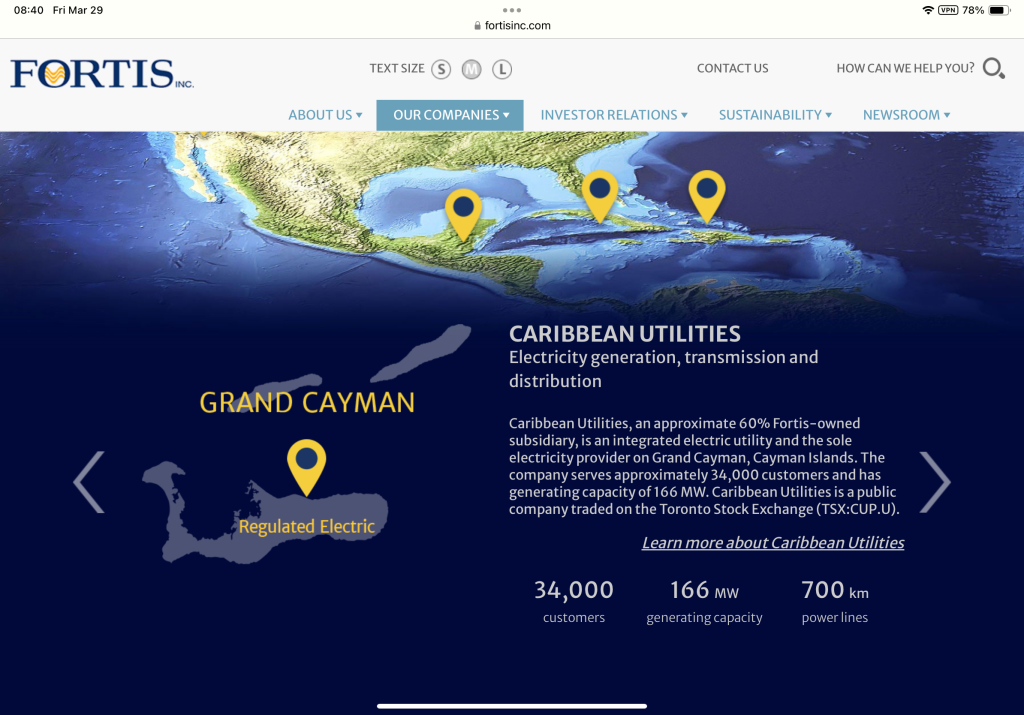
I shall attempt to unpack the Caribbean Utilities Companies situation here in the Cayman Islands, as well that of its majority shareholder Fortis Inc of Canada. https://www.fortisinc.com which owns at least 60% of Caribbean Utilities Company Ltd.
“Realise therefore, that over half of every dollar of Caymanians hard earned money ends up in the pockets of Fortis Inc. Shareholders.”
In fact, the total foreign ownership of Caribbean Utilities Company is in the vicinity of 81%.

FortisBC will Invest Close to $700 Million to Reduce GHG Emissions and Lower Energy Costs for Customers
Reducing energy use is a key pillar in the company’s goal to lead the clean energy transformation in BC Canada.
FortisBC will invest a record CA$694.8 million to help customers reduce their energy use over the next four years, a key pillar in the company’s goal to lead the clean energy transformation in B.C. The investment will allow FortisBC to shift its efforts to more advanced energy-efficiency initiatives, build new energy-saving programs and work with Indigenous communities to develop targeted programs for their unique needs.
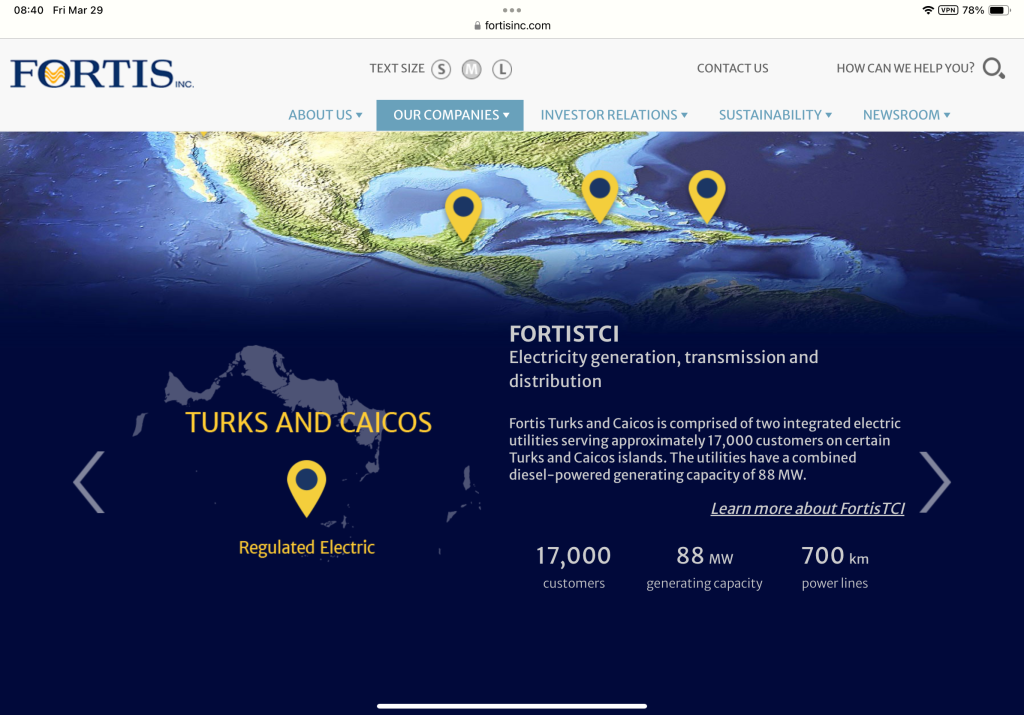
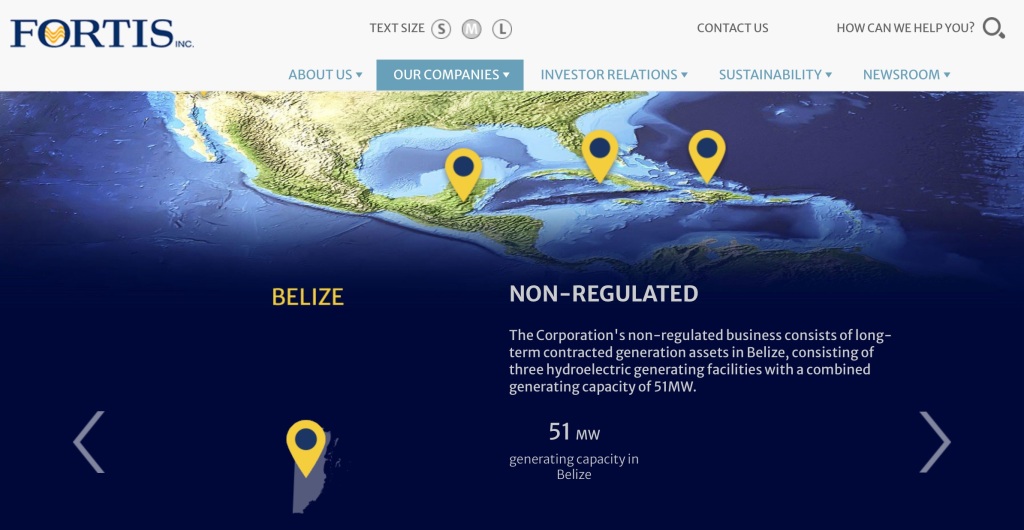
It is indeed interesting to note the difference between Fortis Inc’s policies in Canada and their regional policies in The Cayman Islands, The Turks & Caicos Islands and Belize.
In British Columbia (BC) Canada FortisBC will invest CA$694.8 million to help customers reduce their energy use over the next four years, a key pillar in the company’s goal to lead the clean energy transformation in B.C.
In the Cayman Islands however Caribbean Utilities Company is seeking court action to block the public release of a pair of reports containing details of its costs and the capacity of the Cayman Islands power grid to add new renewable energy.
Public sector transparency watchdog, the Ombudsman, had ordered the release of the reports following a protracted Freedom of Information dispute.
In a ruling which also highlighted concerns over apparent conflicts of interest involving Grand Cayman’s monopoly utility company, the Ombudsman decided in February that the two documents should be released.
The differences in policy between the way customers are treated by Fortis Inc in BC Canada, and how they are treated in the Caribbean by their subsidiary Caribbean Utilities Company Ltd (as well as Fortis Inc’s Belize and Turks & Caicos operations) leads to only one possible conclusion which is that their Cayman Islands operation is exceedingly profitable, and that they will do everything possible to maintain their monoply. The fact that the cost of living in the Cayman Islands is the highest in the world is obviously meaningless to the management of Caribbean Utilities Company as they are at heart Capitalists whose only care is Fortis Inc shareholder profits.
Opinion: How Cayman can follow Hawaii’s blueprint for solar revolution
Video game entrepreneur Henk Rogers helped Hawaii switch to green energy. Now he wants to help Cayman do the same.

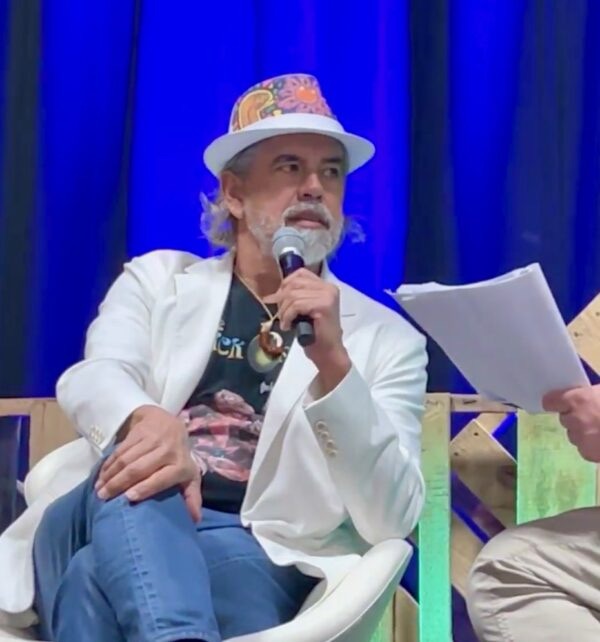
Guest column by Henk Rogers
The Cayman Islands are a paradise – pristine beaches, world-class diving, and unique wildlife, like endangered blue iguanas and rare birds like the red-footed boobies.
They are also the Caribbean islands most negatively impacted by extreme weather, and the fifth-most vulnerable islands in the region to rising sea levels.
The irony is the Cayman Islands aren’t just victims of climate change – they are also significant contributors to the problem.
According to the World Bank, the Cayman Islands consumed 655 million kilowatt hours of electricity in 2019, with only 2.5% of that being produced from island-based renewable sources.
I have lived in Hawaii for much of the last 50 years, and I understand precisely the problems the Cayman Islands are facing. I’ve also participated in Hawaii’s energy transformation and know how the lessons we’ve learned in the Pacific can help our Caribbean friends improve their relationship to energy and have a more resilient, affordable and climate-friendly future.
But we need all of the key stakeholders in the Cayman Islands onboard, and right now we’re facing considerable resistance from one of those stakeholders: the Caribbean Utilities Company, the electricity provider for Grand Cayman.
But first, a little history.
Ditching dirty energy
Before 2015, Hawaii was one of the largest consumers of fossil fuels per capita on the planet. There is no well-populated island more isolated on the globe than Hawaii, and the islands were at the mercy of oil-producing cartels, shelling out upward of US$6 billion a year on dirty energy – petroleum and coal – to fuel the archipelago.
The state’s political and business leadership recognised that the system in place was unhealthy for its citizens, was economically unsound (that money did not stay in the local economy), and was contributing to the climate crisis to dramatic effect in Hawaii. Like other island states, Hawaii was ground zero for the negative impacts of climate change – from extreme storms and flooding to rising sea levels to devastated coral reefs and ecosystems.
In turn, these negative impacts had deleterious effects on human health, communities, our economy and tourism.
In 2007, I founded Blue Planet Foundation, a non-profit that led the movement to establish a 100% renewable-energy transition for the state by 2045. The road was challenging, but ultimately we were successful, and Governor David Ige signed legislation in 2015 making Hawaii the first US state to legislatively mandate a transition to 100% renewable energy.
This was a landmark decision, and one that has since seen more than 20 US states and territories embrace their own versions of this law. Since Hawaii passed that legislation, I founded Blue Planet Alliance, another non-profit, whose mission is to replicate the success we had in Hawaii with other island countries and territories globally.
Last year, we launched a fellowship programme, in which we convene representatives of other islands in Hawaii for a week-long deep dive with local experts into the technical, economic and leadership challenges of transitioning from fossil fuels. We help participating islands develop their own 100% renewable-energy transition plans and create a strategy to make it a reality.
Making it a reality is no easy task. In Hawaii, navigating the relationship with the state’s primary utility, Hawaiian Electric, was the most difficult part of the protracted endeavour. They were wed to their monopoly business model of operating fossil-based power plants,
and the new renewable future was uncertain and scary for a large corporation. This is where island leadership was necessary to set the vision for the future – even over the objection of the utility.
From opponents to partners
Interestingly, after Hawaii’s 100% legislation was adopted, Hawaiian Electric – forced to do a long-range analysis of powering the grid with only renewable energy – found that Hawaii’s 100% clean-energy future could be achieved five years ahead of schedule, at a cost that was billions less than ‘business as usual’, all while working collaboratively with consumers and the private sector.
We helped them devise a business model that was a win-win-win-win: an energy source that was healthier for the planet, more affordable for consumers, better economically for Hawaii, and allowed the utility to make more money.
We’re working to recreate this success story through the Blue Planet Fellowship programme. That first cohort last October comprised eight islands – seven from the Pacific region (many of which have since followed through with proposed legislation for transitions to 100% renewable energy) and the Cayman Islands, our sole Caribbean representative.
The representatives from the Cayman Islands were very committed to bringing renewable energy to their home country. One of those representatives, James Whittaker – chairman of the Cayman Islands Energy Policy Council – spoke poignantly about the environmental impacts on the baby red crab population, which has greatly diminished since his childhood.
But, just as we encountered in Hawaii, despite the support for more renewable energy, the Cayman Islands are getting major pushback from the utility company. It is worth noting that CUC is a Canada-based public company with a monopoly contract for the transmission of electricity in Grand Cayman, which is enforceable through 2048.
Pushing a flawed ‘solution’
Publicly, CUC has embraced solar energy and other renewableenergy sources. But it’s unclear if their private actions are truly aligned with a low-cost, clean-energy future for the Cayman Islands. CUC has recently suggested that importing a new fossil fuel – liquefied natural gas, or LNG – will somehow be a better choice than renewable energy. We heard something similar from the Hawaii utility 10 years ago before we committed to 100% fossil-free energy.
In 2014, Hawaiian Electric argued that importing LNG would serve as a low-cost ‘bridge’ fuel to our clean-energy future. They went so far as to sign an agreement with Fortis, the company that owns a majority stake in CUC, for importing the LNG.
Hawaii leadership ultimately rejected this proposal after learning that the purported cost savings were unlikely to materialise – particularly given the costly infrastructure upgrades needed to receive that fossil fuel.
What’s more, the environmental claims that LNG was somehow a ‘cleaner’ fuel fell apart when examined closer. Several analyses conclude that the lifecycle-climate impact associated with LNG production, transport and energy generation are greater than those of other fossil fuels – even coal. Fortunately, Hawaii instead decided that our future was 100% renewable – a future that was incompatible with importing a new fossil fuel.
That decision paid off. The Hawaiian Electric service territory is, as of 2023, between 30% and 52% renewable, and the Kauai Island Utility Cooperative grid is currently about 70% renewable. The Kauai example is particularly relevant for Grand Cayman, as they have nearly identical populations (about 75,000) and similarly sized electricity grids (about 166 megawatts for Grand Cayman and 236 megawatts for Kauai).
Solar power from rooftops is currently the largest source of clean energy in Hawaii. Over 100,000 homes have solar-power plants on their roof – more than one-third of all detached single-family dwellings in the state. Besides the fact that they produce power without having to take up valuable farmland and conservation space, they are decreasing customer bills, increasing resiliency, creating new solar jobs and reducing our carbon emissions.
We are eager to share what we’re learning in Hawaii with the Cayman Islands’ leadership, residents and CUC. As we found through our experience in Hawaii, working with the utility is much more productive than fighting if we want to accelerate a future that benefits
people, planet and prosperity. We are convinced they will make more money if they work collaboratively and embrace the rapid switch to renewables – money that will stay circulating in the Cayman economy.
We are continuing to work with the Cayman Islands representatives who attended our October fellowship programme, just as we are continuing to work with the seven other islands that participated. Our vision is an enormous diplomatic bloc of 50 islands that will matriculate our programme in just three years – 50 islands on their own path to 100% renewable energy. Imagine what kind of demonstration that will be to mainland powers like China, India and the United States.
We hope CUC can share our vision of collaborating toward a cleaner, healthier, less threatened and more prosperous future – and what we’ve learned can help them get there.
Henk Rogers is the founder of the non-profit Blue Planet
Opinion: How Cayman can follow Hawaii’s blueprint for solar revolution
Life Is About ENERGY
Theories of Everything with Curt Jaimungal
The cities stripping out concrete for earth and plants – BBC Future
From Australia to Ontario, cities are taking up unnecessary stretches of concrete and asphalt, allowing nature to take hold in their place.
On a hot July day, Katherine Rose picked up a sturdy metal pole and jammed it under the tempting lip of a pre-cut concrete slab. Rose, communications and engagement director at Depave, a non-profit in Portland, Oregon, was sweating in the heat – but she was going to win this fight.
The grubby, rectangular section of urban crust in front of her was about to move. Pushing down on her metal bar, applying it like a lever, she eased the concrete covering up and away. Now sunlight could fall once again on the ground below. A mess of gravel and dirt that was, to Rose, just bursting with potential.
Cayman has room for full rollout of renewables
Cayman has room for full rollout of renewables : Cayman News Service
CNS): The suggestion that Cayman doesn’t have room to accommodate enough solar panels or wind turbines to generate all of its power from renewables has been debunked in the government’s new draft National Energy Policy. The revised policy, which is even more ambitious than the last one, has a target of generating 100% of our power from green resources by 2050 and 30% by 2030. While it has been established that Cayman has the capacity to adapt to a greener future, it now needs to pick up the pace.
According to the draft NEP, in order to meet the 100% renewable energy target by 2050, the Cayman Islands will have to have solar panels on rooftops, car parks and old quarries in addition to utility-sized solar farms and also review the exclusion zones to develop wind farms.
Cayman has room for full rollout of renewables
100% Renewable Energy By 2045 For Cayman Islands
As you will discover in this video the fossil fuel utilities in Hawaii are capable of realizing what is best for their state and their citizens.
The Hawaiian people have collectively decided to switch to 100% Renewable Energy by 2045, and have passed a law to ensure this policy is carried out.
Unfortunately, the Management and Board of Directors of Fortis Inc (Majority Shareholders of CUC) apparently put profit over people.
Let us change these islands to 100% Renewable Energy and lower the cost of living.
Please share this video widely with all your family, friends and social media contacts.
OfReg commissions Value Of Solar Study for the Cayman Islands
OfReg commissions Value Of Solar Study for the Cayman Islands
OfReg Office has engaged RMI, https://rmi.org/ the renowned renewable energy consultants working to accelerate the transition to clean energy, to conduct a Value Of Solar Study specifically to address the unique aspects of the local distributed solar marketplace. The scope of the work is intended to assess the value of Photovoltaic (PV) generation from a utility and societal perspective in the Cayman Islands.
The study will include impacts on the transmission and distribution grid, energy costs, address rate design options, and the economic potential of local distributed solar energy systems.
CIG to control future renewable assets in new policy
CIG to control future renewable assets in new policy

The Cayman Islands Government is seeking to take control of the country’s future green energy resources through majority ownership of new solar or other renewable energy facilities. Premier Wayne Panton announced the major new policy direction on Wednesday at a forum in Miami, when he outlined the goal for government and the public to have the majority shares in any new infrastructure, allowing Cayman to reap and retain the benefits of renewable projects and control of future energy supplies.
Panton’s revelation came during a special conversational section at the Caribbean Renewable Energy Forum, in which he delivered the keynote speech. Afterwards, he told CNS that the details of how this will be achieved have not yet been ironed out, but he said government will be engaged in some form of private partnership with operators of renewable facilities that will see the public control the majority stake.
The Peak Oil Crisis: The Cold Fusion Conference
In mid-April the 19th International Conference on Cold Fusion (ICCF-19) took place in Padua, Italy and was attended by some 470 scientists, cold fusion bloggers, entrepreneurs, and the merely interested.

The first of these conferences was held back in 1990 in the wake of the University of Utah announcement that two of its chemists had discovered a new way to release energy from the atom. The 1990 conference, however, was resoundingly ridiculed by the American Physical Association and was said to be nothing but a gathering for crackpots, pseudo-scientists, and fraudsters. However, over the decades, the conferees continued to gather in cities around the world, with some 100-300 usually in attendance. Many of those who came to the conferences were scientists who had been able to reproduce the “anomalous heat” that the University of Utah researchers had observed prior to their announcement in 1989. Most of the presentations were way down in the scientific weeds and were comprehensible only to those with considerable knowledge of particle physics, so the conferences drew little attention.
In the last couple of years, however, the tide has turned. Although Cold Fusion is still anathema to many in the U.S. and more importantly to the U.S. Department of Energy, scientists in several countries around the world are starting to see that the technology works, that it could be at least a partial solution to many of mankind’s problems, and are starting to talk about developments in the field to their local press. Most, however, continue to be unaware of recent progress in developing this new source of energy or are too wedded to their prejudices to even consider new evidence.
This year the most important development in cold fusion, unless overtaken by a competitive technology, is the acceptance test of the Rossi/Industrial heat, 1 megawatt, cold fusion reactor, which currently is underway at customer factory in the US. The engineer and entrepreneur, Andrea Rossi, who developed the first working commercial application of a cold fusion reactor, did not attend the ICCF-19 conference. However, his CEO Tom Darden of North Carolina based Cherokee Investment Partners and its subsidiary that is developing the cold fusion reactors, Industrial Heat, attended for the first time.
While many were hoping that Darden would give a progress report on Industrial Heat’s acceptance test of its first fusion reactor, they were disappointed. Darden talked only in generalities as to how he became involved with cold fusion, his dedication to the technology as a way of solving the carbon emissions problem, and his interest in financing similar projects. Two or three journalists who attended the conference however, reported being told by a “credible” source, possibly Darden, that the 400-day, 24/7, acceptance test of the one megawatt reactor is going well after several months. Rossi, who is spending full time monitoring the acceptance test, has been saying lately that the reactor has been running in the “self-sustained” mode a good piece of the time which means that it does not require any outside energy to stimulate the heat-producing reaction.
As has been the case for 25 years, mainstream media coverage of the conference was scarce to non-existent. In addition to his formal address to the conference, Darden who seems to be one of the more knowledgeable people around concerning what it going on in the field, gave a lengthy interview to a blogger. In the interview, Darden revealed that he was funding other cold fusion projects, but did not give any details.
During the interview Darden said primarily that he wants to use this technology to stop global warming and not just to make money from a new source of energy; that he invested millions of his own money in Rossi’s technology only after many tests and careful due diligence; and that he is convinced that Rossi’s or a similar technology will have major impact on the world. He notes that a cheap source of clean energy, which is exactly what cold fusion promises to be, is what mankind needs at this juncture.
Another star of the conference this year was the Russian physicist Parkhomov, who successfully reproduced Rossi’s cold fusion reaction earlier this year and has been sharing the details of his experiments with interested parties all over the world. This has made him a folk hero among those who are hard at work attempting to create still more replications of the reaction.
As could be expected many of the presentations were highly technical, and ranged from new ways of making the cold fusion reaction more reliable to aeronautical applications and even mutating radioactive waste into harmless substances. The Russians, with their ongoing Chernobyl problem, are particularly interest in this aspect of the science.
This conference was notable for it may be the last one to be ignored by the mainstream media. Should the Rossi/Industrial Heat year-long trial of a working commercial reactor be successfully completed by the time the next conference comes around, public and government perception of cold fusion could well have changed markedly. A working commercial scale reactor, which is open for public inspection, will be very difficult for skeptics to deny or ignore.
Next year’s conference will be held in Japan with a subsidiary conference in China. India was also a bidder for the honor. After 25 years, cold fusion looks like it is on a roll.
Tom Whipple is a retired government analyst and has been following the peak oil issue for several years.
 ©
©  Democracy & Good Governance