

Elly From Africa
carribean
We’re not as small as we like to think
The dilemma facing the Small Island Developing States (SIDS) of the Caribbean, including Jamaica, is that they are not as small as they like to make out — based on comparisons with the population, land area and Gross Domestic Product (GDP) of other countries. Neither are they as deprived of resources, if they measure their land and their marine space.

For example, the land area of The Bahamas is 5,383 square miles but its exclusive economic zone (EEZ) is 242,970 square miles. St Kitts and Nevis is only 100 square miles, but its EEZ is 7,900 square miles. The importance of this is that the sea is a vital resource. Some three billion people live in coastal areas and 90 per cent of all international trade is transported by sea. Fish and fish products are an important sector of global trade. In 2013, total world exports of fish and fishery products were estimated to reach US$136 billion.
Oceans and seas are essential resources to be utilised for a more sustainable future for all countries. This is particularly true in the case of SIDS. Marine fisheries are particularly important in SIDS for income generation, earning of foreign exchange and employment, particularly in coastal communities. In 2012, SIDS exports of fish products were valued at US$1.75 billion and represented approximately seven per cent of their total exports and 1.7 per cent of their total GDP. In some SIDS, fish contributes 90 per cent of animal protein consumed by their populations.
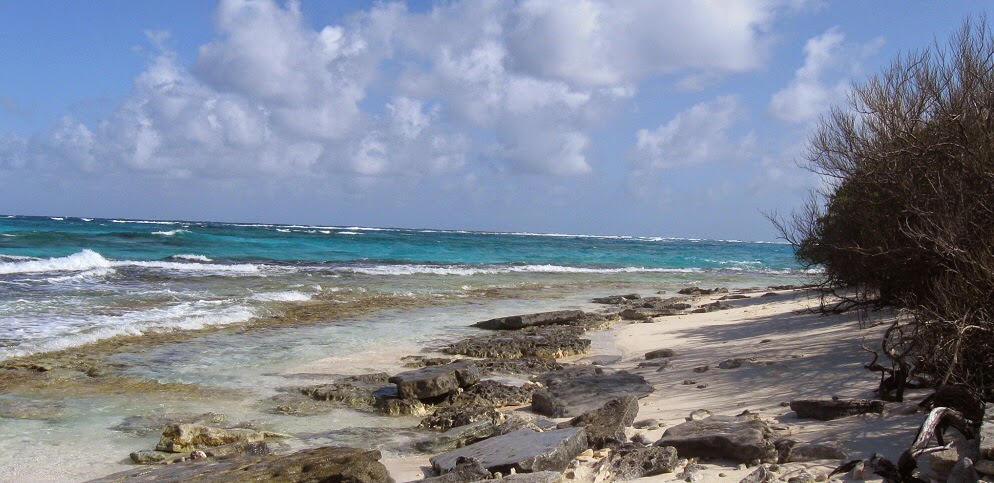
In the Caribbean, most of the population lives on the coast where economic activity and infrastructure is concentrated. The most important industry, the tourism industry, is also on the coast. The sea is an indispensable means of transportation and, according to the Caribbean Tourism Organisation, nearly 24 million cruise ship passengers pass through the Caribbean Sea.
The Caribbean is not, however, making the most of the potential of the sea. First, it is not fully utilising the potential for fishing; and secondly it is not making a vigorous attempt to exploit the possibility of oil and natural gas in the coastal waters.
Just as unfortunate as underutilising the sea is the inadequate provision for protecting the quality of the Caribbean Sea. The value of the Caribbean Sea will not long be attractive if our governments do not immediate intensify their national and regional programmes to protect it. Human and financial resources must be directed to (1) developing a blue economy approach to economic development based on sustainable marine resource management; (2) establishing an integrated approach to ocean governance and regulation; (3) applying marine spatial planning; (4) increasing research and knowledge of the Caribbean Sea; (5) taking measures to ameliorate the impact of climate change and (6) improving institutional and human capacity to act.
If these measures are implemented, the SIDS of the Caribbean will be able to utilise the large potential of the vast area of the sea which fall within their EEZs. The benefits are more productivity from existing activities such as fishing and tourism, realising the potential for underwater resources which might include oil and natural gas, and developing entirely new industries, for example, various forms of aquaculture and blue biotechnology. More
 ©
© IPCC’s Fifth Assessment Report on Climate Change. What does it mean for the Caribbean?IPCC’s Fifth Assessment Report on Climate Change. What does it mean for the Caribbean?
The Caribbean’s response to Climate Change is grounded in a firm regional commitment, policy and strategy. Our three foundation documents – The Liliendaal Declaration (July 2009), The Regional Framework for Achieving Development Resilient to Climate Change (July 2009) and its Implementation Plan (March 2012) – are the basis for climate action in the region.
The Fifth Assessment Report (AR5) of the United Nations Intergovernmental Panel on Climate Change (IPCC) underscores the importance, scientific rigour and utility of these landmark documents. The IPCC’s latest assessment confirms the Caribbean Community’s longstanding call to limit global temperature rise to 1.5 degrees celsius as outlined in the Liliendaal Declaration. At the Nations Nation Framework Convention on Climate Change (UNFCCC) Conference of the Parties (COP) Meeting in 2009, which took place in Copenhagen, Denmark, the Caribbean Community indicated to the world community that a global temperature rise above 1.50C would seriously affect the survival of the community.
In 2010 at the UNFCCC COP Meeting in Cancun, governments agreed that emissions ought to be kept at a level that would ensure global temperature increases would be limited to below 20C. At that time, the Alliance of Small Island States (AOSIS), which includes the Caribbean, re-iterated that any rise in temperature above 1.50C would seriously affect their survival and compromise their development agenda. The United Nations Human Development Report (2008) and the State of the World Report (2009) of The Worldwatch Institute supports this position and have identified 20C as the threshold above which irreversible and dangerous Climate Change will become unavoidable.
Accordingly, the Caribbean welcomes the IPCC’s Fifth Assessment Report prepared by over 2000 eminent scientists. It verifies observations in the Caribbean that temperatures are rising, extreme weather events are occurring more frequently, sea levels are rising, and there are more incidences of coral bleaching. These climatic changes will further exacerbate the limited availability of fresh water, agricultural productivity, result in more erosion and inundation, and increase the migration of fish from the Caribbean to cooler waters and more hospitable habitats. The cumulative effect is reduced food security, malnutrition, and productivity, thus increasing the challenges to achieving poverty reduction and socio-economic development.
The report notes that greenhouse gases emissions, the cause of Climate Change, continues to rise at an ever increasing rate. Unless this trend is arrested and rectified by 2050, global temperatures could rise by at least 4°C by 2100. This would be catastrophic for the Caribbean. However, the report is not all gloom and doom. More than half of the new energy plants for electricity are from renewable resources, a trend that must accelerate substantially if the goal of limiting global warming to below 2°C by 2100 is to remain feasible.
The IPCC AR5 Report should therefore serve as a further wake up call to our region that we cannot continue on a business as usual trajectory. It is an imperative that Climate Change be integrated in every aspect of the region’s development agenda, as well as its short, medium and long-term planning. The region must also continue to aggressively engage its partners at the bilateral and multilateral levels to reduce their emissions. The best form of adaptation is reduction in emissions level.

Dr Kenrick Leslie
The IPCC will adopt the Synthesis Report of the AR5 in Copenhagen, Denmark in late October 2014. Caribbean negotiators are already preparing to ensure that the most important information from the report are captured in the Synthesis Report.
See the highlights of the Caribbean Launch of the UN IPCC AR5 Report in this video:
Learn more about the implications of the IPCC AR5 Report via http://www.caribbeanclimate.bz and @CaribbeanClimate.
* Dr Kenrick Leslie is the Executive Director of the Caribbean Community Climate Change Centre, the regional focal point for Climate Change.
 Democracy & Good Governance