Solar power could be world’s top electricity source by 2050

Solar energy could be the top source of electricity by 2050, aided by plummeting costs of the equipment to generate it, a report from the International Energy Agency (IEA), the West’s energy watchdog, said on Monday.

IEA Reports said solar photovoltaic (PV) systems could generate up to 16% of the world’s electricity by 2050, while solar thermal electricity (STE) – from “concentrating” solar power plants – could provide a further 11%.

“The rapid cost decrease of photovoltaic modules and systems in the last few years has opened new perspectives for using solar energy as a major source of electricity in the coming years and decades,” said IEA Executive Director Maria van der Hoeven.

Solar photovoltaic (PV) panels constitute the fastest-growing renewable energy technology in the world since 2000, although solar is still less than 1% of energy capacity worldwide.

The IEA said PV expansion would be led by China, followed by the United States, while STE could also grow in the United States along with Africa, India and the Middle East. More


WHAT’S POSSIBLE: The U.N. Climate Summit Film

WHAT'S POSSIBLE: The U.N. Climate Summit Film

Published on Sep 23, 2014 • Presented to world leaders at the United Nations Climate Summit in New York, this short inspirational film shows that climate change is solvable. We have the technology to harness nature sustainably for a clean, prosperous energy future, but only if we act now. Narrated by Morgan Freeman, it calls on the people of the world to insist leaders get on the path of a livable climate and future for humankind.

Learn more about climate change and take action at takepart.com/climate.

WHAT'S POSSIBLE was created by director Louie Schwartzberg, writer Scott Z. Burns, Moving Art Studio, and Lyn

Davis Lear and the Lear Family Foundation.

SEQUEL ALERT! Sign up at MovingArt.com to be the first to hear about the launch of the sequel to WHAT'S

POSSIBLE: movingart.com/un/

Directed by Louie Schwartzberg

Written by Scott Z. Burns

Produced by Lyn Davis Lear

Narrated by Morgan Freeman

Music by Hans Zimmer


Israel’s very own history of eugenics

This hour-long documentary, the Ringworm Children, raises so many disturbing questions about Israel and its relationship with the US that one hardly knows where to begin.

In the 1950s, waves of new immigrants swept into Israel. To the dismay of the country’s Ashkenazi leaders (those originating from Europe and the US), the great majority were from Arab countries. Levi Eshkol, a later prime minister, expressed a common sentiment when he called them “human rubbish”. Israel, deprived of “good-quality” Jews, was being forced to bring to its shores Arab Jews, seen as just as primitive and dirty as the Palestinians whom Israel had recently succeeded in ethnically cleansing.

Into this deeply racist atmosphere stepped Dr Chaim Sheba, a eugenicist, who believed that the Arabs Jews were bringing along with them diseases that threatened the Ashkenazi Jews. His obsession was ringworm, an innocuous childhood disease that affects the scalp. He went to the US, collected old military X-ray equipment and zapped tens of thousands of these children’s heads with potentially lethal doses of radiation. The survivors tell of their horrifying experiences during and after the treatment, and of the brothers and sisters they lost at a young age.

But this isn’t just a history lesson exploring an unusual aspect of Israel’s racist underpinnings. The documentary exposes a massive cover-up by the state: many of the children’s medical files – long thought to have been lost – were actually held by one of the doctors involved. Even after this disclosure, the state has continued to refuse the victims access to the files, despite the fact that such access may be vital in helping them receive the correct life-saving treatment, as well as proper compensation.

The final shocking twist is the discovery that all these experiments cost the equivalent of hundreds of millions of dollars in today’s terms – in fact, more than Israel’s entire annual budget at the time. How could Israel have afforded it?

The documentary suggests persuasively that the US, with its own long fascination with eugenics, most likely sub-contracted these experiments to Israel as a way to bypass the increasing domestic legal impediments it faced. The US presumably footed the huge bill.

There are a couple of troubling omissions in the documentary itself. The first is that Dr Sheba did not carry out these experiments on Arab Jews only. He also exposed many Palestinian children in Israel to the same huge doses, for the same racist reasons.

The other is that Dr Sheba is still venerated to this day in Israel and has one of the country’s most famous hospitals, the Chaim Sheba Medical Center, named after him. As the documentary makes clear, there was plenty of evidence by the 1950s of the extremely dangerous effects of radiation on humans. What Dr Sheba did was a form of genocide. That he is still honoured in Israel is, to my mind, no different from Germany naming a hospital in Berlin the Josef Mengele Medical Center.

But keeping Dr Sheba’s reputation unblemished is, I suspect, important to those who wish to prevent other, even more unseemly skeletons being unearthed over this affair.

(UPDATE BELOW)

The documentary, from 2003, is in five 10-min parts: More

UPDATE:

I often talk about “hasbara” (what Israelis translate as “explanation” but really means “propaganda”) but rarely have I found an example of it quite as blatant as the entry on the Ringworm Affair on Wikipedia. By the look of it, this entry has been written by an Israeli government hasbara team. One can almost hear the indignation in the text dismissing the documentary’s claims. But interestingly there is no attempt to refute the two accusations at the heart of the film: that the medical files are still being withheld from the victims, and that the sum needed for the experiments was astronomical and way beyond Israel’s means. So who paid for them and why?


Raise the Roof for Marda Farm Teaching Center

Salam (Peace) from Palestine!

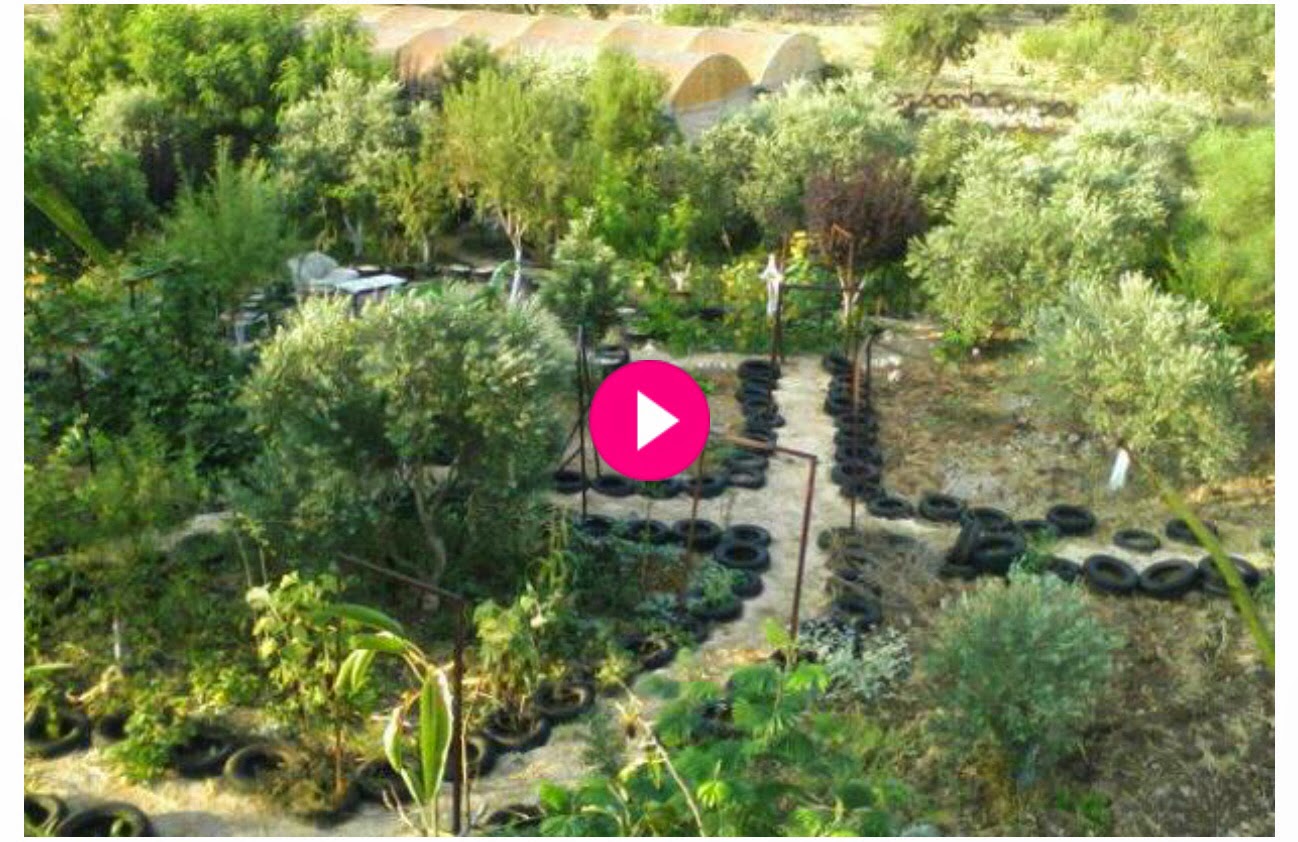
The Marda Permaculture Farm is a working farm and demonstration site for permaculture principles, techniques and strategies in Palestine. Based in the picturesque ancient village of Marda, the project promotes food sovereignty, health, self-reliance and empowerment. This is accomplished through modeling water harvesting, recycling, energy conservation and home-scale garden production with readily available and locally-appropriate materials.

Farm Founder and Director Murad AlKhufash has long dreamed of a Teaching Building using natural materials and techniques such as earth bag construction, cobb, adobe, and local building technologies. The building, which would maximize space at two stories would provide a much needed office, indoor space for workshops, and lodging for interns and volunteers.

We are ready to begin this process, with your help! $4000 will support Murad in launching the project by working with students at nearby Birzeit University to complete renderings for the building, begin the permitting process, and initiate a Natural Building Workshop April 2015 to jumpstart the project!

This Teaching Building will integrate passive and active solar power, rainwater catchment and graywater recycling, thus enabling the farm to go “off grid” and so reduce dependence on Israeli-controlled and high cost energy and water supplies.

Over the past eight years the farm has become a destination for international visitors as well local farmers and backyard gardeners. The farm has thrived despite continual challenges posed by the occupation ranging from destructive hogs unleashed by settlers that destroyed crops and fences, high costs of materials, food, and water.

Murad and his neighbors have endured ongoing curfews, harassment by the Israeli military, difficulty leaving and returning. Thanks to Murad's dedication and strong partners the Farm has survived, on a shoestring.

We are grateful for you contribution and our farm has bounties to offer to send a warm thank you for believing in our cause. Olive oil, organic soap and honey from Palestine as well as fantastic donations from our international allies Starhawk, Albert Bates, and Brad Lancaster are our small thank you for your generous support, with an open invitation to visit us in the Marda Permaculture Farm and Palestine anytime.

Please specify “Marda Teaching Building ” in comments sections when submitting the donation.

Please share widely with friends and colleagues who are passionate about the environment, farming, sustainable agriculture and Palestine. Just spreading the word about the work we do will be very much appreciated.

Our next Permaculture Design Course with instructors Klaudia Van Gool and Leslie Buerk will take place from March 25 to April 10, 2015. April Natural Building Course to be announced soon!

Please consider joining us!

Shukran (Thank you) from the Marda Permaculture Team! Click Here for the IndeGoGo Site


On Low-Carbon Economies

RMI and Carbon War Room are working together to help Caribbean islands transition to lowcarbon, clean-energy economies

Former Costa Rican president and Carbon War Room head José María Figueres on islands, carbon, and global energy use

In 1994 at age 39, José María Figueres was elected president of Costa Rica, becoming the youngest president of a Central American country during modern times. A graduate of the United States Military Academy at West Point and Harvard University’s John F. Kennedy School of Government, his administration focused on sustainable development. Since then, he has served as the chair of a United Nations taskforce, CEO of the World Economic Forum and then Concordia 21, and most recently president of Sir Richard Branson’s nonprofit Carbon War Room. Fresh off travel through parts of Asia with RMI chief scientist Amory Lovins, we asked Figueres about the importance of working with islands, creating low-carbon economies, and how to accelerate transforming global energy use.

José María Figueres

Rocky Mountain Institute: Like RMI CEO Jules Kortenhorst, your background spans business and government. Looking at today’s energy and climate challenges, why are market-based solutions — even if bolstered by supportive governmental policies — so important for driving change?

José María Figueres: About 40 percent of global carbon emissions can be profitably avoided today within existing international agreements and national regulations by applying already-proven technologies. RMI and CWR are leaders in helping businesses realize this terrific market opportunity. As we get more capital to flow into financing the transition toward clean energy and lower carbon emissions, we can provide profitable example for others to follow and broaden understanding about these issues at the same time.

RMI: Looking at RMI and Carbon War Room’s collaborative work together in the Caribbean, including the Creating Climate Wealth summit earlier this year, why is focusing on islands so important, given their small contribution to climate change yet great vulnerability in the face of it?

JMF: Working with islands to shift their energy base from fossil fuels to renewables is important for at least three reasons. First, it helps improve the quality of life for island residents, who are burdened with some of the highest electricity prices in the world. Second, such a transition creates jobs, investment possibilities, and entrepreneurial opportunities that render these islands — normally dependent on tourism for the overwhelming bulk of their economies — more competitive. And third, our work with islands can yield shining examples of a successful transition to lower-carbon, clean-energy economies using existing technologies. This will hopefully inspire others to follow in their footsteps, and not only on literal islands. After all, islands need not be surrounded by water. They can be an off-grid mine, a rural community, an isolated military installation, and much more.

RMI: Costa Rica, already known as an ecotourism hot spot and global leader in environmental stewardship, has set a goal to become carbon neutral by 2021. Your energy mix is already almost entirely renewable (mostly hydro plus some geothermal and wind), with an impressively small amount of fossil fuels. As the country embraces diversification with other renewables, such as solar in the Guanacaste region, what lessons can the rest of the world learn from your successes and challenges?

JMF: The first lesson is that renewables are profitable. Powered by renewables Costa Rica has successfully diversified its economy, with a very pronounced and competitive export-oriented bias. Secondly, we are living proof it can be done even among developing nations with scarcer economic resources than the developed world. Thirdly, our experience shows that systemic thinking in addressing these challenges is much better than a “silo” focus.

RMI: What do you see as the most significant barriers that stand in the way of transforming global energy use? With renewables making an increasingly compelling economic case — garnering billions of dollars of global investment, while their costs keep declining, making that investment go further — how can we accelerate their adoption and topple incumbent fossil fuels?

JMF: There is nothing harder than changing cultural attitudes. Most of the world grew up on fossil fuels without thinking of their unintended consequences: increasing carbon emissions driving climate change. Now we must change our habits and practices, and do so within a ten- to fifteen-year window to avoid temperature changes from escalating beyond two degrees Celsius. This requires broadening our understanding with respect to the business opportunities it entails, strong leadership to change present business models, and public-private partnerships to make progress in the short time we have to act.

RMI: With China and the U.S. dominating global oil imports, fossil fuel consumption (especially coal), and carbon emissions, how do smaller countries such as Costa Rica and the Caribbean’s island-nations perceive their place in that landscape?

JMF: Smaller nations face both a great challenge and a great opportunity. The challenge — and it’s not an easy one to come to terms with — is that even if we do everything we can in the smaller nations and reduce our carbon footprint to zero, the world still needs China, the U.S., Brazil, India, and other large players to do more and move faster. The opportunity, though, is for smaller nations to set an example in the transition to low-carbon economies, which hopefully inspires others to follow. Then, the issue becomes one of scaling solutions, rather than proving them in the first place. Smaller nations can become early-adopters proving the case that paves the way for other major world energy powers to follow.

Follow José María on Twitter.

This article is from the Summer 2014 issue of Rocky Mountain Institute’s Solution Journal. To read more from back issues of Solutions Journal, please visit the RMI website.


Who Will Feed China

Twenty years ago, Lester Brown published an article in World Watch magazine entitled “Who Will Feed China?” A year later, he followed with a book of the same name.

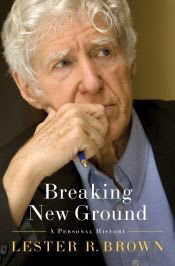
The article and book generated an enormous outcry from China and dozens of conferences, seminars, and studies, as he writes in his autobiography, Breaking New Ground.

“In 1994 I wrote an article for the September/October issue of World Watch magazine entitled “Who Will Feed China?” The late August press conference releasing it generated only moderate coverage. But when the article was reprinted that weekend on the front of the Washington Post’s Outlook section with the title “How China Could Starve the World,” it unleashed a political firestorm in Beijing. …

The World Watch article attracted more attention than anything I have ever written. In addition to appearing in our magazine’s five language editions—English, Japanese, Chinese (Taiwan), German, and Italian—it also appeared in abridged form in many of the world’s leading newspapers, including the Washington Post, Los Angeles Times, and the International Herald Tribune. It was syndicated internationally by both the Los Angeles Times and The New York Times. Among the other major news organizations covering the analysis were the Associated Press and The Wall Street Journal, including the Asian edition. …

One of the most interesting responses was in Washington, DC, where the National Intelligence Council, the umbrella over all the U.S. intelligence agencies, analyzed the effect of China’s growing demand for grain on world agriculture and any security threats that it might pose. A panel of prominent researchers, led by Michael McElroy, then head of the Department of Earth and Planetary Sciences at Harvard, produced a first-rate study of several hundred pages. …

Meanwhile, within China, every few weeks another study was released attempting to demonstrate why my analysis was wrong. These critiques came from such disparate sources as a scientist from the Chinese Academy of Sciences, an official from the Ministry of Agriculture, and an independent academic scholar. Not long after, an enterprising Chinese publisher took a copy of the original World Watch magazine article and a collection of the critiques of it and published them in a book entitled The Great Debate Between Lester Brown and China. …

Over time, China’s leaders came to both appreciate and acknowledge how Who Will Feed China? had helped change their thinking. A late 1998 issue of Feedstuffs, a weekly agribusiness newspaper, quotes Lu Mai, an agricultural economist and senior fellow at a government think tank in Beijing, as saying, “Brown seems to have been accorded guru status in high places. ‘He’s like the monk from outside who knows how to read the Bible.’” …

Lester proved prescient in his analysis. China is a leading importer of grain and it imports a staggering 60 percent of all soybeans entering world trade—and it looks like it will continue. The problem is not so much population growth, but China’s rising affluence, which is allowing its population to move up the food chain, consuming more grain-intensive livestock, poultry, and farmed fish.

Janet Larsen, EPI’s director of research, wrote last year on the Chinese purchase of Smithfield, the world’s leading pork producer. She has also written on how China’s meat consumption has grown to double that of the United States where meat consumption is falling.

Essentially, twenty years later, we are still wondering who will feed China?

Lester has written a number of articles over the last dozen years about China, which are available on Earth Policy Institute’s website. Below are some highlights. More