Caribbean Energy Summit 2015: US Announce Investments in Energy Security for Caribbean Countries During First-Ever DC Summit

The Obama administration recently hosted the first Caribbean Energy Security Summit to support the region's improved governance, access to finance and increased donor coordination for the energy sector.

Vice President Joe Biden has led the issue of Caribbean energy security and said the Obama administration considers the topic as a primary issue.

“This is extremely important to us. It's overwhelmingly in the interest of the United States of America that we get it right, and that this relationship changes for the better across the board,” Biden said.

Biden added that the low oil prices have given little breathing room for governments, but there are alternatives. He mentioned renewable energy as an affordable source in addition to developing wind and solar energy.

“Meanwhile, we're in the midst of a seismic shift in the global economy: the ascendancy of the Americas as the epicenter of energy production in the world,” Biden said. “We have more oil and gas rigs running in the United States, than all the rest of the world combined. Mexico, Canada and the United States is the new epicenter of energy — not the Arabian Peninsula. It is the new epicenter of energy in the 21st century.”

The vice president called for an integrated North America to promote energy security since the U.S. wants Caribbean countries to “succeed as prosperous, secure, energy-independent neighbors — not a world apart, but an integral part of the hemisphere, where every nation is middle class, democratic and secure.”

Biden further stressed the purpose of the summit is not to “put up another solar panel or sign another gas contract” but to help countries establish protocol to attract private-sector investment. The vice president, however, acknowledged that countries have to confront corruption by having clear and transparent rules.

The U.S. created the Overseas Private Investment Corporation (OPIC), which will focus on developing energy projects for the Caribbean. Biden announced $90 million from the OPIC will be funded to Jamaica for wind projects.

The Caribbean Energy Security Summit is a “key component” to Biden's Caribbean Energy Security Initiative, which he announced in June 2014.

A joint statement on Monday had participating countries and regional and international organization agreeing for the Caribbean to make “necessary and specific reforms” that include efforts for sustainable and clean energy technologies. The participants also stated their commitment to exchange data and energy information.

The Jan. 26 summit from Washington, D.C. included governments from Antigua and Barbuda, Aruba, Bahamas, Barbados, Belize, Canada, Colombia, Curacao, Dominica, Dominican Republic, France, Germany, Grenada, Guyana, Haiti, Jamaica, Mexico, New Zealand, Spain, St. Kitts and Nevis, St. Lucia, St. Vincent and the Grenadines, Suriname, Trinidad and Tobago and the United Kingdom. The Caribbean Community (CARICOM) Secretariat, Caribbean Development Bank, European Union, Inter-American Development Bank Group, International Renewable Energy Agency, Organization of American States and the World Bank Group also participated. More


UNEP Manual Provides Guidance on Valuing SIDS’ Ecosystem Services

26 January 2015: The UN Environment Programme (UNEP) launched a manual on calculating the value of ecosystems in small island developing States (SIDS), with the aim of supporting a transition to a green economy. The manual underscores the importance of accounting for the contribution of ecosystem services to human well-being in order to quantify and value these benefits.

The ‘Guidance Manual on Valuation and Accounting of Ecosystem Services for SIDS' highlights the interdependence between SIDS' economies and the natural environment. In Antigua and Barbuda, Anguilla, Seychelles and Vanuatu, 50% of gross domestic product (GDP) comes from the tourism industry, according to the manual. In the Federated States of Micronesia (FSM), fisheries contribute 10% of GDP while 52% of Grenada's exports come from tuna, albacore, cocoa beans and nutmeg.

The manual provides a step-by-step methodological approach to select, design and implement island ecosystem services valuation and accounting exercises, and shares case study examples of accounting and valuation techniques. For instance, a 1% increase in the number of coastal protected areas is associated with a 2.9% increase in international coastal tourism arrivals. The manual also provides guidance on designing a payments for ecosystem services (PES) scheme in SIDS, using the example of Palau's Green Fee.

The manual aims to support policymakers in achieving sustainable development, taking into consideration SIDS' unique environmental, socio-economic and capacity issues. The manual emphasizes that “there is no simple solution” to valuing and accounting for SIDS' ecosystem services, emphasizing that economic valuation and accounting techniques depend on the category of island ecosystem services (cultural, provisioning or regulating) and the island's type of economic policy.

UNEP launched the manual at an event marking the close of the 2014 International Year of SIDS. [Publication: Guidance Manual on Valuation and Accounting of Ecosystem Services in Small Island Developing States] [UNEP Press Release] [UNEP Publications Website]


GRID-Arendal Highlights Blue Forests Project Launch

December 2014: GRID-Arendal's interim marine newsletter highlights the launch of the Global Environment Facility's (GEF) Blue Forests Project, which will explore how to harness the value of carbon and other coastal ecosystem services to improve ecosystem management.

The Blue Forests Project aims to increase recognition of the role of mangroves, seagrasses and saltmarshes in climate change mitigation and adaptation. It will also address knowledge gaps on the role of blue forests in storing and sequestering carbon and sheltering towns from storms. The project will be implemented in Ecuador, Indonesia, Kenya, Madagascar, Mozambique and the United Arab Emirates (UAE) as well as in a to-be-determined location in Central America.

The newsletter also highlights: the Norwegian Blue Forests Network, an initiative that focuses on harnessing the potential of blue forests to capture and store atmospheric carbon as well as other ecosystem services; and a GRID-Arendal and Blue Climate Solutions report, ‘Fish Carbon: Exploring Marine Vertebrate Carbon Services.' The report highlights the potential of marine vertebrates to address climate change and prevent global biodiversity loss and presents eight “fish carbon” mechanisms.

GRID-Arendal also announced that it will begin producing a common newsletter for all its programmes beginning in January 2015, making this newsletter the last one focused solely on marine issues. More

[GRID-Arendal Newsletter] [GRID-Arendal News on Blue Forests Project] [Blue Forests Project Website] [GRID-Arendal News on Norwegian Blue Forests Network] [Publication: Fish Carbon: Exploring Marine Vertebrate Carbon Services]


Typhoon Hagupit Hits Philippines: Climate Catastrophe Is Here Now! by Kumi Naidoo

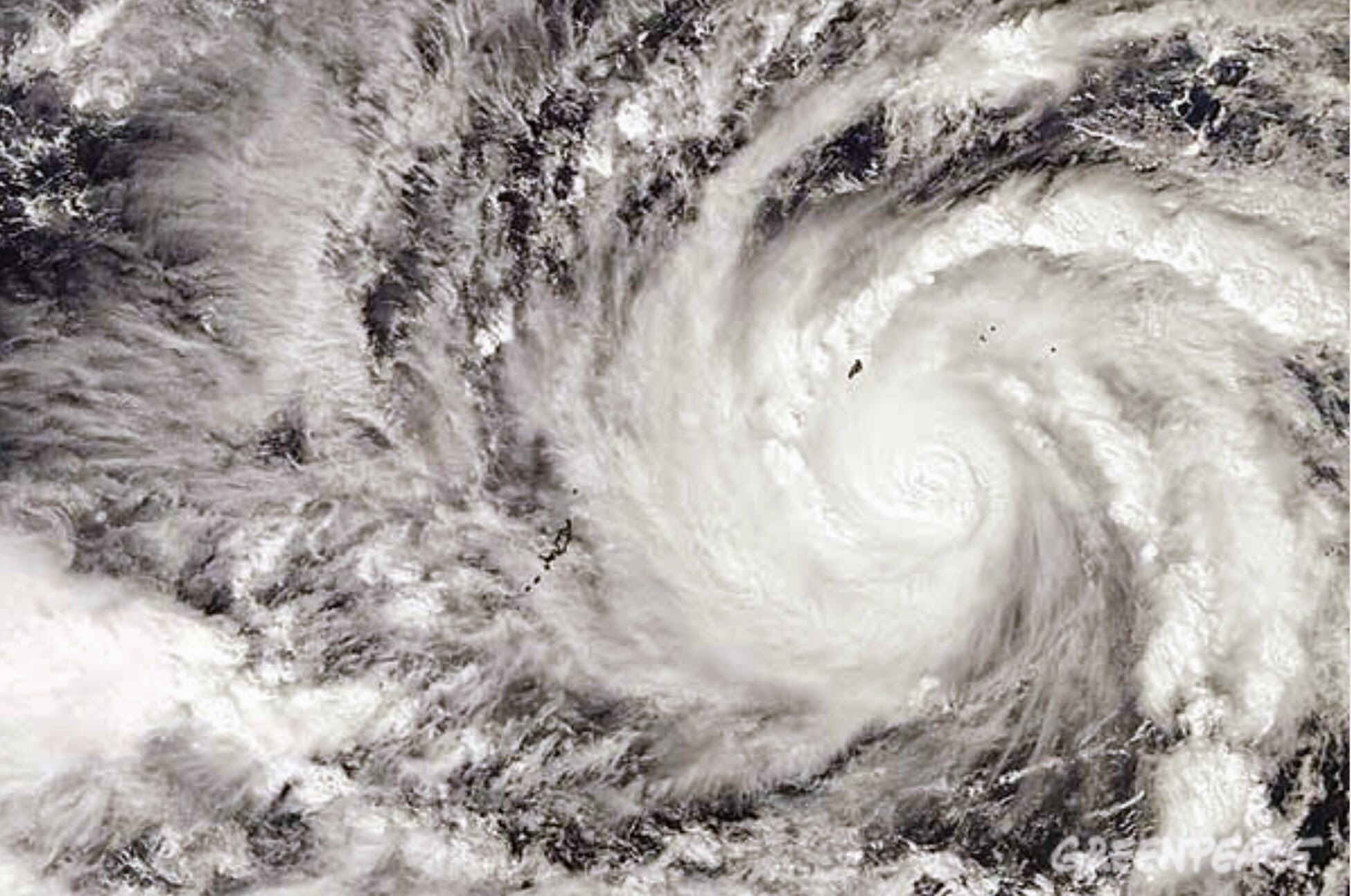
As Typhoon Hagupit hits the Philippines, one of the biggest peacetime evacuations in history has been launched to prevent a repeat of the massive loss of life which devastated communities when Super Typhoon Haiyan hit the same area just over a year ago.

Typhoon Hagupit

“One of the biggest evacuations in peacetime” strikes a sickening chord. Is this peacetime or are we at war with nature?

I was about to head to Lima, when I got a call to come to the Philippines to support our office and its work around Typhoon Hagupit (which means lash). In Lima another round of the UN climate talks are underway to negotiate a global treaty to prevent catastrophic climate change. A truce of sorts with nature.

But these negotiations have been going on far too long, with insufficient urgency and too much behind the scenes, and not so much behind the scenes, interference from the fossil fuel lobby.

This year, like last year and the year before these negotiations take place against a devastating backdrop of a so-called ‘extreme weather event’, something that climate scientists have been warning us about if we don’t take urgent action.

Tragically, we are not taking urgent action. Nature does not negotiate, it responds to our intransigence. For the people of the Philippines, and in many other parts of the world, climate change is already a catastrophe.

Only one year ago, Super Typhoon Haiyan killed thousands, destroyed communities and caused billions of dollars in damage. Many survivors who are still displaced have this week had to evacuate the tents they have been living in as Typhoon Hagupit carves a path across the country as I write.

It’s too early to assess the impact so far—we are all hoping early indications will spare the Philippines of the same pain that was experienced after Haiyan.

Here in Manila, we prepare to travel to the impacted areas in the wake of Typhoon Hagupit, or Ruby, as it has been named. We will offer what minor assistance we can.

We will stand in solidarity with the Filipino people and we will call out those who are responsible for climate change, those who are responsible for the devastation and who should be helping pay for the clean up and for adaptation to a world in which our weather is an increasing source of mass destruction.

With heavy hearts we prepare to bear witness. We challenge those in Lima to turn their attention from the lethargy and process of the negotiations and pay attention to what is happening in the real world.

We call on them to understand that climate change is not a future threat to be negotiated but a clear and present danger that requires urgent action now!

Each year, the people of the Philippines learn the hard way what inaction on emissions mean. They might be slightly better prepared and more resilient, but they are also rightly more aghast that each year—at the same time—the climate meetings seem to continue in a vacuum, not prepared to take meaningful action, not able to respond to the urgency of our time and not holding accountable the Big Polluters that are causing the climate to change with ferocious pace.

Before leaving for Manila I also received a message from Yeb Saño, climate commissioner for the Philippines: “I hope you can join us as we bear witness to the impact of this new super typhoon. Your help would be very valuable in delivering a message to Lima loud and clear.”

Yeb was the Filipino chief negotiator for three years at the UN climate talks and recently visited the Arctic on a Greenpeace ship to witness the Arctic sea ice minimum. Two years ago in Doha, as Typhoon Pablo took the lives of many he broke through the normally reserved language of dispassionate diplomacy that dominates UN climate treaty talks:

“Please … let 2012 be remembered as the year the world found the courage to … take responsibility for the future we want. I ask of all of us here, if not us, then who? If not now, then when? If not here, then where?”

I am joining Greenpeace Philippines and Yeb to visit the worst hit areas, document the devastation and send a clear message from climate change ground zero to Lima and the rest of the world that the ones that are responsible for the majority of emissions will be held accountable by the communities that are suffering the impacts of extreme weather events linked to climate change.

We will call on the heads of the fossil fuel companies who are culpable for the unfolding tragedy to examine their consciences and accept their historic responsibility. They say the truth is the first casualty of war, in this war against nature, the truth of climate science is unquestionable.

Please join us. Please add your voice by signing our petition calling on Big Polluters to be held legally and morally accountable for climate damages. After signing the petition you will be redirected to a site where you can make a donation to the relief efforts of partner organizations. More


Announcing “Disastersand Ecosystems: Resilience in a Changing Climate”

Announcing “Disastersand Ecosystems: Resilience in a Changing Climate”, a new Massive Open OnlineCourse (MOOC) to be launched on 12 January, 2015

What we all know is that disasters are increasing worldwide. Population growth,environmental degradation and climate change will likely exacerbate disasterimpacts in many regions of the world. What role do ecosystems play in reducingdisaster risks and adapting to climate change? This is the topic of an exciting new Massive Open Online Course thatwill go live in January 2015. It was developedjointly by the United Nations Environment Programme (UNEP), the Center for NaturalResources and Development (CNRD) and the Cologne University of Applied Sciences(CUAS), Germany. This is UNEP’s first MOOC, developed through its engagement with universities worldwide including the Global Universities Partnership on Environment for Sustainability (GUPES).

The MOOC covers a broad range of topics from disastermanagement, climate change, ecosystem management and community resilience. Howthese issues are linked and how well-managed ecosystems enhance resilience to naturaldisasters and climate change impacts are the core theme of the course.
The MOOC is designed at two levels: the leadership track, with the first 6 units providing generalintroduction to the fundamental concepts, which is suitable for people from allbackgrounds who wish to have a basic undertaking of the topic. The second level, or expert track comprises 15 units with more in depth learning on thevarious tools of ecosystem-based disaster risk reduction and climate changeadaptation.
The course is delivered by both scientists and practitioners.In addition there are guest lectures from global leaders and experts, such as Achim Steiner, the Executive Director of the United Nations Environment Programme, Julia Marton-Lefèvre, former Director General of the International Union for the Conservationof Nature (IUCN), Rajendra Pachauri of Teri University and Margareta Wahlströmof the UN International Strategy on Disaster Reduction (UNISDR).

Students will have the opportunity to enhance their knowledgethrough quizzes, real life and fictitious problem-solving exercises, additionalreading materials, videos and a discussion forum. An Expert-of-the-Week will be available torespond to questions and interact with students. Students will receive weeklynewsletters with up-to-date news on ecosystem-based disaster risk reduction andadaptation.
The course is invaluable for universities around the world,where faculty members can use it to update their curriculum and use thelectures and teaching materials for blended learning for their own courses. Atthe same time, the MOOC format also allows those currently outside theuniversity system to learn about the new developments in the area of disastersand climate change, without having to enroll in a university or pay for anonline course. Those who successfully complete the course will be provided witha course certificate.

Visit: www.themooc.net<http://www.themooc.net/>, or enroll directly at:
https://iversity.org/en/courses/disasters-and-ecosystems-resilience-in-a-changing-climate


Launch of St Helena’s first national biosecurity policy

St Helena’s announces launch of first national biosecurity policy

St Helena is a UK Overseas Territory in the South Atlantic, currently served by a single ship, 6 days voyage from Cape Town. In 2016 the first airport will open, breaking the island’s isolation and greatly increasing biosecurity risk. The Policy is the result of over a full year’s work, with extensive stakeholder and public consultation. It provides the framework for preventing or mitigating against the increased risk of introduction of new and potentially harmful pests, weeds and diseases to St Helena associated with the air access and a new cargo system.

St Helena’s national vision for biosecurity is: ‘an effective biosecurity system of shared responsibility that protects the sustainable future of our Island, allowing a vibrant economy, safe movement of people and goods, and enhanced livelihoods and health.’

Biosecurity St Helena, as the policy document is known, is guided by seven principles: leadership, communication, shared responsibility, risk and evidence-based decision making, cooperation and equity. An implementation plan is also in place for priority actions to be delivered by responsible agencies.

Deputy Chair for Economic Development, Derek Thomas, said in his speech at the launch event that: “Having a biosecurity policy for the first time gives us a guiding document to help us achieve our vision and our response to our biosecurity challenge. Itrequires the support, participation and compliance of all St Helenians and visitors alike”.

The document and other information on St Helena’s biosecurity system can be found athttp://www.sainthelena.gov.sh/st-helena-biosecurity-service/


The 1.5 degrees global warming call from the Pacific, still possible


Amidst the recent release of scientific reports on climate change, the key message has been for urgent action to limit global warming, before time runs out.

The Intergovernmental Panel on Climate Change released their Synthesis Report on the 5th Assessment Report in October, the World Bank released the “Turn down the heat, confronting the new climate normal” report in November and the United Nations Environment Program released their “Bridging the 2014 Emission Gap Report” also in November.

According to the “Turn down the heat” report and an accompanying press release – climate change impacts such as extreme heat events may now be unavoidable because the Earth’s atmospheric system is locked into warming close to 1.5°C above pre-industrial levels by mid-century, and even very ambitious mitigation action taken today will not change this.

This does not mean, however, that long-term warming of 1.5°C is locked in, or that achievement of the 1.5°C warming limit, as called for by vulnerable countries like Pacific Islands, is no longer possible.

“What we see from the scientific literature is that it’s clear that we can indeed hold warming below 2 degrees in this century probably with the most aggressive mitigation emission reduction options. We can limit peak warming close to 1.5 degrees and slowly reduce that to below 1.5 degrees by 2100,” said Prof. Bill Hare of the Climate Analytics Group, Potsdam Institute.

“This is going to involve fairly major changes in policy settings now but this is what we are negotiating for, to have the emissions go down in the 2020’s and if we can do that fast enough then its technically and economically feasible to bring warming back to 1.5 degrees by the end of the century.”

“Those that are arguing it’s not possible are expressing a political judgment, not a scientific judgment.”

There will be climate change impacts experienced by several regions including the Pacific islands, before warming is reduced as limiting peak warming close to 1.5°C by mid century will still result in significant damage.

At the present levels of warming (about 0.8°C above preindustrial) the impacts of climate change are already being felt in many regions of the world. Continued damage is forecast to the coral reefs in the Pacific and other tropical oceans, there is the huge risk of damage to water supply resources in dry regions and substantial drops in crop yield in regions such as sub Saharan Africa.

“On top of that we’ll also be experiencing quite major increase in extreme heat events even for 1.5 degrees warming so whatever happens we’re going to have to go through some very severe changes,” explains Professor Hare.

Here in Lima, Peru at the 20th Conference of the Parties to the United Nations Framework Convention on Climate Change (UNFCCC COP20), the Pacific islands are calling for a 1.5 degree limit to global warming by 2100. The next two weeks of climate negotiations continue the work being done by the Pacific islands as members of the Alliance of Small Islands States, lobbying for the 1.5 degree limit to global warming to be agreed upon in Paris next year.

The new climate treaty is to be agreed upon by the end of December in 2015 in Paris.

“Strengthening the long-term temperature goal to 1.5 degrees is of critical importance for us. Even at the current temperatures, our small low lying islands are being battered by king tides, salt water intrusion, coastal erosion, coral bleaching, ocean acidification, loss of species and habitats,” said Ms. Ana Tiraa, Head of the Cook Islands delegation at the UNFCCC COP 20.

“These will only be exacerbated at higher temperatures, with due respect to other parties, the Cook Islands calls for ambition levels that are high enough to keep temperature rise below 1.5 degrees. Temperature rises above 1.5 degrees cannot be an option for low lying small islands if we have a hope of surviving.”

According to Prof. Hare, at present there is confidence that with aggressive mitigation action warming can be held to below 2 degrees yet another decade of inaction will most likely lead to warming at 2 degrees or above. The message is clear that the time for action is now.

“It is still feasible to bring global warming to below 1.5 degrees by 2100 but whether or not the world politics and major economies will take enough action in the coming five to 20 years is in question. We are entitled to be skeptical given the inaction that has characterised the last decade as to whether that looks happening but it’s not a scientific judgment or statement, the option is well and truly open to bring warming back to below 1.5 degrees. More


Portraits of Resilience | Christine Germane | TEDxRenfrewCollingwood


Portraits of Resilience | Christine Germane | TEDxRenfrewCollingwood

Published on Nov 26, 201 4 • This talk was given at a local TEDx event, produced independently of the TED Conferences. Listen as photographer and educator Christine Germane tells the stories of Portraits of Resilience, a unique project that illustrates the ethical dimension of the climate change discussion through documenting and sharing the personal stories of indigenous youth. Since 2000, Christine Germane has been collaborating with Indigenous communities as a photographer, educator and curator. The international photojournalism project titled Portraits of Resilience has allowed her to work with indigenous youth to illustrate the personal and ethical effects of climate change on their communities. Since its creation in 2008, the project has occurred in 12 countries and has been exhibited internationally, including the launch at the National Museum of Denmark. With a range of education, awards, and project coordination experience within art and design under her belt, Christine’s exceptional work has provided youth with a medium to share their voice during a crucial period of time.

Twitter ©Germane Photo

Facebook Christine Germane Photography

Email: christinegermano@yahoo.com

Web http://www.christinegermano.com

The end of beaches? Why the world’s shorelines are in serious trouble

We can have our beachfront properties — our Miami high-rises, our Hamptons mansions, our Jersey boardwalks — or we can have our beaches. But as geologist and Duke University emeritus professor Orrin Pilkey has been arguing for decades now, we can’t have both.

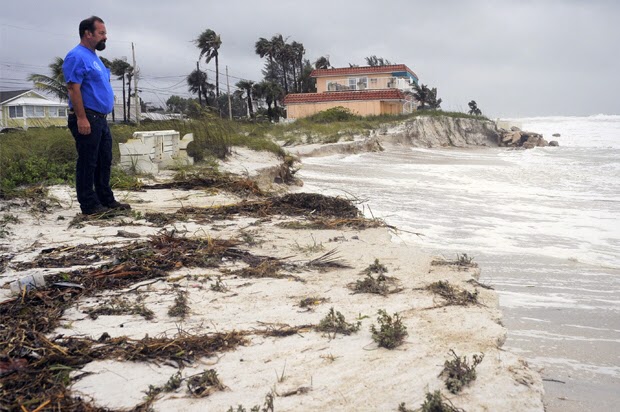
Bradenton Beach, June 2012

As the oceans warm and sea levels rise, coastal living is becoming an increasingly risky proposition. Any climate scientist would tell you not to invest in a beach house, and yet large-scale migration inland is something we’ve yet to see. The beaches themselves can withstand extreme weather, of course. But it’s our attempts to hold them in place, through techno-fixes like seawalls and beach replenishment, that ironically enough will end up destroying them. Sooner or later, Pilkey argues, we’re going to be forced to retreat. The question is whether there’ll be any beach left by then.

The Last Beach,” which Pilkey co-wrote with J. Andrew G. Cooper, a professor of coastal studies at the University of Ulster, is but his latest attempt to drive home just how wrong-headed our push to build on and preserve shorelines is. It’s been an uphill battle; for Pilkey, what counts as progress was that people acknowledged his plea not to rebuild after Superstorm Sandy instead of just attacking him for suggesting it — even if they didn’t really end up following his advice.

Bring pollution, oil spills and the destructive business of sand mining into the picture, and it’s not so extreme, Pilkey told Salon, to imagine a future where beaches as we know them — as places to live and even as places to visit — will no longer exist.

Our conversation, which has been lightly edited for length and clarity, follows.

We don’t typically think of beaches as something that can “go extinct,” but it seems like that’s basically what you’re arguing here.

That’s exactly what we argue: that beaches in developed areas will not be there, that they will be replaced by seawalls large and small. There will be beaches left in remote places and on national seashores and things like that, perhaps — although they’ll be suffering too, because they’ll be eroding and retreating back separately from the developed areas, which will be standing still for a while.

By the time we really begin to see what’s happening, like we are right now in Florida, we’ll be worrying about Manhattan and Queens and Boston and Washington, D.C., Philadelphia, Miami, Charleston, all those cities. We fully expect that the great expense required to hold back the shoreline — which is a losing proposition in any event — will be overwhelming for them.

It seems to us to be pretty obvious — and I think most geologists would agree with this — that in a 50- to 100-year timeframe we’re in trouble. The best example of that, the proof in the pudding, is Florida, where they have hundreds of miles of highrise-lined shoreline. What can they do? You could move the buildings back, but that’s very costly and there’s no place to move them to. So what we see right now, especially with the current governor of Florida, is the building of seawalls right and left. All you have to do is declare an emergency and you can build a seawall.

In the book, you also discuss how beaches have become dangerous places. So would you say there’s also a loss of beaches, not physically, but as we are able to enjoy them?

Yeah, that was the point of that. We, by the way, were really shocked — the one chapter that was really out of our range was pollution, and we were rather shocked at the numbers. We saw repeated statements about how to use a beach, if you’re going to go to a beach what should you do and how should you use it, in the technical literature, but it hasn’t been getting out to the public. Maybe that’s a little bit of irresponsibility on the part of some of the biochemists in not getting that out to the public. On the other hand, I know what would happen. They would get heavily criticized, probably, as being alarmists.

But yes, the fact is that the beaches are getting more and more polluted, and as more and more villages and towns and cities crowd up against the beaches that’s going to continue. Some of the things the literature said seemed rather outrageous to us. One is never to go barefoot on a beach. That’s a tough one. The one thing that everyone agrees is a bad thing to do is to get buried in the sand. And who in this world has not been buried in the sand at some time in their life? If you have a cut or an abrasion of some kind… I’ve always thought that going in the salt water had a healing effect on cuts, but that was really wrong. I’ve told that to a thousand students over the years, and if any of them are reading this I take it all back. It’s very dangerous.

Well, not very dangerous. There’s a very low probability of getting something, but if you do, the probability of getting something serious is high.

And that’s worse than it used to be?

There are no numbers to show it, that we know of, but yes. The pollutants on beaches are higher than they used to be, we think.

I imagine that you must have trouble getting people to take some of the issues you write about seriously. For example, there’s the beach that was stolen in Jamaica — something like that can come off as an offbeat, funny news story instead of a serious environmental crime. Do you come across that sort of response often?

Where we are not taken seriously? Of course, but I’m used to that because I’ve been arguing for years that we need to move houses back and retreat from the shoreline, or let houses fall in, but not leave them in place. My argument in the past in similar situations has been that we have a choice at the shoreline: We can have beaches or we can have buildings, but we can’t have them both. You have to take your choice — and of course, that is met with a lot of derision by beach property owners.

“The Last Beach,” I anticipate, will be met with some derision, because it seems a little extreme. But it’s not extreme at all. Of that I am certain. In my 40 years of working on this I can see the situation deteriorating. We’re going down a bad road, no question about it, and I feel confident about that.

Right after Superstorm Sandy, you wrote an article for the New York Times arguing that we shouldn’t rebuild. What kind of response did that get?

I got some money — somebody wanted to support my next book. Everything that happened to me directly was good, and I think the response was really good, surprisingly good. I heard that the American Shore & Beach Preservation Association (ASBPA) — which is a civilian group beating a hard drum of “there’s no need to retreat” — in their newsletter they made a few nasty comments about me…

A long time ago, when I started saying these things, the response was really negative, like “aw, c’mon, don’t be stupid, nobody’s going to move back.” Now, moving back is not outrageous, and the relationship between seawalls and the loss of beaches is pretty widely known. I think I can say that the response to that editorial was so different than it would have been 30 years ago, 20 years ago. And that’s a good thing.

What about the actual response from people working on recovery from the storm? Did anyone listen? Is the East Coast going to be just as vulnerable the next time a storm comes?

Thirty years ago, the response would have been massive seawalls, there’s no question of that. Hurricane Sandy was the first time I’ve heard serious discussion on the part of the governors of New Jersey and New York about maybe moving back and not rebuilding. As it was, they didn’t do much — they basically rebuilt — but that was music to my ears. I’ve never heard that before. In the past it’s always been “c’mon, we’re Americans, we’re not going to throw up our hands and slink away.”

Almost every house, if there was a house left, had an American flag in front of it. It brought out patriotism, for some reason or another. I guess that’s better than depression, but it’s different. Even though most of these things didn’t bear fruit, we’re getting there. I guess I’m learning that it takes years to get this into the public understanding. I don’t know how many years it’s going to take before we really start moving back, but we’re going to have to, no question about it, or we’ll just give up on the beach. I really believe that we will give up on the beach, for the most part. Beach replenishment, you see, will not be feasible as the sea level rises, because you’re holding the shoreline back in place, where it doesn’t want to be.

The beaches will disappear much faster than they are now. In North Carolina a typical beach lasts about three years. In New Jersey it’s probably about the same, and in Florida, where the wave energy is a little lower, it’s about seven to nine years. In any case, it’s a very costly proposition and it’s definitely going to get more costly.

How far back do people realistically need to move?

It all depends on where you are. If you’re on a barrier island you can move to the back side of the island, but the problem with that is that the back side of the island is lower in elevation. The highest elevation on most barrier islands is at the front of the island, so you’re moving back but on the other hand the chance of being struck directly by waves is increased.

For the most part, if someone is going to go through the cost of moving they ought to get off the island. In Florida, there ain’t no place to get off the island. It’s very, very low and flooding quickly as the sea level rises. We have a photograph in the book of the so-called “Outlaw House” in North Carolina (Outlaw was the family name). It was moved back three or five times, depending on who you believe, and right now it’s very close to the beach once again. That’s a mom-and-pop cottage, and initially it was moved by mules. All the houses near the Outlaw House now are all McMansions. They can be moved, but they’re expensive. The McMansion that was in the movie “Nights in Rodanthe” was just moved down the highway a bit to a safer place — I say safer, but not safe.

In a recent interview, you said you’ve stopped defining yourself as a scientist and have instead become a scientific advocate. When and how did that change come about?

I started out as a deep-sea sedimentologist. I worked on the continental margin of North Carolina and the abyssal plains — I sampled 13 abyssal plains around the world — but I got tired of going to sea. When my parents’ house was damaged in Hurricane Camille, my father and I wrote this little book called “How to Live On an Island,” and it was three eighths of an inch thick and it cost a dollar fifty, and I couldn’t believe the impact it had. People were asking to quote us and so forth, and I realized there was a real vacuum here and I began to move to the beach. I traded a research vessel for a 16-foot skiff, and I’m very happy about that. It’s been very satisfying.

When I first came to Duke it was not possible, before you get tenured, to get involved with controversial things with the general public. One had to wait until one had tenure before one could start pounding on the table about these things, and by the time I got my 16-foot skiff I was already tenured. I had also been a journal editor and a couple other things, and that gave me credibility in the scientific community. Nonetheless, I remember a number of times being criticized by scientists, basically saying “you’re off-base for doing this kind of thing.” I have a 25-book series, “Living with the Shore” for every state, and we have local geologists who were the senior authors of each of these books. I think for probably every book, at least one of the authors would say “I’m not going to lower myself and make science so simple,” or something to that effect, saying that “we can’t expect the public to understand everything we’re doing.”

But I don’t think I hear much of that anymore. I think at least geologists, and probably a lot of others now, are recognizing the value of being able to converse with the public. I know that most universities, Duke included, appreciate work that has an impact on the general public. It’s not like it was when I started at all. We are rewarded for doing such work, although there are local problems in individual states, probably in every state, where public schools still have problems. Here in North Carolina, I know at least two, maybe three geologists who have been asked to turn in their emails, or to furnish all emails that have to do with sea-level rise.

What you’re asking of the public is really difficult: You’re asking them to give up something they love, that they can protect in the short term, in favor of looking at the big picture. It’s something that people come up against with a lot of these environmental and climate problems. Do you have any insights into how to get that message through to people?

The reason you go to beaches is because you went down there with your mother and father during the summer and had the most wonderful time in your whole life, and what could be better than to live there year-round? But here in North Carolina we have some really good newspapers, at least on this issue. I spent a few years back in Woods Hole, Massachusetts, and I found that the people there were far less educated on the problem of beaches and seawalls and retreating shorelines. It was a very marginal thing in Massachusetts, but in North Carolina we have a much longer shoreline and a much higher-energy shoreline. So it’s not a surprise to most people. If they come here from Kansas it might be a surprise, but the locals here are pretty well-educated. Excepting the particular political situation we have right now, which is very pro-development — but that comes and goes — I think in North Carolina we’re better prepared than some other states.

The real resistance to good coastal management with a long-term view is coming not from the people who came down there because their mommy and daddy brought them to the beach. It’s coming from the people who are making money on it. From what I’ve seen here, the high-cost developments are the ones who are trying to change the laws to let them build seawalls. They’re going to protect the houses; they couldn’t give a damn about the general public. Up on South Hampton, New York, rich people are building massive walls. They’re doing things that are illegal in some communities, but when you have billions of dollars you can get an army of lawyers to hold off the community very readily. Wealthy communities are the problem. More


Ocean acidification tops the annual list of important stories ignored by the mainstream media

Our oceans are acidifying — even if the nightly news hasn’t told you yet.

As humanity continues to fill the atmosphere with harmful gases, the planet is becoming less hospitable to life as we know it. The vast oceans absorb much of the carbon dioxide we have produced, from the industrial revolution through the rise of global capitalism. Earth’s self-sacrifice spared the atmosphere nearly 25 percent of humanity’s CO2 emissions, slowing the onslaught of many severe weather consequences.

Although the news media have increasingly covered the climate weirding of global warming — hurricane superstorms, fierce tornado clusters, overwhelming snowstorms, and record-setting global high temperatures — our ocean’s peril has largely stayed submerged below the biggest news stories.

The rising carbon dioxide in our oceans burns up and deforms the smallest, most abundant food at the bottom of the deep blue food chain. One vulnerable population is the tiny shelled swimmers known as the sea butterfly. In only a few short decades, the death and deformation of this fragile and translucent species could endanger predators all along the oceanic food web, scientists warn.

This “butterfly effect,” once unleashed, potentially threatens fisheries that feed over 1 billion people worldwide.

Since ancient times, humans fished the oceans for food. Now, we’re frying ocean life before we even catch it, starving future generations in the process. Largely left out of national news coverage, this dire report was brought to light by a handful of independent-minded journalists: Craig Welch from the Seattle Times, Julia Whitty of Mother Jones, and Eli Kintisch of ScienceNOW.

It is also the top story of Project Censored, an annual book and reporting project that features the year’s most underreported news stories, striving to unmask censorship, self-censorship, and propaganda in corporate-controlled media outlets. The book is set for release in late October.

“Information is the currency of democracy,” Ralph Nader, the prominent consumer advocate and many-time presidential candidate, wrote in his foreword to this year’s Project Censored 2015. But with most mass media owned by narrow corporate interests, “the general public remains uninformed.”

Whereas the mainstream media poke and peck at noteworthy events at single points in time, often devoid of historical context or analysis, Project Censored seeks to clarify understanding of real world issues and focus on what’s important. Context is key, and many of its “top censored” stories highlight deeply entrenched policy issues that require more explanation than a simple sound bite can provide.

Campus and faculty from over two dozen colleges and universities join in this ongoing effort, headquartered at Sonoma State University. Some 260 students and 49 faculty vet thousands of news stories on select criteria: importance, timeliness, quality of sources, and the level of corporate news coverage.

The top 25 finalists are sent to Project Censored’s panel of judges, who then rank the entries, with ocean acidification topping this year’s list.

“There are outlets, regular daily papers, who are independent and they’re out there,” Andy Lee Roth, associate director of Project Censored, told us. Too many news outlets are beholden to corporate interests, but Welch of the Seattle Times bucked the trend, Roth said, by writing some of the deepest coverage yet on ocean acidification.

“There are reporters doing the highest quality of work, as evidenced by being included in our list,” Roth said. “But the challenge is reaching as big an audience as [the story] should.”

Indeed, though Welch’s story was reported in the Seattle Times, a mid-sized daily newspaper, this warning is relevant to the entire world. To understand the impact of ocean acidification, Welch asks readers to “imagine every person on earth tossing a hunk of CO2 as heavy as a bowling ball into the sea. That’s what we do to the oceans every day.”

Computer modeler Isaac Kaplan, at the National Oceanic and Atmospheric Administration office in Seattle, told Welch that his early work predicts significant declines in sharks, skates and rays, some types of flounder and sole, and Pacific whiting, the most frequently caught commercial fish off the coast of Washington, Oregon, and California.

Acidification may also harm fisheries in the farthest corners of the earth: A study by the Arctic Monitoring and Assessment Programme outlines acidification’s threat to the arctic food chain.

“Decreases in seawater pH of about 0.02 per decade have been observed since the late 1960s in the Iceland and Barents Seas,” the study’s authors wrote in the executive summary. And destroying fisheries means wiping out the livelihoods of the native peoples of the Antarctic.

Acidification can even rewire the brains of fish, Welch’s story demonstrated. Studies found rising CO2 levels cause clown fish to gain athleticism, but have their sense of smell redirected. This transforms them into “dumb jocks,” scientists said, swimming faster and more vigorously straight into the mouths of their predators.

These Frankenstein fish were found to be five times more likely to die in the natural world. What a fitting metaphor for humanity, as our outsized consumption propels us towards an equally dangerous fate.

“It’s not as dramatic as say, an asteroid is hitting us from outer space,” Roth said of this slowly unfolding disaster, which is likely why such a looming threat to our food chain escapes much mainstream news coverage.

Journalism tends to be more “action focused,” Roth said, looking to define conflict in everything it sees. A recently top-featured story on CNN focused on President Barack Obama’s “awkward coffee cup salute” to a Marine, which ranks only slightly below around-the-clock coverage of the president’s ugly tan suit as a low point in mainstream media’s focus on the trivial.

As Nader noted, “‘important stories’ are often viewed as dull by reporters and therefore unworthy of coverage.” But mainstream media do cover some serious topics with weight, as it did in the wake of the police officer shooting of Michael Brown in Ferguson, Mo. So what’s the deciding factor?

As Roth tells it, corporate news focuses on “drama, and the most dramatic action is of course violence.”

But the changes caused by ocean acidification are gradual. Sea butterflies are among the most abundant creatures in our oceans, and are increasingly born with shells that look like cauliflower or sandpaper, making this and similar species more susceptible to infection and predators.

“Ocean acidification is changing the chemistry of the world’s water faster than ever before, and faster than the world’s leading scientists predicted,” Welch said, but it’s not getting the attention is deserves. “Combined nationwide spending on acidification research for eight federal agencies, including grants to university scientists by the National Science Foundation, totals about $30 million a year — less than the annual budget for the coastal Washington city of Hoquiam, population 10,000.”

Our oceans may slowly cook our food chain into new forms with potentially catastrophic consequences. Certainly 20 years from now, when communities around the world lose their main source of sustenance, the news will catch on. But will the problem make the front page tomorrow, while there’s still time to act?

Probably not, and that’s why we have Project Censored and its annual list: More