Utility Industry: We Need to Promote Electric Vehicles in Order to ‘Remain Viable’

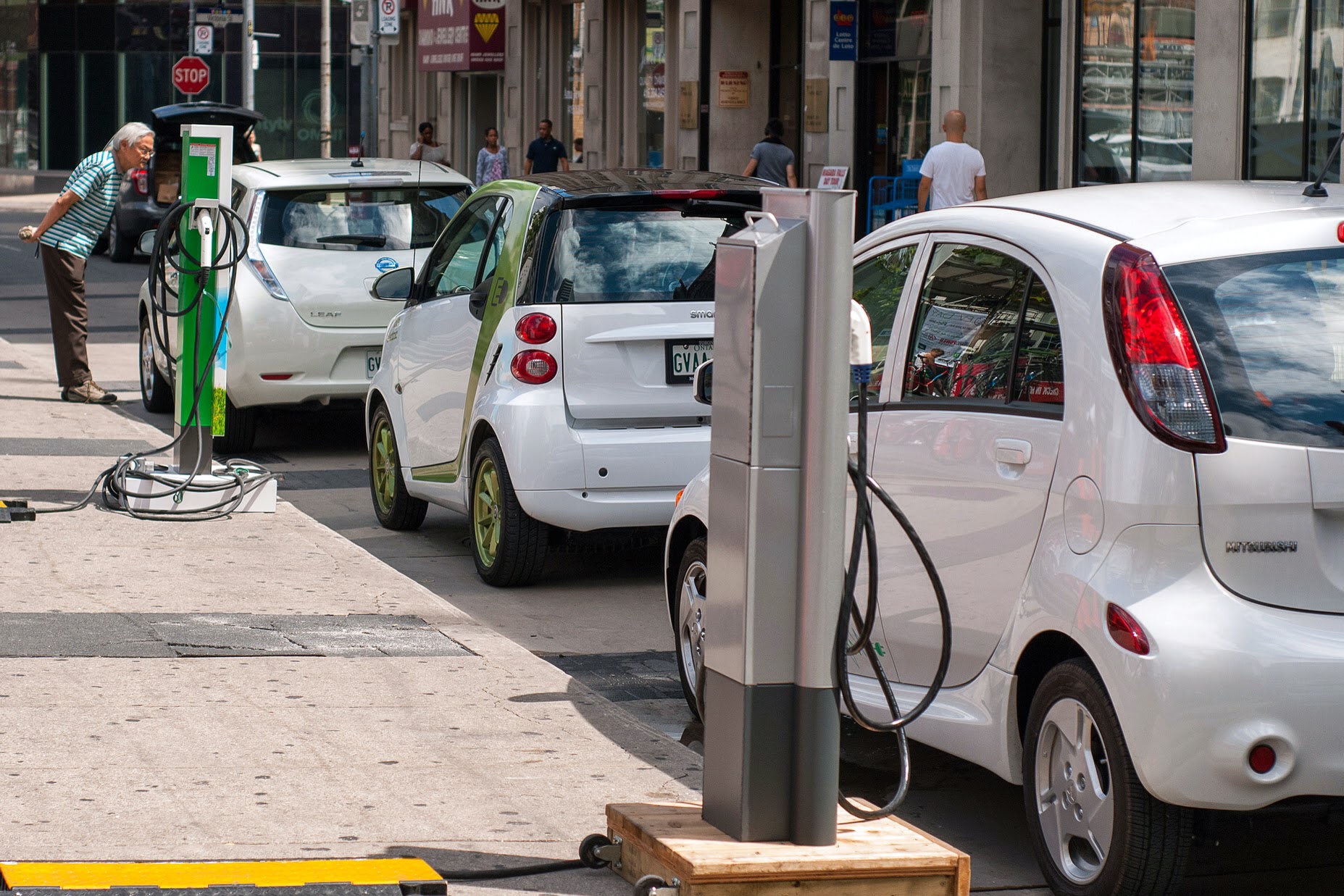
The Edison Electric Institute, the power industry's main trade group, is calling on utilities to better promote electric cars in order to stimulate demand for electricity and help reverse trends that threaten the long-term viability of some in the industry.

Without a strategy to help connect more vehicles to the grid, utilities will continue to face slow growth and stagnant revenues, warns EEI in a new report. The organization calls electric vehicles a “quadruple win” for power companies looking to boost demand, find new ways to interact with customers, support environmental goals and mandates, and reduce operating costs through electrifying their own fleets.

“The bottom line is that the electric utility industry needs the electrification of the transportation sector to remain viable and sustainable in the long term,” conclude the authors.

Some leading investor-owned utilities have rolled out programs to support charging stations, created pilots to test integration of new vehicle-to-grid technologies and have supported studies to model how lots of electric vehicles would interact with the distribution system. But there hasn't yet been a strategic, industry-wide effort to support the electrification of transportation as a way to boost demand.

To understand why EEI is now calling for more electric vehicles, consider where the industry is headed. As the chart below illustrates, growth in retail demand has come to a virtual standstill.

At the same time, the states with the biggest solar PV markets are seeing that technology slow electricity demand growth even further. This is adding additional pressure on utilities (creating borderline disruption in some markets), as third-party developers capture much of the value from developing solar.

“Stagnant growth, rising costs, and a need for even greater infrastructure investment represent major challenges to the utility industry,” writes EEI. “Today’s electric utilities need a new source of load growth — one that fits within the political, economic and social environment.”

Part of the answer is electric vehicles, which could both grow electricity sales and help balance a future grid made up of much more distributed renewables.

Thus far, utilities have had a conflicted relationship with electric vehicles. Although sales continue to grow, consumer demand has been relatively low compared to initial estimates. That has prevented power companies from investing heavily in charging infrastructure. There are also legitimate concerns about how electric cars and trucks will impact circuits on local grids.

However, the potential upside is enormous. If the two charts above have utilities worried, the chart below should have them excited about the future.

As Opower pointed out in a recent analysis, owners of electric cars use nearly 60 percent more electricity than the average customer. And customers who own both a solar system and an electric car consume roughly the same amount of electricity from the grid as an average customer — offsetting much of the excess solar that utilities must buy back through net metering. More


The Sunswift eVe solar-powered car broke a 26-year-old land speed record for electric vehicles

The Sunswift eVe solar-powered car broke a 26-year-old land speed record for electric vehicles on Wednesday at the Australian Automotive Research Center in Victoria. While the record still has to be ratified by the Fédération Internationale de l’Automobile, it would make eVe the fastest electric car to ever compete a 500 km set distance course by a significant margin, Gizmodo reported. The previous record, set in 1988, was an average speed of 73 kilometers per hour; the Sunswift eVe reached 100 km per hour average over the 500 km course.

Sunswift eVe, designed and built by students at the University of New South Wales, seeks to overcome the traditional obstacles that have impeded solar-powered cars, namely, offering both speed and range in the same vehicle.

“There are many solar cars out there with a long range, and many other solar cars capable of even higher speeds,” Rob Ireland, business team leader at Sunswift, told International Business Times. “However, we’re trying to do something ground-breaking and overcome both.”

The zero-emission solar and battery storage electric vehicle is capable of covering 800 km on a single charge and has a top speed of 140 km per hour (87 miles per hour). The car’s solar panels have an 800-watt output and when the sun isn’t shining, eVe relies on its battery pack, reducing drivers’ range anxiety. The car’s motor, “supplied by Australian national science agency CSIRO, operates at 97 percent efficiency, meaning eVe consumes as much power as a kitchen toaster,” according to IB Times.

For Wednesday’s record attempt, the solar panels on the roof and hood were used to charge the battery, but were covered for the actual run, as the attempt had to be completed on a single charge.

While the Sunswift eVe is not fully road legal, the team believes that isn’t far out of reach, telling Renew Economy they hope to have the vehicle on Australian roads within the year as “a symbol for a new era of sustainable driving.” And Ireland said the practicality of the two-seat, four-wheel car is unmatched among solar-powered vehicles.

In the run-up to their attempt at the land speed record, project director and third-year engineering student Hayden Smith explained to Renew Economy why it was so significant. “Five hundred kilometers is pretty much as far as a normal person would want to drive in a single day,” Smith said. “It’s another demonstration that one day you could be driving our car.” More


Caribbean Energy Experts Recommend Creation Of New Caribbean Centre For Renewable Energy And Energy Efficiency

Caribbean energy experts recommend creation of new Caribbean Centre for Renewable Energy and Energy Efficiency (CCREEE) – A Centre of Excellence to Promote Inclusive and Sustainable Energy Industries and SE4ALL

The technical design and institutional set-up of the Caribbean Centre for Renewable Energy and Energy Efficiency (CCREEE) was successfully validated by energy experts and specialists of CARICOM Member States in a regional workshop, held from 21 to 22 July 2014 in Roseau, Dominica. The event was co-organized by theSmall Island Developing States (SIDS) Sustainable Energy Initiative – SIDS DOCK, the United Nations Industrial Development Organization (UNIDO) and the Government of Dominica, with financial support of the Austrian Development Cooperation (ADC).

The workshop follows-up on the official request of SIDS DOCK to UNIDO in August 2013, to assist the small island developing states in the Caribbean, Pacific, Indian Ocean and Africa, in the creation of a SIDS network of regional sustainable energy centres. With technical assistance from UNIDO, a consultative preparatory process for the Caribbean centre was launched in close coordination with the Energy Unit of the CARICOM Secretariat. The process included the development of a needs assessment and project document on the technical and institutional design of the centre. With the inputs received at the regional workshop, the needs assessment and the project document on the technical and institutional design of the centre will be finalized.

It was recommended to create CCREEE under the umbrella of the existing institutional framework of CARICOM. It was agreed to submit the final CCREEE project document for consideration by the next Ministerial Council for Trade and Economic Development (COTED) of CARICOM. It was suggested to launch a competitive selection process for the host country of the Secretariat of CCREEE.

Prime Minister of Dominica, Hon. Roosevelt Skerrit, endorsed the establishment of the CCREEE, and announced Dominica’s interest in hosting the centre. “Dominica has the highest percentage of renewable energy (RE) in its energy mix among the Caribbean countries, therefore, Dominica would be the ideal location,” he said. By 2017, Dominica will become the only Small Island Developing State to export electricity. A partnership between the Government of Dominica and a French Consortium will develop a geothermal power plant for export and subsea transmission lines to French neighbours – Guadeloupe to the north, and Martinique to the south.

Ambassador Vince Henderson, Permanent Representative of the Commonwealth of Dominica to the United Nations, and Chair of the SIDS DOCK Steering Committee, who spearheaded the initiative for the establishment of regional RE and EE centres, expressed gratitude on behalf of the small island developing states to the government of Austria for providing the funding for the establishment of the regional centres in the Pacific and the Caribbean and the support to African SIDS through the ECREEE. “The establishment of regional centres for RE and EE is one of the most progressive steps that UNIDO, SIDS DOCK and our governments can take towards the transitioning from fossil fuels to RE, and CCREEE will work with regional institutions, like the OECS, CARICOM, CREDP and CDB, to pool human and financial resources to transform the regional energy sector,” he noted.

Dr. Pradeep Monga, Director of the Energy and Climate Change Branch of UNIDO, said the importance of the regional energy centre is to boost inclusive and sustainable industrial development in Caribbean islands. “The centre will play an important role in empowering the local private sector and industry to take advantage of growing job and business opportunities in the sustainable energy sector,” Mr. Monga stressed.

The over 60 Caribbean experts and specialists, development and private sector partners in attendance recommended that the centre focuses particularly on policy implementation, capacity development, knowledge management, awareness raising and the creation of business opportunities for the local sustainable energy industry. The centre will act as a think-tank and hub for sustainable energy and will play a key role in creating economies of scale and a competitive sustainable energy market and business sector. It will address existing barriers and strengthen drivers through regional methodologies and tools. It will act as central service provider for the development and implementation of SIDS DOCK and Sustainable Energy For All (SE4ALL) activities.

The centre will become part of UNIDO´s Global Network of Regional Sustainable Energy Centres. The SIDS centres will be announced as an innovative south-south partnership at the Third International Conference on Small Island Developing States, scheduled to take place from 1 to 4 September 2014 in Apia, Samoa.

Further information on the workshop is available at: www.ccreee.org

For more information:

Mr. Al Binger, Energy Advisor, CARICOM Climate Change Centre, abinger@sidsdock.org

Mr. Martin Lugmayr, Sustainable Energy Expert, UNIDO, m.lugmayr@unido.org


The Asia Pacific Clean Energy Summit & Expo

The Asia Pacific Clean Energy Summit & Expo
Co-located with the Islands Innovation Summit & Showcase/ Pacific Defense Energy Summit & Showcase / Pacific Agriculture Innovation Summit

September 15-17, 2014
Honolulu Convention Center, Honolulu, HI
http://islandsconnect.com

The event is the preeminent meeting place for international leaders and energy experts at the forefront of the clean energy movement. Securing energy independence and developing a clean energy industry that promotes the vitality of our planet are two reasons why it is critical to reaffirm already established partnerships and build new ones throughout the Asia-Pacific region and the world. The summit will provide a forum for the high-level global networking necessary to advance this emerging clean energy culture.

Join a broad international community of over 1500 attendees from over 25 countries!

Keynote speakers include:

Neil Abercrombie, Governor, State of Hawai‘i
Major General Anthony Crutchfield, US Army, Chief of Staff, US Pacific Command (PACOM)

Kyle Datta, General Partner, Ulupono Initiative
Captain James Goudreau, Director, Navy Energy Coordination Office, US Navy
Rahul Gupta, Principal, Public Service Practice, Sustainability, and Cleantech, PricewaterhouseCooper

Mike Howard, President & CEO, Electric Power Research Institute (EPRI)
Taholo Kami, Regional Director, IUCN Oceania Regional Office (ORO)

Richard Lim, Director, State of Hawai‘i, Department of Business, Economic Development & Tourism (DBEDT)

Updated Program: http://www.islandsconnect.com/program/dag.html

Speaker List: http://www.islandsconnect.com/program/speakers.html

Register here: http://www.islandsconnect.com/register.html

** When registering, please use the Cayman Institute 20% discount code: 14CAY20

For further information, partnerships, island/community showcase, or group programs, please contact Regina Ramazzini at regina@techconnect.org

How Saudi Arabia Helped Isis Take Over the North of Iraq

How far is Saudi Arabia complicit in the Isis takeover of much of northern Iraq, and is it stoking an escalating Sunni-Shia conflict across the Islamic world?

Some time before 9/11, Prince Bandar bin Sultan, once the powerful Saudi ambassador in Washington and head of Saudi intelligence until a few months ago, had a revealing and ominous conversation with the head of the British Secret Intelligence Service, MI6, Sir Richard Dearlove. Prince Bandar told him: “The time is not far off in the Middle East, Richard, when it will be literally ‘God help the Shia’. More than a billion Sunnis have simply had enough of them.”

The fatal moment predicted by Prince Bandar may now have come for many Shia, with Saudi Arabia playing an important role in bringing it about by supporting the anti-Shia jihad in Iraq and Syria. Since the capture of Mosul by the Islamic State of Iraq and the Levant (Isis) on 10 June, Shia women and children have been killed in villages south of Kirkuk, and Shia air force cadets machine-gunned and buried in mass graves near Tikrit.

In Mosul, Shia shrines and mosques have been blown up, and in the nearby Shia Turkoman city of Tal Afar 4,000 houses have been taken over by Isis fighters as “spoils of war”. Simply to be identified as Shia or a related sect, such as the Alawites, in Sunni rebel-held parts of Iraq and Syria today, has become as dangerous as being a Jew was in Nazi-controlled parts of Europe in 1940.

There is no doubt about the accuracy of the quote by Prince Bandar, secretary-general of the Saudi National Security Council from 2005 and head of General Intelligence between 2012 and 2014, the crucial two years when al-Qa’ida-type jihadis took over the Sunni-armed opposition in Iraq and Syria. Speaking at the Royal United Services Institute last week, Dearlove, who headed MI6 from 1999 to 2004, emphasised the significance of Prince Bandar’s words, saying that they constituted “a chilling comment that I remember very well indeed”.

He does not doubt that substantial and sustained funding from private donors in Saudi Arabia and Qatar, to which the authorities may have turned a blind eye, has played a central role in the Isis surge into Sunni areas of Iraq. He said: “Such things simply do not happen spontaneously.” This sounds realistic since the tribal and communal leadership in Sunni majority provinces is much beholden to Saudi and Gulf paymasters, and would be unlikely to cooperate with Isis without their consent.

Dearlove’s explosive revelation about the prediction of a day of reckoning for the Shia by Prince Bandar, and the former head of MI6′s view that Saudi Arabia is involved in the Isis-led Sunni rebellion, has attracted surprisingly little attention. Coverage of Dearlove’s speech focused instead on his main theme that the threat from Isis to the West is being exaggerated because, unlike Bin Laden’s al-Qa’ida, it is absorbed in a new conflict that “is essentially Muslim on Muslim”. Unfortunately, Christians in areas captured by Isis are finding this is not true, as their churches are desecrated and they are forced to flee. A difference between al-Qa’ida and Isis is that the latter is much better organised; if it does attack Western targets the results are likely to be devastating.

The forecast by Prince Bandar, who was at the heart of Saudi security policy for more than three decades, that the 100 million Shia in the Middle East face disaster at the hands of the Sunni majority, will convince many Shia that they are the victims of a Saudi-led campaign to crush them. “The Shia in general are getting very frightened after what happened in northern Iraq,” said an Iraqi commentator, who did not want his name published. Shia see the threat as not only military but stemming from the expanded influence over mainstream Sunni Islam of Wahhabism, the puritanical and intolerant version of Islam espoused by Saudi Arabia that condemns Shia and other Islamic sects as non-Muslim apostates and polytheists.

Dearlove says that he has no inside knowledge obtained since he retired as head of MI6 10 years ago to become Master of Pembroke College in Cambridge. But, drawing on past experience, he sees Saudi strategic thinking as being shaped by two deep-seated beliefs or attitudes. First, they are convinced that there “can be no legitimate or admissible challenge to the Islamic purity of their Wahhabi credentials as guardians of Islam’s holiest shrines”. But, perhaps more significantly given the deepening Sunni-Shia confrontation, the Saudi belief that they possess a monopoly of Islamic truth leads them to be “deeply attracted towards any militancy which can effectively challenge Shia-dom”.

Western governments traditionally play down the connection between Saudi Arabia and its Wahhabist faith, on the one hand, and jihadism, whether of the variety espoused by Osama bin Laden and al-Qa’ida or by Abu Bakr al-Baghdadi’s Isis. There is nothing conspiratorial or secret about these links: 15 out of 19 of the 9/11 hijackers were Saudis, as was Bin Laden and most of the private donors who funded the operation.

The difference between al-Qa’ida and Isis can be overstated: when Bin Laden was killed by United States forces in 2011, al-Baghdadi released a statement eulogising him, and Isis pledged to launch 100 attacks in revenge for his death.

But there has always been a second theme to Saudi policy towards al-Qa’ida type jihadis, contradicting Prince Bandar’s approach and seeing jihadis as a mortal threat to the Kingdom. Dearlove illustrates this attitude by relating how, soon after 9/11, he visited the Saudi capital Riyadh with Tony Blair.

He remembers the then head of Saudi General Intelligence “literally shouting at me across his office: ’9/11 is a mere pinprick on the West. In the medium term, it is nothing more than a series of personal tragedies. What these terrorists want is to destroy the House of Saud and remake the Middle East.’” In the event, Saudi Arabia adopted both policies, encouraging the jihadis as a useful tool of Saudi anti-Shia influence abroad but suppressing them at home as a threat to the status quo. It is this dual policy that has fallen apart over the last year.

Saudi sympathy for anti-Shia “militancy” is identified in leaked US official documents. The then US Secretary of State Hillary Clinton wrote in December 2009 in a cable released by Wikileaks that “Saudi Arabia remains a critical financial support base for al-Qa’ida, the Taliban, LeT [Lashkar-e-Taiba in Pakistan] and other terrorist groups.” She said that, in so far as Saudi Arabia did act against al-Qa’ida, it was as a domestic threat and not because of its activities abroad. This policy may now be changing with the dismissal of Prince Bandar as head of intelligence this year. But the change is very recent, still ambivalent and may be too late: it was only last week that a Saudi prince said he would no longer fund a satellite television station notorious for its anti-Shia bias based in Egypt.

The problem for the Saudis is that their attempts since Bandar lost his job to create an anti-Maliki and anti-Assad Sunni constituency which is simultaneously against al-Qa’ida and its clones have failed.

By seeking to weaken Maliki and Assad in the interest of a more moderate Sunni faction, Saudi Arabia and its allies are in practice playing into the hands of Isis which is swiftly gaining full control of the Sunni opposition in Syria and Iraq. In Mosul, as happened previously in its Syrian capital Raqqa, potential critics and opponents are disarmed, forced to swear allegiance to the new caliphate and killed if they resist.

The West may have to pay a price for its alliance with Saudi Arabia and the Gulf monarchies, which have always found Sunni jihadism more attractive than democracy. A striking example of double standards by the western powers was the Saudi-backed suppression of peaceful democratic protests by the Shia majority in Bahrain in March 2011. Some 1,500 Saudi troops were sent across the causeway to the island kingdom as the demonstrations were ended with great brutality and Shia mosques and shrines were destroyed.

An alibi used by the US and Britain is that the Sunni al-Khalifa royal family in Bahrain is pursuing dialogue and reform. But this excuse looked thin last week as Bahrain expelled a top US diplomat, the assistant secretary of state for human rights Tom Malinowksi, for meeting leaders of the main Shia opposition party al-Wifaq. Mr Malinowski tweeted that the Bahrain government’s action was “not about me but about undermining dialogue”.

Western powers and their regional allies have largely escaped criticism for their role in reigniting the war in Iraq. Publicly and privately, they have blamed the Iraqi Prime Minister Nouri al-Maliki for persecuting and marginalising the Sunni minority, so provoking them into supporting the Isis-led revolt. There is much truth in this, but it is by no means the whole story. Maliki did enough to enrage the Sunni, partly because he wanted to frighten Shia voters into supporting him in the 30 April election by claiming to be the Shia community’s protector against Sunni counter-revolution.

But for all his gargantuan mistakes, Maliki’s failings are not the reason why the Iraqi state is disintegrating. What destabilised Iraq from 2011 on was the revolt of the Sunni in Syria and the takeover of that revolt by jihadis, who were often sponsored by donors in Saudi Arabia, Qatar, Kuwait and United Arab Emirates. Again and again Iraqi politicians warned that by not seeking to close down the civil war in Syria, Western leaders were making it inevitable that the conflict in Iraq would restart. “I guess they just didn’t believe us and were fixated on getting rid of [President Bashar al-] Assad,” said an Iraqi leader in Baghdad last week.

Of course, US and British politicians and diplomats would argue that they were in no position to bring an end to the Syrian conflict. But this is misleading. By insisting that peace negotiations must be about the departure of Assad from power, something that was never going to happen since Assad held most of the cities in the country and his troops were advancing, the US and Britain made sure the war would continue.

The chief beneficiary is Isis which over the last two weeks has been mopping up the last opposition to its rule in eastern Syria. The Kurds in the north and the official al-Qa’ida representative, Jabhat al-Nusra, are faltering under the impact of Isis forces high in morale and using tanks and artillery captured from the Iraqi army. It is also, without the rest of the world taking notice, taking over many of the Syrian oil wells that it did not already control.

Saudi Arabia has created a Frankenstein’s monster over which it is rapidly losing control. The same is true of its allies such as Turkey which has been a vital back-base for Isis and Jabhat al-Nusra by keeping the 510-mile-long Turkish-Syrian border open. As Kurdish-held border crossings fall to Isis, Turkey will find it has a new neighbour of extraordinary violence, and one deeply ungrateful for past favours from the Turkish intelligence service.

As for Saudi Arabia, it may come to regret its support for the Sunni revolts in Syria and Iraq as jihadi social media begins to speak of the House of Saud as its next target. It is the unnamed head of Saudi General Intelligence quoted by Dearlove after 9/11 who is turning out to have analysed the potential threat to Saudi Arabia correctly and not Prince Bandar, which may explain why the latter was sacked earlier this year.

Nor is this the only point on which Prince Bandar was dangerously mistaken. The rise of Isis is bad news for the Shia of Iraq but it is worse news for the Sunni whose leadership has been ceded to a pathologically bloodthirsty and intolerant movement, a sort of Islamic Khmer Rouge, which has no aim but war without end.

The Sunni caliphate rules a large, impoverished and isolated area from which people are fleeing. Several million Sunni in and around Baghdad are vulnerable to attack and 255 Sunni prisoners have already been massacred. In the long term, Isis cannot win, but its mix of fanaticism and good organisation makes it difficult to dislodge.

“God help the Shia,” said Prince Bandar, but, partly thanks to him, the shattered Sunni communities of Iraq and Syria may need divine help even more than the Shia. More


Major Companies Push for More, Easier Renewable Energy

Some of the largest companies in the United States have banded together to call for a substantial increase in the production of renewable electricity, as well as for more simplicity in purchasing large blocs of green energy.

A dozen U.S-based companies, most of which operate globally, say they want to significantly step up the amount of renewable energy they use, but warn that production levels remain too low and procurement remains too complex. The 12 companies have now put forward a set of principles aimed at helping to “facilitate progress on these challenges” and lead to a broader shift in the market.

“We would like our efforts to result in new renewable power generation,” the Corporate Renewable Energy Buyers’ Principles, released Friday, state. The companies note “our desire to promote new projects, ensure our purchases add new capacity to the system, and that we buy the most cost-competitive renewable energy products.”

The principles consist of six broad reforms, aimed at broadening and strengthening the renewable energy marketplace. Companies want more choice in their procurement options, greater cost competitiveness between renewable and traditional power sources, and “simplified processes, contracts and financing” around the long-term purchase of renewables.

Founding signatories to the principles, which were shepherded by civil society, include manufacturers and consumer goods companies (General Motors, Johnson & Johnson, Mars, Proctor & Gamble), tech giants (Facebook, HP, Intel, Sprint) and major retailers (Walmart, the outdoor-goods store REI).

These 12 companies combined have renewable energy consumption targets of more than eight million megawatt hours of energy through the end of this decade, according to organisers. Yet the new principles, meant to guide policy discussions, have come about due to frustration over the inability of the U.S. renewables market to keep up with spiking demand.

“The problem these companies are seeing is that they’re paying too much, even though they know that cost-effective renewable energy is available. These companies are used to having choices,” Marty Spitzer, director of U.S. climate policy at the World Wildlife Fund (WWF), a conservation and advocacy group that helped to spearhead the principles, told IPS.

WWF was joined in the initiative by the World Resources Institute and the Rocky Mountain Institute, both think tanks that focus on issues of energy and sustainability.

“The companies have also recognised that it’s often very difficult to procure renewables and bring them to their facilities,” Spitzer continues. “While most of them didn’t think of it this way at first, they’ve now realised that they have been experiencing a lot of the same problems.”

‘Too difficult’

In recent years, nearly two-thirds of big U.S. businesses have created explicit policies around climate goals and renewable energy usage, according to WWF. While there is increasing political and public compunction behind these new policies, a primary goal remains simple cost-cutting and long-term efficiencies.

“A significant part of the value to us from renewable energy is the ability to lock in energy price certainty and avoid fuel price volatility,” the principles note.

In part due to political deadlock in Washington, particularly around issues of climate and energy, renewable production in the United States remains too low to keep up with this corporate demand. According to the U.S. government, only around 13 percent of domestic energy production last year was from renewable sources.

Accessing even that small portion of the market remains unwieldy.

“We know cost-competitive renewable energy exists but the problem is that it is way too difficult for most companies to buy,” Amy Hargroves, director of corporate responsibility and sustainability for Sprint, a telecommunications company, said in a statement.

“Very few companies have the knowledge and resources to purchase renewable energy given today’s very limited and complex options. Our hope is that by identifying the commonalities among large buyers, the principles will catalyse market changes that will help make renewables more affordable and accessible for all companies.”

One of the most far-reaching sustainability commitments has come from the world’s largest retailer, Walmart. A decade ago, the company set an “aspirational” goal for itself, to be supplied completely by renewable energy.

Last year, it created a more specific goal aimed at helping to grow the global market for renewables, pledging to drive the production or procurement of seven billion kilowatt hours of renewable energy globally by the end of 2020, a sixfold increase over 2010. (The company is also working to increase the energy efficiency of its stores by 20 percent over this timeframe.)

While the company has since become a leader in terms of installing solar and wind projects at its stores and properties, it has experienced frustrations in trying to make long-term bulk purchases of renewable electricity from U.S. utilities.

“The way we finance is important … cost-competitiveness is very important, as is access to longer-term contracts,” David Ozment, senior director of energy at Walmart, told IPS. “We like to use power-purchase agreements to finance our renewable energy projects, but currently only around half of the states in the U.S. allow for these arrangements.”

Given Walmart’s size and scale, Ozment says the company is regularly asked by suppliers, regulators and utilities about what it is looking for in power procurement. The new principles, he says, offer a strong answer, providing direction as well as flexibility for whatever compulsion is driving a particular company’s energy choices, whether “efficiency, conservation or greenhouse gas impact”.

“We’ve seen the price of solar drop dramatically over the past five years, and we hope our participation helped in that,” he says. “Now, these new principles will hopefully create the scale to continue to drop the cost of renewables and make them more affordable for everyone.”

Internationally applicable

Ozment is also clear that the new principles need not apply only to U.S. operations, noting that the principles “dovetail” with what Walmart is already doing internationally.

In an e-mail, a representative for Intel, the computer chip manufacturer, likewise told IPS that the company is “interested in promoting renewables markets in countries where we have significant operations … at a high level, the need to make renewables both more abundant and easier to access applies outside the U.S.”

For his part, WWF’s Spitzer says that just one of the principles is specific to the U.S. regulatory context.

“Many other countries have their own instruments on renewable production,” he says, “but five out of these six principles are relevant and perfectly appropriate internationally.”

Meanwhile, both the principles and their signatories remain open-ended. Spitzer says that just since Friday he’s heard from additional companies interested in adding their support. More


World first: Australian solar plant has generated “supercritical” steam that rivals fossil fuels’

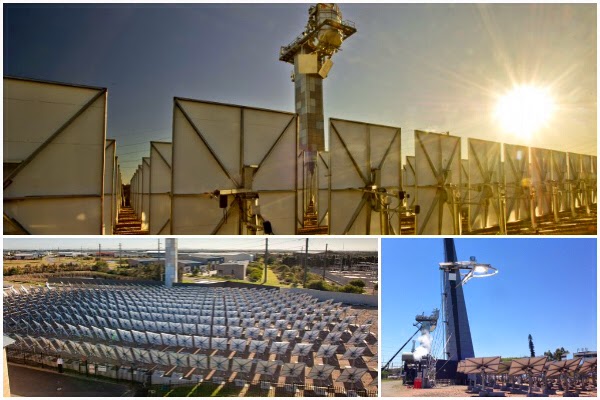
A solar thermal test plant in Newcastle, Australia, has generated “supercritical” steam at a pressure of 23.5 mpa (3400 psi) and 570°C (1,058°F).

CSIRO is claiming it as a world record, and it’s a HUGE step for solar thermal energy.

“It's like breaking the sound barrier; this step change proves solar has the potential to compete with the peak performance capabilities of fossil fuel sources,” Dr Alex Wonhas, CSIRO’s Energy Director, told Colin Jeffrey for Gizmag.

The Energy Centre uses a field of more than 600 mirrors (known as heliostats) which are all directed at two towers housing solar receivers and turbines, Gizmag reports.

This supercritical steam is used to drive the world’s most advanced power plant turbines, but previously it’s only been possible to produce it by burning fossil fuels such as coal or gas.

“Instead of relying on burning fossil fuels to produce supercritical steam, this breakthrough demonstrates that the power plants of the future could instead be using the free, zero emission energy of the sun to achieve the same result,” Dr Wonhas explained.

Currently, commercial solar thermal or concentrating solar power power plants only operate a “subcritical” levels, using less pressurised steam. This means that they’ve never been able to match the output or efficiency of the world’s best fossil fuel power plants – until now.

The commercial development of this technology is still a fair way off, but this is an important first step towards a more sustainable future. More

Watch the video to see the plant in action.


The Peak Oil Crisis: Iraq on the Precipice

The daily newspapers are now full of stories predicting that Iraq, as we know it, will soon disintegrate into three or more warring states.

Tom Whipple

In the last two weeks Sunni insurgents led by the extremist ISIS have routed a good part of the Iraqi army, taken over much of northern Iraq not controlled by the Kurds, and now are moving close to Baghdad. Despite the dispatch of American and Iranian military advisors to at least assess the situation, most observers say government forces are too weak to drive back the insurgents and retake the lost territory. Washington is refusing to get involved unless the Shiite-dominated Iraqi government makes radical changes in its relations with the Sunnis and Kurds.

Our concern here, however, is what all this has to do with the world’s oil supply and, closer to home, our gasoline prices. In recent days we have been told innumerable times that most of Iraq’s oil is way south of Baghdad where it is relatively immune from the turmoil in the north – so there is little chance that Iraq's 2.5 million barrels a day (b/d) of exports will be affected. While this may true for the next few weeks or even months, the Sunni resurgence in the north is not a short-term problem and in the past week the ISIS has captured some formidable assets which could bring heavy pressure on, if not strangle, Baghdad.

ISIS now has control of one of three major refineries in Iraq which supplies the motor fuel and oil for power stations for the northern part of the country. Lines are already forming at gas stations. The ISIS controls the Euphrates and will likely gain control of the Haditha power dam, which supplies 360 MW to the national power grid. With control of the river dams, reduced flows of water could make life very difficult in southern Iraq before the summer is over. It is doubtful if the thousands of foreign oil workers that are expanding and overseeing Iraq’s oil production would stick around too long. Some non-essential-to-production foreigner oil workers are already leaving the country or moving to safer areas.

Another facet of last week’s developments is that the insurgent forces in Anbar province are getting very close to Baghdad’s airport. All it would take would be a few of the howitzers they captured from the Iraqi army and air travel into Baghdad could be restricted.

While it may be impossible for insurgent forces even of the fanatical variety to fight their way through thousands of Shiite militiamen to the southern Shiite shrines and oil fields, in a prolonged standoff (and this one has been going on for 1,400 years) serious harm is likely to be done to Iraq’s current and prospective oil production. Some observers are already saying that large increases in Iraqi oil production in the immediate future are unlikely, but as yet few are writing off the current 3.3 million barrels of daily oil production.

Let’s assume, however, that before this year or next is out, Iraqi oil exports drop substantially as it has in several other oil-exporting states undergoing similar political trauma. Just what does this mean for the world’s oil supply?

With 2.5 million additional barrels of oil disappearing from the market added to the 3.5 million that have already been lost due to lower production in Libya, Iran, Sudan, and Nigeria, the world markets would clearly be stressed.

The Saudis could probably come up with an extra million b/d for a while, but that is about it. Iran could sign a nuclear treaty this summer and be out from under sanctions, but it will take a while to develop significant increases in production. Libya, Sudan, Syria, Nigeria and Yemen show no signs of settling their internal political problems and start exporting significantly larger amounts of crude in the foreseeable future.

Keep in mind that global demand for oil has recently been increasing at a rate of about 1.2 million b/d or so every year, while depletion of existing oilfields requires that another 3-4 million b/d be brought into production each year just to keep even.

Many people, including government forecasters, are looking to increasing U.S. shale oil production and more deepwater oil from the Gulf of Mexico to keep the world’s supply and demand in balance without sharp price increases. Somewhere down the line there may be more oil produced from the Arctic; from Kazakhstan; from off the coast of Brazil; from East Africa; and even significant shale oil production from other than in the U.S. But it will be many years before these new sources can start producing significant amounts of crude, and none of these are likely to make up for any shortages that develop in the next few years.

Deepwater oil production from the Gulf of Mexico has been flat recently, and we are starting to get indications that the rapid increases in U.S. shale oil production, which have kept prices under control for several years, may be drawing to a close. The geology of shale oil production dictates that once it stops growing, a rapid decline in production is likely.

In sum, it looks as if there will be higher and possibly much higher oil and gas prices coming soon. If ISIS decides that the way to finish off the Shiite “infidels” is by cutting their oil revenues, then a bombing and terror campaign against southern Iraqi oil installations and oil workers would be a likely result. It would not take much to send the foreigners running. The Chinese are already moving out some of the 10,000 oil workers they have in southern Iraq, and others are likely to follow as we have seen in so many other places.

Where do oil and gas prices go? The official forecasters are only talking about another couple of dollars a barrel this year, but this is clearly too low if significant shortages develop.

By Tom Whipple of Post Carbon Institute


IEA says ‘peak oil demand’ could hit as early as 2020

Little more that a year after the International Energy Agency added its voice to the chorus chiming that peak oil was dead, a new report from the uconservative adviser to industrialised nations suggests it has changed its tune. Only this time it is not peak supply that is on its radar, but peak demand.

The IEA’s Medium-Term Oil Market Report 2014 has predicted that global growth in oil demand may start to slow down as soon as the end of this decade, due to environmental concerns and cheaper alternatives, and despite boosting its 2014 forecast of global demand by 960,000 barrels per day.

While supply is forecast to remain strong – thanks largely to the unconventional, or “tight” oil revolution currently underway in north America – the IEA says it expects the global market to hit an “inflexion point”, by the end of 2019, “after which demand growth may start to decelerate due to high oil prices, environmental concerns and cheaper fuel alternatives.”

These factors, says the report, will lead to fuel-switching away from oil, as well as overall fuel savings. In short, it says, “while ‘peak demand’ for oil – other than in mature economies – may still be years away, and while there are regional differences, peak oil demand growth for the market as a whole is already in sight.”

It’s worrying news for the over-invested and under-prepared; not least of all oil importing nations, to which, as Samuel Alexander noted in this article last September, the economic costs of peak oil are especially significant.

“When oil gets expensive, everything dependent on oil gets more expensive: transport, mechanised labour, industrial food production, plastics, etc,” he wrote. “This pricing dynamic sucks discretionary expenditure and investment away from the rest of the economy, causing debt defaults, economic stagnation, recessions, or even longer-term depressions. That seems to be what we are seeing around the world today, with the risk of worse things to come.”

This then adds to the peak oil cycle, increasing governments’ motivation to decarbonise their economies – better late than never – “not only because oil has become painfully expensive, but also because the oil we are burning is environmentally unaffordable.”

This view has been echoed in numerous recent reports. US investment banks Sanford Bernstein raised the prospect of “energy price deflation”, caused by the plunging cost of solar and the taking up of market share by that technology as it displaced diesel, gas and oil in various economies. It predicted that could trigger a massive shift in capital.

Analyst Mark Fulton last month also questioned the wisdom of the private-sector investing over $1 trillion to develop new sources of high-cost oil production. While Mark Lewis, of French broking firm, suggested that $US19 trillion in revenuescould be lost from the oil industry if the world takes action to address climate change, cleans up pollution and moves to decarbonise the global energy system.

The IEA report also includes an updated forecast of product supply, which draws out the consequences of the shifts in demand, feedstock supply and refining capacity.

“Given planned refinery construction and the growth in supply that bypasses the refining sector, such as NGLs and biofuels, the refining industry faces a new cycle of weak margins and a glut of light distillates like gasoline and naphtha as a by-product of needed diesel and jet fuel,” it says.

It also predicts that “the unconventional supply revolution that has redrawn the global oil map” will expand beyond North America before the end of the decade, just as OPEC supplies face headwinds, and regional imbalances in gasoline and diesel markets broaden.

The report projects that by 2019, tight oil supply outside the United States could reach 650 000 barrels per day (650 kb/d), including 390 kb/d from Canada, 100 kb/d from Russia and 90 kb/d from Argentina. US LTO output is forecast to roughly double from 2013 levels to 5.0 million barrels per day (mb/d) by 2019.

“We are continuing to see unprecedented production growth from North America, and the United States in particular. By the end of the decade, North America will have the capacity to become a net exporter of oil liquids,” IEA Executive Director Maria van der Hoeven said as she launched the report in Paris. “At the same time, while OPEC remains a vital supplier to the market, it faces significant headwinds in expanding capacity.”

Beyond ageing fields, the major hurdle facing OPEC producers is the escalation in “above-ground woes,” as security concerns become a growing issue in producers like Iraq, and investment risks deter investment and exploration.

The report notes that as much as three-fifths of OPEC’s expected growth in capacity by 2019 is set to come from Iraq. The projected addition of 1.28 mb/d to Iraqi production by 2019, a conservative forecast made before the launch last week of a military campaign by insurgents that subsequently claimed several key cities in northern and central Iraq, faces considerable downside risk. More


Solar is here

Solar is here.

That’s right. You know the solutions to the climate crisis are available today; we simply need the public (and political) will to implement them. Clean energy is urgently necessary, abundant, and becoming increasingly more affordable. That’s why on June 21, The Climate Reality Project is joining 12 other organizations in a day of action to support clean-energy solutions and show our commitment to bringing solar power to communities around the world.

If you don’t already have plans to take part on Saturday, don’t despair! Here are a few last minute ways to get involved:

  1. Sign: Send President Obama an email thanking him for putting solar panels on the roof of the White House.
  2. Share: Take your own #PutSolarOnIt photo and share it with your social media network.
  3. Discover: Check out the Mosaic website to find out if solar is right for you.
  4. Participate: Check out OFA’s website to find an event near you, some of which are being hosted by your fellow Climate Reality Leaders.

The reality is this: solar is affordable. It’s clean. And it’s powerful. The cost of solar panels has plummeted 60 percent since early 2011, and the number of installations keeps growing. The United States now has enough installed solar capacity to power more than 2.2 million homes. In several states, solar power is now competitive with other sources of energy without emitting the dangerous greenhouse gases that cause climate change.

Climate Reality Leaders are the first responders to the climate crisis and lead action across the globe. We’re proud so many of you will be participating on Saturday by hosting presentations, organizing events, and informing others about the benefits of solar power.

The Climate Reality Leadership Corps Team

Solar Array at Caledonian Bank, George Town, Cayman Islands