Climate change will ‘cost world far more than estimated’

Lord Stern, the world’s most authoritative climate economist, has issued a stark warning that the financial damage caused by global warming will be considerably greater than current models predict.

This makes it more important than ever to take urgent and drastic action to curb climate change by reducing carbon emissions, he argues.

Lord Stern, who wrote a hugely influential review on the financial implications of climate change in 2006, says the economic models that have been used to calculate the fiscal fallout from climate change are woefully inadequate and severely underestimate the scale of the threat.

As a result, even the recent and hugely authoritative series of reports from the UN Intergovernmental Panel on Climate Change (IPCC) are significantly flawed, he said.

“It is extremely important to understand the severe limitations of standard economic models, such as those cited in the IPCC report, which have made assumptions that simply do not reflect current knowledge about climate change and its … impacts on the economy,” said Lord Stern, a professor at the Grantham Institute, a research centre at the London School of Economics.

Professor Stern and his colleague Dr Simon Dietz will today publish the peer-reviewed findings of their research into climate change economic modelling in the The Economic Journal.

Their review is highly critical of established economic models which, among other things, fail to acknowledge the full breadth of climate change’s likely impact on the economy and are predicated on assumptions about global warming’s effect on output that are “without scientific foundation”.

Professor Stern, whose earlier research said it is far cheaper to tackle climate change now than in the future, added: “I hope our paper will prompt … economists to strive for much better models [and] … help policy-makers and the public recognise the immensity of the potential risks of unmanaged climate change.”

“Models that assume catastrophic damages are not possible fail to take account of the magnitude of the issues and the implications of the science,” he said.

Professor Stern and Dr Dietz say their findings strengthen the case for strong cuts in greenhouse gas emissions and imply that, unless this happens, living standards could even start to decline later this century.

For the study, they modified key features of the “dynamic integrated climate-economy” (Dice) model, initially devised by William Nordhaus in the 1990s. The changes take into account the latest scientific findings and some of the uncertainties about the major risks of climate change that are usually omitted.

The standard Dice model has been used in a wide range of economic studies of the potential impacts of climate change, some of which have been cited in the most recent IPCC report which has been released in three parts over the past nine months.

Dr Dietz said: “While this standard economic model has been useful for economists who estimate the potential impacts of climate change, our paper shows some major improvements are needed before it can reflect the extent of the risks indicated by the science.”

Dr Dietz said his aim was to show how a new version of the model could produce a range of results that are much more representative of the science and economics of climate change, taking into account the uncertainties.

“The new version of this standard economic model, for instance, suggests that the risks from climate change are bigger than portrayed by previous economic models and therefore strengthens the case for strong cuts in emissions of greenhouse gases,” he said.

The new model differs in that it considers a wider temperature range when estimating the impact of doubling the atmospheric concentration of greenhouse gases – a measure of “climate sensitivity”.

Whereas the standard model usually assumes a single temperature for climate sensitivity of about 3C, the new model uses a range of 1.5C to 6C, which the authors say more accurately reflects the scientific consensus.

The standard model also “implausibly” suggests a loss of global output of 50 per cent would only result after a rise in global average temperature of 18C, even though such warming would likely render the Earth uninhabitable for most species, including humans, Dr Dietz contends.

The new model includes the possibility that such damage could occur at much lower levels of global warming. Standard economic models rule out the possibility that global warming of 5-6C above pre-industrial levels could cause catastrophic damages, even though such temperatures have not occurred on Earth for tens of millions of years. Such an assertion, he says, is without scientific foundation and embodies a false assumption that the risks are known, with great confidence, to be small.

The new model also takes into account that climate change can damage not just economic output, but productivity. The standard model assumes that rising levels of greenhouse gases in the atmosphere only affect economic growth in a very limited way, according to Dr Dietz. More


The Pale Blue Dot

THE SAGAN SERIES – The Pale Blue Dot

================================


Playing in the Major Leagues.


George Town, Cayman Islands – 19 October 2009


Climate change is the most serious peril that has faced humanity in its long history. However, we are faced with more than climate change, there is peak oil and an out of control population, as well as concerns for water and food security in the years to come.


As I said to a colleague earlier today “failing to plan is planning to fail”.


Humanity is today playing in the major leagues. We are in a sink or swim situation. If we can keep the planet habitable by mitigating and adapting to the changing climate, switching to alternative sources of energy such as solar, wind, geothermal, wave, ocean thermal and nuclear, sequester CO2 and provide the population with adequate supplies of water and food and bring the population under control, humanity may survive .


Warfare and conflict will also need to become a thing of the past as climate change and energy may well exacerbate conflict situations. With a 9.5 billion global population by 2050 ensuring that everyone has adequate food and water could be problematic.


There is however, no ‘Plan B’ if we fail to resolve all the problems facing us.


When playing in the major leagues there is no time out, there is no one that is going to offer help, let alone rescue us. Look around, the neighbourhood is somewhat sparsely populated and there are no other worlds on which humanity can survive. Even if there were other habitable worlds nearby they would in all probability belong to someone else.


There are, in all likelihood, other intelligent races out there somewhere, however in the major leagues one survives on ones own. As a young civilisation it is up to us to solve all our problems, to make peace among ourselves, to bring the population under control, to implement the Millennium Development Goals (MDG). We must solve our own problems. As a young race we are as children, and as such we may not be able to solve our own problems. But solve them we must.


If we are able to solve the situation facing us and make it to adulthood, in the galactic meaning of the world, we may then be introduced to the neighbours.


One of the most hopeful initiatives that has been started is the Eradicating Ecocide Initiative. Ecocide is the extensive damage to , destruction of or loss of ecosystems. It is happening on a mass scale, every day and it is getting worse. We can change this. Our aim is to stop the destruction of the Earth by making ecocide the 5th Crime Against Peace. Ecocide is a crime against nature, humanity and future generations. See http://www.thisisecocide.com/


An international law of Ecocide would make CEOs and our Heads of State legally responsible for protecting the Earth. People and planet will become the number one priority.


If we do not make it to adulthood we will be just another minor statistic, a failure, a insignificant footnote in the universal history book.


For all these reasons we have to come together and produce a new global climate change deal to replace the ageing Kyoto treaty. Unless we can do so, we are ‘planning to fail‘.


Posted by Nick Robson at 3:36 PM

Labels: catastrophe, climate

==========================

Published on Oct 21, 2013 • Facebook – http://www.facebook.com/thesaganseries

Twitter – http://twitter.com/reidgower

G+ – http://bit.lyA/pHzQh

The Sagan Series is an educational project working in the hopes of promoting scientific literacy in the general population. Created by ©ReidGower http://twitter.com/reidgower

Copyright Disclaimer Under Section 1 07 of the Copyright Act 1976, allowance is made for “fair use” for purposes such as criticism, comment, news reporting, teaching, scholarship, and research. Fair use is a use permitted by copyright statute that might otherwise be infringing. Non-profit, educational or personal use tips the balance in favor of fair use.

All copyrighted materials contained herein belong to their respective copyright holders, I do not claim ownership over any of these materials. I realize no profit, monetary or otherwise, from the exhibition of these videos.

Mega dry spell Spain’s worst in 150 years

Parts of Spain are currently suffering through their most intense dry spell in a century and a half with Valencia and Alicante among the worst affected regions. Future predictions are not too rosy either, meteorologists warn.

The last eight months have been brutally dry for large swathes of southern and eastern Spain.

While huge storms buffeted Spain’s Atlantic coasts and the Canary Islands during the winter and spring, Valencia and Alicante, as well as areas including Murcia, parts of Albacete province, and the Andalusian provinces of Jaén, Almería, Cadíz and Málaga have all been starved of rain.

In the last 150 years, there has never been “such a long and intense drought”, according to the country’s meteorological agency Aemet.

Indeed there are parts of the country where during “the second worst period of drought on record there was twice as much rain as now”, meteorologist José Antonio Maldonado told Spanish free daily 20 minutos.

Rainfall levels in many areas have been less than half of those seen from 1971 to 2000, while some places have seen less than 25 percent of those levels.

Most dams are still at somewhere between 74 percent and 90 percent of capacity thanks to rains from earlier years, but some farmers are already struggling to water their crops, or have gone out of business.

Spain is also facing an uncertain water future: a 2013 study by the Spanish National Research Council (CSIC) looking at the period from 1945 to 2005 found the country’s droughts were becoming more intense and more regular. More


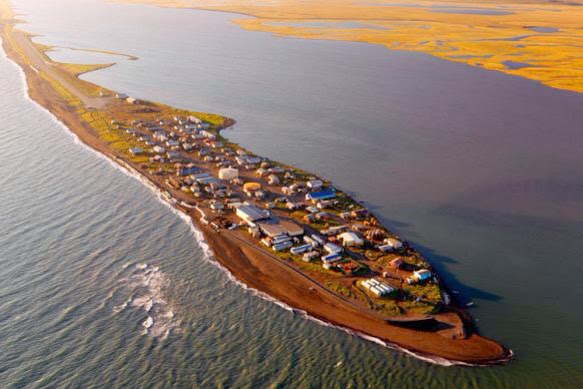
    Which U.S. City Will Be the First Submerged by Climate Change?

    A new Climate Central report shows which U.S. cities’ fates are locked in by sea-level rise. The long list of 1,400 cities includes not only obvious coastal candidates like Miami and New Orleans, but also inland cities such as Sacramento. They’re doomed to drown by 2100 even if carbon emissions immediately—like right now—drop to zero.

    Representative Henry Waxman (D-CA), a longstanding climate champion, tells TakePart: “As this report makes clear, climate change is no longer an issue for ‘later.’ Climate change is already affecting the United States and the window for effective action is closing fast. We must act now to protect the planet for our children and future generations.”

    Ben Strauss, one of the scientists behind the new report, began with a study that found for every degree Fahrenheit of global warming due to carbon pollution, global average sea-level will rise by about 4.2 feet in the long run. When multiplied by the current rate of carbon emissions, and the best estimate of global temperature sensitivity to pollution, this translates to a long-term sea-level rise commitment that is now growing at about one foot per decade. Strauss then analyzed the growth of the locked-in amount of sea-level rise and plotted it against a map of the United States.

    Carbon pollution to date has already locked in more than four feet of sea-level rise past today’s levels, Strauss finds. That’s enough, at high tide, to submerge more than half of today’s population in 316 coastal cities and towns, home to 3.6 million people, in the lower 48 states.

    “We have two sea levels: the sea level of today, and the far higher sea level that is already being locked in for some distant tomorrow,” Strauss writes.

    Rising tides have already harmed some coastal towns.

    “In Rhode Island, we’ve already seen almost 10 inches of sea-level rise at the Newport tide gauge since the 1930s, making coastal communities more vulnerable to floods, erosion, and the kind of property damage we saw during Hurricane Sandy. We must take immediate steps to limit the carbon pollution that is contributing to sea-level rise, and help coastal areas prepare for new realities,” Senator Sheldon Whitehouse tells TakePart.

    To the surprise of absolutely no one who has seen An Inconvenient Truth, Florida is the most threatened state. Louisiana, North Carolina, and New Jersey are also high on the list. Strauss didn’t consider the impact of armoring or defending cities in preparing his report, but notes that New Orleans may be defensible through sea walls, while Miami is indefensible because of its porous bedrock geology.

    Although California’s Sacramento and Stockton are thought of as inland cities, they’re connected to the Pacific Ocean through the Sacramento-San Joaquin Delta, a complex maze of marshes and levees. By 2040, 25 percent of Stockton will be underwater at high tide. By 2060, the same will be true of Sacramento, California’s state capitol. Coastal California cities such as Huntington Beach, the original Orange County Surf City, and Palo Alto, home of Stanford University, will likewise be inundated.

    Other cities projected to be 50 percent underwater: Galveston, Texas, by 2030; Norfolk, Virginia; and Coral Gables, Florida, by 2044. More