Small islands to sign historic treaty in Samoa

Small islands to sign historic treaty in Samoa, to help finance climate change adaptation
Representatives from 31 small islands and low lying countries that are members of the Alliance of Small Island States (AOSIS) will reaffirm their commitment to the Small Island Developing States (SIDS) Sustainable Energy mechanism – SIDS DOCK – at an Official Ceremony for the Opening of Signature for the Statute Establishing the SIDS DOCK, on 1 September 2014, during the upcoming United Nations (UN) Third International Conference on SIDS, in Apia, Samoa, from 1-4 September. The opening for signature of this historic SIDS-SIDS Treaty is a significant highlight and outcome of the Conference, and a major step toward the treaty’s entry into force.

Representatives scheduled to attend the ceremony confirmed their continuing support for, and preparation to sign the Statute as soon as possible, and reiterated their resolve to continue cooperating to achieve its prompt entry into force and to support the SIDS DOCK goal of 25-50-25 by 2033: Island Energy For Island Life. SIDS need to mobilize and facilitate in excess of USD 20 billion by 2033, about USD 1 billion per year, to help finance the transformation of the SIDS energy sector in order to achieve a 25 percent (from the 2005 baseline) increase in energy efficiency, generation of a minimum of 50 percent of electric power from renewable sources, and a 25 percent decrease in conventional transportation fuel use, in order to significantly increase financial resources to enable climate change adaptation in SIDS.

The Hon. Roosevelt Skerrit, Prime Minister and Minister of Foreign Affairs and Finance, for the Commonwealth of Dominica, and acting in his country’s capacity as Chair of the SIDS DOCK Steering Committee, said that SIDS DOCK represents a significant achievement in solidifying SIDS-SIDS relationships and cooperation and is, “an extraordinary lesson learned of what can happen when a genuine partner takes ‘a chance’ on a new and innovative idea that has the potential to help SIDS adapt and become more resilient to the changing climate and sea level rise.” Recognising that the lives of more than 20 million people in small islands and low lying states are at high risk, the majority of them young people, the Government of Denmark was the first country to provide support for SIDS DOCK start-up activities with a grant of USD 14.5 million in 2010, during climate talks in Copenhagen, Denmark. This gesture and demonstration of support was followed by a grant of USD 15 million, over two years in 2011, from the Government of Japan during climate talks in Cancun, Mexico.

In March 2014, in partnership with the United Nations Industrial and Development Organization (UNIDO), the Government of Austria extended support under a Memorandum of Understanding, with a grant of 1 million euros, for start-up activities for Centres for Renewable Energy and Energy Efficiency in the Caribbean (CCREEE), the Pacific (PCREEE), and support to African SIDS through the Economic Community of West African States (ECOWAS) ECREEE in Cabo Verde, and at a later date, support for a centre in the Indian Ocean region (IOCREEE). The new centres will also act as SE4ALL Hubs, assisting SIDS to translate commitments to actions. SIDS DOCK is highly complementary to the work being done under the Sustainable Energy For All (SE4All) Initiative, a personal initiative of the UN Secretary-General, Ban Ki-moon, that has SIDS as the largest group of signatories and with the highest ambitions.

During the Third International Conference on SIDS, the Government of Samoa and its people will host hundreds of representatives from small islands and low lying states, donors, investors and civil society groups, to what is expected to be the most important conference on SIDS to date, and one that is expected to define SIDS in a Post-2015 world, with genuine partnerships at the core of the agenda. SIDS DOCK is well-positioned to participate in the SIDS Post-2015 Agenda with its partners, the Governments of Denmark, Japan and Austria; the United Nations Development Programme (UNDP) and the United Nations Industrial and Development Organization (UNIDO); The World Bank; and The Clinton Foundation – Clinton Climate Initiative (CCI).

During the Signing Ceremony on September 1, the Dominican Prime Minister will invite other members of the AOSIS to consider joining the organisation. The Statute will remain open for signature in Apia, Samoa until September 5, and will re-open for signature in Belmopan, Belize, from September 6, 2014 until it enters into force. Belize is the host country for SIDS DOCK, with Samoa designated as the location for the Pacific regional office. More


Why Island Wisdom Is Crucial to Help the World Adapt and Prepare for the Im

For decades, small island countries have been warning the world about the consequences of climate change. While many countries have been debating whether climate change is even happening or who is to blame, small islands have just had to deal with its impact, from extreme weather to rising sea levels and increasing environmental vulnerability.

Major storms have always been a fact of life for small islands. But in recent years they have intensified in their destructive capabilities. In 2004, Hurricane Ivan struck the Caribbean island of Grenada, causing widespread destruction. The financial cost of the disaster was estimated at more than $900 million – more than twice the country’s gross domestic product (GDP). Only 10 months later, the country was hit again, this time by Hurricane Emily, which caused another $50 million in damage.

In the Caribbean, changes in hurricane intensity and frequency could eventually result in additional annual losses of $450 million, largely due to disruption of a key source of revenue and jobs: tourism. Limited diversification and small market size means that small island economies are not resilient to disaster loss. This is true not just in the Caribbean, but the world over.

According to global risk models developed by the UN Office for Disaster Risk Reduction (UNISDR), six of the top 10 countries with the greatest proportion of resources at risk during hurricanes or cyclones are small islands. These losses will only increase due to sea-level rise, water scarcity, drought, and other factors.

The 38 small island developing states, which spread across the Caribbean, the Pacific and Indian Oceans, are not sitting and waiting for the next storm to hit. They have been taking measures to adapt to and manage the risks posed by climate change.

Several Caribbean islands came together seven years ago to create an insurance pool of easy-to-access disaster funding. Spreading the risk across countries reduces premiums and provides contributors with a safety net which can fund vital services when disaster strikes. Since 2007, more than $30 million has been paid out by the 16 participating countries. A similar initiative is under way in the Pacific region where the memories of the massive human toll and devastation due to Typhoon Haiyan that claimed more than 6,000 lives in the Philippines last November are still all too vivid.

Ideas and actions for reducing the risk from disasters will be at the forefront of the United Nations Conference on Small Island Developing States, to be held in Samoa from 1-4 September. The Conference will be a showcase for those living on the frontlines of climate change and could have a lasting and positive influence on the post-2015 development agenda.

The Conference is an acknowledgement by all the countries of the world of the unique circumstances that small island developing countries face. Their size, combined with their remoteness, and economies of scale, have made it that much more difficult for small islands to implement measures to become resilient. This is compounded by the impacts of climate change, a problem that is hardly of their own making as they collectively contribute less than 1 per cent of total greenhouse gas emissions. In fact, many are striving to become carbon neutral by using renewable energy, improving energy efficiency, and offsetting their greenhouse gas emissions.

Next week’s conference in Samoa is the first of two critical global gatherings. Just a few weeks later, on 23 September in New York, UN Secretary-General will host heads of State, CEOs and civil society leaders at the Climate Summit. The Summit aims to spur accelerated and ambitious actions to reduce emissions and build resilience to climate change worldwide, from the largest countries to the smallest island States. It’s about turning promises into performance.

With international attention on small islands, climate change and the post-2015 framework for disaster risk reduction, there has never been a better chance to turn the tide. Now is the time to listen, support and partner with those who have seen first-hand what climate change can do to your economy and your community. It would be one of the greatest tragedies of our time to continue to ignore the warnings from small islands; their issues will soon become our own. More

_________________

Han Seung-soo is the UN Secretary-General’s Special Envoy for Disaster Risk Reduction and Water and former Prime Minister of the Republic of Korea


UN Outlines Expectations for SIDS Conference


21 August 2014: The UN announced key outcomes that are expected from the Third International Conference on Small Island Developing States (SIDS) taking place in Apia, Samoa, on 1-4 September, including over 300 new, SIDS-focused partnerships that will be monitored for their achievements.


Wu Hongbo, Secretary-General of the SIDS Conference and UN Under-Secretary-General for Economic and Social Affairs, highlighted that the preparatory process leading to the Conference has already produced an agreed outcome document, called the SIDS Accelerated Modalities of Action Pathway, or ‘SAMOA Pathway.' He said the early agreement on the outcome document clears the way for the Conference itself to focus on developing partnerships that will support ‘concrete and focused actions' to tackle the specific development issues faced by SIDS.


The document outlines agreed actions in the areas of economic growth, decent work, climate change, and health and non-communicable diseases (NCDs). Wu stressed that governments alone will not be able to deliver sustainable development, and that partnerships with the private sector and civil society will be needed.


A UN press release said that heads of 21 UN agencies will attend the Samoa conference, and that the UN Department of Economic and Social Affairs (DESA) will continue to maintain a SIDS partnerships platform, and will monitor the implementation of SIDS-focused initiatives. More


IISD Reporting Services will be providing daily coverage of the four pre-conference fora, the conference plenary sessions and six Partnership Dialogues, and selected side events. [UN Press Release] [SAMOA Pathway] [SIDS Conference Website] [IISD RS Meeting Coverage]


Global Climate Inaction Will Mean Economic Turmoil for South Asia, Warns Bank

The first comprehensive study ever issued on the economic costs that uncontrolled climate change would inflict on South Asia predicts a staggering burden that would hit the region's poorest the hardest.


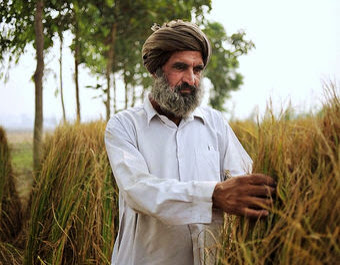
Rice Farmer in Punjab, India

“The impacts of climate change are likely to result in huge economic, social and environmental damage to South Asian countries, compromising their growth potential and poverty reduction efforts,” said the study, published by the Asian Development Bank.

The cuts in regional GDP are so deep that they might ripple around the world, as six developing countries with 1.4 billion people—a third of them living in poverty—pay the price of the world's continuing reliance on fossil fuels.

Projections like this feed into the urgency for action as world leaders prepare to meet at the United Nations next month to discuss the climate crisis. Recent warnings show that the steps nations seem willing to take will fall well short of what is needed.

Action now, the study shows, would pay immediate and lasting dividends to the countries it examined: Bangladesh, Bhutan, India, the Maldives, Nepal and Sri Lanka.

The study, published as a new 160-page book, says that if the world cuts fossil fuel consumption enough to keep warming within 2 degrees Celsius—the goal of UN negotiations—the costs to South Asian countries of adapting to rising seas and temperatures in the decades ahead might be cut almost in half.

But if business-as-usual continues, leading to a world that is 4 or 5 degrees warmer by 2100 than at the start of the industrial age, the outlook looks grim.

“Climate change will slash up to 9 percent off the South Asian economy every year by the end of this century if the world continues on its current fossil-fuel intensive path,” the bank said. “The human and financial toll could be even higher if the damage from floods, droughts, and other extreme weather events is included.”

Because this kind of estimate is inherently imprecise, the bank warned that the real damage could be much worse than expected. Under business-as-usual trends, there is a one in 20 chance that South Asia will lose 24 percent of its annual GDP by the end of the century, the study found.

Paying to stave off those damages will cost these nations dearly, the study said.

To avoid the damage that is expected if the world takes no action on climate change, South Asia would have to spend nearly $40 billion per year by 2050 on adaptation measures, or nearly half a percentage point of average annual GDP. By 2100, the costs would have to increase to $73 billion per year, or roughly nine-tenths of a point of GDP.

If the world were to achieve the 2-degree warming goal established by UN negotiators at climate treaty talks in Copenhagen in 2009—a goal also at the heart of culminating talks set for Paris in 2015—annual adaptation costs for South Asia would be considerably less: $31 billion a year at mid-century, and $41 billion at century's end.

And instead of losing nearly 9 percent of annual GDP by the end of the century, the study found, South Asia would lose about 2.5 percent by 2100 if the world lives up to the goals of Copenhagen. More


Leonardo DiCaprio Narrates Climate Change Films Urging Shift From Fossil Fuels to Renewables

Production company Tree Media, whose mission is to inspire positive social action, has just released the first of four films in the Green World Rising series focusing on solutions to the climate crisis.

The eight-minute film, CARBON, narrated by actor and dedicated environmentalist Leonardo DiCaprio, was created with support from the Leonardo DiCaprio Foundation and in collaboration with Thom Hartmann. The film’s goal is to draw attention to how some governments are already putting a price on carbon through carbon taxes and carbon trading to encourage polluters to shift from dirty energy sources to renewables prior to the UN Climate Summit in New York on Sep. 23. All four films will be released in the next month leading up to the summit.

“97% of climate scientists agree: climate change is happening now—and humans are responsible,” said DiCaprio. “We cannot sit idly by and watch the fossil fuel industry make billions at our collective expense. We must put a price on carbon—now.”

“We need serious action to address the most pressing issue of our time,” said Hartmann. “Communities across the world have taken action in the most direct and effective way possible by taxing and trading carbon. For us to beat this crisis, many more need to join.”

The film explains what a carbon tax and carbon trading are, how they can help us stop “using the atmosphere as a sewer,” as Joseph Romm of the Center for American Progress says in the film, and what ordinary people can do to push elected officials to act. More

Carbon


Published on Aug 20, 201 4 • CARBON is the first film in the Green World Rising Series, http:// www.greenworldrising.org “Carbon” is narrated by Leonardo DiCaprio, presented by Thorn Hartmann and directed by Leila Conners. Executive Producers are George DiCaprio, Earl Katz and Roee Sharon Peled. Carbon is produced by

Mathew Schmid and was written by Thorn Hartmann, Sam Sacks, Leila Conners and Mathew Schmid. Music is composed and performed by Jean-Pascal Beintus and intro drone by Francesco Lupica. Carbon is produced by Tree Media with the support of the Leonardo DiCaprio Foundation.

Greenland ice loss doubles from late 2000s

A new assessment from Europe’s CryoSat spacecraft shows Greenland to be losing about 375 cu km of ice year.

The team has produced elevation models for the ice sheets

Added to the discharges coming from Antarctica, it means Earth’s two big ice sheets are now dumping roughly 500 cu km of ice in the oceans annually.

“The contribution of both ice sheets together to sea level rise has doubled since 2009,” said Angelika Humbert from Germany’s Alfred Wegener Institute.

“To us, that’s an incredible number,” she told BBC News.

In its report to The Cryosphere journal, the AWI team does not actually calculate a sea-level rise equivalent number, but if this volume is considered to be all ice (a small part will be snow) then the contribution is likely to be on the order of just over a millimetre per year.

This is the latest study to use the precision altimetry data being gathered by the European Space Agency’s CryoSat platform.

The satellite was launched in 2010 with a sophisticated radar instrument specifically designed to measure the shape of the polar ice sheets.

The AWI group, led by senior researcher Veit Helm, has taken just over two years’ worth of data centred on 2012/2013 to build what are called digital elevation models (DEMs) of Greenland and Antarctica, and to asses their evolution.

These models incorporate a total of 14 million individual height measurements for Greenland and another 200 million for Antarctica.

When compared with similar data-sets assembled by the US space agency’s IceSat mission between 2003 and 2009, the scientists are able then to calculate changes in ice volume beyond just the CryoSat snapshot.

Negative shifts are the result of surface melting and ice discharge; positive trends are the consequence of precipitation – snowfall.

Greenland is experiencing the biggest reductions in elevation currently, losing about 375 cu km a year (plus or minus 24 cu km per year), with most of the action occurring at the west and south-east coast of the continent.

Significant thinning is seen also in the North East Greenland Ice Stream (NEGIS).

“This has three outlet glaciers and one of these, the Zachariae Isstrom, has retreated quite a bit and some volume loss has already been reported. But we see now that this volume loss is really propagating to upper areas, much further into the interior of the ice sheet than has been recorded before,” explained Prof Humbert.

In Antarctica, the annual volume loss is about 128 cu km per year (plus or minus 83 cu km per year).

As other studies have found, this is concentrated in the continent’s western sector, in the area of the Amundsen Sea Embayment.

Big glaciers here, such as Thwaites and Pine Island, are thinning and retreating at a rapid rate.

Some thickening is seen also, such as in Dronning Maud Land, where colossal snowfalls have been reported. But this accumulation does not offset the losses occurring in West Antarctica.

A British-led group recently reported its own Antarctica DEM, using a different algorithm to process the numbers in the CryoSat data.

The AWI outcomes look very similar, and the German team has transferred the exact same approach to Greenland so it can have confidence in comparing the two continents.

The losses also look consistent with the analysis coming out of the American Grace mission, which uses a different type of satellite to monitor gravity changes in the polar regions – to, in essence, weigh the amount of ice being dumped into the sea.

Prof Andy Shepherd, who was part of the British group that reported its findings in May, commented: “This is yet another exciting result from CryoSat, thanks to the team at AWI, charting yet more new ground by providing the first complete survey of ice volume changes in Greenland.

“However, the increased ice losses that have been detected are a worrying reminder that the polar ice sheets are still experiencing dramatic changes, and will inevitably raise concerns about future global sea-level rise.” More


Beware, fellow plutocrats, the pitchforks are coming

Nick Hanauer: Beware, fellow plutocrats, the pitchforks are coming

Published on Aug 12, 2014 • Nick Hanauer is a rich guy, an unrepentant capitalist — and he has something to say to his fellow plutocrats: Wake up! Growing inequality is about to push our societies into conditions resembling prerevolutionary France. Hear his argument about why a dramatic increase in minimum wage could grow the middle class, deliver economic prosperity … and prevent a revolution.

TEDTalks is a daily video podcast of the best talks and performances from the TED Conference, where the world's leading thinkers and doers give the talk of their lives in 18 minutes (or less). Look for talks on Technology, Entertainment and Design – plus science, business, global issues, the arts and much more.

Find closed captions and translated subtitles in many languages at http://www.ted.com/translate

Follow TED news on Twitter: http://www.twitter.com/tednews

Like TED on Facebook: https ://www.facebook.com/TE D

Subscribe to our channel: http://www.youtube.com/user/TEDtalksDirector

Global campaign launched to improve weather & climate services for small island developing states (SIDS)

A global campaign to improve weather and climate services for all small island developing states was launched today with the support of the World Meteorological Organisation (WMO), the Secretariat of the Pacific Regional Environment Programme (SPREP) and Digicel Pacific.

The Small Islands, Weather Together campaign (www.weathertogether.org) aims to show how the small island developing states of the world can work together to improve their vital weather and climate services.

In the Pacific region alone, extreme weather already accounts for 76% of all disasters with 50% directly related to cyclones. The increase in extreme weather events is also hampering the sustainable development of many small island developing states. For example, when Cyclone Evan hit Samoa in December 2012 it resulted in the loss of one third of the country’s entire annual economic output.

WMO Secretary-General Michel Jarraud stresses that small island developing states need greater investment to further strengthen their vital weather and climate services and to ensure that efforts towards sustainable development are not wasted.

“If we don’t invest in stronger weather and climate services for small island developing states then extreme weather events could simply wipe out years of development effort if they are not well prepared. It is much more cost-effective to invest in early preparedness and prevention than to focus only on rehabilitation and post-disaster action,” he asserted.

Climate change is increasing the frequency and intensity of weather and climate events – cyclones, typhoons, drought, flash floods – in many small island developing states. But many of their Meteorological Services still lack the basic infrastructure, technology and expertise they need to protect vulnerable island communities and economies.

For Mr. Jarraud, there is an urgent need to enhance the quality of early warnings for extreme weather. He pointed out that the formulation and dissemination of these warnings also need to be improved so that they can be understood and used by the island communities and government agencies.

In the Pacific islands, SPREP and other partners are working to improve communication of this type of information in partnership with national meteorological services, the media, including broadcast stations and communities.

“SPREP recognises that weather forecasts and warnings such as those given during tropical cyclones do not have a shelf life, they must be disseminated rapidly to the public or else they are useless,” says SPREP Acting Director General Kosi Latu.

He further noted, “We can improve the quality of the forecasts and warnings so that countries and communities have more lead time to take action. But we can also improve the way climate information is used over longer time scales by farmers, fishermen and by decision-makers across government. For example, when planning new infrastructure, we can say ‘this place has a high risk of tsunami, flooding or storm surge, so don’t build things here’.”

Mr. Jarraud recalls that the small developing island states stand to suffer more and more if the global community fails to agree to a limit in greenhouse gas emissions, the main human cause of climate change and global warming.

“Greenhouse gas emissions are still on the rise. We need to reach a peak of emission over the next 15–20 years, then to decrease dramatically to zero equivalent emission in about 50–60 years from now.

“This is a huge challenge. We must act now. The more we wait, the more difficult it will be, and, therefore, the more expensive it will be for countries to adapt to climate change. If we do not act now, we are agreeing to leave the small island developing states in a situation which may no longer be manageable,” he warned.

The Small Islands, Weather Together campaign was launched specifically to coincide with the lead up to the United Nations Third International Conference on Small Island Developing States, which will be held in Apia, Samoa, from 1–4 September, 2014.

For more information visit: www.weathertogether.org


Grain Harvest Fact Sheet

With grain providing much of the calories that sustain humanity, the status of the world grain harvest is a good indicator of the adequacy of the food supply.

Lester Brown

More than 2 billion tons of grain are produced each year worldwide, nearly half of it in just three countries: China, the United States, and India.

Corn, wheat, and rice account for most of the world’s grain harvest. Whereas rice and most wheat are consumed directly as food, corn is largely used for livestock and poultry feed, and for industrial purposes.

Global grain consumption has exceeded production in 8 of the last 14 years, leading to a drawdown in reserves.

Population growth is the oldest source of increasing grain demand. In recent years, the annual growth in grain use has doubled, largely a result of increased use for fuel ethanol and livestock and poultry feed.

In 2013, the United States harvested more than 400 million tons of grain. Of this, 129 million tons (30 percent) went to ethanol distilleries.

Rising yields are the key to expanding the grain harvest as there is little unused cropland. Since 1950, over 93 percent of world grain harvest growth has come from raising yields.

The global grain area planted per person has shrunk from about half an acre (0.2 hectares) in 1950 to a quarter acre (0.1 hectares) in 2013.

At 10 tons per hectare, U.S. corn yields are the highest of any major grain anywhere. In Iowa, some counties harvest up to 13 tons per hectare.

Global average grain yields more than tripled from 1.1 tons per hectare in 1950 to 3.5 tons per hectare in 2013. However, yield growth has slowed from 2.2 percent a year between 1950 and 1990 to 1.4 percent in the years since.

In France, Germany, and the United Kingdom, wheat yields have been flat for more than a decade. The story is similar for rice in Japan and South Korea.

World fertilizer use climbed from 14 million tons in 1950 to 181 million tons in 2013. But in many countries, fertilizer use has reached diminishing returns.

Since 2007, the world has experienced three major grain price spikes. The U.N. Food Price Index indicates that grain in 2014 was twice as expensive as in 2002–04.

Rising global temperatures threaten the world’s major food crops; the “rule of thumb” is that each 1-degree-Celsius rise in temperature (1.8 degrees Fahrenheit) above the growing season optimum can cut productivity by at least 10 percent. More