FAO ‘Pocketbook’ Highlights Environment, Food Security, Nutrition Links

17 November 2014: The world produces more food than it needs, leaving deep resource footprints in terms of carbon emissions, environmental degradation and land and water use, yet it is off track in achieving the World Food Summit (WFS) target of reducing the number of hungry people by 2015, according to ‘Food and Nutrition in Numbers.’

The publication from the Food and Agriculture Organization of the UN (FAO) provides a “pocketbook” compendium on the global state of nutrition.


FAO released the compendium in advance of the Second International Conference on Nutrition (ICN 2), which convenes on 19-21 November 2014, in Rome, Italy. The meeting is expected to adopt a declaration on nutrition and a framework of action on guidance for national policy commitments.


The pocketbook provides global, regional and national level data on the impacts of food systems, with the aim of highlighting the external aspects of nutrition. It addresses a range of topics on nutrition and health, including micronutrient deficiencies, obesity, non-communicable diseases (NCDs), food prices and trade. It also includes food security indicators and indicators on links between the environment, health and nutrition and data on agriculture-related carbon emissions and land use.


Data included in the publication provide “the starting point for evidence-based food policy analysis and for getting a more complete picture of health and environmental impacts associated with nutrition,” emphasized Josef Schmidhuber, FAO’s Statistics Division. Schmidhuber underscored “how much more food agriculture has produced over the past decades,” but said that “what is equally remarkable is that in this world of plenty, we still have 800 million who don’t consume enough calories and 2 billion who don’t eat well.”


FAO’s Nutrition Division Director, Anna Lartey, highlighted the importance of nutrition in development, stressing that countries that do “not pay attention to the nutrition of its citizens will pay dearly in health costs and loss of productivity and this can significantly reduce its economic development.” [UN Press Release] [UNRIC Press Release] [Publication: Food and Nutrition in Numbers] [IISD RS Coverage of ICN 2]

More


President of Palau becomes Champion of the Earth for his pioneering Green Economy Policies

Bangkok, 17 November 2014 – President of Palau, Tommy Remengesau, Jr, was announced as a winner of the UN’s top environmental accolade, the Champions of the Earth award.

The Policy Leadership award, which has been won in previous years by European Commissioner for the Environment, Dr. Potocnik, and Brazil’s Environment Minister, Izabella Teixeira, will be awarded to President Remengesau by UN Secretary-General Ban-Ki-moon and UNEP Executive Director Achim Steiner at an awards ceremony attended by UNEP Goodwill Ambassador Gisele Bundchen at the Smithsonian American Art Museum and National Portrait Gallery in Washington D.C. on 19 November 2014.

Tommy Remengesau, President of Palau, said, “I am honored to receive this award on behalf of the traditional leaders, the people of Palau, and the islanders around the world, who are the stewards for the protection of our vast oceans and natural wealth.”

“As a fisherman, I have seen first-hand the devastating impacts of overfishing, climate change and pollution on our oceans. As the leader of an island country, I know we have the solutions to tackle these issues. We need to stand together to take action now to protect our oceans and our Mother Earth for our generation and future children.”

Under the leadership of President Remengesau, Palau is showing the way to protect its invaluable natural resources while balancing the needs and traditions of its people. Earlier this year the President announced the world’s first Nation-wide Marine Sanctuary that fully protects over 80 per cent of Palau’s 600,000 sq km of Exclusive Economic Zone.

The Sanctuary bans industrial and foreign fishing as well as exports, while establishing a local fishing zone for domestic use. This is a bold step to reverse degradation of the ocean and stands to ignite further global action on oceans.

The President has demonstrated the country’s capacity to successfully meet its conservation goals, having established a network of protected areas representing more than 50 per cent of marine and 20 per cent of terrestrial areas through the Micronesia Challenge. This was largely funded by a “Green Fee” where tourists pay US$30 on departure from Palau, generating more than US$1.3 million annually for conservation.

The President has spearheaded a range of local to global initiatives, from the world’s first shark sanctuary to establishing the Global Island Partnership alongside President Michel of Seychelles, which has inspired more than 30 leaders to launch major sustainable island commitments.

UN Under-Secretary-General and UNEP Executive Director Achim Steiner said, “Palau is an inspiring example of a small island nation courageously addressing the global challenges of climate change and biodiversity loss through a blue-green economy transition, and reflects the level of commitment many Small Island Developing States demonstrated earlier this year to advancing national sustainable development goals at the Third International Conference on Small Island Developing States through the S.A.M.O.A Pathway Outcome Document.”

“Supporting President Remengesau – and other leaders of other small island nations – on this journey of transition, provides an unprecedented opportunity to be part of game-changing solutions that can be applied in broader contexts and bigger economies.”

“In short, we should look upon small island nations like Palau as microcosms of our larger society, and not stand back and leave them to grapple with threats – such as climate change.”

Champions of the Earth is the United Nations’ flagship environmental award launched in 2005 that recognizes outstanding visionaries and leaders in the fields of policy, science, entrepreneurship, and civil society action. Whether by helping to improve the management of natural resources, demonstrating new ways to tackle climate change or raising awareness of emerging environmental challenges, Champions of the Earth should serve as an inspiration for transformative action across the world. Past laureates have included past laureates Mikhail Gorbachev, Al Gore, Felipe Calderon, Mohamed Nasheed, Marina Silva, Vinod Khosla, and many other such exemplary leaders on the environment and development front.

Visit http://www.unep.org/champions/ for more details.


E-Learning Course: Investment Planning Towards Low Carbon Climate Resilient Development

caribbeanclimate's avatarcaribbeanclimate

E-Learning Course 
Investment Planning Towards Low Carbon Climate Resilient Development

Last date to apply – November 17, 2014
Course Delivery Dates: December 1 – 12, 2014

http://einstitute.worldbank.org/ei/course/investment-planning-toward-low-emission-development

Introduction:
The course compiles knowledge and lessons learned during the design phase of the Climate Investment Funds (CIF) investment plans and strategic programs.

The objective of this course is to teach policy-makers, planners and climate change practitioners how to design and finance strategic plans and programs for low carbon and climate resilient development that go beyond a project-by-project approach.

Note:Preference will be given to (in the following order):

(i) national-level government policy-makers, planners and practitioners working in the fields of clean energy, sustainable transportation, energy efficiency, and climate change from the 14 countries invited to prepare SREP investment plans (Bangladesh, Benin, Cambodia, Ghana, Haiti, Kiribati, Lesotho, Madagascar, Malawi, Nicaragua, Rwanda, Sierra Leone, Uganda, Zambia);

(ii) national-level government policy-makers, planners and practitioners working…

View original post 132 more words

Global Governance: The Intersection of Human Security and Justice

caribbeanclimate's avatarcaribbeanclimate

The Hague Institute for Global Justice and The Stimson Center are co-hosting a breakfast Expert Consultation on “Global Governance: The Intersection of Human Security and Justice” on 9 December 2014 from 08:00am – 10am at the Ausan Gate Meeting Room, Hilton Lima Mirafloresin Peru, in connection with the work of the Commission on Global Security, Justice, and Governance.

The Commission is composed of a select group of eminent statespersons and public intellectuals and co-chaired by former U.S. Secretary of State Madeleine K. Albright and former Foreign Minister of Nigeria Professor Ibrahim A. Gambari. A chief goal of the Commission is to issue, in June 2015, a focused set of global policy and institutional reform recommendations in advance of the September 2015 United Nations’ 70th Anniversary Summit in New York and the December 2015 Paris Climate Change Conference.

In addition to seeking expert views from Lima Climate Change…

View original post 154 more words

12-Year Old Victoria Reveals One Of The Best Kept Secrets In The World

It’s a truly incredible time we live in. Think back to all the amazing revolutions we’ve learned about in history.

There’s been some amazing changes that have taken place and the implications of people standing up and doing something different has been huge. After all it led us to where we are today. As destructive and close to extinction as we are, we’ve done some amazing things at the same time and the power of human creativity and love has shown itself.

To hear a young girl speak about facts of our world like Victoria does in the video below is amazing. It not only shows that younger generations simply won’t stand for the current world we live in, but that we can look to people other than the so-called “experts” for creative answers to our current challenges.


Victoria speaks about how our world financial system really works and how it was specifically designed to enslave the population.

Deep Secrets Kept From Us

Most people in the world, young or old, have little idea that our world is so incredibly corrupt and coldly calculated to create an enslaved population.[1] Luckily, this is changing with each passing day as a switch seems to be turning on in people that allows them to see and realize that something isn’t quite right here.

This triggers us to search for answers and with the bevy of information in books, films and on the internet about the true workings of our world, people have the ability to go beyond limited institutions, such as the educational system, to find out what’s really going on. This is likely how Victoria found this information as it’s doubtful she learned it in school.

Check out her powerful message in the video below. Regardless of the fact that the solution she presents may not be complete nor the most advanced, it would undoubtedly be a positive step in the right direction.

Please use this as a tool to pass on to others so they can understand what type of system they really live in. More


Naomi Klein’s ‘This Changes Everything’

“Every inhabitant of this planet must contemplate the day when this planet may no longer be habitable.” Thus spoke President Kennedy in a 1961 address to the United Nations.

Naomi Klein

The threat he warned of was not climate chaos — barely a blip on anybody’s radar at the time — but the hydrogen bomb. The nuclear threat had a volatile urgency and visual clarity that the sprawling, hydra-headed menace of today’s climate calamity cannot match. How can we rouse citizens and governments to act for concerted change? Will it take, as Naomi Klein insists, nothing less than a Marshall Plan for Earth?

“This Changes Everything: Capitalism vs. the Climate” is a book of such ambition and consequence that it is almost unreviewable. Klein’s fans will recognize her method from her prior books, “No Logo: Taking Aim at the Brand Bullies” (1999) and “The Shock Doctrine: The Rise of Disaster Capitalism” (2007), which, with her latest, form an antiglobalization trilogy. Her strategy is to take a scourge — brand-­driven hyperconsumption, corporate exploitation of disaster-struck communities, or “the fiction of perpetual growth on a finite planet” — trace its origins, then chart a course of liberation. In each book she arrives at some semihopeful place, where activists are reaffirming embattled civic values.

To call “This Changes Everything” environmental is to limit Klein’s considerable agenda. “There is still time to avoid catastrophic warming,” she contends, “but not within the rules of capitalism as they are currently constructed. Which is surely the best argument there has ever been for changing those rules.” On the green left, many share Klein’s sentiments. George Monbiot, a columnist for The Guardian, recently lamented that even though “the claims of market fundamentalism have been disproven as dramatically as those of state communism, somehow this zombie ideology staggers on.” Klein, Monbiot and Bill McKibben all insist that we cannot avert the ecological disaster that confronts us without loosening the grip of that superannuated zombie ideology.

That philosophy — ­neoliberalism — promotes a high-consumption, ­carbon-hungry system. Neoliberalism has encouraged mega-mergers, trade agreements hostile to environmental and labor regulations, and global hypermobility, enabling a corporation like Exxon to make, as McKibben has noted, “more money last year than any company in the history of money.” Their outsize power mangles the democratic process. Yet the carbon giants continue to reap $600 billion in annual subsidies from public coffers, not to speak of a greater subsidy: the right, in Klein’s words, to treat the atmosphere as a “waste dump.”

So much for the invisible hand. As the science fiction writer Kim Stanley Robinson observed, when it comes to the environment, the invisible hand never picks up the check.

Klein diagnoses impressively what hasn’t worked. No more claptrap about fracked gas as a bridge to renewables. Enough already of the international summit meetings that produce sirocco-quality hot air, and nonbinding agreements that bind us all to more emissions. Klein dismantles the boondoggle that is cap and trade. She skewers grandiose command-and-control schemes to re-engineer the planet’s climate. No point, when a hubristic mind-set has gotten us into this mess, to pile on further hubris. She reserves a special scorn for the partnerships between Big Green organizations and Immense Carbon, peddled as win-win for everyone, but which haven’t slowed emissions. Such partnerships remind us that when the lamb and the lion lie down together, only one of them gets eaten.

In democracies driven by lobbyists, donors and plutocrats, the giant polluters are going to win while the rest of us, in various degrees of passivity and complicity, will watch the planet die. “Any attempt to rise to the climate challenge will be fruitless unless it is understood as part of a much broader battle of worldviews,” Klein writes. “Our economic system and our planetary system are now at war.”

Klein reminds us that neoliberalism was once an upstart counterrevolution. Through an epic case of bad timing, the Reagan-Thatcher revolution, the rise of the anti-regulatory World Trade Organization, and the cult of privatizing and globalizing everything coincided with the rising public authority of climate science. In 1988, James Hansen, director of NASA’s Goddard Institute, delivered historic testimony at Congressional hearings, declaring that the science was 99 percent unequivocal: The world was warming and we needed to act collectively to reduce emissions. Just one year earlier, Margaret Thatcher famously declared: “There is no such thing as society. There are individual men and women and there are families.” In the battle since, between a collective strategy for forging an inhabitable long-term future and the antisocial, hyper-­corporatized, hyper-carbonized pursuit of short-term growth at any cost, well, there has been only one clear winner.

But counterrevolutions are reversible. Klein devotes much of her book to propitious signs that this can happen — indeed is happening. The global climate justice movement is spreading. Since the mid-1990s, environmental protests have been growing in China at 29 percent per year. Where national leaders have faltered, local governments are forging ahead. Hundreds of German cities and towns have voted to buy back their energy grids from corporations. About two-thirds of Britons favor renationalizing energy and rail.

The divestment movement against Big Carbon is gathering force. While it will never bankrupt the mega-corporations, it can reveal unethical practices while triggering a debate about values that recognizes that such practices are nested in economic systems that encourage, inhibit or even prohibit them.

The voices Klein gathers from across the world achieve a choral force. We hear a Montana goat rancher describe how an improbable alliance against Big Coal between local Native American tribes and settler descendants awakened in the latter a different worldview of time and change and possibility. We hear participants in Idle No More, the First Nations movement that has swept across Canada and beyond, contrast the “extractivist mind-set” with systems “designed to promote more life.”

One quibble: What’s with the subtitle? “Capitalism vs. the Climate” sounds like a P.R. person’s idea of a marquee cage fight, but it belies the sophistication and hopefulness of Klein’s argument. As is sometimes said, it is easier to imagine the end of the world than to imagine the end of capitalism. Klein’s adversary is neoliberalism — the extreme capitalism that has birthed our era of extreme extraction. Klein is smart and pragmatic enough to shun the never-never land of capitalism’s global overthrow. What she does, brilliantly, is provide a historically refined exposé of “capitalism’s drift toward monopoly,” of “corporate interests intent on capturing and radically shrinking the public sphere,” and of “the disaster capitalists who use crises to end-run around democracy.”

To change economic norms and ethical perceptions in tandem is even more formidable than the technological battle to adapt to the heavy weather coming down the tubes. Yet “This Changes Everything” is, improbably, Klein’s most optimistic book. She braids together the science, psychology, geopolitics, economics, ethics and activism that shape the climate question. The result is the most momentous and contentious environmental book since “Silent Spring.” More


Fearing Bombs That Can Pick Whom to Kill

On a bright fall day last year off the coast of Southern California, an Air Force B-1 bomber launched an experimental missile that may herald the future of warfare.

LRAS Missile launched from B-1 bomber

Initially, pilots aboard the plane directed the missile, but halfway to its destination, it severed communication with its operators. Alone, without human oversight, the missile decided which of three ships to attack, dropping to just above the sea surface and striking a 260-foot unmanned freighter.

Warfare is increasingly guided by software. Today, armed drones can be operated by remote pilots peering into video screens thousands of miles from the battlefield. But now, some scientists say, arms makers have crossed into troubling territory: They are developing weapons that rely on artificial intelligence, not human instruction, to decide what to target and whom to kill.

As these weapons become smarter and nimbler, critics fear they will become increasingly difficult for humans to control — or to defend against. And while pinpoint accuracy could save civilian lives, critics fear weapons without human oversight could make war more likely, as easy as flipping a switch.

Britain, Israel and Norway are already deploying missiles and drones that carry out attacks against enemy radar, tanks or ships without direct human control. After launch, so-called autonomous weapons rely on artificial intelligence and sensors to select targets and to initiate an attack.

Britain’s “fire and forget” Brimstone missiles, for example, can distinguish among tanks and cars and buses without human assistance, and can hunt targets in a predesignated region without oversight. The Brimstones also communicate with one another, sharing their targets.

Armaments with even more advanced self-governance are on the drawing board, although the details usually are kept secret. “An autonomous weapons arms race is already taking place,” said Steve Omohundro, a physicist and artificial intelligence specialist at Self-Aware Systems, a research center in Palo Alto, Calif. “They can respond faster, more efficiently and less predictably.”

Concerned by the prospect of a robotics arms race, representatives from dozens of nations will meet on Thursday in Geneva to consider whether development of these weapons should be restricted by the Convention on Certain Conventional Weapons. Christof Heyns, the United Nations special rapporteur on extrajudicial, summary or arbitrary executions, last year called for a moratorium on the development of these weapons.

The Pentagon has issued a directive requiring high-level authorization for the development of weapons capable of killing without human oversight. But fast-moving technology has already made the directive obsolete, some scientists say.

“Our concern is with how the targets are determined, and more importantly, who determines them,” said Peter Asaro, a co-founder and vice chairman of the International Committee for Robot Arms Control, a group of scientists that advocates restrictions on the use of military robots. “Are these human-designated targets? Or are these systems automatically deciding what is a target?”

Weapons manufacturers in the United States were the first to develop advanced autonomous weapons. An early version of the Tomahawk cruise missile had the ability to hunt for Soviet ships over the horizon without direct human control. It was withdrawn in the early 1990s after a nuclear arms treaty with Russia.

Back in 1988, the Navy test-fired a Harpoon antiship missile that employed an early form of self-guidance. The missile mistook an Indian freighter that had strayed onto the test range for its target. The Harpoon, which did not have a warhead, hit the bridge of the freighter, killing a crew member.

Despite the accident, the Harpoon became a mainstay of naval armaments and remains in wide use.

In recent years, artificial intelligence has begun to supplant human decision-making in a variety of fields, such as high-speed stock trading and medical diagnostics, and even in self-driving cars. But technological advances in three particular areas have made self-governing weapons a real possibility.

New types of radar, laser and infrared sensors are helping missiles and drones better calculate their position and orientation. “Machine vision,” resembling that of humans, identifies patterns in images and helps weapons distinguish important targets. This nuanced sensory information can be quickly interpreted by sophisticated artificial intelligence systems, enabling a missile or drone to carry out its own analysis in flight. And computer hardware hosting it all has become relatively inexpensive — and expendable.

The missile tested off the coast of California, the Long Range Anti-Ship Missile, is under development by Lockheed Martin for the Air Force and Navy. It is intended to fly for hundreds of miles, maneuvering on its own to avoid radar, and out of radio contact with human controllers.

In a directive published in 2012, the Pentagon drew a line between semiautonomous weapons, whose targets are chosen by a human operator, and fully autonomous weapons that can hunt and engage targets without intervention.

Weapons of the future, the directive said, must be “designed to allow commanders and operators to exercise appropriate levels of human judgment over the use of force.”

The Pentagon nonetheless argues that the new antiship missile is only semiautonomous and that humans are sufficiently represented in its targeting and killing decisions. But officials at the Defense Advanced Research Projects Agency, which initially developed the missile, and Lockheed declined to comment on how the weapon decides on targets, saying the information is classified.

“It will be operating autonomously when it searches for the enemy fleet,” said Mark A. Gubrud, a physicist and a member of the International Committee for Robot Arms Control, and an early critic of so-called smart weapons. “This is pretty sophisticated stuff that I would call artificial intelligence outside human control.”

Paul Scharre, a weapons specialist now at the Center for a New American Security who led the working group that wrote the Pentagon directive, said, “It’s valid to ask if this crosses the line.”

Some arms-control specialists say that requiring only “appropriate” human control of these weapons is too vague, speeding the development of new targeting systems that automate killing.

Mr. Heyns, of the United Nations, said that nations with advanced weapons should agree to limit their weapons systems to those with “meaningful” human control over the selection and attack of targets. “It must be similar to the role a commander has over his troops,” Mr. Heyns said.

Systems that permit humans to override the computer’s decisions may not meet that criterion, he added. Weapons that make their own decisions move so quickly that human overseers soon may not be able to keep up. Yet many of them are explicitly designed to permit human operators to step away from controls. Israel’s antiradar missile, the Harpy, loiters in the sky until an enemy radar is turned on. It then attacks and destroys the radar installation on its own.

Norway plans to equip its fleet of advanced jet fighters with the Joint Strike Missile, which can hunt, recognize and detect a target without human intervention. Opponents have called it a “killer robot.”

Military analysts like Mr. Scharre argue that automated weapons like these should be embraced because they may result in fewer mass killings and civilian casualties. Autonomous weapons, they say, do not commit war crimes.

On Sept. 16, 2011, for example, British warplanes fired two dozen Brimstone missiles at a group of Libyan tanks that were shelling civilians. Eight or more of the tanks were destroyed simultaneously, according to a military spokesman, saving the lives of many civilians.

It would have been difficult for human operators to coordinate the swarm of missiles with similar precision.

“Better, smarter weapons are good if they reduce civilian casualties or indiscriminate killing,” Mr. Scharre said. More

Editorial

Professor Samdhong Rinpoche,, a leading Tibetan academic stated recently; “Today the challenges of the modernity pose existential threat to mankind and earth itself, if not tackled adequately and immediately. The first major challenge is of VIOLENCE. Its most visible forms are war and terrorism. Then there is the systematic or system generated violence. We are neither able to see it or understand it, but its scope and spread are frightening. The present situation is such that we have no will to resist violence, unless it directly affects us. This kind of violence is market driven which necessitates perpetuation of war or its possibility. In brief the entire world today is being governed by the market forces, which are described consumeristic system”. Violence, war and terrorism, along with poverty and disease are governance issues, global governance issies.

As Kofi Annan, then secretary-general of the United Nations (UN), told world leaders in 1998: “Good governance is perhaps the single most important factor in eradicating poverty and promoting development.” Governance is the exercise of economic, political, and administrative authority to manage a country’s affairs at all levels. Different definitions of good governance have been proposed by development organizations. The definition offered by the UN Development Programme highlights participation, accountability, transparency, consensus, sustainability, the rule of law, and the inclusion of the poorest and most vulnerable people in making decisions about allocating development resources.

All of the above are issues that we have to technology and resources to alleviate. Doing so would remove the necessity to produce weapons as described above, it could do away for the need for the military as we know it today. The world could be like Costa Rica whose military was abolished on December 1, 1948, by President José Figueres Ferrer. Our world could literally become a Paradise or Garden of Eden where peace reigned as everyones needs were fulfilled. Editor.


Climate Policy Initiative

caribbeanclimate's avatarcaribbeanclimate

Here’s a round-up of activities by the Climate Policy Initiative that are useful in the leap up to COP.

Interactive Report & Webinar: Moving to a Low-Carbon Economy Could Free up Trillions

Some worry that a switch away from fossil fuels could have a significant cost to the global economy and undermine the financial system. New research conducted by CPI for the New Climate Economy project demonstrates that with the right policies, a transition to a low-carbon energy system could free up trillions of dollars over the next 20 years to invest in better economic growth.

Read the interactive report HERE.

Join the webinar on November 21st to learn how moving to a low-carbon economy can free up trillions.

New Animated Video: New Models for a Low-Carbon Electricity System

New finance and business models for a low-carbon electricity system in the U.S. and Europe can save consumers, investors, and…

View original post 101 more words

Signs of stress must not be ignored, IEA warns in its new World Energy Outlook

Energy sector must tackle longer-term pressure points before they reach breaking point

Events of the last year have increased many of the long-term uncertainties facing the global energy sector, says the International Energy Agency’s (IEA) World Energy Outlook 2014 (WEO-2014). It warns against the risk that current events distract decision makers from recognising and tackling the longer-term signs of stress that are emerging in the energy system.

In the central scenario of WEO-2014, world primary energy demand is 37% higher in 2040, putting more pressure on the global energy system. But this pressure would be even greater if not for efficiency measures that play a vital role in holding back global demand growth. The scenario shows that world demand for two out of the three fossil fuels – coal and oil – essentially reaches a plateau by 2040, although, for both fuels, this global outcome is a result of very different trends across countries. At the same time, renewable energy technologies gain ground rapidly, helped by falling costs and subsidies (estimated at $120 billion in 2013). By 2040, world energy supply is divided into four almost equal parts: low-carbon sources (nuclear and renewables), oil, natural gas and coal.

In an in-depth focus on nuclear power, WEO-2014 sees installed capacity grow by 60% to 2040 in the central scenario, with the increase concentrated heavily in just four countries (China, India, Korea and Russia). Despite this, the share of nuclear power in the global power mix remains well below its historic peak. Nuclear power plays an important strategic role in enhancing energy security for some countries. It also avoids almost four years’ worth of global energy-related carbon-dioxide (CO2) emissions by 2040. However, nuclear power faces major challenges in competitive markets where there are significant market and regulatory risks, and public acceptance remains a critical issue worldwide. Many countries must also make important decisions regarding the almost 200 nuclear reactors due to be retired by 2040, and how to manage the growing volumes of spent nuclear fuel in the absence of permanent disposal facilities.

“As our global energy system grows and transforms, signs of stress continue to emerge,” said IEA Executive Director Maria van der Hoeven. “But renewables are expected to go from strength to strength, and it is incredible that we can now see a point where they become the world’s number one source of electricity generation.”

The report sees a positive outlook for renewables, as they are expected to account for nearly half of the global increase in power generation to 2040, and overtake coal as the leading source of electricity. Wind power accounts for the largest share of growth in renewables-based generation, followed by hydropower and solar technologies. However, as the share of wind and solar PV in the world’s power mix quadruples, their integration becomes more challenging both from a technical and market perspective.

World oil supply rises to 104 million barrels per day (mb/d) in 2040, but hinges critically on investments in the Middle East. As tight oil output in the United States levels off, and non-OPEC supply falls back in the 2020s, the Middle East becomes the major source of supply growth. Growth in world oil demand slows to a near halt by 2040: demand in many of today’s largest consumers either already being in long-term decline by 2040 (the United States, European Union and Japan) or having essentially reached a plateau (China, Russia and Brazil). China overtakes the United States as the largest oil consumer around 2030 but, as its demand growth slows, India emerges as a key driver of growth, as do sub-Saharan Africa, the Middle East and Southeast Asia.

“A well-supplied oil market in the short-term should not disguise the challenges that lie ahead, as the world is set to rely more heavily on a relatively small number of producing countries,” said IEA Chief Economist Fatih Birol. “The apparent breathing space provided by rising output in the Americas over the next decade provides little reassurance, given the long lead times of new upstream projects.”

Demand for gas is more than 50% higher in 2040, and it is the only fossil fuel still growing significantly at that time. The United States remains the largest global gas producer, although production levels off in the late-2030s as shale gas output starts to recede. East Africa emerges alongside Qatar, Australia, North America and others as an important source of liquefied natural gas (LNG), which is an increasingly important tool for gas security. A key uncertainty for gas outside of North America is whether it can be made available at prices that are low enough to be attractive for consumers and yet high enough to incentivise large investments in supply.

While coal is abundant and its supply relatively secure, its future use is constrained by measures to improve efficiency, tackle local pollution and reduce CO2 emissions. Coal demand is 15% higher in 2040 but growth slows to a near halt in the 2020s. Regional trends vary, with demand reaching a peak in China, dropping by one-third in the United States, but continuing to grow in India.

The global energy system continues to face a major energy poverty crisis. In sub-Saharan Africa (the regional focus of WEO-2014), two out of every three people do not have access to electricity, and this is acting as a severe constraint on economic and social development. Meanwhile, costly fossil-fuel consumption subsidies (estimated at $550 billion in 2013) are often intended to help increase energy access, but fail to help those that need it most and discourage investment in efficiency and renewables.

A critical “sign of stress” is the failure to transform the energy system quickly enough to stem the rise in energy-related CO2 emissions (which grow by one-fifth to 2040) and put the world on a path consistent with a long-term global temperature increase of 2°C. In the central scenario, the entire carbon budget allowed under a 2°C climate trajectory is consumed by 2040, highlighting the need for a comprehensive and ambitious agreement at the COP21 meeting in Paris in 2015.

The World Energy Outlook is for sale at the IEA bookshop. Journalists who would like more information should contact ieapressoffice@iea.org.

Download the following resources:

About the IEA

The International Energy Agency is an autonomous organisation that works to ensure reliable, affordable and clean energy for its 29 member countries and beyond. Founded in response to the 1973/4 oil crisis, the IEA’s initial role was to help countries co-ordinate a collective response to major disruptions in oil supply. While this remains a key aspect of its work, the IEA has evolved and expanded. It is at the heart of global dialogue on energy, providing authoritative research, statistics, analysis and recommendations.

Alternative Download


US and China strike deal on carbon cuts in push for global climate change pact

caribbeanclimate's avatarcaribbeanclimate

Barack Obama aims for reduction of a quarter or more by 2025, while Xi Jinping sets goal for emissions to fall after 2030

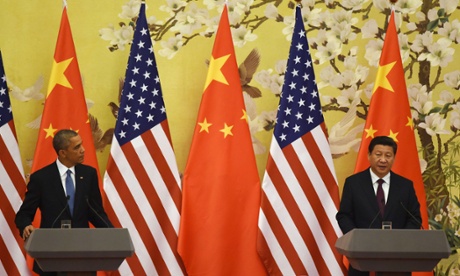
US President Barack Obama looks on as Chinese President Xi Jinping speaks during a joint press conference in the Great Hall of the People in Beijing Photograph: Greg Baker/AFP/Getty Images US President Barack Obama looks on as Chinese President Xi Jinping speaks during a joint press conference in the Great Hall of the People in Beijing Photograph: Greg Baker/AFP/Getty Images

The United States and China have unveiled a secretly negotiated deal to reduce their greenhouse gas output, with China agreeing to cap emissions for the first time and the US committing to deep reductions by 2025.

The pledges in an agreement struck between President Barack Obama and his Chinese counterpart, Xi Jingping, provide an important boost to international efforts to reach a global deal on reducing emissions beyond 2020 at a United Nations meeting in Paris next year.

China, the biggest emitter of greenhouse gases in the world, has agreed to cap its output by 2030 or…

View original post 944 more words