UK provides millions to aid fishing in the Caribbean

caribbeanclimate's avatarcaribbeanclimate

fishermen

British Prime Minister David Cameron has set aside £5.6 million (US$8.4 million) of its overseas aid budget to go towards improving fishing in the Caribbean and other small island states.

Among the 25 Commonwealth small island nations set to benefit are: Barbados, Bermuda, Jamaica, St Lucia, Trinidad and Tobago.

Cameron said the money will be provided from next year to target developing maritime economy plans, with additional funding on offer for future years to help these countries implement their plans.

The funding will provide for: technical experts from the UK Hydrographic Office to locate valuable marine resources and mitigate the hazards to shipping that would otherwise make the exploitation of those resources uneconomical; the Centre for Environment, Fisheries and Aquaculture Science to work with the countries to strengthen their capacity to manage their local fisheries, tackle pollution and develop coastal infrastructure; and assistance from the National Oceanographic Centre to map…

View original post 159 more words

Concern Rising Over Massive Annual Seaweed Invasion in West Africa

caribbeanclimate's avatarcaribbeanclimate

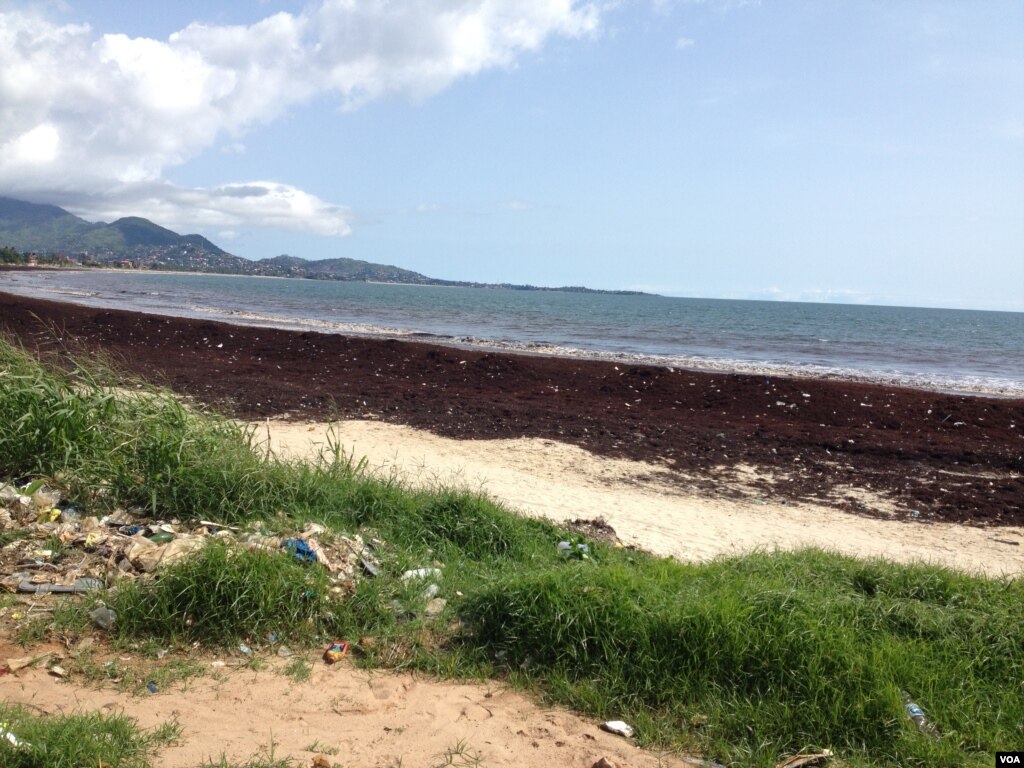
FILE - Sargassum seaweed blankets Lumley beach, Freetown, Sierra Leone, Oct. 1, 2015. (N.de Vries/VOA). FILE – Sargassum seaweed blankets Lumley beach, Freetown, Sierra Leone, Oct. 1, 2015. (N.de Vries/VOA).

Large amounts of seaweed have been washing up on the beaches of Sierra Leone and other countries in West Africa and the Caribbean. Scientists say climate change may be to blame. Local environmental protection authorities plan to bring it up at the U.N.’s climate change summit in Paris.

As Sierra Leone is trying to bounce back from the worst Ebola outbreak in history, it now is turning attention back to other pressing issues, including excessive seaweed on its pristine beaches.

The problem has been apparent for the past several years during the country’s rainy season, which can last about six months.

The beaches become entirely blanketed with sargassum seaweed. It’s normal to have some of this seaweed, but not the amount that’s been showing up lately.

Climate change may be a factor.

Climate change impact

View original post 317 more words

French ambassador: T&T leads region in Climate Change commitment

caribbeanclimate's avatarcaribbeanclimate

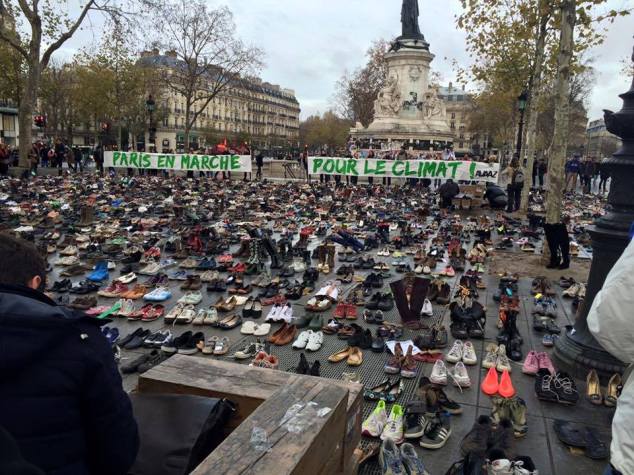
Dr Albert Imana of Kenya reacts as Darius De Allie, a volunteer with the El Socorro Centre for Wildlife Conservation, drapes an albino python around his neck during yesterday’s IAMovement Port-of-Spain to Paris People’s Climate March at Nelson Mandela Park, in St James. PHOTO: SHIRLEY BAHADUR

French Ambassador to Trinidad and Tobago (T&T), Ambassador Hedi Picquart said this country is the first in the Caribbean region to show its commitment to deal with the effects of climate change.

This comes ahead of today’s conference in Paris where global leaders will meet to talk about climate change, including gas emissions and its effect on the environment.

The ambassador was speaking at the start of yesterday’s People’s Climate march titled, From Port-of-Spain to Paris 2015, which started at the Nelson Mandela Park in St James and had between 500 and 600 participants, according to director, Jonathon Barcant from the IAMovement, a non-profit…

View original post 134 more words

Marching into the climate negotiations

caribbeanclimate's avatarcaribbeanclimate

Dizzanne Billy is President of the Caribbean Youth Environment Network (CYEN) in Trinidad and Tobago, where she works in the areas of education and public awareness with regard to environment and development issues. She is a climate tracker with Adopt-A-Negotiator and an advocate for climate change action.

12309495_10153738611552708_2833872136702375608_o

The climate change movement broke records in more than ten countries around the world.12316641_981797305218699_4017826271841672710_n

The largest climate marches in history were held in Australia and the UK, with 60,000 and 50,000 people traipsing the streets of Melbourne and London. This  movement is representative of humanity; from Mongolia to Saudi Arabia and Samoa to Trinidad and Tobago (T&T), over 570, 000 people in 175 countries came together to support climate action.

In Port-of-Spain (POS), placards displayed messages such as “Global warming is not cool,” “Less talk, more action,” and “1.5 to stay alive,” representing  a foundation for the implementation of  policies.   At the…

View original post 380 more words

Why is COP 21 Important for the Caribbean? 11 points our negotiators are championing

caribbeanclimate's avatarcaribbeanclimate

The 21st Conference of the Parties (COP 21) to the 1992 United Nations Framework Convention on Climate Change (UNFCCC) and the 11th session of the Meeting of the Parties to the 1997 Kyoto Protocol are underway in Paris. COP 21 is expected to result in a legally binding and universal agreement on climate, from all the nations of the world.

The future of the Caribbean depends on a binding and ambitious global agreement at COP 21. A bold agreement that curbs greenhouse gas emissions to limit the global rise in temperature to below two Degrees Celsius  is needed to safeguard our food, critical industries such as tourism, infrastructure and promote renewable energy. Perused our informational card “Why is COP 21 Important?” for more context and the region’s 11 point negotiating position leading up to COP 21.

View original post 22 more words

Gallery

Students and Minister Visit the CCCCC

caribbeanclimate's avatarcaribbeanclimate

Students of Compassion Primary School in Yo Creek Village, Orange Walk District, Belize visited the Caribbean Community Climate Change Centre (CCCCC) on Friday, November 20.

The teaching team that accompanied the students were elated, noting: “It is never too early to learn about climate change and that is why we wanted the children to visit the Centre on Children’s Day.” The students were eager to learn about how Climate Change is affecting their country, as well as the the mitigation work being undertaken by the Centre. They were further animated by the presence of Mr Omar Figueroa, Minister of State with responsibility for Environment, Sustainable development and Climate Change, who encouraged them to continue to show strong interest in climate change concerns and get involved with schools-based projects.

Carlos Fuller, the Regional Liaison Officer at the  Centre, introduced the students to a wide-ranging of climate change concepts and the broader regional…

View original post 229 more words

Caribbean environmental experts explore climate change and public health responses

caribbeanclimate's avatarcaribbeanclimate

Flooding in Cuba *Photo credits: IPS News Flooding in Cuba *Photo credits: IPS News

The Caribbean, mainly comprised of small island nations, is the world’s most tourist-dependent region, and one of the most vulnerable to the negative impacts of climate change.

Within recent times, the Region has experienced more frequent and severe storms and hurricanes, increases in mosquito-borne diseases, rises in sea level, prolonged periods of drought and salt water intrusion of coastal groundwater sources, which pose a significant threat to human health.

Recognizing the critical need to be more climate change resilient, the Caribbean Public Health Agency (CARPHA) in collaboration with the Pan American Health Organization/World Health Organization (PAHO/WHO), UNEP-Caribbean Regional Coordinating Unit (UNEP CAR-RCU), and the Government of Saint Lucia, will host a Conference to address issues related to climate change and health.

Dr.-James-Hospedales-1024x682 CARPHA Executive Director Dr. James Hospedales said that because Climate Change threatens traditional public health infrastructure, the focus will be on environmental…

View original post 202 more words

St Lucian Youth Raise Their Voices Ahead of COP21

caribbeanclimate's avatarcaribbeanclimate

The Saint Lucia chapter of the Caribbean Youth Environment Network (CYEN), a network of environmentally conscious young adults, recently launched its “1.5 to Stay Alivestatement and petition on the popular global Change.org platform.

The group is aiming to attract over one million signatures by the end of the month.  They have since distributed within the global GEF SGP system with 124 countries and over 20,000 CSOs.

View the petition here.

View original post

Cautious Optimism in Some Quarters Ahead of COP21

caribbeanclimate's avatarcaribbeanclimate

Dr Orville Grey (left), senior technical officer with responsibility for Adaptation in the Climate Change Division, listens intently to Clifford Mahlung (right), one of Jamaica’s senior negotiators for the upcoming United Nations Conference on Climate Change (COPI21) in Paris, and Jeffrey Spooner, head of the Meteorological Service of Jamaica during a workshop yesterday.

Jamaica appears cautiously optimistic about the global climate-change deliberations to take place in Paris next month, having had, along with others, to significantly rework the text that is to form the basis of their work.

The text is comprised of a draft agreement and a draft decision, with provisions that could go in either, together with areas covered in previous talks, including mitigation, adaptation, loss and damage, finance, and technology.

Without that document, which increased from 20 to 51 pages after the October 19 to 23 meeting of delegates, held in Bonn, Germany, it would likely have…

View original post 576 more words

The War in Syria: Complex and More Dangerous

Russian military intervention in Syria has expanded considerably over the past month and may accelerate further if the destruction of Metrojet Flight 9628 over Sinai is proved to be the work of Islamic State (IS).

Russian and American representatives meet to discuss the situation in Syria on September 29, 2015

The US-led coalition against IS in Syria is meanwhile steadily losing its active members, even as the US escalates its bombing campaign and declares a greater willingness to deploy Special Forces units inside Syria. While the UK prevaricates on its involvement within Syria, Israel has launched new attacks on Hezbollah there and Turkey pursues its own interests against IS and Kurdish factions alike. The risks of accidental escalation between these disparate actors is rising as the complexity of the war grows.

Introduction

The October briefing reported a number of developments in the war in Syria, including the Russian intervention, a likely extension of the US-led air war and a change in US strategy towards arming opposition groups in preference to training them. Perhaps most significantly there were revised US intelligence estimates indicating that Islamic State (IS) was gaining new recruits in Syria and Iraq at a rate more than compensating for the heavy losses caused by the air strikes in both countries.

This briefing provides an updated analysis based on developments since mid-October as they apply to Syria in particular. Its main focus is on two developments early in November. One was the criticism of UK policy towards Syria by the Chief of the Defence Staff, General Sir Nicholas Houghton, who argued that the UK was letting its allies down by not joining in the air strikes against IS in Syria. The second was the destruction on 31 October of a Russian charter airliner shortly after it began a flight from Sharm el-Sheikh in southern Sinai to St Petersburg, killing all 224 passengers and crew.

Military Criticism of UK Inaction

The comments of General Houghton caused some concern as they were paralleled by a more controversial expression of opposition to the views of the new Labour Party Leader, Jeremy Corbyn, over the Trident nuclear weapons system. There has been concern that General Houghton has strayed too far into the political dimension with his Trident-related comments, but this has been less the case in relation to his views on attacking Syria in that there is already cross-party opposition to that policy.

What General Houghton’s comments have done is to focus attention on the nature of the air war in Syria which has involved nine coalition partners: Saudi Arabia, Bahrain, the United Arab Emirates (UAE), Morocco, Jordan, Canada and the United States plus, since September, Australia and France. Although the US has carried out around 95% of the attacks, the presence of a range of other countries has added weight to the idea of a united, broadly based and multinational coalition opposing IS in Syria.

The reality is actually quite different as six of the nine coalition partners have ceased undertaking air strikes in the past nine months, although some may still be involved in support operations. Bahrain ceased air strike operations nine months ago, the UAE and Morocco eight months ago, Jordan three months ago and Saudi Arabia just two months ago. These countries are all now more actively involved in their war in Yemen. The fifth country, Canada, under new Prime Minister Justin Trudeau, is withdrawing from all air strike operations over Syria and Iraq.

Of the remaining coalition partners, France is reported to have carried out just two air strikes over Syria with all of the rest of the 270 attacks being over Iraq. Finally, Australia’s air force has undertaken 434 air strikes but up to 2 October had only undertaken two attacks in Syria before pausing in its operations when Russia started its intervention. Belgium and Denmark also pulled out their fighter-bombers from operations over Iraq in July and September respectively.

To all intents and purposes, the air war that has evolved over Syria is now a US operation with minimal involvement from western allies and no operations being undertaken by regional allies. There certainly is an increased intensity of air strikes against IS in Syria but this is entirely down to increased US operations, especially from the Turkish base at Incirlik, less than 30 minutes flight from IS-controlled territory in northern Syria. It is thus fast becoming an American war and this may explain General Houghton’s concern, bearing in mind that it makes it far easier for IS propagandists to portray their role as being the guardians of Islam under persistent attack by the “far enemy” of the United States and its western allies.

Meanwhile, Russian air operations continue although at a lower level than those of the United States. The great majority continue to be against the opponents of the Assad regime and are serving to ensure that those areas of north west Syria that are strongly supportive of the regime are secure from opponents. There are occasional Russian air strikes against IS targets and, while these are of little military consequence, their political significance could be considerable following the destruction of the Russian airliner over Sinai. More