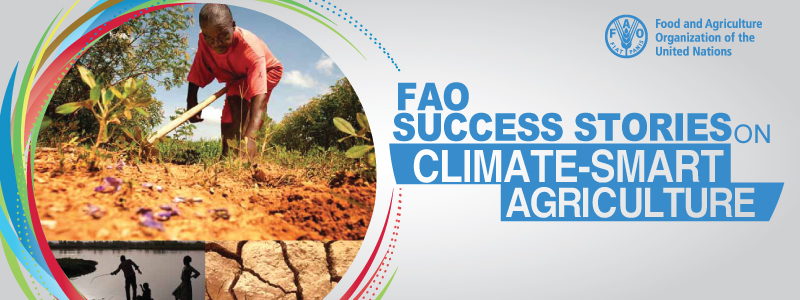
FAO success stories on climate-smart agriculture

caribbeanclimate's avatarcaribbeanclimate

FAO success story

This booklet provides examples of climate-smart systems by showcasing some FAO success stories in various countries. The cases have been selected from the FAO Climate-Smart Agriculture (CSA) Sourcebook launched in 2013 to show the diversity of potential options across different regions and agricultural systems also covering subjects such as biodiversity and gender.

Download here

Credit: Food and Agriculture Organization of the United Nations

View original post

Climate change: UN backs fossil fuel divestment campaign

The UN organisation in charge of global climate change negotiations is backing the fast-growing campaign persuading investors to sell off their fossil fuel assets. It said it was lending its “moral authority” to the divestment campaign because it shared the ambition to get a strong deal to tackle global warming at a crunch UN summit in Paris in December.

“We support divestment as it sends a signal to companies, especially coal companies, that the age of ‘burn what you like, when you like’ cannot continue,” said Nick Nuttall, the spokesman for the UN framework convention on climate change (UNFCCC).

The move is likely to be controversial as the economies of many nations at the negotiating table heavily rely on coal, oil and gas. In 2013, coal-reliant Poland hosted the UNFCCC summit and was castigated for arranging a global coal industry summit alongside. Now, the World Coal Association has criticised the UNFCCC’s decision to back divestment, saying it threatened investment in cleaner coal technologies.

Several analyses have shown that there are more fossil fuels in proven reserves than can be burned if catastrophic global warming is to be avoided, as world leaders have pledged. Divestment campaigners argue that the trillions of dollars companies continue to spend on exploration for even more fossil fuels is a danger to both the climate and investors’ capital.

“Everything we do is based on science and the science is pretty clear that we need a world with a lot less fossil fuels,” Nuttall told the Guardian. “We have lent our own moral authority as the UN to those groups or organisations who are divesting. We are saying ‘we support your aims and ambitions because they are fairly and squarely our ambition’, which is to get a good deal in Paris.”

The UN secretary general, Ban Ki-moon, sent a related message to investors in November, saying: “Please reduce your investments in the coal- and fossil-fuel-based economy and [move] to renewable energy.” But he stopped short of backing the divestment campaign itself.

Many religious groups are among the 180 organisations that have already divested their funds from fossil fuels, as well as city authorities and universities. “We see the divestment of churches very much as a moral imperative for them,” Nuttall said. “If their goal is relieving the suffering of millions of people, then divestment is in line with how they want the world to be.”

A recent tweet from the UNFCCC said: “Divestment worked to free [South Africa] of apartheid. Now it can help free us of fossil fuels.” The tweet carried a quote and image of the archbishop Desmond Tutu, who in 2014 told the Guardian: “People of conscience need to break their ties with corporations financing the injustice of climate change.”

— UNFCCC (@UNFCCC) February 11, 2015

#Divestment worked to free SA of #apartheid. Now it can help free us of #fossilfuelshttp://t.co/RWEszTzWvp @350 pic.twitter.com/0yWJOAn1y8

Divestment campaigners say their aim is to bankrupt fossil fuel companies morally, not financially. “No one is saying divestment by churches and universities will shift the market in a one-to-one way,” said Nuttall. “The message now is that you can get off fossil fuels without undermining your investments. It’s a different world now. You can save the world and get a good return on your investment.”

Many senior figures and institutions in the financial world, including the World Bank, Bank of England, HSBC, Goldman Sachs and Standard and Poor’s, have warned that only a fraction of known fossil fuel reserves can be safely burned and that the remainder could plummet in value posing huge risks to investors.

Benjamin Sporton, acting chief executive of the World Coal Association, rejected the linking of divestment from fossil fuels with divestment from tobacco and apartheid South Africa. “The coal divestment campaign is not comparable to any other divestment campaign,” he said. “Active and responsible investors play a vital role in encouraging investment in cleaner coal technologies. Demand for coal is not going away.”

As global warming argument moves on to politics and business, Alan Rusbridger explains the thinking behind our major series on the climate crisis

Sporton said the divestment campaign was a concern: “There are economic and social dimensions that mean divesting from fossil fuels – and in particular coal – comes with significant risks, not least when 1.3 billion people are still without access to electricity.” The UN’s Intergovernmental Panel on Climate Change said in November that global warming is set to inflict severe and irreversible impacts on people and that “limiting its effects is necessary to achieve sustainable development and equity, including poverty eradication”.

“Meeting the demand projected by the International Energy Agency will call for $18.5tn of cumulative investment between 2014 and 2035,” said a spokesman for the International Association of Oil and Gas Producers (IOGP). “This doesn’t support an argument for divestment.” Replacing coal-fired power stations with gas can halve carbon emissions, he added.

IPIECA, the global oil and gas industry association for environmental issues and “the industry’s principal channel of communication with the UN”, declined to comment. More


Building Resilience to Disasters and Climate Change in the Pacific for Sustainable Developmen

Should you be in Sendai attending the UN World Conference on Disaster Risk Reduction we would like to cordially invite you to attend our Pacific side event “Building Resilience to Disasters and Climate Change in the Pacific for Sustainable Development” on Monday, 16 March from 9.45am – 12pm at B104 Kawauchi-Kita Camps, Tohoku University.

If you have any queries, please do not hesitate to contact me at nanettew@sprep.org.


The Palestinian dimension of the regional energy landscape

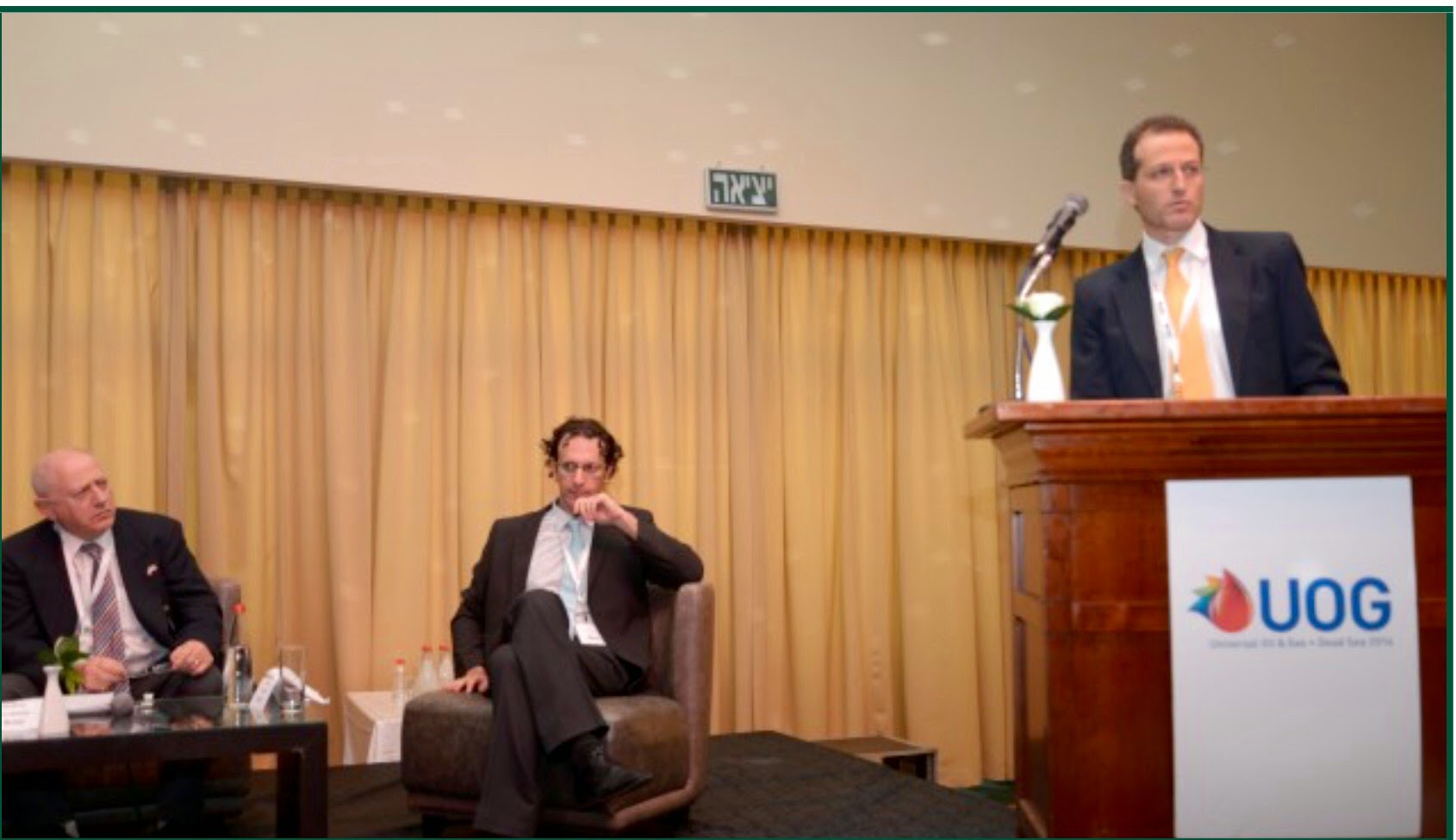
“The dynamic regional context creates opportunities for synergies between Palestinians, Israelis and other regional actors in the field of energy,” Ariel Ezrahi, Energy Advisor at the Office of the Quartet Representative told the International Oil and Gas Conference on Thursday (20 November 2014).

Ariel Ezrahi

In his presentation to the conference at the Dead Sea in Israel, Ezrahi gave an overview of the Palestinian energy sector including the current capacities, future demand, and potential opportunities for investment and development. He said that development of the Gaza Marine offshore gas field would constitute an important source of revenue for the Palestinian Authority, and fuel Palestinian power generation projects for years to come. The Gaza Marine field would not only be a cost-efficient solution for domestic power generation, but also a more environmentally friendly solution than the present sources of fuel, said Ezrahi.

He also noted that the West Bank currently has no power generation capacity whatsoever. Electricity usage is currently around 860 megawatts, but demand in the West Bank alone is expected to reach around 1,300 megawatts in 2020. Gaza currently receives between 150 to 210 megawatts, while demand is closer to 410 megawatts. By 2020, Ezrahi said, demand will hit 855 megawatts.

“There is a lot of room for cooperation in the energy sphere between Palestinian actors and Israel and other regional counterparts. I think it’s a very exciting time and that the energy sector can hopefully act as a bridge to overcome some of the political constraints. And that would be in everyone’s interest,” he told participants.

“Israel needs to see the Palestinians as an asset as they strive to join the regional power grid, and as a bridge to the Arab world.” Ezrahi emphasised that the Gaza Marine field should not be seen as a competitor to Israel’s fields, but rather, it provides a potential additional source of gas and opportunities for cooperation between the neighbouring countries. More

Related Links

  • Presentation on the Palestinian dimension of the regional energy landscape
  • ‘Israel’s bridge to the Arab world: Palestinian natural gas?’ article in Haaretz English Edition
  • ‘Gaza marine development could help deliver Israeli security,’ article in Rigzone
  • Ariel Ezrahi interivew with TheMarker (Hebrew)

One has to question why Gaza and Palestine would want to give their energy generation to Israel, the occupying power, or in fact help Israel sell their gas through Egypt. Using the gas from the Gazan fields would at least give both Gaza and Palestine energy independance and insulate them from the withholding by Israel of their tax receipts, see http://is.gd/FPWOWr Editor


Different Angles on Iran

Dear Colleague,


As the deadline for finalizing the outline of a nuclear deal with Iran approaches, I want to draw your attention to recent commentary and analysis by Carnegie’s scholars.

Critics of the agreement, including Israeli Prime Minister Benjamin Netanyahu and U.S. Republican senators, are voicing their complaints. But as I explain in a Q&A, there is no better alternative to the current approach, and critics’ arguments depend on dubious assumptions that Iran is not deterrable.

In an article on China’s role in the negotiations, Tong Zhao analyzes how Beijing’s strategic interests align with those of Washington, providing China a chance to contribute to an important precedent for nonproliferation.

In an article on EU-Iran relations, Cornelius Adebahr, Marc Otte, and Nathalie Tocci look at conditions for a more effective EU policy toward Tehran.

In an op-ed published in Arms Control Today, Ariel Levite outlines a Plan B to avoid undue escalation if the goal of securing a credible deal proves elusive.

Finally, in an op-ed published in National Interest, Alexei Arbatov discusses ways for U.S. policymakers to move on in case of a failure to reach a final deal.

I very much hope that you’ll take a look.

Sincerely,

George Perkovich
Vice President for Studies
Nuclear Policy Program


Iran Calls GOP Letter ‘Propaganda Ploy,’ Offers To ‘Enlighten’ Authors

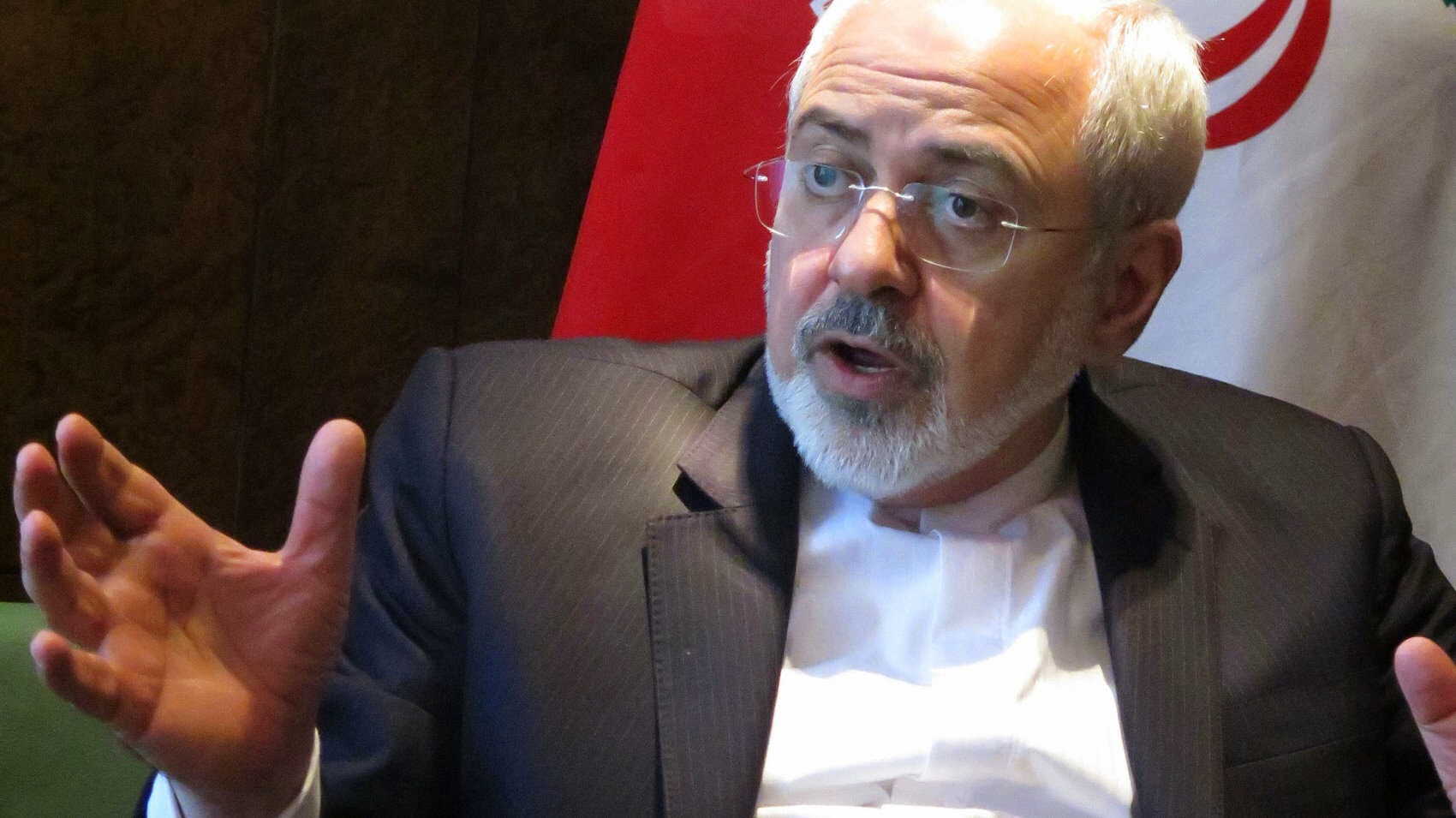
A letter from U.S. senators suggests the lawmakers “not only do not understand international law, but are not fully cognizant of the nuances of their own Constitution,” says Iranian Foreign Minister Mohammad Javad Zarif.

Republican senators’ letter to Iran about ongoing nuclear talks has prompted a lengthy response from Iranian Foreign Minister Mohammad Javad Zarif, who delivered an overview of international law as he critiqued the letter.

Zarif said he was astonished by the letter, saying it suggests the U.S. lawmakers “not only do not understand international law” — a subject in which he is a professor — “but are not fully cognizant of the nuances of their own Constitution when it comes to presidential powers in the conduct of foreign policy,” according to Iran’s Foreign Ministry.

The Iranian minister said that “in our view, this letter has no legal value and is mostly a propaganda ploy.”

His response (we have more of it below) came after it was announced Monday that 47 Senate Republicans who oppose a potential deal with Iran over its nuclear program had signed a letter to the country’s leaders.

Coming two weeks before the deadline for envoys to reach general terms with Iran, the signatories wrote that they had been observing the negotiations over potentially relaxing economic sanctions — and told Iran’s leaders they were concerned “that you may not fully understand our constitutional system.”

The letter seemed to strike a nerve for Zarif, who moved to the U.S. as a teenager and holds a doctorate and two other advanced degrees from American universities.

As NPR’s It’s All Politics blog noted, “The letter was written by freshman Arkansas Sen. Tom Cotton and co-signed by 46 of his GOP colleagues, including Majority Leader Mitch McConnell.”

The senators cited the U.S. process of ratifying treaties in Congress and President Obama’s term that expires in January of 2017, writing:

“What these two constitutional provisions mean is that we will consider any agreement regarding your nuclear-weapons program that is not approved by Congress as nothing more than an executive agreement between President Obama and Ayatollah Khamenei. The next president could revoke such an executive agreement with the stroke of a pen and future Congresses could modify the terms of the agreement at any time.”

The Republicans’ message was quickly criticized by Vice President Joe Biden, a former senator who said it was “beneath the dignity of an institution I revere.”

Seven Republicans did not sign the letter, as NPR’s Ailsa Chang reported today on Morning Edition.

President Obama said, “I think it’s somewhat ironic to see some members of Congress wanting to make common cause with the hard-liners in Iran” who are also against making a deal over Iran’s nuclear program.

Zarif, noting that negotiations are ongoing and haven’t yielded an agreement, said the U.S. lawmakers’ “unconventional methods” show that they “are opposed to any agreement, regardless of its content.”

Saying he hopes to “enrich the knowledge of the authors,” Zarif said:

“I should bring one important point to the attention of the authors and that is, the world is not the United States, and the conduct of inter-state relations is governed by international law, and not by US domestic law. The authors may not fully understand that in international law, governments represent the entirety of their respective states, are responsible for the conduct of foreign affairs, are required to fulfill the obligations they undertake with other states and may not invoke their internal law as justification for failure to perform their international obligations.”

Zarif also noted that many previous international agreements the U.S. has been a party to have been “mere executive agreements,” and not full treaties that received Senate ratification.

He said any deal on sanctions and Iran’s nuclear program would not be bilateral; would require approval by the U.N. and the U.N. Security Council; and would not be subject to modification by Congress.

He added, “I wish to enlighten the authors that if the next administration revokes any agreement with the stroke of a pen, as they boast, it will have simply committed a blatant violation of international law.”

For a different perspective, Ailsa spoke to Richard Nephew, who was on U.S. teams negotiating with Iran during both the Bush and Obama administrations.

Nephew said, “The idea that a sitting group of senators of either party would write to the other side of a negotiation to say, ‘Eh, don’t sign a deal with these guys’ — to me, it really smacks of a misplaced understanding of how the international system is supposed to work.” More


Climate change threatens human rights, Kiribati president tells UN

Pacific leaders tell Human Rights Council they fear for the future of their civilisations as climate impacts intensify

Just three weeks after the conclusion of the most recent climate negotiations, Geneva has once again offered a space for governments to consider how to address the human rights implications of climate change.

As the issue recently emerged as one of the elements that many countries wish to see integrated to the Paris climate agreement, these discussions provided insights on opportunities for states and UN bodies to better address this issue in the coming months.

Last Friday, the Human Rights Council hosted two high-level panels dedicated to the issue of human rights and climate change, with specific focus on the importance of international cooperation and on the impacts of climate change on the exercise of the right to food.

Representatives from small islands states called for urgent action to mitigate climate change, pointing at the fact that climate change threatens the progress made with the promotion of human rights.

The prime minister of Tuvalu Enele Sopoaga warned that climate change will worsen existing inequities in world already riven with inequality, poverty and conflict. Tuvalu, the prime minister warned, has neither the resources nor the capacity to cope with these impacts.

Kiribati’s President Anote Tong reminded the Human Rights Council that, despite all the efforts by his government, climate change remains an existential threat to his people.

“Who do we appeal and turn to for our people’s right to survive?” president Tong asked the Council. “If there is a major challenge on human rights that deserves global commitment, leadership and collaboration, this is the one: the moral responsibility to act now against climate change.”

Both Sopoaga and Tong challenged the Council to consider how the international community should respond to the climate crisis and to urge more strongly for climate action in order to protect the rights of the most vulnerable people.

Other speakers discussed in their interventions the benefits of integrating human rights into climate policies. UN Special Envoy on Climate Change (and former UN High Commissioner for Human Rights) Mary Robinson emphasized that a “human rights framing to our development and climate responses can maximize the potential for inclusion, participation and equality”.

Victoria Tauli-Corpuz, UN Special Rapporteur on the Rights of Indigenous Peoples, insisted more specifically on the importance to respect the rights of indigenous peoples, in particular land rights and participatory rights, when designing climate policies.

Quoting the fifth assessment report from the UN’s IPCC climate science panel, Victoria Tauli-Corpuz also highlighted that “indigenous, local, and traditional knowledge systems and practices, including indigenous peoples’ holistic view of community and environment, are a major resource for adapting to climate change, but these have not been used consistently in existing adaptation efforts”.

The panels were followed by an interactive dialogue with representatives from governments and civil society.

Several common threads emerged from this discussion, including the importance to fully implement the right of the public to take part in decision-making related to climate change, the recognition of the impacts of climate change on economic and social rights, and the importance to consider the linkages between the need to address climate change while protecting the right to development.

Several speakers also spoke in favor of two specific proposals for UN institutions: the importance to include strong references to human rights in the Paris 2015 climate agreement and the opportunity for the Human Rights Council to nominate a UN special rapporteur on human rights and climate change.

Germany also announced during the panels that the country would join the “Geneva Pledge on Human Rights and Climate Action” signed by 18 countries during the most recent round of climate negotiations.

However, the impact of the high political stakes related to the preparation of the Paris Climate Agreement could also be felt throughout the panels.

The interventions by most countries reflected mainly well-entrenched positions in the Council and at the climate negotiations.

The United States in particular suggested that attempts to push for the inclusion in the climate negotiations of references to the work of the Human Rights Council could lead to the “sabotage of the 2015 climate agreement”, a statement that many participants to the session considered out of tone with the discussions.

The panels were followed by the presentation, on Monday, of the report of the UN Independent Expert on Human Rights and the Environment John Knox.

In his presentation, Prof. Knox emphasized that climate change is likely the most serious threat to the enjoyment of human rights.

Referring to the Geneva Pledge as an example of a good practice to better integrate human rights and climate policies, he challenged relevant UN bodies, such as the Office of the High Commissioner for Human Rights, UNEP and UNDP, to establish focal points for human rights and climate change.

The ongoing discussions in Geneva this week are not expected to lead to immediate concrete results. These exchanges could nevertheless provide additional momentum when related sessions will resume in June, both in Geneva and in Bonn.

For the first half of the month, UN climate negotiations will continue to advance work towards the Paris climate agreement.

Momentum

Several governments having insisted last month on the need to insert human rights language in the negotiating text, the June meeting of the climate talks will be crucial to determine whether this proposals are retained in the draft agreement.

Upon the closing of the climate negotiations in Bonn, the Human Rights Council will gather once again in Geneva to consider, among other matters, the adoption of a new resolution on human rights and climate change.

Over the past two months, Geneva offered two opportunities for governments to deepen their understanding of the interplay between human rights and climate action.

The coming months will now be critical to determine whether, through the UN climate body and the Human Rights Council, states are willing to commit to take steps towards ensuring that climate policies address climate change in a way that promotes human rights at the same time. More


Police will “guard” the water for those who can pay for it, while we die of thirst.”

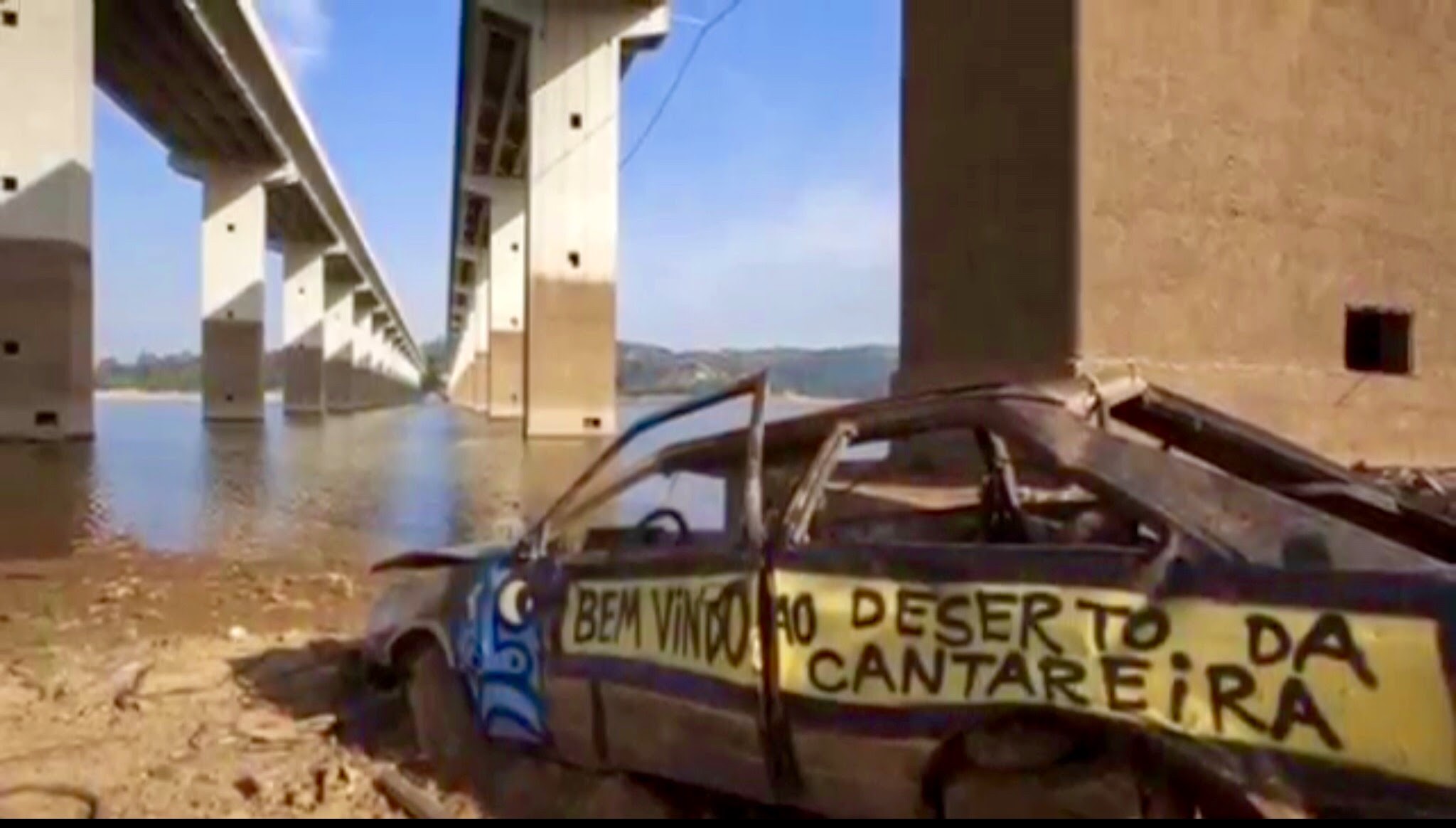
So says a protester walking though the streets of Sao Paul as water service is being drastically cut due to a relentless drought in Brazils most populous state. The 20 million people that live in Sao Paulo, Brazil have run out of water and things are starting to get ugly really fast.

Secretly recorded, Paulo Massato, the metropolitan director of the São Paulo state-run water utility, said that people might have to flee the city. “There's not enough water, there won't be water to bathe, to clean,” says Massato. Fears of what comes next has begun and thousands took to the streets recently walking from the poor neighborhoods and marching past wealthy residential towers most of which have their own water tanks, to the Bandeirantes Palace in Morumbi, where the official residence of the governor (State of Sao Paolo Geraldo Alckmin) is located.

A demonstrator holds up a bucket with a sign reading “Water, Yes,” in reference to water rationing in Sao Paulo January 29, 2015. Residents of Brazil's largest city, Sao Paulo, could soon only have running water two days a week. (REUTERS/Nacho Doce)

São Paulo, along with 93 smaller localities around Brazil, is facing drastic water shortages that could mean up to five days a week without running water starting in April. The mega-city’s largest reservoir, which supplies about 30 percent of the 20 million people living in the metropolitan region, is currently at only 5.1 percent of its capacity. It’s all the result of a severe drought that has extended throughout Brazil’s Southeastern region, and could soon lead to water rationing for as much as 40 percent of the population.

Aside from practical residential concerns, the shortage has affected industry and agriculture across the region, including the production of hydroelectricity, a key component of Brazil’s power grid. Even the carnaval is threatened—celebrations have been cancelled in some dry municipalities and the Río samba groups are altering their choreography to eliminate traditionally prominent water us.

The latest must-have item in the city is a rainwater cistern. A local group created in October, Cisterna Já, teaches city residents how to make their own mini-cisterns, allowing them to cut back on increasingly expensive and scarce public water supplies.

Consumption in the metropolitan region has already been reduced by a quarter, according to the president of Sabesp, the city’s water utility. Yet the main water loss culprit isn’t long showers, but rather leaky pipes. In order to address the problem, he explained in a recent op-ed, about 64,000 kilometers of buried pipes would have to be replaced.

Experts say they are concerned there is little practical preparation for upcoming shortages and argue that few relevant policy measures are being put into place.

The roots of the water shortage can be traced back to deforestation and industrialization across the region, according to Marcos Sorrentino, a professor of education and environmental policy at the University of São Paulo. A lack of political will to address the problem has led São Paulo to maintain a system of wasteful water distribution and consumption, and the city has missed opportunities to implement water saving and reuse technologies, Sorrentino says.

Residential water use only accounts for an estimated 6 percent of water usage in the region, which means that even if Paulistas stopped bathing altogether they won’t be able to resolve the “crisis de agua,” as it’s called locally. “Agriculture and industry, the biggest consumers, are only now being mobilized to commit to reducing consumption,” says Sorrentino.

A recent study found that 95 percent of businesses, industries, hospitals and hotels in the state of São Paulo don’t have a water supply contingency plan. “Lack of water will certainly compromise the operations of places that depend on the public water system,” says Rodnei Domingues, the study’s coordinator.

Sorrentino is particularly concerned about the drought’s impact on food prices, and notes that there have already been several water shortage-related protests. “The discontent of the population of the cities in which rationing has started is very large and it is not difficult to predict effects on public health and the expansion of urban violence,” he says.

The drought began last austral summer (December to February), when São Paulo state received about one-third to half of its usual amount of rain during what should have been its wettest season. In the seven months since, rainfall has been about 40 percent of normal. Across southeastern Brazil, production of key crops like coffee and sugar are in steep decline, and citizens are facing periodic outages in the water supply—even as news agencies report that local water authorities have not instituted conservation measures.

“The climate of the region is seasonal, with a rainy summer and a dry winter, and the drought has extended through the current dry season and the past rainy season,” noted Marcos Heil Costa, climate scientist at the Universidade Federal de Viçosa. “To make things worse, the onset of the rainy season—which usually happens in late September or early October—has not happened yet.”

“For the last rainy season, the pattern [of reduced rainfall] has been observed in the past, though the intensity was unprecedented this year,” Costa added. “For the dry season, coincidence or not, it looks exactly like what has been predicted by IPCC for a warmer climate. And it is now clear that our policies on management of water resources are unsustainable. No city in southeast Brazil seems prepared to handle a drought like this one. It is a mix of a lack of preparation for low levels of rain and a lack of environmental education in the population. Most people continue to use water as if we were in a normal year.” More


Water for Life Voices’ Exhibition in UN Headquarters to highlight progress during the Water Decade

Water for Life Voices’ Exhibition in UN Headquarters to highlight progress during the Water Decade

Date: 9 March to 14 April 2015 – Place: UN Headquarters, New York, United States

Organiser: UN-Water Decade Programmeon Advocacy and Communication (UNW-DPAC)

Achieving the Water for Life Decade’s goals has needed sustained commitment, engagement, cooperation and investment from all. As the Decade is officially drawing to a close in 2015, the UN-Water Decade Programme on Advocacy and Communication (UNW-DPAC)wants to show how people’s efforts have contributed to its success. To this end, the Water for Life Voices campaign has gathered the voices of those whose life has changed over the last 10 years due to water and sanitation. Selected contributions from the campaign will form the exhibition at the UN Headquarters from 9 March to 14 April 2015. It is hoped that the exhibition will bring the voices of beneficiaries of water programmes over the Decade and highlight the human aspect of water programmes, and thus help support the inclusion of such considerations into the Sustainable Development Goals (SDG). As Josefina Maestu, Director of the Office to support the Water for Life Decade, explains: “This exhibit brings the lives and voices of the beneficiaries of water programmes right into the halls of the UN General Assembly. It serves as a reminder to the UN’s top decision makers of just how much impact their work has had on people over the last Decade. It should also show visitors how much has been done, and how much there is yet to do to ensure continued development and progress for all the world’s peoples.”

>> Access the Water for Life Voices website!

>> More on the Water for Life Voices campaign


Climate change key in Syrian conflict – and it will trigger more war in future

Climate change was a key driver of the Syrian uprising, according to research which warns that global warming is likely to unleash more wars in the coming decades, with Eastern Mediterranean countries such as Jordan and Lebanon particularly at risk.

Experts have long predicted that climate change will be a major source of conflict as drought and rising temperatures hurt agriculture, putting a further strain on resources in already unstable regimes.

But the Syria conflict is the first war that scientists have explicitly linked to climate change. Researchers say that global warming intensified the region’s worst-ever drought, pushing the country into civil war by destroying agriculture and forcing an exodus to cities already straining from poverty, an influx of refugees from war-torn Iraq next door and poor government, the report finds.

“Added to all the other stressors, climate change helped kick things over the threshold into open conflict,” said report co-author Richard Seager, of Columbia University in New York.

“I think this is scary and it’s only just beginning. It’s going to continue through the current century as part of the general drying of the Eastern Mediterranean – I don’t see how things are going to survive there,” Professor Seager added.

Turkey, Lebananon, Israel, Jordan, Iraq and Afghanistan are among those most at risk from drought because of the intensity of the drying and the history of conflict in the region, he says. Israel is much better equipped to withstand climate change than its neighbours because it is wealthy, politically stable and imports much of its food. Drought-ravaged East African countries such as Somalia and Sudan are also vulnerable along with parts of Central America – especially Mexico, which is afflicted by crime, is politically unstable, short of water and reliant on agriculture, Prof Seager said.

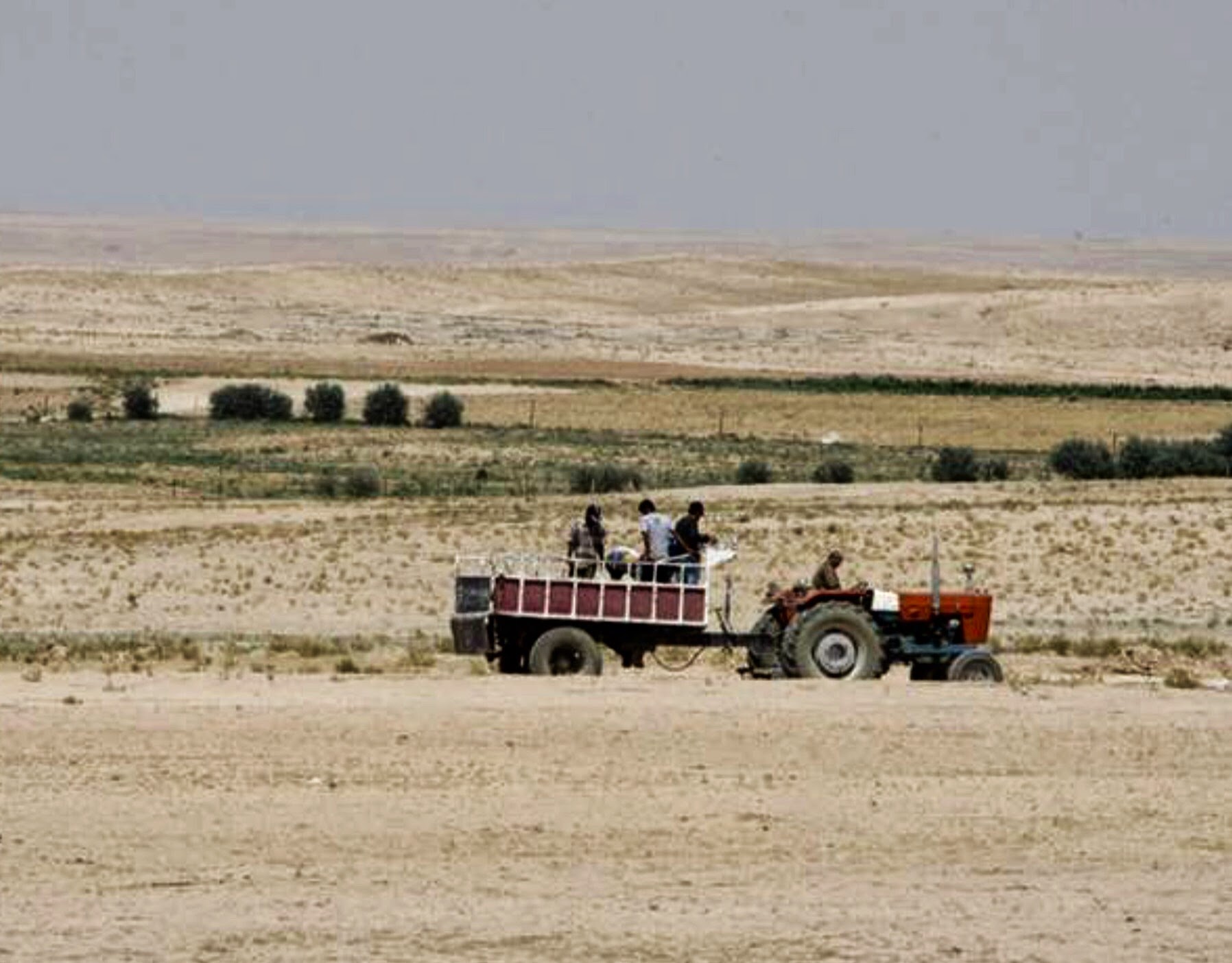
The conflict in Syria began in spring 2011 and has evolved into a complex multinational war that has killed at least 200,000 people and displaced millions more, according to the Columbia study, which appears in the journal Proceedings of the National Academy of Sciences. It was preceded by a record drought that ravaged Syria between 2006 and 2010.The paper says the timing is unlikely to be a coincidence, citing a recent interview with a 38-year old farmer in Mohasen, an agricultural village in the north east of Syria.

Asked if the conflict was about the drought, Faten – a female farmer who did not want to give her last name – said: “Of course. The drought and unemployment were important in pushing people towards revolution. When the drought happened, we could handle it for two years, and then we said, ‘It’s enough’,” the report said.

The study combined climate, social and economic data relating to the so-called Fertile Crescent, spanning parts of Turkey and much of Syria and Iraq, where agriculture and herding are thought to have started 12,000 years ago and continue to be crucial.

The region has warmed by between 1 and 1.2C since 1900, reducing rainfall in the wet season by an average of 10 per cent. In addition to the warming – which has found to be caused by human greenhouse gas emissions – Syria has had to contend with rapid population growth, from 4 million in the 1950s to 22 million now.

The ruling al-Assad family encouraged water-intensive export crops such as cotton, while illegal drilling of irrigation wells dramatically depleted groundwater that might have provided valuable reserves, the report said. The drought’s effects were immediate. Agriculture production, which typically makes up a quarter of Syria’s economy, plummeted by a third.

In the hard-hit northeast, livestock herds were practically obliterated, cereal prices doubled and nutrition-related diseases among children increased dramatically. As many as 1.5m people fled from the country to the city.

“Whether it was a primary or substantial factor is impossible to know, but drought can lead to devastating consequences when coupled with pre-existing acute vulnerability,” said lead author Colin Kelley, who did the work at Columbia but is now the University of California, Santa Barbara.

The pressure exerted by climate change is even more dangerous because it comes against a backdrop of rising populations and growing scarcity of resources, experts say.

With demand for basic commodities such as wheat and copper set to soar over the next two decades, relatively small shocks to supply risk causing sudden price rises and triggering “overreactions or even militarised responses”, the Chatham House think-tank has warned.

Furthermore, while the effects of rising population and global warming may be felt hardest among the poorer countries most affected by climate change, the impact will be felt worldwide.

Global trade is so interconnected that no importer of resources is insulated from the problems of key exporters – a fact of concern to the UK, which imports 40 per cent of its food and a high proportion of fossil fuels and metals, the think-tank warns. More