Pakistani Taliban: The fault in their narrative

On December 16, 2014, Pakistani Taliban massacred over 132 children when they attacked a high school in Peshawar.

Taliban in the spring of 2013

They rationalized this attack as a reaction to the violence perpetrated against them (whether by the Pakistani military or US drones). This narrative attempts to shift blame for the violence away from the Taliban, creating an environment where the population becomes sympathetic to their rationales, even while disagreeing with their tactics. Therefore, it is increasingly important to challenge the Taliban narrative.

First, simply claiming to be fighting in reaction to military operations, does not make it true. Taliban in Pakistan were targeting civilians long before the start of any military campaigns. Lethal force was employed against them because the militants had started violence against the Pakistan state, rather than vice versa.

Second, while civilians are in fact being harmed by both the Pakistani military and the US drones, it is not clear if these victims are necessarily joining the Taliban. In fact, there is considerable evidence of child recruitment and forcible recruitment within the Taliban organizations.

Third, in the context of Afghanistan, in his study Jason Lyall found that while insurgents do increase their attacks after the use of force by the counter-insurgency, civilian casualties play an insignificant role in motivating these attacks. To put it simply, terrorist do not care about civilian casualties. By definition, terrorism is a tactic that deliberately targets civilians. Militants increase attacks because their own survival is threatened, and violence is a way of bolstering their bargaining leverage. The choice of targeting a school does show desperation on their part. To quote a Pakistani general, “The militants know they won’t be able to strike at the heart of the military, they don’t have the capacity. So they are going for soft targets.”

The use of lethal force against terrorist groups is a hard sell in today’s political climate, as experts often argue that it exacerbates the problem of terrorism. However, if the use of weapons is to be reduced in the “war against terrorism,” then it is important to challenge the terrorists’ narrative and condemn their actions in an unapologetic fashion. This will shrink the sympathetic space that makes it easier for these groups to operate, making their demise more likely. More


Global warming reduces wheat production markedly if no adaptation takes place

Future global wheat harvest is likely to be reduced by six per cent per each degree Celsius of local temperature increase if no adaptation takes place. Worldwide this would correspond to 42 million tons of yield reduction, which equals a quarter of current global wheat trade, experts warn.

Future global wheat harvest is likely to be reduced by six per cent per each degree Celsius of local temperature increase if no adaptation takes place. Worldwide this would correspond to 42 million tons of yield reduction, which equals a quarter of current global wheat trade.

Wheat plays an important role in feeding the world, but climate change threatens its future harvest. Without adaptation, global aggregate wheat production is projected to decline on average by six per cent for each additional degree Celsius temperature increase. Worldwide this would correspond to 42 million tons yield reduction for one 1°C global warming.

This result has been generated by an international research consortium to which Natural Resources Institute Finland (previously known as MTT Agrifood Research Finland) substantially contributed. The results were published online in the high impact journal Nature Climate Change.

Losses expected throughout the world

The researchers found out that in response to global temperature increases, grain yield declines are predicted for most regions in the world. Considering present global production of 701 million tons of wheat in 2012, this means a possible reduction of 42 million tons per one degree Celsius of temperature increase.

“To put this in perspective, the amount is equal to a quarter of global wheat trade, which reached 147 million tons in 2013. In addition, wheat yield declines due to climate change are likely to be larger than previously thought and should be expected earlier, starting even with small increases in temperature,” points out Prof. Dr. Reimund Rötter from Natural Resources Institute Finland.

“Therefore it is essential to understand how different climate factors interact and impact food production when reaching decisions on how to adapt to the effects of climate change.”

Increased variability weakens stability in grain supply

In the study, the researchers systematically tested 30 different wheat crop models against field experiments in which growing season mean temperatures ranged from 15 °C to 26 °C. The temperature impact on yield decline varied widely across field test conditions. In addition, year-to-year variability increased at some locations because of greater yield reductions in warmer years and lesser reductions in cooler years.

“Increased yield variability is critical economically as it could weaken regional and global stability in wheat grain supply and food security, amplifying market and price fluctuations, as experienced during recent years,” says Professor Rötter.

In its recent Assessement Report (AR5), the Intergovernmental Panel on Climate Change (IPCC) projects that global mean temperature may rise up to 5 °Celsius by the end of this century.

“Timely and adequate adaptation, such as cultivating more heat-tolerant wheat cultivars could substantially reduce climate change induced risks,” Rötter continues.

Unique and multi-locational study

Agrosystems modellers, Dr. Fulu Tao, Dr. Taru Palosuo and Prof. Dr. Reimund Rötter from Natural Resources Institute Finland participated to this collaborative research under the umbrella of AgMIP, The Agricultural Model Intercomparison and Improvement Project coordinated by Columbia University, NASA and University of Florida, USA. Apart from Finland, scientists from Germany, France, Denmark, Netherlands, Spain, UK, Columbia, Mexico, India, China, Australia, Canada and USA participated in this global study.

In a unique study set-up, the scientists first compared simulation results from a large ensemble of wheat crop growth models with experimental data, including artificial heating experiments and multi-locational field trials. They found that discrepancies between observation and simulation varied among individual models, whereby deviations increased with increasing growing season temperature.

Most reliable estimates of observed yields over the range of temperature regimes were achieved by using the multi-model ensemble median estimate. Based on these test results, scientists subsequently applied the multi-model ensemble to estimate wheat yields under increasing temperature in the main cultivation areas of the world. More


The Great Global Lie By Richard W. Rahn

Offshore financial centers owe their prosperity to tax transparency, not tax evasion

Grand Cayman, Cayman Islands — January 13, 2015 – Cayman is prosperous, in part, because of a great global lie, which causes many big rich nations to pursue bad economic policies. The global lie is that the developed countries have too little government, rather than too much


That lie causes countries to tax themselves far above the level that would maximize the general welfare and job creation. That lie causes governments to spend money on many nonproductive activities and to spend money far less efficiently than the private sector for the same activity. Finally, that lie causes governments to regulate excessively and often in a destructive manner. The simple and obvious empirical fact that most developing and developed countries with smaller government sectors have grown faster in recent decades than those countries with big government sectors is ignored both by the politicians and many in the media

The Economist magazine is just out with its annual lists of economic forecasts for the major developed countries. It makes for depressing reading. The euro area (including Germany, France, Italy and Spain) and Japan had less than 1 percent growth in 2014, and are forecast to average only about 1 percent growth in 2015, which is little more than stagnation. Britain and the United States are doing the best — having growth of about 2.9 percent for Britain and 2.3 percent for the United States in 2014 — with a forecast of approximately 3 percent growth for both in 2015. These numbers are all well below the averages for the great prosperity that lasted for the 25-year period from 1983 to 2007. The unemployment rate for the eurozone at the end of this past year was 11.5 percent (depression levels)

The political classes in these countries, rather than taking responsibility for their own misguided policies, look for scapegoats. Their favorite scapegoats are high-growth countries with low tax rates on savings and investment. They blame offshore financial centers like Cayman, Hong Kong, Bermuda, and even mid-sized countries like Switzerland for engaging in “unfair tax competition.

Critics of Cayman and other offshore financial centers call them “tax havens,” ignoring the fact that they all have many taxes, particularly on consumption — which is good tax policy — rather than on productive labor and capital — which is bad tax policy. The statist political actors in the high-tax jurisdictions will not admit that people do not work, save and invest if they are going to be overly taxed and otherwise abused by their own governments. Those who are able will pick up some of their marbles and move them to places where they will be better treated.

Cayman and other offshore financial centers originally arose because of a need to have places that facilitate the movement of marbles (aka savings). Cayman is too small (only 100 square miles and 50,000 people) to be the ultimate destination of wealth trying to escape oppression — but it has the rule of law, an honest court system and protects private property — which allows it to become a protected way station for productive investment throughout the world, including the United States.

Cayman now has almost total tax transparency with the United Kingdom, the European Union and the United States as a result of tax information exchange agreements; yet its financial sector continues to grow — more company licenses, more of the world's hedge funds (with total assets of almost $2 trillion), and more insurance companies. This growth is not driven by tax evasion, but mainly by regulatory and civil court efficiency and integrity

The chairman of the Cayman Islands Stock Exchange, Anthony Travers, recently wrote in the IFC Review: “Paradoxically, what now becomes clear as a result of this increased tax transparency is that the historical arguments of the NGOs [non-governmental organizations] in relation to the extent of tax evasion in the offshore jurisdictions are proven to be the purest nonsense. Not only have the Tax Information Exchange Agreements failed to generate any discernible revenue but what will now be shown is that the tax revenues generated for the benefit of the USA and the U.K. Treasuries from FATCA [Foreign Account Tax Compliance Act] will be marginal.”

The fact is the world would be poorer with even less growth if the offshore financial centers did not exist — because the amount of productive investment and its efficient allocation would be less. The offshore centers are merely a response to bad tax, regulatory and spending policies in most of the major, rich countries. The major countries could conquer the offshore centers, but as the smart people know, that would make the rich countries poorer, and without a convenient scapegoat. Or, the rich countries could reduce the size of their own governments, cut tax rates on capital, and make their regulatory systems cost-efficient. Such actions would reignite growth and job creation — but reduce the power of the political and international bureaucratic classes — so they continue the big lie.Richard W. Rahn

Richard W. Rahn is a senior fellow at the Cato Institute and chairman of the Institute for Global Economic Growth.


http://www.washingtontimes.com/news/2015/jan/12/richard-rahn-cayman-islands-owe-prosperty-to-trans/


GRID-Arendal Highlights Blue Forests Project Launch

December 2014: GRID-Arendal's interim marine newsletter highlights the launch of the Global Environment Facility's (GEF) Blue Forests Project, which will explore how to harness the value of carbon and other coastal ecosystem services to improve ecosystem management.

The Blue Forests Project aims to increase recognition of the role of mangroves, seagrasses and saltmarshes in climate change mitigation and adaptation. It will also address knowledge gaps on the role of blue forests in storing and sequestering carbon and sheltering towns from storms. The project will be implemented in Ecuador, Indonesia, Kenya, Madagascar, Mozambique and the United Arab Emirates (UAE) as well as in a to-be-determined location in Central America.

The newsletter also highlights: the Norwegian Blue Forests Network, an initiative that focuses on harnessing the potential of blue forests to capture and store atmospheric carbon as well as other ecosystem services; and a GRID-Arendal and Blue Climate Solutions report, ‘Fish Carbon: Exploring Marine Vertebrate Carbon Services.' The report highlights the potential of marine vertebrates to address climate change and prevent global biodiversity loss and presents eight “fish carbon” mechanisms.

GRID-Arendal also announced that it will begin producing a common newsletter for all its programmes beginning in January 2015, making this newsletter the last one focused solely on marine issues. More

[GRID-Arendal Newsletter] [GRID-Arendal News on Blue Forests Project] [Blue Forests Project Website] [GRID-Arendal News on Norwegian Blue Forests Network] [Publication: Fish Carbon: Exploring Marine Vertebrate Carbon Services]


International Dialogue on Underwater Munitions Highlighting Sea-Dumped Chemical Weapons

International Dialogue on Underwater Munitions

Deadly Depths

Underwater munitions pollute the marine environment with toxic chemicals. We have learned that there is a “need to clean” both chemical and conventional weapons based on potential human health impacts, as well as environmental implications through depleting fish stocks (CHEMSEA Findings Report 2013, Search and Assessment of Sea Dumped Chemical Weapons and Porter, JW, Barton J and Torres 2011, Ecological, Radiological and Toxicological Effects of Naval Bombardment on Coral Reefs of Isla de Vieques, Puerto Rico).

Terrence Long

Underwater Munitions are “Point Source Emitters of Pollution”. This means that in most cases, if we remove the source: we remove the problem. Off-the-shelf-technology developed by private sector, oil and gas industry, and military's unmanned systems programs, already exists to detect, map, recover and dispose of underwater munitions and the toxic waste they create. The International Dialogues on Underwater Munitions (IDUM's) mission is to promote the creation of an internationally binding treaty on all classes (biological, chemical, conventional, and radiological) of underwater munitions, to lead to the cleanup of our Oceans worldwide. IDUM hosts and attends international forums to facilitate collaboration with international leaders and organizations to better understand the socio-economic impact on both human health and environment from years of decaying underwater munitions. IDUM cooperates with researchers, industry, and government to foster collaborative solutions that further the clean-up of our oceans. We believe through international diplomacy via national and international programs, dialogue, conferences, workshops, committees, senate hearings, and commissions, we can come together globally to clean our One Ocea

IDUM is considered the international group of experts in Policy, Science, Technology and Responses to Underwater Munitions. We have been extremely effective in furthering international discussion, and creating a united appeal to international governments, as well as creating an International Technology Advisory Board on Sea Dumped Munitions. In support of our efforts, IDUM has been recognized in proceedings for Organization for the Prohibition of Chemical Weapons (OPCW), Third Review Conference of State Parties, 2014 Noble Peace Prize winner and United Nations (Secretary General Report Sixty-eight session on Sustainable development) for our contributions within the Resolution on sea dumped chemical munitions.

IDUM takes action:

IDUM mobilizes working groups for policy science and technology of sea dumped munitions, and has hosted five (5) international dialogues. We have participated as an observer for Helsinki Commission Heads of Delegations for Protection of the Baltic Sea, as well as provided consultations within HELCOM MUNI Ad Hoc Working Groups on Sea Dumped Chemical Weapons. IDUM has also been a “Special Invited Guest” of the OSPAR Commission for the Protection of the North-East Atlantic Oceans, and participates as Co- Directors for CHEMSEA – Search and Assessment of Chemical Weapons, Baltic Sea and NATO Science for Peace and Security (SPS) – MODUM Project.

IDUM is on the Scientific Committee Polish Naval Academy for Marine Security Yearbook and board of directors for International Centre for Chemical Safety and Security (ICCSS). Most recently, IDUM has been invited to centralize our cooperation with global peace and security organizations at The Hague. Our Chairman, Mr. T. P. Long, will manage the office in The Hague and cooperate with the international community of The Hague (including States Parties and the United Nations) to represent your concerns in an open and transparent process.

Mission Statement

The International Dialogue on Underwater Munitions (IDUM) is a non-governmental organization/Society founded in 2004 by Mr. Terrence P. Long following his appearance at a Canadian Senate Hearing with the Senate Standing Committee on Fisheries and Oceans. The IDUM's mission is to promote the creation of an internationally binding treaty on all classes (biological, chemical, conventional, and radiological) of underwater munitions. This treaty would encourage countries to collaborate on underwater munitions policy, research, science, and responses including environmentally-friendly remediation in affected regions. The IDUM is an internationally recognized body where all stakeholders (diplomats, government departments including external affairs, environmental protection and fishery departments, industry, fishermen, salvage divers, oil and gas, militaries and others) can come together in an open and transparent forum to discuss underwater munitions, seek solutions, and promote international teamwork on their issues related to underwater munitions. The IDUM promotes constructive engagement with all stakeholders rather than disengagement so that we may learn from one another's situation and determine how we can best respond in the future with everyone's considerations. What we have learned is that off-the-shelf-technology, developed by the oil and gas industry and military's unmanned systems programs, does exist to address underwater munitions sites. And there is a “Need to clean” based on the potential human health and environmental impact on our health care systems and fish stocks. Underwater munitions in some form or another will continue to pollute the marine environment over time. It’s just a question of “When”. Underwater Munitions are “Point Source Emitters of Pollution”. In most cases, remove the source and you remove the problem.

Chairman's Message

“The IDUM is collaborating with international leaders and organizations to better understand the socio-economic impact on both human health and environment from years of decaying underwater munitions. The organization is facilitating this through international diplomacy via national and international programs, dialogues, conferences, workshops, committees, senate hearings, and international commissions. Most notable are the international efforts of the Government of Lithuania that resulted in the unanimous passing of the United Nations Resolution on Sea Dumped Chemical Weapons in December 2010 at the United Nations. Internationally, we must organize and continue our work together to collect, process, and provide information on underwater munitions to the Secretary General of the United Nations. Any tangible approach would require a multilateral response from all stakeholders including institutional capacity-building and the creation of an International Donor Trust Fund.” Visit the IDUM Website


Egypt refuses Renaissance Dam storage capacity

Egypt rejected the current the Grand Ethiopian Renaissance Dam’s (GERD) high storage capacity, as studies showed it will affect its national water security

Grand Ethiopian Renaissance Dam’

Egypt rejected the current the Grand Ethiopian Renaissance Dam’s (GERD) high storage capacity, as studies showed it will affect its national water security, reported state-owned Middle East News Agency (MENA) Sunday.

The dam’s storage capacity reaches 74bn cubic meters. Calling such capacity “unjustified and technically unacceptable”, Egypt asked Ethiopia to reduce it to what was agreed before the start of negotiations over the years-of-filling and operation of the dam.

Egypt, Ethiopia, and Sudan, the three countries involved, are facing difficulties in technical negotiations, said Alaa Yassin, Advisor to the Egyptian Minister of Water Resources and Irrigation and spokesman for the GERD file, according to state news agency MENA.

Yassin hopes that all parties adhere to the August agreements that took place in Sudan“without procrastination and time-wasting”, while the three countries are trying to overcome these difficulties.

“Egypt’s share in the historic Nile River water red line cannot be crossed,” Yassin told MENA.

Ethiopia began constructing the dam in 2011, and since then Egypt and Ethiopia have been locked in a diplomatic dispute, which reached a peak in 2013. Egypt, which utilises more Nile water than any other country, fears the dispute will have a detrimental effect on its share of Nile water.

As per agreements signed in 1929 and 1959, Egypt annually receives 55.5bn cubic metres of the estimated total 84bn cubic metres of Nile water produced each year, with Sudan receiving 18.5bn cubic metres. More


On a tropical island, fossils reveal past — and possible future — of polar ice

The balmy islands of Seychelles couldn’t feel farther from Antarctica, but their fossil corals could reveal much about the fate of polar ice sheets.

About 125,000 years ago, the average global temperature was only slightly warmer, but sea levels rose high enough to submerge the locations of many of today’s coastal cities. Understanding what caused seas to rise then could shed light on how to protect those cities today.

The balmy islands of Seychelles couldn’t feel farther from Antarctica, but their fossil corals could reveal much about the fate of polar ice sheets.

About 125,000 years ago, the average global temperature was only slightly warmer, but sea levels rose high enough to submerge the locations of many of today’s coastal cities. Understanding what caused seas to rise then could shed light on how to protect those cities today.

By examining fossil corals found on the Indian Ocean islands, University of Florida geochemist Andrea Dutton found evidence that global mean sea level during that period peaked at 20 to 30 feet above current levels. Dutton’s team of international researchers concluded that rapid retreat of an unstable part of the Antarctic ice sheet was a major contributor to that sea-level rise.

“This occurred during a time when the average global temperature was only slightly warmer than at present,” Dutton said.

Dutton evaluated fossil corals in Seychelles because sea level in that region closely matches that of global mean sea level. Local patterns of sea-level change can differ from global trends because of variations in Earth’s surface and gravity fields that occur when ice sheets grow and shrink.

In an article published in the January 2015 issue of Quaternary Science Reviews, the researchers concluded that while sea-level rise in the Last Interglacial period was driven by the same processes active today — thermal expansion of seawater, melting mountain glaciers and melting polar ice sheets in Greenland and Antarctica — most was driven by polar ice sheet melt. Their study, partially funded by the National Science Foundation, also suggests the Antarctic ice sheet partially collapsed early in that period.

“Following a rapid transition to high sea levels when the last interglacial period began, sea level continued rising steadily,” Dutton said. “The collapse of Antarctic ice occurred when the polar regions were a few degrees warmer than they are now — temperatures that we are likely to reach within a matter of decades.”

Several recent studies by other researchers suggest that process may have already started.

“We could be poised for another partial collapse of the Antarctic ice sheet,” Dutton said. More

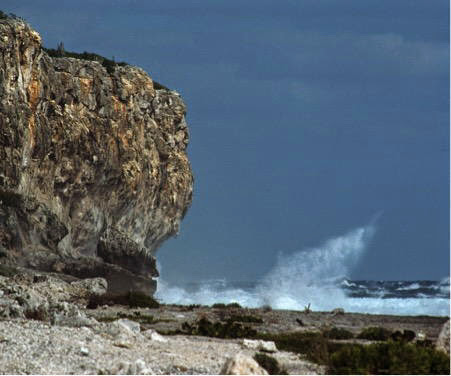
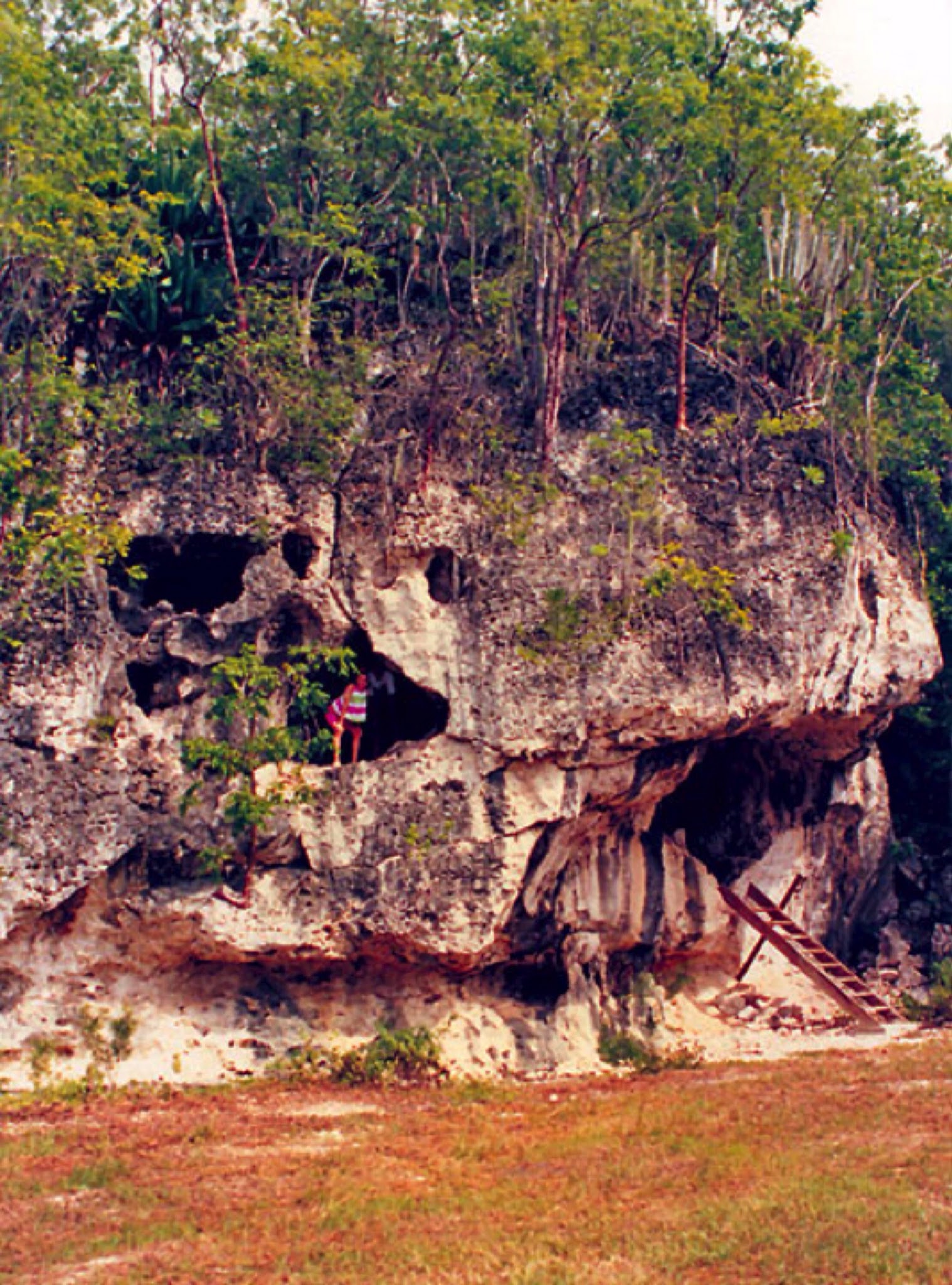
Photos above from Cayman Brac, Cayman Islands.


Amendment/Revision of Expressions of Interest: Coastal Protection for Climate Change Adaptation in the Small Island States in the Caribbean Project No. 2012.9762.1

caribbeanclimate's avatarcaribbeanclimate

The Caribbean Community Climate Change Centre (CCCCC) is seeking Expressions of Interest (EoI) for Consulting Services for the Implementation Consultant (IC) to assist the Caribbean Community Climate Change Centre (CCCCC) in the implementation of the Coastal Protection for Climate Change Adaptation in the Small Island States in the Caribbean Project. Qualified Independent Consultants are invited to submit a pre-qualification document. Funds have been earmarked for this Project by the German bilateral Financial Cooperation, provided through KfW Development Bank.

Ref-No: BZM 201297621

Project-No: 2012.9762.1

Deadline for submission of EoI is at 2:00 pm January 30, 2015, Belize Time.  Late submissions will not be accepted.

Peruse the official EoI request here.

EoIs should be submitted in one original and three copies to:

Project Manager
Caribbean Community Climate Change Centre
Attn: Ms. Dorett Tennyson, Procurement and Administrative Officer
Second Floor Lawrence Nicholas Building
Ring Road
P. O. Box 563
Belmopan…

View original post 41 more words

LA Imports Nearly 85 Percent of Its Water—Can It Change That by Gathering Rain?

The urban drainage-ways of Los Angeles can never quite look like wild creeks, but restoring some of their capacity to store, slow, and filter water fixes many problems at once.

Walk the glaring streets of Los Angeles’ San Fernando Valley on a sun-soaked afternoon in a drought year, the dry, brush-covered mountains rising behind you, and it can be easy to feel that you’re in arid country. “Beneath this building, beneath every street, there’s a desert,” said the fictional mayor in the Oscar-winning 1974 movie Chinatown. “Without water the dust will rise up and cover us as though we’d never existed!”

It’s an apocryphal idea. L.A. is not the Mojave but, climatically, more like Athens. Artesian springs, fed by rain in the mountains and hills, used to bubble up around Los Angeles, and farmers and Spanish missionaries grew fruit and olives in the Valley starting in the 18th and 19th centuries.

But the city has a history of treating its own raindrops and rivers as if they were more problematic than valuable. The L.A. River was prone to catastrophic floods in heavy rains, and, in the 20th century, engineers buried, straightened, and paved sections of the riverbed, flushing the water through concrete drainage channels to the Pacific Ocean. Then, to quench the thirst of its growing population, Los Angeles undertook a series of engineering feats that pumped water from the eastern Sierra Nevada Mountains, Northern California, and the Colorado River via hundreds of miles of pipes and reservoirs. Now the city typically imports more than 85 percent of its water from afar. And it’s as if the waters of Los Angeles disappeared from the consciousness of locals: Many Angelenos will tell you, mistakenly, that they live in a desert.

Now that story is changing again.

In the past decade and a half, a few local environmentalists have been collaborating with city and county officials to rewrite the plan for water here, driven by more and more urgent necessity. As winter temperatures rise in an era of climate change, the city’s distant water sources, fed by mountain snowmelt, are becoming less reliable. And drought years and battles over water allocation are adding to the difficulties. The State Water Project, which transfers water from the north to southern California, announced this year it would supply only five percent of the amount of water requested by agencies around the state (including the Metropolitan Water District of Southern California, which supplies parts of Los Angeles), because of the drought. Court rulings to protect endangered species have limited the amount of water L.A. and other cities can take from the Sacramento-San Joaquin Delta.

There’s no easy way for L.A. to get more water from distant sources, but new research from UCLA suggests that rainfall in the Los Angeles region is likely to stay the same on average in decades ahead.

Urban drainage in L.A. can never look like wild creeks, but restoring some capacity to store, slow, and filter water fixes many problems.

The city will need to become more water self-reliant to survive the rest of this century, and capturing local rain looks much more desirable than in the past. “There’s been a refocus on the value of local stormwater as a resource, not as a nuisance,” says Kerjon Lee, public affairs manager for the Los Angeles County Department of Public Works.

During the 1990s, in the flat landscape of Sun Valley, a San Fernando Valley neighborhood at the foot of the Verdugo Mountains, Los Angeles engineers and bureaucrats began re-imagining what one could do with raindrops.

Sun Valley never stopped acting as a tributary of the Los Angeles River, even as many of its lots filled, over the past several decades, with sand and gravel pits, auto body shops, junkyards, metals recycling plants, and miscellaneous blue-collar industries. Now two-thirds of the land here is covered with what engineers call an “impervious surface,” like concrete or asphalt, which water cannot penetrate. The more such surfaces there are in a neighborhood, the more rainwater tends to puddle up and flood. Heavy rain can make many of Sun Valley’s streets impassable. In one of the worst storms, about a decade ago, a sinkhole swallowed up part of a major street that used to be a riverbed, and a city engineer tumbled in and died.

Sun Valley is one of a few areas of L.A. not served by the massive drainage system that sends stormwater either to San Pedro or Santa Monica Bay. In the 1990s, the county planned to build a series of storm drains throughout the neighborhood—until a local environmentalist and gadfly named Andy Lipkis stepped in and asked them to reconsider.

Lipkis founded an organization called TreePeople in the mid-1970s, when he was just a teenager. The organization eventually made its headquarters on the site of an old fire station in Coldwater Canyon Park, on the high ridgeline along Mulholland Drive, named after the famous engineer who designed the first system to import water to the city on a large scale. There, among the breezy, fragrant slopes of oak and bay trees, you can see what Lipkis has been trying to tell locals his whole life: Much of Los Angeles is part forest and part river.

In 1998, Lipkis rigged a south L.A. house with water cisterns and rain gardens, gathered a group of local officials, and staged a deluge, aiming fire hoses at the roof. The group watched with amazement as the lot soaked up thousands of gallons of water.

He convinced them to consider what, at the time, was a more experimental and costly approach to managing water in Sun Valley, which overlies the San Fernando Valley Groundwater Basin, an aquifer that supplies about 13 percent of L.A.’s water. Lipkis argued that the county and city could begin to revive some of the features of a natural watershed. The urban drainage-ways of Los Angeles can never quite look like wild creeks, but restoring some of their capacity to store, slow, and filter water fixes many problems at once. When stormwater gushes across pavement, it picks up debris and contamination; when it soaks into soil and enters an aquifer, it is cleaner. Conventional storm drains would have only cost about $40 million, while TreePeople says its recommendations were nearly five times as expensive. But the organization’s own analysis suggested that the latter would return at least $300 million in benefits to the city.

“There’s been a refocus on the value of local stormwater as a resource, not as a nuisance.”

Water managers brought the options to stakeholders and residents in the mostly Latino, working-class neighborhood. They chose Lipkis’ approach. “The community didn’t want more concrete,” says Lee.

Alicia Gonzales moved to Sun Valley in 1985, as a nine-year-old, after her parents “fell in love with the house” on Elmer Avenue. Then she and her family watched as the rains poured through her yard, turning it from grass to mud. She remembers how the rain would form a torrent in the alley near her family’s house. “Trash and shopping carts would get stuck there,” she says.

She moved out as a young adult, then returned several years ago to help her father, who was struggling with severe diabetes and kidney disease and needed regular dialysis.

When the streets flooded, many kids in the neighborhood stayed home. Gonzales often wouldn’t drive her daughters to school on rainy days. “My car would get stuck,” she said.

Though Lipkis had sowed the ideas for a new way to manage water here, years passed before anyone found the funding and wherewithal to solve Elmer Avenue’s flooding problems. In 2004, L.A. County finalized a new stormwater plan for Sun Valley. Two years later, the county finished its first project. Under a baseball and soccer field in Sun Valley Park, a tree-lined oasis in the middle of an industrial district, engineers installed a retention tank that collects runoff from the surrounding streets. In 2007, the county Flood Control District spent nearly $4 million to build drains, catch basins, and a tiny corner park at an intersection that used to turn into a deep lagoon in heavy rain—and was a favorite location for news crews to shoot dramatic footage of local storms.

About eight years ago, employees of TreePeople appeared on Gonzales’ block. They said that her street was part of a watershed, and stormwater from the mountains was pouring into her backyard. (When Gonzales first met Andy Lipkis, she says he rhapsodized about her parents’ olive tree, nearly the only landscaping that had survived the flood damage.) An organization called the Council for Watershed Health had partnered with TreePeople to renovate her street.

“There’s been a refocus on the value of local stormwater as a resource, not as a nuisance.”

The Council for Watershed Health led the effort to pull apart the street and put in rain barrels, rain gardens, underground water tanks, and water-permeable walkways and driveways. Gonzales got one of a few special grants to replant her muddy yard, and volunteers showed up at her house to help with the landscaping. The alley became a pedestrian walkway that the project organizers dubbed The Paseo, a meandering sidewalk lined with native plants between concrete-block walls, painted with the words, “Water is the driving force of life.” In rainstorms now, the water runs through the landscaping, and kids walk the path to school. Neighbors water their drought-tolerant plants with rain barrels, but most of the rain soaks in under the street.

As small as these three projects were—a single city block, a corner park, and a soccer field—they have gotten the attention of the entire region: two Southern California regional water districts, several Los Angeles city and county agencies, the federal Bureau of Reclamation, and a number of state agencies got involved and provided funding for Elmer Avenue. These projects have become test cases for a much larger strategy to boost the water supply every time it rains across the entire region.

In Sun Valley, the county plans ultimately to capture nearly all of the rainwater that pours through the neighborhood. Next to Sun Valley Park, the city and county are planning to convert what is now a gravel pit and concrete plant into a 46-acre park that will collect in an average year about enough water to supply 4,000 Angelenos.

Their findings come at a crucial time. Crumbling infrastructure and a new court ruling are forcing the hands of local officials: A federal court has ordered the county to clean up the Los Angeles and San Gabriel Rivers, currently fouled by the dirt, grime, and toxins that wash from streets into storm drains. Meanwhile, billions of dollars worth of city water infrastructure is falling apart and has to be replaced before it breaks down.

The city of Santa Monica has set a goal to use only local water by 2020.

The city needs to both clean up its stormwater problem and find more water to drink. TreePeople says it could do both at once and is working with the City of Los Angeles to rewrite its entire stormwater management plan by next year. The county has undertaken a study, in partnership with the Bureau of Reclamation, to predict how climate change will affect local hydrology and what it can do to better capture stormwater. Water districts throughout the region are following suit: The Water Replenishment District of Southern California, which manages groundwater for parts of the region, has set a goal to wean itself off imported water altogether by treating and recycling wastewater and collecting more stormwater. The Council for Watershed Health released a study in 2012 estimating that the district could capture 5.5 billion gallons of water per year through more projects like Elmer Avenue.

The city of Santa Monica has set a goal to use only local water by 2020. The Los Angeles Department of Water and Power estimates that by 2035, it will import just over half of its water (down from 85 percent), meet 9 percent of its water needs by conserving more, and supply 28 percent by using local groundwater, capturing stormwater, and recycling water from sewage. Water recycling and stormwater projects aren’t cheap, but they’re typically less costly than building high-energy desalination plants that distill water from the ocean. A new desalination plant is going up in Carlsbad, south of Los Angeles. But if groups like TreePeople and the Council succeed, southern California may not need to build many more facilities like this.

“We’re looking at how we could shift the amount of water we currently squander.” says Edith de Guzman, a researcher at TreePeople. More

Madeline Ostrander wrote this article for Cities Are Now, the Winter 2015 issue of YES! Magazine. Ostrander is a contributing editor to YES! and a 2014 National Health Journalism Fellow. She lives in Seattle and writes about the environment and climate change.


Declassified Memo of Rumsfeld’s Post-9/11 Middle East Visit Highlights Logistical Challenges; Unwavering Belief in WMD

Lauren Harper's avatarUNREDACTED: The National Security Archive Blog

No stranger to the region, Rumsfeld served as Middle East envoy under President Reagan. Here Iraqi President Saddam Hussein greets  Rumsfeld in Baghdad on December 20, 1983. No stranger to the region, Rumsfeld served as Middle East envoy under President Reagan. Here Iraqi President Saddam Hussein greets Rumsfeld in Baghdad on December 20, 1983.

Less than one month after the September 11 attacks, Donald Rumsfeld embarked on a coalition building trip to the Middle East, his first visit to the region while serving as Secretary of Defense. Rumsfeld notes in his 2011 memoir Known and Unknown that at the time of his whirlwind October 3-5 visit to Saudi Arabia, Oman, Egypt, Uzbekistan, and Turkey, he knew that CENTCOM commander General Tommy Franks was planning to insert special operations teams into Afghanistan on the nights of October 6 and 7.1 Rumsfeld’s tour was therefore intended to shore up support for the U.S.’ nascent war on terror from the countries surrounding Afghanistan, and to assuage fears that U.S. military action in the region would be a “flash…

View original post 1,244 more words