Chevening scholarship opens to future leaders

Chevening scholarship opens to future leaders

Professionals and public servants from the Cayman Islands looking to further their education are being urged to apply for the United Kingdom’s prestigious Chevening Scholarship.

The award is a product of the UK’s flagship scholarship programme funded by the Foreign and Commonwealth Office. It recognises exceptional and budding leaders, offering them financial support for a Master’s level degree beginning September 2015 at one of the UK’s leading universities.

To be eligible for a Chevening Scholarship, applicants must be a citizen of a Chevening-eligible country and intend to return there after their studies; hold a degree that is equivalent to at least an upper second-class honours degree in the UK; have completed at least two years’ work or equivalent experience before applying for a Chevening Scholarship; be able to meet the Chevening minimum English language requirement; and be able to obtain the correct visa, and receive an unconditional offer from a UK university.

The programme’s team is particularly interested to hear from applicants in the Cayman Islands who wish to study good governance, financial management, public administration and law, commercial / economic development and environment.

Applicants have until 15 November 2014 to submit their application.

A Chevening scholarship is usually offered for a one-year Master’s degree, in any subject at any of the UK’s leading universities. It includes a monthly stipend, travel to and from the recipients country, a thesis or dissertation grant and tuition fees. Applicants should read the online guidance and be able to demonstrate how they meet the Chevening selection criteria before submitting an application. Further details of closing dates and priority subject areas are available at www.chevening.org/apply.


Gallery

The Small Islands Weather Together Partnership is LIVE!

caribbeanclimate's avatarcaribbeanclimate

The Small Islands Weather Together partnership is now live!

What is Partnership?
The “Small Islands, Weather Together” partnership is designed to show how the small island nations of the world are working together to improve their vital weather and climate services.  This initiative has been developed by the World Meteorological Organisation (WMO) and the Secretariat of the Pacific Regional Environment Programme (SPREP)  in support of the Third International Conference on Small Island Developing States which will be held in Apia, Samoa, from 1-4 September, 2014.

sids-logo-2

What’s the problem?
Because of climate change many of the world’s small island nations face an increase in the devastating impacts of extreme weather events such as cyclones and flash floods.
Many National Meteorological Services in small island nations still lack the basic infrastructure, technology and expertise they need to serve their vulnerable communities. So we know that investing in stronger weather and climate services could…

View original post 130 more words

Has the era of the ‘climate change refugee’ begun?

A far-flung scattering of islands in a turquoise sea, Tuvalu is one of the planets' smallest and most remote nations, just west of the International Date Line, just south of the equator.

Funafuti, Tuvalu

Tuvalu's coastline consists of white and sandy beaches, green palm trees and mangroves. It is hard to imagine that anybody would want to leave this small island nation, located between Australia and Hawaii, voluntarily. But Tuvalu has become the epicenter of a landmark refugee ruling that could mark the beginning of a wave of similar cases: On June 4, a family was granted residency by the Immigration and Protection Tribunal in New Zealand after claiming to be threatened by climate change in its home country, Tuvalu. The news was first reported by the New Zealand Herald on Sunday.

The small Pacific island nation sits just two meters above sea level. If the current sea level rise continues, experts believe the island might disappear in approximately 30 to 50 years. Tuvalu shares this existential threat with many other island nations and coastal regions, which have struggled for years to raise international awareness about their tragic plight. Predictions for climate change-induced displacement range widely from 150 to 300 million people by 2050, with low-income countries having the far largest burden of disaster-induced migration, according to the Internal Displacement Monitoring Center.

Those threatened by sea-level rise, droughts or other natural catastrophes face an epochal problem: Victims of climate change are not recognized as refugees by the International Refugee Convention. In the Tuvalu case, Sigeo Alesana and his family reportedly left the island nation in 2007 and moved to New Zealand, where they lost their legal status in 2009. The family was not able to obtain work visas and had to apply for refugee and protected persons status in 2012. Although the claims were dismissed in March 2013 and an appeal was turned down, the family's case was finally approved. The case was closely followed by immigration and environmental lawyers all over the world.

Sigeo Alesana and his wife claimed before the tribunal that climate change had made life in Tuvalu more difficult due to much more frequently occurring inundations, that caused coastal erosion and made it difficult to grow crops. The tribunal explicitly mentioned climate change in its assessment saying that Alesana's children were particularly “vulnerable to natural disasters and the adverse impact of climate change.”

“I don't see it as delivering any kind of 'verdict' on climate change as such,” says Vernon Rive, a Senior Lecturer in Law at AUT Law School in Auckland. The New Zealand decision is very specific because the family based its application for residency on three arguments, Rive says. First, the family members claimed to be refugees; second, they argued to be “protected people“, and third, the family said its case fell under “exceptional humanitarian grounds.” Each of these arguments is based on an existing convention regarding refugees, but the family only succeeded because it claimed “exceptional humanitarian grounds,” which is a wording recognized in New Zealand's immigration legislation but not by many other governments.

In its judgment the New Zealand tribunal surprisingly acknowledged the humanitarian consequences of climate change among other factors, such as the presence of an elderly mother who required care. In its conclusion, however, the tribunal refrained from singling out climate change and stated that other factors would already have been sufficient to grant residency to the family. In other words: The tribunal avoided a clear decision on whether climate change can or cannot be reason enough for refugees to be granted residency. The mere fact that the tribunal mentioned the impacts of global warming as a contributing factor to the ruling is nevertheless remarkable. “What this decision will not do is open the gates to all people from places such as Kiribati, Tuvalu and Bangladesh who may suffer hardship because of the impacts of climate change,” Rive says.

While the tribunal's decision may not have the same impact everywhere, it could send a strong signal to a number of nations, such as Sweden and Finland, that often grant asylum to people affected by natural disasters. According to French climate change migration expert François Gemenne, governments need to get to grips with the reality of climate change refugees, irrespective of legal conventions. “I believe that bilateral or regional arrangements are going to become necessary,” says Gemenne, suggesting a raft of agreements will need to be put into place, between nations and among geopolitical blocs, that will ensure the protection of those displaced by rising waters.

But will there eventually be open doors for the victims of climate change? Some of the countries endangered by climate change fear that their citizens could effectively become “second class” citizens abroad. As a consequence, the island nation Kiribati – itself at risk from climate change – has set up a “Migration with Dignity” program which involves training its citizens as highly-skilled workers who are needed and welcomed in other countries if and when the residents of Kiribati are forced to move.

The recent New Zealand ruling could give smaller nations stronger leverage on the international stage. But do the world's leading statesmen, beset by a host of other crises, care? Michael Gerrard, Director for Climate Change Law at Columbia University, puts current progress in perspective: “The world community has not even begun to grapple with what is to come,” he tells WorldViews in an e-mail. More


UN Releases Six Briefs for SIDS Conference Partnership Dialogues

The UN Department of Economic and Social Affairs (DESA) has released a series of six briefing papers on priority themes for discussion during the Third International Conference on Small Island Development States (SIDS), set to take place in Apia, Samoa, from 1-4 September 2014.

August 2014: The SIDS conference will include six multi-stakeholder ‘Partnership Dialogues’ intended to strengthen existing partnerships and promote new ones. The UN briefing papers correspond to the partnership dialogue themes of: sustainable economic development; climate change and disaster risk management; social development in SIDS, health and non-communicable diseases (NCDs), youth and women; sustainable energy; oceans, seas and biodiversity; water and sanitation, food security and waste management. The papers suggest a wide range of opportunities that could be addressed through new or existing partnerships, especially public-private collaborations.

On sustainable economic development, the authors propose conducting investment impact monitoring, and establishing regional SIDS programmes to promote investment through public-private partnerships.

On climate change and disaster risk management, the authors suggest the adoption of risk financing instruments, such as contingency funds and insurance, as part of spatial and development planning initiatives.

On social development, they note that obesity and diabetes rates are “staggering” in the Pacific, and they aim to prevent premature morbidity and mortality from NCDs, including measures to protect SIDS from the negative impacts of bilateral and global trade agreements. They also aim to make education more relevant, and to improve labor market access and secure quality jobs for young people.

On sustainable energy, the authors recommend supporting an enabling environment for sustainable energy markets; facilitating access to modern, affordable and reliable energy services for rural households; decreasing reliance on fossil fuel imports; and improving women’s access to renewable and cost-effective energy.

On oceans, they recommend addressing the impacts of ocean acidification and climate change, promoting inclusive and sustainable development of local economies using the oceans, preventing marine and land-based pollution, and reversing the decline in fish stocks.

On water and sanitation, they propose strengthening regional mechanisms for managing hazardous wastes and ship-generated wastes; promoting resource efficiency as a means to reduce the generation of waste and wastewater, and incorporating climate information into practices and policies for supporting agriculture and food security. [Partnership Dialogue Briefs] [SIDS Conference Website] [SIDS Partnerships Platform]


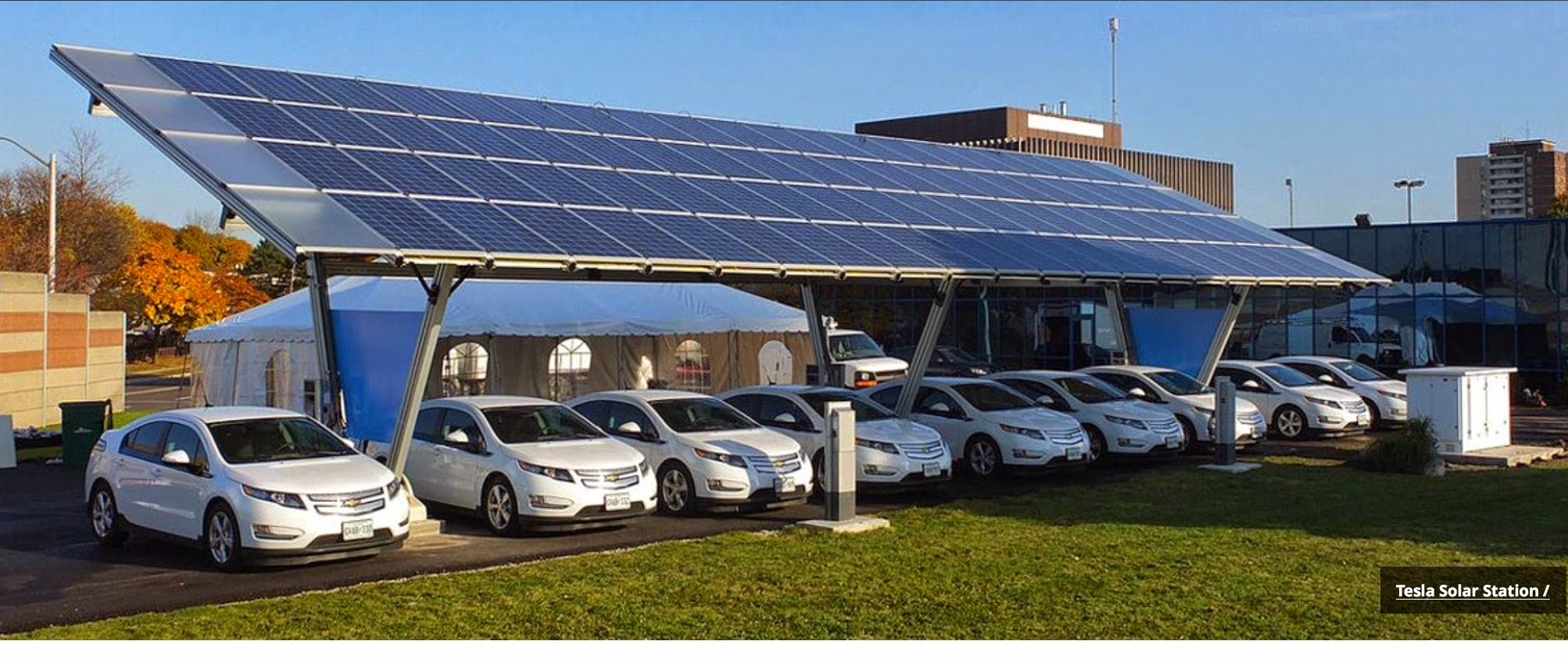
Why Morgan Stanley Is Betting That Tesla Will Kill Your Power Company

There’s a reason that power companies are attacking rooftop solar across the nation: They see those silicon panels as nothing short of an existential threat.

As the cost of solar continues to fall, and more people opt for the distributed power offered by solar, there will be less demand for big power plants and the utilities that operate them. And one major investment giant has now released three separate reports arguing that Tesla Motors is going to help kill power companies off altogether.

Earlier this year, Morgan Stanley stirred up controversy when it released a report that suggested that the increasing viability of consumer solar, paired with better battery technology—that allows people to generate, and store, their own electricity—could send the decades-old utility industry into a death spiral. Then, the firm released another one, further emphasizing the points made in the first. Now, it’s tripling down on the idea with yet another report that spells out how Tesla and home solar will “disrupt” utilities.

“There may be a ‘tipping point’ that causes customers to seek an off-grid approach,” the March report argued. ”The more customers move to solar, the [more the] remaining utility customers’ bills will rise, creating even further ‘headroom’ for Tesla’s off-grid approach.”

Yes, Tesla Motors, everyone’s favorite electric car company. And that’s where the controversy comes in. Morgan Stanley breathlessly pegged Tesla as “the most important auto company in the world” in part because its electric car business was pushing it to develop better energy storage technology, and then mass manufacture said batteries. That’s exactly what Tesla CEO Elon Musk and company will be doing at its forthcoming Gigafactory, which it is building in the Southwest with Panasonic.

With the new manufacturing facility, Morgan Stanley reasons, Tesla stands to double its business (adding another $2 billion in revenue) by selling the lithium ion batteries it typically ships under the hood of a Model S to homeowners with solar panels, too. If consumers can store energy the panels generate during the day for use at night, it would ostensibly render the need for utilities to pipe in faraway power—and their electric bills—obsolete.

Energy storage, when combined with solar power, could disrupt utilities in the US and Europe to the extent customers move to an off-grid approach

Musk is also the chairman of Solar City, a company that leases rooftop solar setups to homeowners, and one that would benefit from the battery tech. Now, the shadiness here is that Morgan Stanley released the report trumpeting Tesla’s crossover energy storage potential—causing Tesla’s stock to rise—right before it underwrote a fundraising round for… Tesla.

So the whole thing is very incestuous, and it does render some of the projections a little suspect, but the bottom line here is that private solar and battery companies are viable enough that they’ve attracted the backing of one of the world’s biggest financial services companies—over the multi-trillion dollar utility industry.

“Energy storage, when combined with solar power, could disrupt utilities in the US and Europe to the extent customers move to an off-grid approach,” Morgan Stanley writes in its third report this year emphasizing the prospect. ”We believe Tesla’s energy storage product will be economically viable in parts of the US and Europe, and at a fraction of the cost of current storage alternatives.”

In other words, Morgan Stanley has Tesla’s back, big time. It’s betting that Musk is going to make the best solar energy batteries money can buy.

Ironically enough, however, even staunch clean energy advocates are wary about Morgan Stanley’s finding that utilities are going the way of the buffalo. “Barring extraordinary circumstances, the economic case for grid defection is still very weak for US consumers,” Stephen Lacey, the senior editor of Greentech Media, wrote of the Morgan Stanley report. ”The electricity system offers valuable backup in case a customer over- or under-invests in an on-site system.”

It’s more likely, then, that people will still buy home solar—by the tens of millions, Greentech suggests—but not unplug from the grid entirely. Utilities will be diminished, but not broken. This process is underway in Europe already, where countries like Germany have powerful incentives for consumers to switch to solar.

Last year, the Economist called the sharp decline of European utilities “startling,” noting that together, they lost half their value—$600 billion—in just five years. Here in the states, utilities and conservative politicians are fighting solar tax credits to prevent the same thing from happening. For the most part, the utilities are losing.

All of this is, ideally, what needs to happen. Climate change is accelerating, and we need to transition away from those massive, fossil fuel-slurping power plants. Distributed solar is an increasingly powerful force behind that weaning process.

And even if some of Morgan Stanley’s calculations are shaky, the trends that Tesla is helping to amplify are anything but—clean, personalized (or community-wide) power will play a major role in shaping our energy future.

The fact that a greed-driven titan of finance like Morgan Stanley recognizes as much, and is willing to triple down on its bets on battery storage and distributed power, is a promising sign that the energy revolution is underway. More


Caribbean energy experts recommend creation of new Caribbean Centre for Renewable Energy and Energy Efficiency (CCREEE)

caribbeanclimate's avatarcaribbeanclimate

SIDS Press release logos

The technical design and institutional set-up of the Caribbean Centre for Renewable Energy and Energy Efficiency (CCREEE) was successfully validated by energy experts and specialists of CARICOM Member States in a regional workshop, held from 21 to 22 July 2014 in Roseau, Dominica. The event was co-organized by the Small Island Developing States (SIDS) Sustainable Energy Initiative – SIDS DOCK, the United Nations Industrial Development Organization (UNIDO) and the Government of the Commonwealth of Dominica, with financial support of the Austrian Development Cooperation (ADC).

The workshop follows-up on the official request of SIDS DOCK to UNIDO in August 2013, to assist the small island developing states in the Caribbean, Pacific, Indian Ocean and Africa, in the creation of a SIDS network of regional sustainable energy centres. With technical assistance from UNIDO, a consultative preparatory process for the Caribbean centre was launched in close coordination with the Energy Unit of…

View original post 595 more words

Sixty-Nine Years After Hiroshima, Time for Renewed Action for Nuclear Disarmament and Human Survival

Daryl G. Kimball's avatar

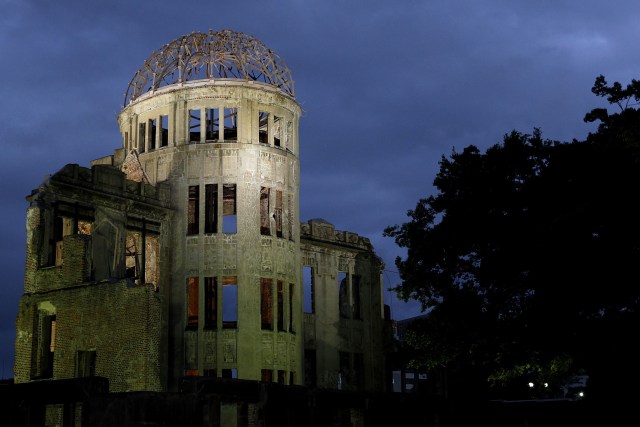
HIROSHIMA, JAPAN - AUGUST 05:  A-Bomb Dome is seen near Hiroshima Peace Memorial Park on August 5, 2010 in Hiroshima, Japan, on the eve of the 65th anniversary of the Hiroshima atomic bombing. The world's first atomic bomb was dropped on Hiroshima by the United States during World War II, killing an estimated 70,000 people instantly with many thousands more dying over the following years from the effects of radiation. Three days later another atomic bomb was dropped on Nagasaki.  (Photo by Kiyoshi Ota/Getty Images) A-Bomb Dome is seen near Hiroshima Peace Memorial Park on August 5, 2010 in Hiroshima, Japan,. (Photo by Kiyoshi Ota/Getty Images)

By Daryl G. Kimball

Since the devastating U.S. atomic bombings of Hiroshima and Nagasaki 69 years ago this week, the catastrophic effects of nuclear weapons have motivated ordinary citizens to push their leaders to pursue arms control and disarmament measures to reduce the threat of nuclear weapons use.

For decades, it has been well understood that the direct effects of a large-scale nuclear conflict could result in several hundred million human fatalities, while the indirect effects would be far greater, leading to the loss of billions of lives.

An April 1979 U.S. Arms Control and Disarmament Agency report found that an exchange of U.S. and Soviet nuclear forces involving a total of approximately 18,000 strategic warheads would kill 25-100 million people in both the U.S. and the Soviet…

View original post 3,102 more words

All in the Timing: The Weapons of Mass Destruction Free Zone in the Middle East – Patricia Mary Lewis

The Helsinki Conference process established by the 2010 nuclear Non-Proliferation Treaty (NPT) Review Conference is the most significant opportunity to increase stability and prevent nuclear catastrophe in the Middle East that has presented itself in recent years. If states fail to take this opportunity, the consequences will be severe.

The Helsinki Conference process established by the 2010 nuclear Non-Proliferation Treaty (NPT) Review Conference is the most significant opportunity to increase stability and prevent nuclear catastrophe in the Middle East that has presented itself in recent years – coming at a time when the Iranian nuclear capabilities issue is being seriously and sustainably addressed, and when the instability in the region is all too plain to see. If states fail to take this opportunity, the consequences will be severe. Now is a time for leadership. Serious efforts to forge an agreement between Israel and Egypt would make all the difference and could help the region’s security in a time of considerable danger.

However, progress towards a weapons of mass destruction (WMD) free zone in the Middle East has been sporadic. A deadline of December 2012 was not met and no follow-on date has yet been announced for the Helsinki conference. There are three main scenarios that could play out in the period leading up to the next NPT Review Conference in April 2015. They are:

  • a Helsinki conference that has a successful outcome and leads to a process towards a WMD free zone negotiation that includes regional security measures to support the zone,
  • a Helsinki conference that results in no positive outcome and no follow-on process, and
  • no Helsinki conference before the 2015 Review Conference.

In the event of a successful Helsinki conference before 2015 there are a number of proposals to develop the zone.

  • Begin regional negotiations through a set of working groups or committees that divide the workload into nuclear weapons, chemical weapons, biological weapons, means of delivery including missiles, supportive measures/confidence- and security-building measures, wider regional security issues, and verification and other technical measures.
  • Install capacity-building measures to implement and verify the WMD free zone, such as training inspectors, developing common methodologies and learning how to use technical instruments for monitoring.
  • Involve civil society and the general public in the debate, and foster a wide discussion among all segments of the societies in the region, including young political leaders, young scientists and young journalists.

In the event of a failed or abandoned Helsinki conference it may still be possible to undertake the following measures.

  • Revamp the 1991 Madrid peace process and the multilateral tracks that it established which led to the Oslo Peace Accord and the Israeli–Jordanian Peace Treaty and see if the approach taken at that time could be adapted for today. This will require Egypt and Israel to enter into direct negotiations in order to get the ball rolling.
  • Revert to the UN Security Council to request a consideration of Resolution 687 that established the ceasefire in Iraq in 1991, which contains references to the Middle East WMD free zone.
  • Employ the UN General Assembly by building on the UN resolution that has been adopted annually calling for the ‘Establishment of a nuclear-weapon-free zone in the region of the Middle East’.
  • Establish a building-blocks approach aiming to establish a zone through a set of parallel or sequential commitments to sign and ratify the extant treaties such as the Chemical Weapons Convention (CWC), the Biological Weapons Convention (BWC), the NPT and the Comprehensive Test Ban Treaty (CTBT). Other measures could include a highly-enriched-uranium-free zone, separate agreements on non-attack of nuclear facilities (including cyber attacks), missile tests launch notifications, nuclear security assurances and transparency measures.

Research Paper: All in the Timing: The Weapons of Mass Destruction Free Zone in the Middle East


Energy Efficiency Simply Makes Sense

What simple tool offers the entire world an extended energy supply, increased energy security, lower carbon emissions, cleaner air and extra time to mitigate climate change? Energy efficiency. What’s more, higher efficiency can avoid infrastructure investment, cut energy bills, improve health, increase competitiveness and enhance consumer welfare — all while more than paying for itself.

Maria van der Hoeven - IEA

The challenge is getting governments, industry and citizens to take the first steps towards making these savings in energy and money.

The International Energy Agency (IEA) has long spearheaded a global move toward improved energy efficiency policy and technology in buildings, appliances, transport and industry, as well as end-use applications such as lighting. That’s because the core of our mandate is energy security — the uninterrupted availability of energy at an affordable price. Greater efficiency is a principal way to strengthen that security: it reduces reliance on energy supply, especially imports, for economic growth; mitigates threats to energy security from climate change; and lessens the global economy’s exposure to disruptions in fossil fuel supply.

In short, energy efficiency makes sense.

In 2006, the IEA presented to the Group of Eight leading industrialized nations its 25 energy efficiency recommendations, which identify best practice and policy approaches to realize the full potential of energy efficiency for our member countries. Every two years, the Agency reports on the gains made by member countries, and today we are working with a growing number of international organizations, including the European Bank for Reconstruction and Development, the Asian Development Bank and the German sustainable development cooperation services provider GIZ.

The opportunities of this “invisible fuel” are many and rich. More than half of the potential savings in industry and a whopping 80 percent of opportunities in the buildings sector worldwide remain untouched. The 25 recommendations, if adopted fully by all 28 IEA members, would save $1 trillion in annual energy costs as well as deliver incalculable security benefits in terms of energy supply and environmental protection.

Achieving even a small fraction of those gains does not require new technological breakthroughs or ruinous capital outlays: the know-how exists, and the investments generate positive returns in fuel savings and increased economic growth. What is required is foresight, patience, changed habits and the removal of the barriers to implementation of measures that are economically viable. For instance, as the World Energy Outlook 2012 demonstrates, investing less than $12 trillion in more energy-efficient technologies would not only quickly pay for itself through reduced energy costs, it would also increase cumulative economic output to 2035 by $18 trillion worldwide.

While current efforts come nowhere close to realizing the full benefits that efficiency offers, some countries are taking big steps forward. Members of the European Union have pledged to cut energy demand by 20 percent by 2020, while Japan plans to trim its electricity consumption 10 percent by 2030. China is committed to reducing the amount of energy needed for each unit of gross domestic product by 16 percent in the next two years. The United States has leaped to the forefront in transportation efficiency standards with new fuel economy rules that could more than double vehicle fuel consumption.

Such transitions entail challenges for policy, and experience shows that government and the private sector must work together to achieve the sustainability goals that societies demand, learning what works and what does not, and following the right path to optimal deployment of technology. Looking forward, energy efficiency will play a vital role in the transition to the secure and sustainable energy future that we all seek. The most secure energy is the barrel or megawatt we never have to use.

Maria van der Hoeven is the Executive Director of the International Energy Agency, an autonomous organization which works to ensure reliable, affordable and clean energy for its 28 member countries and beyond. This commentary appeared first this month in IEA Energy, the Agency’s journal.


Noam Chomsky, Why National Security Has Nothing to Do With Security

Think of it as the true end of the beginning. Last week, Theodore “Dutch” Van Kirk, the final member of the 12-man crew of the Enola Gay, the plane (named after its pilot’s supportive mother) that dropped the atomic bomb on Hiroshima, died at age 93.

Paul Tibbetts, Jr. in cockpit

When that first A-bomb left its bomb bay at 8:15 on the morning of August 6, 1945, and began its descent toward its target, the Aioli (“Live Together”) Bridge, it was inscribed with a series of American messages, some obscene, including “Greetings to the Emperor from the men of the Indianapolis.” (That ship had delivered to the Pacific island of Tinian parts of the very bomb that would turn Hiroshima into an inferno of smoke and fire — “that awful cloud,” Paul Tibbetts, Jr., theEnola Gay's pilot, would call it — and afterward was torpedoed by a Japanese submarine with the loss of hundreds of sailors.)

The bomb, dubbed Little Boy, that had gestated in the belly of the Enola Gay represented not only the near endpoint of a bitter global war of almost unimaginable destruction, but the birthing of something new. The way for its use had been paved by an evolution in warfare: the increasing targeting of civilian populations from the air (something that can be seen again today in the carnage of Gaza). The history of that grim development extends from German airship bombings of London (1915) by way of Guernica (1937), Shanghai (1937), and Coventry (1940), to the fire bombings of Dresden (1945) and Tokyo (1945) in the last year of World War II. It even had an evolutionary history in the human imagination, where for decades writers (among others) had dreamed of the unparalleled release of previously unknown forms of energy for military purposes.

On August 7, 1945, a previous age was ending and a new one was dawning. In the nuclear era, city-busting weapons would be a dime a dozen and would spread from the superpowers to many other countries, including Great Britain, China, India, Pakistan, North Korea, and Israel. Targeted by the planet’s major nuclear arsenals would be the civilian inhabitants not just of single cities but of scores and scores of cities, even of the planet itself. On August 6th, 70 years ago, the possibility of the apocalypse passed out of the hands of God or the gods and into human hands, which meant a new kind of history had begun whose endpoint is unknowable, though we do know that even a “modest” exchange of nuclear weapons between India and Pakistan would not only devastate South Asia, but thanks to the phenomenon of nuclear winter also cause widespread famine on a planetary scale.

In other words, 70 years later, the apocalypse is us. Yet in the United States, the only nuclear bomb you're likely to read about is Iran’s (even though that country possesses no such weapon). For a serious discussion of the U.S. nuclear arsenal, those more than 4,800 increasingly ill-kept weapons that could incinerate several Earth-sized planets, you need to look not to the country’s major newspapers or news programs but to comic John Oliver — or TomDispatch regular Noam Chomsky. Tom

How Many Minutes to Midnight?

Hiroshima Day 2014

If some extraterrestrial species were compiling a history of Homo sapiens, they might well break their calendar into two eras: BNW (before nuclear weapons) and NWE (the nuclear weapons era). The latter era, of course, opened on August 6, 1945, the first day of the countdown to what may be the inglorious end of this strange species, which attained the intelligence to discover the effective means to destroy itself, but — so the evidence suggests — not the moral and intellectual capacity to control its worst instincts.

Day one of the NWE was marked by the “success” of Little Boy, a simple atomic bomb. On day four, Nagasaki experienced the technological triumph of Fat Man, a more sophisticated design. Five days later came what the official Air Force history calls the “grand finale,” a 1,000-plane raid — no mean logistical achievement — attacking Japan’s cities and killing many thousands of people, with leaflets falling among the bombs reading “Japan has surrendered.” Truman announced that surrender before the last B-29 returned to its base.

Those were the auspicious opening days of the NWE. As we now enter its 70th year, we should be contemplating with wonder that we have survived. We can only guess how many years remain.

Some reflections on these grim prospects were offered by General Lee Butler, former head of the U.S. Strategic Command (STRATCOM), which controls nuclear weapons and strategy. Twenty years ago, he wrote that we had so far survived the NWE “by some combination of skill, luck, and divine intervention, and I suspect the latter in greatest proportion.”

Reflecting on his long career in developing nuclear weapons strategies and organizing the forces to implement them efficiently, he described himself ruefully as having been “among the most avid of these keepers of the faith in nuclear weapons.” But, he continued, he had come to realize that it was now his “burden to declare with all of the conviction I can muster that in my judgment they served us extremely ill.” And he asked, “By what authority do succeeding generations of leaders in the nuclear-weapons states usurp the power to dictate the odds of continued life on our planet? Most urgently, why does such breathtaking audacity persist at a moment when we should stand trembling in the face of our folly and united in our commitment to abolish its most deadly manifestations?”

He termed the U.S. strategic plan of 1960 that called for an automated all-out strike on the Communist world “the single most absurd and irresponsible document I have ever reviewed in my life.” Its Soviet counterpart was probably even more insane. But it is important to bear in mind that there are competitors, not least among them the easy acceptance of extraordinary threats to survival.

Survival in the Early Cold War Years

According to received doctrine in scholarship and general intellectual discourse, the prime goal of state policy is “national security.” There is ample evidence, however, that the doctrine of national security does not encompass the security of the population. The record reveals that, for instance, the threat of instant destruction by nuclear weapons has not ranked high among the concerns of planners. That much was demonstrated early on, and remains true to the present moment.

In the early days of the NWE, the U.S. was overwhelmingly powerful and enjoyed remarkable security: it controlled the hemisphere, the Atlantic and Pacific oceans, and the opposite sides of those oceans as well. Long before World War II, it had already become by far the richest country in the world, with incomparable advantages. Its economy boomed during the war, while other industrial societies were devastated or severely weakened. By the opening of the new era, the U.S. possessed about half of total world wealth and an even greater percentage of its manufacturing capacity.

There was, however, a potential threat: intercontinental ballistic missiles with nuclear warheads. That threat was discussed in the standard scholarly study of nuclear policies, carried out with access to high-level sources — Danger and Survival: Choices About the Bomb in the First Fifty Years by McGeorge Bundy, national security adviser during the Kennedy and Johnson presidencies.

Bundy wrote that “the timely development of ballistic missiles during the Eisenhower administration is one of the best achievements of those eight years. Yet it is well to begin with a recognition that both the United States and the Soviet Union might be in much less nuclear danger today if [those] missiles had never been developed.” He then added an instructive comment: “I am aware of no serious contemporary proposal, in or out of either government, that ballistic missiles should somehow be banned by agreement.” In short, there was apparently no thought of trying to prevent the sole serious threat to the U.S., the threat of utter destruction in a nuclear war with the Soviet Union.

Could that threat have been taken off the table? We cannot, of course, be sure, but it was hardly inconceivable. The Russians, far behind in industrial development and technological sophistication, were in a far more threatening environment. Hence, they were significantly more vulnerable to such weapons systems than the U.S. There might have been opportunities to explore these possibilities, but in the extraordinary hysteria of the day they could hardly have even been perceived. And that hysteria was indeed extraordinary. An examination of the rhetoric of central official documents of that moment like National Security Council Paper NSC-68 remains quite shocking, even discounting Secretary of State Dean Acheson’s injunction that it is necessary to be “clearer than truth.” Read More