IEA says ‘peak oil demand’ could hit as early as 2020

Little more that a year after the International Energy Agency added its voice to the chorus chiming that peak oil was dead, a new report from the uconservative adviser to industrialised nations suggests it has changed its tune. Only this time it is not peak supply that is on its radar, but peak demand.
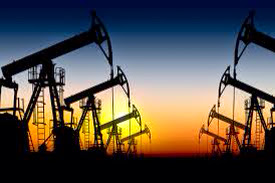
The IEA’s Medium-Term Oil Market Report 2014 has predicted that global growth in oil demand may start to slow down as soon as the end of this decade, due to environmental concerns and cheaper alternatives, and despite boosting its 2014 forecast of global demand by 960,000 barrels per day.

While supply is forecast to remain strong – thanks largely to the unconventional, or “tight” oil revolution currently underway in north America – the IEA says it expects the global market to hit an “inflexion point”, by the end of 2019, “after which demand growth may start to decelerate due to high oil prices, environmental concerns and cheaper fuel alternatives.”

These factors, says the report, will lead to fuel-switching away from oil, as well as overall fuel savings. In short, it says, “while ‘peak demand’ for oil – other than in mature economies – may still be years away, and while there are regional differences, peak oil demand growth for the market as a whole is already in sight.”

It’s worrying news for the over-invested and under-prepared; not least of all oil importing nations, to which, as Samuel Alexander noted in this article last September, the economic costs of peak oil are especially significant.

“When oil gets expensive, everything dependent on oil gets more expensive: transport, mechanised labour, industrial food production, plastics, etc,” he wrote. “This pricing dynamic sucks discretionary expenditure and investment away from the rest of the economy, causing debt defaults, economic stagnation, recessions, or even longer-term depressions. That seems to be what we are seeing around the world today, with the risk of worse things to come.”

This then adds to the peak oil cycle, increasing governments’ motivation to decarbonise their economies – better late than never – “not only because oil has become painfully expensive, but also because the oil we are burning is environmentally unaffordable.”

This view has been echoed in numerous recent reports. US investment banks Sanford Bernstein raised the prospect of “energy price deflation”, caused by the plunging cost of solar and the taking up of market share by that technology as it displaced diesel, gas and oil in various economies. It predicted that could trigger a massive shift in capital.

Analyst Mark Fulton last month also questioned the wisdom of the private-sector investing over $1 trillion to develop new sources of high-cost oil production. While Mark Lewis, of French broking firm, suggested that $US19 trillion in revenuescould be lost from the oil industry if the world takes action to address climate change, cleans up pollution and moves to decarbonise the global energy system.

The IEA report also includes an updated forecast of product supply, which draws out the consequences of the shifts in demand, feedstock supply and refining capacity.

“Given planned refinery construction and the growth in supply that bypasses the refining sector, such as NGLs and biofuels, the refining industry faces a new cycle of weak margins and a glut of light distillates like gasoline and naphtha as a by-product of needed diesel and jet fuel,” it says.

It also predicts that “the unconventional supply revolution that has redrawn the global oil map” will expand beyond North America before the end of the decade, just as OPEC supplies face headwinds, and regional imbalances in gasoline and diesel markets broaden.

The report projects that by 2019, tight oil supply outside the United States could reach 650 000 barrels per day (650 kb/d), including 390 kb/d from Canada, 100 kb/d from Russia and 90 kb/d from Argentina. US LTO output is forecast to roughly double from 2013 levels to 5.0 million barrels per day (mb/d) by 2019.

“We are continuing to see unprecedented production growth from North America, and the United States in particular. By the end of the decade, North America will have the capacity to become a net exporter of oil liquids,” IEA Executive Director Maria van der Hoeven said as she launched the report in Paris. “At the same time, while OPEC remains a vital supplier to the market, it faces significant headwinds in expanding capacity.”

Beyond ageing fields, the major hurdle facing OPEC producers is the escalation in “above-ground woes,” as security concerns become a growing issue in producers like Iraq, and investment risks deter investment and exploration.

The report notes that as much as three-fifths of OPEC’s expected growth in capacity by 2019 is set to come from Iraq. The projected addition of 1.28 mb/d to Iraqi production by 2019, a conservative forecast made before the launch last week of a military campaign by insurgents that subsequently claimed several key cities in northern and central Iraq, faces considerable downside risk. More


Iraq oil shock would kill world economic recovery, experts warn

As I have been warning people about for a number of years: Potential oil price spike in Middle East; What could this do to the Cayman Islands?

Open warfare between the government and rebels in Iraq would pose a threat to the global economic recovery should oil production from the war-torn Middle East state suffer a serious disruption, analysts have warned.

As violence threatens Iraq’s oil industry, experts fear crude at $130 per barrel would damage the global economy

Open warfare between the government and rebels in Iraq would pose a threat to the global economic recovery should oil production from the war-torn Middle East state suffer a serious disruption, analysts have warned.

Brent oil prices climbed as high as $110.25 (£65.59) on Wednesday amid concerns that 3.5m barrels per day of Iraqi exports could be knocked out of the market by the violence that has seen al-Qaeda forces seize control of Mosul, Tikrit and Samarra.

“The worst case scenario is that we see production from Iraq slip down to levels in the last Gulf war, then oil could spike $20 a barrel very quickly,” Ole Hansen, vice-president and head of commodity strategy at Saxo Bank told The Telegraph. “In that scenario, the entire economic recovery, which is still fragile, could stall and we could even slip back into recession in some regions.”

Iraq’s oil minister, Abdul Kareem Luaibi, who was attending a gathering of the 12-member Organisation of Petroleum Exporting Countries (Opec) in Vienna on Wednesday, tried to ease concerns by stressing that most of the country’s crude was pumped from fields in the Shia-Muslim dominated South, where export facilities are “very, very safe”.

Despite the deteriorating political situation in Iraq, where government forces have been seen fleeing from the Sunni-Muslim al-Qaeda insurgents, Opec decided to leave its production quotas unchanged. The cartel limits the output of its members to 30m barrels per day (bpd) of crude, roughly a third of the world’s supply.

However, the group’s ability to react to shocks to the oil market is limited, with Saudi Arabia the only producer with enough spare production capacity to cover any shortfalls. Riyadh maintains about 12.5m barrles per day (bpd) of production capacity, with 2.5m bpd – three-times Britain’s output from the North Sea – lying idle at any one time.

Although Saudi’s oil officials told reporters in Vienna on Wednesday that the kingdom and Opec could compensate for any Iraqi shortfalls, oil traders remain concerned.

In a note to Bloomberg, Helima Croft, Barclays’ head of North American commodities research, said: “The shocking escalation in violence in Iraq raises the prospect of potential output losses. It comes as other key producers, like Libya, have also seen exports ‘evaporate’ amid rising unrest.”

Helped by investment from international oil companies such as Royal Dutch Shell, BP and Lukoil, Iraq has increased its importance in the world oil market since recovering from the 2003 war.

The opening of the giant West Qurna-2 oilfield near Basra in March would allow Iraq to pump 4m bpd by the end of the year. Already the second-largest producer in Opec after Saudi Arabia, according to Reuters, Iraq has pumped an average of 3.5m bpd since the beginning of the year.

UK oil companies working in Iraq are understood to be closely monitoring the situation but at this point have no plans to withdraw workers from their fields.

Brent oil prices climbed as high as $110.25 (£65.59) on Wednesday amid concerns that 3.5m barrels per day of Iraqi exports could be knocked out of the market by the violence that has seen al-Qaeda forces seize control of Mosul, Tikrit and Samarra.

“The worst case scenario is that we see production from Iraq slip down to levels in the last Gulf war, then oil could spike $20 a barrel very quickly,” Ole Hansen, vice-president and head of commodity strategy at Saxo Bank told The Telegraph. “In that scenario, the entire economic recovery, which is still fragile, could stall and we could even slip back into recession in some regions.”

Iraq’s oil minister, Abdul Kareem Luaibi, who was attending a gathering of the 12-member Organisation of Petroleum Exporting Countries (Opec) in Vienna on Wednesday, tried to ease concerns by stressing that most of the country’s crude was pumped from fields in the Shia-Muslim dominated South, where export facilities are “very, very safe”.

Despite the deteriorating political situation in Iraq, where government forces have been seen fleeing from the Sunni-Muslim al-Qaeda insurgents, Opec decided to leave its production quotas unchanged. The cartel limits the output of its members to 30m barrels per day (bpd) of crude, roughly a third of the world’s supply.

However, the group’s ability to react to shocks to the oil market is limited, with Saudi Arabia the only producer with enough spare production capacity to cover any shortfalls. Riyadh maintains about 12.5m barrles per day (bpd) of production capacity, with 2.5m bpd – three-times Britain’s output from the North Sea – lying idle at any one time.

Although Saudi’s oil officials told reporters in Vienna on Wednesday that the kingdom and Opec could compensate for any Iraqi shortfalls, oil traders remain concerned.

In a note to Bloomberg, Helima Croft, Barclays’ head of North American commodities research, said: “The shocking escalation in violence in Iraq raises the prospect of potential output losses. It comes as other key producers, like Libya, have also seen exports ‘evaporate’ amid rising unrest.”

Helped by investment from international oil companies such as Royal Dutch Shell, BP and Lukoil, Iraq has increased its importance in the world oil market since recovering from the 2003 war.

The opening of the giant West Qurna-2 oilfield near Basra in March would allow Iraq to pump 4m bpd by the end of the year. Already the second-largest producer in Opec after Saudi Arabia, according to Reuters, Iraq has pumped an average of 3.5m bpd since the beginning of the year.

UK oil companies working in Iraq are understood to be closely monitoring the situation but at this point have no plans to withdraw workers from their fields. More

Furthermore, if the insurgencies drag Iran into the fray will Kingdom of Saudi Arabia (KSA) be tempted to respond on the side of the Wahabi / Salafi axis? Remember that KSA recently spent 60 Billion or armaments. Where may any of this leave the Cayman Islands? Editor