Hague court under western pressure not to open Gaza war crimes inquiry

The international criminal court has persistently avoided opening an investigation into alleged war crimesin Gaza as a result of US and other western pressure, former court officials and lawyers claim.
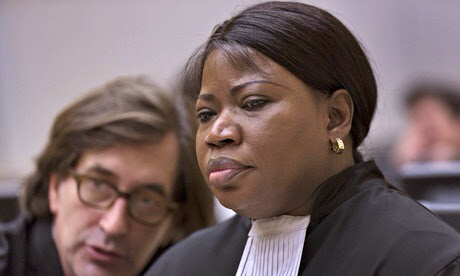
Fatou Bensouda, the international criminal court prosecutor

In recent days, a potential ICC investigation into the actions of both the Israel Defence Forces and Hamas in Gaza has become a fraught political battlefield and a key negotiating issue at ceasefire talks in Cairo. But the question of whether the ICC could or should mount an investigation has also divided the Hague-based court itself.

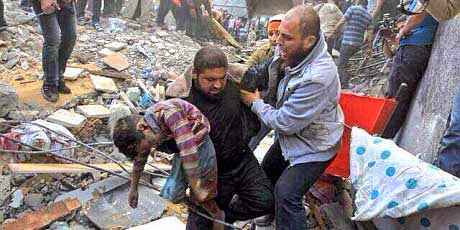
An ICC investigation could have a far-reaching impact. It would not just examine alleged war crimes by the Israeli military, Hamas and other Islamist militants in the course of recent fighting in Gaza that left about 2,000 people dead, including women and children. It could also address the issue of Israeli settlements in the Palestinian territories, for which the Israeli leadership would be responsible.

The ICC’s founding charter, the 1998 Rome statute (pdf), describes as a war crime “the transfer, directly or indirectly, by the occupying power of parts of its own civilian population into the territory it occupies”.

Also at stake is the future of the ICC itself, an experiment in international justice that occupies a fragile position with no superpower backing. Russia, China and India have refused to sign up to it. The US and Israel signed the accord in 2000 but later withdrew.

Some international lawyers argue that by trying to duck an investigation, the ICC is not living up to the ideals expressed in the Rome statute that “the most serious crimes of concern to the international community as a whole must not go unpunished”.

John Dugard, a professor of international law at the University of Leiden, in the Netherlands, and a longstanding critic of Israel’s human rights record, said: “I think the prosecutor could easily exercise jurisdiction. Law is a choice. There are competing legal arguments, but she should look at the preamble to the ICC statute which says the purpose of the court is to prevent impunity.”

In an exchange of letters in the last few days, lawyers for the Palestinians have insisted that the ICC prosecutor, Fatou Bensouda, has all the legal authority she needs to launch an investigation, based on a Palestinian request in 2009. However, Bensouda is insisting on a new Palestinian declaration, which would require achieving elusive consensus among political factions such as Hamas, who would face scrutiny themselves alongside the Israeli government. There is strong US and Israeli pressure on the Palestinian leader, Mahmoud Abbas, not to pursue an ICC investigation.

Western pressure on the ICC to stay away from the issue has caused deep rifts within the prosecutor’s office. Some former officials say the Palestinians were misled in 2009 into thinking their request for a war crimes investigation – in the wake of an earlier Israeli offensive on Gaza, named Cast Lead – would remain open pending confirmation of statehood. That confirmation came in November 2012 when the UN general assembly (UNGA) voted to award Palestine the status of non-member observer state, but no investigation was launched.

Bensouda initially appeared open to reviewing the standing Palestinian request, but the following year issued a controversial statement (pdf) saying the UNGA vote made no difference to the “legal invalidity” of the 2009 request.

Luis Moreno Ocampo, who was prosecutor at the time of the Palestinian 2009 declaration, backed Bensouda, saying in an email to the Guardian: “If Palestine wants to accept jurisdiction, it has to submit a new declaration.”

But another former official from the ICC prosecutor’s office who dealt with the Palestinian declaration strongly disagreed. “They are trying to hiding behind legal jargon to disguise what is a political decision, to rule out competence and not get involved,” the official said.

Dugard said Bensouda was under heavy pressure from the US and its European allies. “For her it’s a hard choice and she’s not prepared to make it,” he argued. “But this affects the credibility of the ICC. Africans complain that she doesn’t hesitate to open an investigation on their continent.”

Moreno Ocampo took three years to make a decision on the status of the 2009 Palestinian request for an investigation, during which time he was lobbied by the US and Israel to keep away. According to a book on the ICC published this year, American officials warned the prosecutor that the future of the court was in the balance.

According to the book, Rough Justice: the International Criminal Court in a World of Power Politics, by David Bosco, the Americans suggested that a Palestine investigation “might be too much political weight for the institution to bear. They made clear that proceeding with the case would be a major blow to the institution.”

Although the US does not provide funding for the ICC, “Washington’s enormous diplomatic, economic and military power can be a huge boon for the court when it periodically deployed in support of the court’s work,” writes Bosco, an assistant professor of international politics at American University.

In his book, Bosco reports that Israeli officials held several unpublicised meetings with Moreno Ocampo in The Hague, including a dinner at the Israeli ambassador’s residence, to lobby against an investigation.

A former ICC official who was involved in the Palestinian dossier said: “It was clear from the beginning that Moreno Ocampo did not want to get involved. He said that the Palestinians were not really willing to launch the investigation, but it was clear they were serious. They sent a delegation with two ministers and supporting lawyers in August 2010 who stayed for two days to discuss their request. But Moreno Ocampo was aware that any involvement would spoil his efforts to get closer to the US.”

Moreno Ocampo denied that he had been influenced by US pressure. “I was very firm on treating this issue impartially, but at the same time respecting the legal limits,” he said in an email on Sunday. “I heard all the arguments. I received different Oxford professors who were explaining the different and many times opposing arguments, and I concluded that the process should … go first to the UN. They should decide what entity should be considered a state.”

He added: “Palestine was using the threat to accept jurisdiction to negotiate with Israel. Someone said that if you have nine enemies surrounding you and one bullet, you don’t shoot, you try to use your bullet to create leverage.”

A spokeswoman for his successor, Fatou Bensouda, rejected allegations of bias in the prosecutor’s choice of investigations. “The ICC is guided by the Rome statute and nothing else,” she said. “Strict rules about jurisdiction, about where and when ICC can intervene should be not be deliberately misrepresented … Geographical and political consideration will thus never form part of any decision making by the office.”

The French lawyer representing the Palestinians, Gilles Devers, argued that it was for the court’s preliminary chamber, not the ICC’s prosecutor, to decide on the court’s jurisdiction in the Palestinian territories. Devers said negotiations were continuing among the Palestinian parties on whether to file a new request for an investigation, even though he believed it to be unnecessary in legal terms. Ultimately, he said, the outcome would be determinedly politically.

“There is enormous pressure not to proceed with an investigation. This pressure has been exerted on Fatah and Hamas, but also on the office of the prosecutor,” Devers said. “In both cases, it takes the form of threats to the financial subsidies, to Palestine and to the international criminal court.”

Among the biggest contributors to the ICC budget are the UK and France, which have both sought to persuade the Palestinians to forego a war crimes investigation. More


How Israel’s lies are used to justify mass slaughter of civilians in Gaza

Israel's lies make it clear to the Palestinians that it will continue to wage a campaign of state terror and will never admit its atrocities or its intentions.


ALL GOVERNMENTS lie, including Israel and Hamas. But Israel engages in the kinds of jaw-dropping lies that characterize despotic and totalitarian regimes.


It does not deform the truth; it inverts it. It routinely paints a picture for the outside world that is diametrically opposed to reality. And all of us reporters who have covered the occupied territories have run into Israel's Alice-in-Wonderland narratives, which we dutifully insert into our stories — required under the rules of American journalism — although we know they are untrue.


I saw small boys baited and killed by Israeli soldiers in the Gaza refugee camp of Khan Younis. The soldiers swore at the boys in Arabic over the loudspeakers of their armored jeep. The boys, about 10 years old, then threw stones at an Israeli vehicle and the soldiers opened fire, killing some, wounding others. I was present more than once as Israeli troops drew out and shot Palestinian children in this way.


Such incidents, in the Israeli lexicon, become children caught in crossfire.


I was in Gaza when F-16 attack jets dropped 1,000-pound iron fragmentation bombs on overcrowded hovels in Gaza City. I saw the corpses of the victims, including children. This became a surgical strike on a bomb-making factory.


I have watched Israel demolish homes and entire apartment blocks to create wide buffer zones between the Palestinians and the Israeli troops that ring Gaza. I have interviewed the destitute and homeless families, some camped out in crude shelters erected in the rubble. The destruction becomes the demolition of the homes of terrorists.


I have stood in the remains of schools — Israel struck two United Nations schools in the last six days, causing at least 10 fatalities at one in Rafah on Sunday and at least 19 at one in the Jebaliya refugee camp Wednesday — as well as medical clinics and mosques. I have heard Israel claim that errant rockets or mortar fire from the Palestinians caused these and other deaths, or that the attacked spots were being used as arms depots or launching sites.


I, along with every other reporter I know who has worked in Gaza, have never seen any evidence that Hamas uses civilians as “human shields.”


There is a perverted logic to Israel's repeated use of the Big Lie — the lie favored by tyrants from Josef Stalin to Saddam Hussein. The Big Lie feeds the two reactions Israel seeks to elicit — racism among its supporters and terror among its victims.


By painting a picture of an army that never attacks civilians, that indeed goes out of its way to protect them, the Big Lie says Israelis are civilized and humane, and their Palestinian opponents are inhuman monsters.


The Big Lie serves the idea that the slaughter in Gaza is a clash of civilizations, a war between democracy, decency and honor on one side and Islamic barbarism on the other. And in the uncommon cases when news of atrocities penetrates to the wider public, Israel blames the destruction and casualties on Hamas.


George Orwell in his novel “Nineteen Eighty-Four” called this form of propaganda doublethink. Doublethink uses “logic against logic” and “repudiate[s] morality while laying claim to it.”


The Big Lie does not allow for the nuances and contradictions that can plague conscience. It is a state-orchestrated response to the dilemma of cognitive dissonance. The Big Lie permits no gray zones. The world is black and white, good and evil, righteous and unrighteous.


The Big Lie allows believers to take comfort — a comfort they are desperately seeking — in their own moral superiority at the very moment they have abrogated all morality.


The Big Lie, as the father of American public relations, Edward Bernays, wrote, is limited only by the propagandist's capacity to fathom and harness the undercurrents of individual and mass psychology. And since most supporters of Israel do not have a desire to know the truth, a truth that would force them to examine their own racism and self-delusions about Zionist and Western moral superiority, like packs of famished dogs they lap up the lies fed to them by the Israeli government.


But the Big Lie is also consciously designed to send a chilling message to Gaza's Palestinians, who have lost large numbers of their dwellings, clinics, mosques, and power, water and sewage facilities, along with schools and hospitals, who have suffered some 1,850 deaths since this assault began — most of the victims women and children — and who have seen 400,000 people displaced from their homes.


The Big Lie makes it clear to the Palestinians that Israel will continue to wage a campaign of state terror and will never admit its atrocities or its intentions. The vast disparity between what Israel says and what Israel does tells the Palestinians that there is no hope. Israel will do and say whatever it wants. International law, like the truth, will always be irrelevant. There will never, the Palestinians understand from the Big Lie, be an acknowledgement of reality by the Israeli leadership.


The Israel Defense Forces website is replete with this black propaganda. “Hamas exploits the IDF's sensitivity towards protecting civilian structures, particularly holy sites, by hiding command centers, weapons caches and tunnel entrances in mosques,” the IDF site reads. “In Hamas' world, hospitals are command centers, ambulances are transport vehicles, and medics are human shields,” the site insists.


“… [Israeli] officers are tasked with an enormous responsibility: to protect Palestinian civilians on the ground, no matter how difficult that may be,” the site assures its viewers. And the IDF site provides this quote from a drone operator identified as Lt. Or. “I have personally seen rockets fired at Israel from hospitals and schools, but we couldn't strike back because of civilians nearby. In one instance, we acquired a target but we saw that there were children in the area. We waited around, and when they didn't leave we were forced to abort a strike on an important target.”


Israel's ambassador to the United States, Ron Dermer, in a Big Lie of his own, said last month at a conference of Christians United for Israel that the Israeli army should be given the “Nobel Peace Prize … a Nobel Peace Prize for fighting with unimaginable restraint.”


The Big Lie destroys any possibility of history and therefore any hope for a dialogue between antagonistic parties that can be grounded in truth and reality.


And when facts no longer matter, when there is no shared history grounded in the truth, when people foolishly believe their own lies, there can be no useful exchange of information.


The Big Lie, used like a bludgeon by Israel, as perhaps it is designed to be, ultimately reduces all problems in the world to the brutish language of violence. And when oppressed people are addressed only through violence they will answer only through violence. More


Natural Gas in the Palestinian Authority: The Potential of the Gaza Marine Offshore Field

Summary: Although in strict legal terms its status is ambig-uous, a 25-year exploration license for the marine area off the Gaza Strip was awarded by the Palestinian Authority in 1999.

The Gaza Marine field was discovered the following the year though its natural gas has yet to be exploited. Politics as well as failure to agree on commercial terms have been the principal reasons for the delay.

Exploitation of the field would provide the Palestinian Authority with an important revenue stream. Using Gaza Marine gas may also reduce the need of Israel to consume its own natural gas to generate electricity for the Palestinians. Ultimately the decision will be political, but, in economic terms, the case for the exploita-tion of Gaza Marine is strong. Download PDF


BBC’s biased reporting of the Gaza massacre

BBC's biased reporting of the Gaza massacre: Tariq Ali


Published on Aug 10, 2014 • Tariq Ali tells the BBC on 09/08/14, when 150,000 marched in the biggest ever UK demonstration for Gaza, why there is such widespread criticism of the Israeli bias in its reporting. (For more on the demonstration see: http://bit.ly/1ozrch>

War and Natural Gas: The Israeli Invasion and Gaza’s Offshore Gas Fields

More than five years ago, Israel invaded Gaza under “Operation Cast Lead”.

The following article was first published by Global Research in January 2009 at the height of the Israeli bombing and invasion under Operation Cast Lead.

In the wake of the invasion, Palestinian gas fields were de facto confiscated by Israel in derogation of international law

A year following “Operation Cast Lead”, Tel Aviv announced the discovery of the Leviathan natural gas field in the Eastern Mediterranean “off the coast of Israel.”

At the time the gas field was: “ … the most prominent field ever found in the sub-explored area of the Levantine Basin, which covers about 83,000 square kilometres of the eastern Mediterranean region.” (i)

Coupled with Tamar field, in the same location, discovered in 2009, the prospects are for an energy bonanza for Israel, for Houston, Texas based Noble Energy and partners Delek Drilling, Avner Oil Exploration and Ratio Oil Exploration. (See Felicity Arbuthnot, Israel: Gas, Oil and Trouble in the Levant, Global Research, December 30, 2013

The Gazan gas fields are part of the broader Levant assessment area.

What is now unfolding is the integration of these adjoining gas fields including those belonging to Palestine into the orbit of Israel. (see map below).

It should be noted that the entire Eastern Mediterranean coastline extending from Egypt’s Sinai to Syria constitutes an area encompassing large gas as well as oil reserves.

War and Natural Gas: The Israeli Invasion and Gaza's Offshore Gas Fields

More than five years ago, Israel invaded Gaza under “Operation Cast Lead”.

The following article was first published by Global Research in January 2009 at the height of the Israeli bombing and invasion under Operation Cast Lead.

In the wake of the invasion, Palestinian gas fields were de facto confiscated by Israel in derogation of international law

A year following “Operation Cast Lead”, Tel Aviv announced the discovery of the Leviathan natural gas field in the Eastern Mediterranean “off the coast of Israel.”

At the time the gas field was: “ … the most prominent field ever found in the sub-explored area of the Levantine Basin, which covers about 83,000 square kilometres of the eastern Mediterranean region.” (i)

Coupled with Tamar field, in the same location, discovered in 2009, the prospects are for an energy bonanza for Israel, for Houston, Texas based Noble Energy and partners Delek Drilling, Avner Oil Exploration and Ratio Oil Exploration. (See Felicity Arbuthnot, Israel: Gas, Oil and Trouble in the Levant, Global Research, December 30, 2013

The Gazan gas fields are part of the broader Levant assessment area.

What is now unfolding is the integration of these adjoining gas fields including those belonging to Palestine into the orbit of Israel. (see map below).

It should be noted that the entire Eastern Mediterranean coastline extending from Egypt’s Sinai to Syria constitutes an area encompassing large gas as well as oil reserves.

levant gas map1 felicity

Michel Chossudovsky, January 3, 2014

War and Natural Gas: The Israeli Invasion and Gaza’s Offshore Gas Fields

by Michel Chossudovsky

January 8, 2009

The December 2008 military invasion of the Gaza Strip by Israeli Forces bears a direct relation to the control and ownership of strategic offshore gas reserves.

This is a war of conquest. Discovered in 2000, there are extensive gas reserves off the Gaza coastline.

British Gas (BG Group) and its partner, the Athens based Consolidated Contractors International Company(CCC) owned by Lebanon’s Sabbagh and Koury families, were granted oil and gas exploration rights in a 25 year agreement signed in November 1999 with the Palestinian Authority.

The rights to the offshore gas field are respectively British Gas (60 percent); Consolidated Contractors (CCC) (30 percent); and the Investment Fund of the Palestinian Authority (10 percent). (Haaretz, October 21, 2007).

The PA-BG-CCC agreement includes field development and the construction of a gas pipeline.(Middle East Economic Digest, Jan 5, 2001).

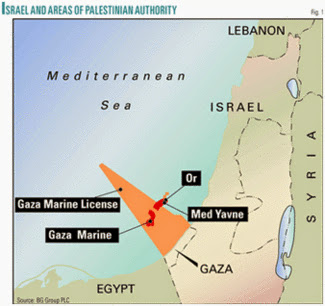
The BG licence covers the entire Gazan offshore marine area, which is contiguous to several Israeli offshore gas facilities. (See Map below). It should be noted that 60 percent of the gas reserves along the Gaza-Israel coastline belong to Palestine.

Map 1

The BG Group drilled two wells in 2000: Gaza Marine-1 and Gaza Marine-2. Reserves are estimated by British Gas to be of the order of 1.4 trillion cubic feet, valued at approximately 4 billion dollars. These are the figures made public by British Gas. The size of Palestine’s gas reserves could be much larger.

Who Owns the Gas Fields

The issue of sovereignty over Gaza’s gas fields is crucial. From a legal standpoint, the gas reserves belong to Palestine.

The death of Yasser Arafat, the election of the Hamas government and the ruin of the Palestinian Authority have enabled Israel to establish de facto control over Gaza’s offshore gas reserves.

British Gas (BG Group) has been dealing with the Tel Aviv government. In turn, the Hamas government has been bypassed in regards to exploration and development rights over the gas fields.

Map 2

The election of Prime Minister Ariel Sharon in 2001 was a major turning point. Palestine’s sovereignty over the offshore gas fields was challenged in the Israeli Supreme Court. Sharon stated unequivocally that “Israel would never buy gas from Palestine” intimating that Gaza’s offshore gas reserves belong to Israel.

In 2003, Ariel Sharon, vetoed an initial deal, which would allow British Gas to supply Israel with natural gas from Gaza’s offshore wells. (The Independent, August 19, 2003)

The election victory of Hamas in 2006 was conducive to the demise of the Palestinian Authority, which became confined to the West Bank, under the proxy regime of Mahmoud Abbas.

In 2006, British Gas “was close to signing a deal to pump the gas to Egypt.” (Times, May, 23, 2007). According to reports, British Prime Minister Tony Blair intervened on behalf of Israel with a view to shunting the agreement with Egypt.

The following year, in May 2007, the Israeli Cabinet approved a proposal by Prime Minister Ehud Olmert “to buy gas from the Palestinian Authority.” The proposed contract was for $4 billion, with profits of the order of $2 billion of which one billion was to go the Palestinians.

Tel Aviv, however, had no intention on sharing the revenues with Palestine. An Israeli team of negotiators was set up by the Israeli Cabinet to thrash out a deal with the BG Group, bypassing both the Hamas government and the Palestinian Authority:

Israeli defence authorities want the Palestinians to be paid in goods and services and insist that no money go to the Hamas-controlled Government.” (Ibid, emphasis added)

The objective was essentially to nullify the contract signed in 1999 between the BG Group and the Palestinian Authority under Yasser Arafat.

Under the proposed 2007 agreement with BG, Palestinian gas from Gaza’s offshore wells was to be channeled by an undersea pipeline to the Israeli seaport of Ashkelon, thereby transferring control over the sale of the natural gas to Israel.

The deal fell through. The negotiations were suspended:

”Mossad Chief Meir Dagan opposed the transaction on security grounds, that the proceeds would fund terror”. (Member of Knesset Gilad Erdan, Address to the Knesset on “The Intention of Deputy Prime Minister Ehud Olmert to Purchase Gas from the Palestinians When Payment Will Serve Hamas,” March 1, 2006, quoted in Lt. Gen. (ret.) Moshe Yaalon, Does the Prospective Purchase of British Gas from Gaza’s Coastal Waters Threaten Israel’s National Security? Jerusalem Center for Public Affairs, October 2007)

Israel’s intent was to foreclose the possibility that royalties be paid to the Palestinians. In December 2007, The BG Group withdrew from the negotiations with Israel and in January 2008 they closed their office in Israel.(BG website).

Invasion Plan on The Drawing Board

The invasion plan of the Gaza Strip under “Operation Cast Lead” was set in motion in June 2008, according to Israeli military sources:

“Sources in the defense establishment said Defense Minister Ehud Barak instructed the Israel Defense Forces to prepare for the operation over six months ago [June or before June] , even as Israel was beginning to negotiate a ceasefire agreement with Hamas.”(Barak Ravid, Operation “Cast Lead”: Israeli Air Force strike followed months of planning, Haaretz, December 27, 2008)

That very same month, the Israeli authorities contacted British Gas, with a view to resuming crucial negotiations pertaining to the purchase of Gaza’s natural gas:

“Both Ministry of Finance director general Yarom Ariav and Ministry of National Infrastructures director general Hezi Kugler agreed to inform BG of Israel’s wish to renew the talks.

The sources added that BG has not yet officially responded to Israel’s request, but that company executives would probably come to Israel in a few weeks to hold talks with government officials.” (Globes online- Israel’s Business Arena, June 23, 2008)

The decision to speed up negotiations with British Gas (BG Group) coincided, chronologically, with the planning of the invasion of Gaza initiated in June. It would appear that Israel was anxious to reach an agreement with the BG Group prior to the invasion, which was already in an advanced planning stage.

Moreover, these negotiations with British Gas were conducted by the Ehud Olmert government with the knowledge that a military invasion was on the drawing board. In all likelihood, a new “post war” political-territorial arrangement for the Gaza strip was also being contemplated by the Israeli government.

In fact, negotiations between British Gas and Israeli officials were ongoing in October 2008, 2-3 months prior to the commencement of the bombings on December 27th.

In November 2008, the Israeli Ministry of Finance and the Ministry of National Infrastructures instructed Israel Electric Corporation (IEC) to enter into negotiations with British Gas, on the purchase of natural gas from the BG’s offshore concession in Gaza. (Globes, November 13, 2008)

“Ministry of Finance director general Yarom Ariav and Ministry of National Infrastructures director general Hezi Kugler wrote to IEC CEO Amos Lasker recently, informing him of the government’s decision to allow negotiations to go forward, in line with the framework proposal it approved earlier this year.

The IEC board, headed by chairman Moti Friedman, approved the principles of the framework proposal a few weeks ago. The talks with BG Group will begin once the board approves the exemption from a tender.” (Globes Nov. 13, 2008)

Gaza and Energy Geopolitics

The military occupation of Gaza is intent upon transferring the sovereignty of the gas fields to Israel in violation of international law.

What can we expect in the wake of the invasion?

What is the intent of Israel with regard to Palestine’s Natural Gas reserves?

A new territorial arrangement, with the stationing of Israeli and/or “peacekeeping” troops?

The militarization of the entire Gaza coastline, which is strategic for Israel?

The outright confiscation of Palestinian gas fields and the unilateral declaration of Israeli sovereignty over Gaza’s maritime areas?

If this were to occur, the Gaza gas fields would be integrated into Israel’s offshore installations, which are contiguous to those of the Gaza Strip. (See Map 1 above).

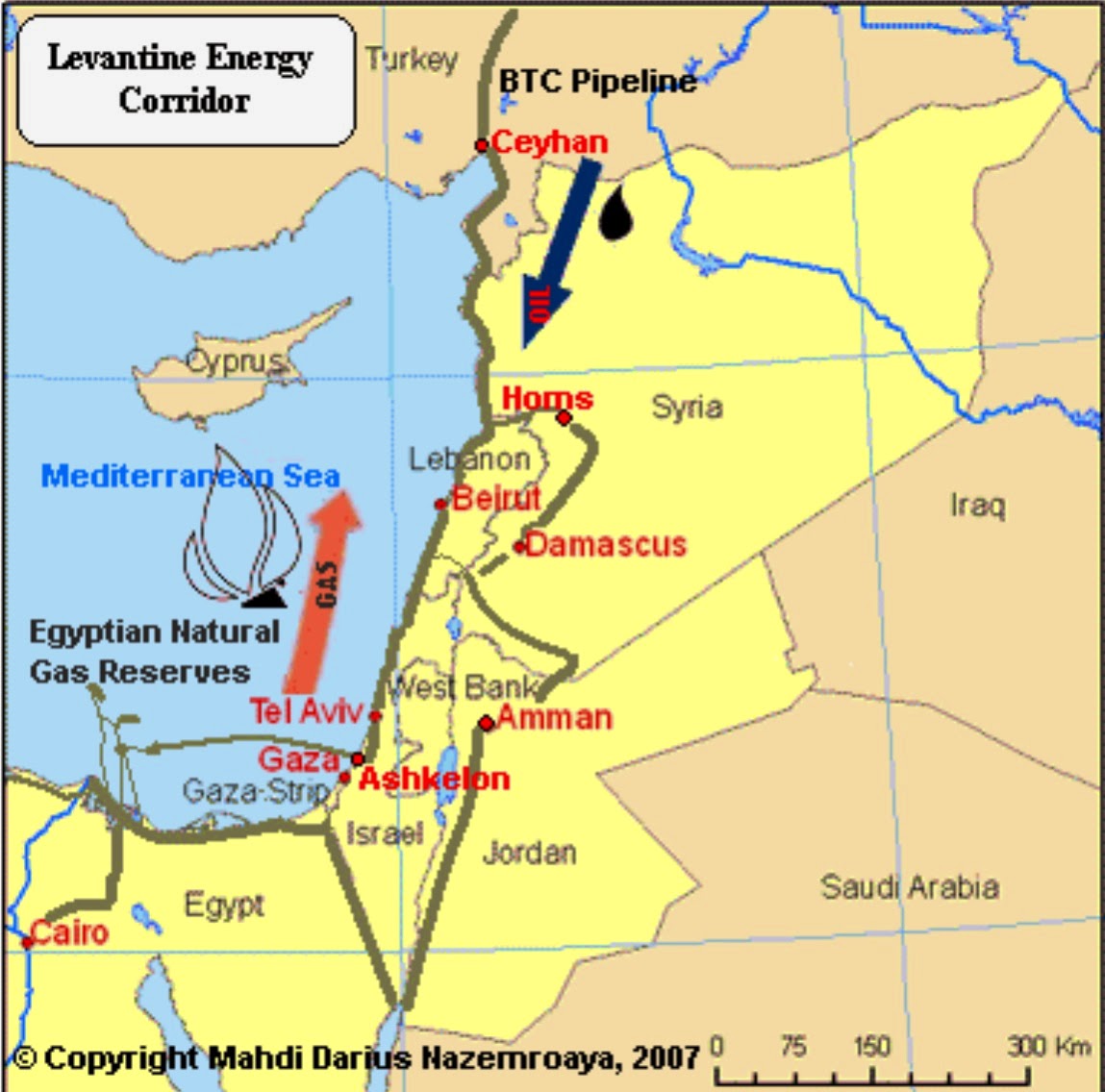
These various offshore installations are also linked up to Israel’s energy transport corridor, extending from the port of Eilat, which is an oil pipeline terminal, on the Red Sea to the seaport – pipeline terminal at Ashkelon, and northwards to Haifa, and eventually linking up through a proposed Israeli-Turkish pipeline with the Turkish port of Ceyhan.

Map 3

Ceyhan is the terminal of the Baku, Tblisi Ceyhan Trans Caspian pipeline. “What is envisaged is to link the BTC pipeline to the Trans-Israel Eilat-Ashkelon pipeline, also known as Israel’s Tipline.” (See Michel Chossudovsky, The War on Lebanon and the Battle for Oil, Global Research, July 23, 2006)

More


Gaza: Widespread Impact of Power Plant Attack

(Jerusalem, Palestine) – The apparent Israeli shellfire that knocked out the Gaza Strip’s only electrical power plant on July 29, 2014, has worsened the humanitarian crisis for the territory’s 1.7 million people. Damaging or destroying a power plant, even if it also served a military purpose, would be an unlawful disproportionate attack under the laws of war, causing far greater civilian harm than military gain.

The shutdown of the Gaza Power Plant has had an impact on the population far beyond power outages. It has drastically curtailed the pumping of water to households and the treatment of sewage, both of which require electric power. It also caused hospitals, already straining to handle the surge of war casualties, to increase their reliance on precarious generators. And it has affected the food supply because the lack of power has shut off refrigerators and forced bakeries to reduce their bread production.

“If there were one attack that could be predicted to endanger the health and well-being of the greatest number of people in Gaza, hitting the territory’s sole electricity plant would be it,” said , deputy Middle East and North Africa director. “Deliberately attacking the power plant would be a war crime.”

The spokesperson for the Energy Distribution Authority, Jamal Dardasawi, was quoted in the media as saying that Israeli tank shells hit one of Gaza Power Plant’s fuel storage tanks. The attack caused a massive explosion and a fire that damaged other parts of the facility and took much of the day to extinguish.

The plant’s shutdown cut off all power for much of the territory. For years, Gazans have been living with electricity service for only part of each day, and those who can afford fuel run private generators to provide back-up power. A week after the strike, some service was restored to most neighborhoods, but less than the limited pre-conflict levels.

Shortly after the attack was reported, Israel denied targeting the plant but said its forces might have hit it accidentally. Human Rights Watch was unable to determine whether Palestinian fighters were deployed in the area when the plant was hit. However, Fathi al-Sheikh Khalil, deputy chairman of the Energy and Natural Resources Authority in Gaza, said that the al-Nusseirat area, where the plant is located, was being heavily bombed at the time of the strike. Khalil said that Gaza firefighters phoned him to say they could not approach the plant because of the ongoing attacks in the vicinity. As a result, the fire spread from the small storage tank that was initially hit to a larger one, he said.

The strike came at about 3 a.m. on a day of bombardment that was widely described as the heaviest in the first three weeks of fighting. Israeli airstrikes that day destroyed a central mosque and the home of the Hamas political leader, Ismail Haniya, and damaged government buildings and a building that housed the offices of Hamas-controlled television and radio stations. Israeli military operations that day killed about 100 Palestinians.

Israeli military operations have caused massive damage to Gaza’s infrastructure, including housing, factories, hospitals, mosques, and schools.

Under the laws of war, power plants, like airports, are considered dual-use objects – civilian objects that also benefit an armed force. As such they can be military objectives, subject to attack. However, any attack on a dual-use object must be proportionate. Attacks that can be expected to cause more harm to civilians and civilian structures than the anticipated military gain of the attack are prohibited. Expected civilian harm encompasses casualties over time as well as immediate civilian losses. Thus any attack on the Gaza Power Plant that would cause a significant shutdown would invariably be disproportionate, violating international humanitarian law.

Israel has denied attacking the power plant. Brig. Gen. Yaron Rosen, the commander of the Israeli Air Support and Helicopter Air Division, said on July 29 that Israel “has no interest” in attacking the plant. “We transfer to them the electricity, we transfer in the gas, we transfer in the food in order to prevent a humanitarian disaster,” he said. “So we attacked the power plant?” Rosen said it was possible Israel hit the power plant accidentally and that an internal investigation was under way. An August 4 CNN story on the electricity crisis stated that an Israeli Defense Ministry spokesperson had told CNN that Israeli forces were not involved in the attack.

Ribhi al-Sheikh, deputy head of the Palestine Water Authority, said the lack of electricity had idled wells – except where generators were able to provide some back-up power – as well as water treatment and desalination plants. Idling wells endangers crops that require water at the hottest time of year.

Most urban households in Gaza need electricity to pump water to rooftop tanks. Ghada Snunu, a worker for a nongovernmental organization, said on August 4 that her home in Gaza City had been without electricity since the attack on the power plant, forcing her family to buy water in jerry cans and to conserve the used household water to empty the toilets. The collapse of electricity service meant that many Gazans lacked access to the 30 liters of water that is the estimated amount needed per capita daily for drinking, cooking, hygiene and laundering, said Mahmoud Daher, head of the Gaza office of the UN World Health Organization.

Daher said that hospitals have been given priority for scarce electricity, with Shifa, the territory’s largest hospital, getting the most, at 16 hours a day. If the fuel required to run generators were to run out, or a generator to fail, a hospital could lose power.

An official at al-Quds Hospital in Gaza City told Human Rights Watch on August 7 that because of electricity interruptions:

We use a large generator for six to eight hours per day, then have to rely on three smaller ones, because the large one cannot be run full-time. If the large one goes, we don’t know how we would repair it, because of the lack of spare parts. It powers the oxygen station, the hospital’s two elevators, and the air conditioners – this amounts to 80 percent of the hospital’s total electricity consumption. When we use the smaller generators, they can only power one elevator, and none of the air conditioners, which makes it difficult for staff to work long hours in the August heat, and dangerous for patients.

Israeli forces had reportedly struck the power plant both earlier in the current fighting and in previous conflicts, Human Rights Watch said. The plant had been hit on five occasions since early July, according to the International Committee of the Red Cross. It closed briefly after shelling by Israeli forces on July 22 and 23, said Gisha, an Israeli nongovernmental organization. One of the strikes knocked out one of the plant’s generator sets, said Khalil of the Energy Authority.

He said repairing it and the storage tanks will take more than a year, but the plant can make temporary repairs that will enable it to produce 50 megawatts sooner, though at a higher cost. The power plant, in central Gaza, produced about 60 megawatts of power before the current fighting began, the deputy minister of the Palestine Energy Authority in Ramallah, Abdelkarim Abdeen, told Human Rights Watch.

Khalil said that about two days before the July 29 strike, Israeli authorities had passed a message to him via the UN Office for the Coordination of Humanitarian Affairs (OCHA) that the power plant was not a target and that its workers could move safely within the compound. No workers were hurt in the strike, he said.

In addition to the output from the plant, Gaza normally gets 120 megawatts of power from Israel via 10 transmission lines and 28 from Egypt via 3 lines. However, the recent fighting damaged 8 of the Israeli lines and 2 of the Egyptian lines, reducing the supply coming from Israel to 24 megawatts and from Egypt to 18 megawatts as of August 4, Abdeen said.

Damage to the Israeli and Egyptian power lines and then the attack on the power plant cut Gaza’s electricity supply to about 20 percent of the 200 megawatts it had before the conflict began. Gaza’s electricity needs are estimated at 350 megawatts, so power rationing and rolling blackouts were the norm even before war damage slashed the amount of power available.

Since the August 5 ceasefire, electricity power supplies have increased as repair crews have restored eight of the Israeli and all three of the Egyptian lines. Before the ceasefire, conflict conditions had made it hazardous for technicians to perform the necessary repairs, the International Committee of the Red Cross said. As of August 7, households were reportedly getting between three and seven hours of electricity, depending on their location in the Gaza Strip.

Eight years ago, on June 28, 2006, Israeli missiles hit the plant eight times, knocking out its transformers, three days after Hamas fighters in Gaza captured the Israeli soldier Gilad Shalit. Israel then delayed or blocked the delivery of material needed to fully repair the Gaza power plant. Then, in 2008, Israel cut its deliveries of electricity and fuel to Gaza for the declared purpose of pressuring armed groups to end their rocket attacks against civilians in Israel, a form of collective punishment in violation of the laws of war.

Israel has attacked power plants in hostilities outside of Gaza. During its armed conflict with Hezbollah, Israel deliberately bombed electricity plants in southern Lebanon, including on June 24, 1999, February 8, 2000, and May 5, 2000. The day after the 1999 attack, Israeli Brig. Gen. Dan Halutz said at a news conference that the Lebanese infrastructure targets “had been selected a long time ago,” and that the Israeli “government decided to carry out an attack on Lebanese infrastructure and not only on Hezbollah objectives…to stress that all power brokers in Lebanon who support Hezbollah’s murderous activity are liable to attack.” The attacks on electricity plants violated the laws of war prohibition against disproportionate attacks because their expected harm to the civilian population was greater than the military gain achieved.

The laws of war obligate countries responsible for violations to make full reparations for the loss or injury caused. This would involve at a minimum providing materials and assistance to permit the prompt restoration of the power plant to its pre-war capacity. Even while fighting continues, Israel should ensure humanitarian agencies have access to restore destroyed power lines, given their crucial humanitarian impact on the civilian population More


Life in occupied Palestine

A video that Israel and the United States does not want you to see. Anna, a Jewish American from the International Womens Peace Service (IWPS) speaks about documenting human rights abuses in occupied Palesting and supporting non-violent resistance.