Gallery

UN Secretary General Ban Ki-Moon meets with Caribbean agencies focused on Climate Change

caribbeanclimate's avatarcaribbeanclimate

Deputy Director and Science Advisor of the Caribbean Community Climate Change Centre, Dr. Ulric Trotz, and other representatives of leading regional agencies focused on climate change issues met with His Excellency Mr. Ban Ki-Moon, Secretary General of the United Nations, last week at the Caribbean Development Bank (CDB) in Barbados.

Reflecting on the challenges posed by climate change and the way forward for the Caribbean, Dr Trotz noted that:

“Building climate resilient, low carbon economies in the Caribbean will require a transformational change by national governments, regional organisations, NGOs, the private sector and civil society supported by an unprecedented level of financial and technical assistance.”

The Secretary General applauded the Caribbean for its contribution and engagement on climate change and affirmed the importance of regional institutions in keeping on the front burner the concerns about the impact on the Caribbean.

“Regional organizations are critical to moving this agenda forward – and…

View original post 806 more words

Cuba and the Cayman Islands Concerns Grow With Prospect of U.S. Presence

Already, American corporations are poised to rush into a country only 90 miles from Florida’s shores.In March, a delegation from the U.S. Agriculture Coalition for Cuba, an agribusiness group that includes Cargill, the National Grain and Feed Association, the National Chicken Council and other companies and organizations, flew to Havana to meet with Cuban officials.

And cruise ship companies and hotel chains like Marriott and Hilton have indicated their enthusiasm. “I can’t stop thinking about it,” Frank Del Rio, chief executive officer of Norwegian Cruise Line Holdings, said in an interview. “Cuba and the cruise industry are just a match made in heaven, waiting to happen. More

The question for the Cayman Islands, who is considering constructing a new cruise ship dock, is how will the opening of Cuba affect cruise traffic to George Town?

I argue that an Economic Study is needed, in addition to the Environmental Impact Assesment (EIA), to analyse the economics of the cruise business to the Cayman Islands as a whole. This study should compare the financial benefits of stay-over tourism, with the extension of Owen Roberts International Airport (ORIA) to 10.000' feet allowing the handling of long-haul direct flights from Europe, East Asia (China, Japan, South Korea) and the Persian Gulf. It may be possible to turn ORIA into the air-hub of the Western Caribbean with Cayman Airways actually turning a profit as a regional carrier. Editor


IRENA Assesses Renewables Readiness of Fiji, Marshall Islands and Vanuatu

2 July 2015: The International Renewable Energy Agency (IRENA) has released Renewables Readiness Assessments (RRAs) for three small island developing States (SIDS): Fiji, the Marshall Islands and Vanuatu. The RRAs find that the three countries could meet their energy needs, expand energy access, decrease electricity costs and strengthen energy independence through a combination of renewable energy resources.

The Assessments call for employing a combination of solar, wind, geothermal, marine, biomass and biofuel energy to lessen the islands’ dependence on imports and cushion their economies from oil price fluctuations. They find that developing domestic sources of renewable power will be a win-win for both the climate and the economy, mitigating these countries’ carbon emissions and creating local jobs.


As outlined in their RRAs, all three countries are heavily dependent on fossil fuel imports, despite abundant renewable sources: solar, geothermal, wind, biomass and biofuel in Vanuatu; solar and wind in the Marshall Islands; and hydropower, biomass, solar, geothermal and wind in Fiji.


The RRA for Vanuatu assesses progress under the National Energy Roadmap toward sourcing 63% of its energy from renewables by 2030, calling for a grid-assessment study in preparation for large-scale renewables integration. Concluding that off-grid renewables could reach 83% of rural residents without electricity, it also recommends adoption of standard designs for off-grid solar-home systems.


The RRA for the Marshall Islands reports thousands of solar installations since enactment of the National Energy Policy and the Energy Action Plan, but suggests exploring more wind opportunities, forming a national energy agency and a renewable energy coordination committee, planning for off-grid renewables and addressing fuel drum leakage.


The RRA for Fiji examines the National Energy Policy, which hopes to achieve 100% renewables by 2030, finding that the Policy requires further implementation. It calls for a national energy committee to improve coordination among ministries and donors, consideration of maritime transport fueled by renewables, and greater geothermal energy exploration.


IRENA, which has completed more than 20 RRAs for countries around the world, states that the Assessments “offer a holistic evaluation of conditions for renewable energy deployment in a country and outline the actions necessary to further improve these conditions.” [IRENA Press Release] [IRENA Publication Webpage, Fiji] [Publication: Fiji Renewables Readiness Assessment] [IRENA Publication Webpage, Marshall Islands] [Publication: The Republic of Marshall Islands Renewables Readiness Assessment] [IRENA Publication Webpage, Vanuatu] [Publication: Vanuatu Renewables Readiness Assessment] More


CARICOM Countries Address Renewable Energy, SIDS’ Development, Climate Change

CARICOM 5 July 2015: The 36th Regular Meeting of the Conference of Heads of Government of the Caribbean Community (CARICOM) focused on energy, bolstering education systems, and Haiti's “looming humanitarian crisis,” among other issues. A high-level symposium on sustainable development convened on the sidelines of the Conference.

During the meeting, held on 2-4 July 2015, in Bridgetown, Barbados, leaders welcomed the establishment of a Caribbean Centre for Renewable Energy, which will be hosted by Barbados. The Centre will act as the implementation hub for sustainable energy activities and projects within the Caribbean. The Government of Trinidad and Tobago proposed creating a Caribbean Energy Fund, which participants supported.

Discussions at the Conference also addressed: access to concessional development financing for small island developing States (SIDS), with leaders advocating for a vulnerability measurement instead of gross domestic product (GDP) to determine economic health; a climate agreement that would limit warming to below 1.5°C compared to pre-industrial levels; and decision-making mechanisms in the region.

The Conference resulted in a communiqué that addresses: sustainable development; resilience building and wealth creation for Caribbean development, and the role of Caribbean universities; science and technology; and the promotion of sustainable energy. Participants also adopted 'The CARICOM Declaration for Climate Action,' which outlines the Caribbean region's priorities for the 2015 climate agreement, including loss and damage, limiting warming to below 1.5°C, a compliance mechanism, and finance measures, including improved and privatized access to funds by SIDS.

Speaking during the high-level symposium on sustainable development, UN Secretary-General Ban Ki-moon said that, by 2020, Barbados will be one of the world's top five solar energy users on a per capita basis, and Caribbean countries “are lighting the path to the future.” Noting that sustainable development and climate change are “two sides of the same coin,” Ban reiterated that this generation could be the first to end global poverty, and the last to prevent the worst impacts of climate change, “before it is too late.”

Ban underscored that the proposed Sustainable Development Goals (SDGs) must be “focused, financed and followed up,” and that partnerships must be strengthened with regard to capacity building, financing, access to technology, and improved data collection and statistics.

Ban also called on countries to: link the global agenda to regional agendas; deepen regional integration; focus on the needs and vulnerabilities of SIDS and middle-income countries (MICs), including by addressing the debt challenge; and achieve a low-carbon, climate-resilient development pathway. He said he will continue working to guarantee that SIDS and the least developed countries (LDCs) are top funding priorities of the Green Climate Fund (GCF), among other sources.

http://sids-l.iisd.org/news/caricom-countries-address-renewable-energy-sids-development-climate-change/


Light Up A Life For A Better Nepal


New NASA data show how the world is running out of water

The world’s largest underground aquifers – a source of fresh water for hundreds of millions of people — are being depleted at alarming rates, according to new NASA satellite data that provides the most detailed picture yet of vital water reserves hidden under the Earth’s surface.

Twenty-one of the world’s 37 largest aquifers — in locations from India and China to the United States and France — have passed their sustainability tipping points, meaning more water was removed than replaced during the decade-long study period, researchers announced Tuesday. Thirteen aquifers declined at rates that put them into the most troubled category. The researchers said this indicated a long-term problem that’s likely to worsen as reliance on aquifers grows.

Scientists had long suspected that humans were taxing the world’s underground water supply, but the NASA data was the first detailed assessment to demonstrate that major aquifers were indeed struggling to keep pace with demands from agriculture, growing populations, and industries such as mining.

“The situation is quite critical,” said Jay Famiglietti, senior water scientist at NASA’s Jet Propulsion Laboratory in California and principal investigator of the University of California Irvine-led studies.

Underground aquifers supply 35 percent of the water used by humans worldwide. Demand is even greater in times of drought. Rain-starved California is currently tapping aquifers for 60 percent of its water use as its rivers and above-ground reservoirs dry up, a steep increase from the usual 40 percent. Some expect water from aquifers will account for virtually every drop of the state’s fresh water supply by year end

The aquifers under the most stress are in poor, densely populated regions, such as northwest India, Pakistan and North Africa, where alternatives are limited and water shortages could quickly lead to instability.

The researchers used NASA’s GRACE satellites to take precise measurements of the world’s groundwater aquifers. The satellites detected subtle changes in the Earth’s gravitational pull, noting where the heavier weight of water exerted a greater pull on the orbiting spacecraft. Slight changes in aquifer water levels were charted over a decade, from 2003 to 2013.

“This has really been our first chance to see how these large reservoirs change over time,” said Gordon Grant, a research hydrologist at Oregon State University, who was not involved in the studies.

But the NASA satellites could not measure the total capacity of the aquifers. The size of these tucked-away water supplies remains something of a mystery. Still, the satellite data indicated that some aquifers may be much smaller than previously believed, and most estimates of aquifer reserves have “uncertainty ranges across orders of magnitude,” according to the research.

Aquifers can take thousands of years to fill up and only slowly recharge with water from snowmelt and rains. Now, as drilling for water has taken off across the globe, the hidden water reservoirs are being stressed.

“The water table is dropping all over the world,” Famiglietti said. “There’s not an infinite supply of water.”

The health of the world’s aquifers varied widely, mostly dependent on how they were used. In Australia, for example, the Canning Basin in the country’s western end had the third-highest rate of depletion in the world. But the Great Artesian Basin to the east was among the healthiest.

The difference, the studies found, is likely attributable to heavy gold and iron ore mining and oil and gas exploration near the Canning Basin. Those are water-intensive activities.

The world’s most stressed aquifer — defined as suffering rapid depletion with little or no sign of recharging — was the Arabian Aquifer, a water source used by more than 60 million people. That was followed by the Indus Basin in India and Pakistan, then the Murzuk-Djado Basin in Libya and Niger.

California’s Central Valley Aquifer was the most troubled in the United States. It is being drained to irrigate farm fields, where drought has led to an explosion in the number of water wells being drilled. California only last year passed its first extensive groundwater regulations. But the new law could take two decades to take full effect.

Also running a negative balance was the Atlantic and Gulf Coastal Plains Aquifer, which stretches across the southeast coast and Florida. But three other aquifers in the middle of the country appeared to be in relatively good shape.

Some groundwater filters back down to aquifers, such as with field irrigation. But most of it is lost to evaporation or ends up being deposited in oceans, making it harder to use. A 2012 study by Japanese researchers attributed up to 40 percent of the observed sea-level rise in recent decades to groundwater that had been pumped out, used by humans and ended up in the ocean.

Famiglietti said problems with groundwater are exacerbated by global warming, which has caused the regions closest to the equator to get drier and more extreme latitudes to experience wetter and heavier rains. A self-reinforcing cycle begins. People living in mid-range latitudes not only pump more water from aquifers to contend with drier conditions, but that water — once removed from the ground — also then evaporates and gets recirculated to areas far north and south.

The studies were published Tuesday in the Water Resources Research journal.

Famiglietti said he hoped the findings would spur discussion and further research into how much groundwater is left.

“We need to get our heads together on how we manage groundwater,” he said, “because we’re running out of it.” More


Regional environment group wants Caribbean to benefit from global funds

caribbeanclimate's avatarcaribbeanclimate

The Belize-based Caribbean Community Climate Change Centre (CCCCC) says it is working towards ensuring that the region benefits significantly from the Green Climate Fund (GCF) as well as the Adaptation Fund (AF) established to help countries worldwide deal with the impact of climate change.

Executive director Dr. Kenrick Leslie says the Centre, under a directive from CARICOM leaders, has been “working with national governments to put together programmes that would help them develop bankable projects that can be funded under the various mechanisms under the United Nations Framework Convention on Climate Change.

“The Centre is putting maximum effort to ensure CARICOM Member States get their fair share of the Green Climate Fund (GCF), Adaptation Fund (AF) and other funds to help them in their adaptation efforts. That is our primary thrust— to meet the mandate given to us by the regional heads,” he said,

He said the CCCCC has applied…

View original post 468 more words

UN-HABITAT Report Explores Climate Change, Urbanization in SIDS

May 2015: A small island developing States (SIDS) urban agenda must reflect the cultural, economic and geographic characteristics of SIDS, in order to address sustainable urbanization in SIDS, according to a publication by the UN Human Settlements Programme (UN-HABITAT).

The report provides an overview of current trends in climate change and urbanization, describes the impact of climate change on cities in SIDS, and explores the role of urban planning and design as a tool for addressing the challenges and opportunities of climate change in relation to human settlements in SIDS.

‘Urbanization and Climate Change in Small Island Developing States' responds to SIDS' calls to enable strong, genuine and durable partnerships at all levels and to strengthen long-standing cooperation and support from the international community. The publication is part of UN-HABITAT's ‘Cities and Climate Change Series.'

Global urbanization trends are present in SIDS, where 59% of residents live in urban settlements. According to the report, the term ‘urban' in the SIDS context can refer to a small town connected by villages on a single island, along a coastal perimeter or a series of islets.

“Climate change threatens the achievement of the Sustainable Development Goals (SDGs),” particularly for SIDS, the report states. To position SIDS to achieve the SDGs and tackle climate change, the report emphasizes the importance of adapting resilience and sustainable urbanization concepts to the SIDS context and adopting innovative approaches such as the blue economy.

The report recommends promoting compact urban forms to address the ‘primacy of capitals' and resulting urban sprawl. Tools for achieving compact urban forms include smart growth principles, land use regulation, development and recognition of urban growth boundaries, and promotion of walking and cycling.

The report further recommends: adopting ecosystems-based approaches (EbA) to adaptation, such as reducing exposure to natural disasters through maintaining coastal ecosystems; incorporating an inclusive human rights-based approach; prioritizing investments and improving local capacity; and compiling adequate local data and information systems. [Publication: Urbanization and Climate Change in Small Island Developing States] More


The island states of Seychelles and Palau are set on forging closer ties and strengthening their newly-established diplomatic relations.

This follows the signing Tuesday morning of a General Cooperation Agreement and a Short Stay Visa Waiver Agreement between the two countries which seeks to allow bilateral cooperation between the two sides in several areas.

The agreements were signed by the Seychelles Minister of Foreign Affairs and Transport Joel Morgan and Palau’s Ambassador to the United States of America, Hersey Kyota.

Kyota is part of the four-member delegation which the Palauan President Tommy Esang Remengesau is leading on his official visit to Seychelles.

The signing followed a tête-à-tête between President Remengesau and Seychelles President James Michel at State House in the Seychelles capital of Victoria, after which they were joined by officials of their two countries for further discussions.

In a press statement issued this afternoon, State House said talks between Michel and Remengesau centred on their respective countries' progress in various sectors, namely fisheries, aviation, tourism, environmental protection, renewable energy, economic reforms and wider issues of sustainable development.

Seychelles and Palau only established formal diplomatic ties earlier this year, although the two heads of states have enjoyed close relations for a number of years.

Michel and Remengesau were the ones who called for the setting up of the Global Island Partnership (GLISPA) in January 2005 during the second International Meeting of the Small Island Developing States held in the neighbouring Indian Ocean island of Mauritius.

GLISPA is an open and voluntary platform for all islands and their supporters to work together to build resilient and sustainable island communities through innovative partnerships.

Both Palau and Seychelles are also members of the Alliance of Small Island States (AOSIS).

On his first visit to Seychelles, Remengesau was also the guest of honour at yesterday’s National Day Celebrations.

In a press statement issued by State House this afternoon following this morning's meeting, Michel described Remengesau’s visit to the Indian Ocean archipelago of 115 islands as “a historic milestone” in the relations between the two countries.

“His presence amongst us is not only an opportunity for him to share in our festivities, to share our joy and achievements as a nation, but also an occasion to celebrate and strengthen even further the strong island kinship between our two brotherly countries and between islands everywhere,” said Michel.

According to the statement, the two leaders have agreed that “the close cooperation between Seychelles and Palau that is planned in the future” will be an example of collaboration between individual small island developing states adding that Seychelles and Palau will encourage such cooperation between other island nations.

“This type of cooperation should be replicated in the Post-2015 era if small island countries or as we say ‘large ocean states’ are to benefit to the maximum from the implementation of the Post-2015 Development Agenda, the Sustainable Development Goals (SDGs) and the Paris Climate Change agreement as well as the SAMOA PATHWAY,” said Michel.

For the Palauan president, the visit represents an opportunity which will allow the two island nations to share experiences and learn from each other’s best practices considering they face similar challenges.

“…I am reminded that we share the same values; that the development of a nation rests on the benefits it can bring to the people and that sustainability is at the heart of our island nations. We seek to continue to bring the same message of island people to the world community and work together in close collaboration,” said Remengesau.

The Palauan President will leave Seychelles on Wednesday July 1.

During his stay, he is also paying close attention to restoration of eroded coastlines due to climate change in Seychelles which is a similar challenge faced by Palau. This is through visits to several sites in the Seychelles where such projects have been undertaken.

Palau consists of over 200 islands, out of which only eight are permanently inhabited. The western Pacific islands have a much smaller population size of only around 21,000 people when compared to Seychelles’ population of around 90,000.

Palau which is close to Southeast Asia has a rather mixed population of Malay, Melanesian, Filipino, and Polynesian ancestry. It is believed that its original settlers as early as 2500 BC were from Indonesia.

The Palau islands remained under Spanish ownership for many years before Spain sold them to Germany in 1899. The islands were also occupied by Japan during the World War 1 and the US during the World War 2.

Palau became independent in 1994 More


Israel intercepts Gaza-bound flotilla

kiaoragaza's avatarKia Ora Gaza

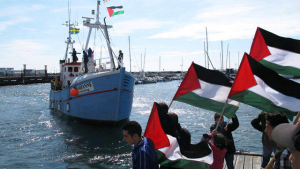
Freedom Flotilla III's Marianne av Göteborg on its way to Gaza. Freedom Flotilla III’s Marianne av Göteborg on its way to Gaza.

By Jack Khoury and Gili Cohen, Haaretz (Israeli daily newspaper), 29 June 2015

Israeli forces intercepted the Gaza-bound boat Marianne late Sunday night, in what the Israeli Defense Forces said was a short operation free of any casualties. The boat is currently en route to Ashdod port.

Fighters from the Shayetet 13 unit searched the boat after the successful takeover. According to military sources, the ship is expected to dock in Ashdod within the next 12-24 hours, depending on weather and sea conditions.

After arriving in Ashdod, they will be interrogated before being escorted to Ben-Gurion Airport and flown out of Israel.

The Swedish boat, which on Sunday afternoon was 150 nautical miles from the Gaza Coast, is carrying 20 activists, among them MK Basel Ghattas (Joint Arab List) and former Tunisian president Moncef Marzouki.

According to the army’s…

View original post 338 more words